
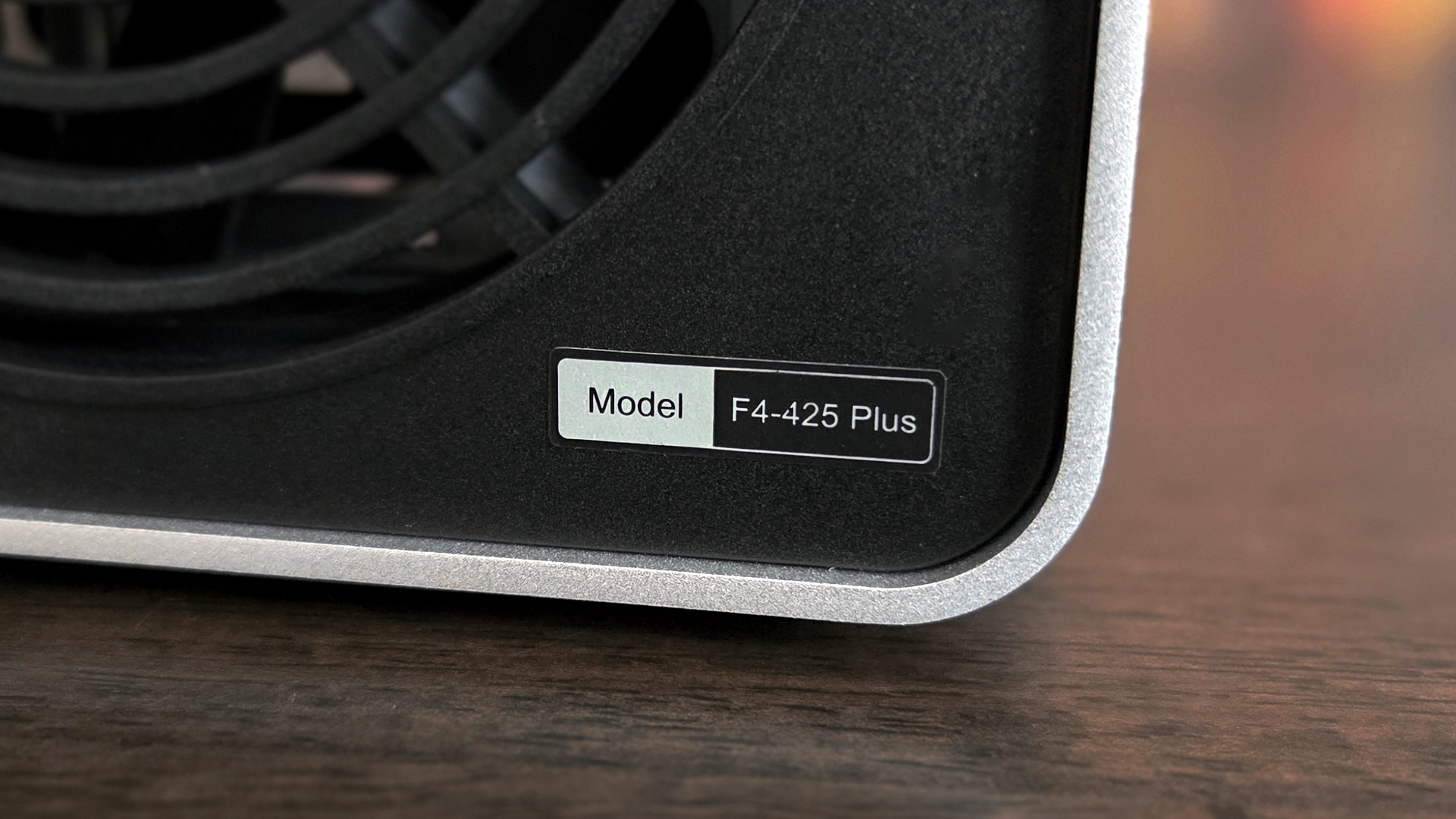
Arriving after Synology, QNAP, and other ASUSTOR, Terramaster quickly carved out a name among NAS enthusiasts thanks to products with an attractive price/performance ratio. Its latest model, the F4-425 Plus, keeps an appealing price despite the rising cost of certain components.
7 / 10
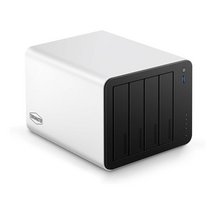
- 4 bays + 3 M.2: plenty to work with!
- Dual 5 GbE network controllers
- Proper processor N150
- 16 Go of DDR5 out of the box
- Low heat, quiet operation
- TOS 6 still needs to improve
- HDMI port largely unnecessary
- Mobile app needs work
Sleek design, compact model
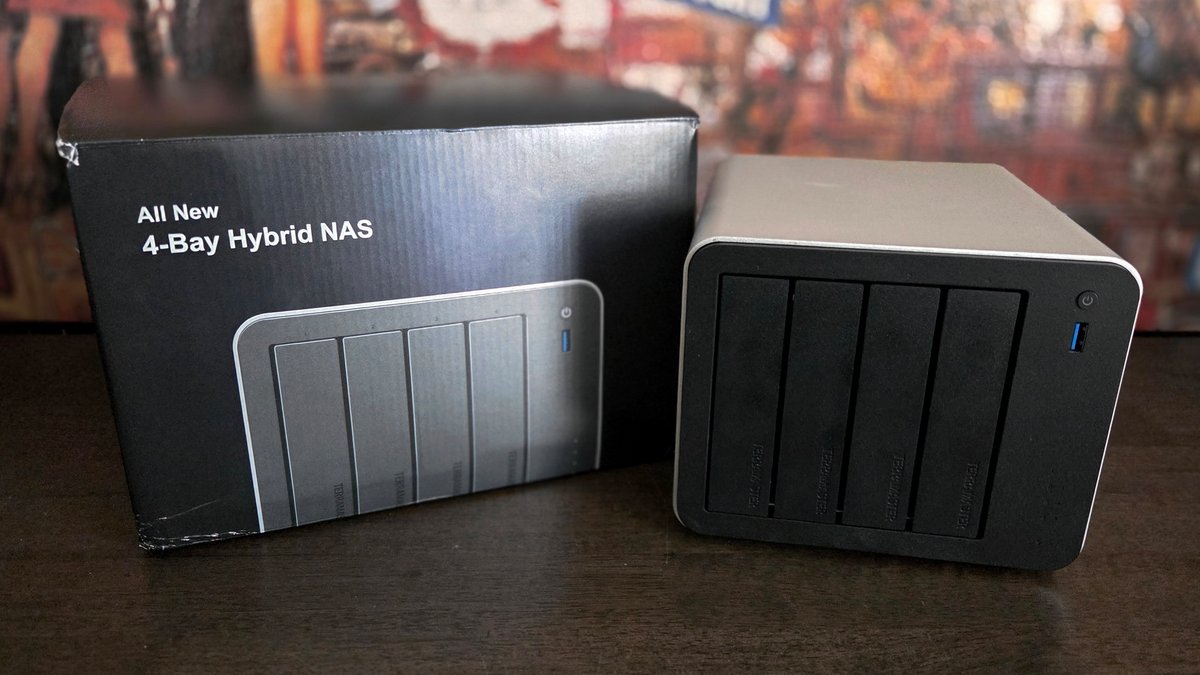
Brought to market a few weeks apart, the F4-425 and F4-425 Plus form the two faces of the same device. Terramaster aims to offer two levels of performance for similarly purposed NAS units. Structurally, they rely on the same concepts, with notable differences: the F4-425 is uniformly black and markedly more squat than our test F4-425 Plus, which is more compact and whose front panel is the only part that remains black.
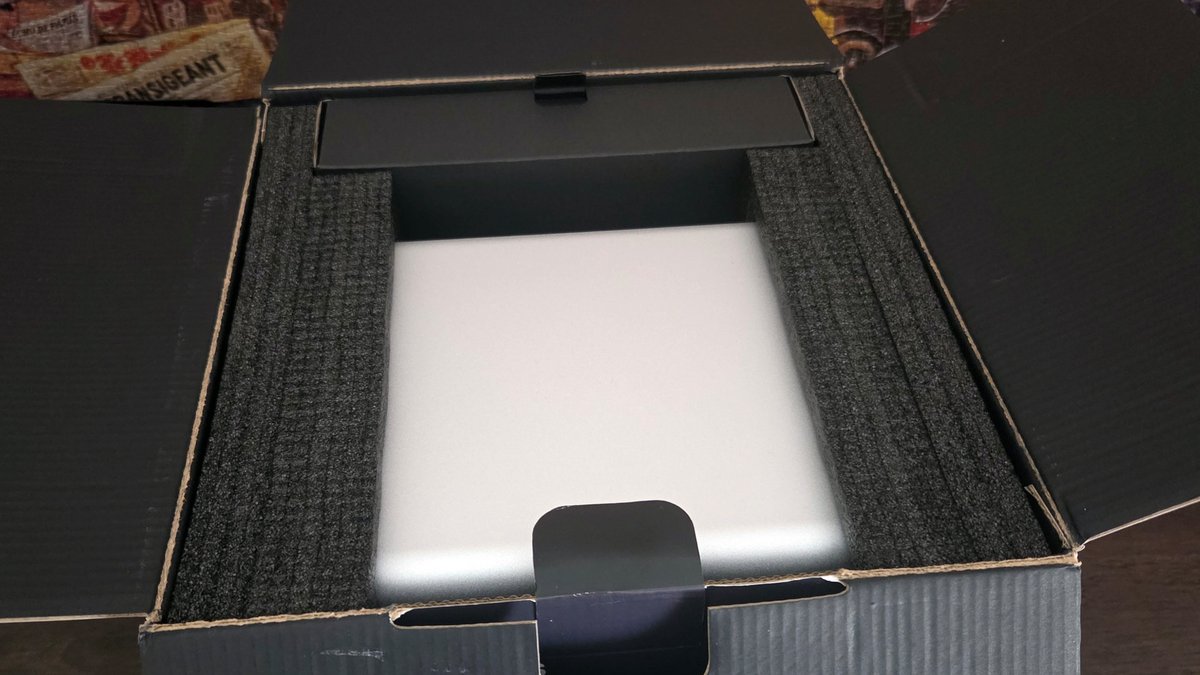
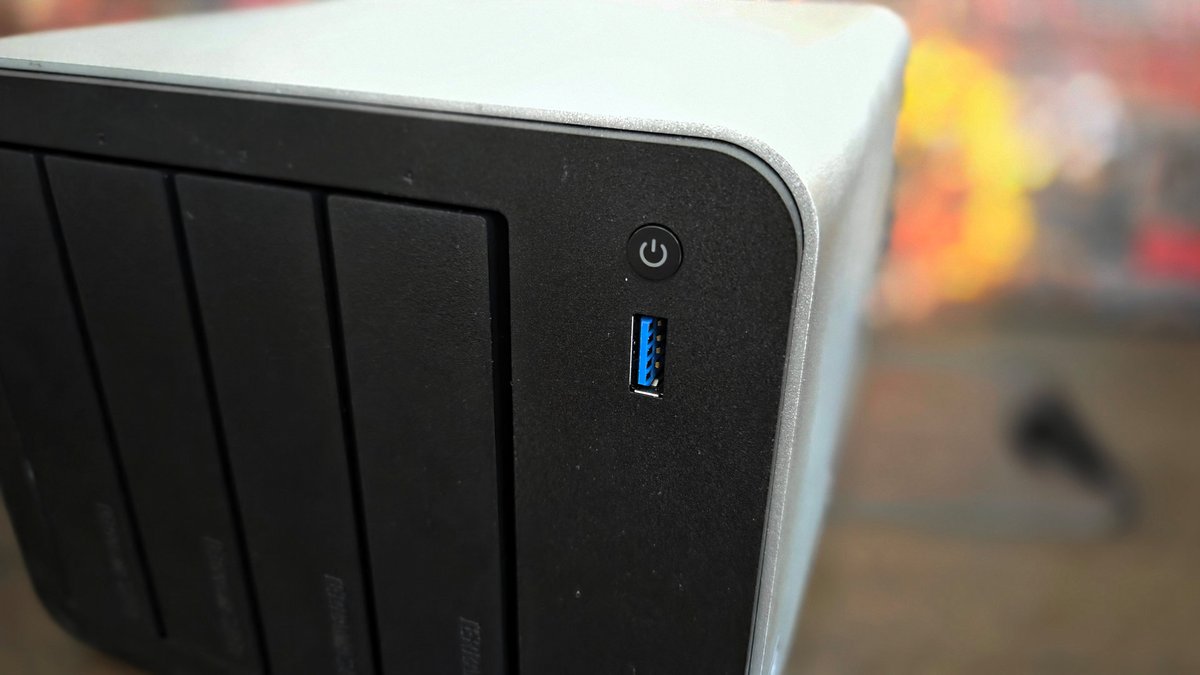
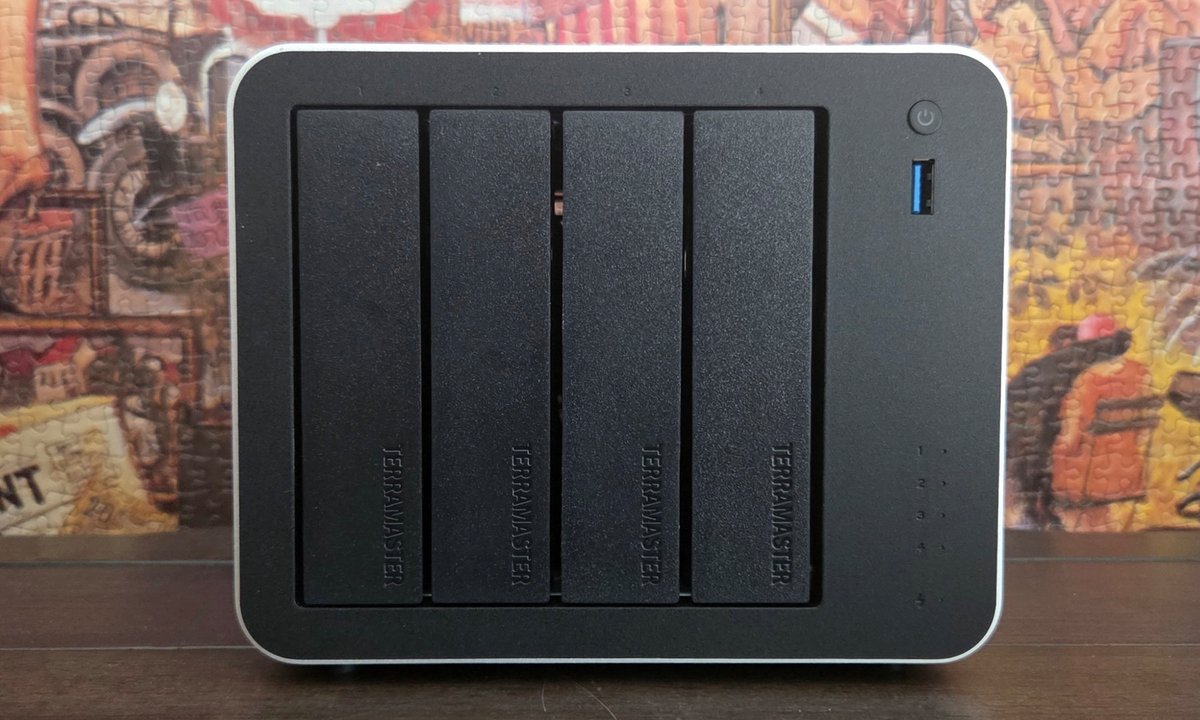
The F4-425 Plus is ultimately a small four-bay NAS that is mostly metal. It is built from extruded aluminum with a plastic front and bays, while the front panel stands out as the main access point for storage: the four sleds for HDD/SSD are easily accessible here.
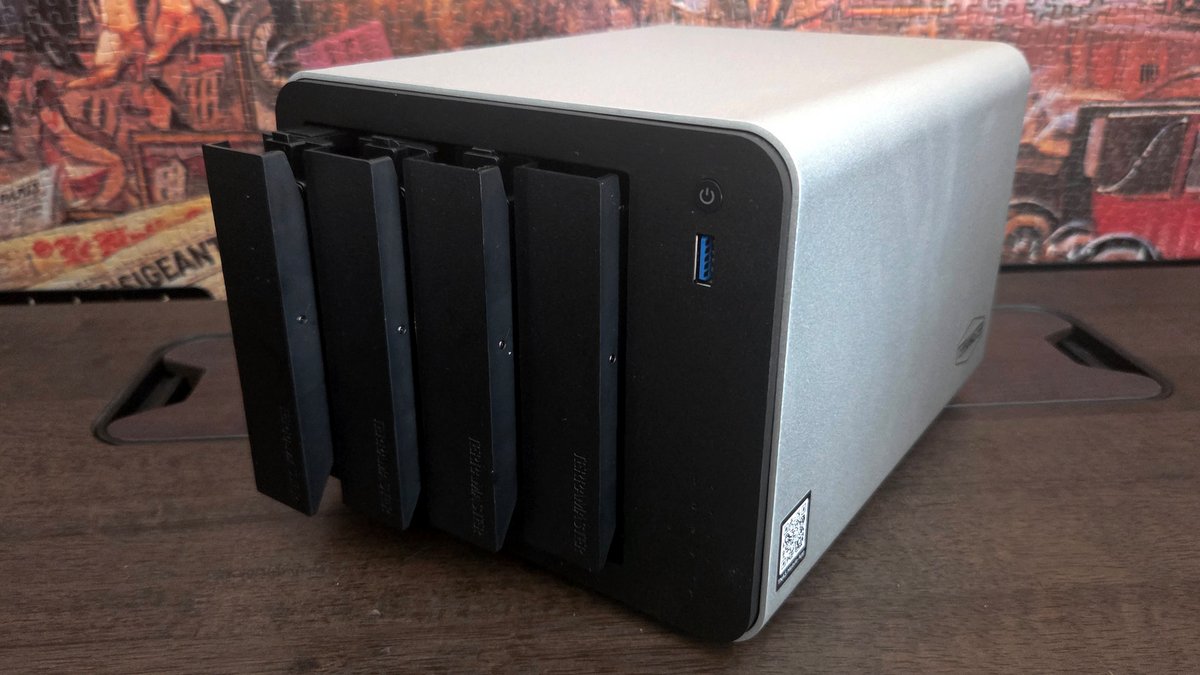
Still on the front, you will find a row of five status LEDs: one for powering the NAS and four for the storage bays. Terramaster also chose to place the power button on the front, unlike some brands that position it elsewhere on premium models. Finally, a USB Type-A port sits on the face — convenient, since it is USB 3.2 Gen 2 with speeds up to 10 Gbps.
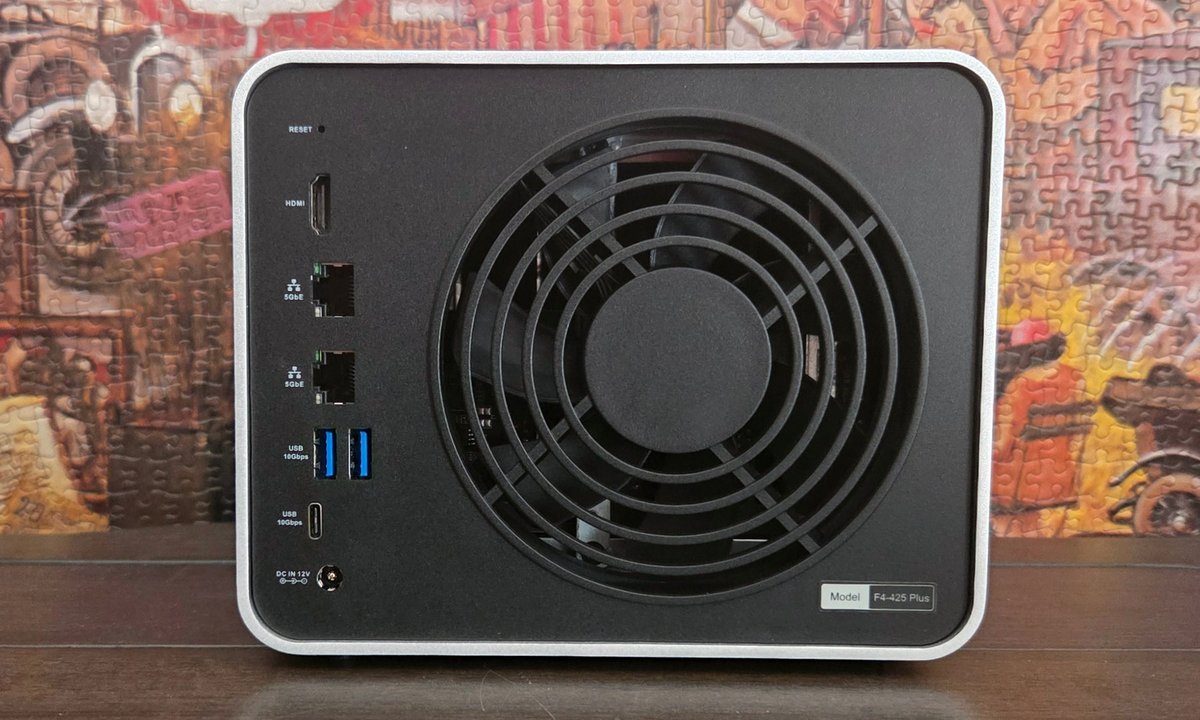
Indeed, unlike more affordable models like the F4-425, our F4-425 Plus is essentially metal. It is crafted from extruded aluminum with a plastic front and sleds. The NAS is therefore noticeably heavier than its smaller sibling, but also far more robust and should dissipate heat better, while at the back you’ll notice a single 120 mm fan.
Features and software interface
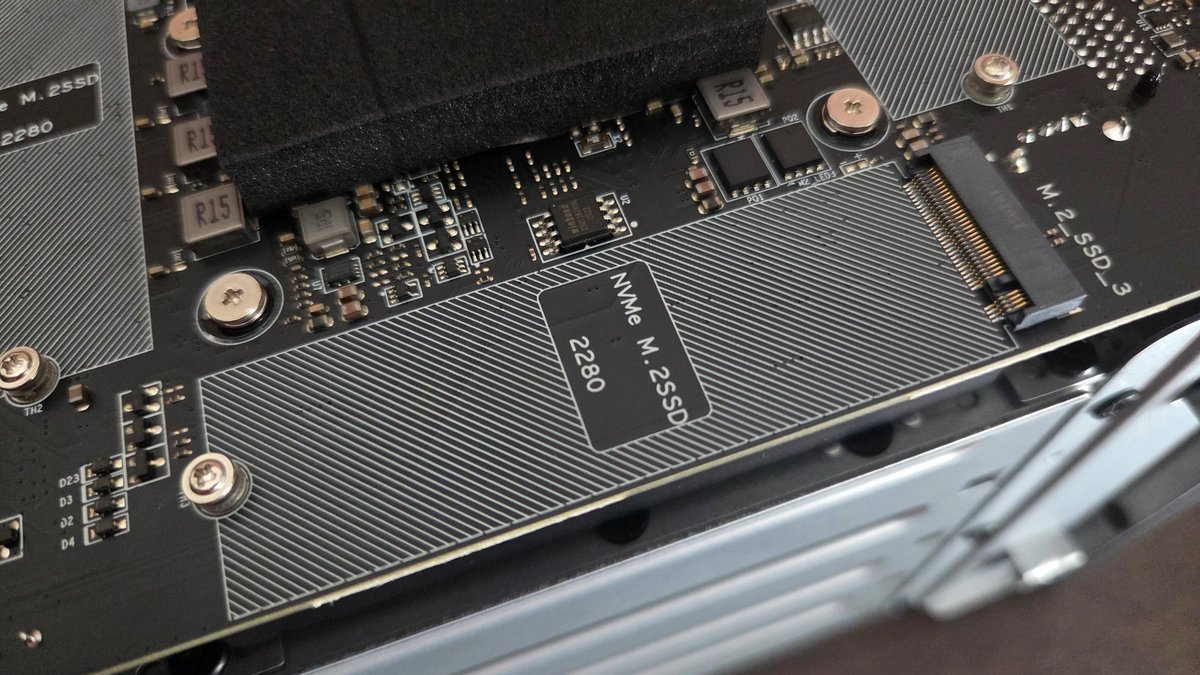
Having four bays allows Terramaster to claim a maximum capacity of 120 TB (4x 30 TB), noting that 32 TB HDDs are already available. Also, the FE-425 Plus incorporates three M.2 2280 slots (PCIe Gen 3) that can be configured as cache or storage, at the user’s discretion. Before getting into that, let’s quickly detail the rest of a setup based on an Intel solution.
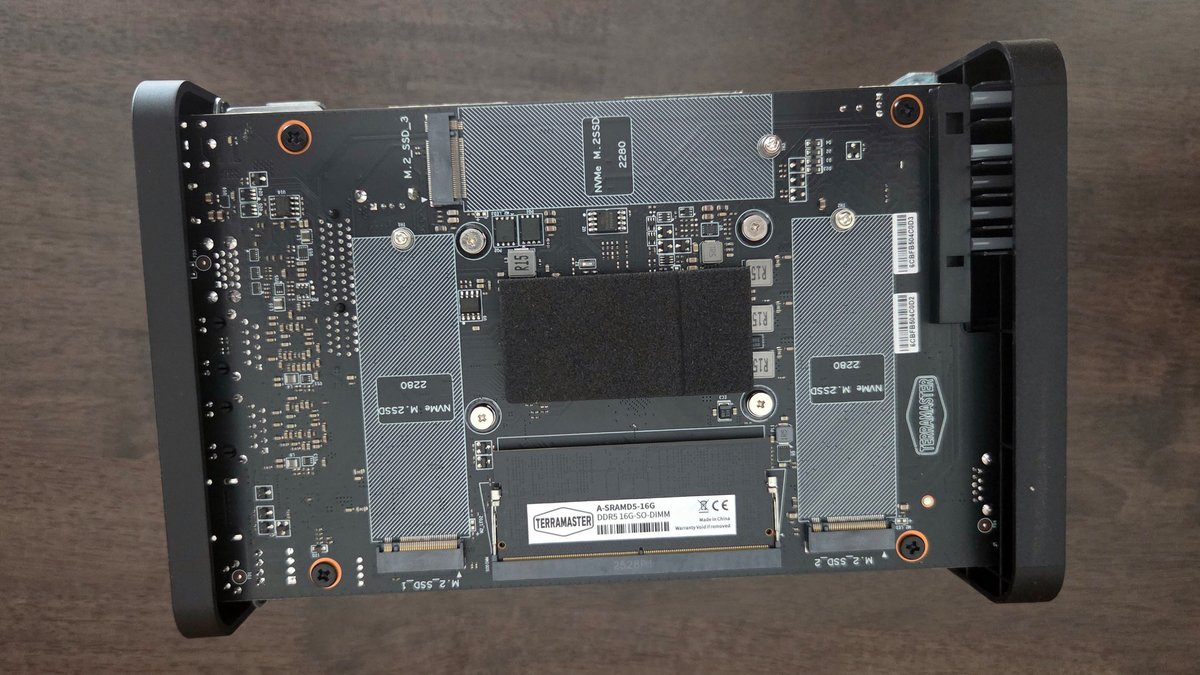
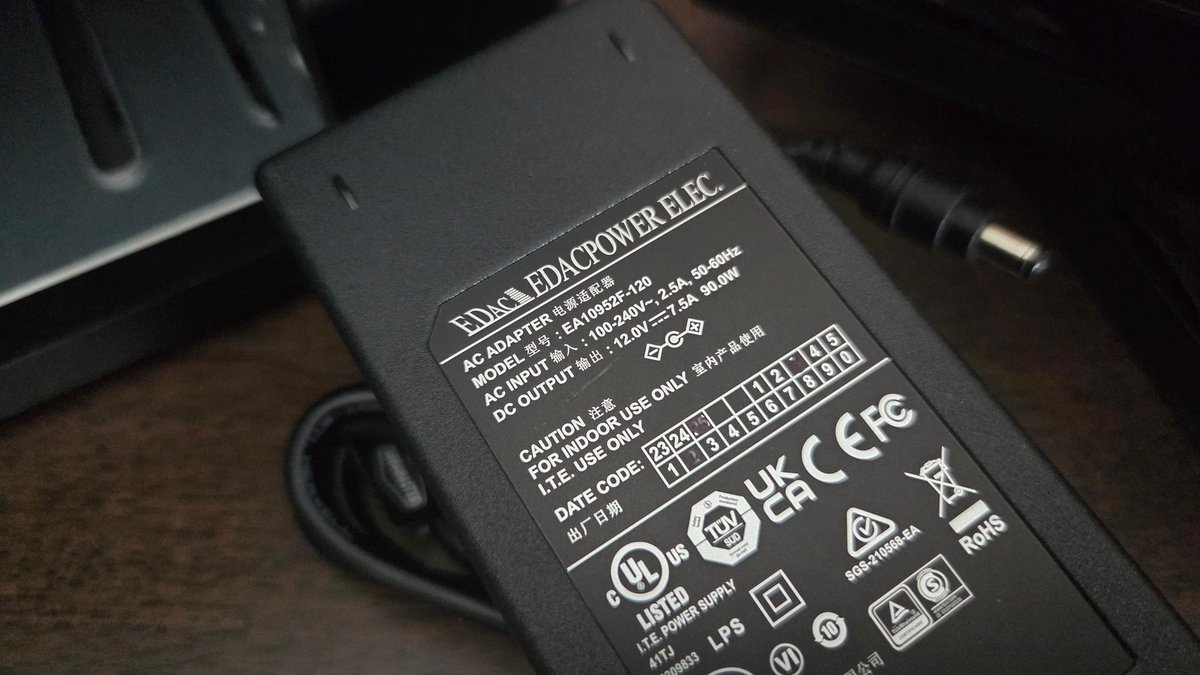
Terramaster indeed opted for a compact four-core N150 SoC with a maximum frequency of 3.6 GHz. It isn’t a power monster, but it is sufficient to handle hardware 4K decoding of VC-1, for example, and it stands out with a modest 6 W TDP. Perfect for low power consumption and reduced heat. Moreover, despite current price levels, Terramaster managed to pair it with 16 GB of RAM.
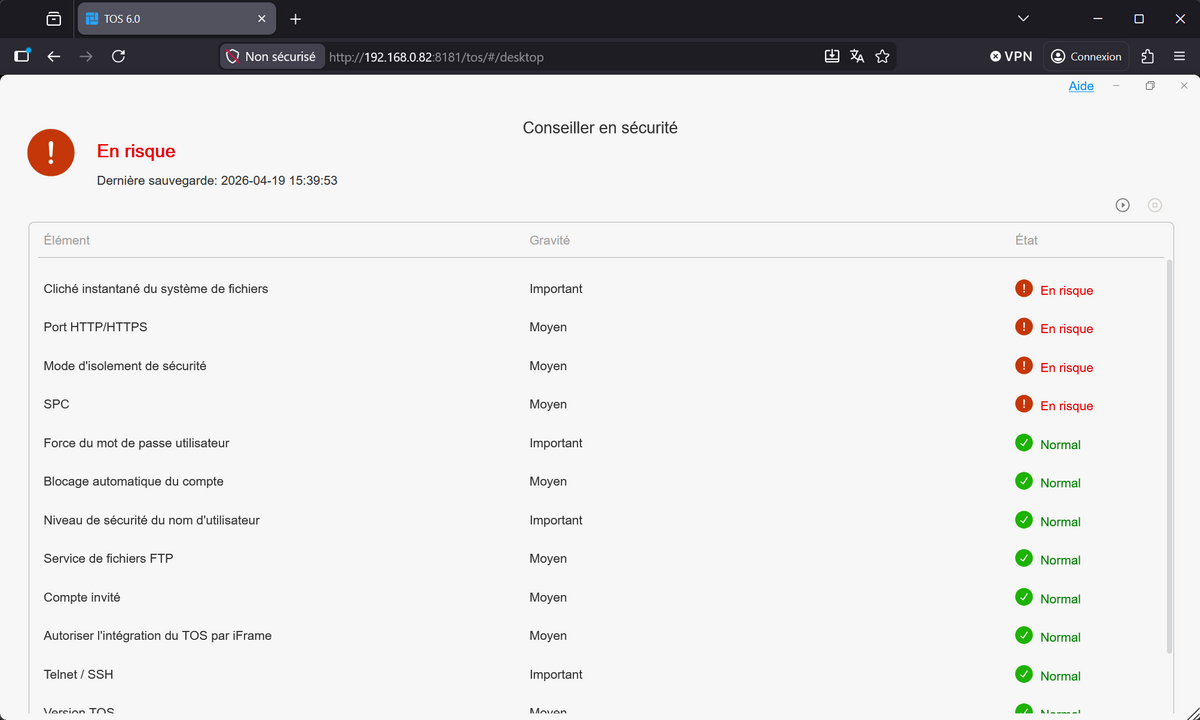
On paper, everything looks flawless at this level. Yet, despite several revisions and the move to TOS 6, some hiccups persist. For example, despite its activation, the SMB multichannel feature does not seem to provide particular gains. The wake-on-LAN function behaves similarly: in most cases it works, but at times it refuses to wake the NAS for reasons that remain unclear. Not very practical.
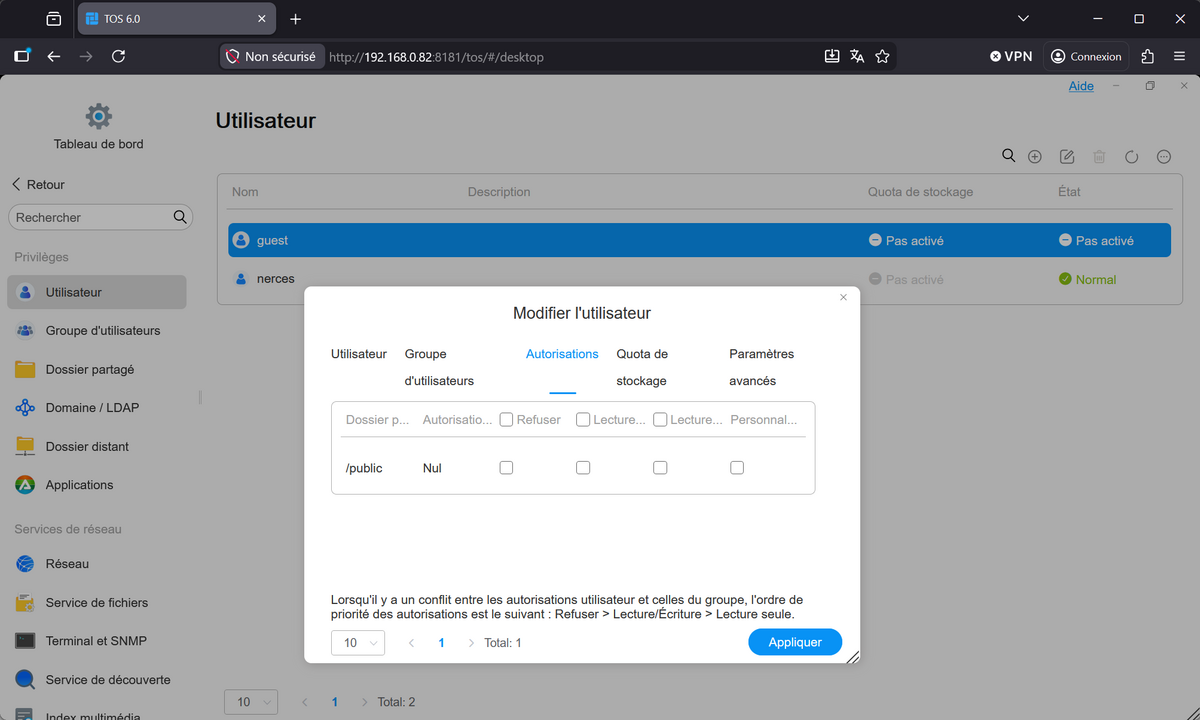
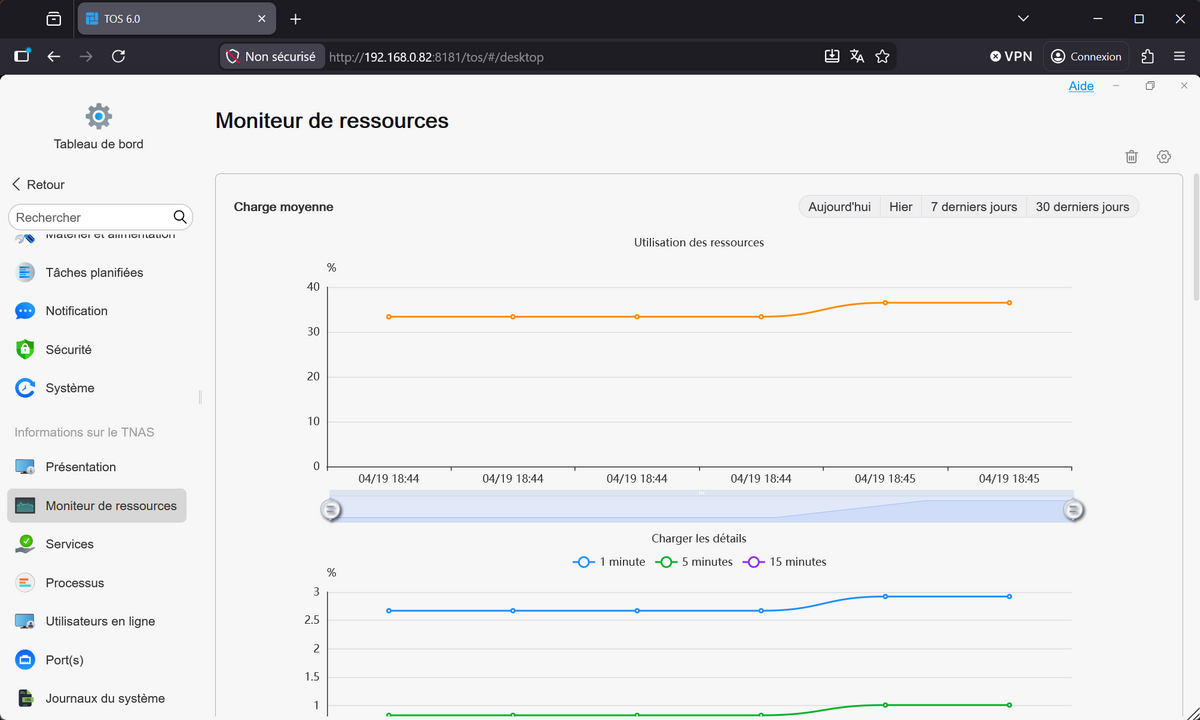
TOS generally offers good responsiveness and covers the majority of basic needs. Disk management, HDD/SSD pairing, and M.2 cache configuration pose no issues. Creating a RAID array is a bit slow, but not prohibitive. On the other hand, Terramaster’s ancillary features remain notably behind rival offerings, and the gap does not seem to be closing quickly.
In fact, unlike cheaper models such as the F4-425, our F4-425 Plus is predominantly metal. It uses extruded aluminum with a plastic front and bays. The NAS is therefore notably heavier than its smaller sibling but also significantly more robust and should dissipate heat more effectively, while at the back you can see a single 120 mm fan.
Features and software interface
With four bays, Terramaster can claim up to 120 TB of total capacity (4x 30 TB), noting that 32 TB HDDs are already available. The FE-425 Plus also includes three M.2 2280 slots (PCIe Gen 3) that can be configured as cache or storage, depending on the user’s preference. Before getting into that, let’s quickly review the rest of a configuration based on an Intel solution.
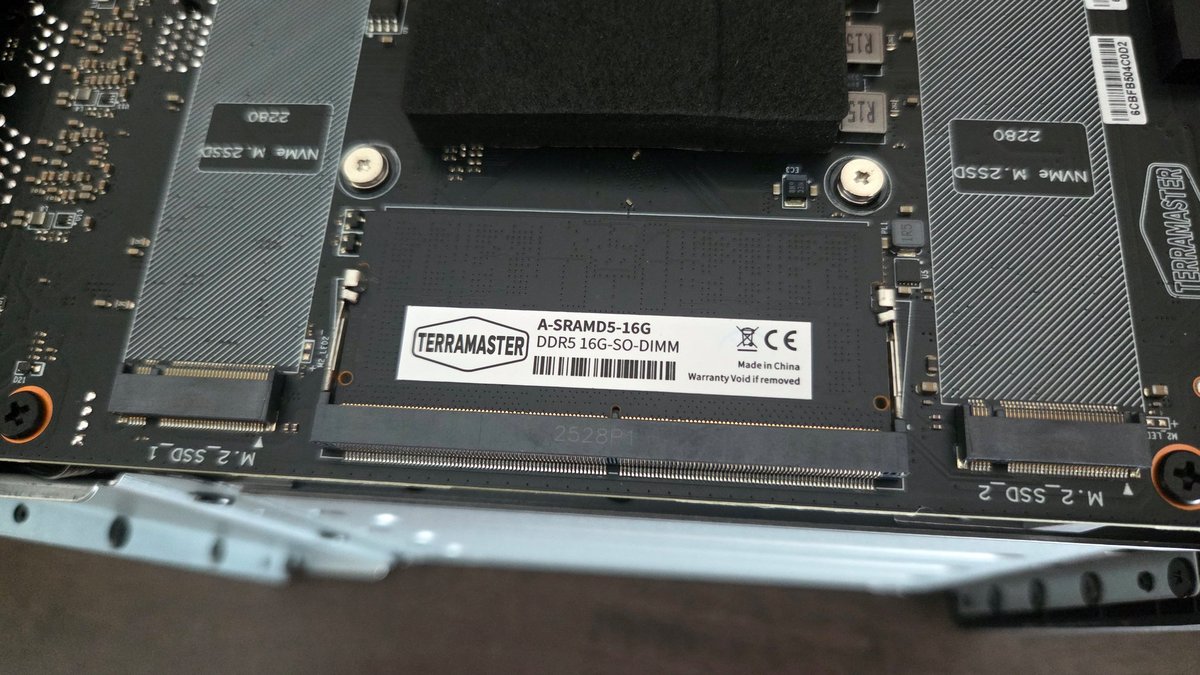
Terramaster has indeed chosen a compact four-core N150 with a frequency ceiling of 3.6 GHz. It isn’t a power monster, but it is sufficient for hardware-accelerated 4K decoding and it stands out for a mere 6 W TDP. Perfect for low power consumption and minimal heating. Moreover, despite current prices, Terramaster managed to pair it with 16 GB of RAM.
It uses DDR5 with 4800 MT/s and the 16 GB come in a SO-DIMM module. A small caveat: there is only one SO-DIMM slot on the motherboard, so to reach 32 GB you would need to replace the existing module. Still, 16 GB is plenty these days, and given prices, you’ll likely think twice before aiming for 32 GB. Note as well that access to this SO-DIMM slot is gained by sliding the NAS’s lid, which also reveals access to the three M.2 ports.
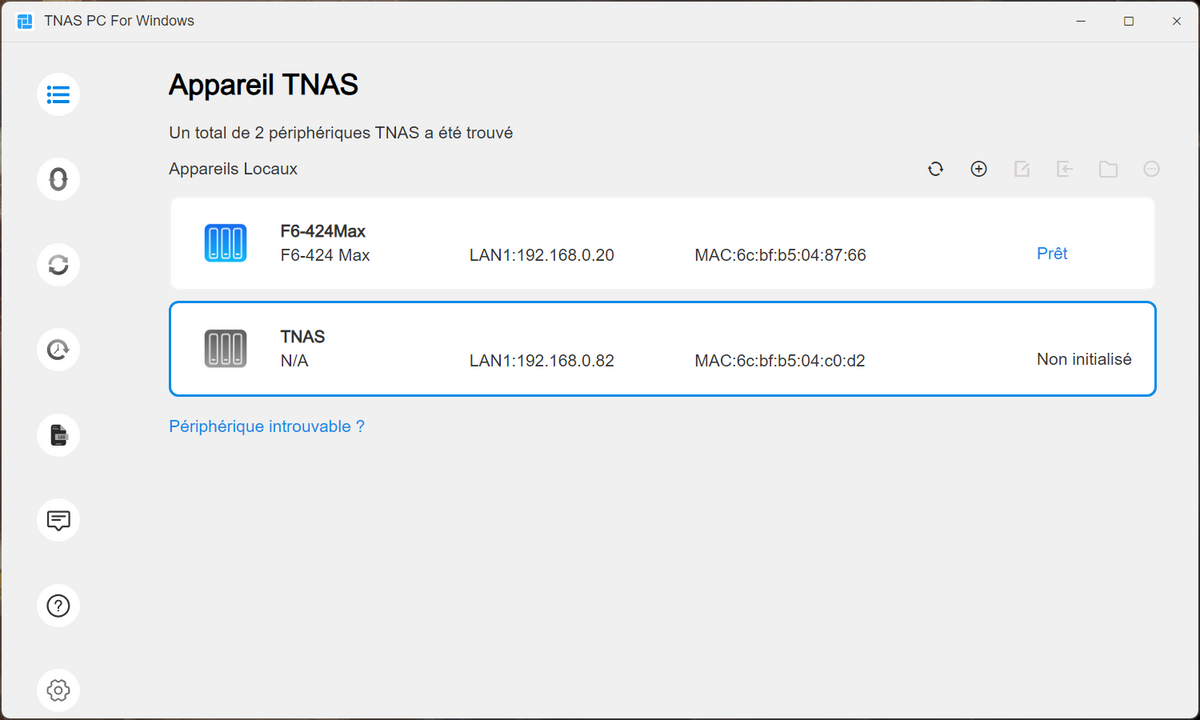
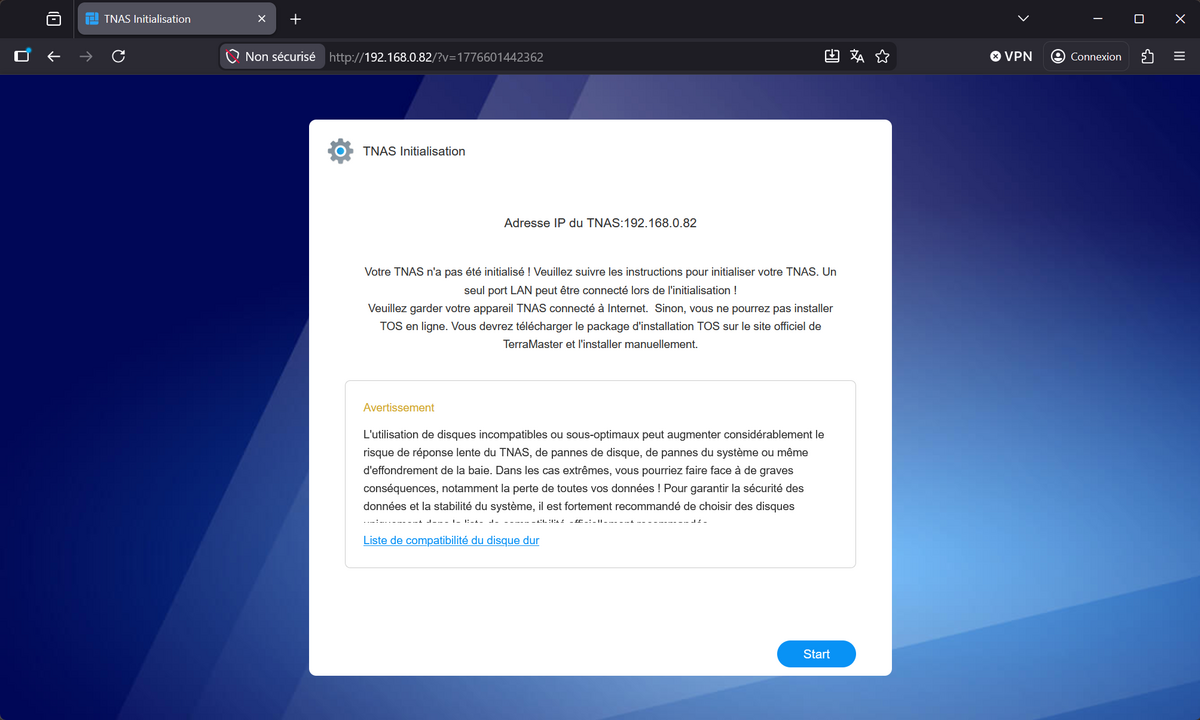
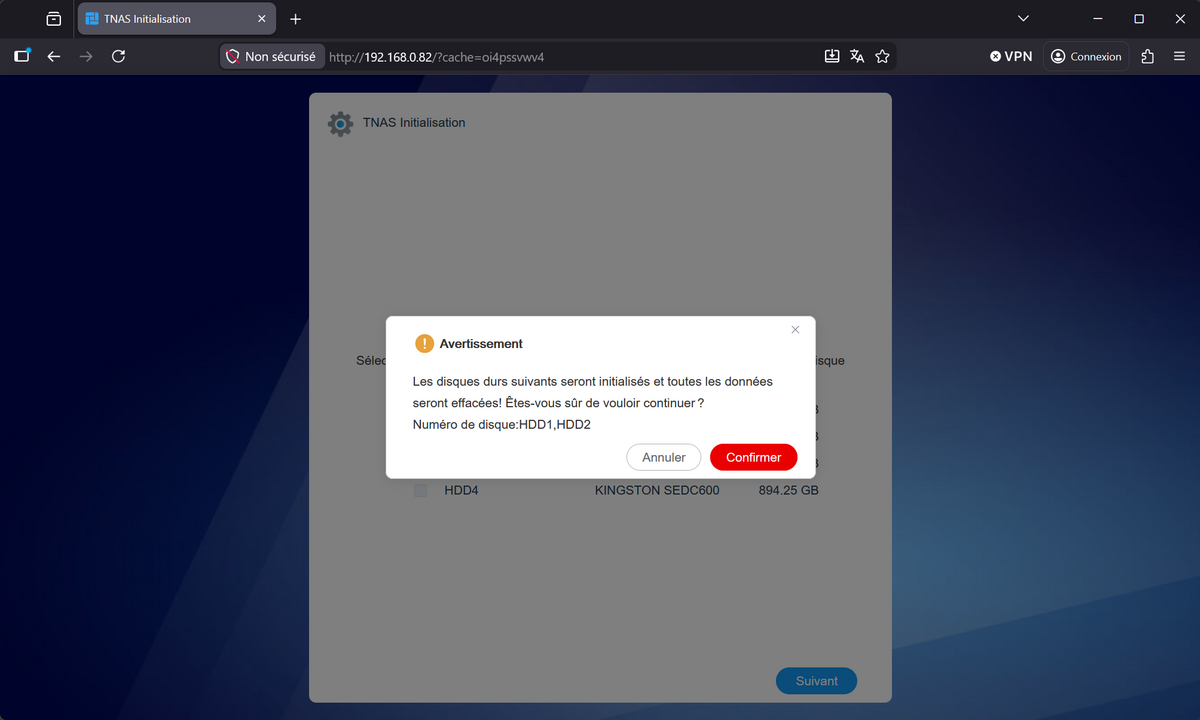
Once the disk configuration is validated, you can power on the NAS and begin its setup. Discovering the F4-425 Plus on the network is incredibly straightforward via TNAS PC — Terramaster’s companion software. There is no issue here: identification is immediate and installation proceeds with little difficulty: simply follow the guide — in good French — with its clear steps.
In practice, unlike the more accessible F4-425, our F4-425 Plus is predominantly metal. It is built from extruded aluminum with a plastic front and bays. The NAS is therefore noticeably heavier than its smaller sibling but also much more robust and should better dissipate heat from its components, while at the back you’ll notice a single 120 mm fan.
Terramaster F4-425 Plus: features and software
Even though RAM shortages have driven up the cost of some models, Terramaster continues to offer 16 GB of DDR5 RAM on its mid-range NAS. The F4-425 Plus is thus well equipped for a unit of this type, and its price/performance seems appealing.
“Seems? Indeed, if on hardware and pricing there are few complaints, Terramaster still lags a bit on software. The Intel N150, the presence of four bays with easy-access sleds, the three M.2 slots, the dual 5 GbE controllers, and the 16 GB of DDR5 are all clear strengths for a product that can be found around 650–700 euros. Unfortunately, this does not fully compensate for the weaknesses of TOS.
Let us not overstate things: the system remains usable, but the comparison with Terramaster’s rivals is painful. Synology and QNAP have years of head start, and even ASUSTOR does much better with more features and a wider array of modules. While not a scandal, we hope Terramaster will respond.
- 4 bays + 3 M.2: plenty to do!
- Dual 5 GbE network controllers
- N150 quad-core, capable
- 16 GB DDR5 out of the box
- Low heat, low noise
- TOS 6 still needs to improve
- HDMI port largely useless
- Mobile app needs work
amazon.fr
GrosBill
Cybertek
Fnac
Alternatives to the Terramaster F4-425 Plus NAS
- Well-designed, practical to use
- CPU 8-core, 8 GB RAM, 2.5 GbE
- 2x RJ45 5 GbE with link aggregation

Daniel Brooks
I cover everyday products with a practical eye, from kitchen tools and home essentials to smart gadgets and consumer trends. My goal is to help readers understand what is genuinely useful, what is worth the price, and what deserves a second look before buying.