

For years, people with oily skin have lived in a kind of quiet truce with sunscreen. The logic seemed simple: if the skin already shines, why add another cream? If it also tans easily, the sense of security grows. Fewer visible sunburns, less worry.
But that idea—so widespread yet so mistaken—is precisely what the dermocosmetics expert Gema Herrerías has been trying to debunk for some time. Her message is straightforward: oily skin ages too, it stains too, and it accumulates sun damage. “Healthy tanning doesn’t exist,” she asserts. “The mere darkening of the skin already means there has been solar aggression,” she adds.
The false sense of protection
There is a deeply rooted belief: that some skin types tolerate the sun better and therefore require less protection. Herrerías explains that this perception comes from confusing tolerance with invisible damage.
Ultraviolet radiation not only causes burns. It acts progressively and silently, accelerating collagen degradation, promoting the appearance of dark spots and increasing the risk of skin cancer. “Sun damage is cumulative—insists the pharmacologist—it’s not something that happens overnight, but builds up exposure after exposure.”
Hence their rejection of one of the summer’s most common concepts: the so-called base tan. “There is no such thing. That ‘base tan’ many people seek is, in fact, skin that is already damaged,” she explains.
The problem was never the sunscreen itself, but which one to choose
If there is one thing Herrerías is clear about, it is that most people with oily skin do not skip sunscreen out of ignorance, but due to bad experiences: heavy textures, sticky feel, or makeup that doesn’t blend well afterward. Therefore she insists that the key is not only to protect but to choose the right formula.
“Texture changes everything. If you don’t like how the product feels, you won’t use it,” she says. In her daily practice she notes that when the sunscreen adapts to the skin—gel formats or ultralight gel-creams, invisible finishes and a pore-diffusing effect—the adherence improves dramatically.
She also warns against another frequent error: focusing solely on the oil-free label. “It is not enough that it doesn’t add oil; it must help balance the skin and feel cosmetically pleasant,” cautions the pharmacist.
Sunscreens that work
Cantabria Labs – Heliocare 360º Gel Oil-Free SPF 50
Facial sunscreen SPF50 with an oil-free gel texture, specially formulated for oily or acne-prone skin. It provides broad-spectrum protection against UVB, UVA, visible light, and infrared rays while helping control shine and maintain a matte, light finish. Its formula with antioxidants and reparative agents protects against sun damage without clogging pores, making it a comfortable option for daily use, even under makeup.
SVR SUN SECURE Blur facial cream SPF50+ 50ml
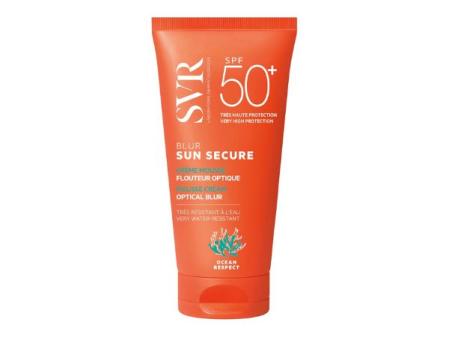
Facial sunscreen SPF50+ with a mousse texture that blends into the skin, leaving an immediate matte finish and a diffusing effect. Designed for daily use, it helps control shine, smooth the appearance of pores, and protect against photoaging thanks to its broad-spectrum protection. Ideal as the final step in a routine or as a makeup primer for combination and oily skin.
Eucerin Sun Gel-Cream Oil Control Dry Touch SPF 50+
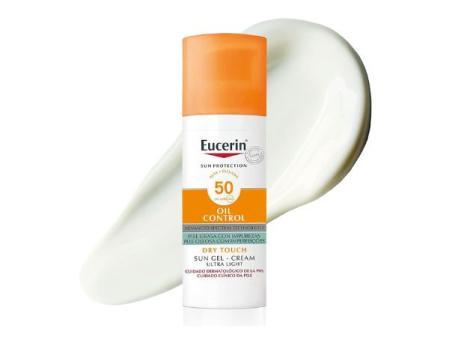
Facial sunscreen SPF50+ specially formulated for oily and acne-prone skin that offers protection against UVA, UVB, and high-energy visible light. Incorporates Oil Control technology with a lasting mattifying effect to reduce shine without clogging pores. Its lightweight, non-comedogenic, and fast-absorbing formula also helps protect the skin from oxidative stress and supports daily repair.
Cantabria Labs – Heliocare 360° capsules – Oral sun protection
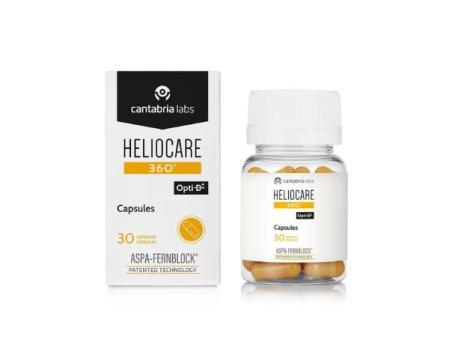
Oral sunscreen supplement that helps reinforce the skin’s defense against sun damage from within and prevent spots and photoaging. Its formula combines antioxidants, vitamins, and Fernblock® technology to increase skin resistance to the sun as a complement—not a substitute—for topical sunscreen. Easy to integrate into daily routines, it is especially indicated during periods of greater sun exposure or for skin prone to hyperpigmentation.
Bella Aurora – SPF 50+ Sunscreen – 50 ml, for combination-oily skin
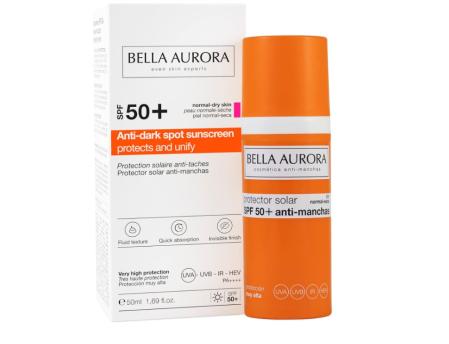
SPF50 anti-dark-spot sunscreen designed for combination and oily skin, combining high protection against UVA, UVB, and infrared radiation with depigmenting ingredients that help reduce and prevent dark spots. Its fluid, light texture with a matte finish absorbs quickly without adding oil, making it comfortable for daily use even on skin prone to shine.
Laboratorios Babé – Super Fluid Matificante fotoprotector SPF 50
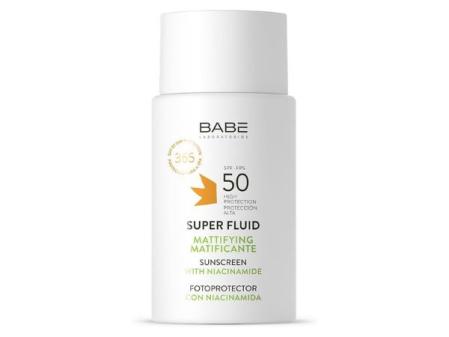
Facial sunscreen SPF50 with a mattifying finish, especially indicated for combination, oily, or acne-prone skin. Its oil-free formula with niacinamide helps regulate excess sebum while protecting against UVA, UVB, blue light, and infrared radiation. With a super-fluid texture and rapid absorption, it hydrates without adding oil, leaving the skin comfortable, even, and ready for makeup or daily wear.
SPF 50 yes, but it’s not the most important
Consumers have learned to look at the SPF number as if it were the only protection indicator. Yet Herrerías nuanced that idea. For daily use she recommends SPF 50 or 50+, but reminds that the true value lies in broad spectrum. That is, the product’s ability to guard against different forms of solar radiation that act even when we don’t feel heat or see redness.
“We need protection against UVB, which causes burning, but also against the long UVA rays responsible for aging and collagen destruction,” she notes. Added to that is visible light—especially relevant for skin with spots—and infrared radiation A, implicated in oxidative stress.
A technical detail she regards as key is the near-370 nanometer wavelength, an indicator of coverage against the deepest and most persistent UVA rays.
One of the points that often surprises her patients, she says, is discovering that protecting only the face isn’t always enough. “The skin functions as a global organ,” she explains. Sun exposure on the arms, décolletage, or legs can trigger biological signals that stimulate melanocytes and worsen facial hyperpigmentation even when the face is protected.
That’s why she advocates for what she calls an integrated cosmetics approach: daily photoprotection combined, when appropriate, with oral antioxidants and habits that reduce skin inflammation. “Skin also takes care of itself from within.”
The mistake that ruins any sunscreen
Paradoxically, the most common error isn’t the chosen product but how it’s applied. Many people use insufficient amounts or limit the sunscreen only to visible areas. Herrerías emphasizes that the face doesn’t end at the chin: the neck and facial contour form part of the same aesthetic unit and should be protected equally.
Applying it every morning, waiting a few minutes before makeup, and reapplying during direct exposure remain basic gestures that, she reminds, make a real difference. “A poorly applied SPF 50 can behave like a much lower SPF.”
Two common excuses that the expert debunks
The first occurs indoors. Working by a window or driving for long stretches also exposes the skin to radiation capable of accelerating aging and staining. Glass blocks much of the burning radiation but allows UVA, visible light, and infrared radiation to pass through.
The second has a name: vitamin D. “Vitamin D has become the major justification for not using sunscreen,” she says. However, she notes that during summer short exposures are usually enough to synthesize it, and in winter production decreases even if we try to stay out longer. When there is a deficiency, the solution is to consider supplementation under medical supervision, not to give up protection.
Oily skin also ages
Herrerías’ final message moves away from a purely cosmetic discourse and places health at its core. For decades it was believed that oily skin aged better—and to some extent that is true: higher sebum production can delay the onset of fine lines. But that doesn’t make them immune to photoaging or to dark spots.
“Sun protection is not an optional or seasonal gesture,” she concludes. “It is the most important anti-aging treatment there is.” And perhaps that is where the real paradigm shift lies: it isn’t about convincing oily-skinned people to wear sunscreen, but showing them that today there are formulations designed precisely for them.