

In recent years, at-home LED dental whitening kits have become one of the standout products in aesthetic self-care. They are sold online, promise quick results and a whiter smile in a matter of days. But what is really behind this trend? Do they work? Are they safe? And how do they differ from a professional whitening performed in a clinic?
To answer these questions, we spoke with Dr. Fulvia Kucharski, a dentist specializing in restorative and aesthetic dentistry, who analyzes with medical rigor one of the most demanded, and also most trivialized, treatments of recent times. The popularity of these devices is not casual. According to Dr. Kucharski, they are products that “are very practical, easy to use, with clear instructions and easily accessible.” Added to that is an aggressive marketing strategy, especially on social media, where they are presented as quick and affordable solutions.
“The growing social concern about dental appearance has greatly boosted their visibility,” adds the specialist. A white smile has become synonymous with health, youth, and attractiveness, which explains why more and more consumers are encouraged to try these at-home treatments.
A dental whitening product you can buy on Amazon
Bledras Professional Whitening Kit
At-home LED dental whitening kit, aimed at those seeking a complete in-home solution. Includes whitening and soothing gels, adaptable silicone trays, and LED light for sessions of 15 to 20 minutes. It is formulated to act progressively on stains from coffee, wine, tea, or tobacco. Its hypoallergenic gel includes a soothing option to alleviate possible discomfort. Not suitable for children, pregnant women, or for prosthetic or ceramic teeth.
Is its efficacy real?
“Yes, they work, a bleaching effect can be produced,” acknowledges the doctor, but with important nuances. By regulation, home-use products contain much lower concentrations of bleaching agents, which implies slower, gradual, and limited results.
“The true bleaching effect will depend on the type of peroxide, its concentration, contact time, and the type of enamel, not on the light,” she emphasizes. And she is firm on this point: “In no case are their effects comparable to those of a health treatment performed under professional supervision.”
Home whitening vs. clinic whitening
The difference between professional whitening and at-home whitening goes far beyond price or speed. In the clinic, explains Dr. Kucharski, whitening agents are used at higher concentrations, which requires prior diagnosis, technical control, and direct supervision by a dentist.
“Results are usually almost immediate,” she notes. Typically, three to four short sessions with high-powered LED light are performed in a single visit, which in some cases is complemented with a home treatment using trays, but always under professional guidance.
Home-use kits, on the other hand, are restricted precisely because they are applied without diagnosis or medical follow-up. “The lower concentration aims to minimize risks such as tooth sensitivity or gum irritation,” she explains, though at the cost of lower efficacy.
How whitening works
One of the main selling points of these kits is the LED light. However, its role is often overstated. “LED light by itself does not whiten,” clarifies the doctor. “Its function is to accelerate the gel’s action on the enamel, but it is not essential,” she adds. “The real whitening agent is the gel,” she insists, “the one that contains hydrogen peroxide or carbamide peroxide, capable of penetrating the enamel and acting on stains through an oxidation process.”
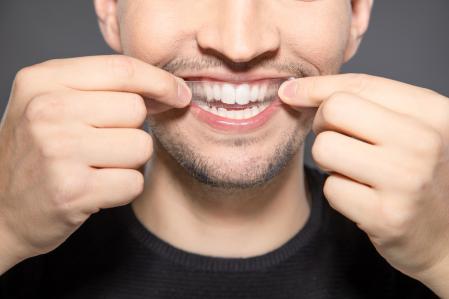
From a chemical standpoint, the active ingredient is the same in both at-home kits and clinical products. The difference lies in concentration, formulation, and degree of control. In over-the-counter products, concentrations are low and formulas simpler. Some even substitute peroxide with alternatives like PAP, a substance effective and with lower risk potential.
“The peroxide concentration is the determining factor for both the results and the safety of the treatment,” says Dr. Kucharski. The higher the concentration, the greater the efficacy… and the greater the need for professional supervision. “It would be a mistake not to view dental whitening as a health procedure.” Before undergoing any treatment, a prior examination is essential to assess the enamel, gums, the presence of cavities or prostheses.
What are the side effects of dental whitening?
Poorly indicated or poorly executed whitening can cause persistent tooth sensitivity, gingival irritation, and other adverse effects whose progression cannot be predicted without proper clinical assessment.
Another major myth is that whitening is suitable for everyone. It is not. There are clear contraindications: pregnancy, lactation, under 16 years of age, uncontrolled periodontal diseases, enamel alterations, or deep stains such as those caused by tetracyclines. “This is not a procedure that can be applied universally, without individualized medical guidance,” emphasizes Dr. Kucharski.
So, what does a specialist recommend?
For those who are undecided between buying an online LED kit or going to a clinic, Dr. Kucharski sums it up like this: “Dental whitening is not a cosmetic procedure, but a health care act.” Her recommendation is clear: visit the dentist, discuss the desire to improve tooth color, and jointly assess the most appropriate option according to the case, available time, the type of enamel, and realistic expectations.
“More and more patients, even young ones, are asking about these kits. Many have already tried them, and what matters in these cases is that they are informed and know what they can and cannot expect from each option,” she concludes.
Other whitening products you can buy on Amazon
EASY SMILE 16X LED Dental Whitening
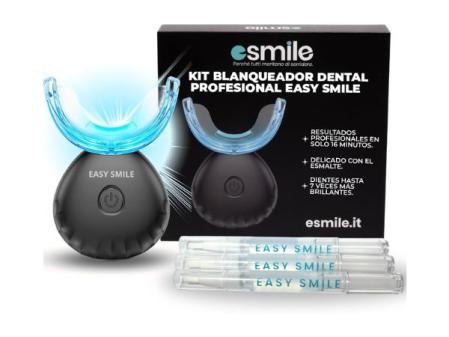
Designed for those looking to improve their tooth shade from home in a straightforward way. It combines whitening gel and blue LED light to target common stains from coffee, wine, foods or tobacco. Includes a wireless device with an automatic 16-minute timer, designed for comfortable, hassle-free use. Includes gel pens and a rechargeable system, with safety certifications. Promises visible results from the first applications, always with continued use.
Uwelliky Dental Whitening Kit
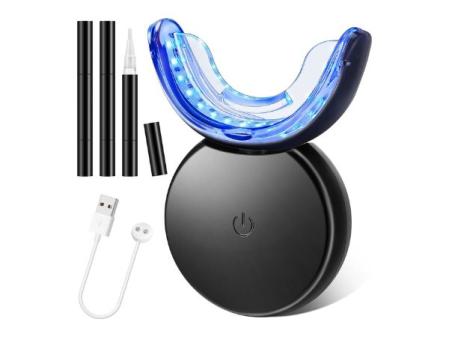
Portable dental whitening kit designed for simple and comfortable daily use. Combines whitening gel and a device with automatic 16-minute shutdown, allowing treatment of common stains from coffee, wine, tobacco, or foods. Its formula is designed to be gentle on enamel and gums, minimizing sensitivity. The compact design facilitates use at home or during travel. Not recommended for children or pregnant women and promises visible results after a week of continued use.
Celakeety Dental Whitening Strips

At-home dental whitening strips designed for those seeking a simple treatment without devices. Includes 56 strips for 28 sessions, with daily applications of 15 to 30 minutes. They act on stains from coffee, tea, wine, or tobacco and promise progressive results in 7 to 14 days. Its formula is designed to minimize sensitivity and be kind to enamel and gums. They include a mint flavor for a refreshing after-use sensation.
Halercay Dental Whitening Kit
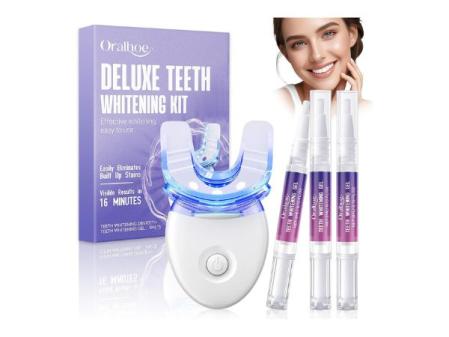
Gentle-use dental whitening product, designed for people with a regular dental hygiene routine. Its formula is designed to start whitening without causing discomfort after use. With continued application, it helps to reduce common stains from coffee, tea, or pigmented foods, progressively improving the tooth shade. Its practical format makes it easy to integrate at home as well as during travel or workdays. Maintenance use helps to preserve brightness and delay the reappearance of stains.