
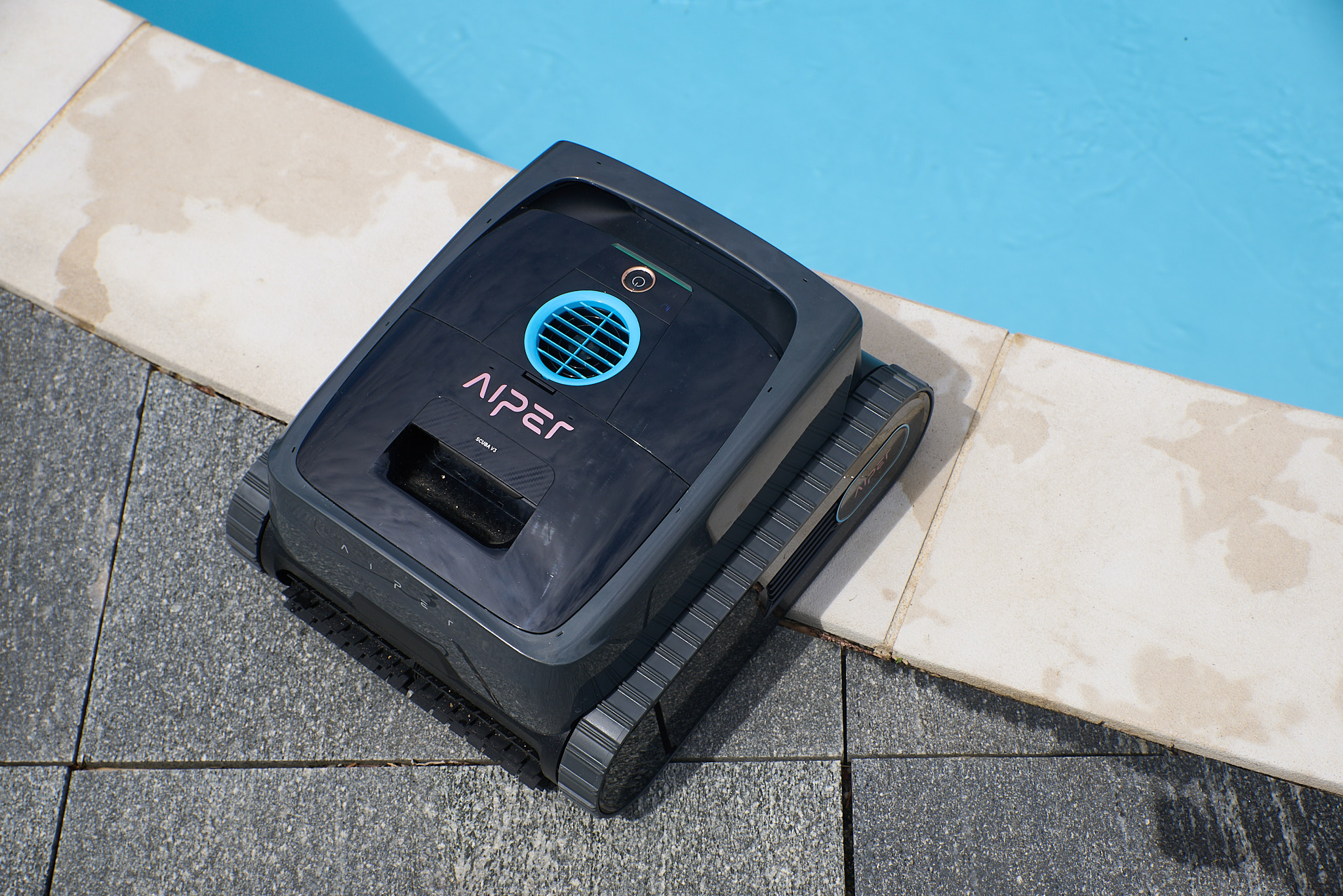
Aiper is arguably the boldest name in the compact world of pool-cleaning robots: every year the lineup is refreshed, with models that are frequently sold for just one season. The era of the simple, brainless machine (Seagull Plus) is long behind us, and that was barely in 2023! This year’s novelty is artificial intelligence, embodied by the Scuba V3, a robot that seems to know better than you what needs to be done in the water. So, marketing hype or a real advance?
9 / 10
- Compact and fairly light (8.2kg)
- Sits back to the surface
- Fully automatic mode
- Waterline mode always at the top
- Micromesh filter still quite long to clean
- Cannot stay just ten minutes on the surface when finished
- Long recharge time (4 to 5 hours)
Unboxing Aiper Scuba V3: a pleasant surprise
The Scuba V3 is a robot of the kind you like: compact and almost light at 8.2 kg, the type of machine you can easily carry to the pool for frequent use. This mid-range model doesn’t try to offer a skimmer option, which is good for the budget but also for weight and bulk. The Aiper aesthetic shows through with glossy black, blue, and a few copper accents. Yet there are also sturdy tracks and thick rollers at the ends, clues to solid grip and effective cleaning, as we’ll see.
The dual basket (normal filtration 180 μm and micrometric 3 μm) has become a staple at Aiper, but you still encounter the infamous micromesh typical of Aiper, which we dread every time it needs cleaning. This year, however, we’re tempering our criticisms a bit since this time it’s just a flexible strap that wraps around a rigid frame (sadly still before the main filter). The choice to place microfiltration upstream of the standard filtration remains odd, forcing a first pass before fitting the finer filter. Fortunately, it can now be removed fairly easily and flipped to pass under the jet, or even sent to the washing machine!
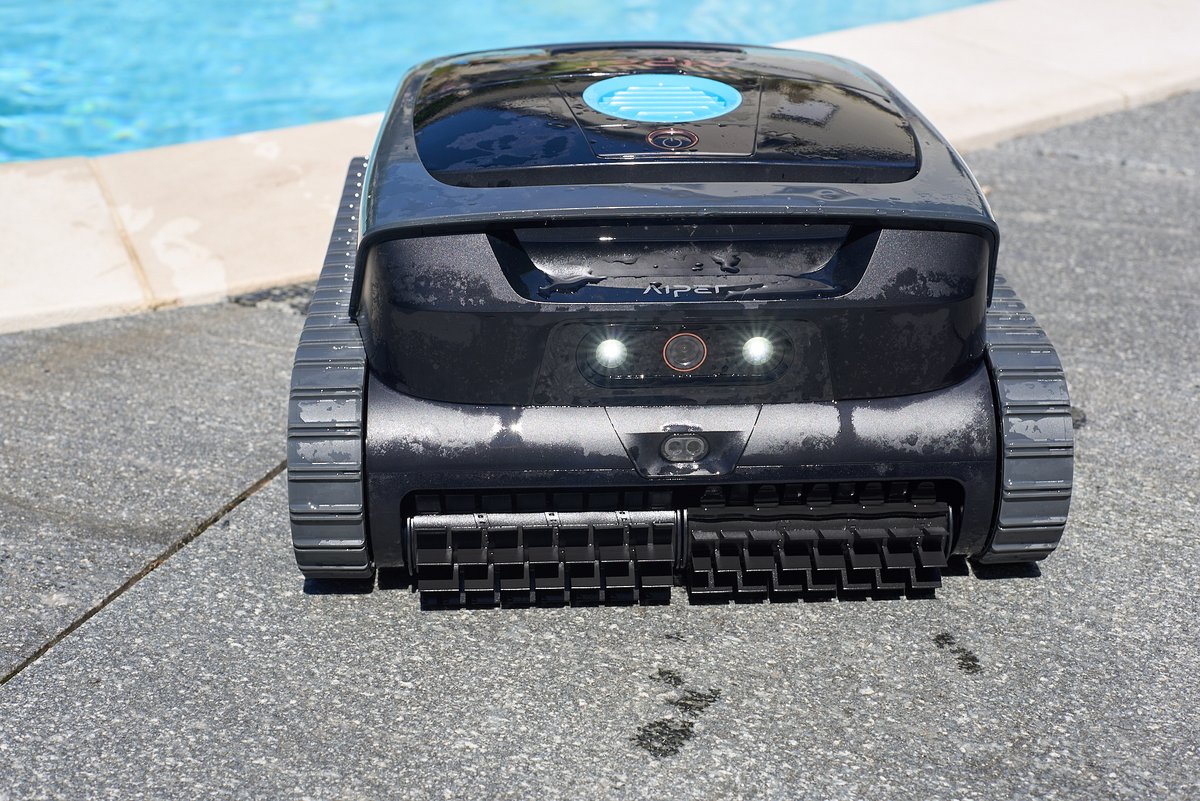
The filtration basket holds a standard volume of 3.5 liters, a size unsurprising when its main rival Beatbot has moved to a 6-liter basket. Still, there’s no complaint, as this is more than enough to maintain solid suction for several days in a medium-sized, reasonably dirty pool.
The brand has abandoned the early-season large-mesh basket that appeared with the X1 range. A quick dip of the net remains the most effective for large debris at the start of the season.
A nice surprise in the box: Aiper includes a simple, practical charging station that folds flat. Those who love docking stations will get what they expect, and those who want to save storage space during winter won’t complain about the compact base. It’s well thought out.
Test Scuba V3: A pool that stays clean with a robot you forget
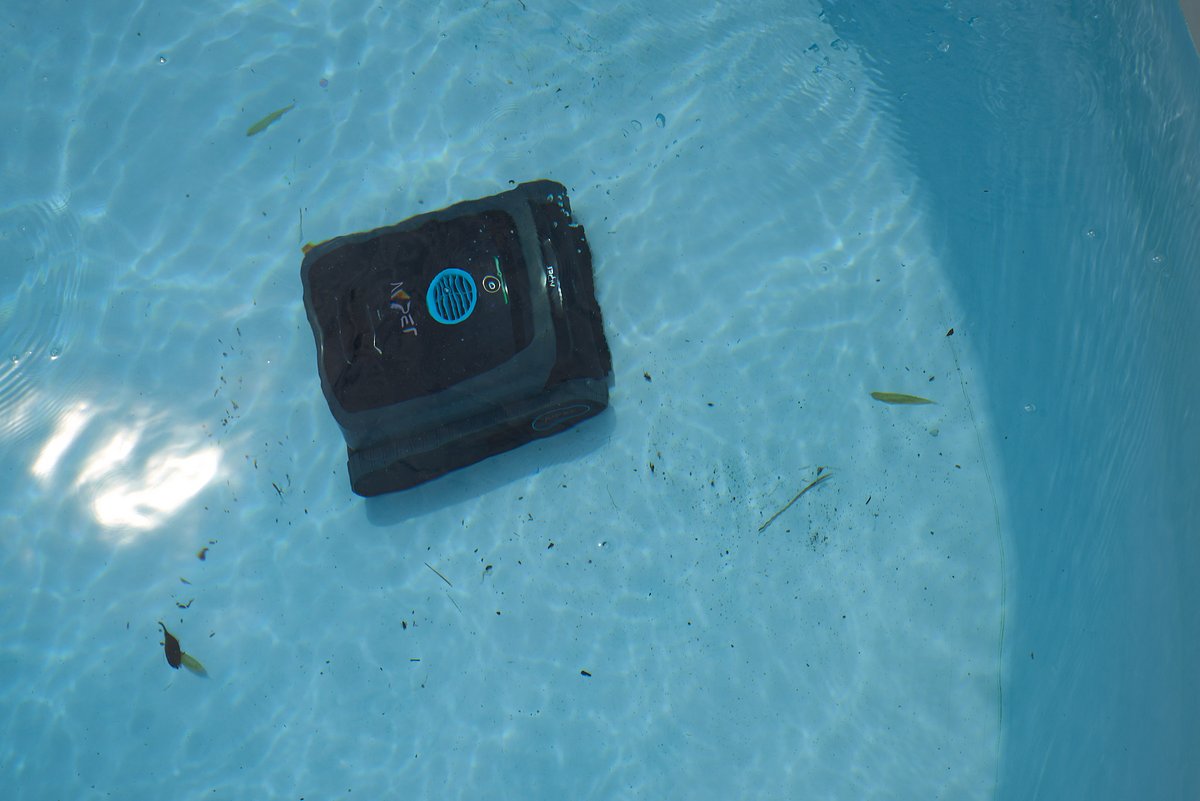
Externally, the Scuba V3 looks much like its predecessors. It’s in its operation that the changes arrive. Three modes exist: the classic mode, where you take the robot out as needed; the scheduled mode, where it works at regular intervals; and the real novelty, the IA Navium mode. With the Scuba V3, Aiper offers a third path: you leave the robot at the bottom of the pool, as in scheduled mode, but thanks to AI and its camera, it will decide for itself whether there is much work to do and learn where debris tends to accumulate most often.
Everything is connected to weather data to tailor cleaning based on meteorological conditions (if it’s raining, you generally want a bit more cleaning than on sunny days). The robot surfaces after each cleaning, which allows it to connect via Wi-Fi to get weather updates, and to send a notification that the day’s cleaning was completed. This daily feedback is quite handy: even if you forget the robot, you still get a reminder that everything is fine or that it needs charging.
Bonus: since the robot has a camera to detect debris, Aiper did well here: two powerful LED headlights illuminate the pool if cleaning starts early in the morning, when lighting is poor and a cover still covers the pool. They’ve thought of everything at Aiper!
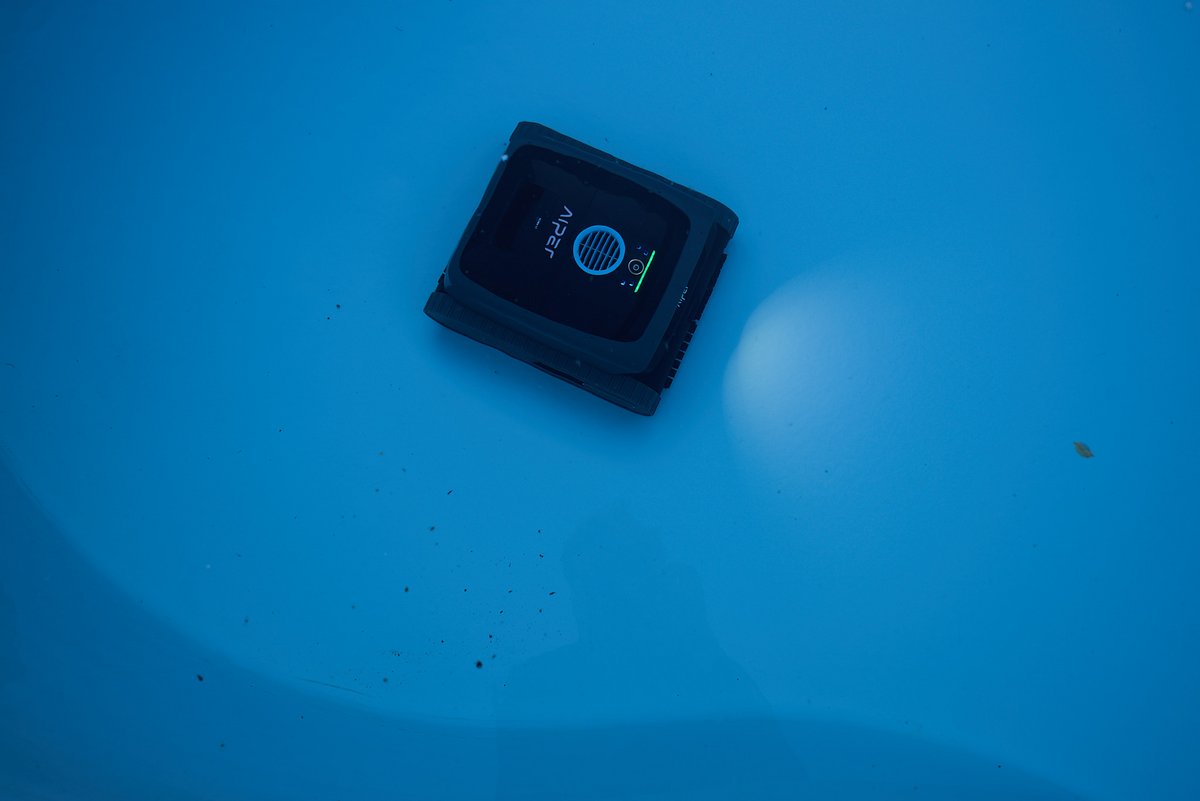
In the end, the robot adjusts its cleaning duration to the pool’s condition, and you end up with a clean basin every day. However, its trajectories are far from optimized: you’d expect it to sprint toward obvious debris clusters, but it moves quite erratically. We hope official updates will make its movements more logical, further boosting its autonomy.
Aiper still stands out with its waterline mode: the robot climbs to the waterline and scrapes the wall as it moves laterally until it detects a wall change. It’s well executed and more effective than machines that descend each time, which is the case for the entire competition.
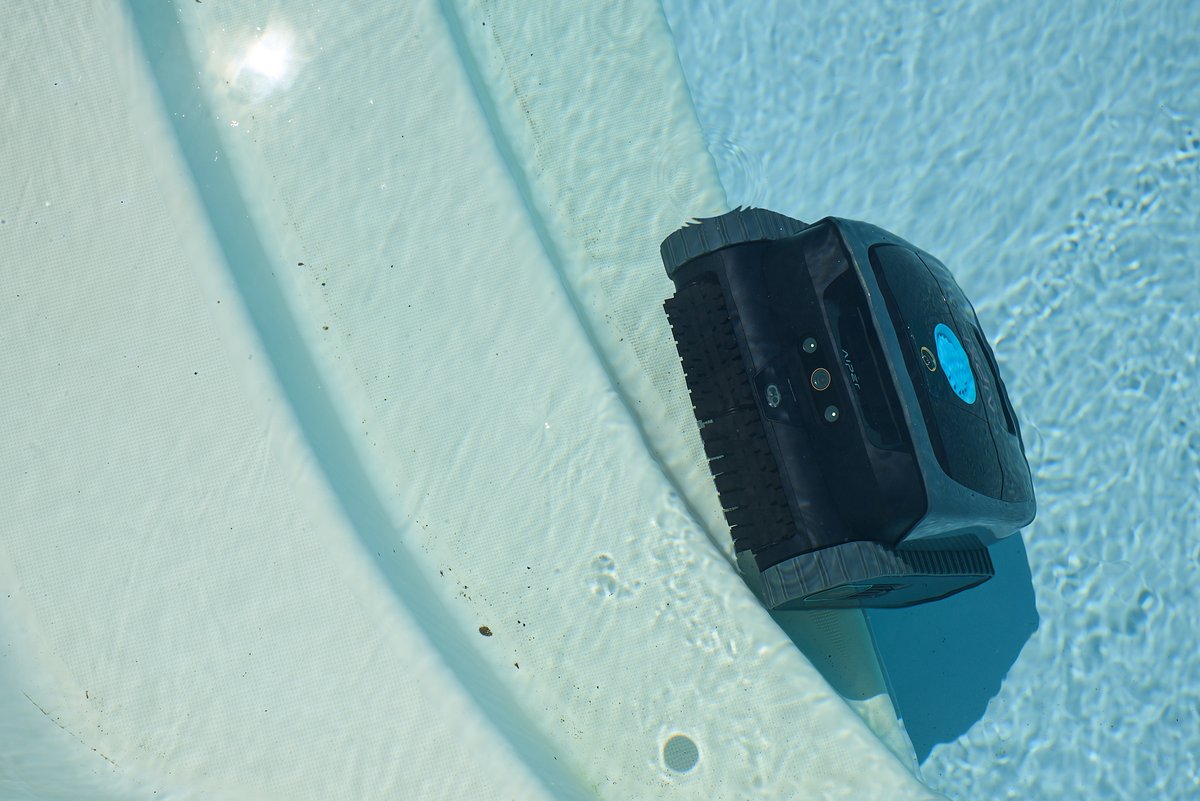
The suction power and the Scuba V3’s relative compactness are solid advantages when it comes to cleaning a stairwell: by climbing the steps diagonally, the robot was able to scrub a sandy staircase without much trouble.
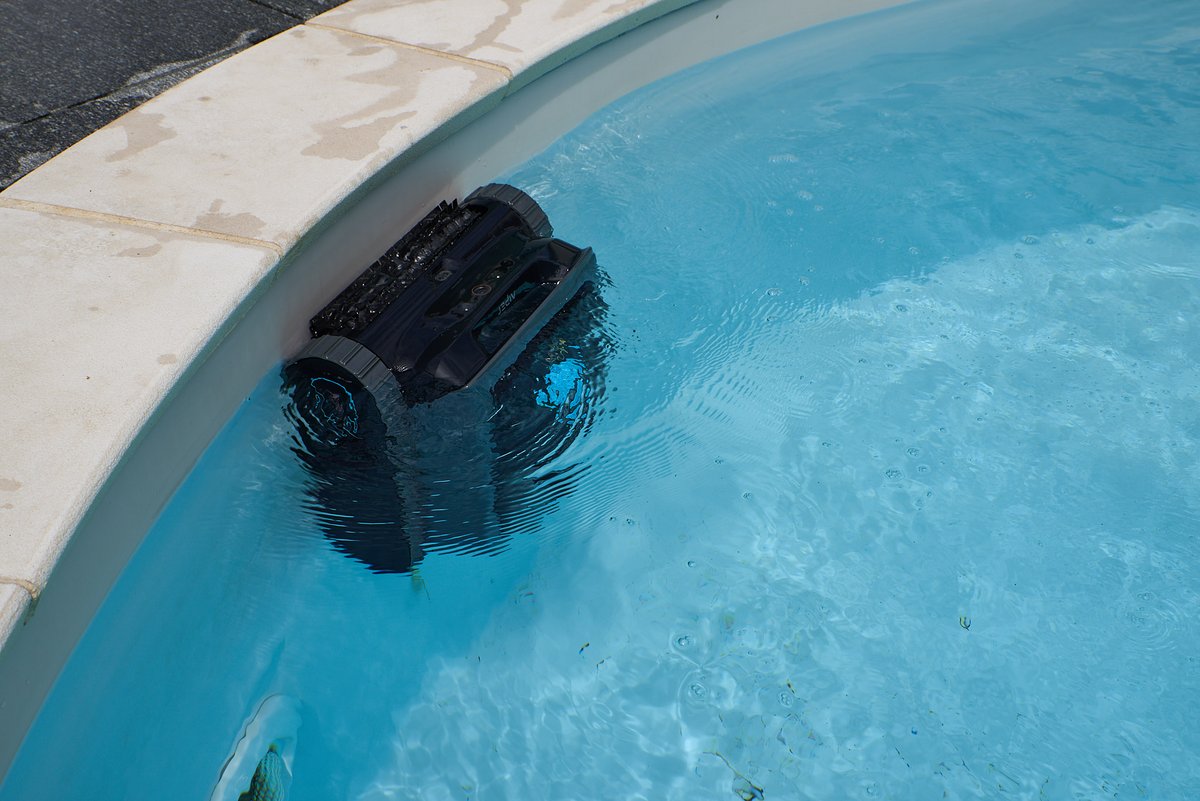
At the end of a cleaning, the robot resurfaces and stays at the surface until its battery is exhausted (about 10 minutes if you’ve completed a full cycle). So you need to be present to enjoy this mode; there’s no ballast to keep it floating for long, which means that in scheduled or AI Navium modes you’ll usually retrieve the Scuba V3 from the bottom of the pool, with the reaching pole and hook. That’s when it’s nice to have a robot that weighs only 8.2 kg dry, as it becomes a bit heavier when filled with water.
As for the app, while Aiper keeps things simple (and we appreciate that the brand hasn’t succumbed to poking a store and ads into its app like some others), the arrival of AI has made things a bit more complex. You can choose a classic mode, a scheduled mode with days and duration, or let the IA Navium mode decide almost everything: you still have to specify the days and duration you want. Some time is needed to adjust before finding the configuration that suits you best. You’ll need to think a bit and try what you prefer before starting the cleaning.
Autonomy, as usual with Aiper, is more than enough to thoroughly clean a large pool. It shines most in scheduled mode: expect 4 to 5 cleanings on a single charge, enough to last a full week in IA Navium mode without worrying about recharging.
Regarding recharging, nothing new: plan about 5 hours for a full recharge, a fairly long time but standard in the pool-robot field: you’ll want a robot that’s at least half-charged if you’re using it right before swimming.
Aiper Scuba V3: Clubic’s verdict
The Scuba V3 is a solid pool robot, building on Aiper’s basics (strong suction, efficient waterline mode, affordable price) without the skimmer mode, which so far never seems to be well executed and ends up making robots bulky. The AI-driven automatic operation is fairly effective, even if the robot seems to use only part of its camera to optimize passes. A robot you grow fond of forgetting at the bottom of the water. You get a clean pool when you need it, without stressing about cleaning it proactively: just remember to charge the robot from time to time.
The negative point is the micrometric filter, which we still dread: difficult to clean, fragile, best treated as a consumable to change frequently. Fortunately, this year it has evolved and its soft-band design is easier to maintain, but it’s still placed upstream of the standard filter, which is hard to understand.
The Scuba V3 isn’t the flashiest robot on the market, but it’s certainly one of the most effective for everyday use. Compact, quiet, autonomous: if you’re looking for a pool robot that does the job without fuss, this is the one.
- Compact and fairly light (8.2kg)
- Sits back to the surface
- Automatic mode convincingly
- Waterline mode always on top
- Micromesh filter still quite hard to clean
- Doesn’t stay on the surface for more than about ten minutes after finishing
- Long recharge (4–5 hours)
9
9
8
8
ElectroDepot
Fnac
Fnac
Fnac
Darty

Daniel Brooks
I cover everyday products with a practical eye, from kitchen tools and home essentials to smart gadgets and consumer trends. My goal is to help readers understand what is genuinely useful, what is worth the price, and what deserves a second look before buying.