
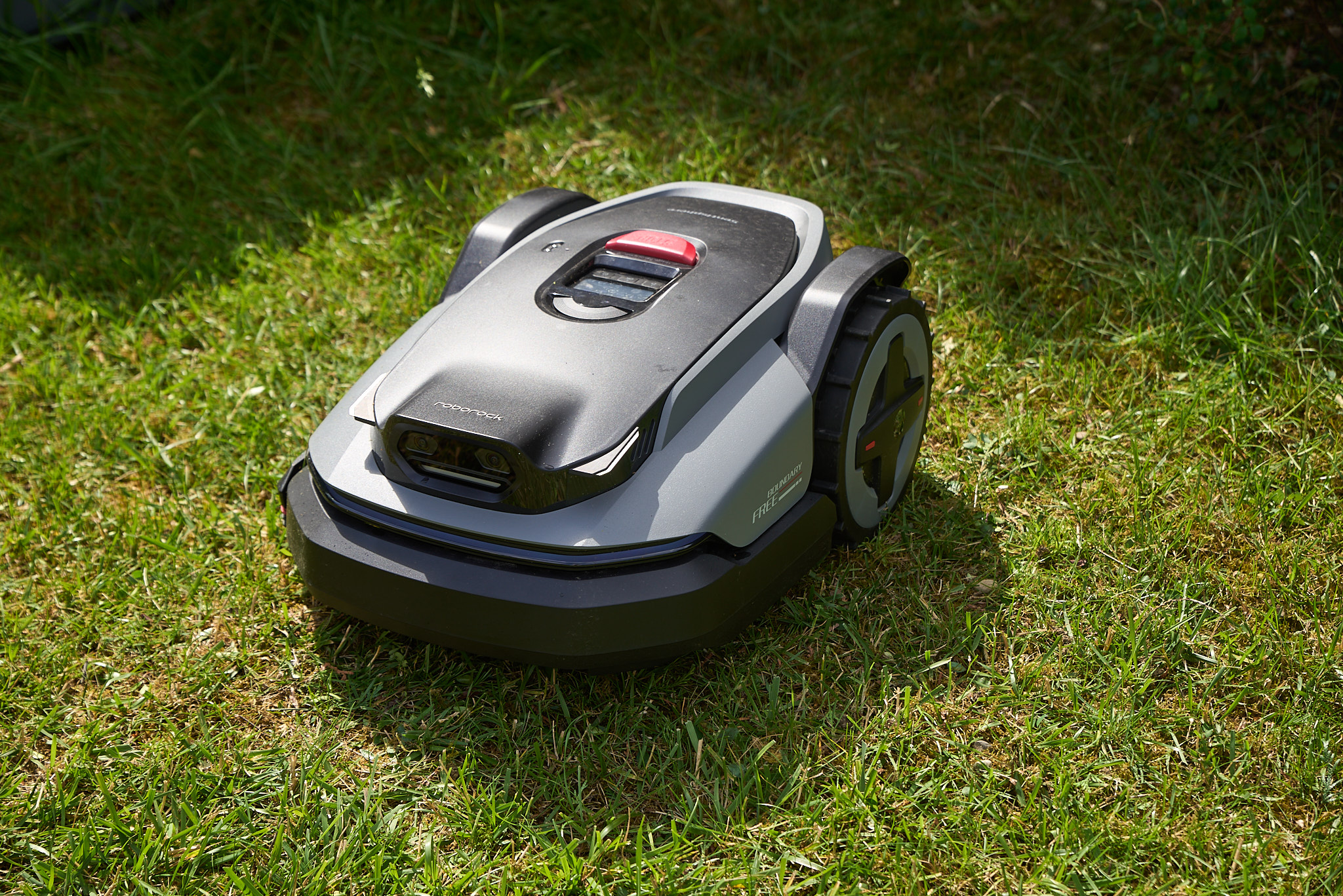
2026 marks the arrival on the market of Roborock’s lawnmowers, a brand better known for its robotic vacuum cleaners. After testing the Roborock Z1, their very impressive flagship that is becoming a strong contender for the title of best LiDAR lawn mower. But at a rather high price, let’s see what the brand offers for a more reasonable budget.
8 / 10
- Integrated PreciEdge edge-trimmer, a rarity in this segment
- Very fast charging, about one hour for a full charge
- Good coverage of the defined area in balanced mode
- Metal protective disc guarding screw heads
- Simple and well-thought-out app
- Moderate off-road capability, standard at best
- Edge trimming still imperfect, about 5 cm left uncut near walls
- Shop tab overload in smart-device apps
- No help with RTK antenna positioning
Roborock proposes a « S1 » line of two RTK lawnmowers that are physically identical but differ in the autonomy/charging speed pairing: the S108 (€1,399) is designed to cover 800 m2 with 130 minutes of autonomy and a full recharge in 75 minutes, while the S115 (€1,699), intended to cover up to 1500 m2, offers 150 minutes of autonomy for a 65-minute charge. To break from our usual approach, we tested the high-end model, which is perhaps a bit better positioned price-wise than its little brother.
Unpacking Rockmow S115: in familiar territory
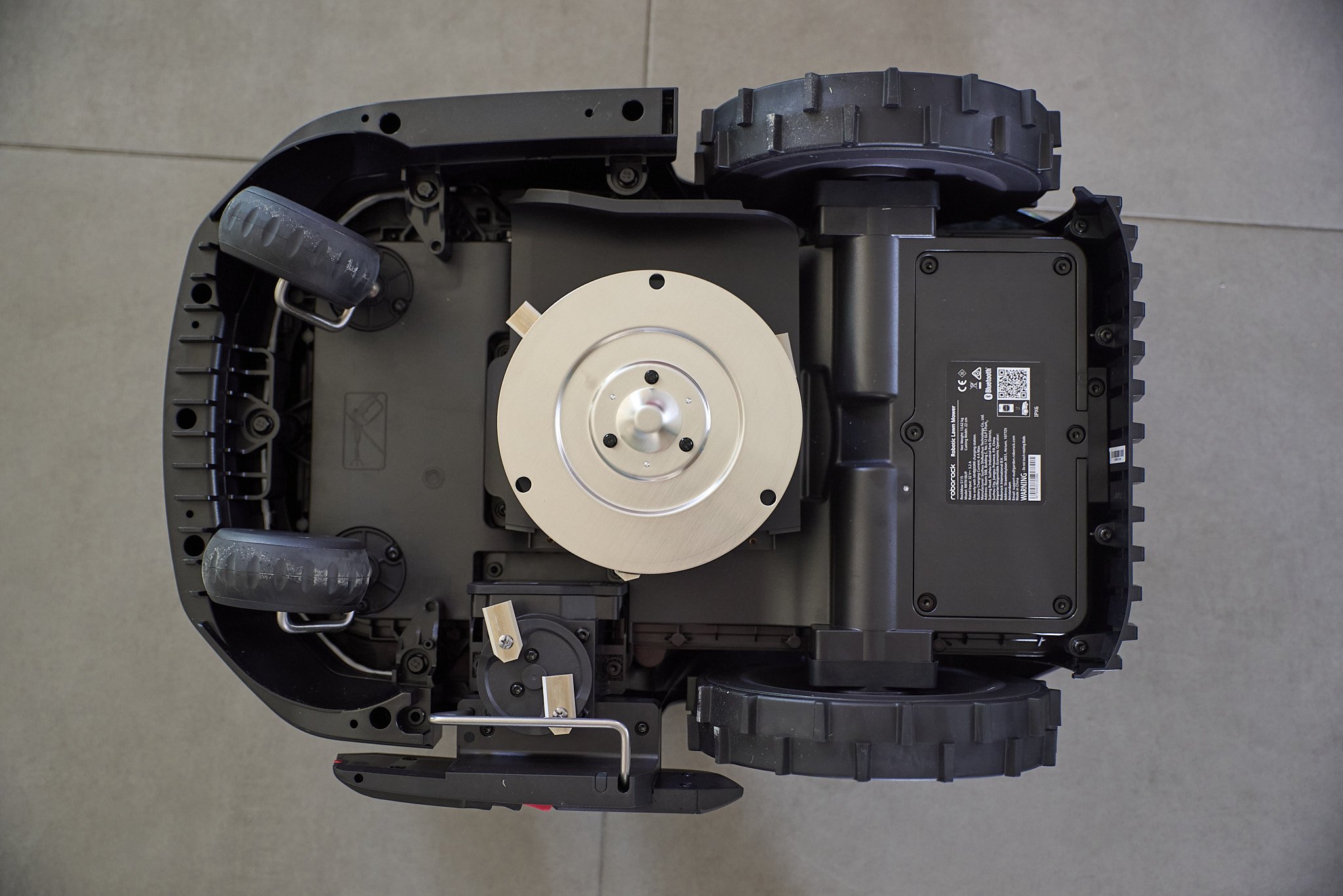
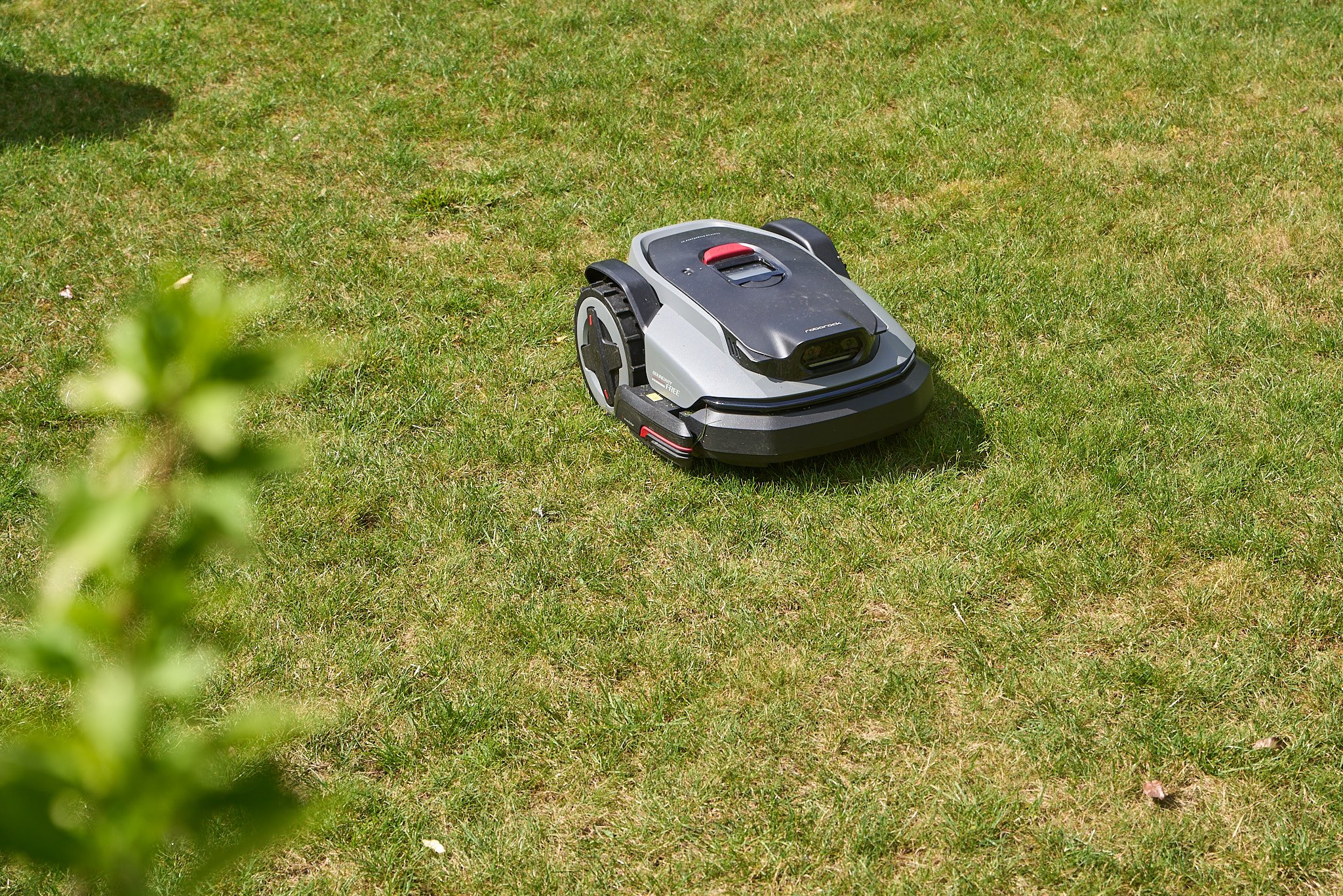
After testing the very innovative Z120, we return to more conventional ground with the S115: a robot mower sized for “over 1000m2” — roughly 60 cm long by 40 cm wide, with two large rear drive wheels (23 cm in diameter, fairly standard) and two small jockey wheels at the front, tucked under the body. The cutting disc measures 22 cm in diameter (also fairly standard), it features six blades and a metal protective disk, which helps preserve screw heads — a small luxury still quite rare at this price.
On the positioning and sensing side, we again find the classics: an RTK antenna to place near the base (no additional power supply included, but there is enough cable to reach quite far) and a pair of front-facing cameras. We wonder if, for this model, Roborock simply went shopping in the standard building blocks available on Shenzhen’s professional market.
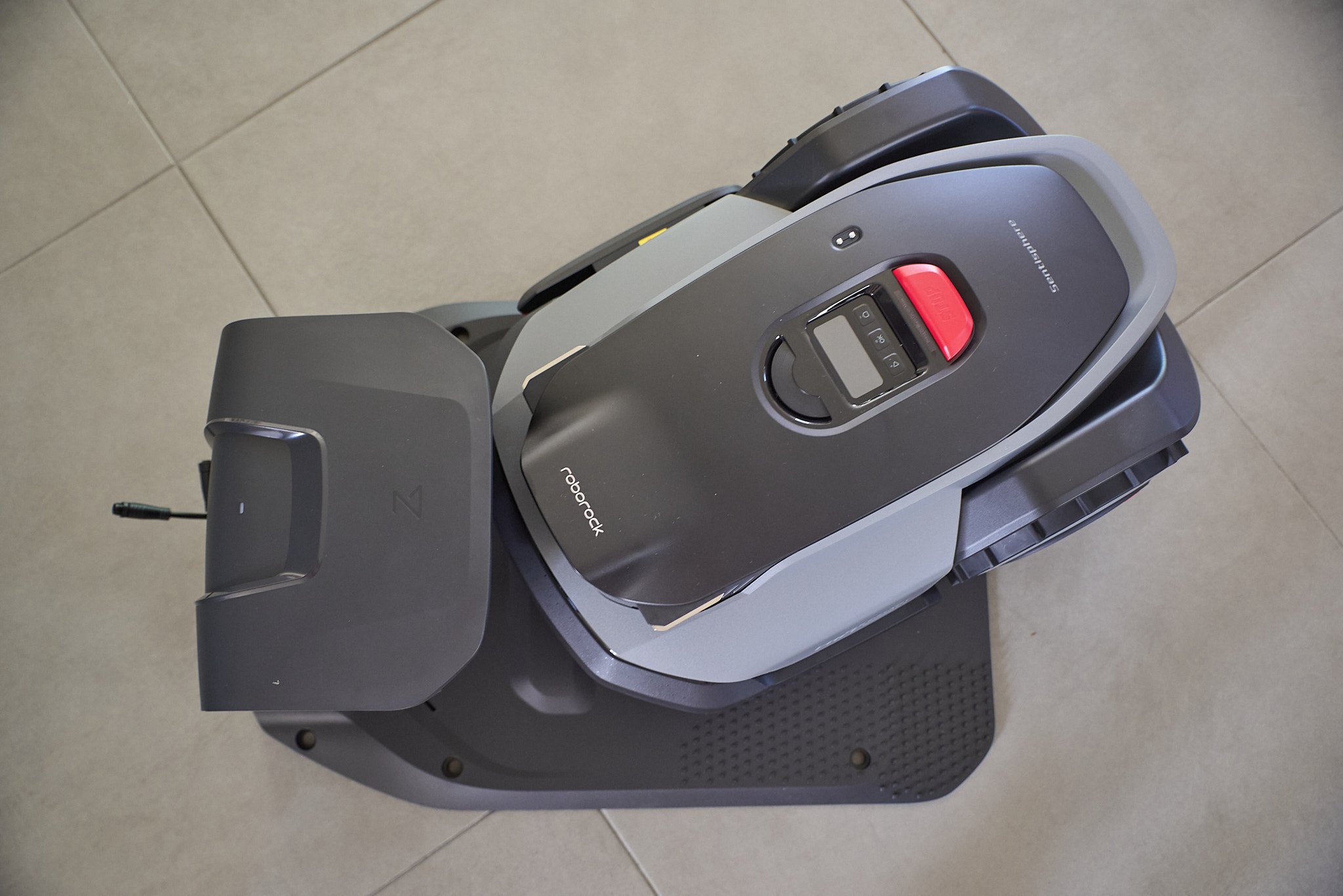
What you’ll notice for the first time is a secondary cutting disk offset 5 cm from the edge of the robot that trims the borders, a module Roborock calls PreciEdge, and which comes standard on this mower. That means you can minimize the use of the trimmer line. The base is somewhat different from the Z-series, featuring a notably horizontal portion that almost doubles as a shelter. It makes us wonder: when will charging docks themselves provide shelter, rather than being sold as an option?
Roborock has taken care to give its RTK antenna a slightly more stylish look (it’s still a square with rounded corners, but nicer than some purely technical round and gray antennas), and it ships with a taller foot than we’re used to installing (not necessarily very visually practical, but it can help achieve correct localization if you are a bit boxed in).
Rockmow S115 test: the classic RTK with a subtle upgrade
As with the Z120, there is still no automatic lawn mapping during our test of the S115, but manual mapping remains quite straightforward, though it requires guiding the robot with a single finger (forward/back and left/right under the same finger rather than using two separate joysticks). The clear distinction between standard borders and hazard borders allows you to avoid disturbing flowerbeds while mowing. And as always, defining multiple zones and pathways is very easy.
Note: Roborock does not offer a tool to help position the RTK antenna in its app; you’ll have to position it blind (but simply find a spot with a good sky view).
Mowing is fairly quick (the six-blade configurations tend to be a touch faster than three-blade rivals), and there is an “efficient” mode for accelerated mowing. The unit covers the entire defined area, provided you select the “balanced” obstacle avoidance mode rather than “sensitive,” otherwise it tends to be overly cautious about border hedges (no issue with walls and low walls).
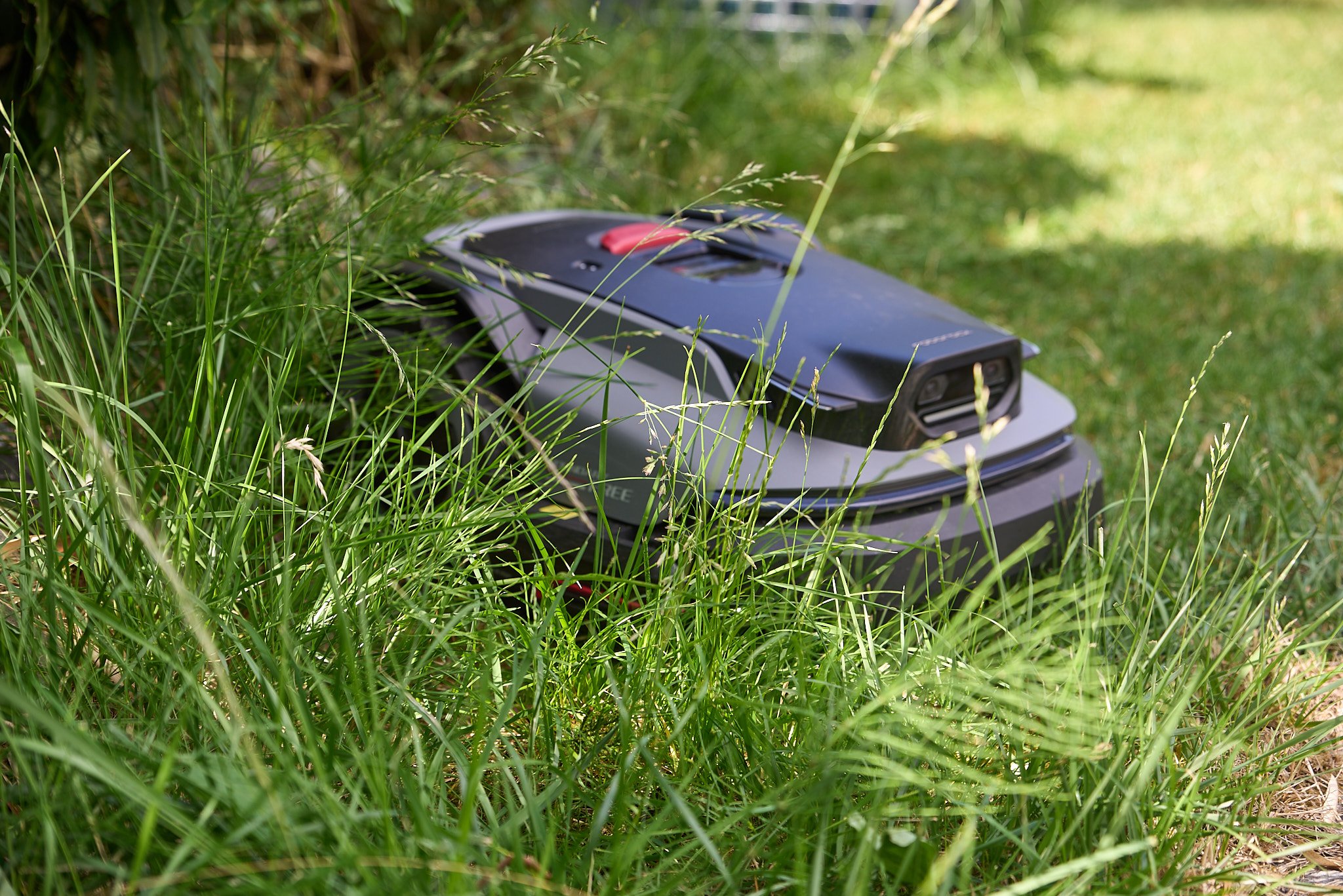
Roborock highlights an obstacle-crossing capability of 4 cm: a marketing-grade figure that we did not observe to outperform the competition, although it can climb slopes of 45%, a value fairly common in 2026. Still, these figures are already quite solid for gardens that aren’t too steep or rugged.
If there’s one feature common to modern robots over the last couple of years, it’s their quiet operation: you hear only the cutting blade, no longer the whine of a motor or movement. And while this remains true with the Rockmow S115, it’s a little louder once the PreciEdge module is engaged. It stays reasonably quiet, but you can hear the edge-trimmer purring. We won’t complain too much, since the extra noise comes with an extra function!
In terms of autonomy, expect roughly two hours of mowing for more than 400 m2 mowed, and just over an hour for a full charge (a fairly low figure; whether this will affect battery life over several weeks is hard to say). This still enables covering the 1500 m2 claimed in a single busy day.
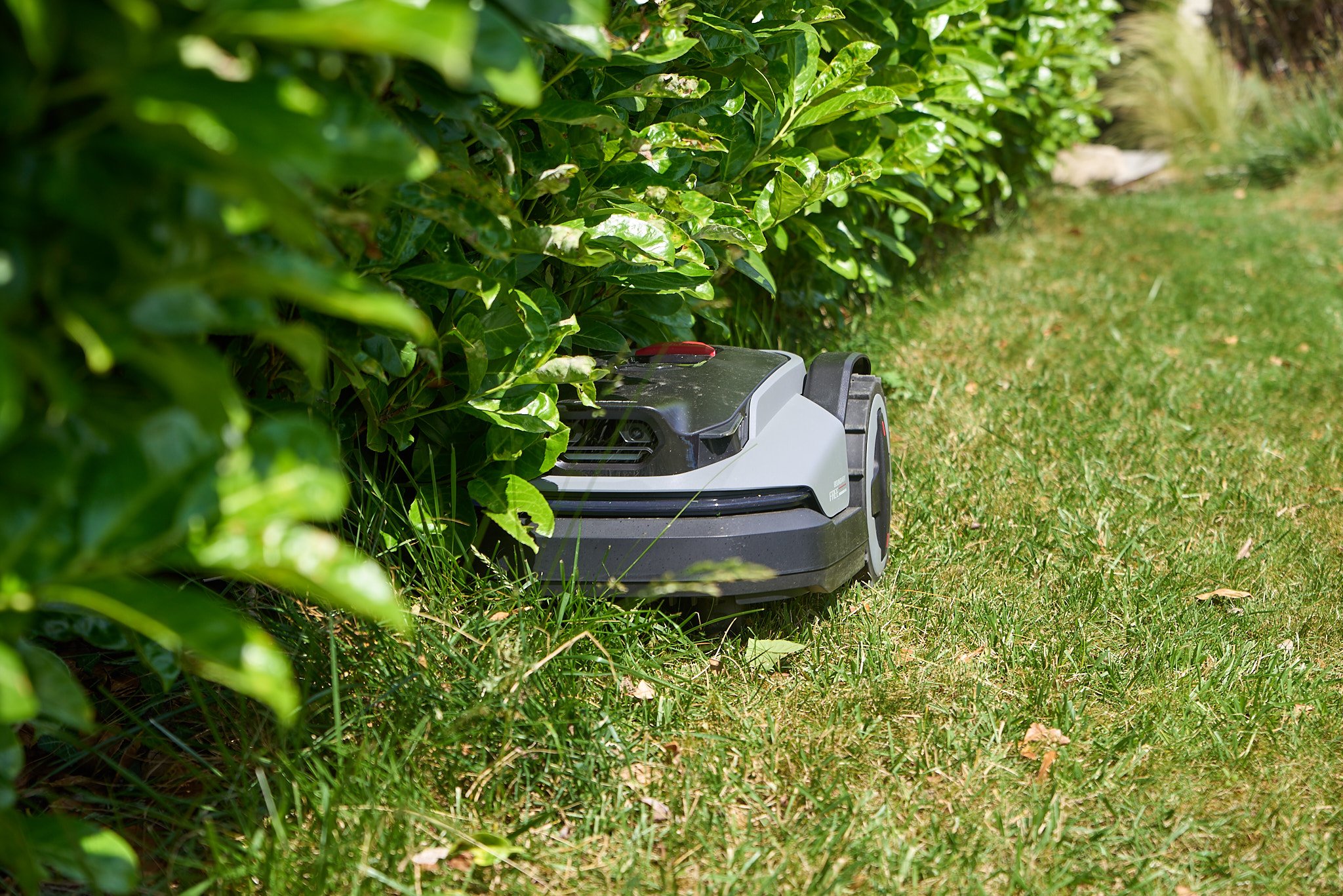
Roborock highlights a 4 cm obstacle-clearing capability, a marketing argument that isn’t clearly superior to rivals, and notes 45% slope-climbing as a common figure in 2026. Still, these values are very respectable for gardens that aren’t too steep or irregular.
If there is one feature that is common across modern robots for the past two years, it is their quietness: you hear only the cutting blades, not the motor or drive noise. And yes, if the PreciEdge module is on, you’ll hear the edge-trimmer’s gentle hum. It remains fairly quiet, though this extra sound is tied to an additional function!
If the app is very straightforward and aesthetically pleasing (short, intuitive menus and tabs, clearly accessible buttons), Roborock has succumbed like too many brands to adding a shop tab within the app (not just spare parts, but other robots).
Roborock Rockmow S115: Clubic’s verdict
In the jungle of RTK lawn mowing robots, Roborock arrives with a fairly well-developed proposal: high-quality mowing over up to 1500 m², excellent area coverage without compromising safety, and above all an integrated border-trimmer that sets it apart from a competition that often lacks this feature. Fast charging and a polished app complete a coherent package.
However, that border-trimmer, welcome as it is, doesn’t work miracles: even with the PreciEdge module activated, 5 centimeters still remain between the robot and a wall or low wall. Occasional use of the trimmer line remains necessary for the meticulous among you. The off-the-shelf capabilities to cross obstacles are average, not a differentiating selling point.
At 1,699 euros, the Rockmow S115 must contend with rivals that are sometimes cheaper. The integrated border-trimmer justifies the gap for those who absolutely refuse to take out the cutting line, but for others the decision will mostly come down to budget availability.
- Integrated PreciEdge border-trimmer, a rarity in this segment
- Very fast charging, around one hour for a full recharge
- Good coverage of the defined area in balanced mode
- Metal head-protecting disk preserves screws
- Simple and well-designed app
- Mid-range crossing abilities, standard at best
- Edge trimming still imperfect, about 5 cm remains uncut near walls
- We’re tired of the shop tabs in smart home apps
- No RTK antenna positioning assistance
9
7
7
8
8
8
Anthbot M9
Segway Navimow i206 AWD
Navimow i208 LiDAR
Mova 600
Mova LiDAX Ultra 1200

Daniel Brooks
I cover everyday products with a practical eye, from kitchen tools and home essentials to smart gadgets and consumer trends. My goal is to help readers understand what is genuinely useful, what is worth the price, and what deserves a second look before buying.