Lenovo ThinkBook Plus Gen 6 Rollable Review: A Bold OLED Rollable Laptop

August 29, 2026
Tech

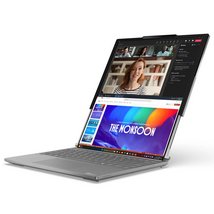
Annonced at CES 2025 and eventually released, somewhat belatedly, at the end of last year, the Lenovo ThinkBook Plus Gen 6 Rollable is a laptop featuring a roll-out OLED display that can swing from a relatively conventional 14-inch footprint to a 16.7-inch screen in a vertical format. An innovative concept, indeed, but how does it perform in practice? Our review provides the answer.

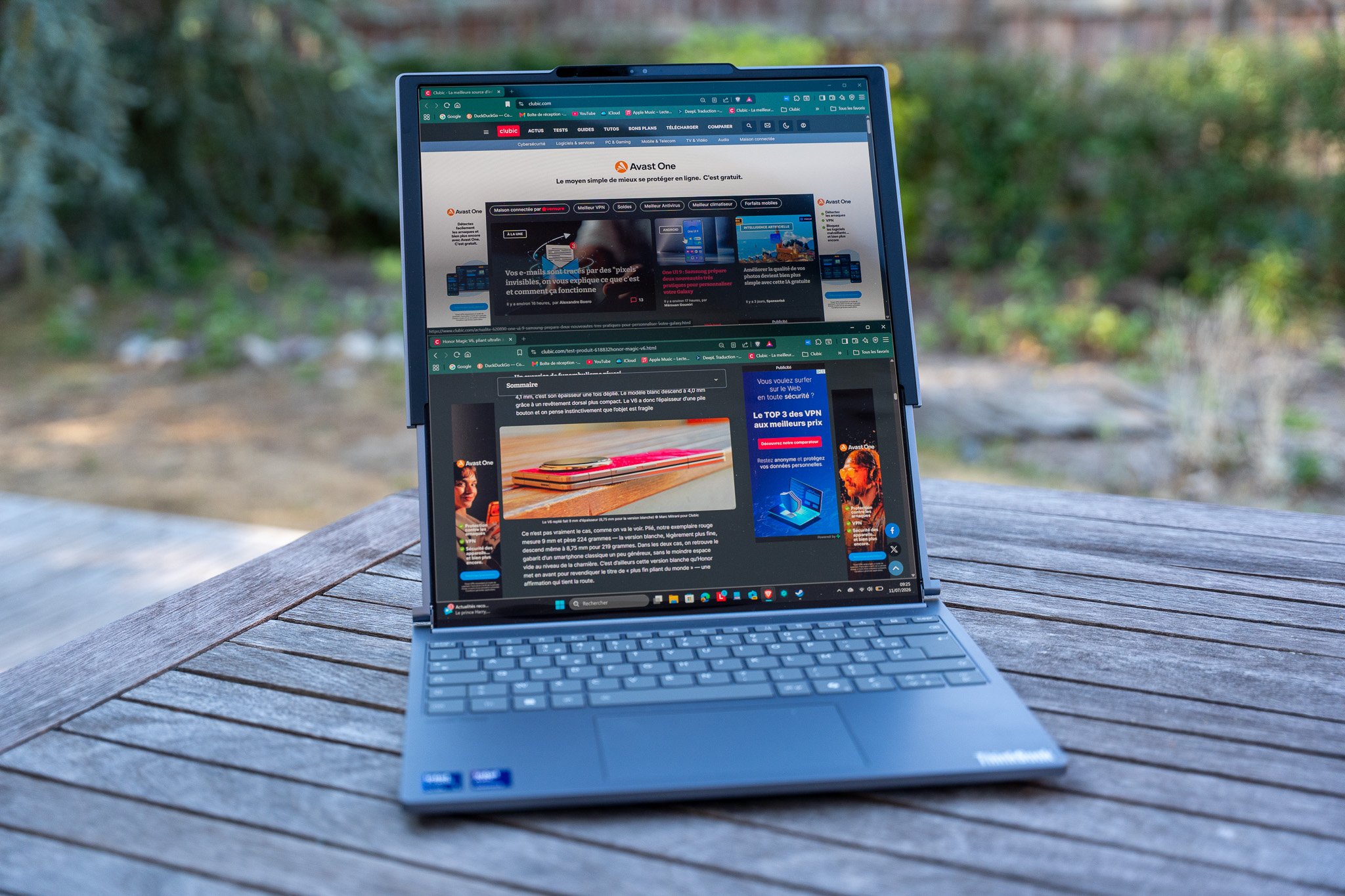
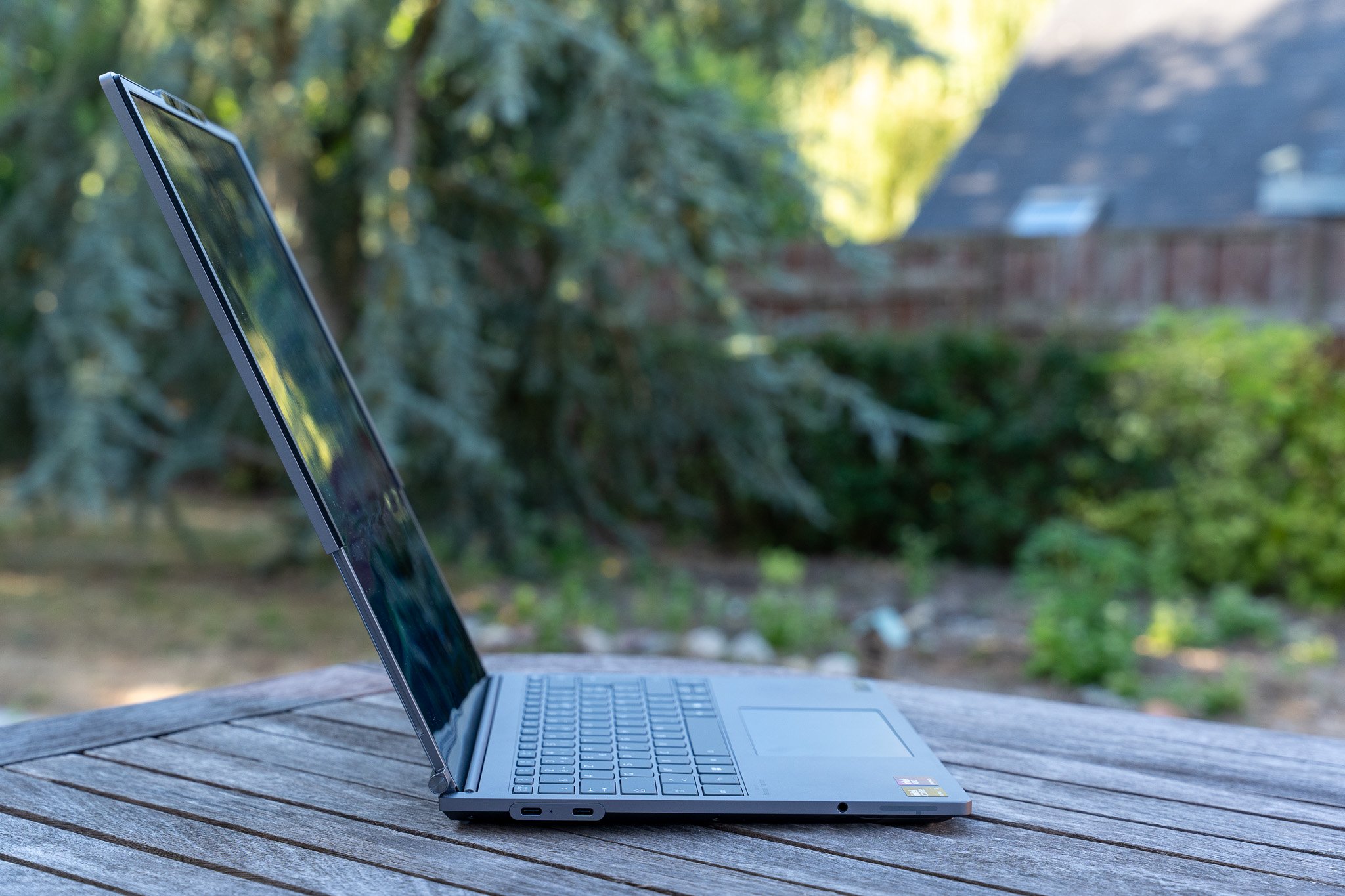
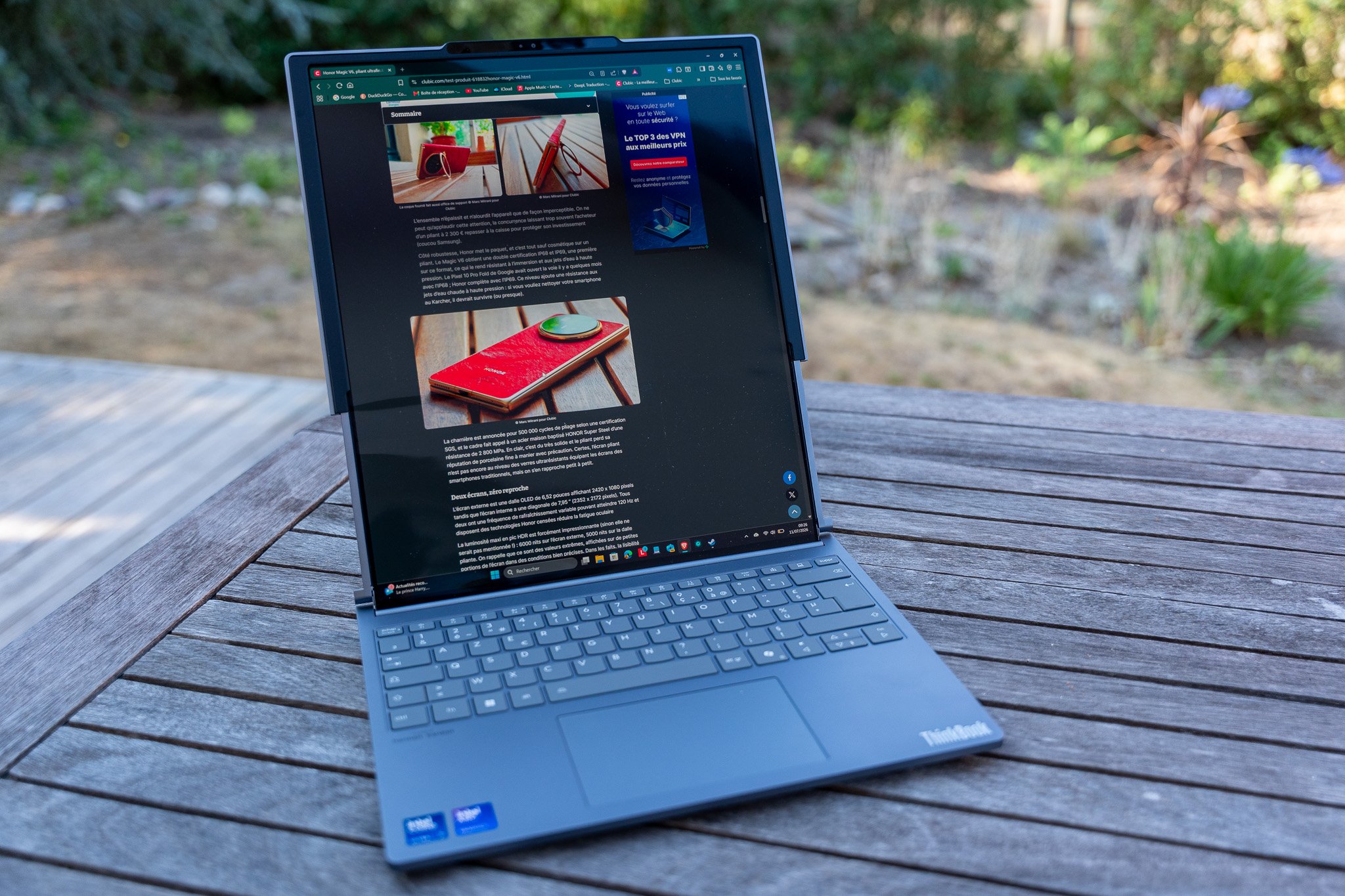
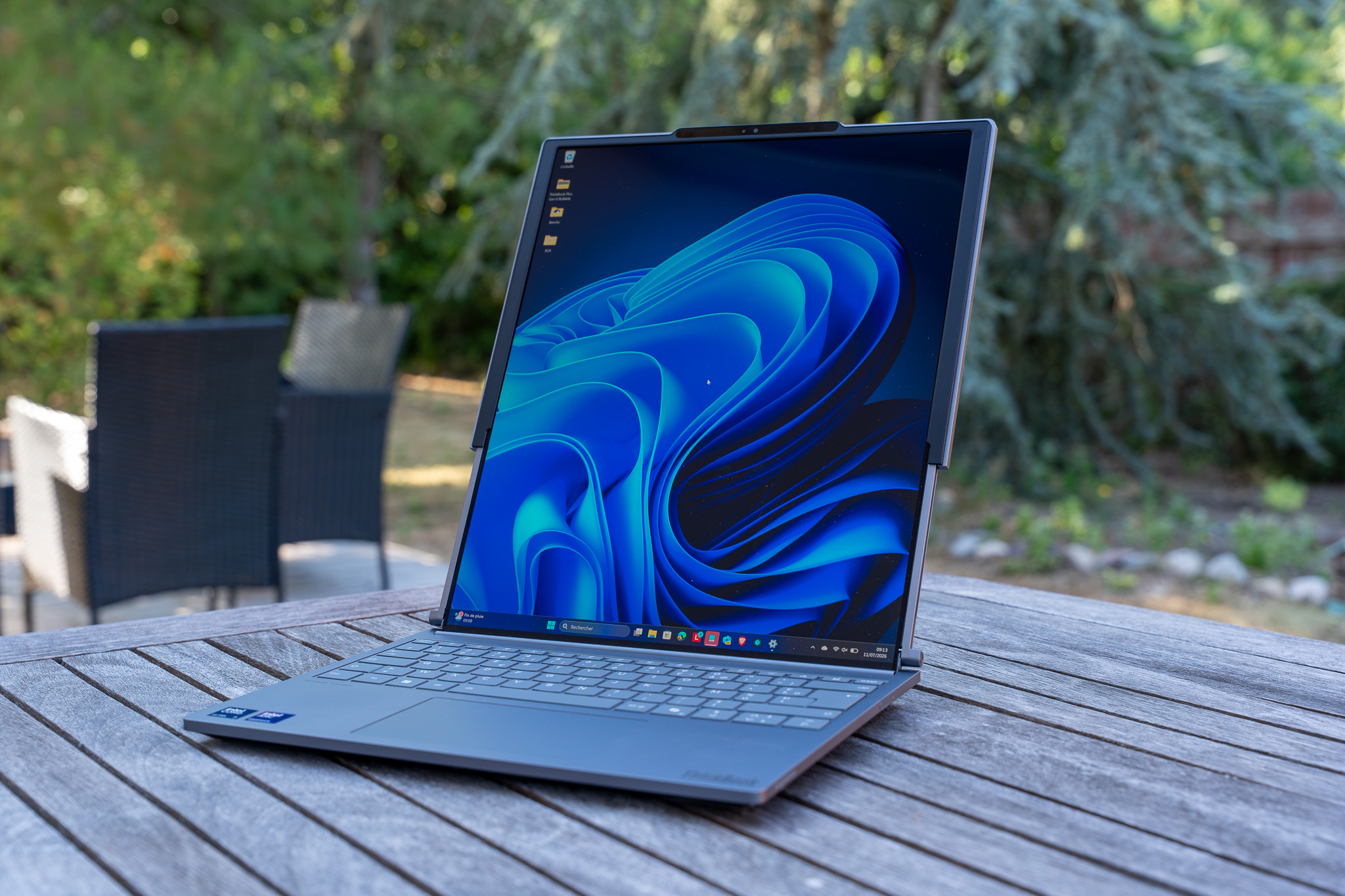
The ThinkBook Plus Gen 6 Rollable, here in its 16.7-inch format. © Nathan Le Gohlisse for Clubic

Lenovo, for its part, tends to push innovative concepts—sometimes extravagant, but never absurd. Each year the Chinese manufacturer places a priority on presenting a handful of models that claim an unconventional design. Most of them are concept proofs and not destined for full commercial release, yet a few eventually reach the market. This is the case with the ThinkBook Plus Gen 6 Rollable, which is what we’re examining today.

Lenovo ThinkBook Plus Gen 6 Rollable

6  / 10

Lenovo ThinkBook Plus Gen 6 Rollable

Best prices

PC Componentes

3,459.00 €

GrosBill

3,679.95 €

Fnac

3,798.65 €

Fnac

4,699.99 €
The best
  • The unusual concept that turns heads…
  • Neither too bulky, nor too heavy
  • The Lunar Lake SoC’s versatility remains appealing in 2026
  • Solid keyboard, decent webcam
The drawbacks
  • … but useful only to a small niche of users
  • Insufficient screen tilt angle; stability in stretched mode could be improved
  • Rudimentary I/O cover
  • Limited autonomy (6 to 9 hours depending on usage)
Read the conclusion

We will see whether the vertically unfolding OLED screen, and to a lesser extent its Intel Lunar Lake processor, make this model a daily useful ally, but first, here is the device specification Lenovo France loaned us for review:

Lenovo ThinkBook Plus Gen 6 Rollable specs

Summary

Processor Intel Core Ultra 7 258V
Memory size 16Go
Graphics card Intel Arc 140V
Display size 16.7 inches
Refresh rate 120Hz

OS

Operating system Windows 11

Processeur

Processor Intel Core Ultra 7 258V
Processor type 8 cores / 8 threads
Processor frequency 4.8GHz
Manufacturing process 3nm

Memory

Memory size 16Go
Memory type DDR5
Memory bandwidth 8,533MHz

Graphics

Graphics card Intel Arc 140V

Display

Display size 16.7 inches
Refresh rate 120Hz
Panel type OLED
Matte / anti-glare No
NVIDIA G-SYNC No
Touchscreen No

Storage

Storage configuration SSD
Main drive Up to 1To
Optical drive None

Connections

Available connections Thunderbolt 4/USB-C, 3.5 mm female stereo jack

Wireless

Wi‑Fi Yes
Wi‑Fi version 7
Bluetooth Yes
Bluetooth version 5.4

Physical dimensions

Dimensions 303.5 mm x 230.6 mm x 19.1 mm
Weight 1.69 kg

Connectivity

Available ports Thunderbolt 4/USB-C, 3.5 mm stereo jack

Wireless network

Wi‑Fi Yes
Wi‑Fi version 7
Bluetooth Yes
Bluetooth version 5.4

Processor

Processor Intel Core Ultra 7 258V
Processor type 8 cores / 8 threads
Processor frequency 4.8 GHz
Core fabrication 3 nm

RAM

Memory size 16Go
Memory type DDR5
Memory bandwidth 8,533MHz

Graphics

Graphics Intel Arc 140V

Display

Display size 16.7 inches
Refresh rate 120Hz
Screen type OLED
Matte / anti-glare panel No
NVIDIA G-SYNC No
Touch screen No

Storage

Drive configuration SSD
Main drive Up to 1To
Optical drive None

Connectivity

Connectors Webcam, built-in speakers, keyboard, backlit keyboard

Camera

Webcam Yes
Speakers Integrated
Keyboard AZERTY
Backlit keyboard Yes – Single color
Numeric keypad No

Physical controls

Physical controls Fine; some iciness in hinges

Physical dimensions

Length 303.5 mm
Width 230.6 mm
Thickness 19.1 mm
Weight 1.69 kg

The Lenovo ThinkBook Plus Gen 6 Rollable is available in France at a price of 4,699.99 euros.

Design: an enhanced prototype, but is it usable?

As expected, the ThinkBook Plus Gen 6 Rollable looks like an improved prototype. This is often the “problem” with such unusual devices—unveiled as concepts at trade shows, then released to market after a quick refinement phase. Among competitors, the ASUS Zenbook 17 Fold OLED gave us the same impression in 2022: a peculiar product launched before being fully finalized.
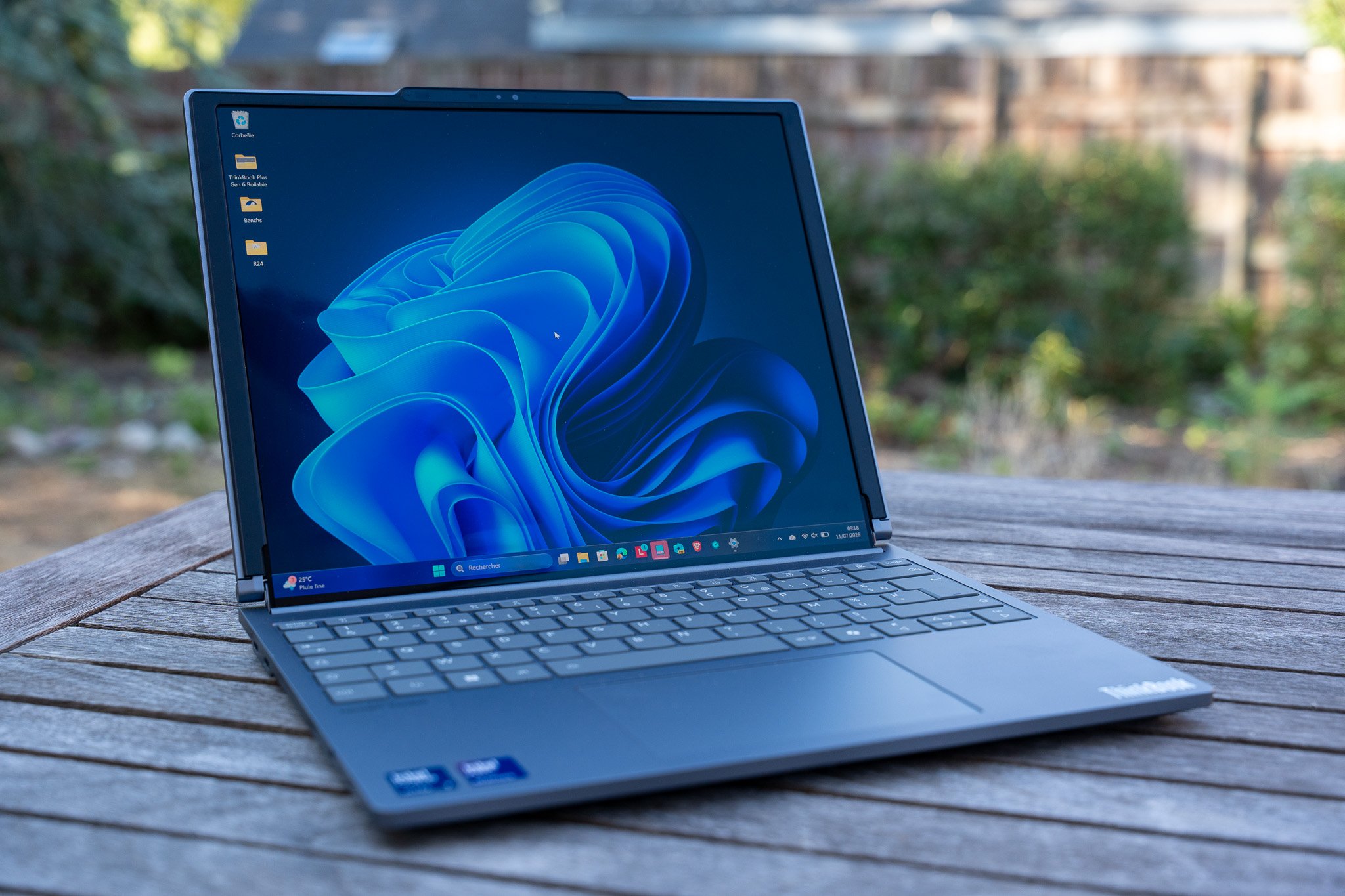
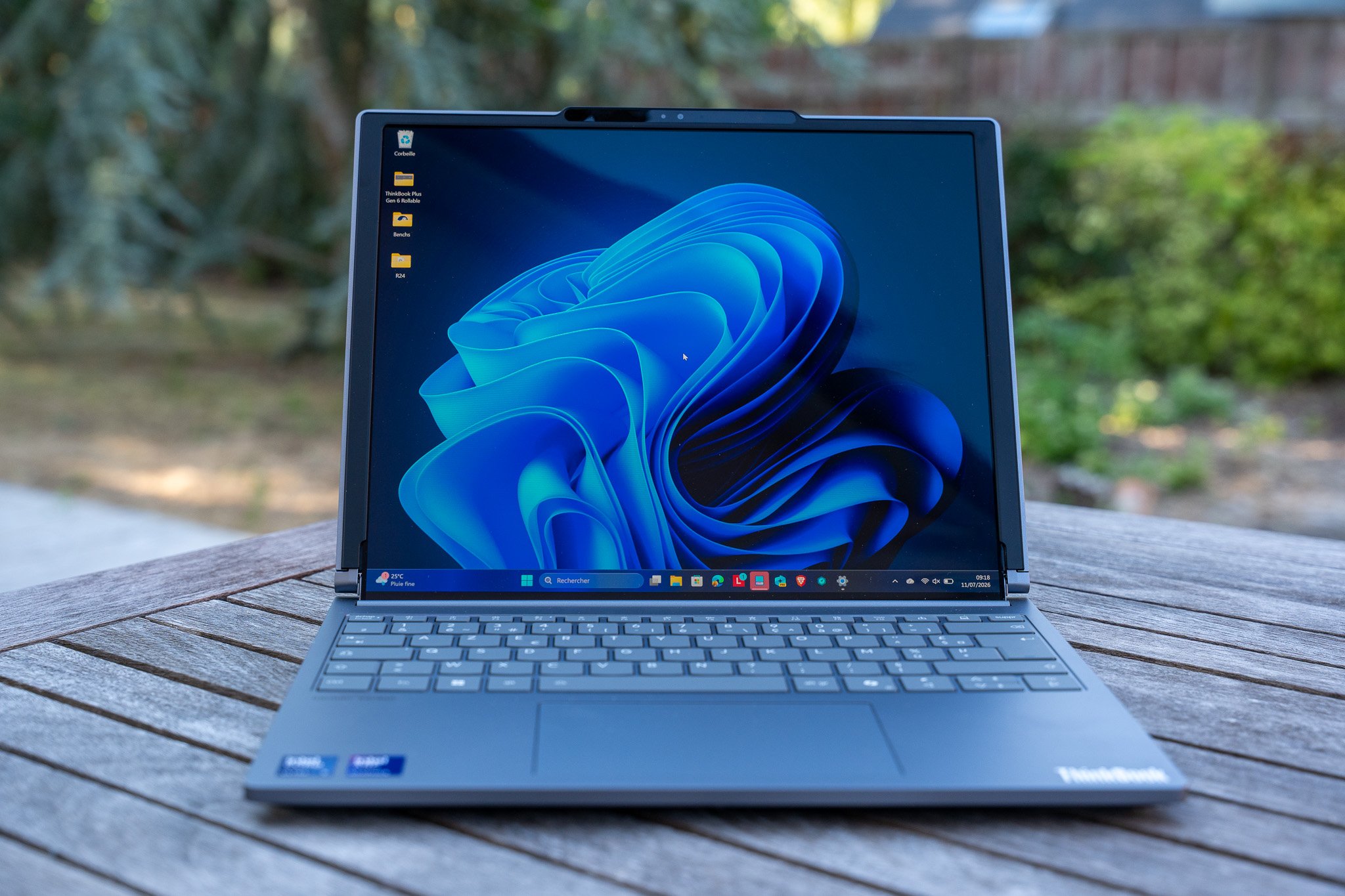
The device, this time in its 14-inch form. © Nathan Le Gohlisse for Clubic

The device, this time in its 14-inch form. © Nathan Le Gohlisse for Clubic

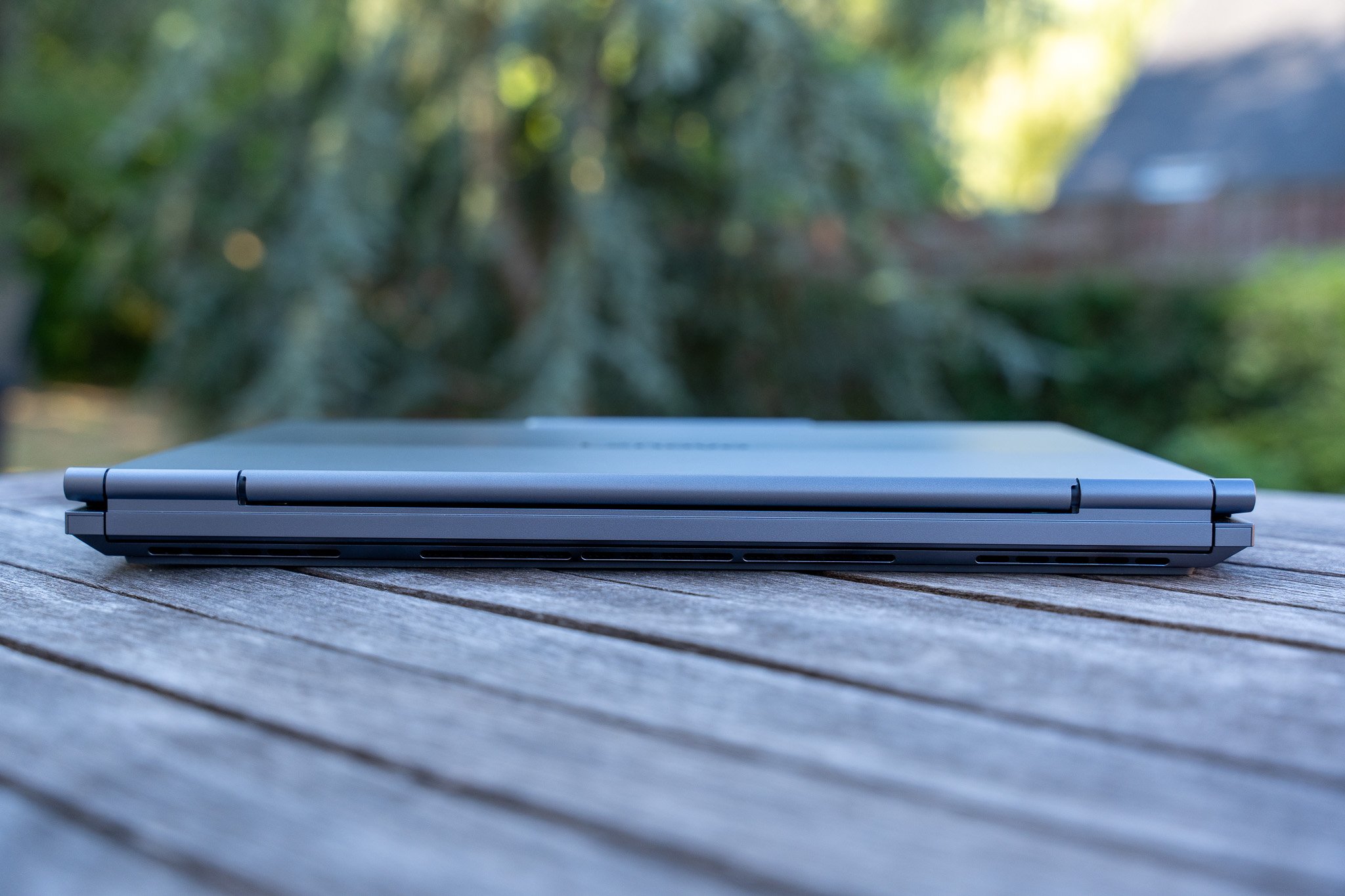
With its ultra-portable form and a roll-out screen, Lenovo still manages to improve things somewhat. The first impression is surprising: you face a 14-inch ultraportable that is a touch heavier and thicker than typical “thin and light” models, yet not radically different at first glance. When fully closed, with the screen rolled up, the device measures 30.35 x 23.06 x 1.91 cm at its thickest point, weighing 1.69 kg. To give you a sense, that’s roughly the footprint of a gaming-oriented 14-inch model. So we’re not dealing with a completely incongruous size, which is a good thing.
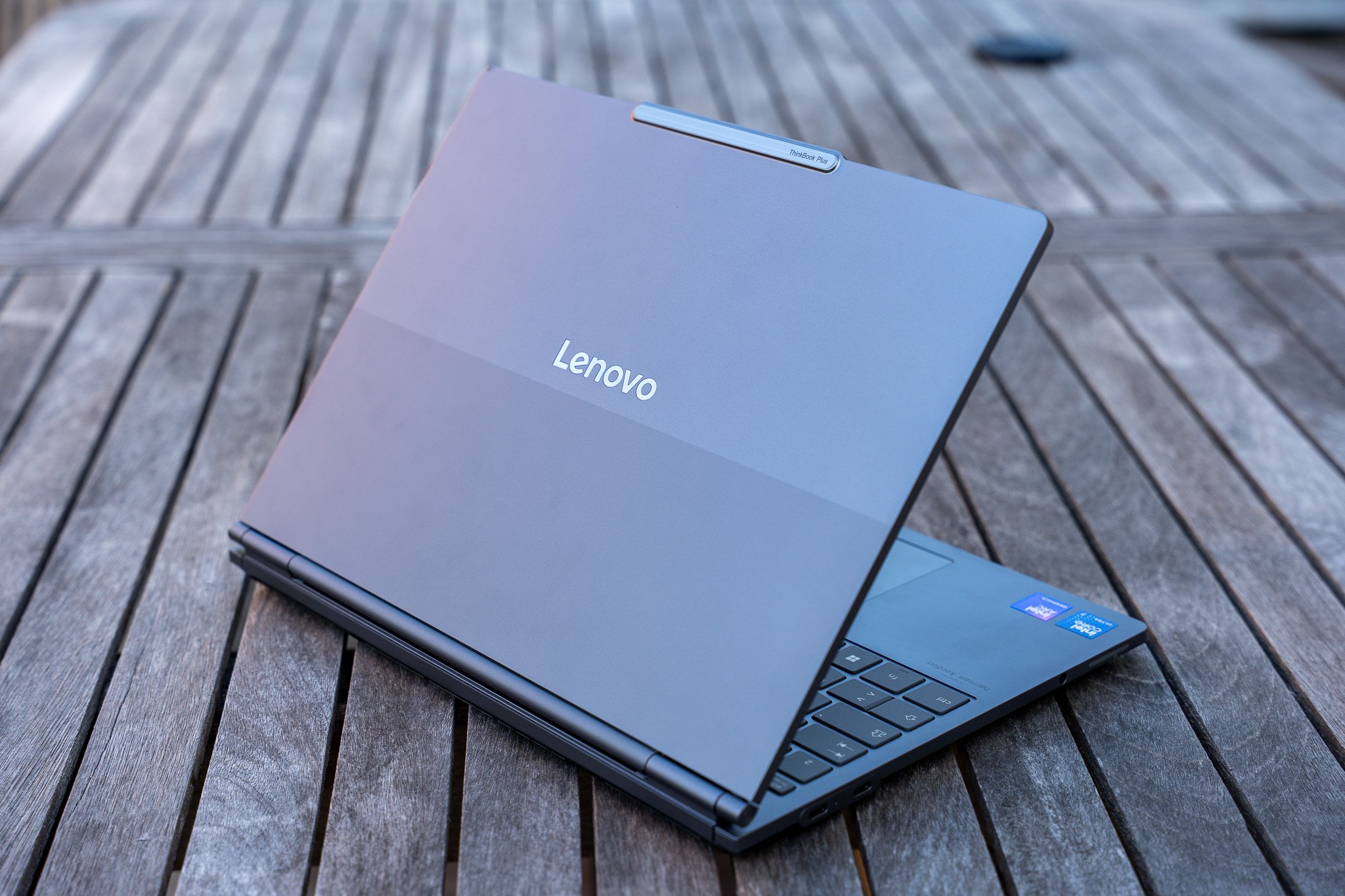
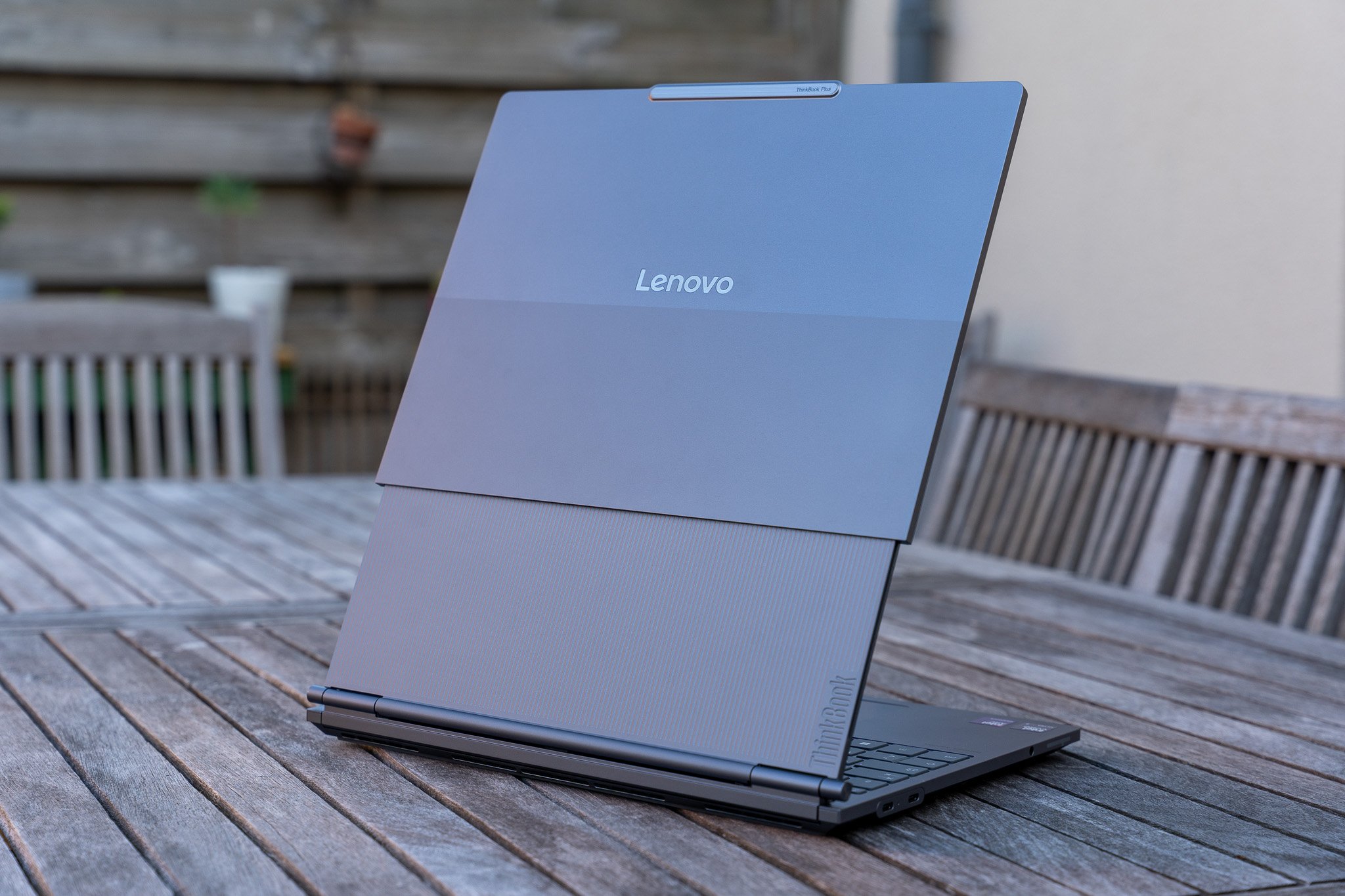
© Nathan Le Gohlisse for Clubic

© Nathan Le Gohlisse for Clubic

© Nathan Le Gohlisse for Clubic

© Nathan Le Gohlisse for Clubic

© Nathan Le Gohlisse for Clubic

© Nathan Le Gohlisse for Clubic

© Nathan Le Gohlisse for Clubic

© Nathan Le Gohlisse for Clubic

© Nathan Le Gohlisse for Clubic

© Nathan Le Gohlisse for Clubic

Opening the cap is weak at maximum, and the device can be unstable when fully extended. © Nathan Le Gohlisse for Clubic

Opening the cap at maximum is weak and the device can be unstable when extended. © Nathan Le Gohlisse for Clubic

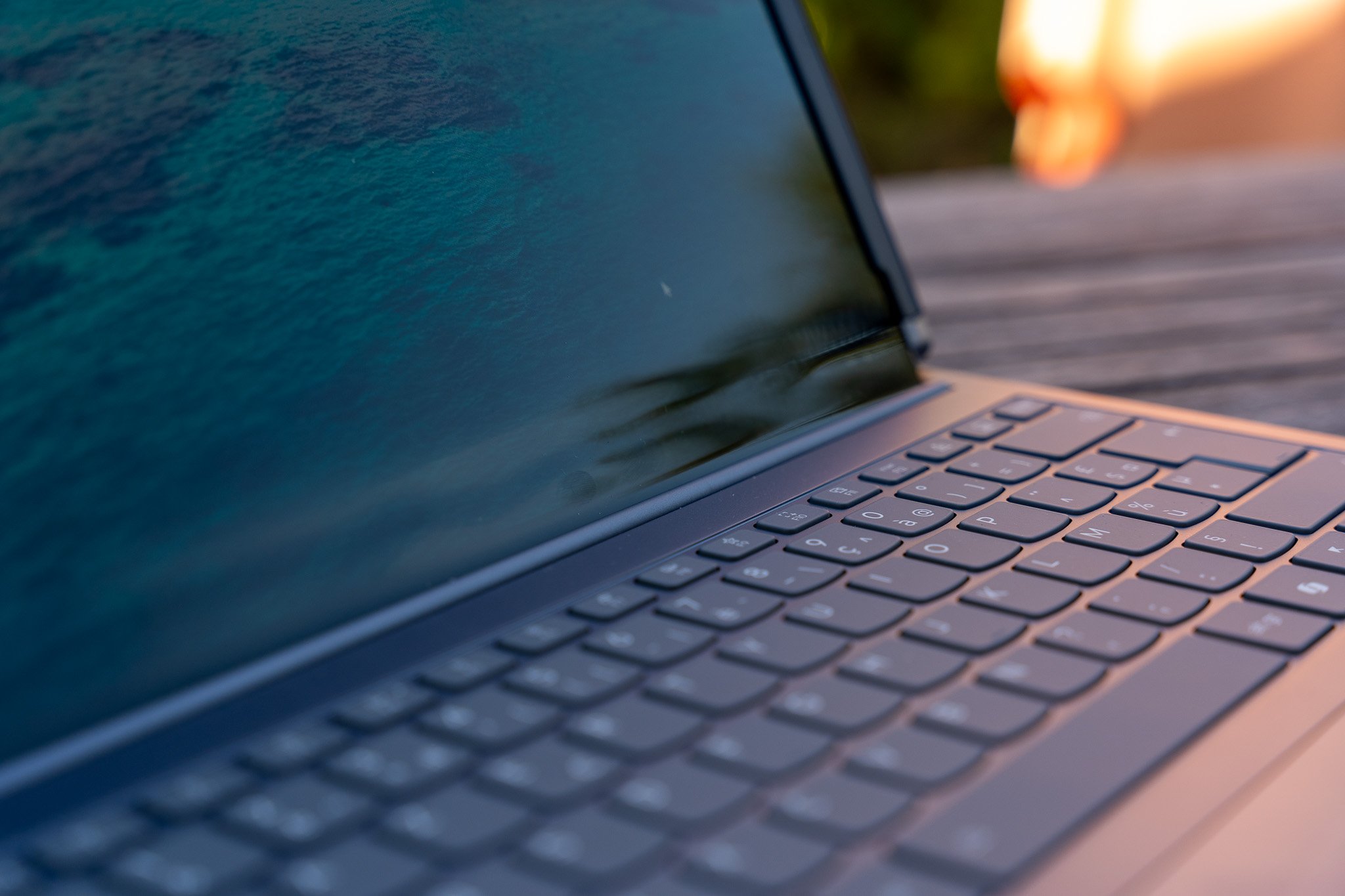
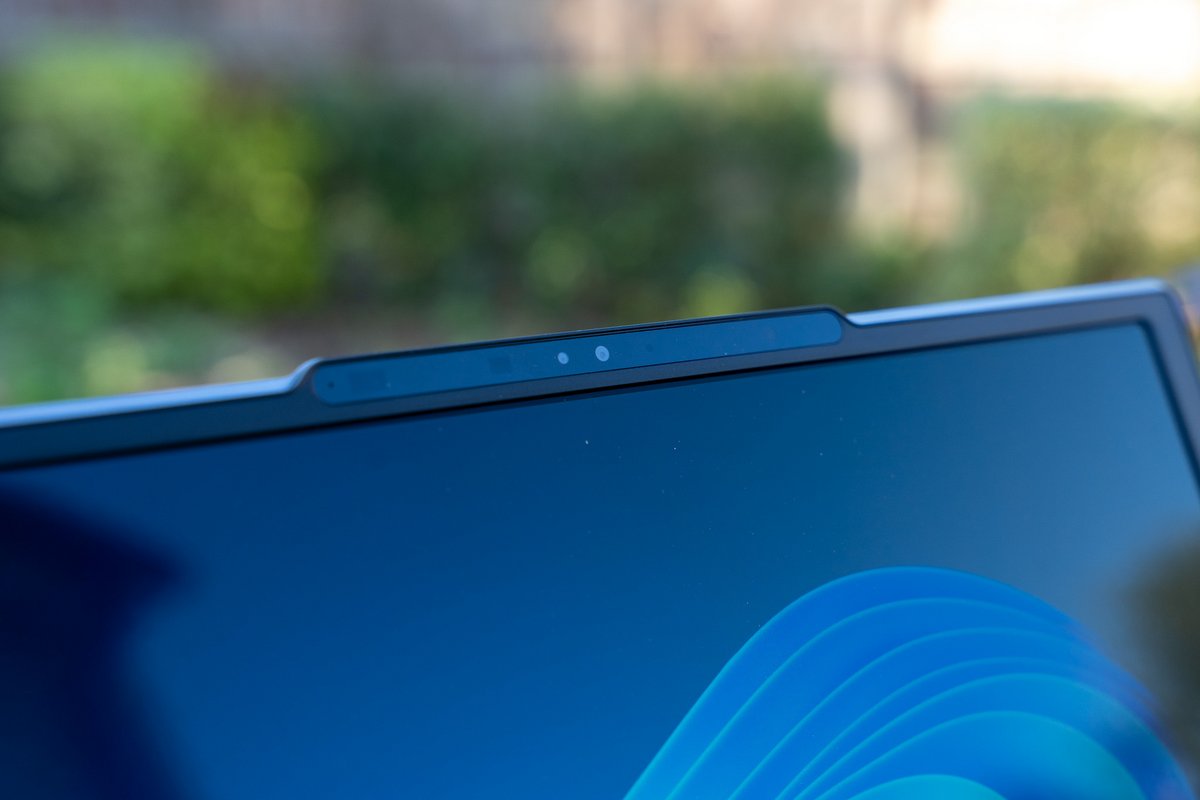
As with many Lenovo products, the webcam is of decent quality. At 5 MP with integrated sensors, it can deliver respectable sharpness for video calls (1440p resolution) and supports facial recognition for easy sign‑in. The keyboard, too, is worthy of note for its typing experience, aligning with Lenovo’s other ultraportables.

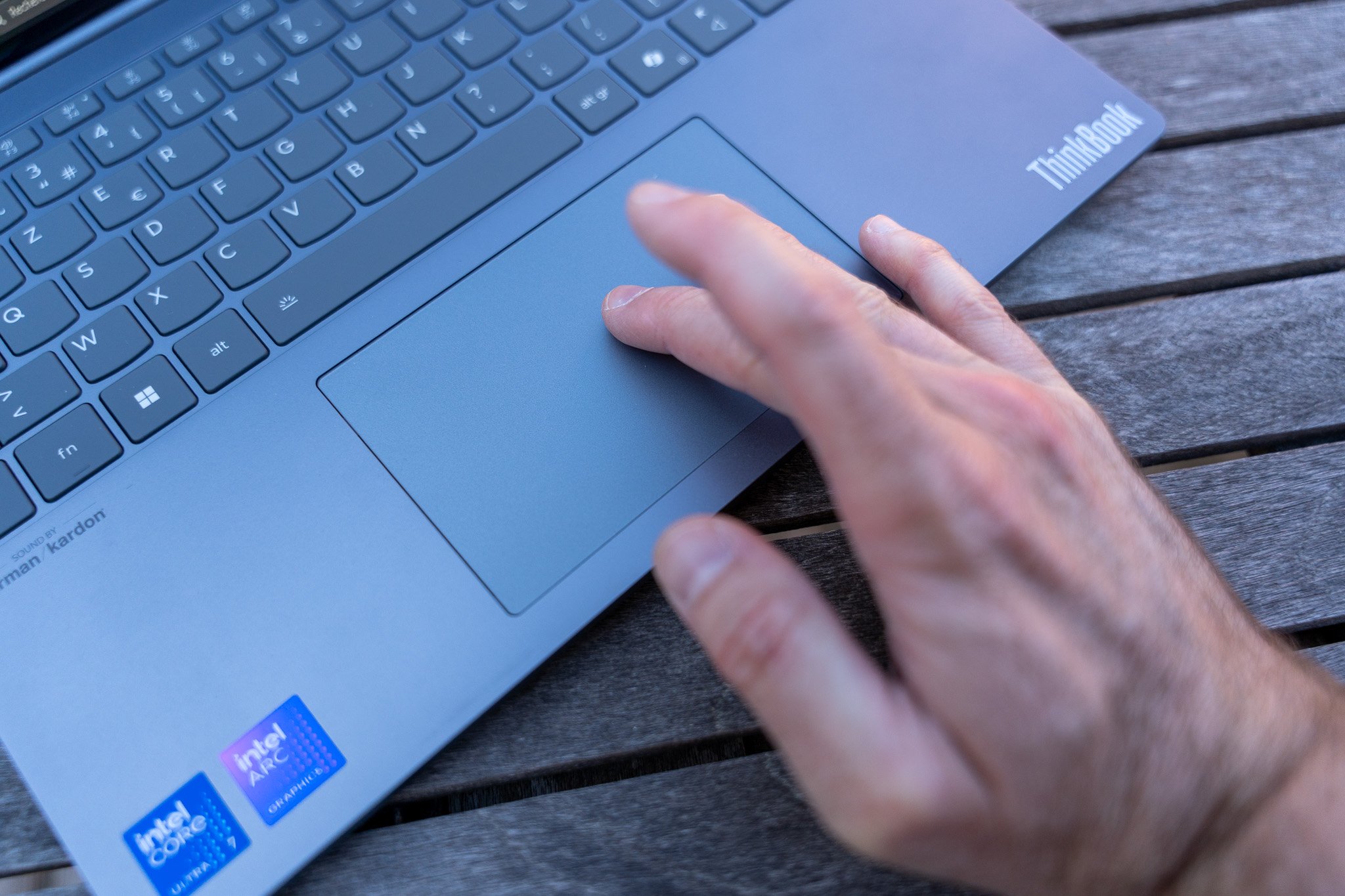
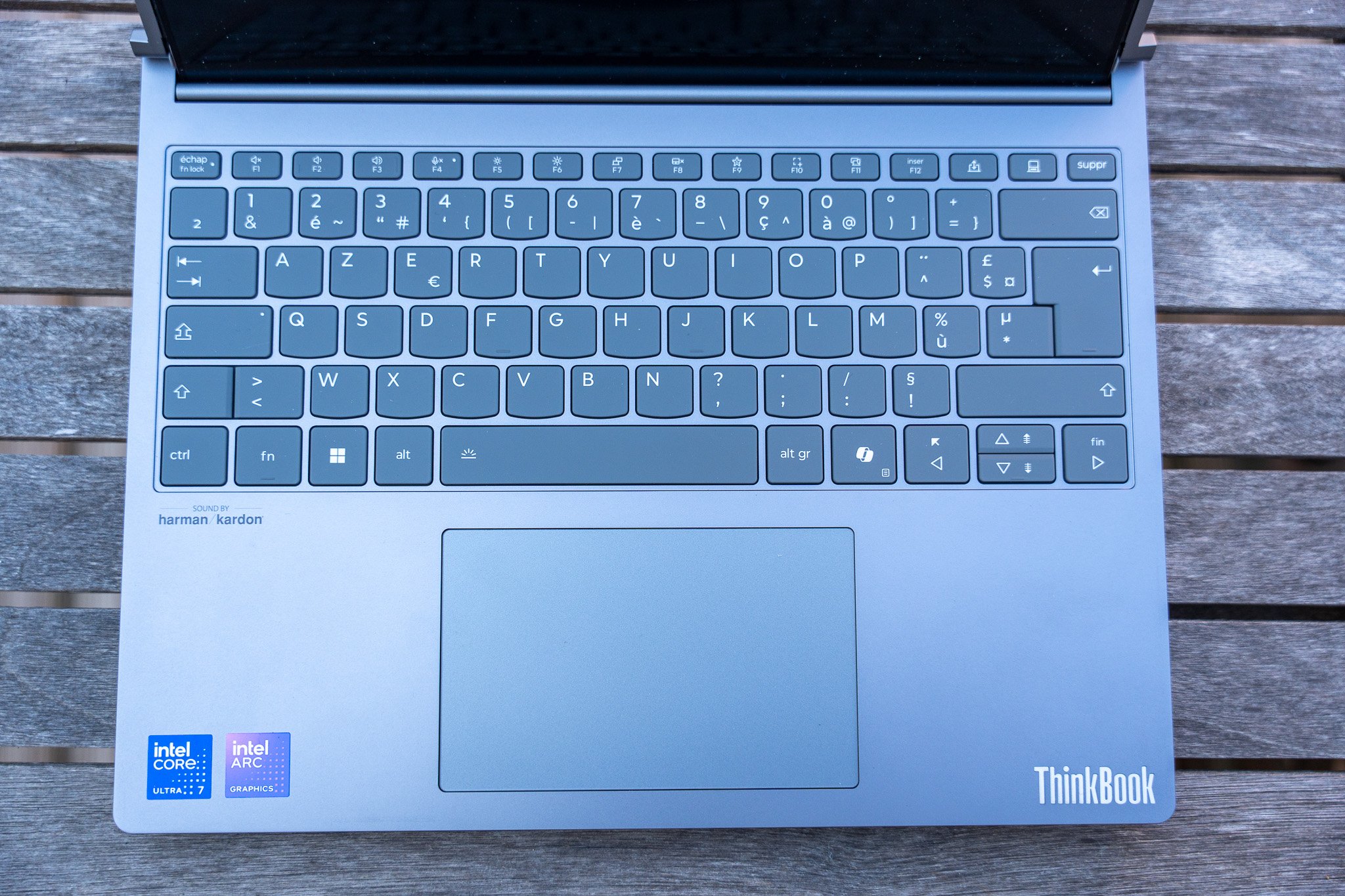
The keyboard is simply excellent, with wide, soft keys that are well spaced. The Chinese manufacturer clearly knows what it is doing here, as this is confirmed once again. Bonus: the trackpad is haptic, much like Apple’s MacBook Air/Pro trackpads. Unfortunately, testing isn’t perfect: the clicks are loud, the glide surface is narrow, and precision isn’t up to par (double-clicks occur more than once by accident).

© Nathan Le Gohlisse for Clubic

© Nathan Le Gohlisse for Clubic

© Nathan Le Gohlisse for Clubic

© Nathan Le Gohlisse for Clubic

Opening the cap is weak at maximum, and the device sometimes lacks balance. © Nathan Le Gohlisse for Clubic

Opening the cap at maximum is weak and the device sometimes lacks balance. © Nathan Le Gohlisse for Clubic

As with Lenovo, the webcam is of decent quality. With 5 MP and integrated sensors, it provides decent sharpness for videoconferencing (1440p) and enables quick authentication via facial recognition. The keyboard, likewise, is not worth lingering over, as it mirrors the experience offered by other Lenovo ultraportables in terms of typing feel.

This keyboard is simply excellent, with broad, softly padded keys and ample spacing. The Chinese manufacturer knows what it is doing, and this is confirmed once again… with a bonus: the trackpad here is haptic, like those on Apple’s MacBook Air/Pro. Unfortunately, the test isn’t perfectly translated into practice: the clicks are loud, the glide surface is somewhat narrow, and precision is lacking (many accidental double-clicks, for example).

© Nathan Le Gohlisse for Clubic

© Nathan Le Gohlisse for Clubic

© Nathan Le Gohlisse for Clubic

© Nathan Le Gohlisse for Clubic

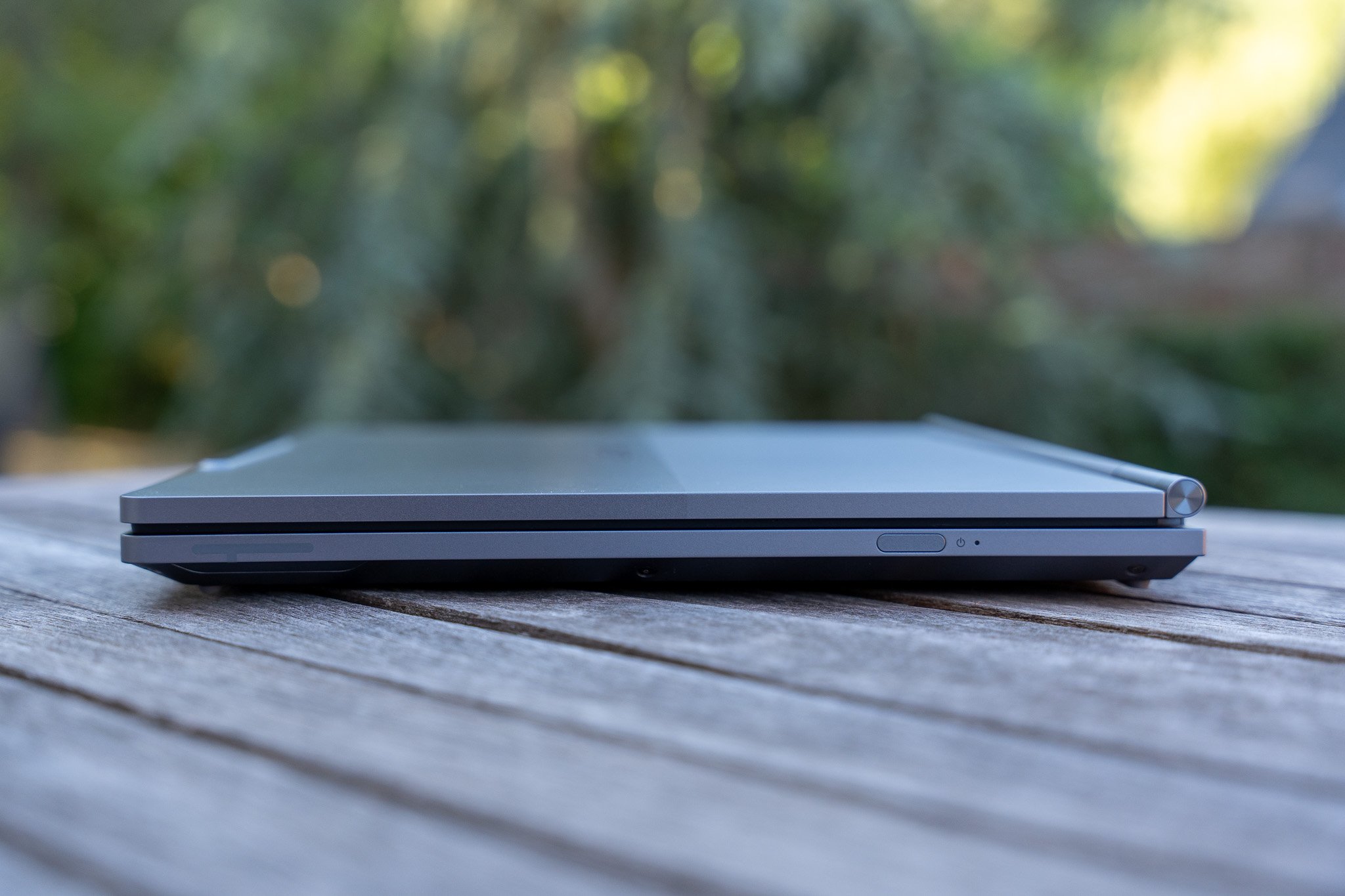
The finish is overall fairly decent. The base of the chassis is aluminum alloy, as is the lid. The bezels around the screen (which are quite thick) are plastic—just like the elements of the dual hinge, which is quite complex as it houses the rack-and-roller system that enables extending and retracting the OLED display. We will come back to this mechanism.

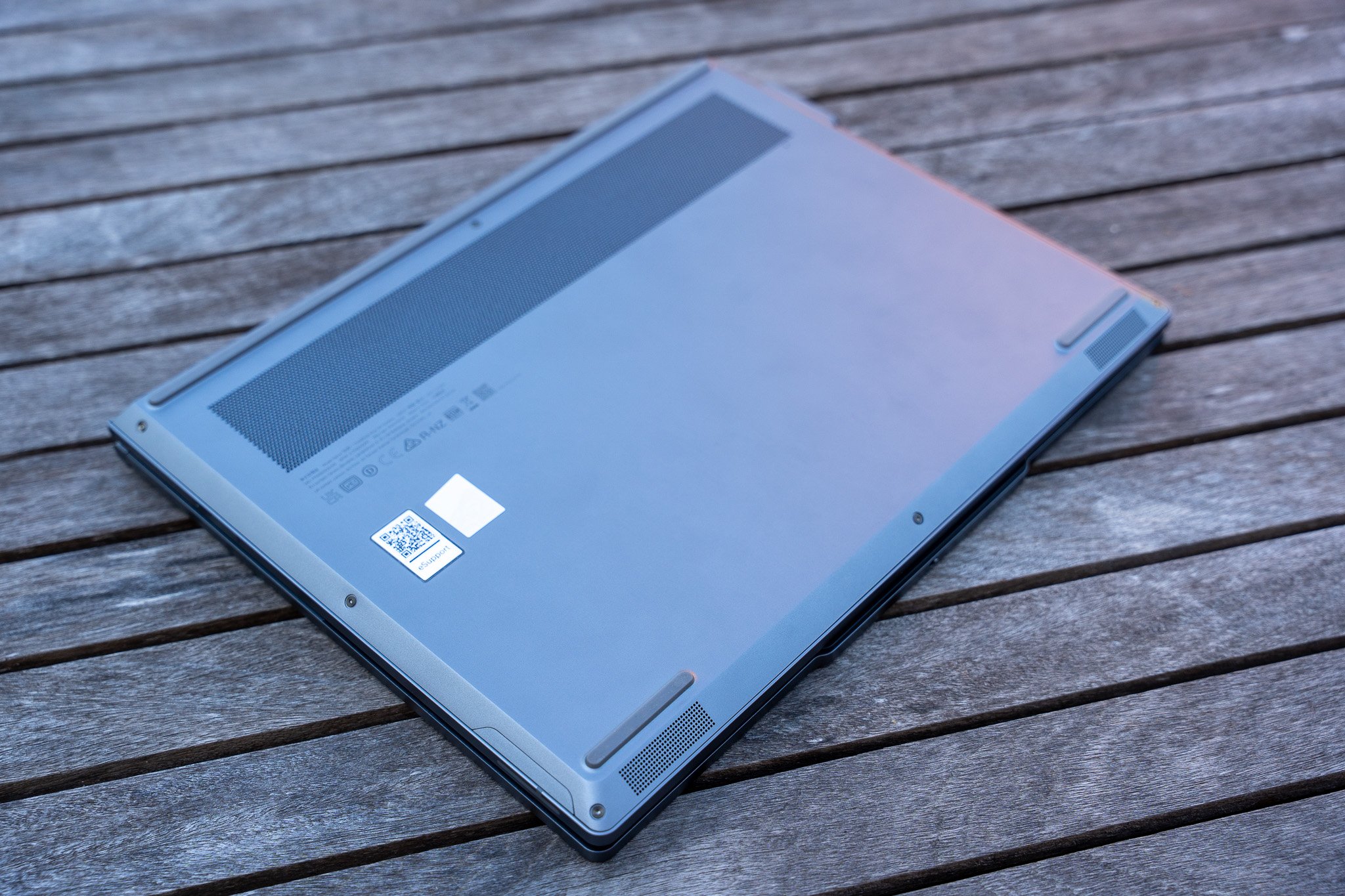
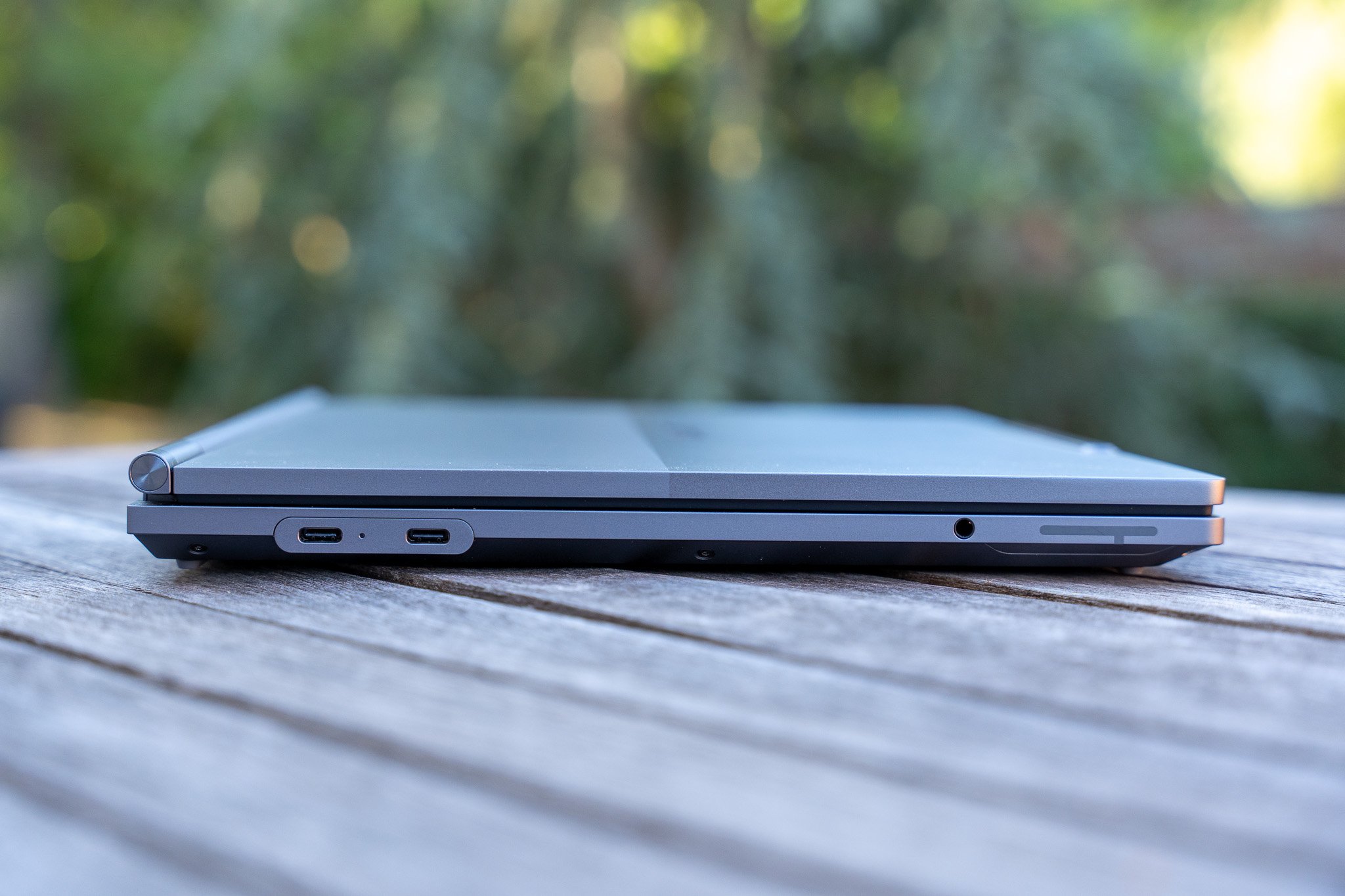
We’ll quickly note the I/O: there are only three ports. Minimalist by design, the device sticks to two USB-C Thunderbolt 4 ports and a 3.5 mm jack. The thickness could likely have allowed more, but clearly Lenovo had to make internal trade-offs to free space for the rolling/unrolling concept to exist.

© Nathan Le Gohlisse for Clubic

© Nathan Le Gohlisse for Clubic

© Nathan Le Gohlisse for Clubic

© Nathan Le Gohlisse for Clubic

The finish is generally quite solid. The base and lid use aluminum alloy, and the screen surround (which is quite thick) is plastic, as are some elements of the complex dual hinge where the rack-and-roller mechanism is housed to extend and retract the OLED display. We’ll get back to this.

We’ll quickly skip the connectors: there are three ports. Minimalist by design, the device sticks to two USB-C Thunderbolt 4 ports and a 3.5 mm jack. The device’s thickness could have allowed for more, but Lenovo clearly had to balance internal space to accommodate the rolling/unrolling concept.

© Nathan Le Gohlisse for Clubic

© Nathan Le Gohlisse for Clubic

© Nathan Le Gohlisse for Clubic

© Nathan Le Gohlisse for Clubic

Opening the cap is weak at maximum, and the device sometimes lacks balance. © Nathan Le Gohlisse for Clubic

Opening the cap at maximum is weak and the device sometimes lacks balance. © Nathan Le Gohlisse for Clubic

In terms of image quality, the webcam is pretty solid. The 5 MP sensor provides adequate sharpness for video calls, and facial recognition lets you sign in quickly. The keyboard, again, offers a typing experience consistent with Lenovo’s other ultraportables.

This keyboard is excellent, with generous, cushioned keys and generous spacing. The Chinese manufacturer clearly knows what it is doing here, a fact that is reinforced again… albeit with a bonus: the trackpad is haptic, similar to Apple’s MacBook trackpads. Unfortunately, the test isn’t perfect: the clicks are loud, the glide area is narrow, and precision isn’t up to par (double-clicks happen unintentionally).

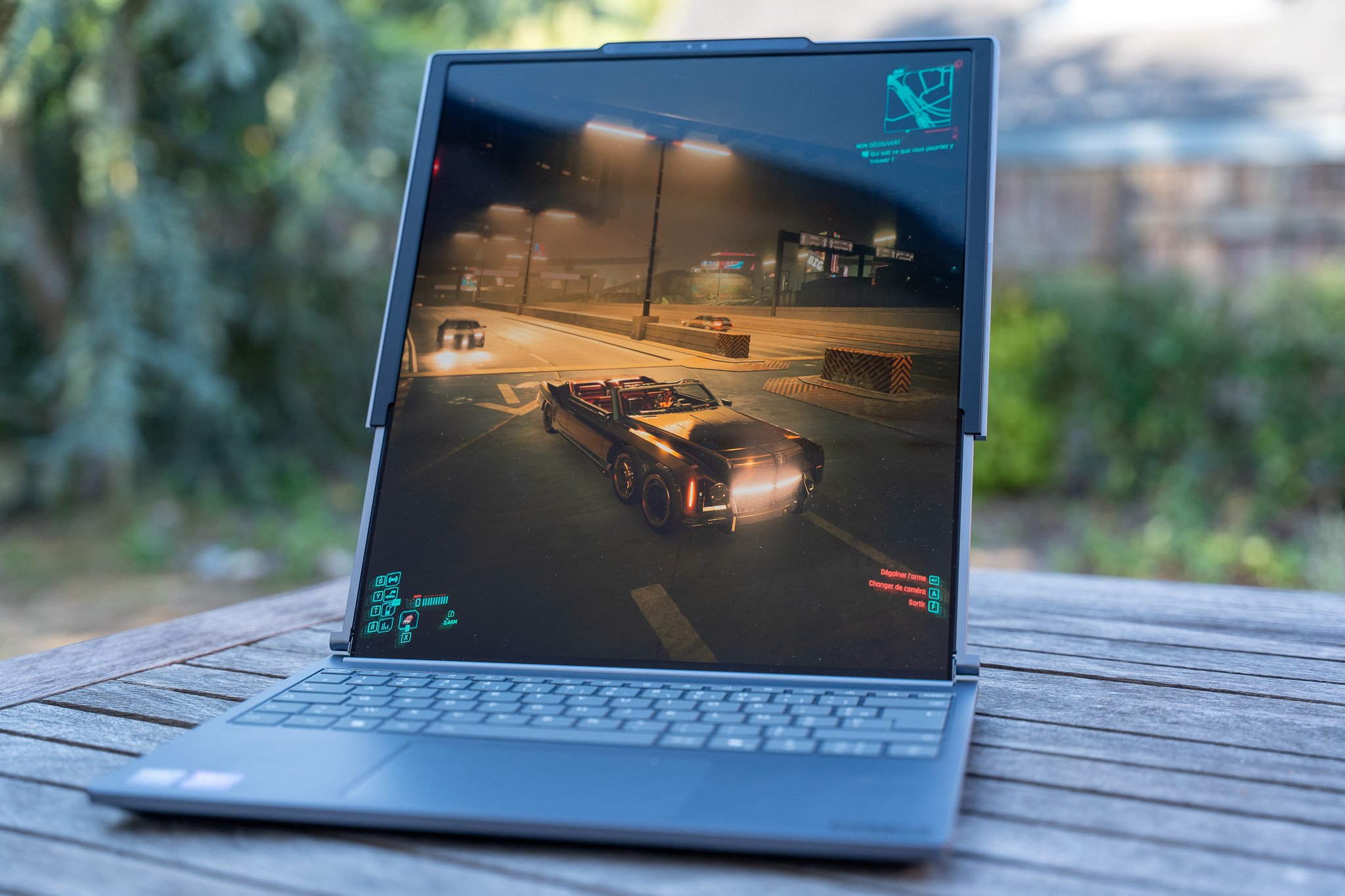
Jouer à Cyberpunk 2077 in this format is more fun than we expected (of course, it’s also possible to stay in 14 inches). © Clubic

Playing Cyberpunk 2077 in this format is more fun than we expected (of course, it’s also possible to stay in 14 inches). © Clubic

© Nathan Le Gohlisse for Clubic

© Nathan Le Gohlisse for Clubic

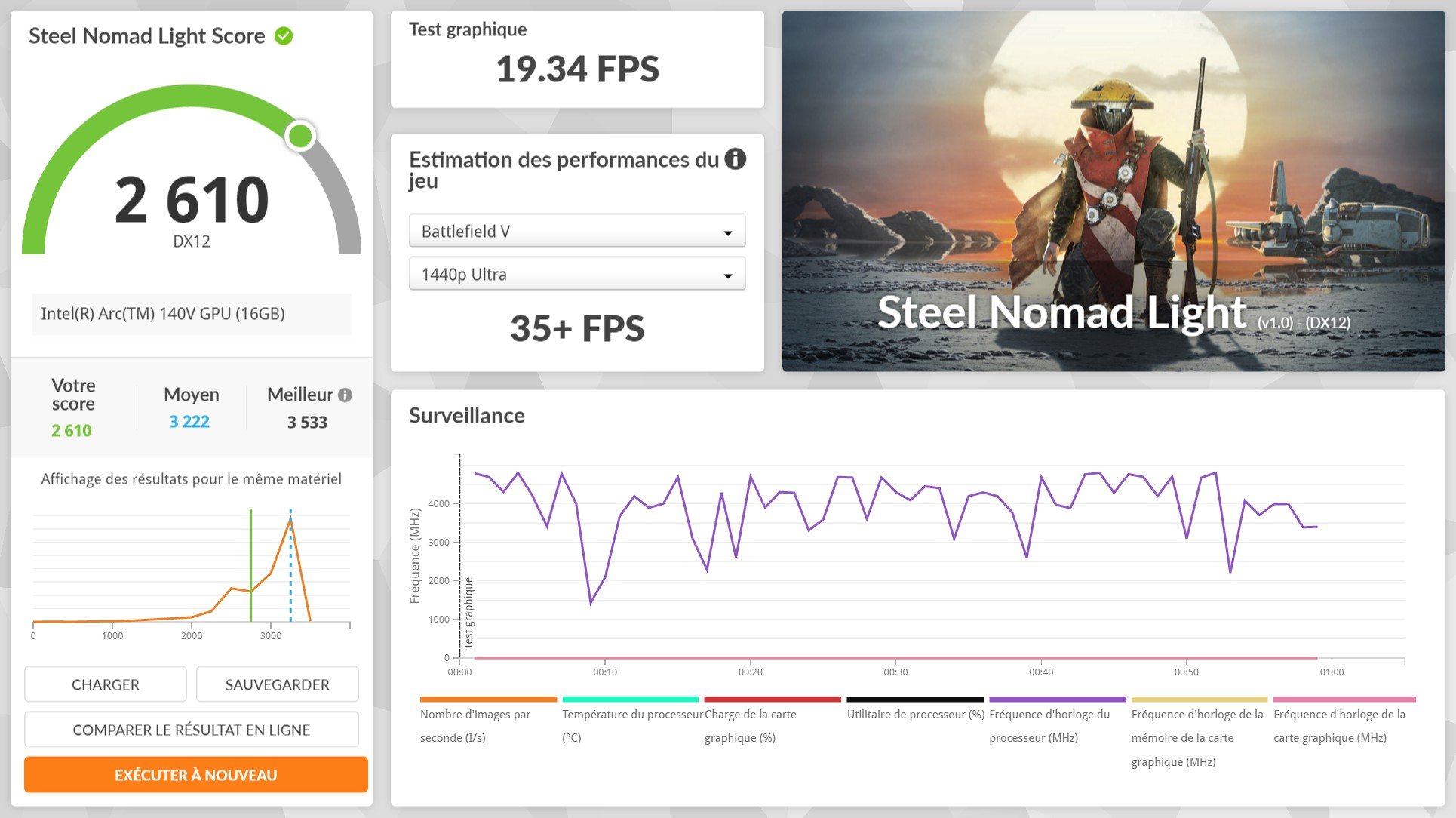
Les résultats sur 3D Mark Steel Nomad Light. © Clubic

Les résultats sur 3D Mark Steel Nomad Light. © Clubic

© Nathan Le Gohlisse for Clubic

© Nathan Le Gohlisse for Clubic

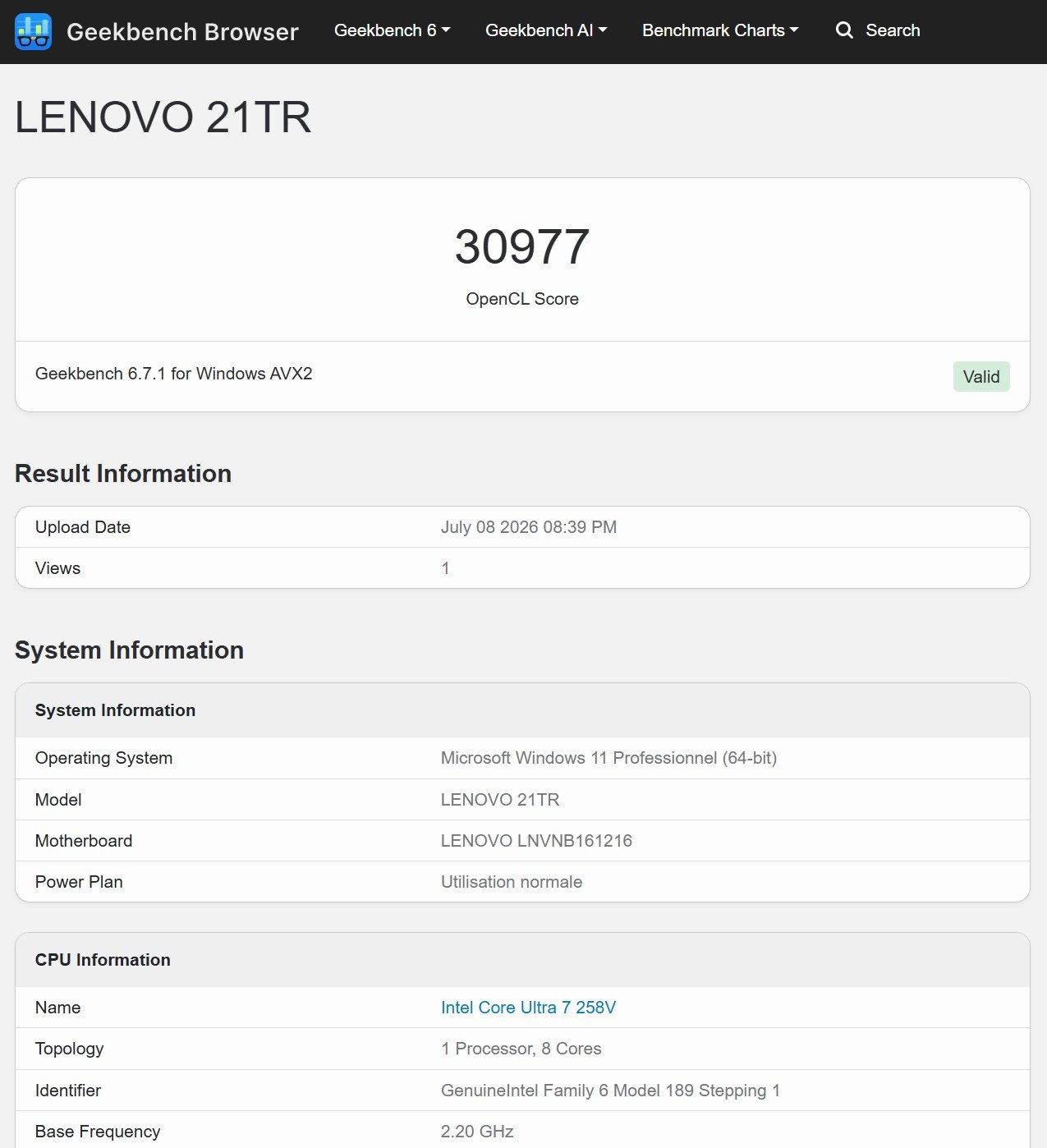
Les résultats CPU sur Geekbench 6. © Clubic

CPU results on Geekbench 6. © Clubic

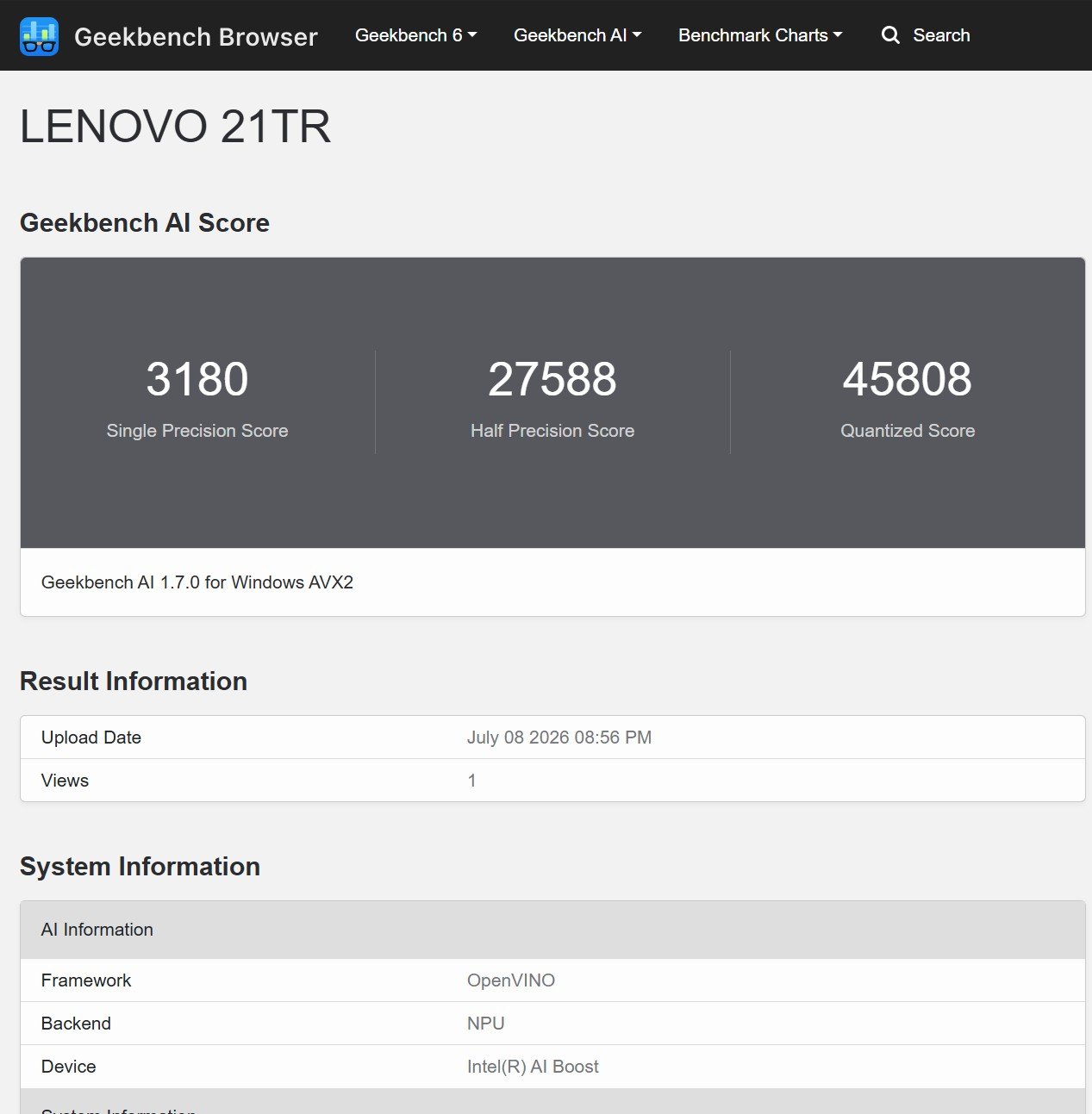
Les résultats NPU sur Geekbench AI. © Clubic

NPU results on Geekbench AI. © Clubic

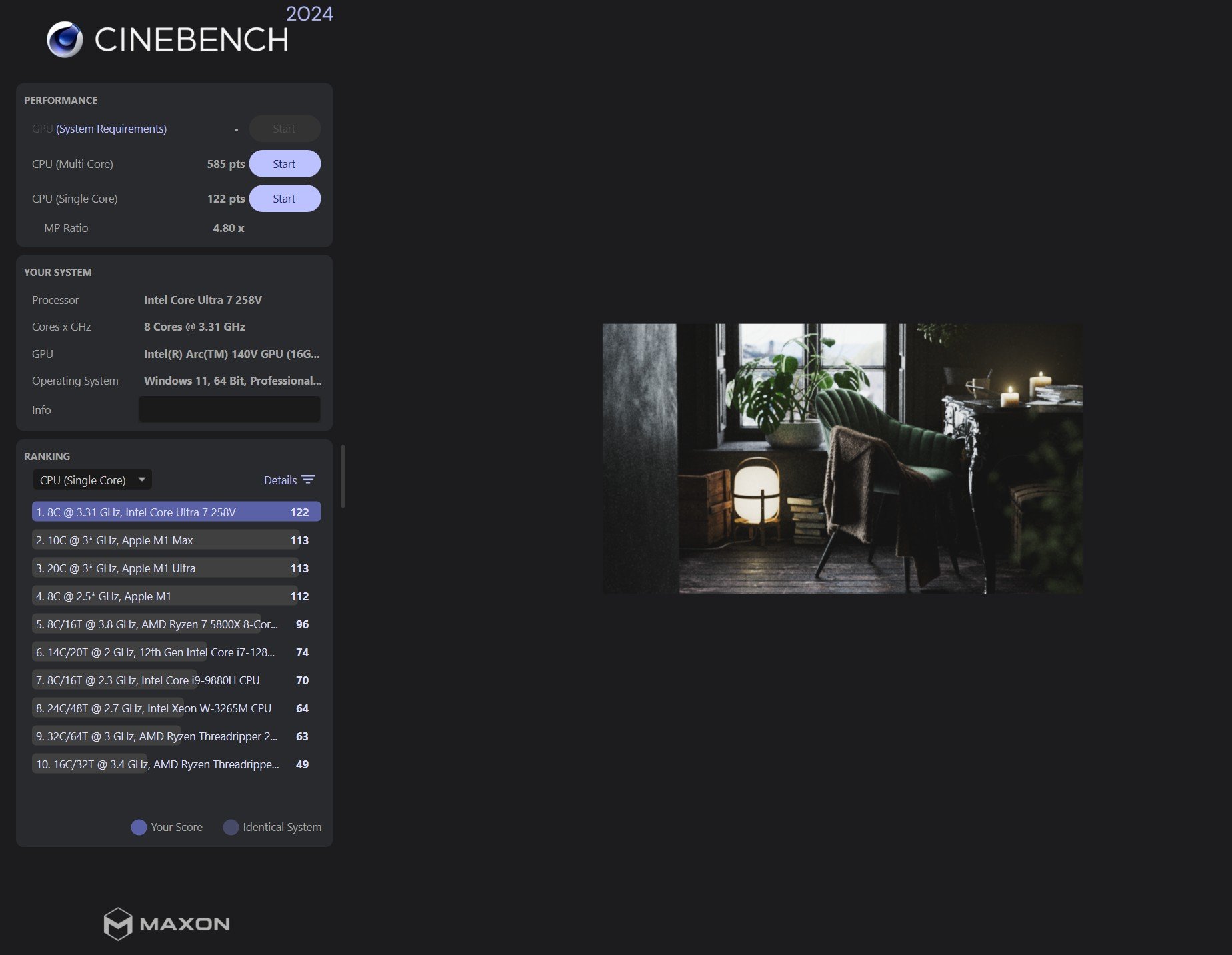
Les résultats CPU sur Geekbench 6. © Clubic

Les résultats CPU sur Geekbench 6. © Clubic

© Nathan Le Gohlisse for Clubic

© Nathan Le Gohlisse for Clubic

© Nathan Le Gohlisse for Clubic

© Nathan Le Gohlisse for Clubic

The finishes are, moreover, reasonably solid overall. The base and lid are made from aluminum alloy, just like the lid. The bezels around the display (which are very thick) are plastic, as are the elements of the dual hinge, which houses the rack-and-roller mechanism that allows expanding and retracting the OLED panel. We will revisit this later.

We’ll quickly note the connectivity: there are three ports. Minimalist by design, the device sticks to two USB-C Thunderbolt 4 ports and a 3.5 mm jack. The device’s thickness could have allowed more, but there’s little doubt Lenovo chose internal trade-offs to make room for the rolling/unrolling concept to exist.

The chassis is relatively thin and compact for such an unusual product. © Nathan Le Gohlisse for Clubic

The chassis is relatively thin and compact for such an unusual product. © Nathan Le Gohlisse for Clubic

© Nathan Le Gohlisse for Clubic

© Nathan Le Gohlisse for Clubic

The device’s chassis is barely aesthetic and somewhat kludgy in the broader design; it feels fragile. It’s a necessary evil to obtain a 16.7-inch screen that unfolds vertically, and Lenovo will need to find a more robust and elegant solution in future iterations. It’s acceptable, but only if you handle the device with kid-glove care.

The screen cannot tilt beyond roughly 95° backward, while the lower portion of the chassis weighs enough to help stabilize its extreme verticality. Caution is essential when handling. In this context, and while we remain impressed by the mechanical achievement of the concept, we remain worried about long-term durability—especially if you are naturally clumsy.

© Nathan Le Gohlisse for Clubic

© Nathan Le Gohlisse for Clubic

© Nathan Le Gohlisse for Clubic

Visually unappealing and awkwardly integrated with the rest of the design, this surface is a necessary evil to obtain a 16.7-inch screen, at least until Lenovo finds a more aesthetic and robust approach for future iterations. We tolerate it, but only with the utmost care in handling.

Moreover, the display cannot tilt more than about 95° backward, and the lower portion of the chassis barely keeps the device stable in its ultra-vertical render. Handling must therefore be cautious. In this context, and while we’re indeed impressed by the mechanical feat of the concept, we remain generally uneasy about the device’s long-term solidity—especially if you’re prone to rough handling.

Entièrement déroulé, l'écran correspond à deux dalles 16:9 placées l’une sur l’autre. © Nathan Le Gohlisse for Clubic

Entirely extended, the screen corresponds to two 16:9 panels stacked one atop the other. © Nathan Le Gohlisse for Clubic

The OLED panel displays noticeable creases when fully extended. © Clubic

The OLED panel exhibits noticeable creases when fully extended. © Clubic

We won’t repeat the usual OLED basics, but the contrast is, in short, excellent. As with this technology, blacks are deep and the overall image is highly pleasing. Yet there is a significant color drift on this screen that would have benefited from more careful calibration.

Indeed, we measured a DeltaE value of 3.4 (ideally should be 3 or below) and, more notably, a color temperature that sinks to 6012 K, indicating overly warm colors for natural rendering of content.

Coverage of major color spaces is precise, with 187% of sRGB coverage and 125% of the DCI-P3 gamut. We also appreciate the excellent uniformity across the panel. Whether in 14-inch or 16.7-inch mode, the viewing experience remains consistent with no notable disparities.

Performance: a 2024 spec sheet… in 2026

As is common with this kind of “unconventional” device, the spec sheet isn’t exactly fresh. It relies on a 2024-era Intel Lunar Lake processor in place of the many Panther Lake chips found in 2026 laptops.

Clearly, Lenovo’s aim wasn’t to offer cutting-edge performance, but rather to finalize the elaborate design of a “new” device and make it as functional as possible. This is indeed the case—anything less would be surprising at 4,700 euros. Unfortunately, the ThinkBook Plus Gen 6 Rollable arrived on the market a bit early to carry the latest Intel chips, released just last January.

C'est une ancienne puce Lunar Lake qui pilote le ThinkBook... mais elle fait encore aujourd'hui son petit effet. © Clubic

It’s an older Lunar Lake chip powering the ThinkBook… but it still holds its own today. © Clubic

This leads us to question: why didn’t Lenovo take a few more months to refine the design and incorporate the latest-generation processors as well? The mystery remains, but here is the specification we worked with for this review.

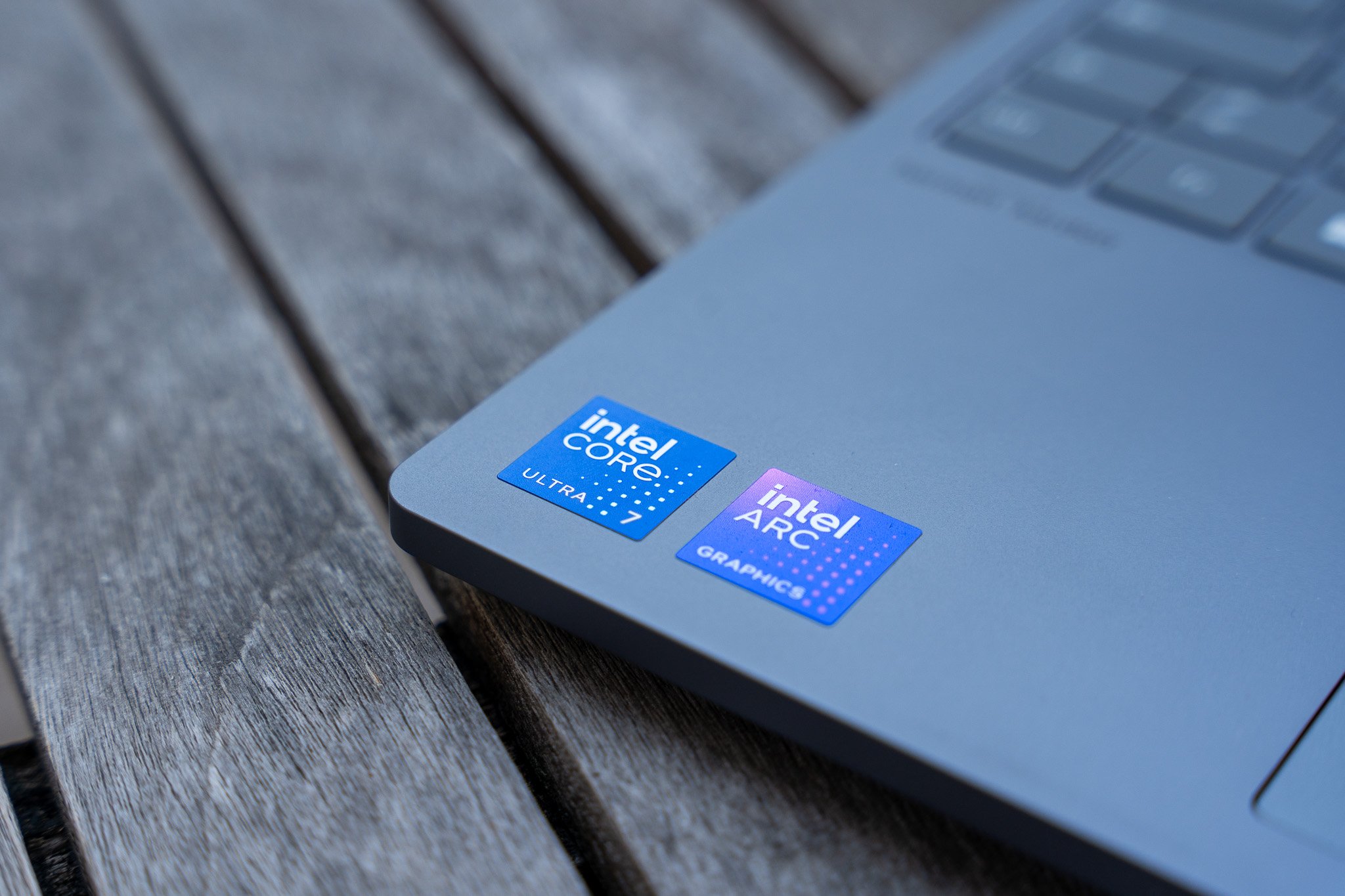
  • Intel Core Ultra 7 258V (8 cores / 8 threads, up to 4.8 GHz, 12 MB cache, 17 W default TDP) with integrated Intel Arc 140V graphics (8 Xe2 GPU cores @ 1.95 GHz)
  • 32 GB memory (LPDDR5X at 8533 MT/s)
  • 1 TB PCIe Gen 4 storage

Thermally, Lenovo isn’t easily faulted. The device stays pleasantly warm to the touch even under heavy load. It remains reasonably quiet—no more than 43 dB at peak when the Performance mode is active. In daily use, for most tasks, the fans stay off and the unit remains completely silent.

© Nathan Le Gohlisse for Clubic

© Nathan Le Gohlisse for Clubic

Once unfolded, the screen offers a large vertical surface, very pleasant for content viewing. © Clubic

Once unfolded, the screen offers a large vertical surface, very pleasant for content viewing. © Clubic

However, the comfort of use in extended mode is undeniable. The usage is at eye level — not with the neck slightly tilted forward as happens with other portable PCs. The display area also enables comfortable web page viewing and easier multitasking… Even if, when split across windows, Windows 11 native features prove far more useful than Lenovo’s overlay. It’s a bit messy and never quite as expected; it deserves a rethink. It does have the merit of being callable or dismissible via a keyboard shortcut. Handy.

The question remains: which user niche is this machine aimed at? The answer is hard to pin down. We’d lean towards professionals, developers, coders, or individuals who need extra display space for consulting documents. However, in terms of verticality, the ZenBook Duo 2026 appears far more pragmatic, efficient, and versatile… and at roughly half the price. Mark that down.

The chassis is relatively thin and compact for such an unusual product. © Nathan Le Gohlisse for Clubic

The chassis is relatively thin and compact for such an unusual product. © Nathan Le Gohlisse for Clubic

The chassis is relatively thin and compact for such an unusual product. © Nathan Le Gohlisse for Clubic

© Nathan Le Gohlisse for Clubic

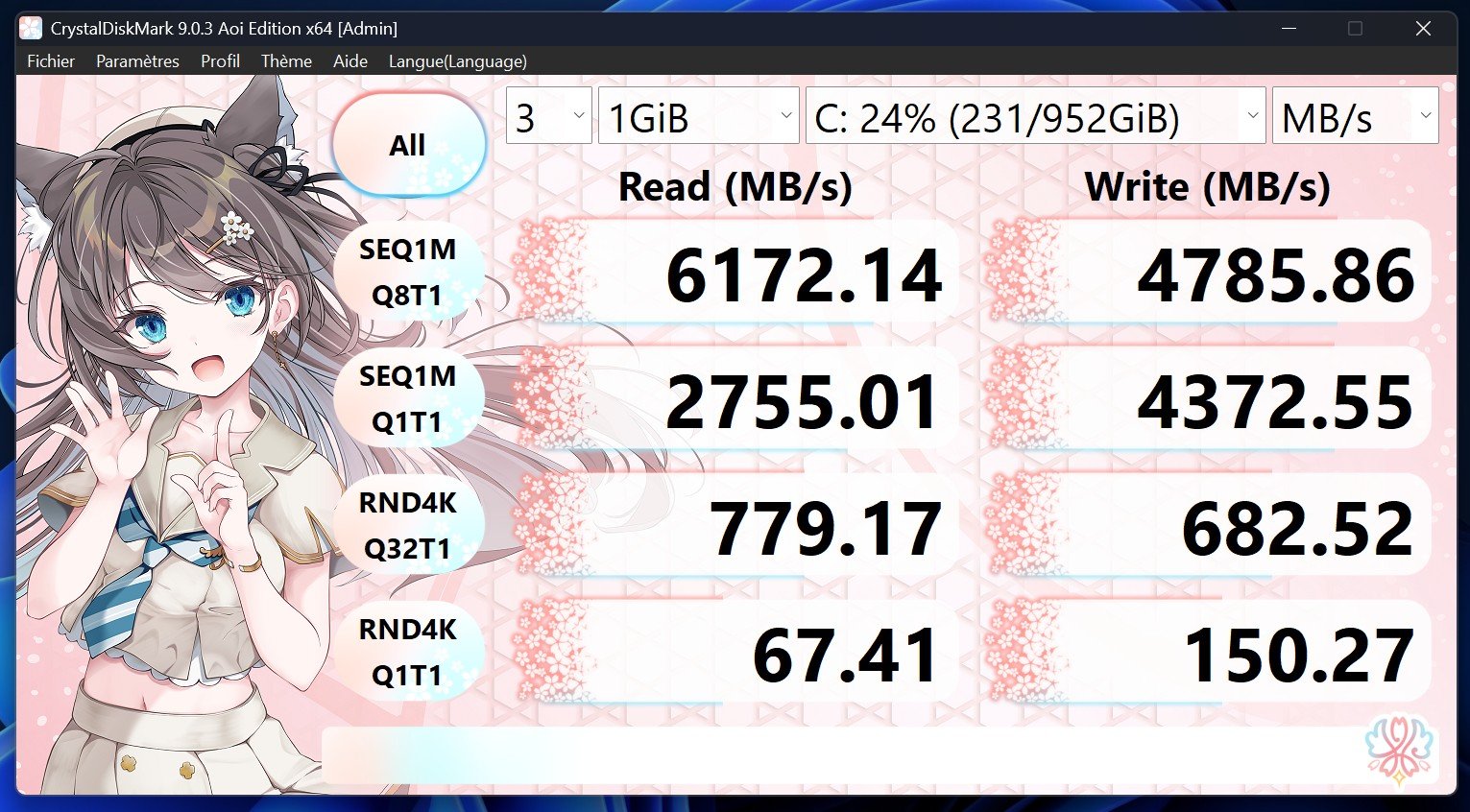
The SSD performance, finally, is honest. The 1 To M.2 PCIe Gen 4 drive installed in our test unit delivers 6172 MB/s read and 4785 MB/s write. Reasonable throughputs, sufficient for most tasks.

Les résultats du SSD sous CrystalDiskMark. © Clubic

Les résultats du SSD sous CrystalDiskMark. © Clubic

Battery life: the verdict?

Autonomy isn’t the ThinkBook Plus Gen 6 Rollable’s strongest suit, as one might expect. The device houses a 66 Wh battery, not especially generous given the large OLED display’s appetite.

During our ten days of testing, we managed to push between 7 and 9 hours of use when the screen remained at the 14-inch format. In the 16.7-inch mode, energy consumption rose modestly, reducing this estimate by about an hour on average.

The autonomy isn’t particularly impressive, but Lenovo does its best. © Nathan Le Gohlisse for Clubic

The autonomy isn’t particularly impressive, but Lenovo does its best. © Nathan Le Gohlisse for Clubic

We tested with adaptive power mode and the screen locked at 60 Hz, primarily in office and multimedia usage, with a word processor open, Slack, Notion, and up to twenty browser tabs in Brave. We also watched YouTube videos during the day using the same browser.

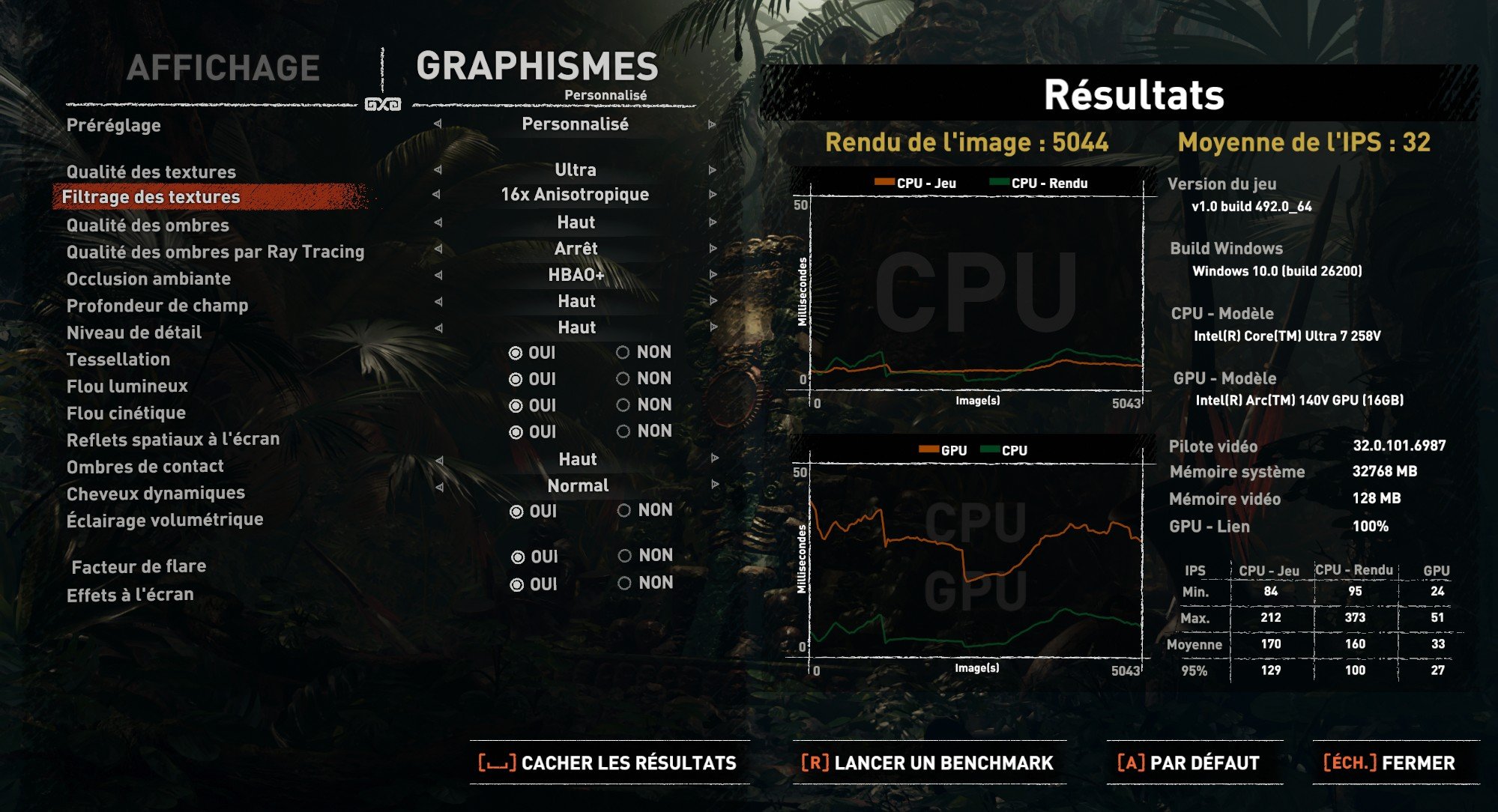
In gaming, using the 14-inch mode, we typically hit about 2–3 hours of battery in most cases with the Performance mode enabled from the software settings.

Finally, the ThinkBook Plus ships with a compact GaN 65 W USB-C charger, capable of fully recharging the battery in a little under two hours.

Lenovo ThinkBook Plus Gen 6 Rollable: Clubic’s verdict

Conclusion
Overall note
6 / 10

Persona of a gadget that is bound to attract attention, the Lenovo ThinkBook Plus Gen 6 Rollable is undeniably a beautiful proof of concept. A concept that unfortunately struggles to exit its enhanced prototype status, as finishes remain rough and its concrete usefulness difficult to gauge.

Little, if any, use for the majority of users, the dual format targets professionals who demand (literally and figuratively) a large vertical display area for coding or reviewing large vertical documents (minutes, deeds, transcripts, for example).

A niche audience that a competitor like ASUS’s ZenBook Duo will likely siphon more easily thanks to a more mature design, greater versatility, newer-generation performance, and a notably lower price.

In that context, what remains for the ThinkBook Plus Gen 6 Rollable? In its current form, not much. We’ll see whether Lenovo chooses to deepen the topic in the future to finally convince us of the practicality of a large vertically rolling OLED screen.

Pros
  • The unusual concept that grabs attention…
  • Not too bulky, not too heavy
  • The versatility of the Lunar Lake SoC remains appealing in 2026
  • Good keyboard, decent webcam
Cons
  • … but useful only to a small niche of users
  • Angle d’inclinaison trop faible de l’écran, stabilité perfectible en mode étiré
  • Rudimentary I/O cover
  • Limited autonomy (6 to 9 hours depending on use)
Notes
Design

6

Display

7

Performance

7

Battery

7

Best prices

PC Componentes

3,459.00 €

See offer
3,459.00 €

GrosBill

3,679.95 €

Voir l’offre
3,679.95 €

Fnac

3,798.65 €

Voir l’offre
3,798.65 €

Fnac

4,699.99 €

Voir l’offre
4,699.99 €

Darty

4,699.99 €

Voir l’offre
4,699.99 €

ASUS Zenbook Duo 2026

ASUS Zenbook Duo 2026
  • Performance and energy efficiency of Panther Lake
  • The ASUS double-screen PC remains more useful and comfortable
  • Better design, improved OLED panels
8 / 10

4,699.99 €

Read the test

Daniel Brooks

I cover everyday products with a practical eye, from kitchen tools and home essentials to smart gadgets and consumer trends. My goal is to help readers understand what is genuinely useful, what is worth the price, and what deserves a second look before buying.