
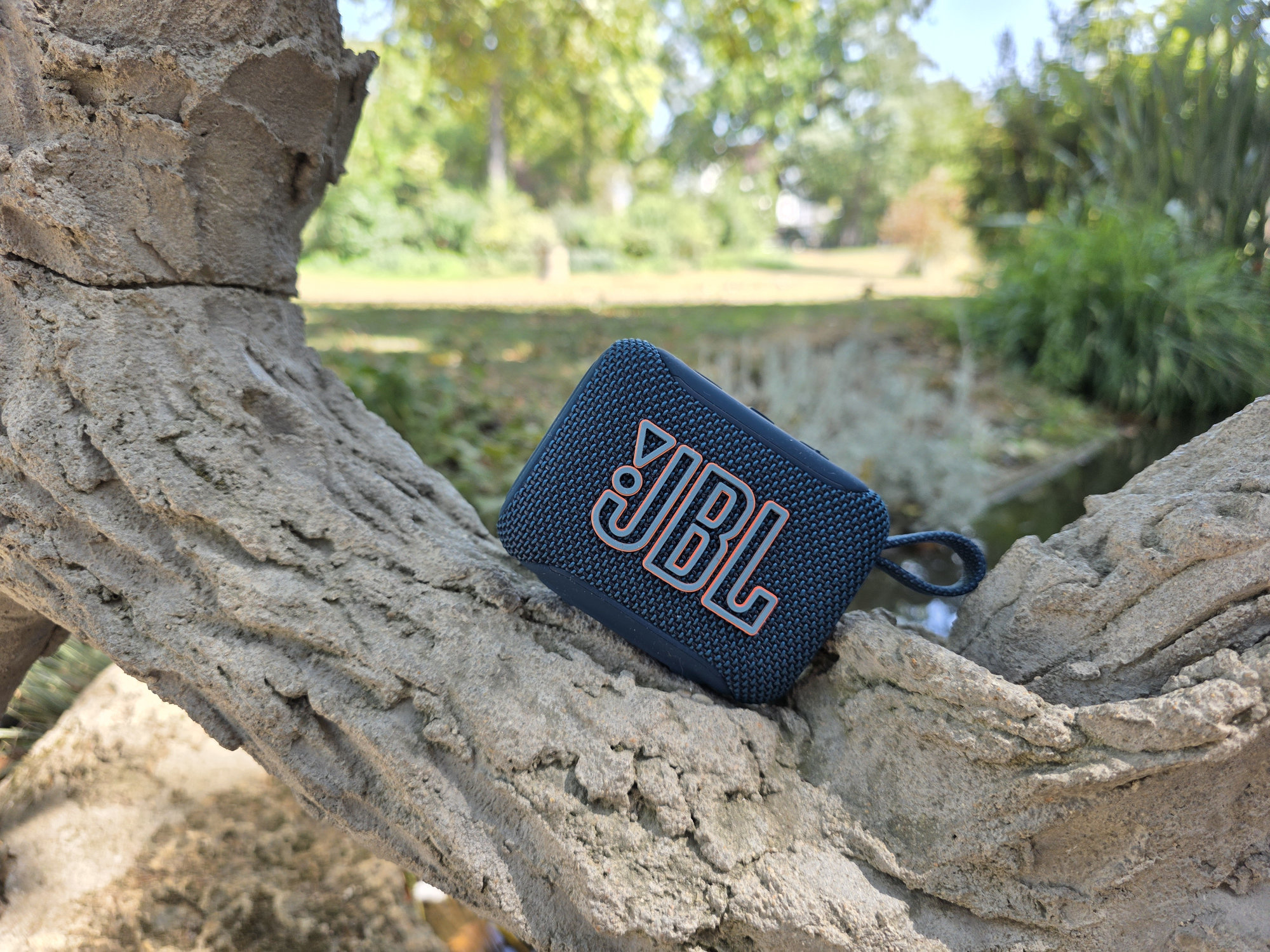
The simplest and most affordable Bluetooth speaker in JBL’s catalog, the Go remains a quintessential pick for true nomad enthusiasts. With the new Go 5, the brand crosses the symbolic threshold into LE Audio. The question is: is it the best yet?
In hand and light, the JBL Go 5 isn’t a gimmick. Waterproof, with little obvious plastic, this miniature unit serves as a showcase for the maker, who finally brings Auracast and USB-C audio interface to its Bluetooth speaker, without sacrificing its sonic character.
8 / 10
Best Prices
amazon.fr
Darty
Son-Vidéo
Boulanger
See more prices
- Good sound balance
- Compact and IP68-rated
- Ergonomics, well-thought-out app
- Stereo and PartyTogether modes
- Sharp balance at high volume
- Bass are somewhat weak
- Medium battery life
- Auracast limited to JBL ecosystem
On Form: An Established Product, But Not Premium
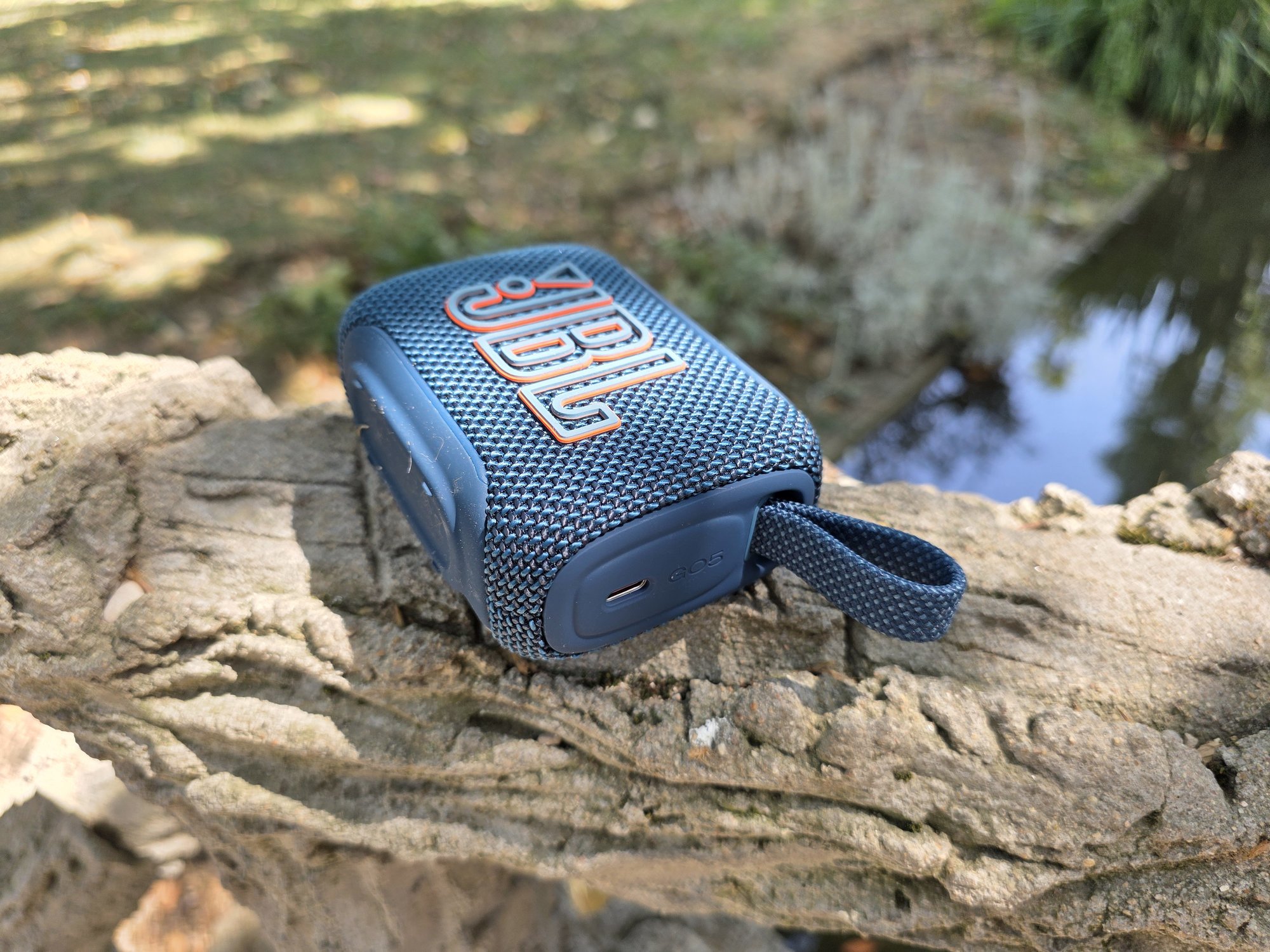
Of course, the JBL Go 5 doesn’t pretend to be luxurious. Yet, drawing on its know‑how, the brand delivers a satisfying rendition. This compact block measuring 10.1 x 7.74 x 4.3 cm and weighing 230 g avoids heavy plastic as much as possible. The speaker is mainly wrapped in a pleasant, tactile synthetic weave, with edges partly covered by a silicone-damped zone, lending it some shock-resistance. The only connectivity, symbolized by a single USB-C port, sits on a rigid base (though fairly soft to the touch). And as for the light show, it’s limited to two RGB LED strips, programmable via the app.
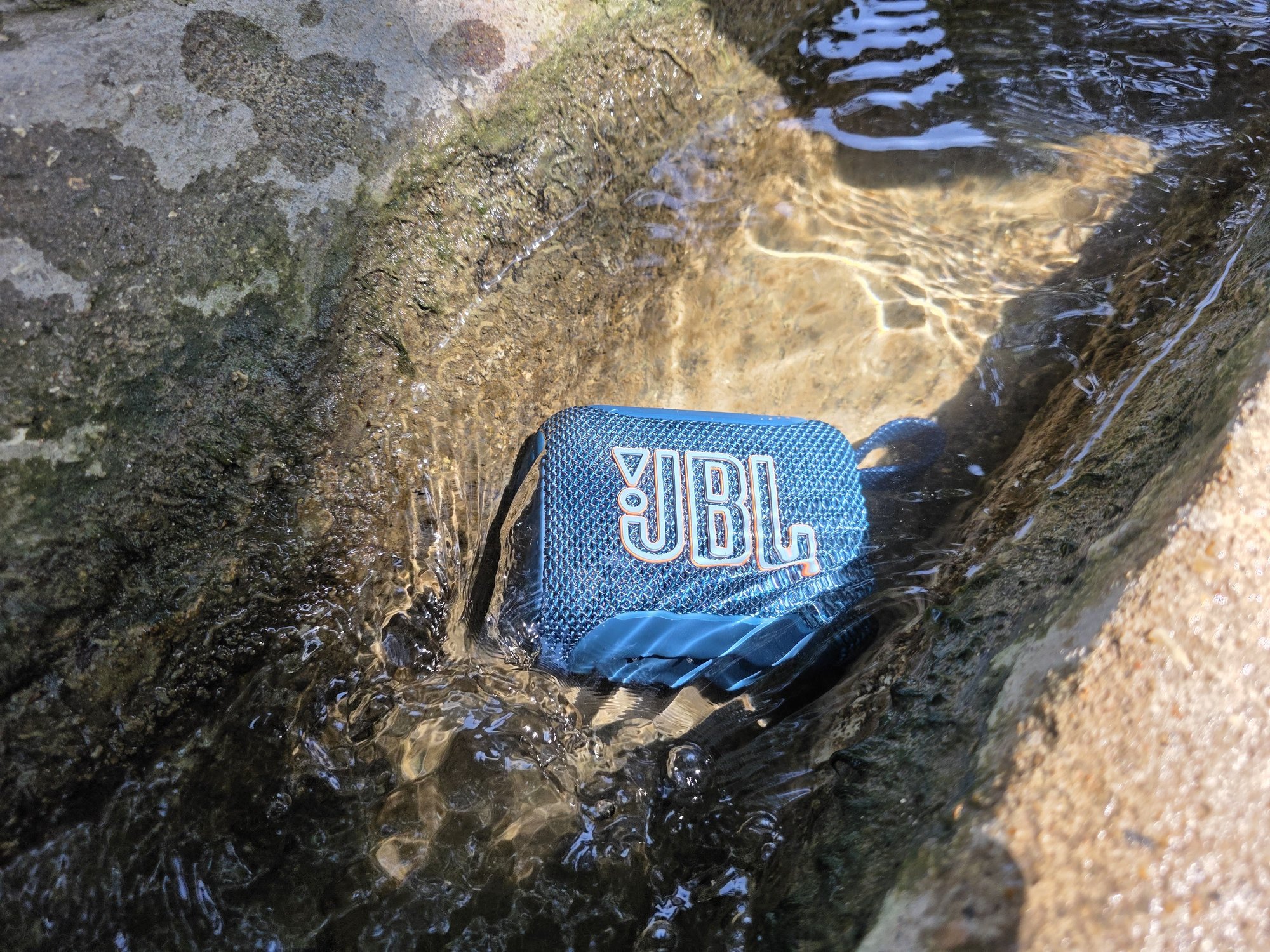
To avoid alienating longtime users, the Go 5 sticks to the aesthetic cues of its bigger sisters Go 3 and Go 4, with a few tweaks. This lineage includes the advanced IP68 rating (dust and prolonged immersion), the pinnacle of what’s currently available. If there’s a gripe, it’s that the USB-C port isn’t protected by a waterproof flap.
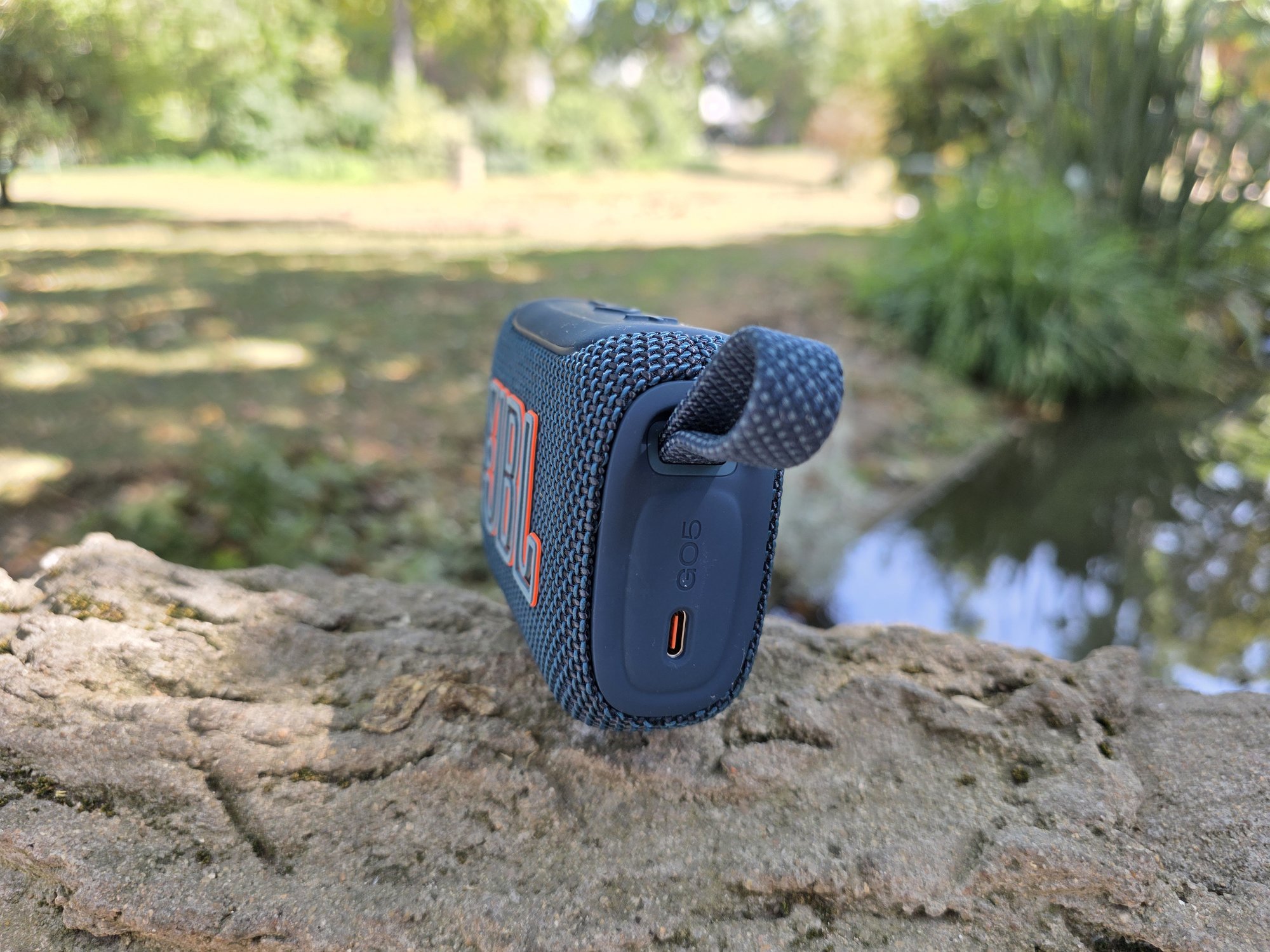
Naturally, the main asset of the speaker remains its compactness, as it fits into a large pocket with relative ease, and into any small backpack. The tiny cord—not as handy as the carabiner on a JBL Clip—is designed to attach to other items (lanyard, carabiner, rope) or to help grip it more easily.
User Experience: Limited, Yet Modern
Far from a central audio hub, the Go 5 generally goes for the simplest route, but benefits significantly from JBL’s cohesive ecosystem. This ecosystem is embodied here by the JBL Portable app, highly intuitive and offering a few adjustable options: a 7-band programmable equalizer, light-mode management, and group management.
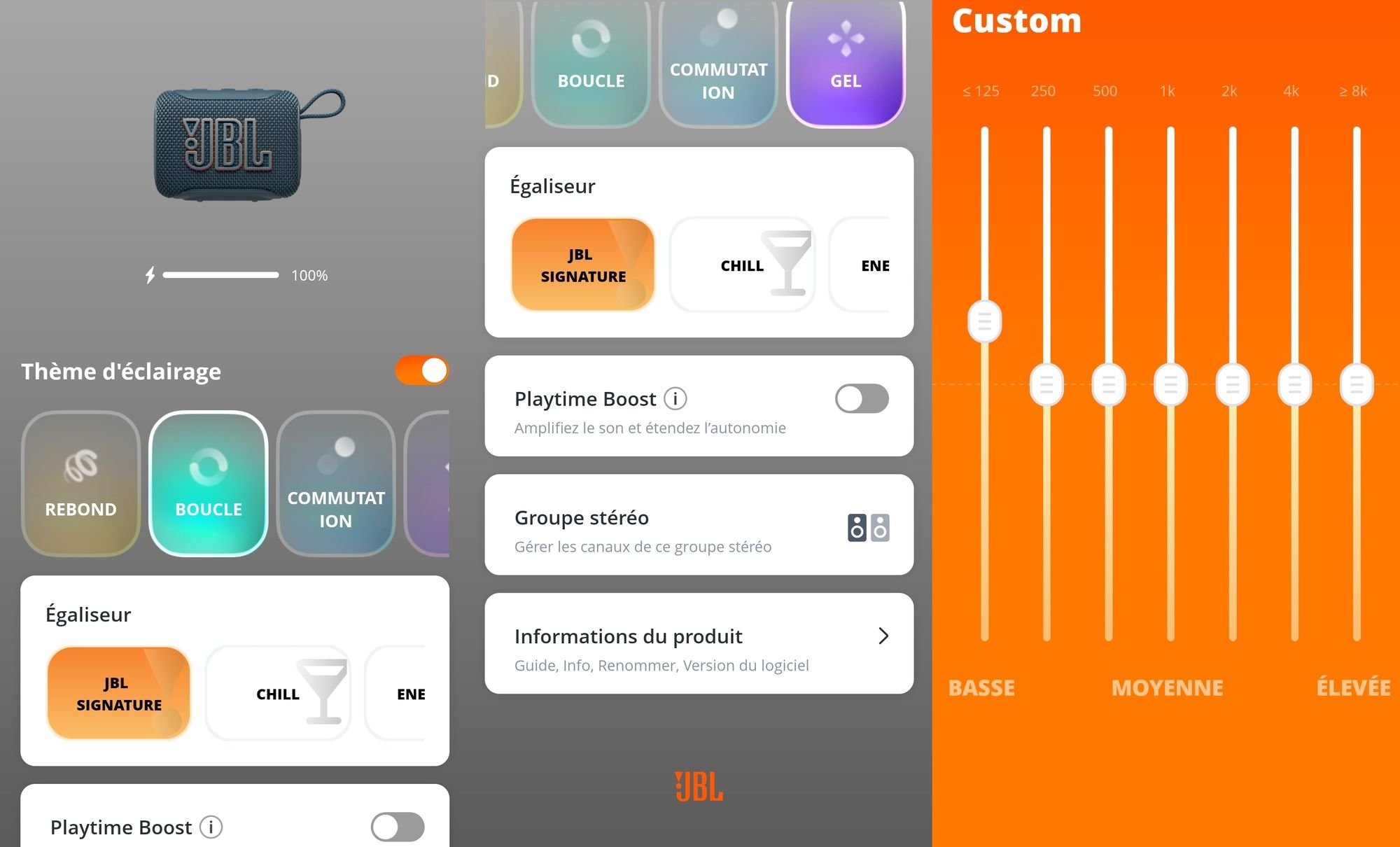
It’s with this mode that JBL demonstrates its edge over competitors (though not all of them), since the Go 5 can either pair with a second identical unit for stereo operation, or integrate into the PartyTogether feature, which accommodates nearly an unlimited number of JBL-compatible speakers (latest generation, therefore). The multi‑link concept isn’t new, but JBL moves away from a purely proprietary system in favor of Auracast… albeit with its own twist.
This advanced connectivity goes hand in hand with a more basic Bluetooth Classic management (the non‑LE Audio branch), limited to SBC/AAC codecs. At least multipoint and quick pairing (Google and Microsoft) are available.

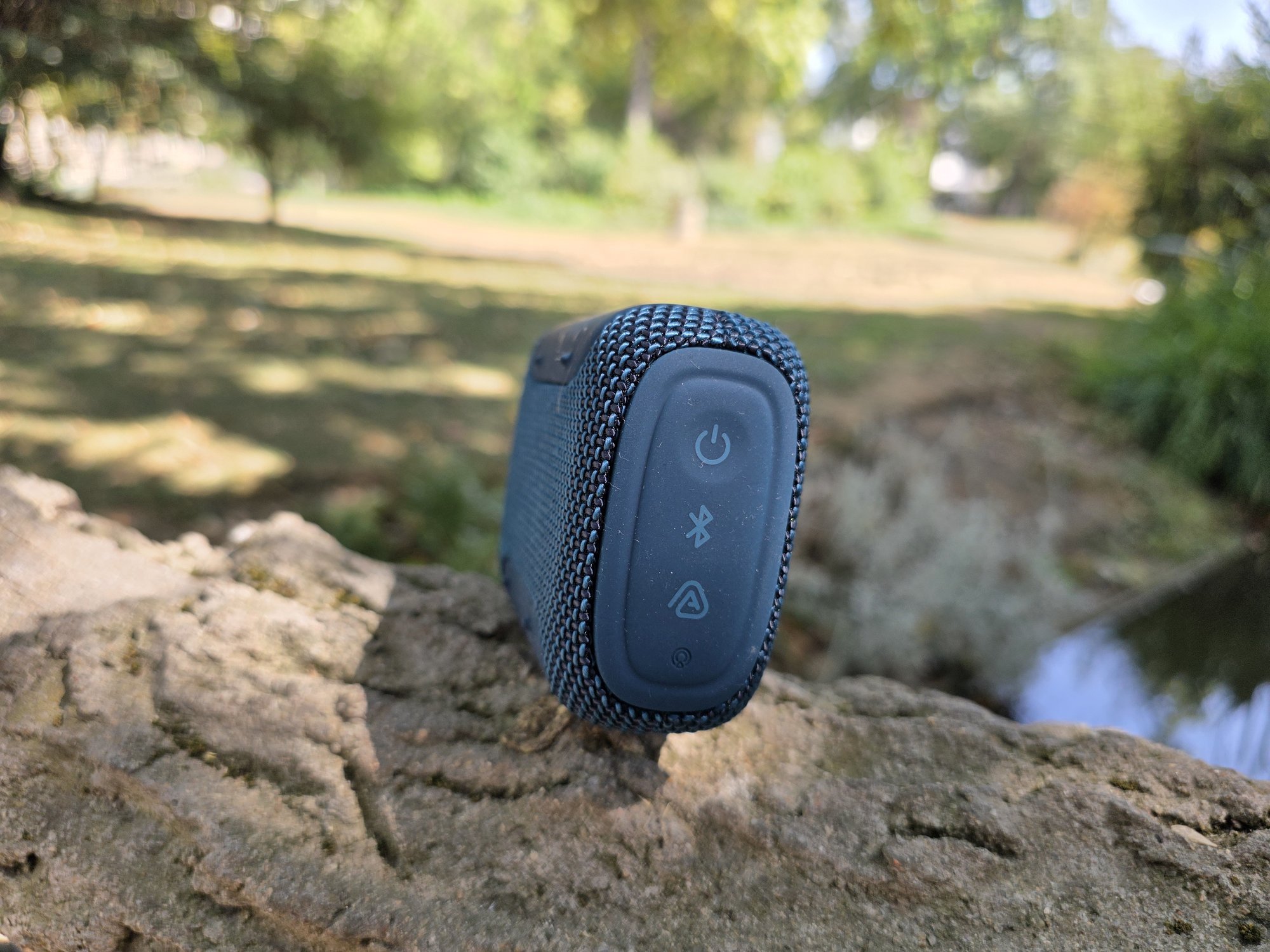
Regarding controls, there is nothing new under the sun. The JBL Go 5 relies on a proven layout: on the top edge, a trio of raised buttons (volume down; volume up; multifunction button for playback, pause, and navigation). On the left edge: power on/off; Bluetooth pairing; and Auracast buttons. The latter triggers the mentioned mode.
Very simple? Not entirely, at least not for a newcomer. The stereo-pairing concept, as well as Auracast, tend to overlap in the interface. Switching off one mode to enable another, adding a speaker to PartyTogether, and especially stopping Auracast broadcasting, aren’t completely intuitive aspects.
A Controlled Sound, Except at High Volume
The JBL formula, while not unchangeable, follows a well-oiled logic that works whether you’re looking at tiny products or party speakers: no excess, with bass and mids tapering toward the highs. This approach is informally known as Harman’s signature, seen on Harman Kardon products and some Samsung devices (Harman/JBL’s parent company).
Here, we’re not lost. Despite its minimalist architecture—featuring a single 45 mm full-range driver paired with a passive radiator—the Go 5 displays a respectable technical level.
At moderate volume, the device delivers a balanced sound with a touch of heft. The bass isn’t anemic, though it’s not distinctly rounded. JBL has slightly boosted the low-mids to compensate for the product’s physical constraints. The small driver, the passive radiator, and the modest 4.8 W RMS amplification mean the deep bass cannot be sustained beyond a certain threshold (roughly at two-thirds of max volume). Still, the Go 5 avoids becoming harsh.
Techniquement parlant, ce n’est pas révolutionnaire, mais on peut aussi relever une certaine tenue dans l’approche. Quelques détails et une impression d’ouverture subsistent malgré l’architecture mono et une dynamique moyenne. Compte tenu du format et du prix, la concurrence n’est pas vraiment pressante. Bien sûr, on peut faire mieux, notamment dans les graves, mais il faut dépenser davantage et viser un format plus imposant.
Immersive Stereo and Auracast Bluetooth
We also tested the Go 5 in stereo configuration (with a second identical unit). If this mode will likely appeal to only a portion of buyers, the listening quality gain is quite noticeable. The main advantage isn’t the bass level, but the spatial imaging and the better distribution of details, which makes sense when moving from a single mono speaker to a two-speaker stereo setup.
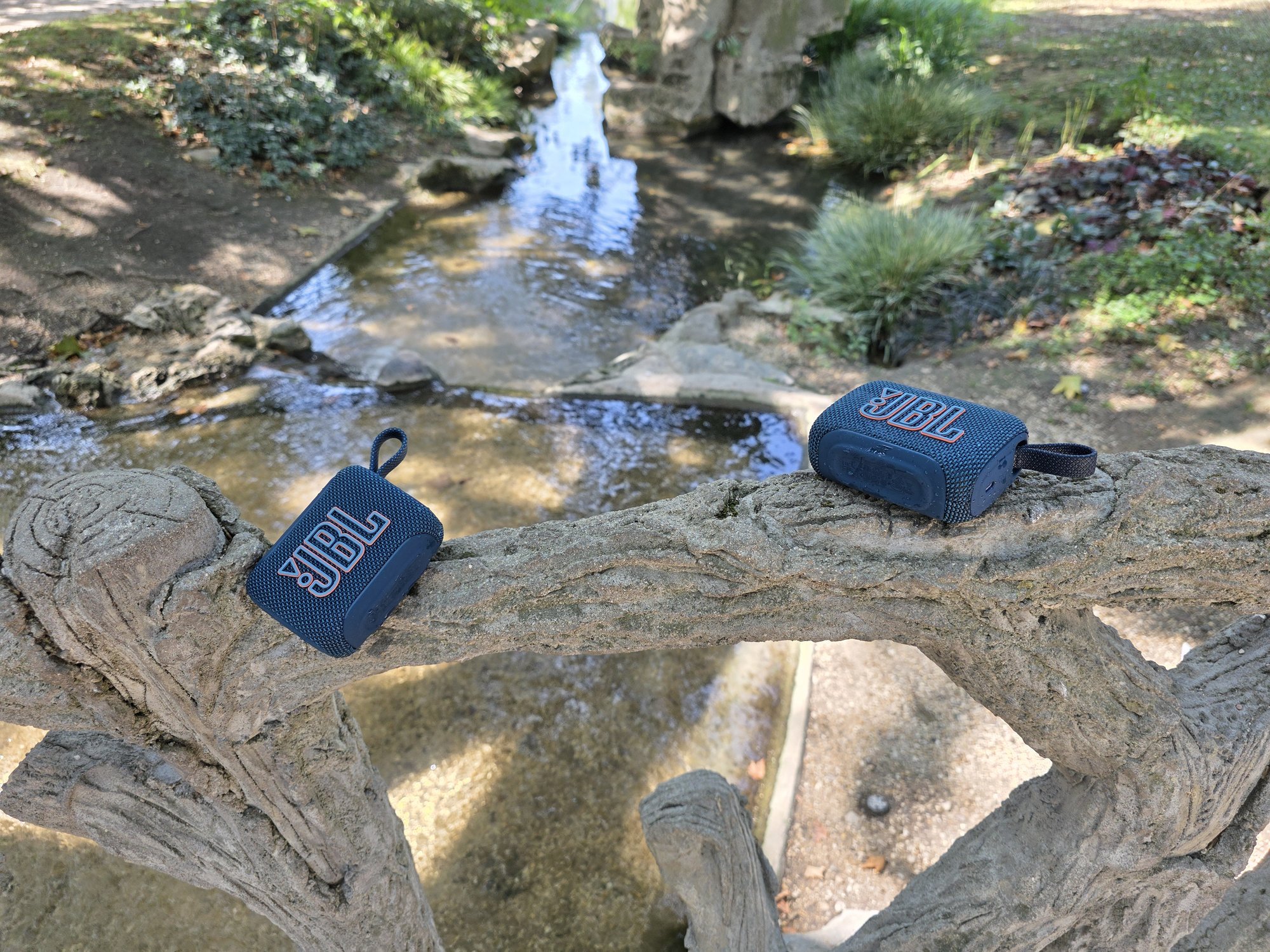
We even attempted Auracast with a JBL Xtreme 5 in front and the Go 5 in rear, to create an ever more immersive bubble. This Auracast mode isn’t flawless, though: it’s not possible to independently adjust the volume of each speaker, and using Auracast outside the JBL ecosystem remains impossible.
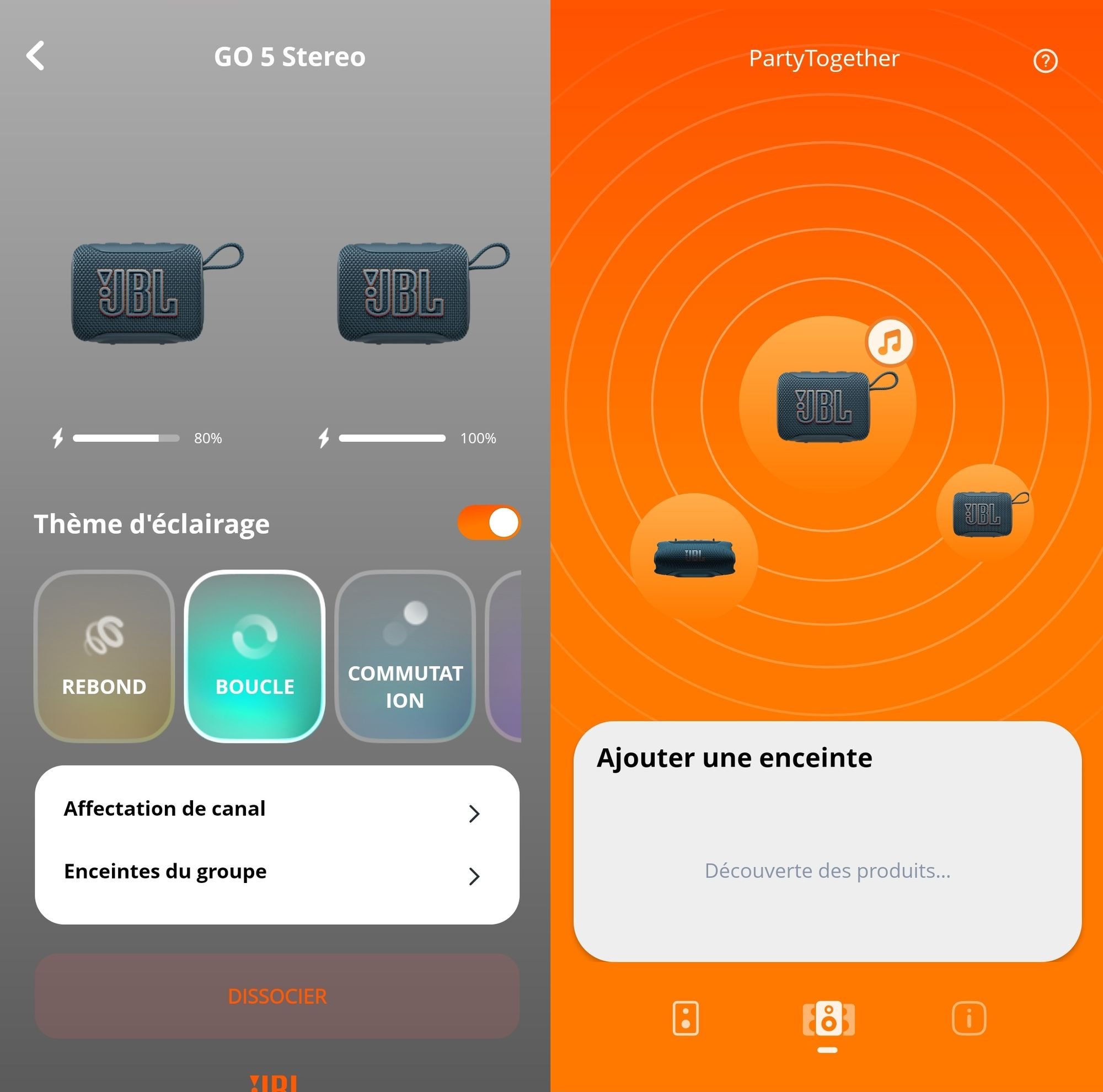
La fonction Audio Diffusion (Auracast) de notre S25 Ultra ne reconnaît pas les enceintes (contrairement à d’autres produits), et l’application JBL ne permet pas d’ajouter des enceintes d’autres marques en PartyTogether. La norme LE Audio, Auracast en tête, est encore loin des promesses d’universalité.
Autonomy: The Bare Minimum
Promised at up to 10 hours (up to 10 h), the Go 5’s endurance isn’t huge. Yes, you can reach or exceed the promises, but only at low volume. In more typical conditions, plan for around 5–6 hours. Probably sufficient, but still on the lower end.
Who Is the JBL Go 5 Really For?
A compact and ultra-portable product, the Go 5 is designed for the following users:
- Fans of truly nomadic devices
- Those who want simple yet balanced sound
- Users seeking some scalability, perhaps buying a second unit
Quelles sont les meilleures mini-enceintes Bluetooth en 2026 ?
JBL Go 5: Clubic’s Verdict
A Bluetooth speaker without grand surprises, the JBL Go 5 follows in the footsteps of its predecessors, minimally modernizing a well-tuned formula. Size, solid build, ergonomic design, USB‑C audio mode. Everything is aimed at maximizing performance without hindering the product’s nomadic nature.
To top it off, the audio quality is present: balanced and fairly rich, though a touch light on the bass. The Go 5 stays true to Harman’s lineage to the fullest extent. It’s a pity the battery life isn’t better, and that Auracast, while supported, keeps LE Audio’s ecosystem somewhat proprietary.
- Good sound balance
- Compact and IP68
- Ergonomie complète, application bien pensée
- Stereo and PartyTogether
- Déséquilibre à haut volume
- Bass are not very robust
- Battery life is quite average
- Auracast is JBL ecosystem–specific only
8
7
8
5
8
amazon.fr
Darty
Son-Vidéo
Boulanger
Cdiscount
See more prices
Best Alternatives to the JBL Go 5
Indeed the JBL Go 5 holds its own in its segment, but there are other options
-
JBL Clip 5
Not as modern as the Go 5, this speaker leans more toward rugged use, yet its sound quality remains fairly close. Over the years its price has dropped.
 59,90 €
-
Soundcore Boom Go 3i
A touch more expensive and larger, the Go 3i also delivers more power than the JBL, with two advantages. First, a small indicator screen, and second, a more open Auracast management.

Daniel Brooks
I cover everyday products with a practical eye, from kitchen tools and home essentials to smart gadgets and consumer trends. My goal is to help readers understand what is genuinely useful, what is worth the price, and what deserves a second look before buying.