9 / 10
Best prices
Cdiscount
Fnac
RDC
- Absolutely gigantic capacity
- Top-tier performance
- HAMR technology
- 5-year warranty
- Rescue Data Recovery for 3 years
- Current pricing, of course
- The limitations of the SATA interface
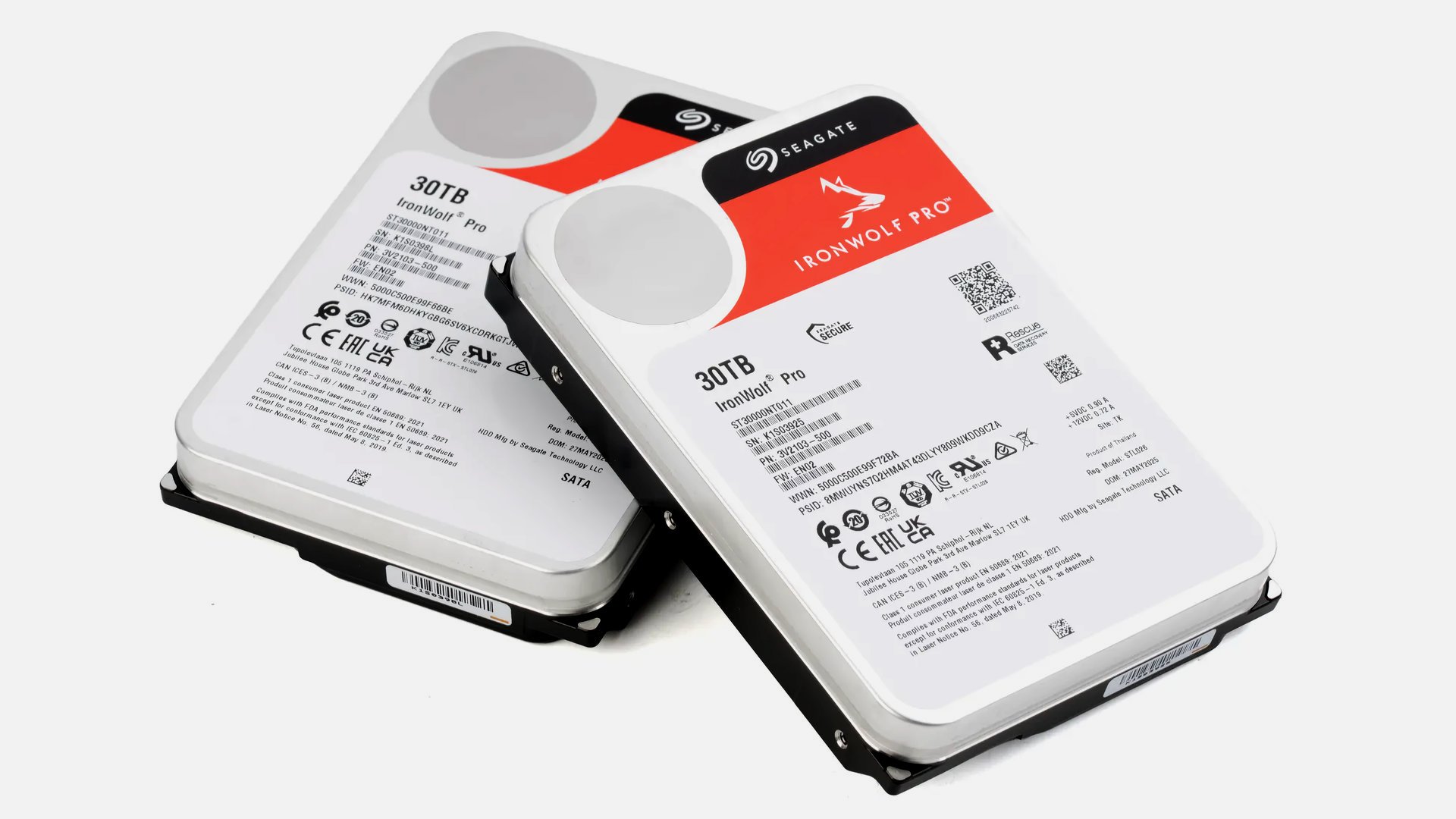
Over 30,000,000 megabytes of capacity!
Today, on most machines you use, hard drives have given way to SSDs. Yet when it comes to storing large amounts of data, the traditional platter HDD remains unmatched. The recent inflation across the storage market has certainly raised HDD prices, but they still offer a lower cost per terabyte than any SSD: the price per terabyte is often three to four times more favorable.
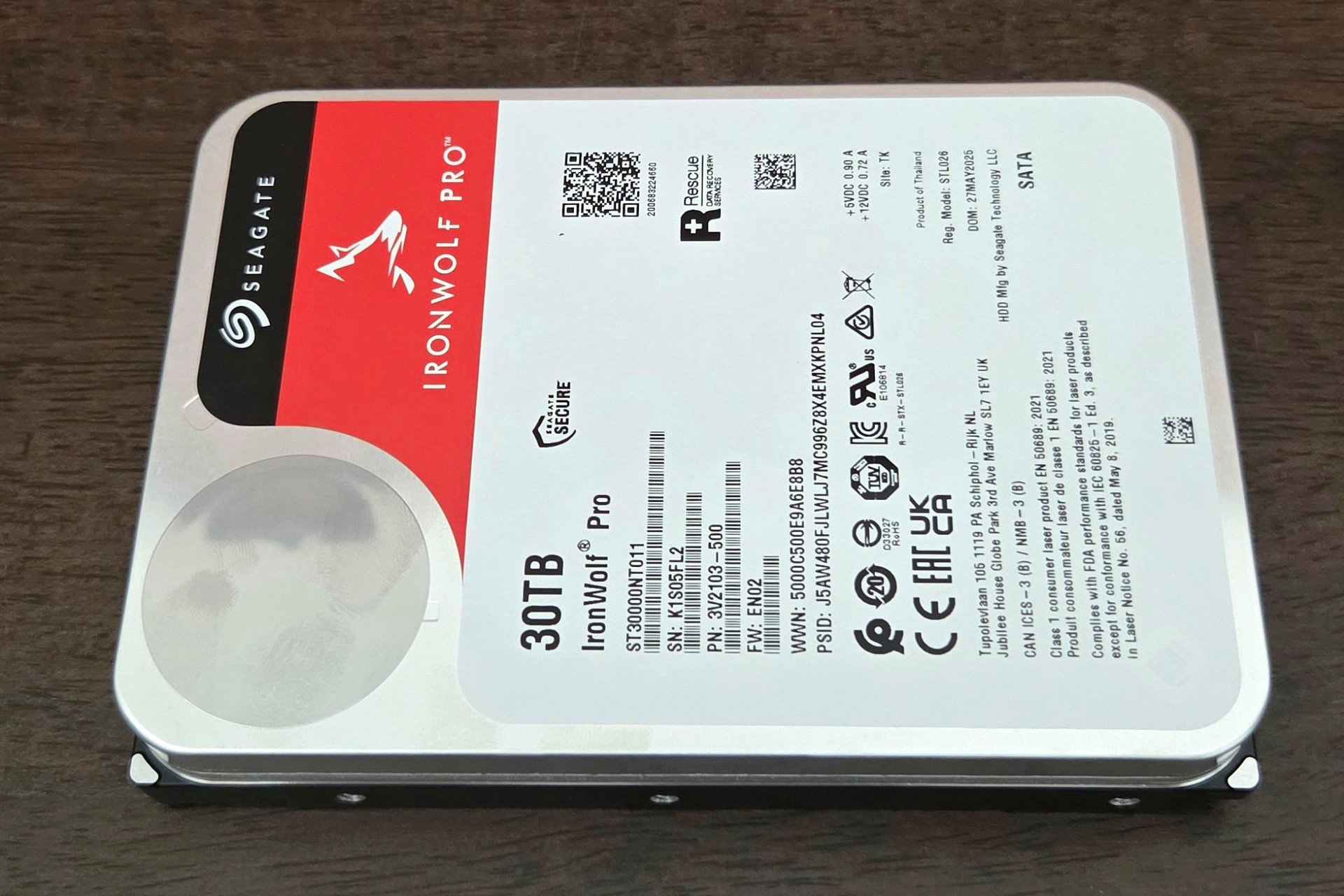
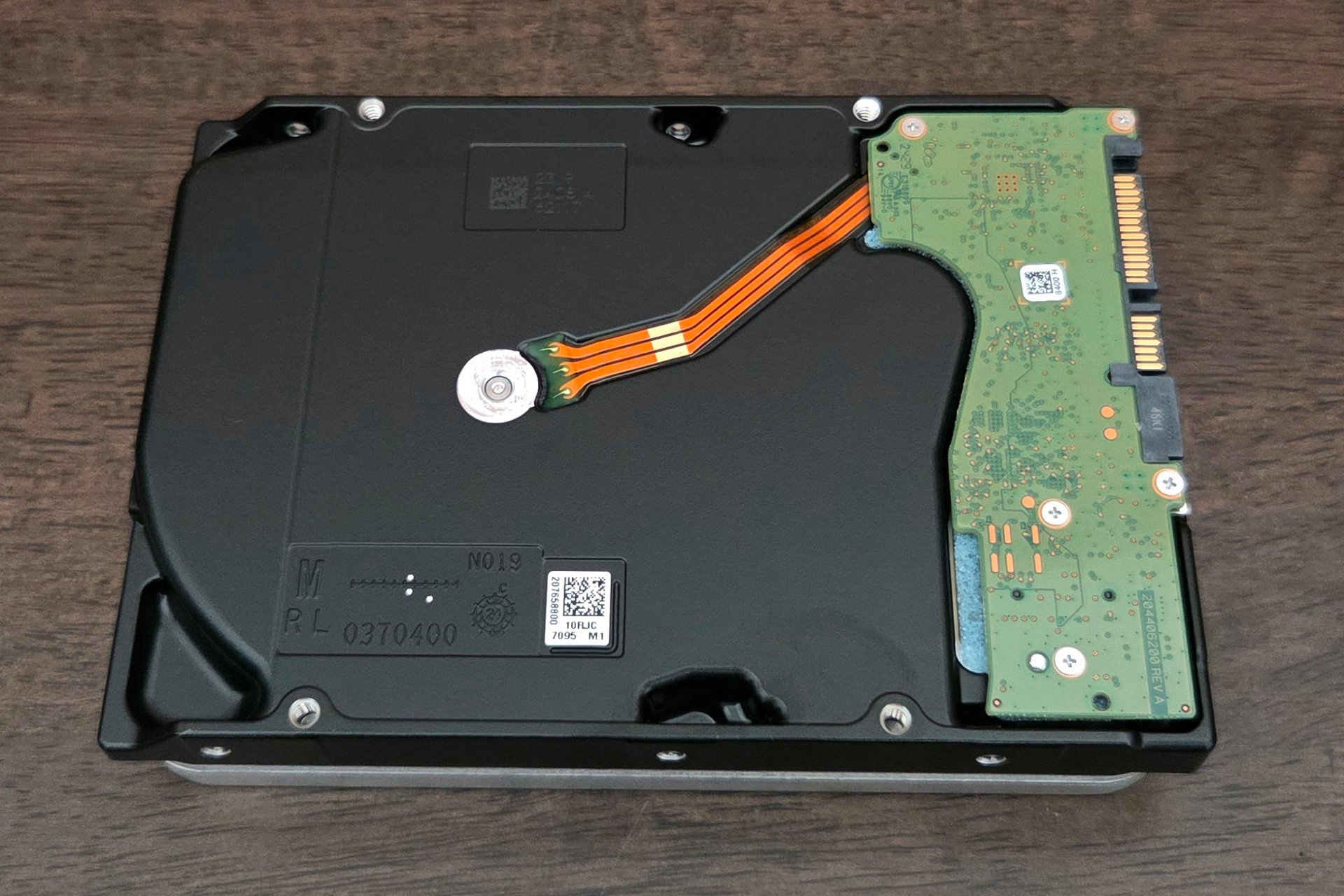
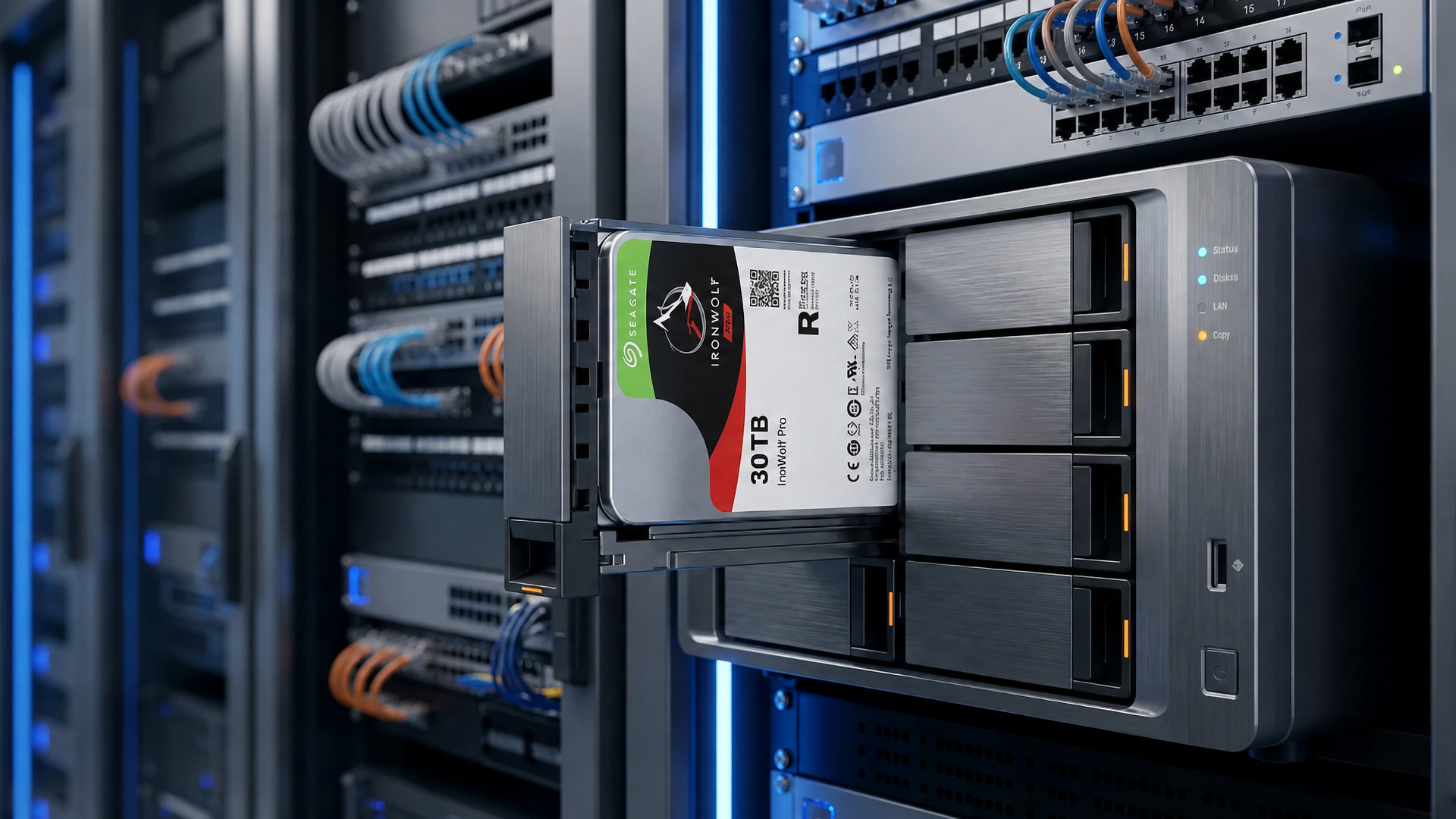
In recent years, HDD manufacturers have heavily leaned on capacity as a differentiating argument versus SSDs. Today, Seagate argues that 50 TB drives are in sight and that 80 TB could arrive by 2030. We are not there yet, and the Ironwolf Pro’s 30 TB still feels prodigious. In a 3.5-inch form factor, you can indeed store an enormous amount of data.
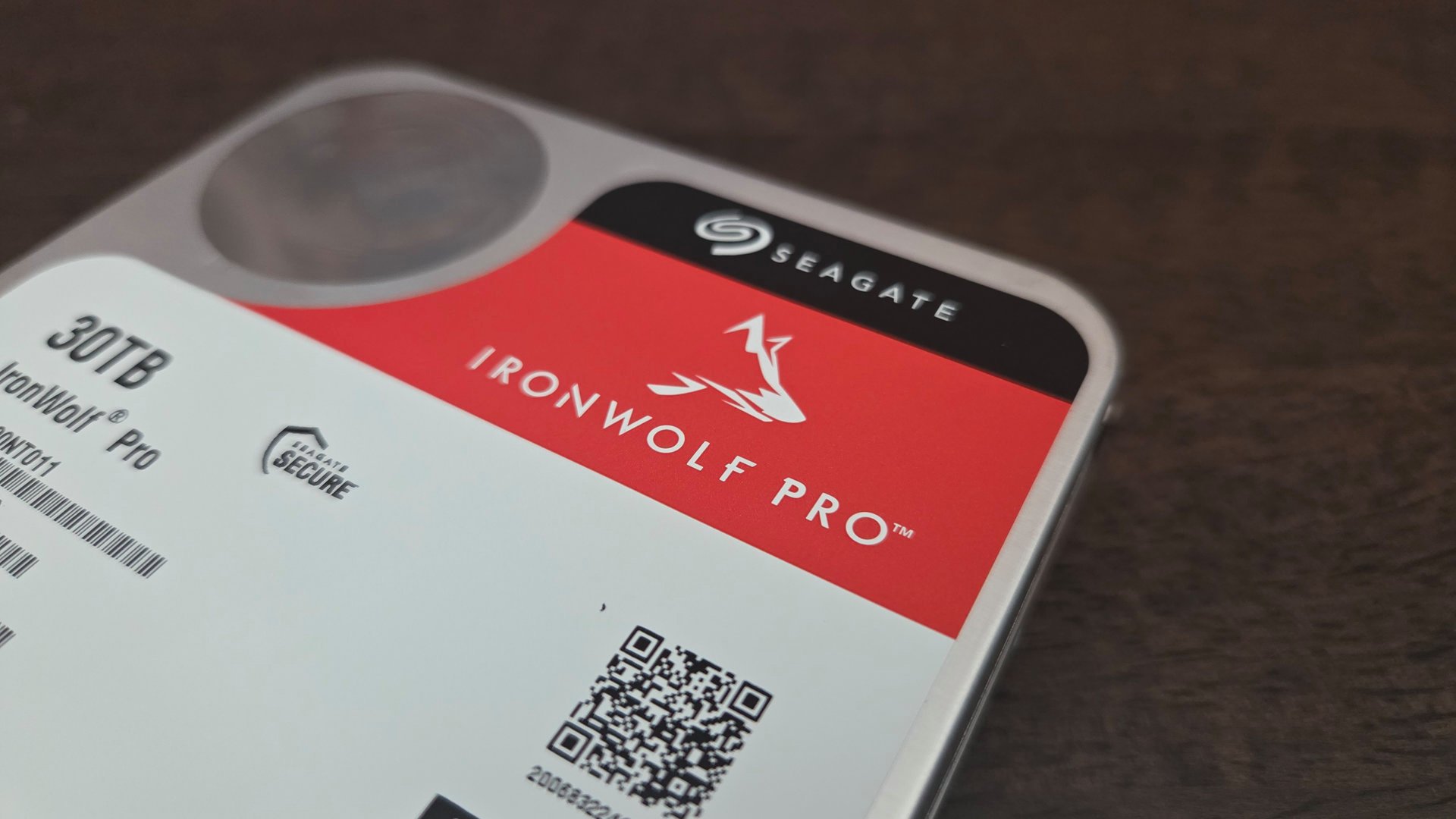
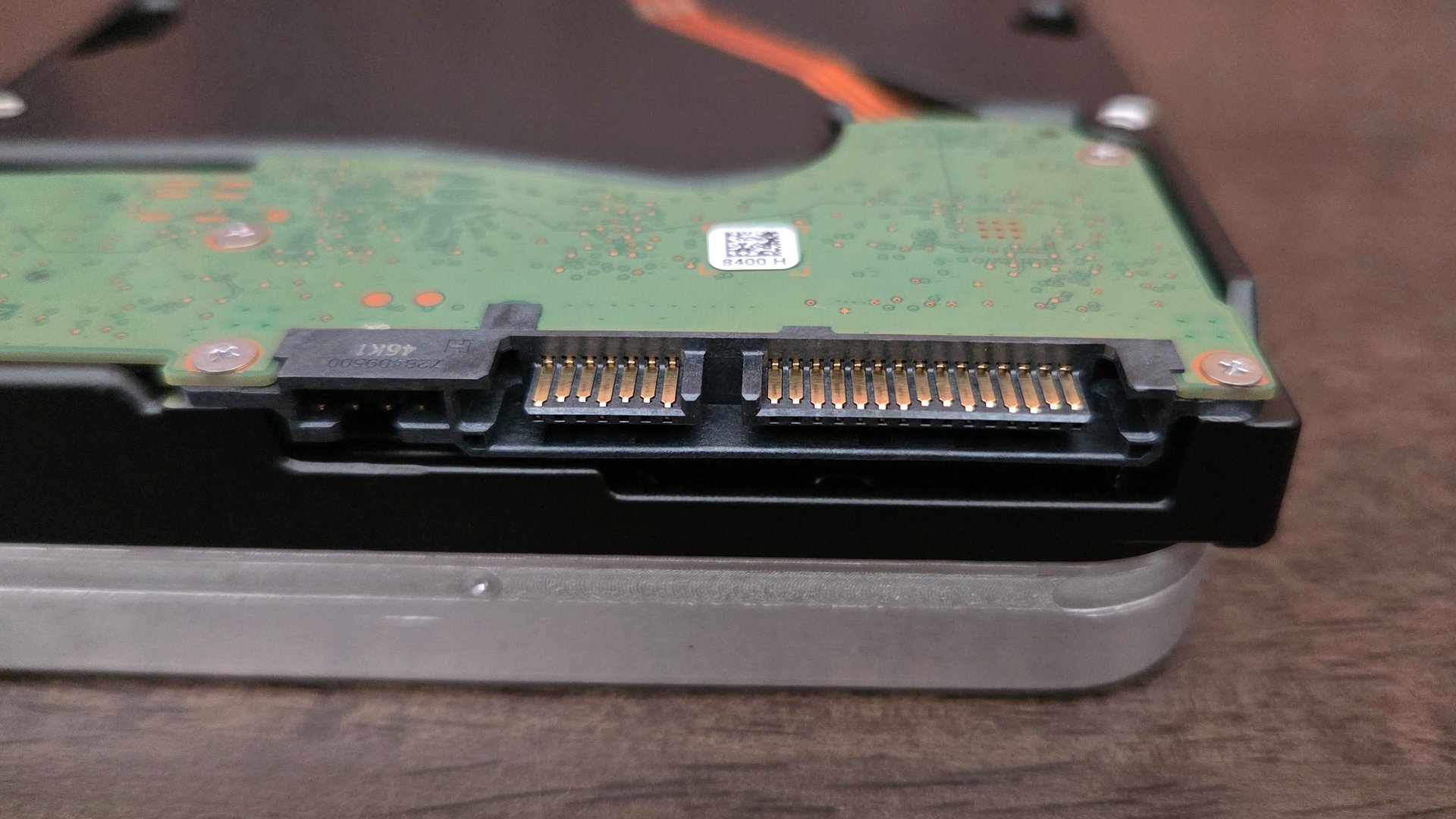
A traditional format for NAS and data centers, measuring 14.6 cm in length, 10.1 cm in width, and a mere 2.6 cm in thickness. Much heavier than an SSD, the Ironwolf Pro weighs exactly 695 grams. The interface used is clearly SATA, but it is worth noting that Seagate accompanies the device with a 512 MB cache.
In recent years, hard drive manufacturers have aggressively marketed capacity as the differentiator versus SSDs. Today, Seagate argues that 50 TB drives are in sight and that 80 TB could arrive around 2030. We are not there yet, and the Ironwolf Pro’s 30 TB already appears colossal. In a 3.5-inch form factor, you can indeed store an enormous amount of data.
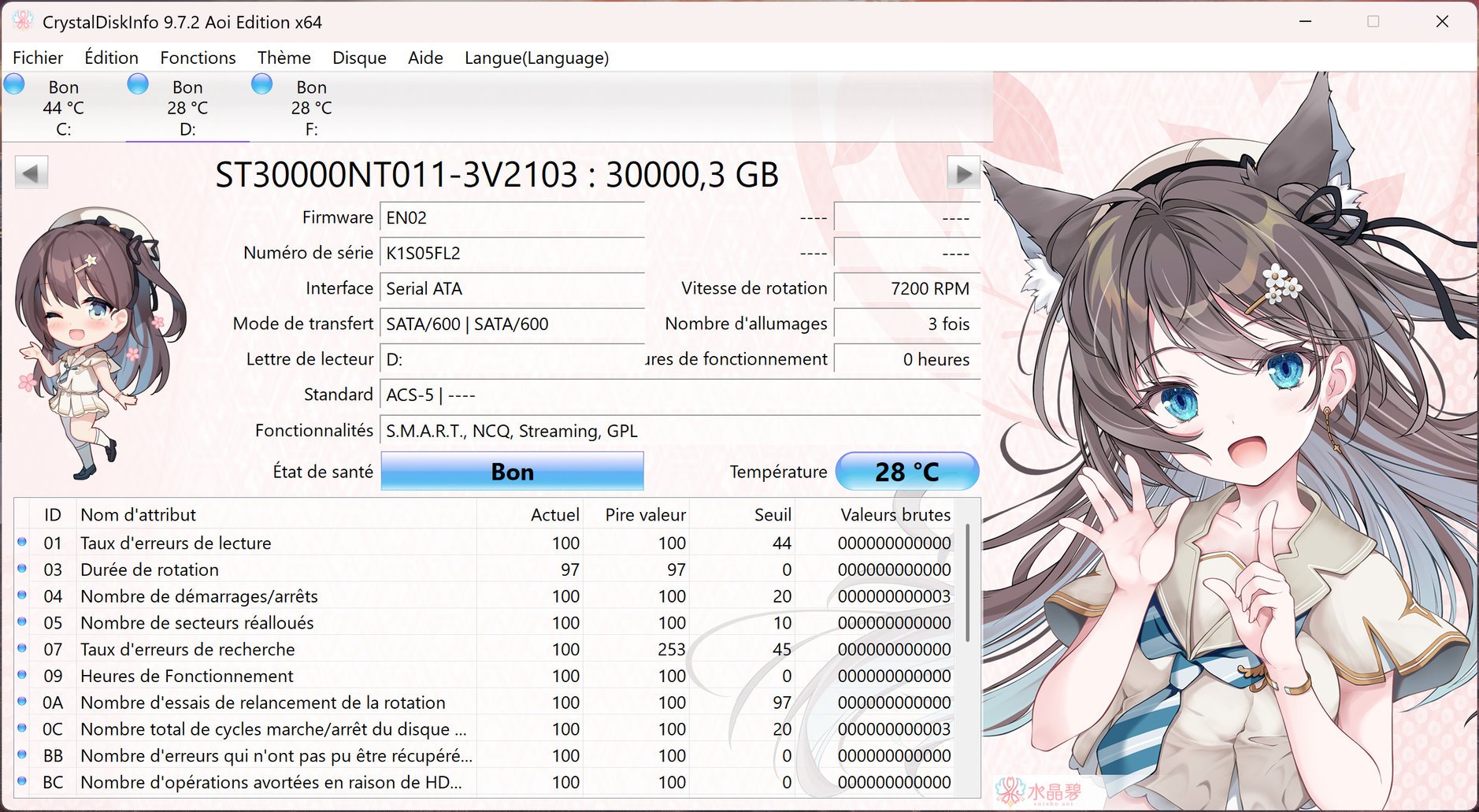
Read / write speeds and heating
Test configuration
- Motherboard: ASUS ROG Crosshair X870E Hero (BIOS 2103)
- Processor: AMD Ryzen 7 9850X3D
- Memory: G.Skill Trident Z5 Neo DDR5-6000 CL30 (2x 16 GB)
- Graphics card: integrated in the processor
- System SSD: Kingston KC3000 2 TB
- Cooling: ASUS ROG RYUJIN III 360 ARGB Extreme
- Power supply: be quiet! Power Zone 2 (1,200 watts)
CrystalDiskMark speeds
On Seagate’s official product page for the Ironwolf Pro 30 To, speeds are advertised as “up to 275 MB/s” (285 MB/s for the 32 To model and “only” 270 MB/s for the 28 To). We were eager to verify this with the inevitable CrystalDiskMark. Initial sequential results: reads slightly exceed 275 MB/s (277 MB/s) and writes are just under (265 MB/s).
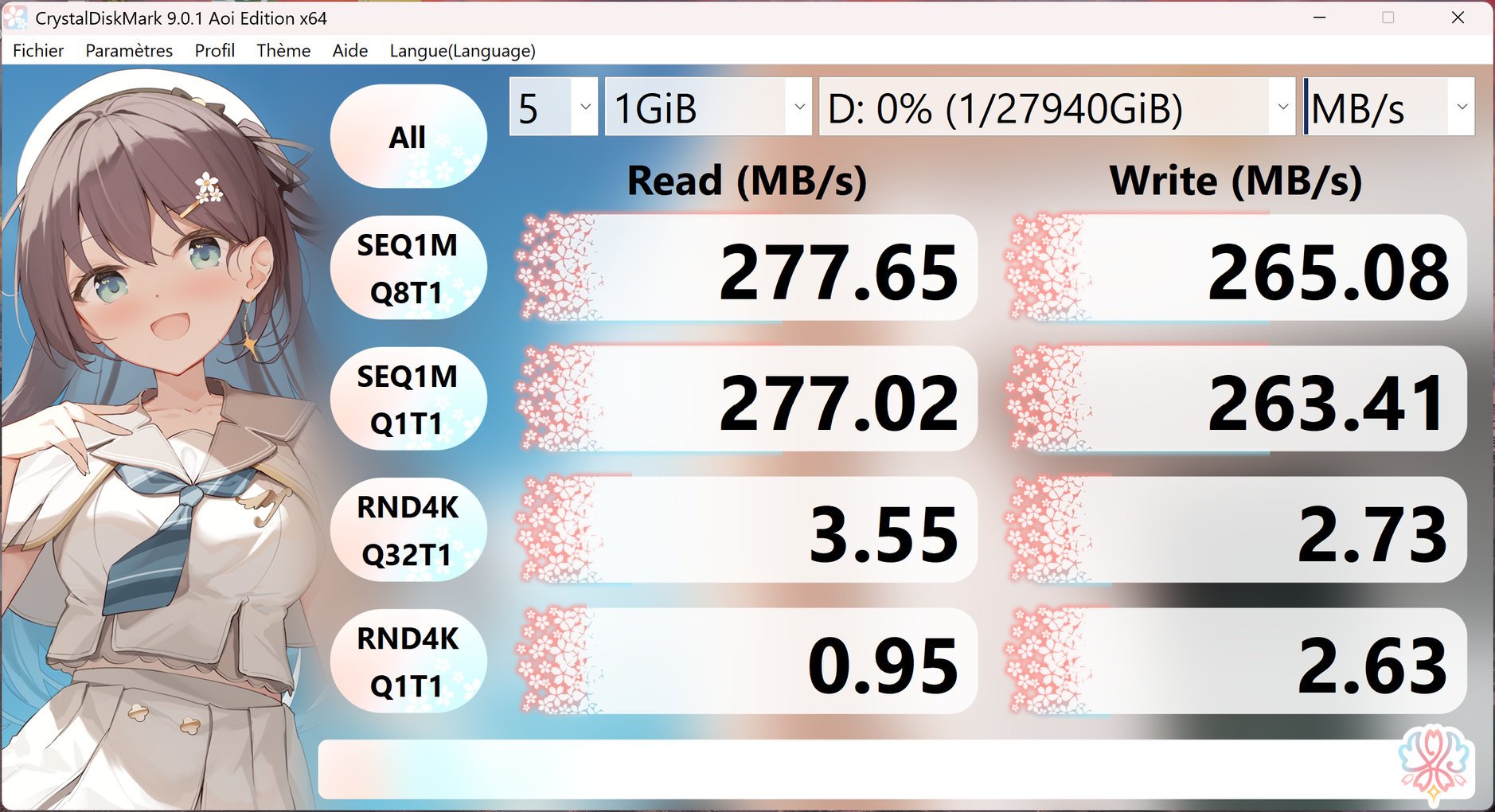
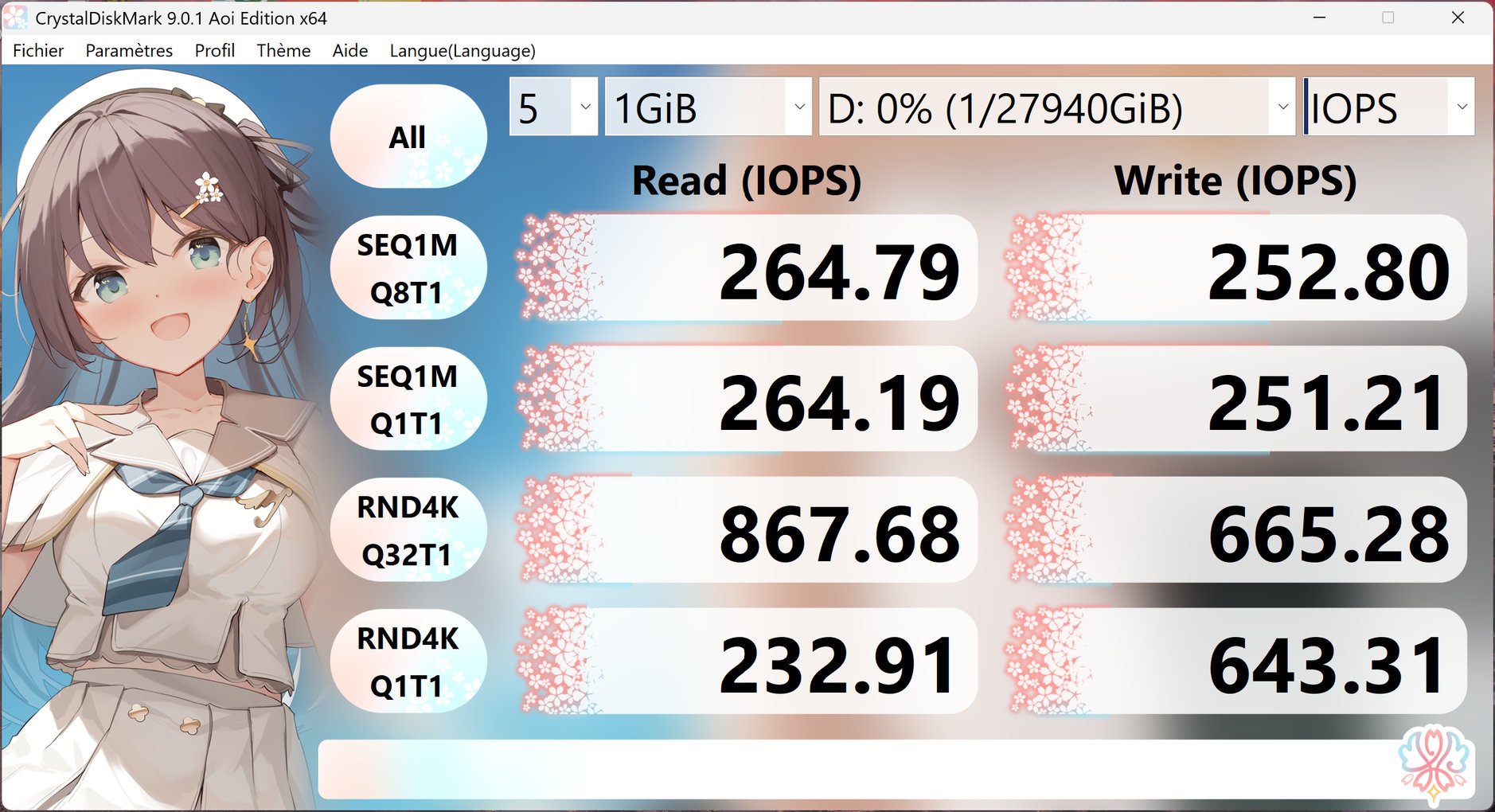
Randomly, it’s a different story. Of course, even SSDs struggle in this kind of test, and a platter HDD, no matter how modern, cannot work miracles. The speeds shown in our captures may look ridiculous, but that’s the norm for such units; the Ironwolf Pro performs quite respectably for what it is: you should not judge the beast solely on this metric.
Linear write test on AIDA64
Windows 11 file copy speeds
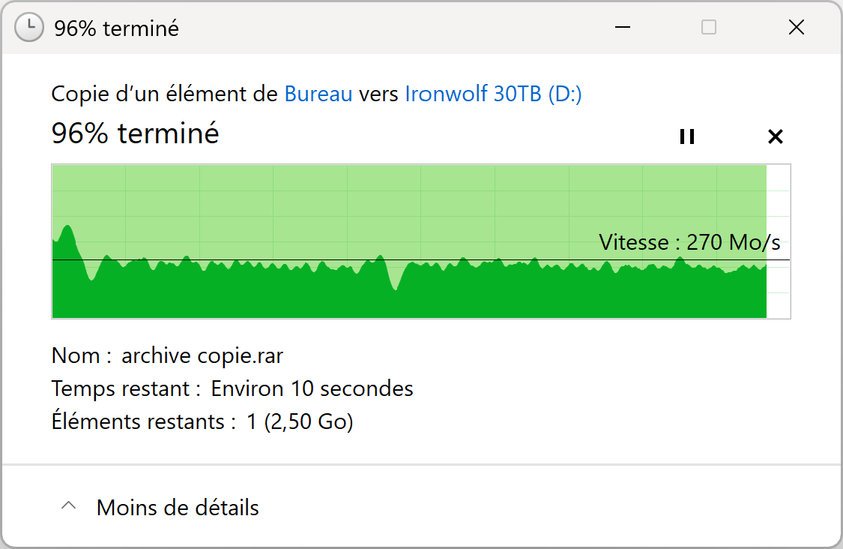
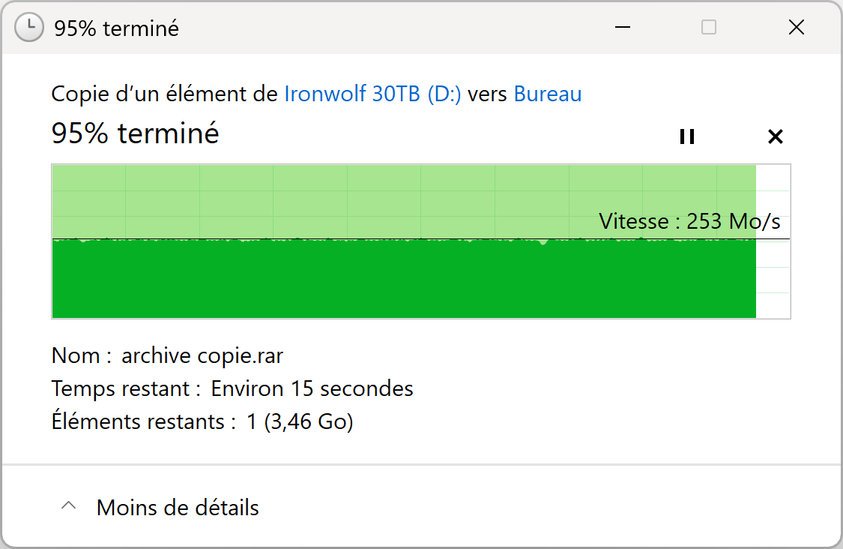
Finally, to confirm the official and CrystalDiskMark speeds, we present the file copy speeds via Windows 11 Explorer. We do not reproduce CrystalDiskMark values exactly, but at an average of 270 MB/s for reads from the Ironwolf Pro and 253 MB/s writes to the HDD, Seagate clearly does not disappoint.
Seagate Ironwolf Pro 30 To: Clubic’s verdict
While we chose this hard drive for our NAS tests, it would be unfair to treat it as a poor product. That said, when we selected it, we did not necessarily expect it to be so compelling. Despite its SATA-only interface, it delivers high speeds for a traditional platter drive, and it is the best option we had available.
Its 512 MB cache seems sufficient for such a product, and its enormous capacity is a strong selling point. Another interesting point: although not the most modern, the Ironwolf Pro 30 To keeps to a reliable CMR technology. Seagate is confident about this choice: it guarantees the drive for five years and accompanies it with a three-year Rescue Data Recovery service. Of course, the current cost of storage remains a major factor: we cannot fully recommend this purchase while prices stay at this level.
- Absolutely gigantic capacity
- Leading performance
- HAMR technology
- 5-year warranty
- Rescue Data Recovery for 3 years
- The current prices, of course
- The limits of the SATA interface