
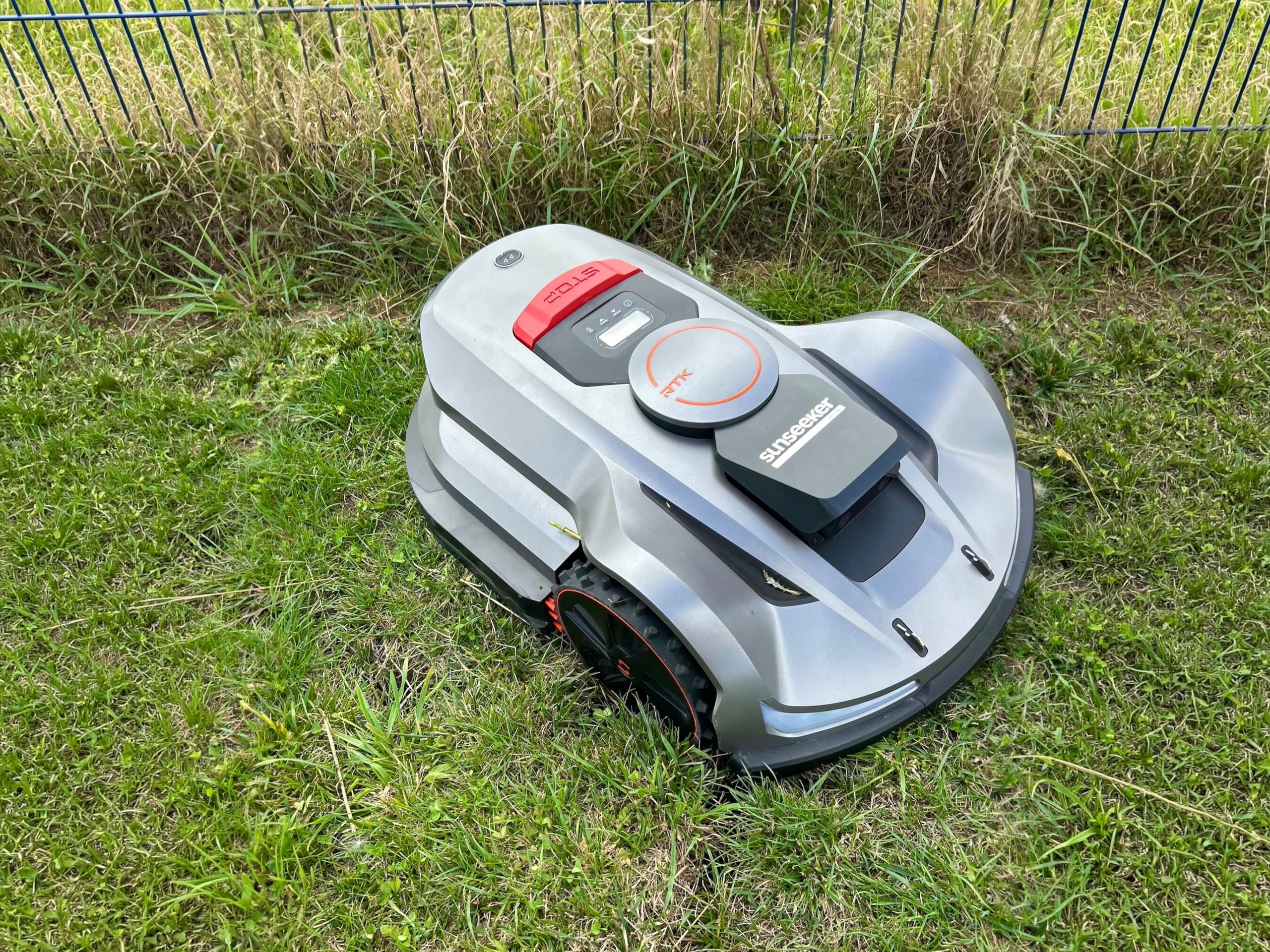
Sunseeker returns with an X7 Gen 2 that completely abandons the RTK antenna in favor of network-based positioning, and promises to mow up to 3,000 m² of lawn. On the field, the mower impresses with its movements and the quality of its cut, but a few software blind spots temper our enthusiasm.
8 / 10
No offers available, discover:
Navimow i208 LiDAR
Segway Navimow i206 AWD
Anthbot M9
Mova LiDAX Ultra 1200
- Excellent cut quality
- Remarkable off-road mobility
- Simplified installation, no RTK antenna to place
- Comfortable range and fast recharge
- Camera return not accessible in the app
- Errors reset only on the robot’s screen
- Small items on the ground poorly detected
- Repeated contact with trunks and borders
- €49 per year subscription after the included period
The robotic lawn mower market has definitively closed the door on peripheral cables. In 2026, the battle shifts elsewhere: on positioning accuracy, the ability to tackle difficult terrain, and the finesse of obstacle detection. Sunseeker enters this arena with an X7 Gen 2 that methodically checks all the boxes.
The brand discards the traditional RTK antenna, the one you had to install high up and keep clear of obstacles, in favor of a system called AONavi 2.0. The principle combines RTK network-based positioning, via an integrated 4G module, with visual navigation via VSLAM 2.0 that takes over as soon as satellite signals weaken. Result: nothing to install in the yard beyond the charging station. All of it is controlled by a 10 TOPS AI chip, a dual 35-centimeter mowing disc, and a claimed all-wheel drive capable of tackling slopes up to 35 degrees.
For this test, I enlisted my best friend, who kindly lent me his garden for the occasion. A roughly 3,000 m² plot, gently undulating, pockmarked with holes and full of the typical family-exterior obstacles: a trampoline, a football goal, and a pending pool tarp. Thanks to him, the playing field was ideal for testing the manufacturer’s promises.
Test conducted on a unit loaned by the manufacturer.
Installation and Mapping: Easier Than It Looks
The box is a substantial chunk, and the documentation provided is not shy about details. Paradoxically, that’s a good sign: everything is described with precision, and the installation goes smoothly. This is one of the direct benefits of dropping the RTK antenna. Whereas previous generations required finding a clear spot, planting a mast, and praying for signal, here you simply place the charging station and let the 4G module do its job.
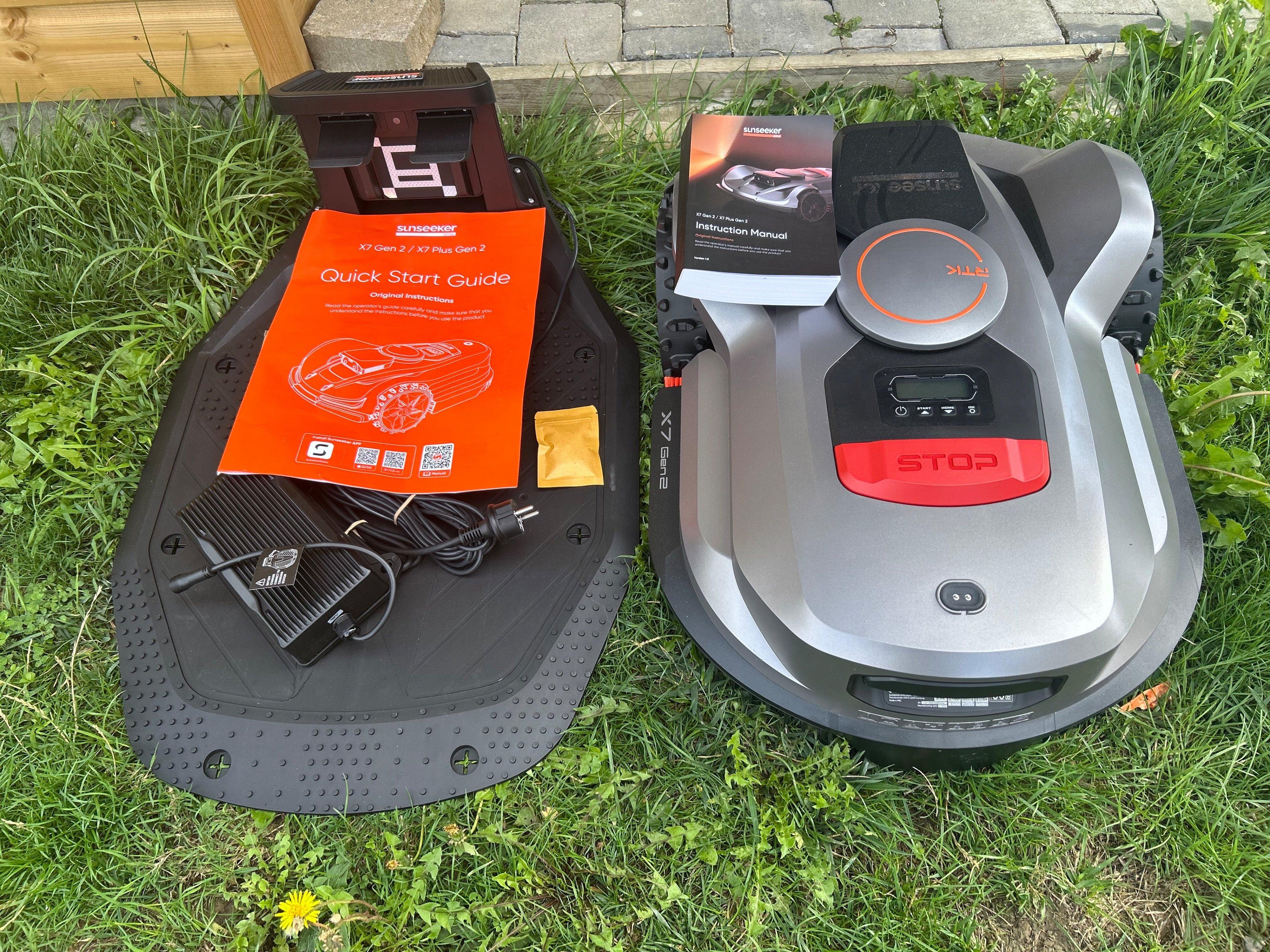
After the initial charge, pairing proceeds via Bluetooth then Wi‑Fi. A small surprise along the way: the box is quite distant from the station, yet the connection works perfectly. A big plus for gardens whose base is at the far end of the plot, away from the house.
Mapping then follows naturally. You control the robot from the app to survey the property, and the process is intuitive and smooth. Defining zones to avoid is equally straightforward, allowing quick exclusion of the kids’ play area, the trampoline, and the tarp for the future pool. The app then offers a mowing schedule that you can fine-tune, adjusting time windows, travel speed, and passage spacing. I set it to the tightest configuration, nearly to the blade of grass level.
Mowing: a Lawn Treated Better Than with a Tractor
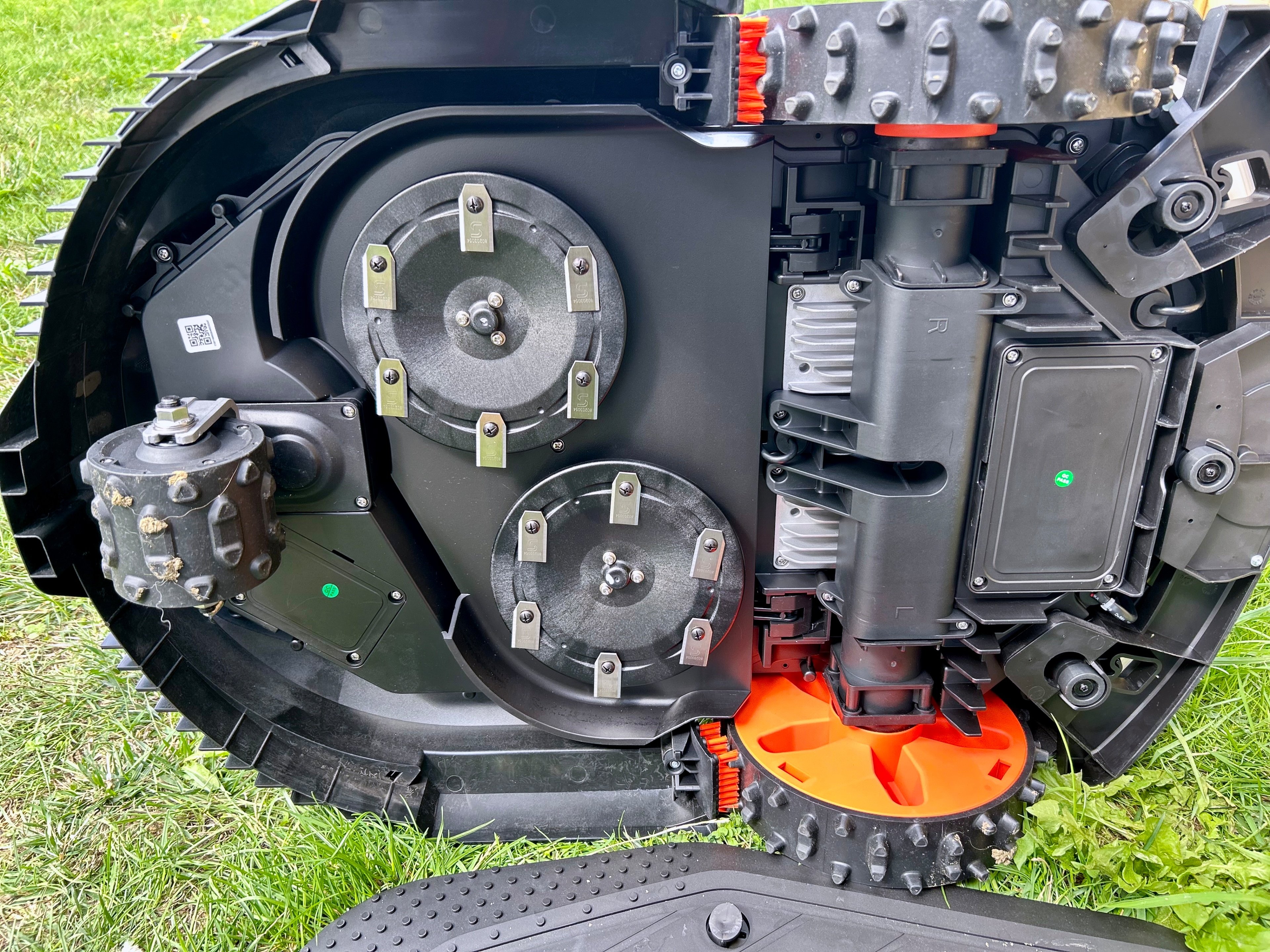
This is where the X7 Gen 2 convinces most quickly. The dual 35-centimeter discs, outfitted with six evenly distributed blades, deliver outstanding work. I set the cutting height to 5 centimeters on a drought-stricken field, overrun with various weeds. Every plant got treated.
Two elements explain this result. First, the generous 35-centimeter cutting width, which considerably reduces the number of passes needed to cover the area. Second, the floating dual-plate system, which follows ground irregularities rather than scraping over bumps and missing hollows. On terrain as uneven as this, the difference is visible at a glance.
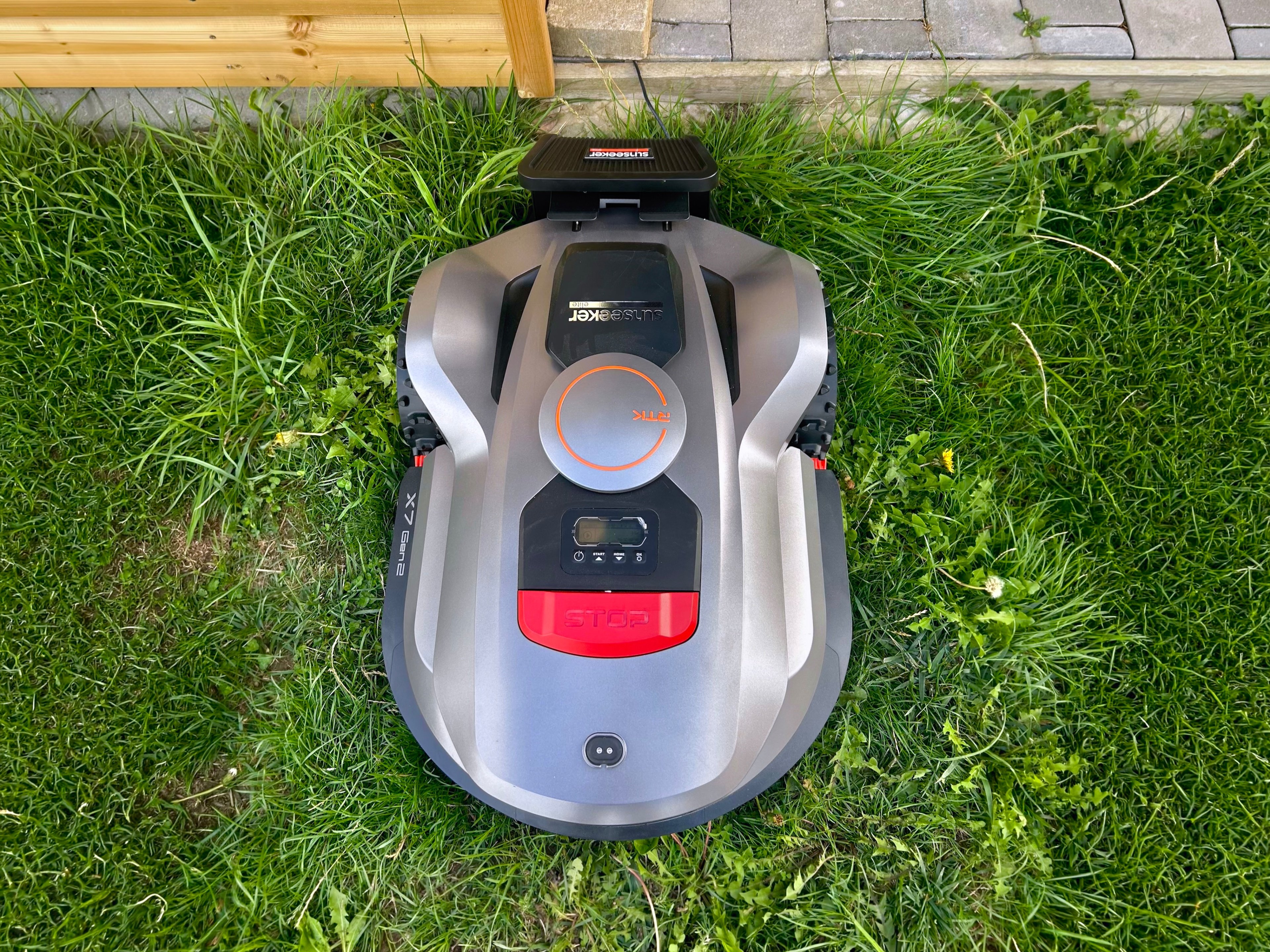
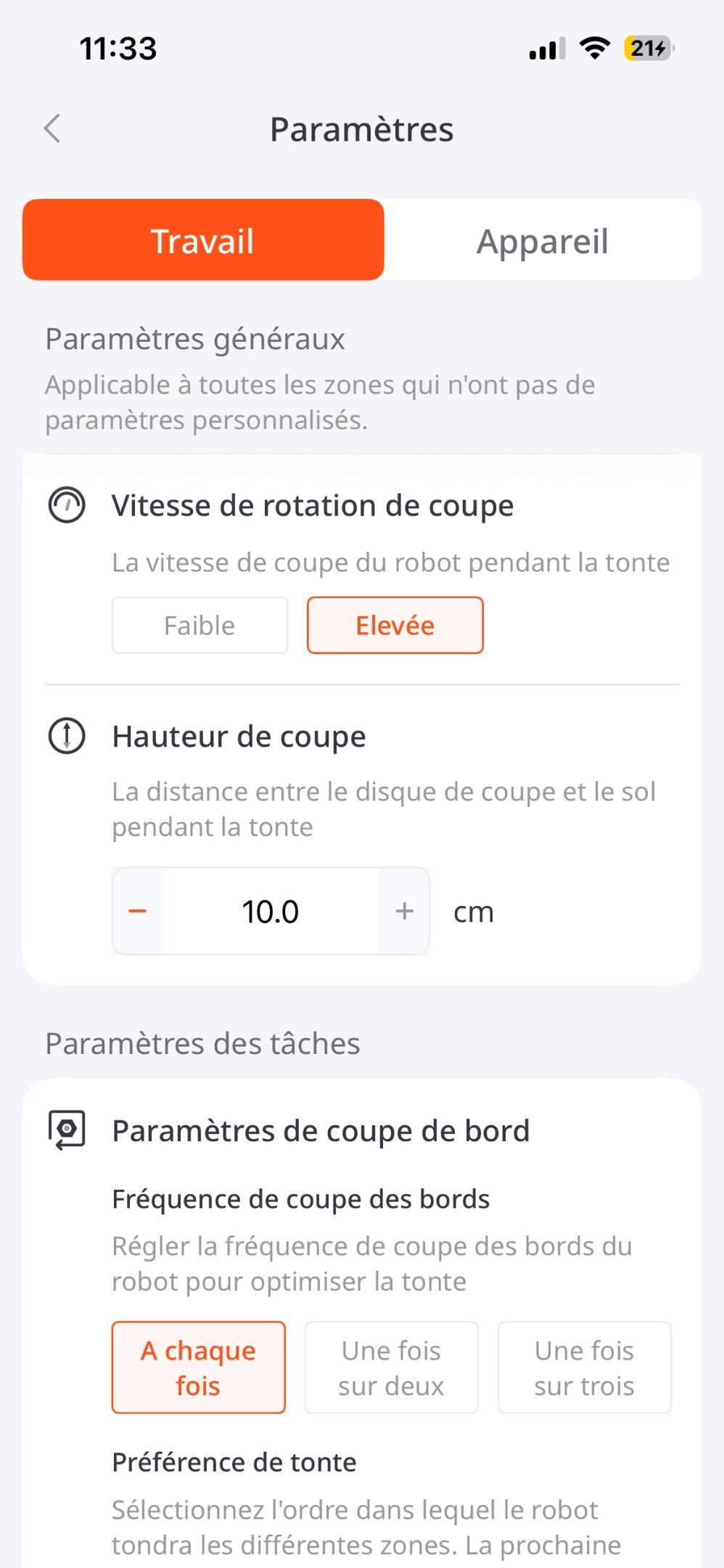
The cutting height ranges from 2 to 10 centimeters and is fully adjustable from the app, even mid-session. However, note a crucial detail: this on-the-fly adjustment relies on the quality of the connection with the robot. As soon as the link is lost, the mower reverts to its original cutting height. On a large plot with poorly covered zones, it is advisable to pre-program the height rather than rely on a mid-route tweak.
Sunseeker also offers the option to modify the mowing angle, a feature increasingly found in high-end models and far from a gimmick. Varying the angles from one session to another helps avoid mowing the lawn in distinct stripes and greatly improves the final look, without the banding typically associated with sports grounds. The result looks more natural, and the grass is protected.
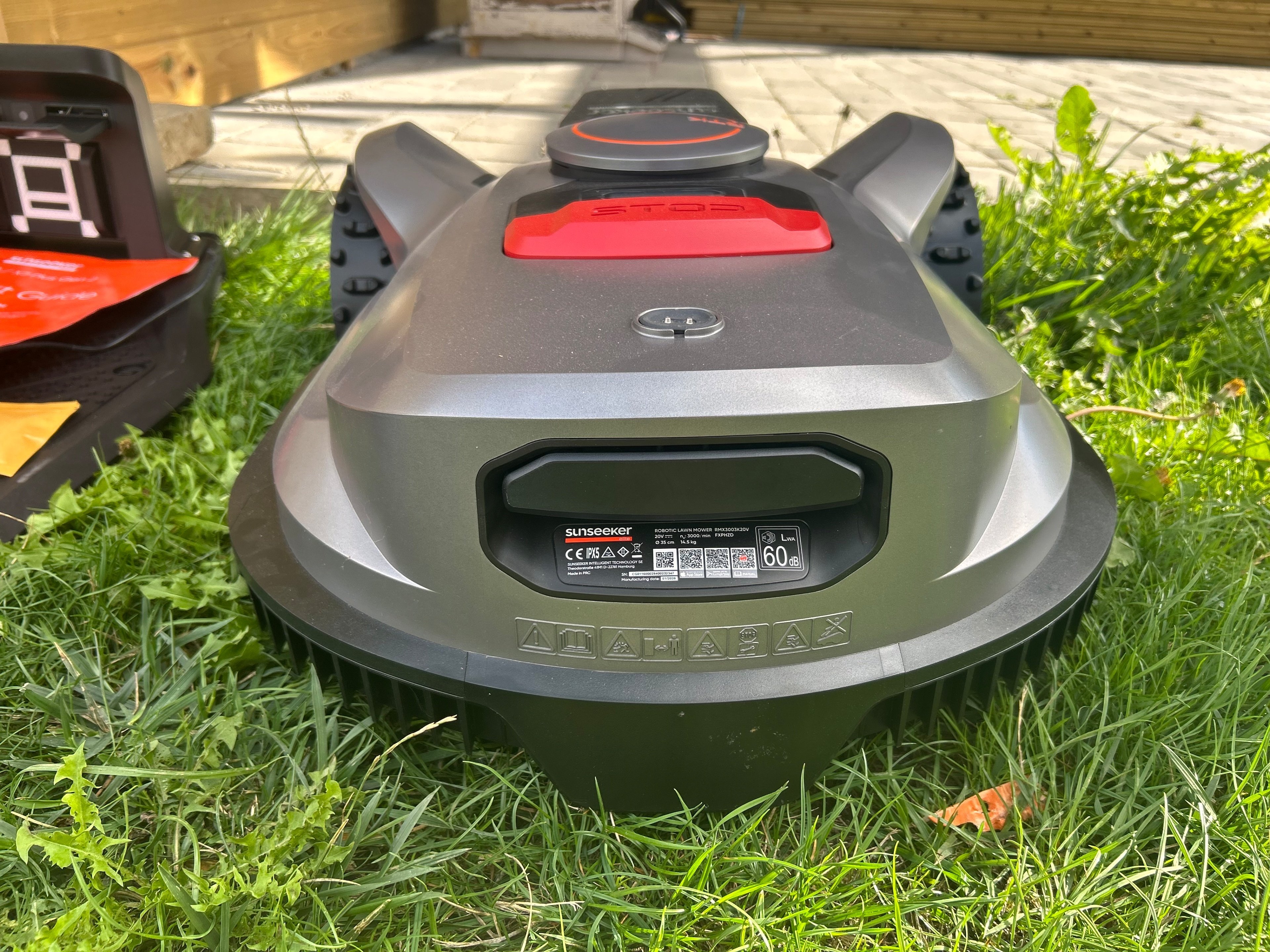
Regarding audible disturbances, the manufacturer cites 60 dB measured at the hood, and my tests confirm this. Compared to a conventional lawnmower, the difference is evident. A further telling indicator: my friend’s dog hardly notices the robot as it moves around, which speaks to the device’s discretion.
Mobility: a Real All-Terrain Machine
If there is a single point that sums up this X7 Gen 2, it is that one. All-wheel drive, with front-wheel transmission that can be independently driven and a suspension that absorbs irregularities, turns the mower into a genuine off-road vehicle.
The garden on which Sunseeker worked features several significant holes—those that would immobilize a mid-range robot with only two driven wheels and two dead wheels. Repeatedly, I watched the X7 Gen 2 sink into a rift, a wheel suspended in the air, and extract itself without apparent effort. Across the test, I only intervened once to free it. That’s remarkable for such terrain.
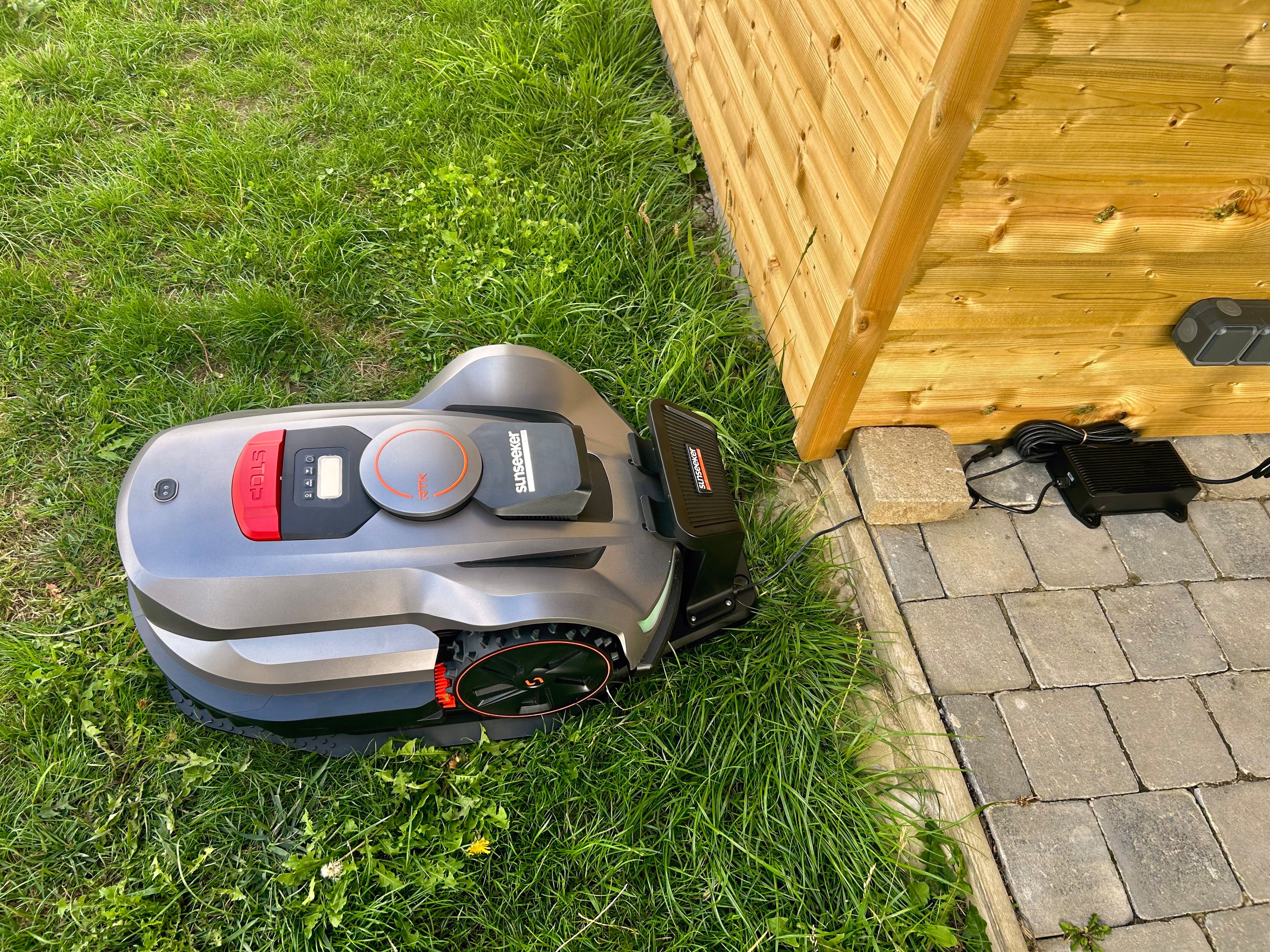
This cleverness comes with a catch. The X7 Gen 2 can feel a bit brutal (one could say “rugged”) in its approach. At terrace edges, it leans into the concrete to force its passage, even if it risks a few scratches on its plastic flank. The result is a complete cut right to the edge, but the car body’s aesthetics take a hit with every pass.
The manufacturer claims a 70% crossing ability, i.e., a 35-degree slope. I didn’t get to test this on such a steep terrain, but what I observed of the garden’s irregularities makes the promise quite credible.
Navigation and Obstacles: An Efficient Vision, with Blind Spots
The Vision AI 2.0 system combines a day-oriented binocular camera with an iToF sensor for night vision, all running on a 10 TOPS AI chip. If the terms seem technical, in short the mower should “see” everything, day and night. In practice, the performance is solid, with a few caveats.
I tested the system by removing the trampoline zone from the mapping to see whether the robot would venture beneath it. Mission accomplished: the X7 Gen 2 passed under the structure by carefully bypassing the metal feet, without touching them. The same success extended to large objects and balls left on the lawn, which were consistently avoided.
The collision alert also works. When the dog passes in front of the mower, the alarm triggers immediately, which is reassuring when animals or children are moving around the garden during a session.
Two caveats, however. First, small objects very close to the ground—like a plush toy lying in the grass—don’t always get detected in time and the blades can strike them. Fine for larger items or vertical structures, but fragile items should be cleared to avoid mishaps.
Second, trees. The bypass works and the mower circles the trunks, but it has a tendency to brush the trunk before correcting its path. Nothing catastrophic for the tree or the robot, but it’s far from the perfect avoidance described.
A more annoying absence: it is not possible to access the camera return from the app. The mower carries all the necessary equipment, and some competitors offer this function. Either it is truly absent, or it is buried so deeply in the menus that I could not find it, which is a real ergonomics issue.
Autonomy, App and Maintenance
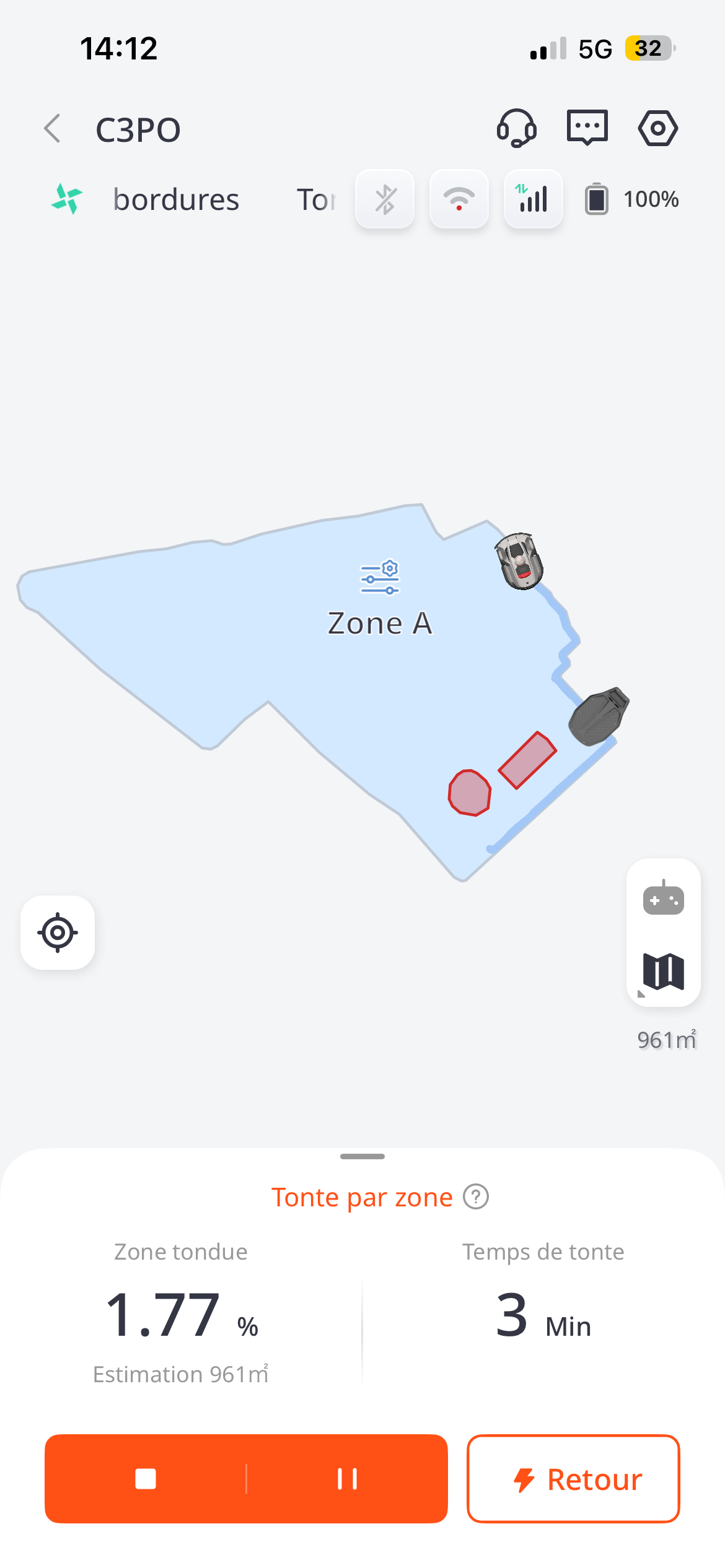
Across my 1,300 m² test plot mowed at a slow pace with very tight spacing, the X7 Gen 2 completes the entire area, including recharging, in six hours. In practice, it does one mowing pass, returns to recharge, then goes back out to finish the job. The full recharge is quick, which minimizes downtime.
Raw numbers are telling: during a session the robot ran for 263 minutes on a single charge, just over four hours, and still had 17% battery left. For a plot of this size, the autonomy is well-calibrated, leaving a comfortable margin for larger areas.
The Sunseeker Smart app covers the essentials: scheduling, zone management, mowing settings, and integration with voice assistants. It remains a notch below best-in-class vacuum-robot apps in terms of intuitiveness. You can navigate it, but it demands an adjustment period and can feel a bit cluttered at times.
One irritating drawback: you cannot reset errors from the app. The operation must go through the robot’s LCD screen, which is itself difficult to read in bright sun. A round trip to the far end of the garden to acknowledge an error message is annoying in 2026, even if the safety reasons behind this constraint are understandable.

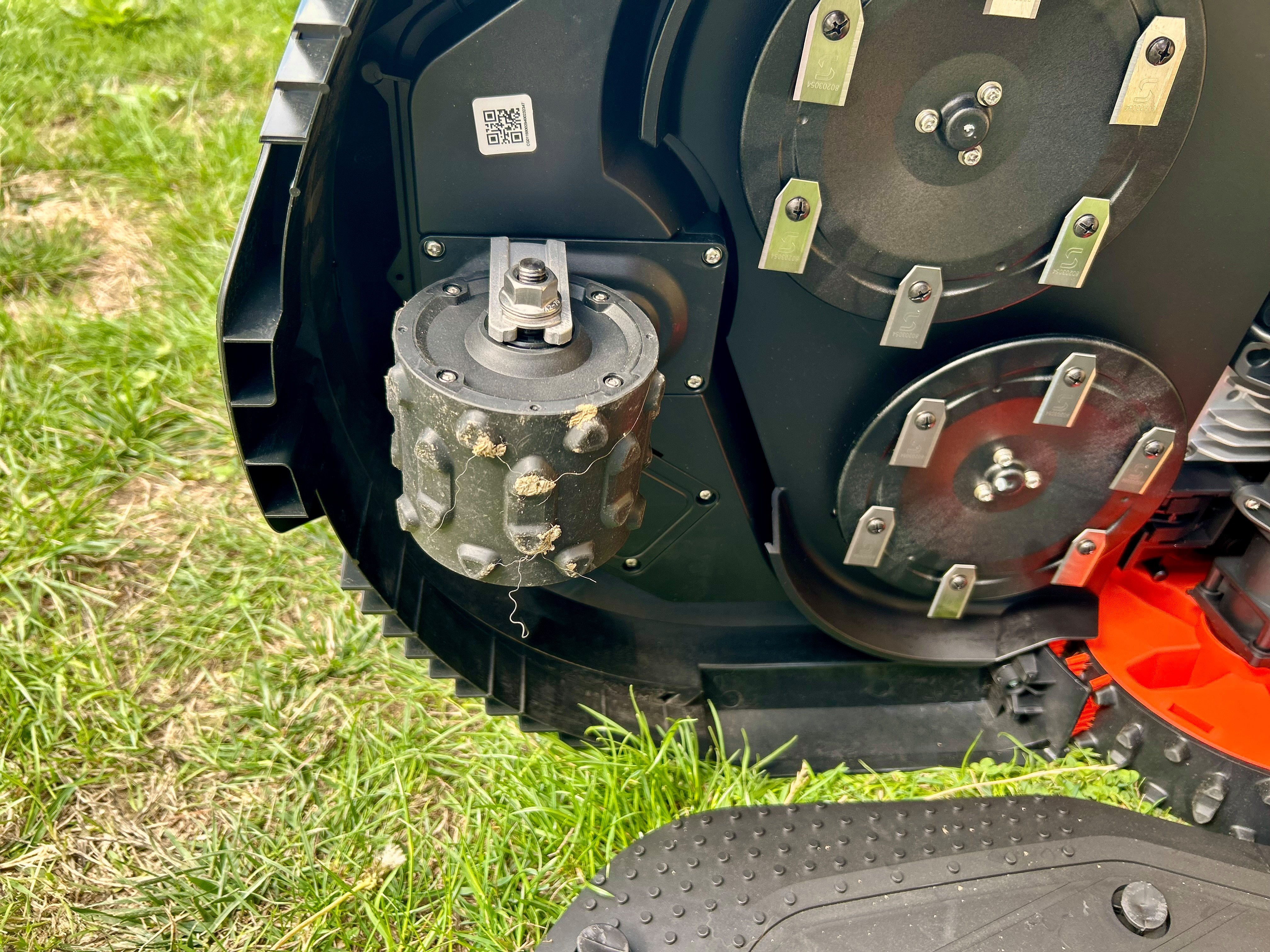
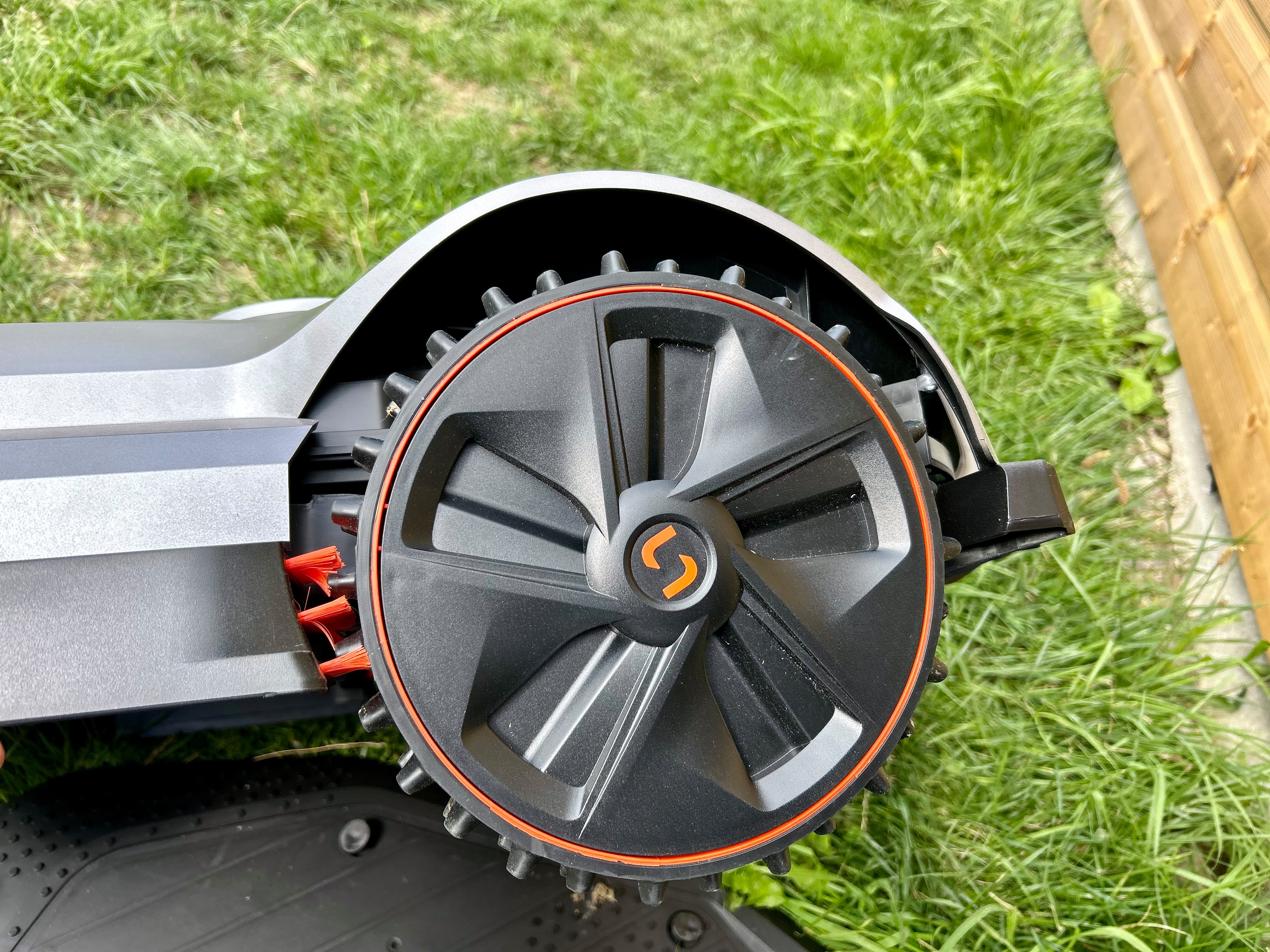
Maintenance is excellent. With dry grass, debris hardly clings to the wheels or the cutting system. The small brushes positioned opposite the toothed wheels are a clever idea, significantly limiting the accumulation of soil and residues.
Finally, a point the manufacturer does not emphasize: network-based positioning relies on a NetRTK subscription and 4G, included for 24 months. After this period, renewal costs €49 per year and remains essential to the navigation system’s operation. A recurring expense to factor into the purchase calculation.
Sunseeker X7 Gen 2: Clubic’s Verdict
On the ground, the X7 Gen 2 impressed me. Gaps, slopes, terrace edges—nothing stops it, and I only intervened once during the entire test. The mowing is clean, the autonomy is more than sufficient, and the RTK antenna is finally a thing of the past. A bulldozer that has (almost) learned manners. Almost, because it still scrapes the concrete and brushes trunks before deciding to back off. Aggressive, yet effective.
Where it struggles is the software. A mower capable of pulling itself out of a crater, yet unable to let me validate an error from my phone? You have to walk across the garden, squint at a tiny screen in full sun, and press. In 2026, sorry, but that just doesn’t cut it. Add a subscription that takes over once the free period ends, and the bill becomes less pleasant.
The issue for the X7 Gen 2 isn’t its mechanics, but its software. For a large, rugged garden, it’s a pricey model that’s certainly worth buying with eyes closed. For others, those who don’t need such all-terrain capability, the app shortcomings will weigh more heavily. Sunseeker has delivered the muscle. It only needs a more developed brain.
- Excellent mowing quality
- Excellent off-road performance
- Easier installation, no RTK antenna to position
- Comfortable autonomy and fast charging
- Cutting height adjustment
- Low noise on a large plot (60 dB)
- Camera return not accessible in the app
- Errors can only be reset on the robot’s display
- Small objects on the ground poorly detected
- Annual subscription of €49 per year after the included period
Note: product tested on a unit loaned by the manufacturer.

Daniel Brooks
I cover everyday products with a practical eye, from kitchen tools and home essentials to smart gadgets and consumer trends. My goal is to help readers understand what is genuinely useful, what is worth the price, and what deserves a second look before buying.