
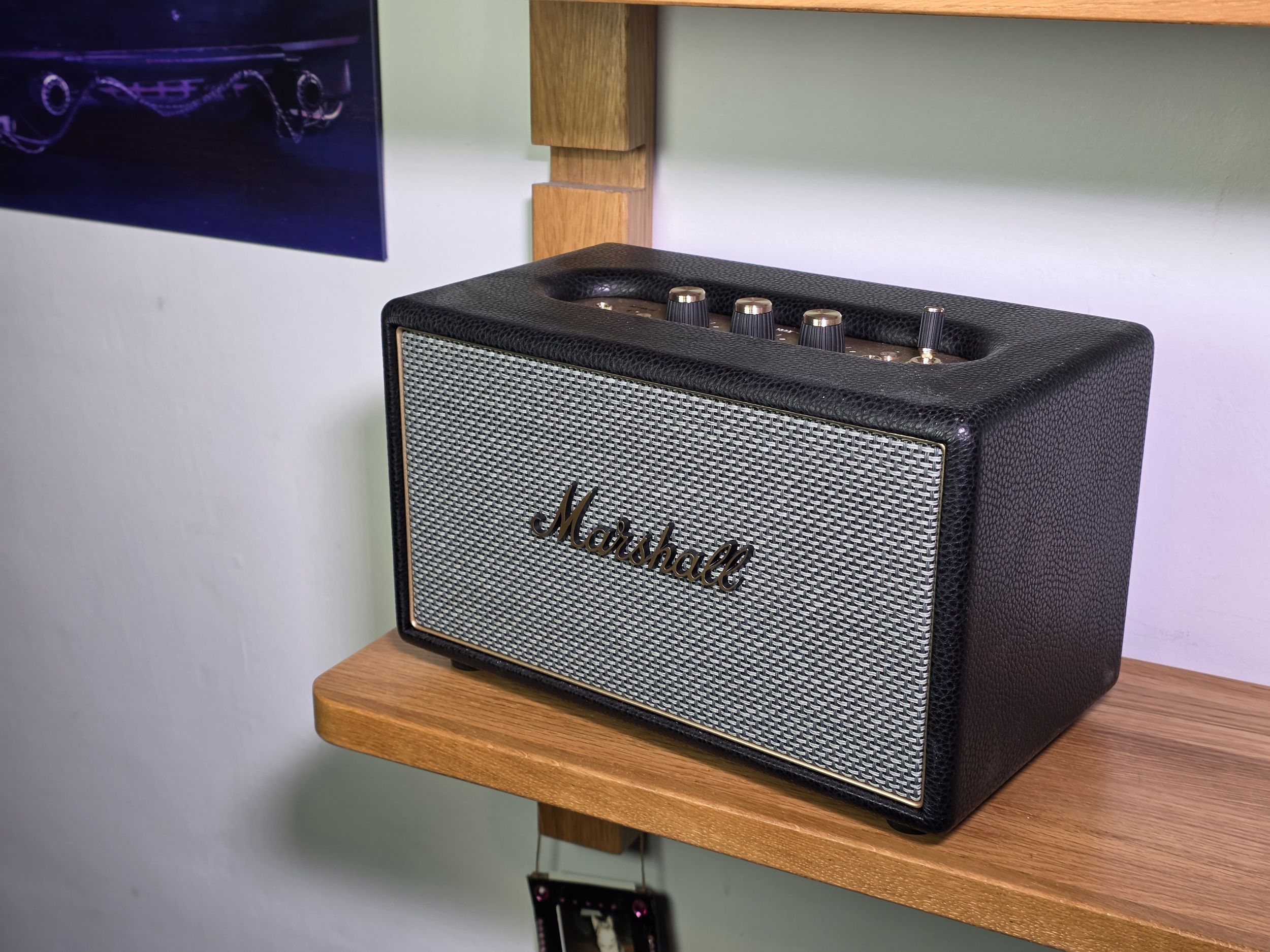
A stationary Bluetooth speaker, a category that leans on design and ease of use, the Acton is above all the most affordable product in Marshall’s Homeline series. A new version of this classic, the Acton IV revises certain elements and further modernizes the core. Not revolutionary, but certainly enough to satisfy fans of the brand.
Despite being powered from mains and carrying a fairly substantial weight, the Acton IV remains a straightforward Bluetooth speaker. Unsurprisingly, it leans on Marshall’s familiar strengths—an iconic design and a richly featured built-in interface. By recalibrating the acoustic architecture and finally embracing the Auracast standard, this new-generation Acton aims to move the game forward.
8 / 10
Best prices
amazon.fr
Fnac
Son-Vidéo
PC Componentes
Voir plus de prix
- Powerful sound, strong bass extension
- Balanced signature
- Elegant, well-built design
- Integrated, sleek interface
- Slight lack of treble richness, stereo image rather tight
- Bluetooth-only connectivity
- LE Audio/Auracast not functional (for the moment)
A handsome object for the living room
Unless you really won’t stand Marshall’s aesthetic, it’s hard not to be charmed by the Acton IV’s look. Naturally very close to its predecessor and to the rest of the Homeline lineup, especially the larger Stanmore and Woburn, this compact rectangular block ticks all the boxes. The blend of a matte black chassis, light tones in the front grille, and brass accents on the interface evokes the venerable guitar amps. Importantly, the Acton IV is small enough (26 x 17 x 15 cm) to fit on most furniture without crowding the space.
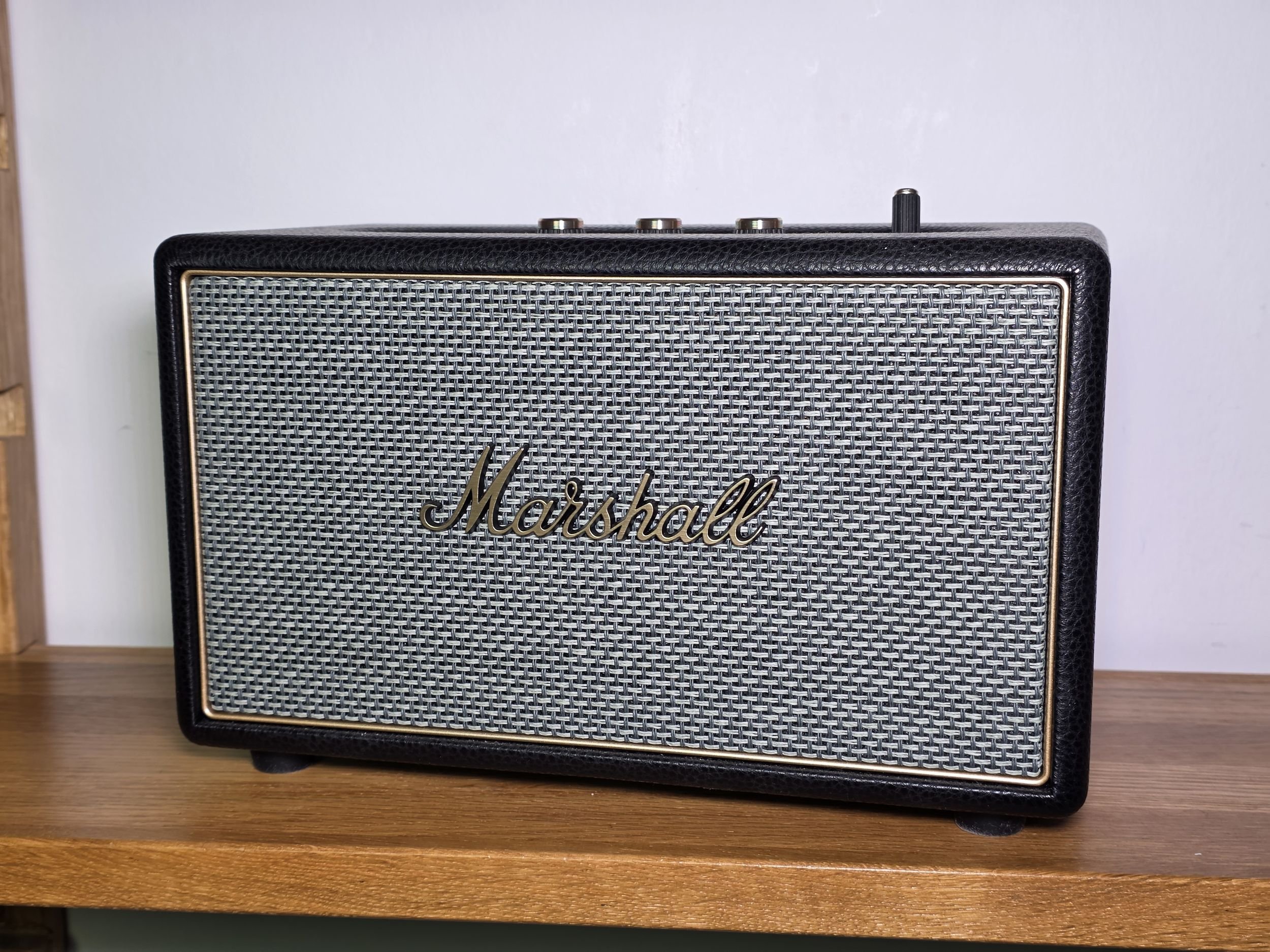
Build is solid, to be expected rather than luxurious in a sartorial sense like B&O: MDF body, textured vinyl finish reminiscent of ToLex, front grille that mimics fabric, top plate and switch in anodized aluminum, discrete rubber decoupling feet.
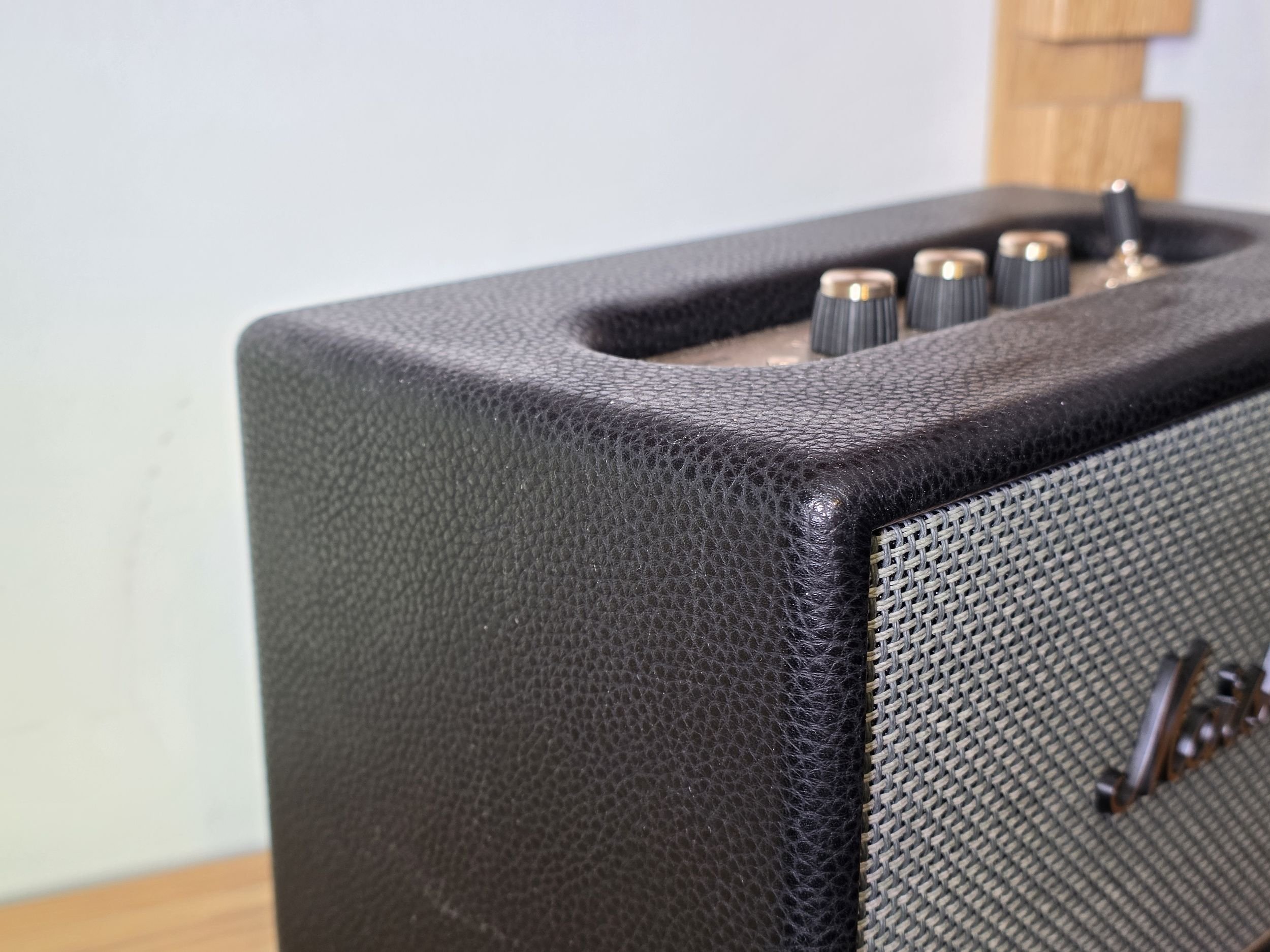
The speaker exudes a reassuring heft and is well put together. By relocating the ports and the vent into a recessed cavity at the base, the Acton IV appears more serious than ever. Of course, the design gap with the Acton III isn’t gigantic, but it is not negligible either.
A pleasure to use, but questions remain
Marshall prefers simplicity, hence a connectivity philosophy that stops at Bluetooth. On paper, the approach works, especially since the new 5.3 chip is Auracast compatible, which should imply universality and LE Audio compatibility (Auracast is normally encompassed within this standard, or rather this framework).
But this is also where our questions begin. Indeed, there is no sign of universal Auracast use, whether via the traditional route with a smartphone (the product appearing in the S25 Ultra’s broadcast tab) or via Marshall’s dedicated app. The app itself does not highlight any LE Audio/Auracast option or tab, despite what the product sheet states. The brand remains a little evasive, but this seems to stem from a somewhat delayed deployment of the feature in the Marshall app. We will leave this point open for now.
Beyond this potential connectivity, the Bluetooth Classic side includes multipoint, Fast Pair and Swift Pair, and supports SBC/AAC and LDAC codecs.
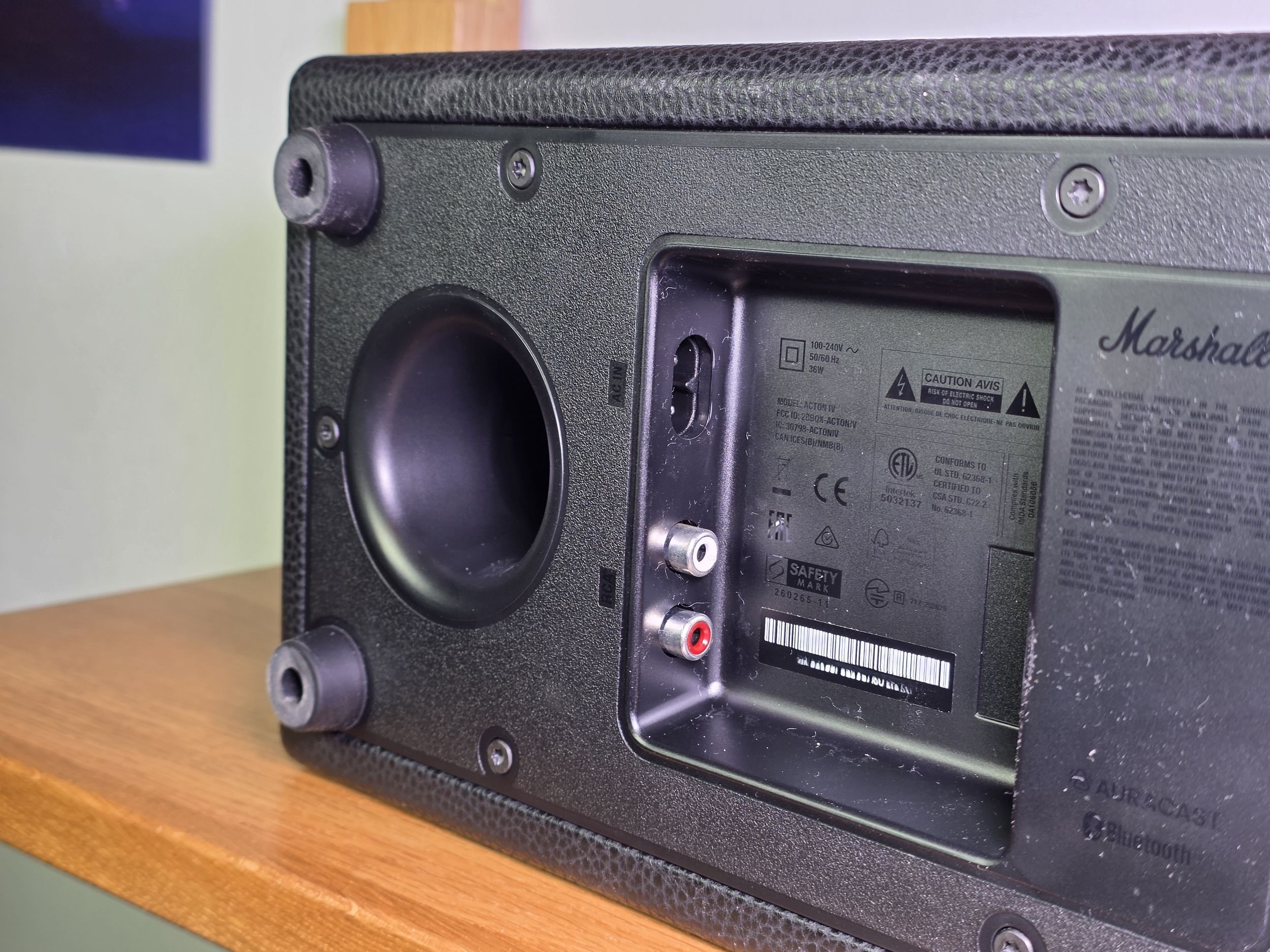
As for connectivity, the brand makes a modest step forward, moving away from a single 3.5 mm line input to include a 3.5 mm jack plus a second RCA input cleverly camouflaged in the base beside the power port.
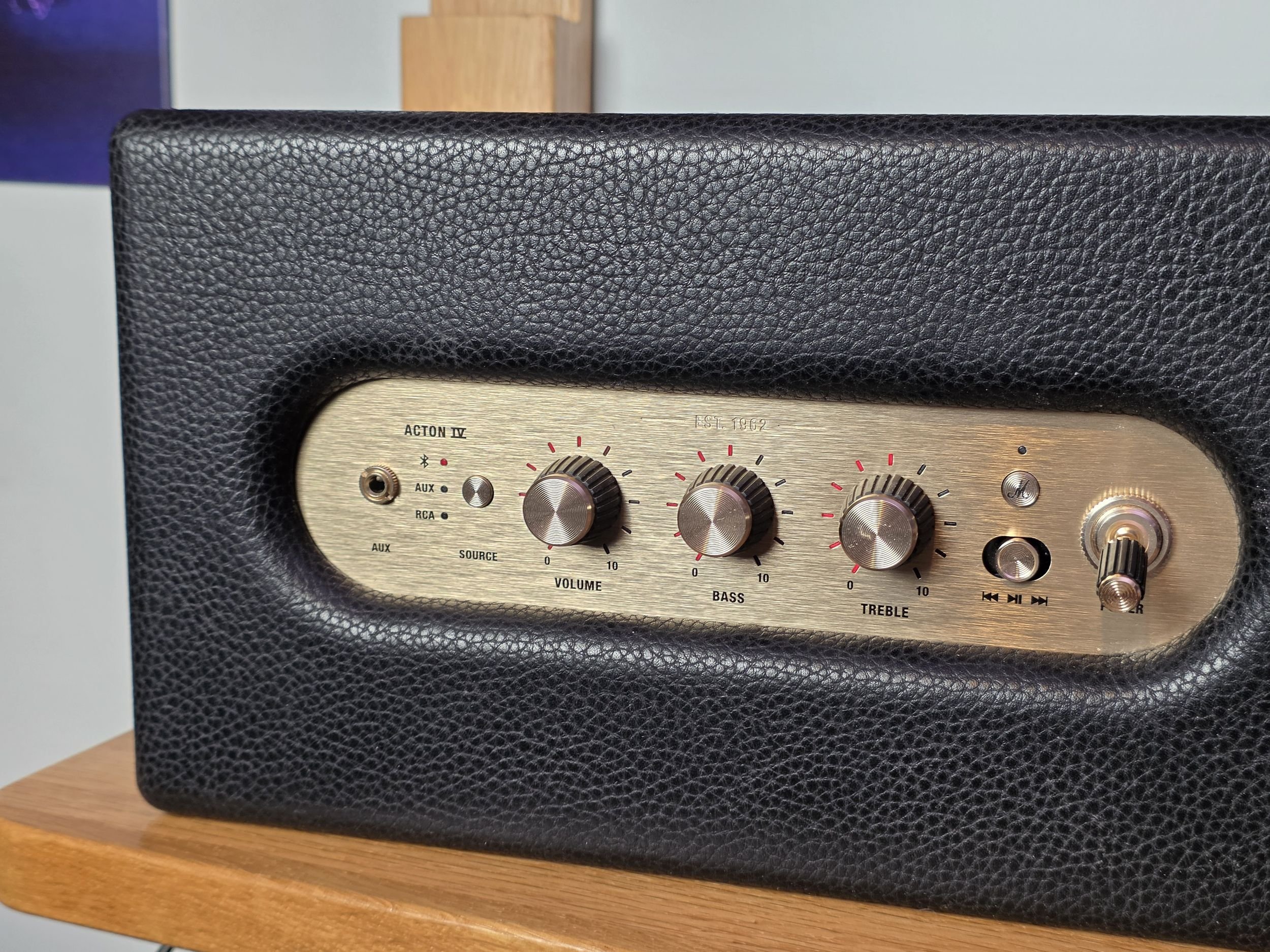
All of this is tied to Marshall’s famous interface, which emphasizes physical controls: a multifunction navigation joystick (play/pause/track skip); an input-select button; a new programmable M button; an on/off switch; and a trio of knobs. These not only adjust the volume, but also manage bass and treble levels without using the app. The ensemble is completed by stylish red LEDs. Clearly, this interface is one of the main reasons for the success of the Homeline line, and of the brand in general in the active speaker segment.
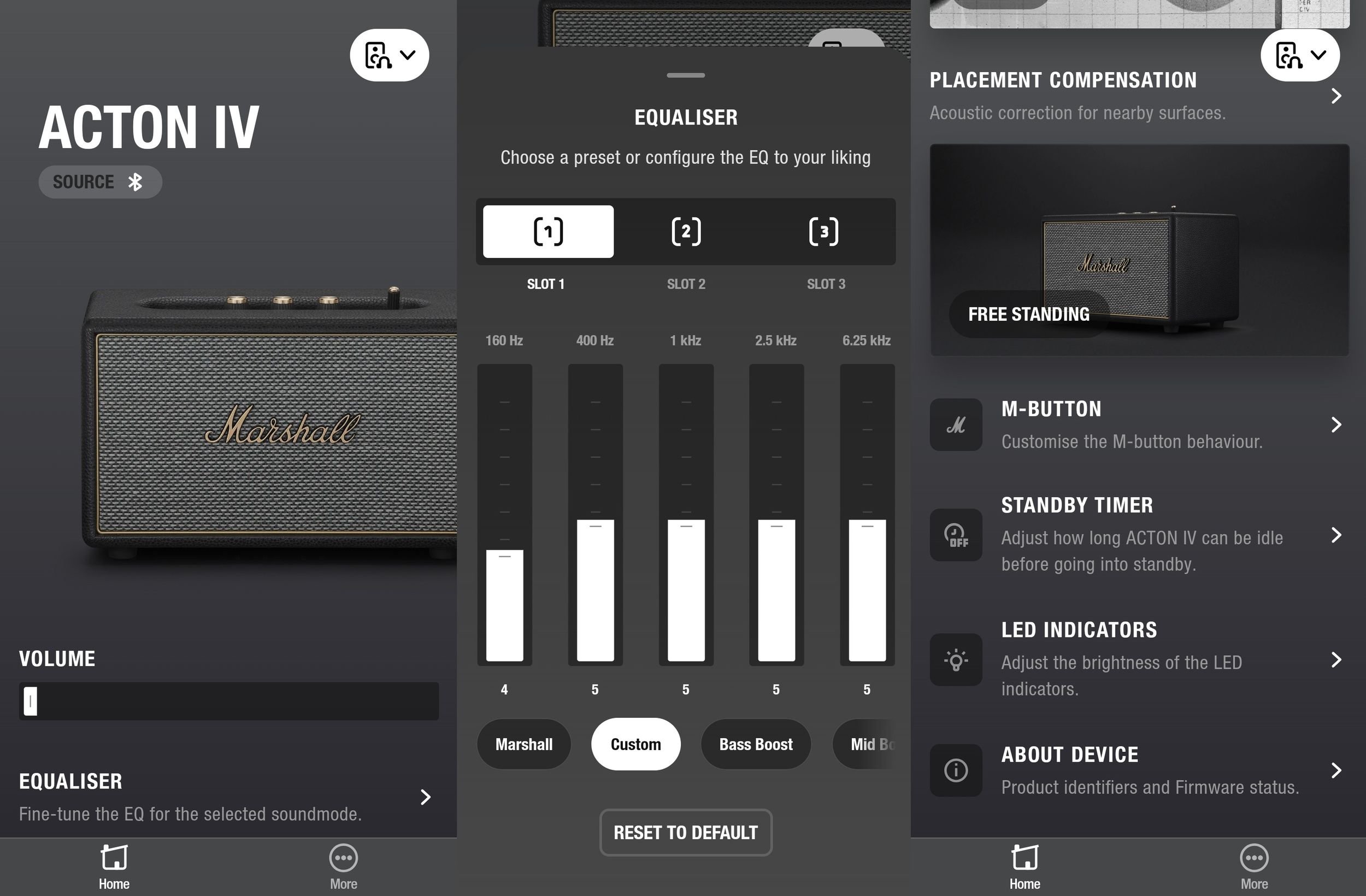
With the app, things are broadly positive, although it isn’t fully polished yet. Beyond a five-band equalizer, the brand now includes a feature that adapts the sound depending on the speaker’s placement (near a piece of furniture, in a corner, etc.), and a programming tool for the M button (Sound Profile, Spotify Tap).
Power under control, shy stereo
Marshall’s acoustic recipe is simple: a solid 10 cm woofer and two 19 mm dome tweeters with waveguides (thus a stereo setup). A small novelty is the bass-reflex vent, now placed at the base rather than the rear as on the previous generation, which simplifies placement. All of this is driven by three Class D amplifiers: 60 W RMS for the woofer, 25 W for each tweeter. On specs, Marshall isn’t shy: a claimed frequency range of 37 Hz – 38 kHz (no measurement detail), and a max SPL of 95 dB.
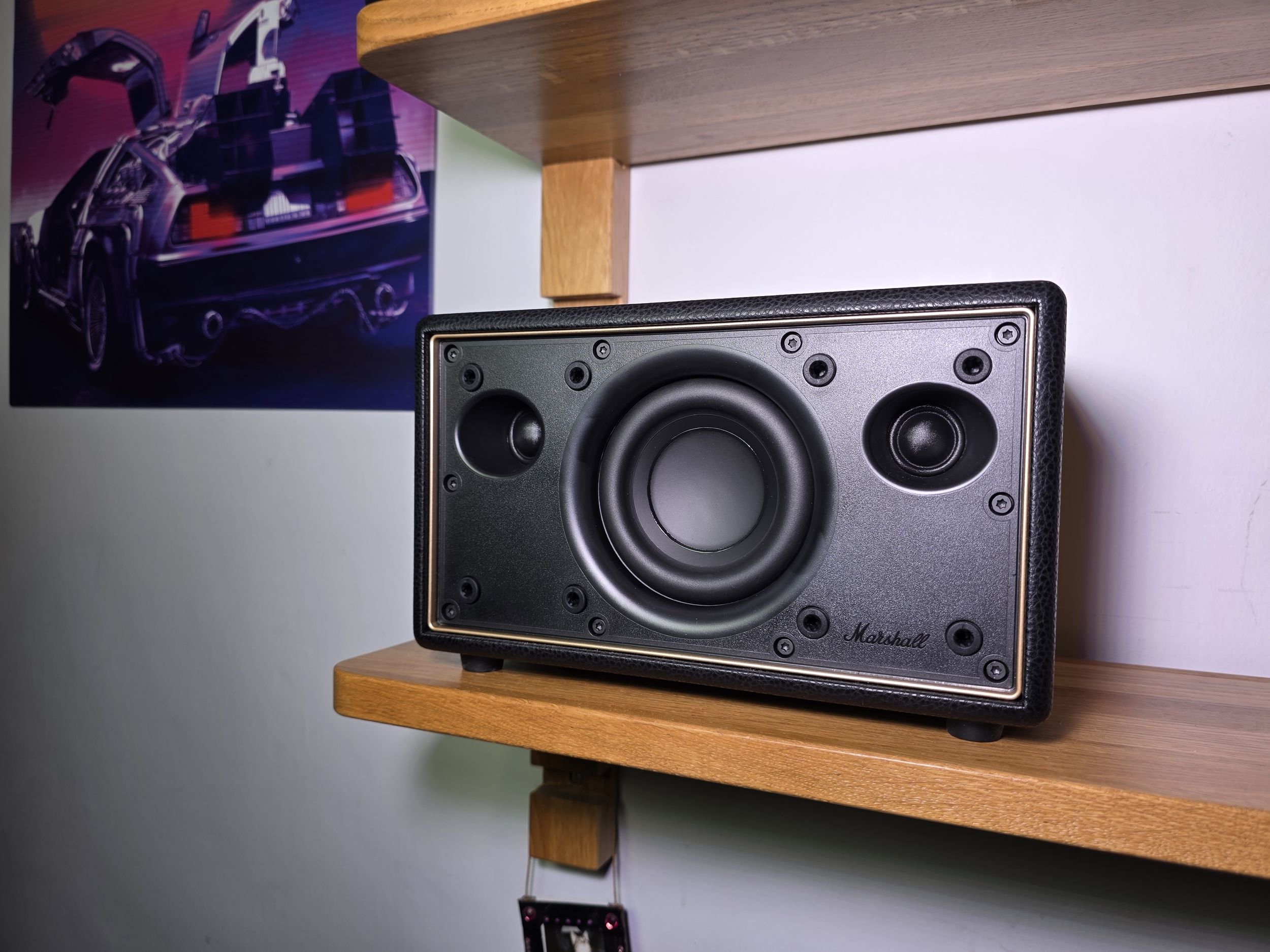
No, Marshall hasn’t entirely abandoned its previous approach. Where its earlier creations delivered highly distinctive, even exuberant, sonic profiles, the Acton IV finally manages to blend power with a degree of balance.
Not a perfect neutrality, but the peaks and troughs, particularly in the upper midrange and treble, are largely tamed. Slightly rounded, the sound is pleasant—powerful without being fatiguing or overcompressed. The bass extension is present without an exaggerated spectrum. This range isn’t as pristine as the best floorstanding speakers, but there is good linearity that yields clarity in listening, even if it isn’t a nirvana of nuance.
Despite its compact size, the Marshall Acton IV really has some heft. Only at the very top end of volume do you start to notice the product’s technical limits, the bass dropping off a bit earlier than in its larger sister, the Stanmore IV.
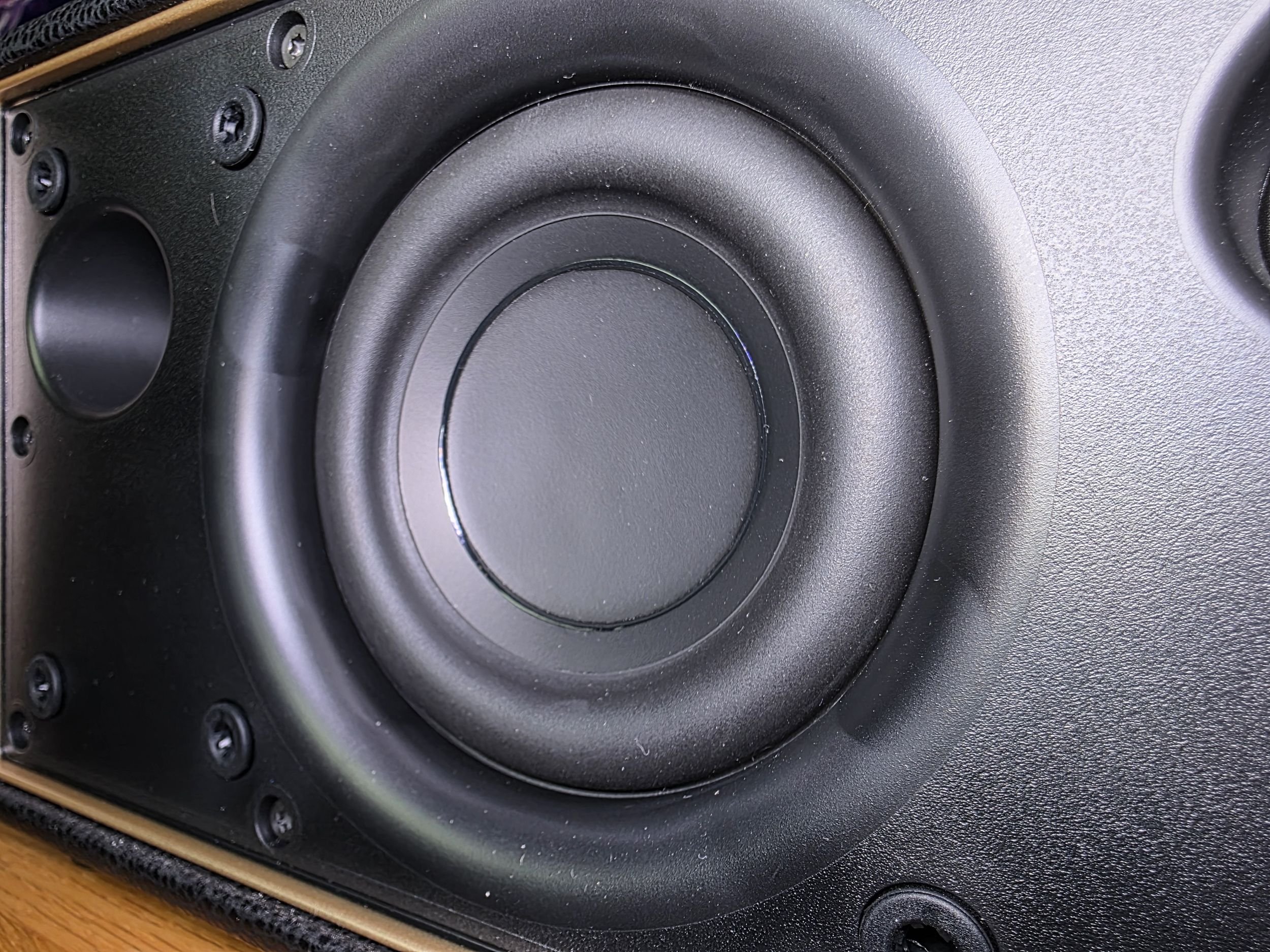
Midrange and highs are balanced too, though slightly recessed to the listener’s ear compared with the bass. We avoid any sense of veil or muddy, undefined sound, leaning toward a softer than razor-sharp profile. Conversely, a few sparkles appear beyond 8–10 kHz, signaling the tweeters still have room to improve. This range is controlled but not extremely detailed, and the soundstage, while stereo, is regrettably not very wide on the sides. We’d like a true sense of breadth and immersion, but the Acton IV tends to present a somewhat wide mono image rather than a strongly defined stereo field.
Who the Marshall Acton IV is really for
This stationary speaker is somewhat peculiar, but it is aimed at:
- Those who appreciate Marshall’s iconic retro styling
- Fans of powerful yet fairly balanced sound
- People who don’t require a connected, networked solution
Marshall Acton IV: Clubic’s verdict
Nice, well-finished, enjoyable to use, and exuding a powerful and relatively balanced sound, the Marshall Acton IV is a very commendable home Bluetooth speaker—especially for those who dig its rock-inspired aesthetic.
However, there are still elements that could be improved, and some promises are only partially met. The treble is solid but not exceptionally rich or expansive, and the 5.3 Bluetooth chip, on paper modern, doesn’t fully exploit LE Audio capabilities at the time of writing. A very effective and pleasant-to-use product nonetheless.
- Powerful sound, good bass extension
- Balanced signature
- Balanced design and build quality
- Elegant, integrated interface
- Limited upper treble, very narrow stereo
- Bluetooth-only connectivity
- LE Audio/Auracast not functioning (for the moment)
9
6
8
8
amazon.fr
Fnac
Son-Vidéo
PC Componentes
Materiel.net
Voir plus de prix
What are the best Bluetooth speakers for the living room in 2026?

Daniel Brooks
I cover everyday products with a practical eye, from kitchen tools and home essentials to smart gadgets and consumer trends. My goal is to help readers understand what is genuinely useful, what is worth the price, and what deserves a second look before buying.