
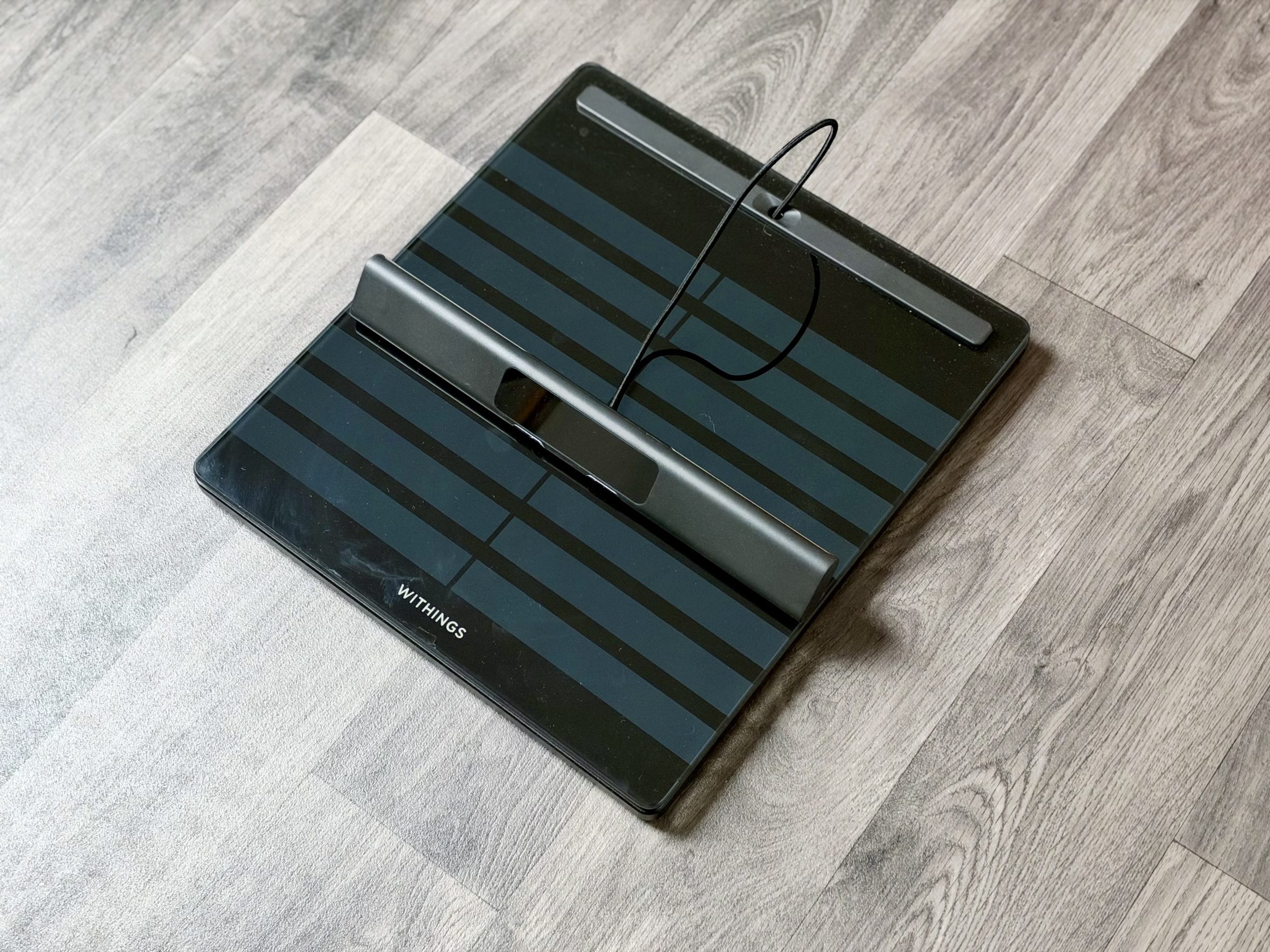
With the BodyScan 2, Withings turns weighing into health tracking that goes far beyond a simple step on a scale—covering weight, body composition, and several cardiac indicators. After almost four months of use, the interest extends beyond a graph gallery, but the price of the scale and its subscription deserve more careful consideration.
8 / 10
Design and build: the price is visible on the scale too
The BodyScan 2 makes an immediate strong impression. Build quality is impeccable, a constant from the French maker, and the whole unit exudes a premium feel. At this price, we expected nothing less, and Withings has refined its presentation.
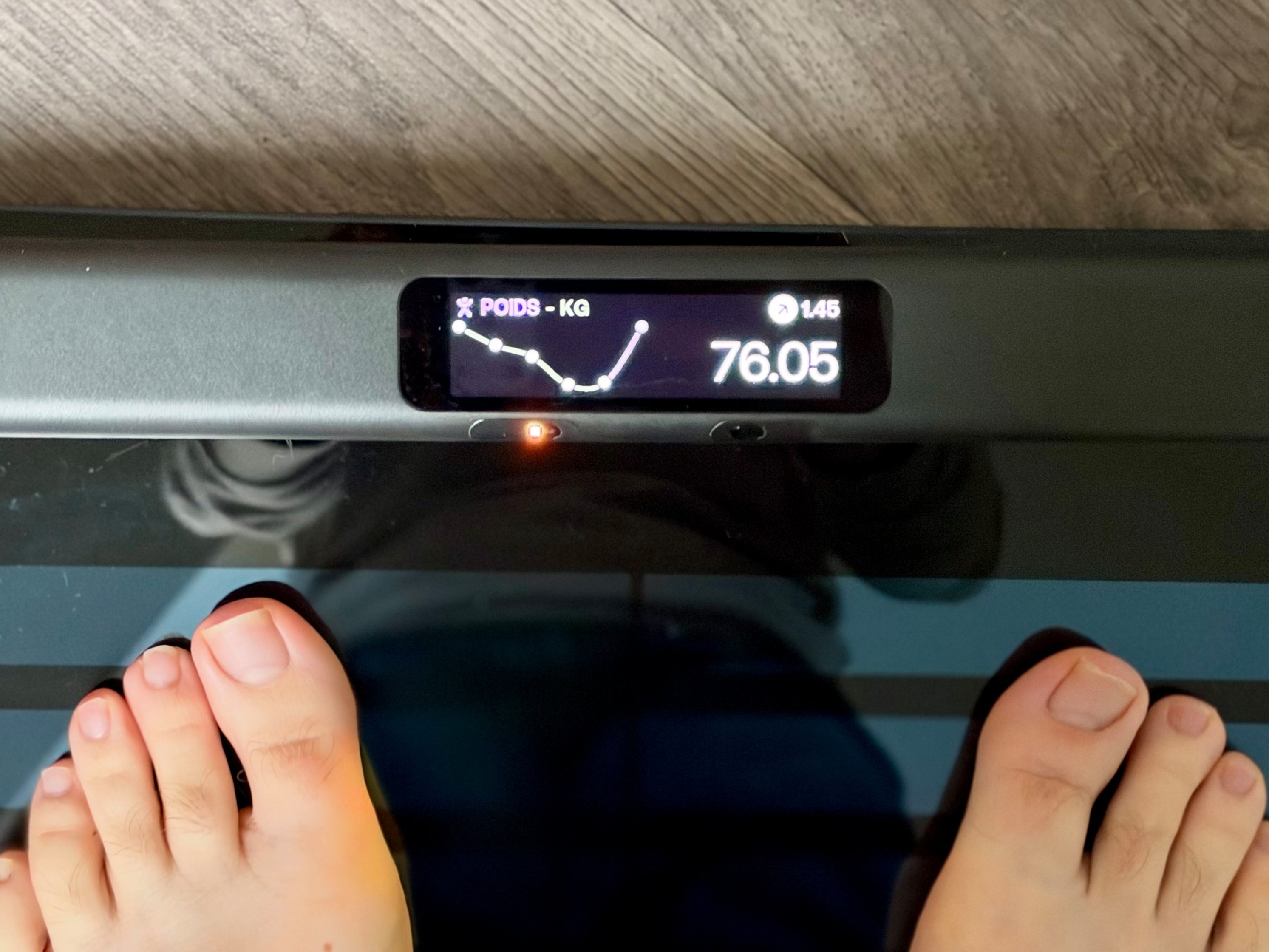
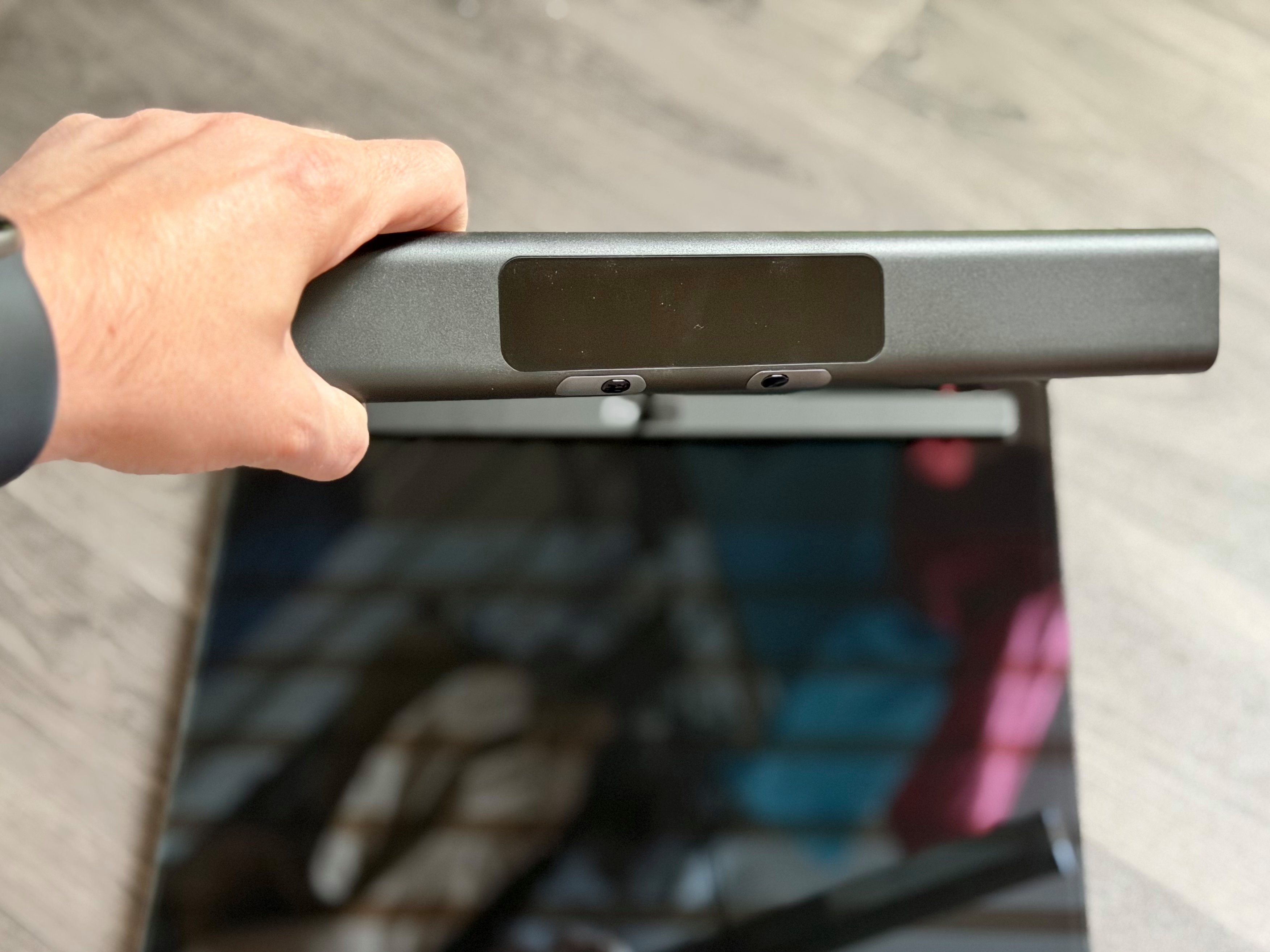
The display integrated into the handle is highly legible. This is a crucial feature on a device that shows so much information and accompanies you during each measurement. The handle isn’t a novelty of this generation: the first BodyScan already featured it, notably for the segmental analysis and the ECG. Here, the display stays close to the hands and eyes. The cord connecting the handle to the scale includes a locking mechanism to keep its length during the measurement.
The black glass on the top of the unit is very stylish, but it quite readily shows fingerprints. Nothing dramatic, and the color likely doesn’t help to hide them. You’ll simply need to wipe it from time to time to maintain the ensemble’s pristine look.
Getting started: weighing requires a few repetitions
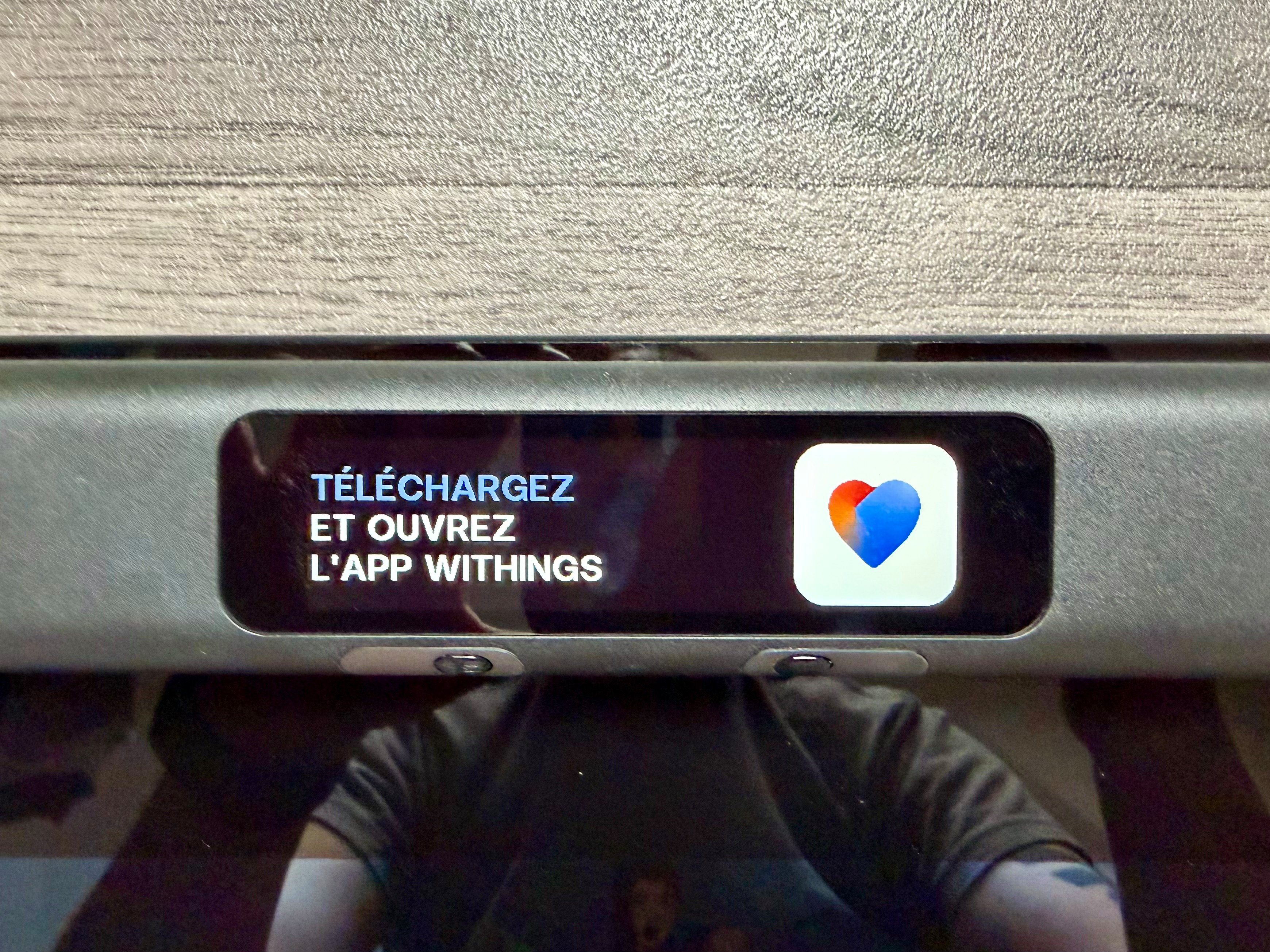
Once the device is registered in the Withings app (you’ll need to create a user account if you’re new), it’s time to step on.
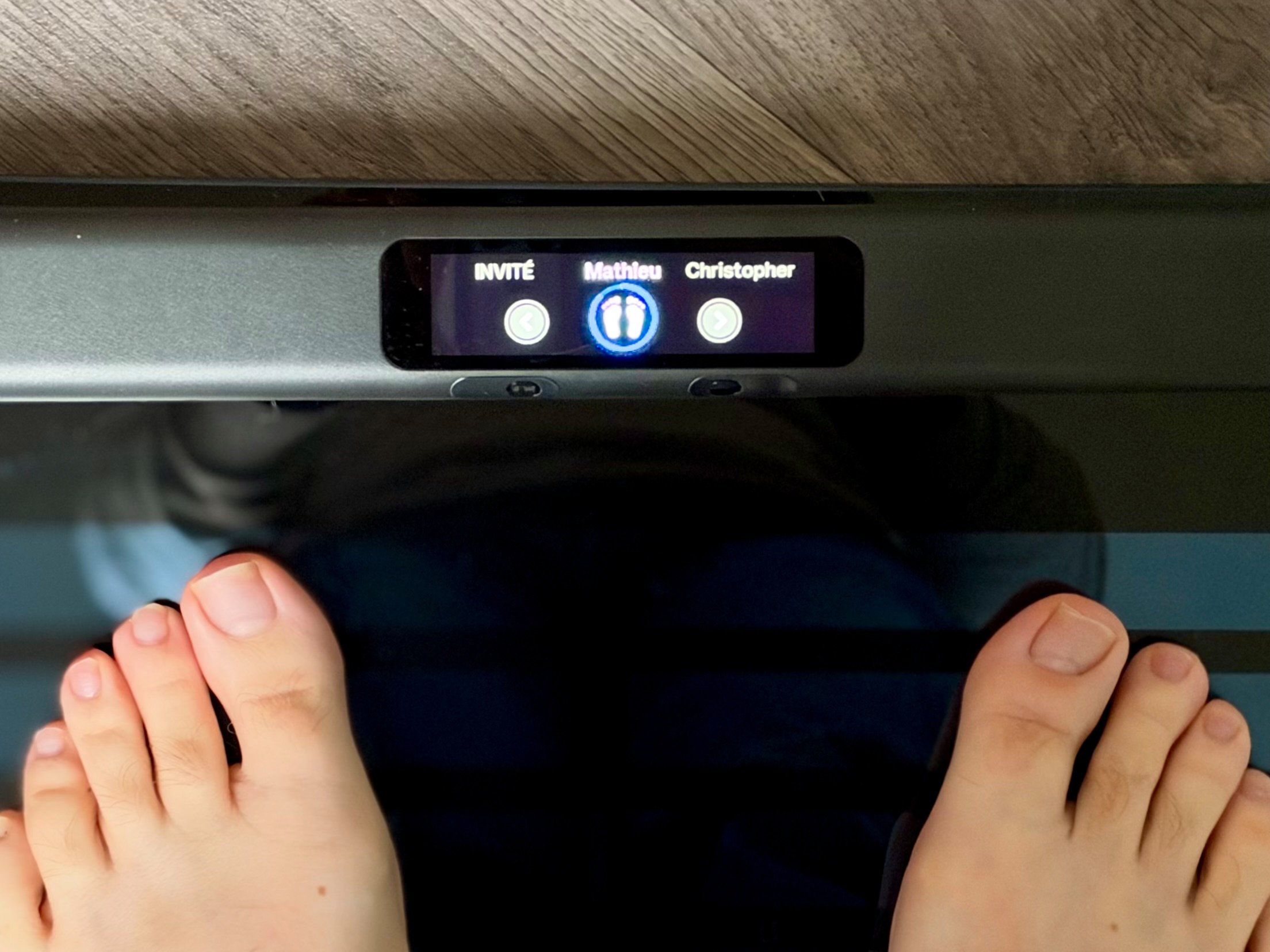
The weight measurement is immediate. You place your feet, the weight appears. For the full report, you must engage more: grab the handle, place your thumbs on the sensors, and adjust your position following the on-screen animation. In my case, a slight lean was needed to achieve the expected posture. It took a few minutes and two missteps to realize I was not correctly positioned. A brief explanation on the screen would not have gone amiss.
The early uses do require a bit of attention. You don’t simply step onto the scale and wait for everything to happen. After several days, this difficulty disappeared. I now master the motions, and weighing no longer poses a positioning problem. The learning curve exists, but there’s no need to redo it every week.
I also encountered some Wi-Fi connection hiccups during setup, although the configuration process is very well documented and illustrated in the Withings mobile app. They did not last long: since those initial adjustments, the connection hasn’t posed a problem. There remains, from time to time, a delay between weighing and data appearing in the app.
The full cycle also takes time. In my experience, plan about two to three minutes to complete all measurements. Withings distinguishes a detailed weekly report, called Longevity Scan, from a Daily Scan that can be customized and is advertised around 30 seconds. The latter lets you maintain a faster follow-up between full assessments.
Personally, I don’t necessarily roam every feature: some days I simply step on the scale to check my weight, without grabbing the handle. In my usage, I don’t feel the need to redo the full report daily; I mainly consult long-term trends over several weeks.
I also experienced a few Wi‑Fi connection hiccups when getting started, even though the setup procedure is very well documented and illustrated in the Withings app. They did not persist: since those early adjustments, the connection has been smooth. However, from time to time, there is still a delay between the weighing and the data appearing in the app.
The full cycle also takes time. In my usage, plan for about two to three minutes to perform all measurements. Withings distinguishes a comprehensive weekly overview, Longevity Scan, from a Daily Scan that can be customized and is advertised around 30 seconds. The latter keeps a smoother track between major assessments.
I don’t systematically tour the entire device: some days I simply step on the scale to record my weight, without grabbing the handle. In my usage, I don’t feel the need to repeat the full assessment every day; I mainly monitor trends over several weeks.
I ran into some Wi‑Fi connection issues when starting, even though the setup process is well documented and illustrated in the app. They did not last: since those initial adjustments, the connection has been smooth. There remains, however, occasionally a delay between weighing and the data appearing in the app.
The full cycle also takes time. In my experience, plan about two to three minutes to perform all measurements. Withings differentiates a weekly, in-depth Longevity Scan from a customizable Daily Scan, announced around 30 seconds. The latter is designed to maintain a quicker read between full assessments.
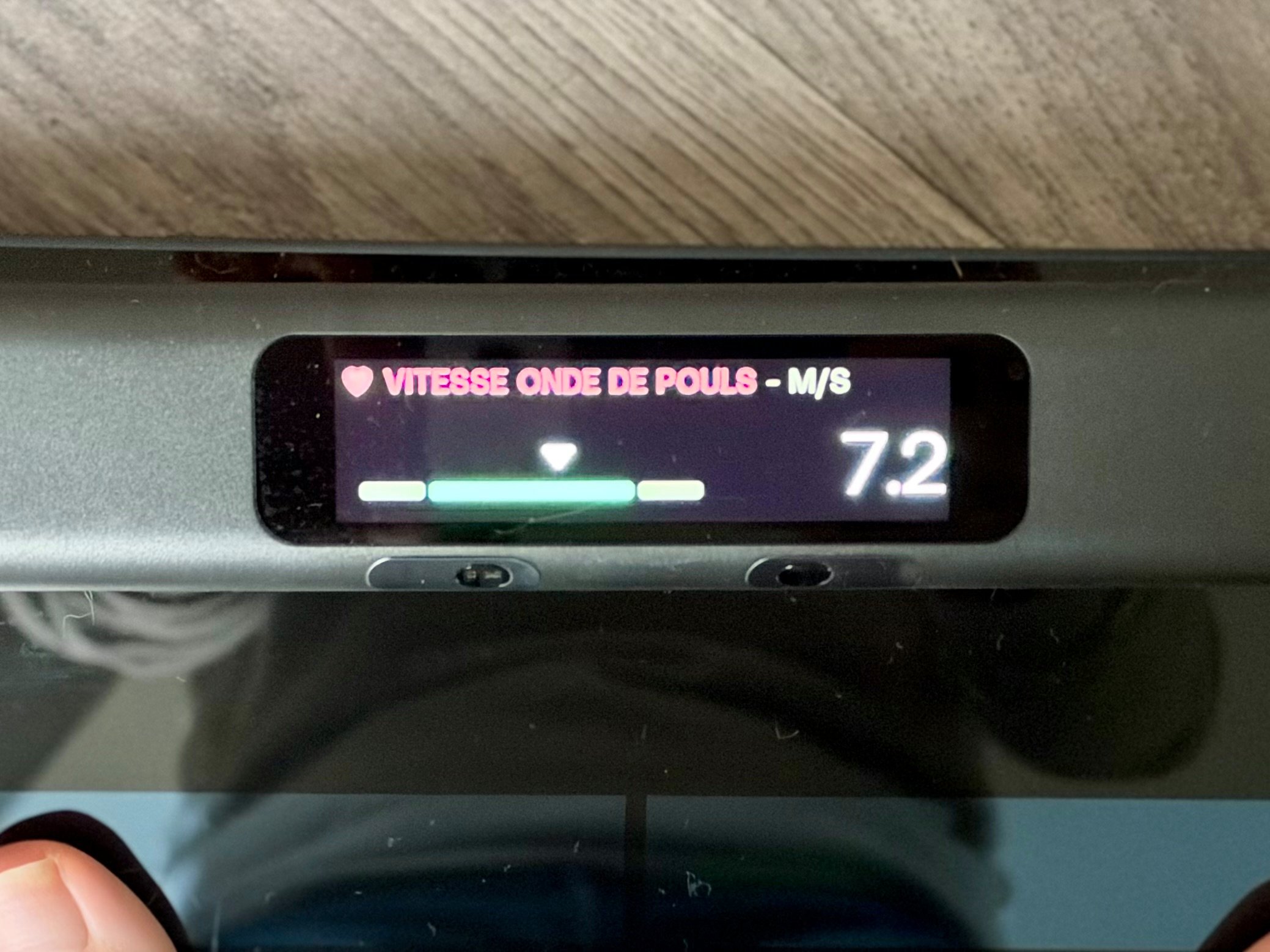
The nerve response in the feet is also part of the data I check regularly. This indicator relies on the electrical conductance of the skin, linked to sweat gland activity, which themselves are controlled by small nerve fibers. Its presentation on the scale’s screen remains somewhat opaque. You need to open the app and read the explanations to truly understand what the result represents. The display shows the number, but the mobile app is the real engine for dissecting the data.
Finally, an infrared light sensor embedded in the handle estimates blood oxygen saturation, or SpO₂. This measurement appeared only after several weeks of use on my unit. The product has evolved during my test, a point to keep in mind when comparing initial impressions with today’s experience.
Application and Withings+: syntheses are more convincing than the chatbot
The Withings app accompanies this wealth of data well. Tutorials and guides take time to explain the indicators, which is welcome when moving beyond familiar weight and BMI concepts.
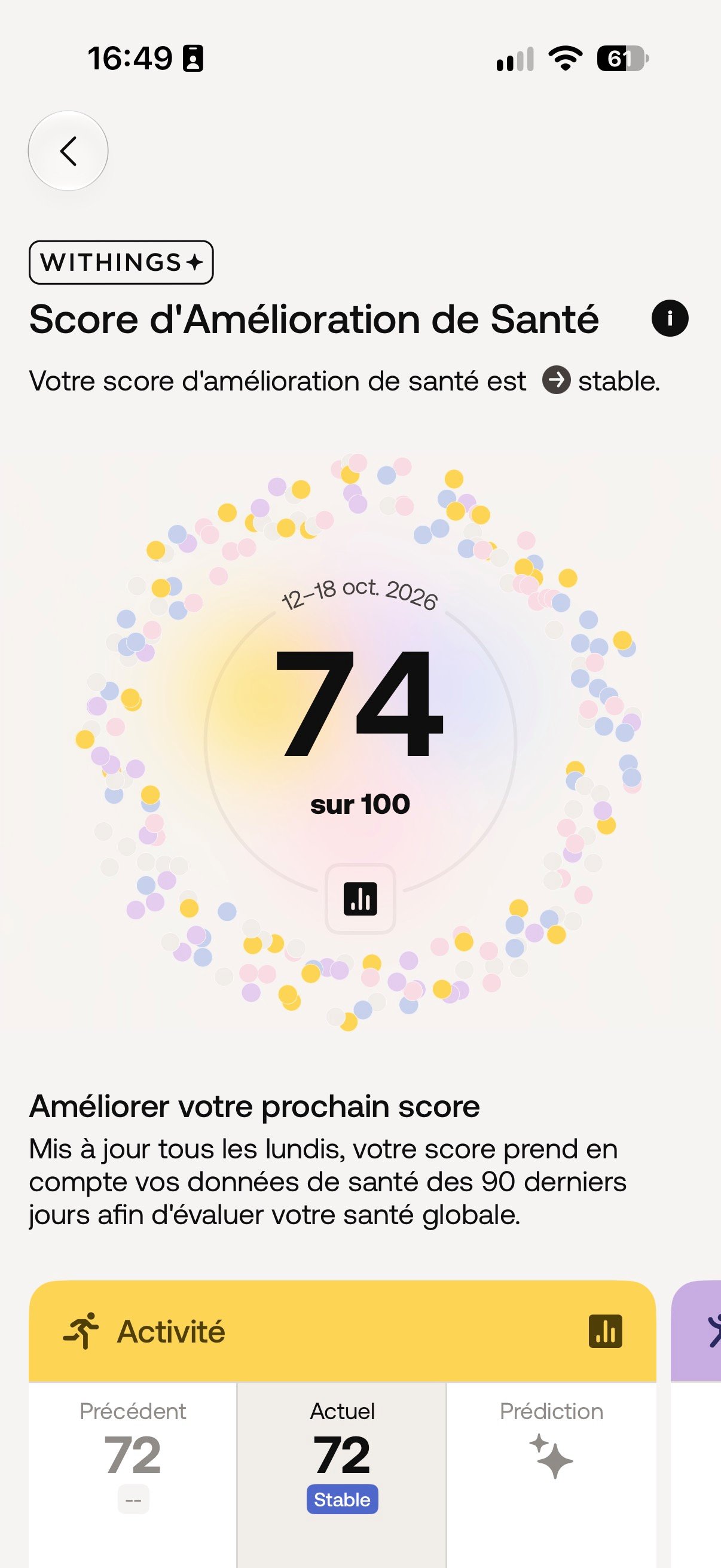
With Withings+ enabled during this test, I especially appreciate how it connects the different pieces of information. The morning summary provides a coherent and understandable snapshot of the situation, easier to consult than a string of independent curves, with for example an energy score to gauge recovery.
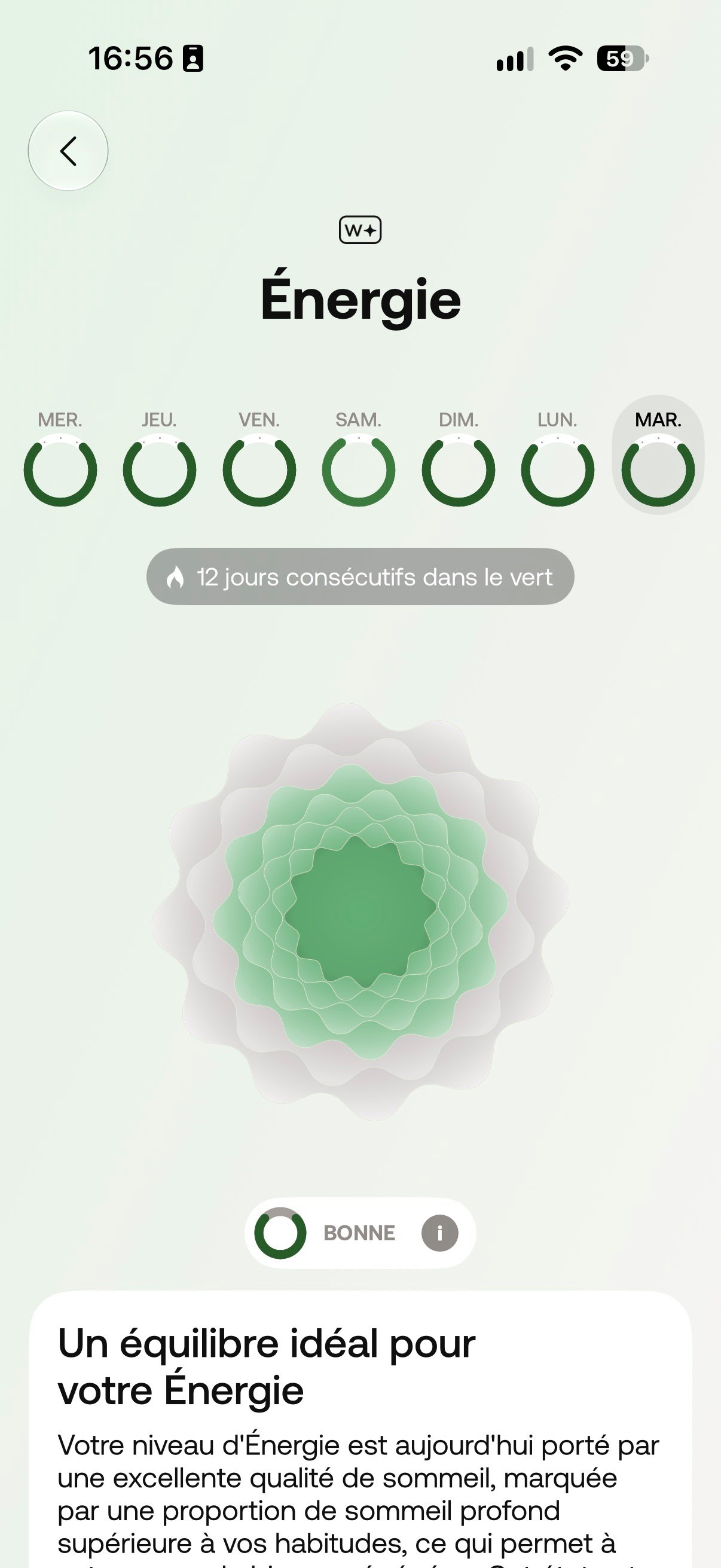
The indicator also seems aligned with the sleep quality tracked by the watches and connected bracelets I use daily. This concordance does not by itself validate the analysis, but it helps make the follow-up meaningful in my eyes.
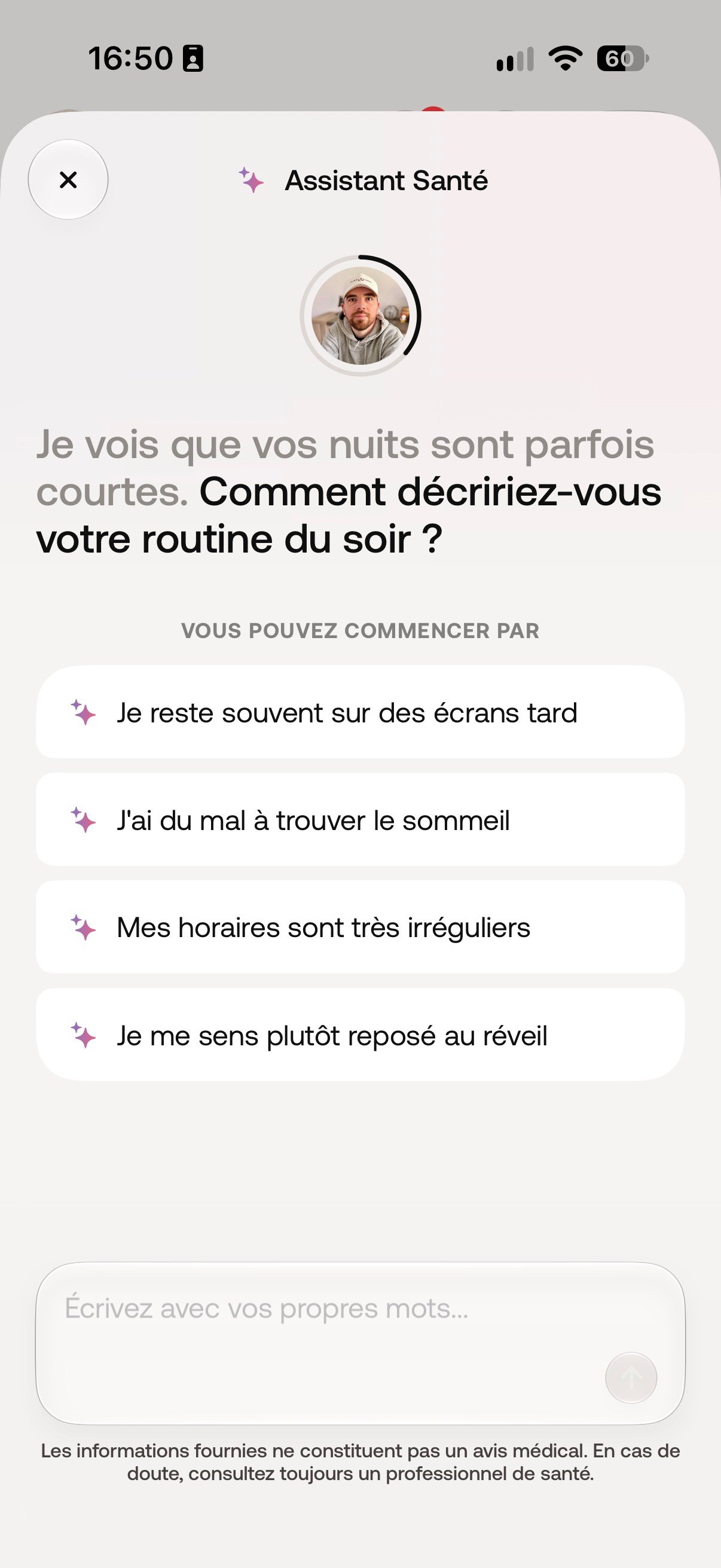
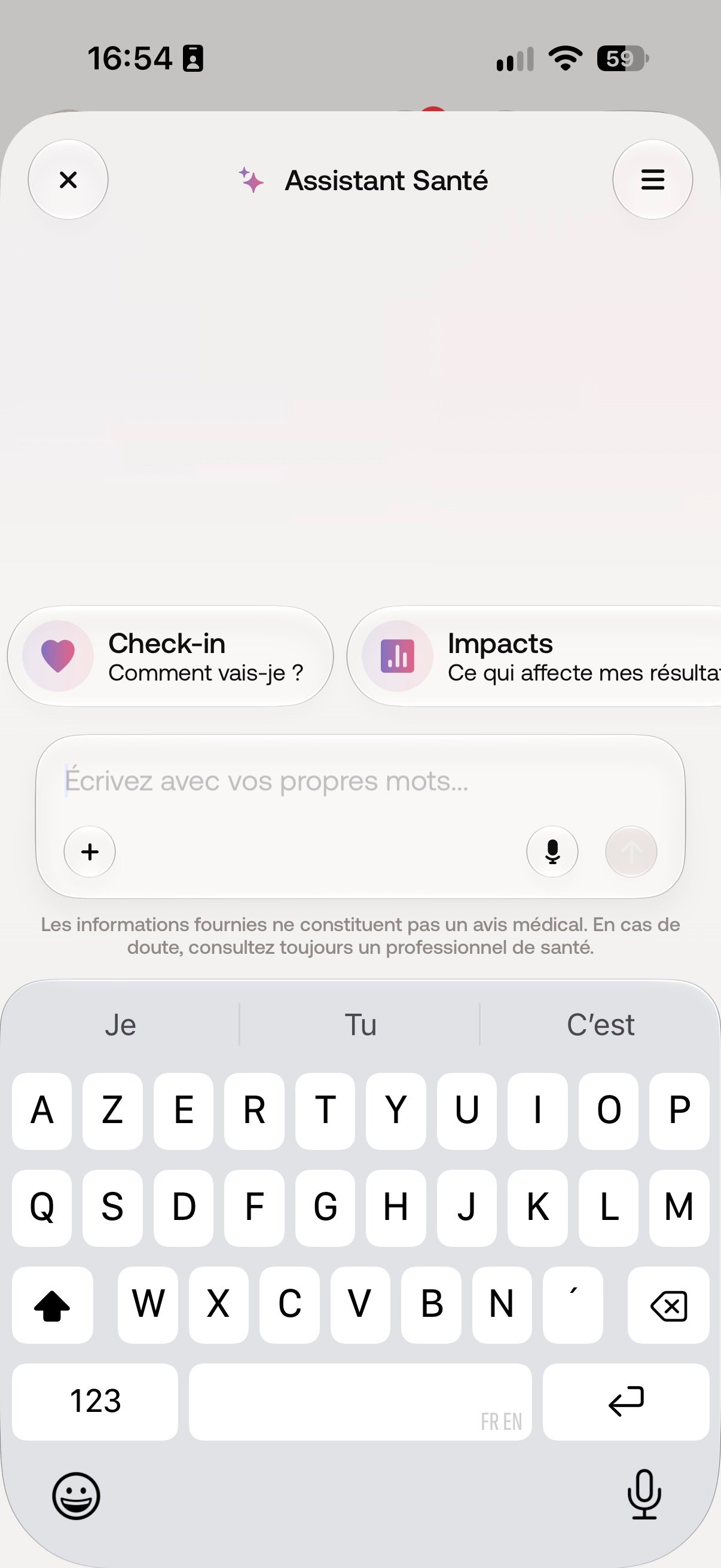
I remain less convinced by the chatbot. In my early trials, its answers felt fairly general, with no obvious value that would make me want to engage it regularly. I never quite knew what precise question to ask, and its responses are often measured. But there are better options!
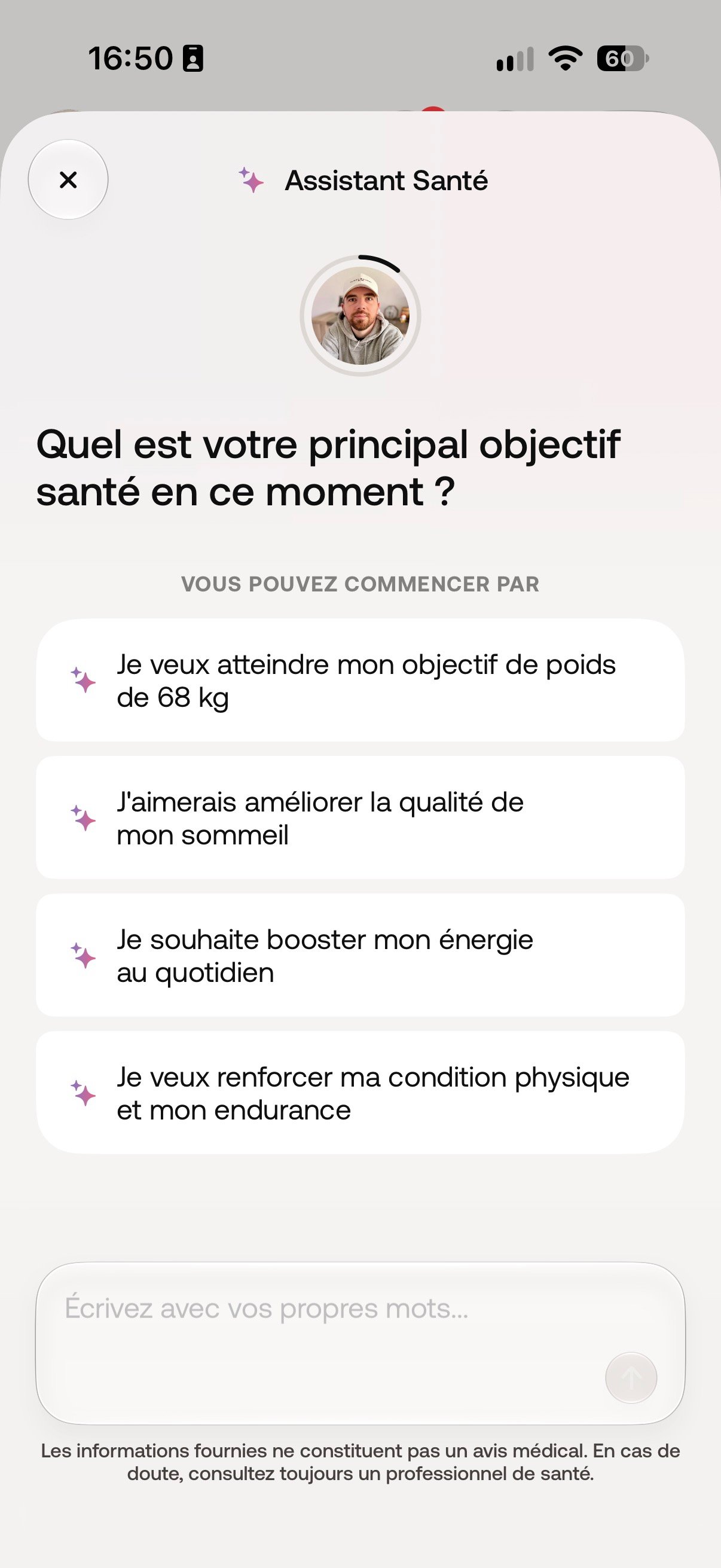
Nowadays, Withings+ offers some prompts at the bottom of the screen, personalized to the health objectives set at the start (weight target, dietary habits, lifestyle) that initiate a conversation on a broad topic, then narrow down with several questions. Withings clearly does not intend to turn its AI into a pocket doctor, and that’s commendable, but for now, it is the summaries that prove useful to me.
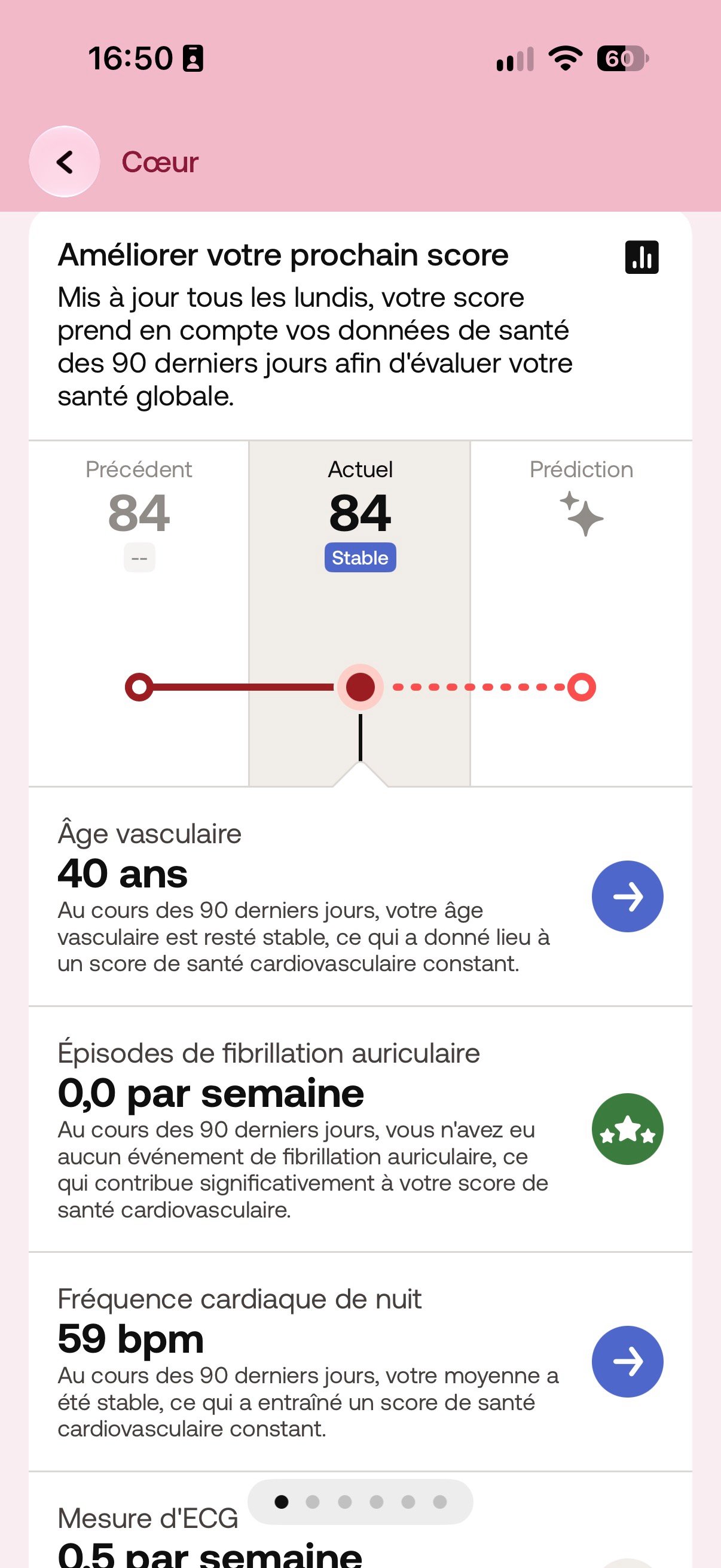
The price question nevertheless arises. The BodyScan 2 is listed at 499.95 €, with Withings+ possibly adding 9.95 € per month or 99.50 € per year. The service is well designed and I appreciate its interpretation of the data, but an additional subscription remains a cost to consider, especially after purchasing a scale for nearly 500 €. One more note: Withings+ isn’t limited to advice and summaries—some indicators, including the heart age I regularly consult, are reserved for subscribers. The question then also becomes which information you want to retain after the trial period ends.
Autonomy: USB-C charging can still wait
Withings claims between twelve and fifteen months of autonomy. I don’t yet have enough long-term data to confirm this duration, but I can share a concrete observation: between June 30 and October 19, the battery dropped from 80% to 58% without any mid-way recharge. A drop of 22 percentage points in a little under four months, under the conditions of this test.
That result corresponds to two people using the scale about once a week each. You should not extrapolate this to a household performing full assessments every morning.
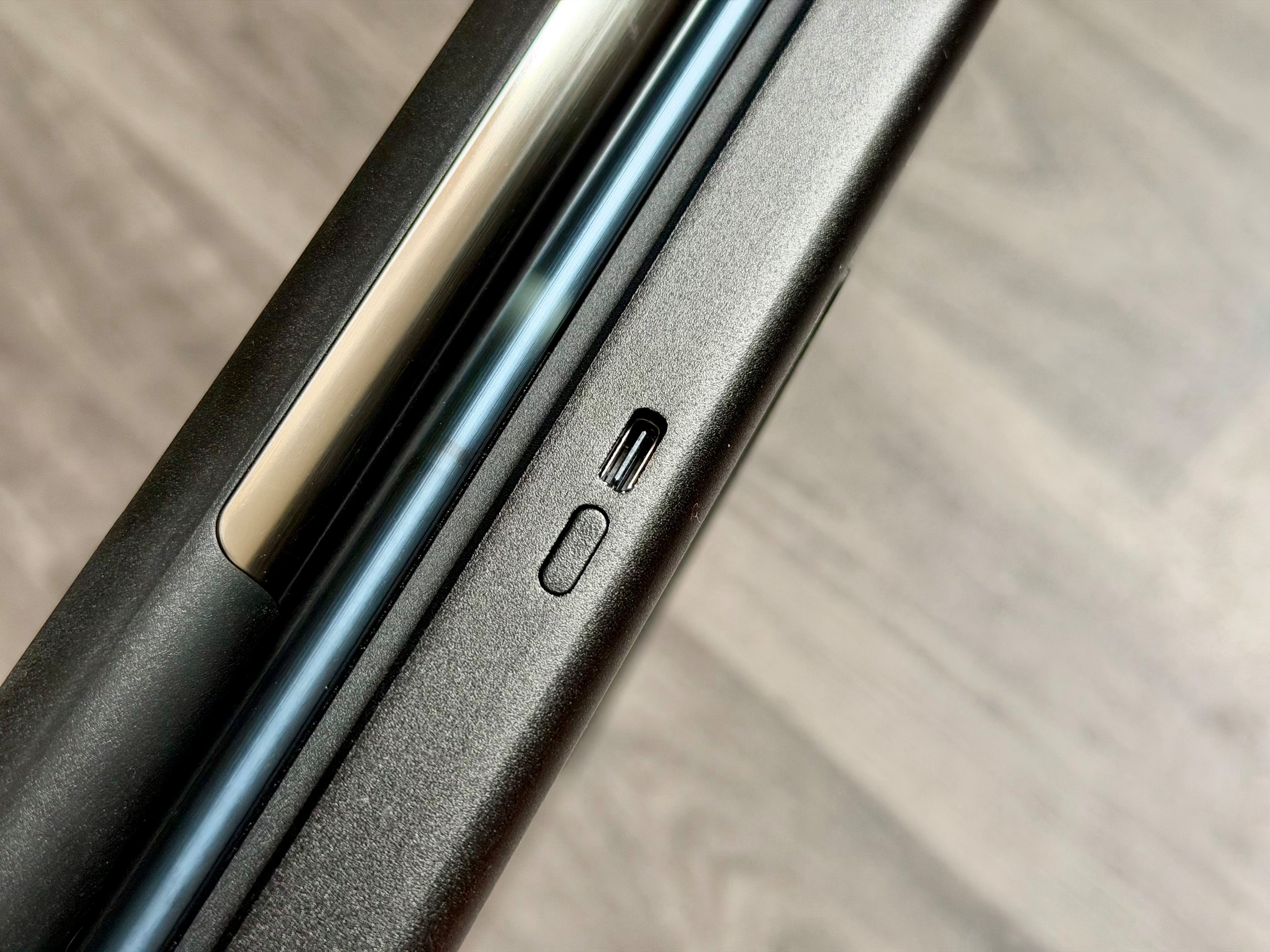
The battery recharges via USB-C, a welcome change after the disposable batteries used by my Body+. For now, I have not needed to pull out the charging cable yet.
Withings BodyScan 2: Clubic’s verdict
After almost four months of use, the BodyScan 2 provides more than a well-presented weight reading. The body composition tracking pushed me to rethink a few eating habits, while the cardiovascular indicators add another dimension to weighing. The build is impeccable, the screen highly legible, and once I learned the right movements, the initial usage difficulties fade away.
Not everything is immediately easy to interpret. Some data require a detour through the app explanations, body composition estimates can fluctuate significantly from day to day, and the full assessment takes a few minutes of availability. Withings+ offers useful syntheses to bring clarity, but its chatbot is less convincing. Especially, reserving certain indicators, including the heart age, for subscribers leaves a somewhat bitter taste after buying a scale for nearly 500 euros.
The BodyScan 2 thus targets those who want to regularly monitor their body composition and health indicators, and who will take the time to review them. For this use case, I understand the investment. For primarily watching one’s weight, the entry price seems harder to justify.
The pros and cons in a nutshell
The Withings BodyScan 2 has a sophisticated ecosystem that translates into several strengths and a few drawbacks.
Pros
- Detailed body and cardiovascular tracking
- Educational app and practical Withings+ summaries
- Impeccable build and easy-to-read display
Cons
- Premium price, plus subscription for certain indicators
- Some synchronization delays with the app
- Withings+ chatbot not yet indispensable
For years my Withings Body+ did its job. I stepped on it, the data synced to the app, and I could track my weight without making life overly complicated. Since June last year, the BodyScan 2 has taken its place, with a much broader ambition.
We presented the promises of this new generation at its CES 2026 announcement. It remained to see what these additional indicators would bring once the scale was installed in the bathroom, after the initial weigh-ins and the discovery of the menus.
In my usage, two elements became important: tracking body composition and cardiovascular indicators. It is still necessary to learn how to use the device, then to understand what it is telling you. On these two points, not everything depends on the scale’s platform.
Design and build: the price is visible on the scale too
The BodyScan 2 leaves a strong first impression. Build quality is flawless, a hallmark of the French maker, and the bundle conveys a premium sense. At this price, one expects nothing less, and Withings has refined its implementation.

The screen integrated into the handle is highly legible. This is an important asset on a device that displays so much information and accompanies you through each measurement. The handle isn’t a novelty of this generation: the original BodyScan already featured it, particularly for segmentation analysis and ECG. Here, the display sits close to the hands and eyes. The cord linking the handle to the scale includes a locking mechanism to maintain its length during measurement.
The black glass on the top of the unit is quite elegant, but it easily shows fingerprints. Nothing dramatic, and the color probably does not help to hide them. You’ll simply need to wipe it down from time to time to preserve the overall look.
Handling: weighing requires some repetitions
Once the device is registered in the Withings app (you’ll need to create a user account if you’re new), it’s time to step on.
The weight measurement is immediate. You place your feet, the weight shows up. For the full balance, more interaction is required: grabbing the handle, placing the thumbs on the sensors, and adjusting your position following the on-screen animation. In my case, I had to lean forward slightly to reach the expected posture. It took a few minutes and two misses to realize I wasn’t correctly positioned. A short on-screen tooltip would have been welcome.
The initial uses require a bit of patience. You don’t just step on the scale and expect everything to be ready. After several days, this difficulty disappeared. I now master the motions and weighing no longer presents a positioning problem. The learning curve exists, but there’s no need to redo it weekly.
I also ran into some Wi‑Fi connection hiccups during setup, though the configuration process is very well documented and illustrated in the Withings app. They did not persist: since those initial tweaks, the connection has not posed any problem. Still, there are occasional delays between weighing and data appearing in the app.
The full cycle also takes time. In my usage, expect about two to three minutes to complete all measurements. Withings distinguishes a thorough weekly Longevity Scan from a Daily Scan, which is customizable and advertised at around 30 seconds. The later keeps a faster trace between comprehensive assessments.
The nerve response of the feet is also part of the data I check regularly. This indicator relies on the skin’s electrical conductance, linked to sweat gland activity controlled by tiny nerve fibers. Its display on the scale’s screen remains somewhat opaque. You need to open the app and read the explanations to truly understand what the result represents. The display shows the figure, but the mobile app is the brain for unpacking the data.
Finally, a light sensor within the handle estimates blood oxygen saturation, or SpO₂. This measurement appeared only after several weeks of use on my unit. The product evolved during my test, a reminder to keep in mind when comparing early impressions with today’s experience.
Application et Withings+: synthèses convaincantes davantage que le chatbot
The Withings app successfully accompanies this data avalanche. The tutorials and guides take the time to explain the indicators, which is welcome when moving beyond familiar notions of weight or BMI.
With Withings+ activated during this test, I particularly value how it links the various data points. The morning summary provides a coherent and understandable snapshot, easier to consult than a sequence of independent graphs, with for example an energy score to gauge recovery.
The sleep quality indicated by my wearables aligns well with these measurements. This correlation does not by itself validate the analysis, but it reinforces the relevance of the monitoring in my eyes.
I remain less convinced by the chatbot. In early tests, its answers felt rather generic, with insufficient added value to prompt regular use. I never quite knew which exact question to pose, and its responses are typically cautious. But there are better options!
Now, Withings+ offers some suggestions at the bottom of the screen, tailored to the health objectives set at the start (weight goal, eating habits, lifestyle) which can start a conversation on a broad topic and then refine it with several questions. Withings clearly doesn’t intend to turn its AI into a pocket doctor, which is to its credit, but for the moment, the summaries are what serve me best.
The price question remains. Withings lists the BodyScan 2 at 499.95 €, with Withings+ potentially adding 9.95 € per month or 99.50 € per year. The service is well thought out and I appreciate its interpretation of the data, but an extra subscription is an expense to weigh, particularly after purchasing a scale for nearly 500 €. One more note: Withings+ isn’t limited to tips and summaries—certain indicators, including the heart age I consult regularly, are also reserved for subscribers. The question is thus also about which information you want to retain after the trial period.
Autonomy: USB-C charging can still wait
Withings promises between twelve and fifteen months of autonomy. I don’t yet have the long-term perspective to confirm this duration, but a concrete note: from June 30 to October 19, the battery moved from 80% to 58% without any recharge in between. A drop of 22 percentage points in just under four months, under the conditions of this test.
This result came from two people using the scale about once per week each. Don’t extrapolate to a household that would run full assessments every morning.
The battery recharges via USB-C, a good point in my book after the disposable batteries used by my Body+. For now, I have not needed to pull out the cable yet.
Withings BodyScan 2: Clubic’s verdict
After almost four months of use, the BodyScan 2 offers more than a well-presented weight readout. The body composition tracking pushed me to rethink a few dietary habits, while the cardiovascular indicators add another dimension to weighing. The build is impeccable, the screen highly legible, and once you’ve mastered the right gestures, the initial usage difficulties fade away.
Not everything is instantly easy to grasp. Some data require a detour through app explanations, body composition estimates can fluctuate quite a bit from day to day, and the full balance takes a few minutes to complete. Withings+ provides helpful syntheses to clarify things, but its chatbot doesn’t convince me as much. In particular, reserving certain indicators, including the heart age, for subscribers leaves a somewhat sour aftertaste following the purchase of a nearly 500 € scale.
The BodyScan 2 is therefore aimed at those who want to regularly monitor their body composition and health indicators, and who will take the time to review them. For this use case, I understand the investment. If you mainly want to monitor weight, the entry price is harder to justify.
Notes and disclaimers
The take-away for me is that the BodyScan 2 stands out for those who want to follow body composition and health indicators on a regular basis and are willing to invest a bit of time in learning how to read everything. It makes weight tracking more meaningful, but it does require time to interpret and to reconcile fluctuations in segments like body fat or fluid mass with everyday life and hydration levels.
If you want a simple, precise weight monitor, the price and subscription model may feel heavy. If you value long-term trends, integrated cardiovascular data, and a richer health narrative, the BodyScan 2 can be a compelling choice for regular use.
- Detailed body and cardiovascular tracking
- Educational app and useful Withings+ summaries
- Clear, legible display
- Good endurance and USB-C charging
- Premium price, plus subscription for certain indicators
- Some delays in synchronization with the app
- Withings+ chatbot not yet indispensable

Daniel Brooks
I cover everyday products with a practical eye, from kitchen tools and home essentials to smart gadgets and consumer trends. My goal is to help readers understand what is genuinely useful, what is worth the price, and what deserves a second look before buying.