
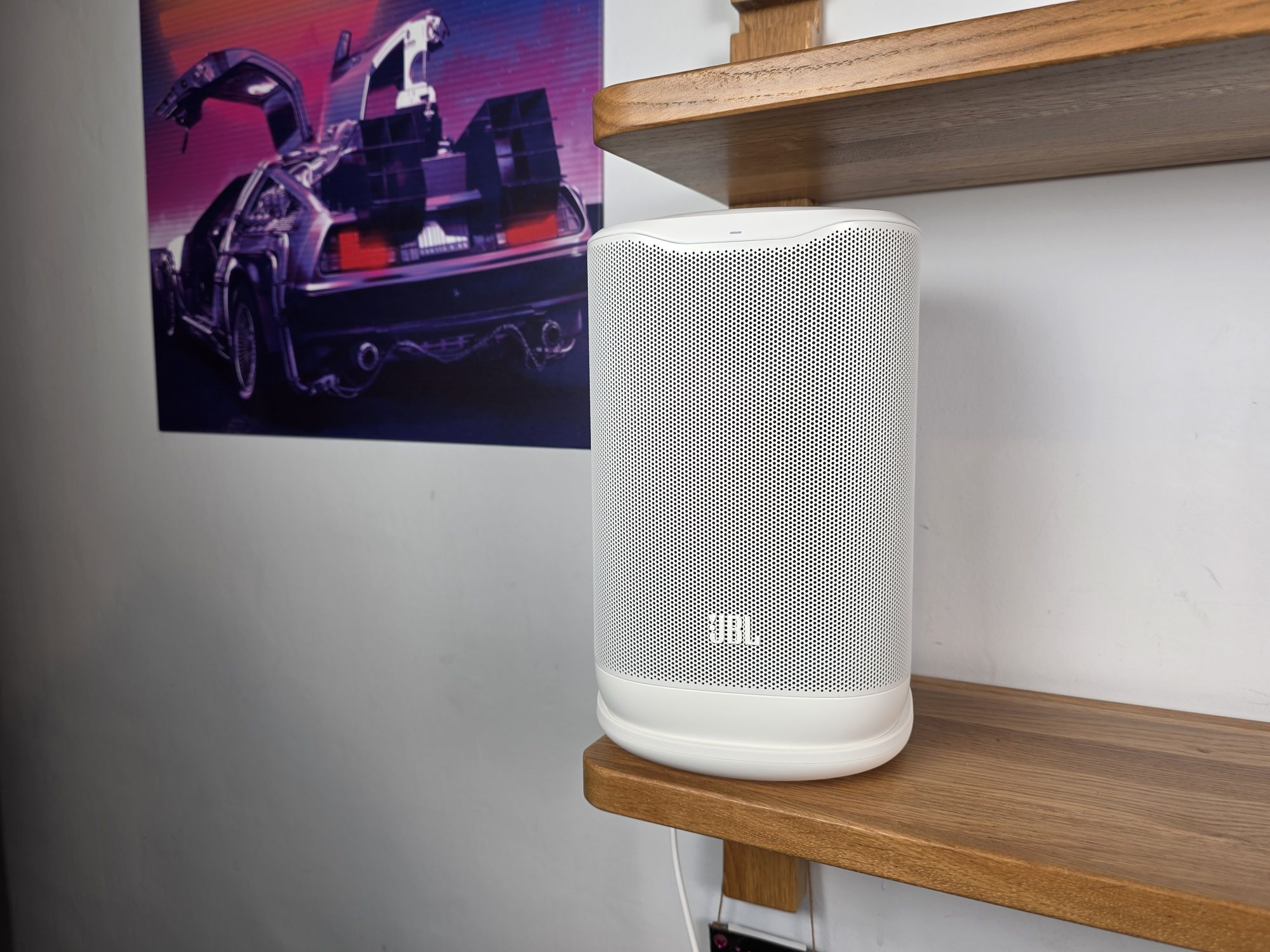
The JBL Cove P1 is the only battery-powered speaker in the small Cove connected lineup, and it is arguably the most attractive model of the trio. Beneath its almost classic looks, this model aims to shine through its versatility and its sound power. In short, a competitor to the recent Sonos Play. Could this place JBL in the race for the best connected speakers?
JBL does not skimp on resources. Beyond its fairly massive yet portable chassis, the speaker boasts an ambitious architecture with a woofer + passive radiators, three tweeters, and a vertical speaker specifically designed to support Atmos content. The rest is equally enticing, with a robust battery offering 14 hours of autonomy, an elegant dedicated charging base, IP56 rating, and of course integration into the multi-room JBL One ecosystem.
9 / 10
Best prices
Son-Vidéo
Boulanger
JBL
- Well balanced and rich, good reach
- Good sound power, controlled bass
- Advanced connectivity
- Intuitive user experience
- Build quality and IP56
- Light inconsistency in the upper mids
- Spartan connectivity
- No Atmos virtualization
Not Original, But Successfully Executed
Difficult to tell, especially for anyone who isn’t a pure technophile, that this dense totem measuring 14.6 x 23.3 x 14.7 cm and weighing 3.26 kg is a JBL creation and not yet another Sonos. In any case, this formula does not confuse users, who find here the usual Scandinavian approach, where nothing ever really overflows and where colors express themselves, at best, only in grayish shades. This white version is, in our view, more successful, at least less dull, than the black variant (which reveals fingerprints even more).
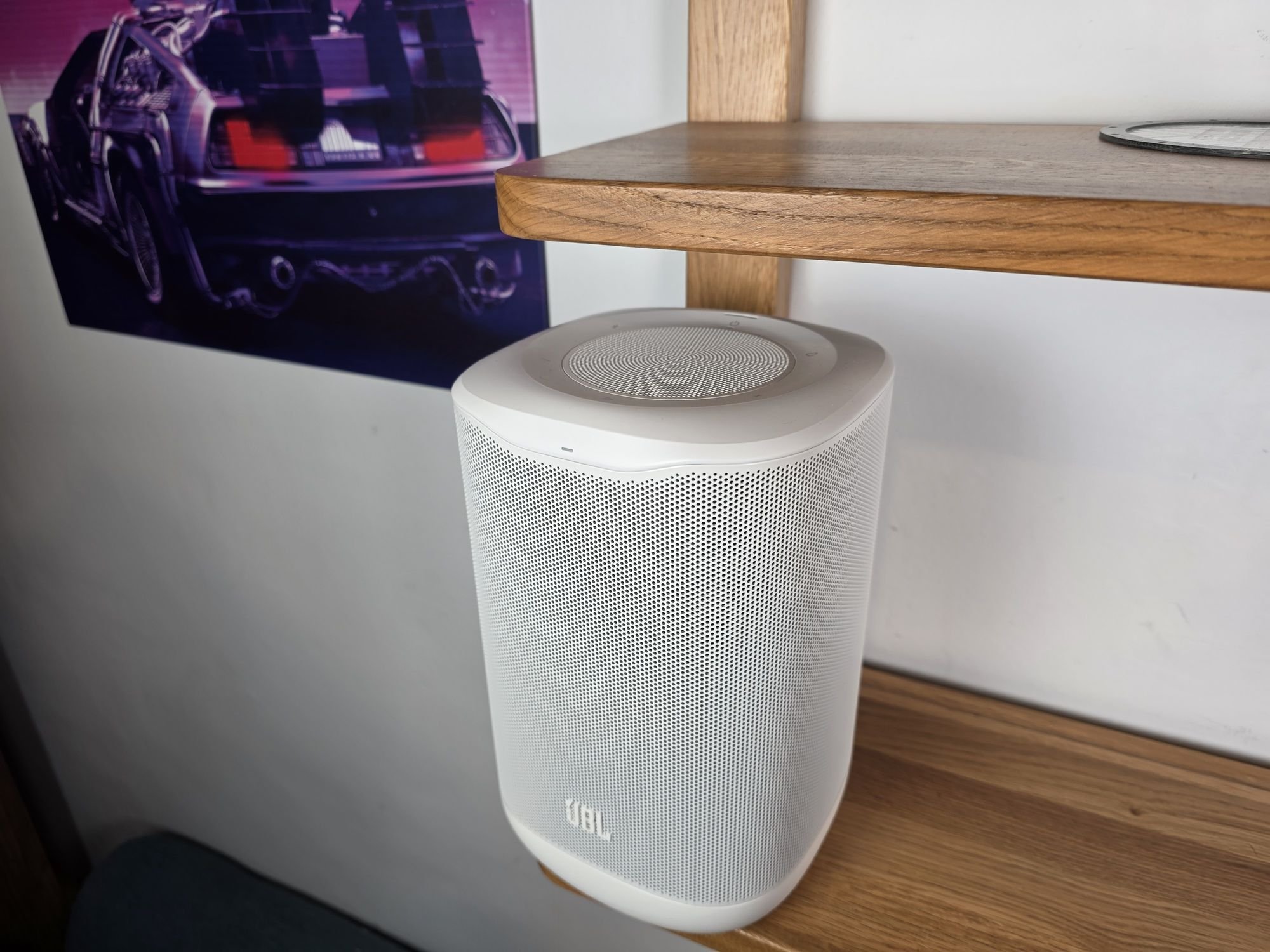
Serious despite a noticeable amount of soft-touch plastic, the P1 features a metallic grille encircling almost its entire circumference. Of course, the IP56 certification is hard to miss, granting this connected and Bluetooth model a versatility that its smaller M1 and larger X1 cannot claim. In theory, the Cove P1 can be used outdoors or in a bathroom. Obviously avoid beaches and seawater, as corrosion defeats a simple IP56 rating.
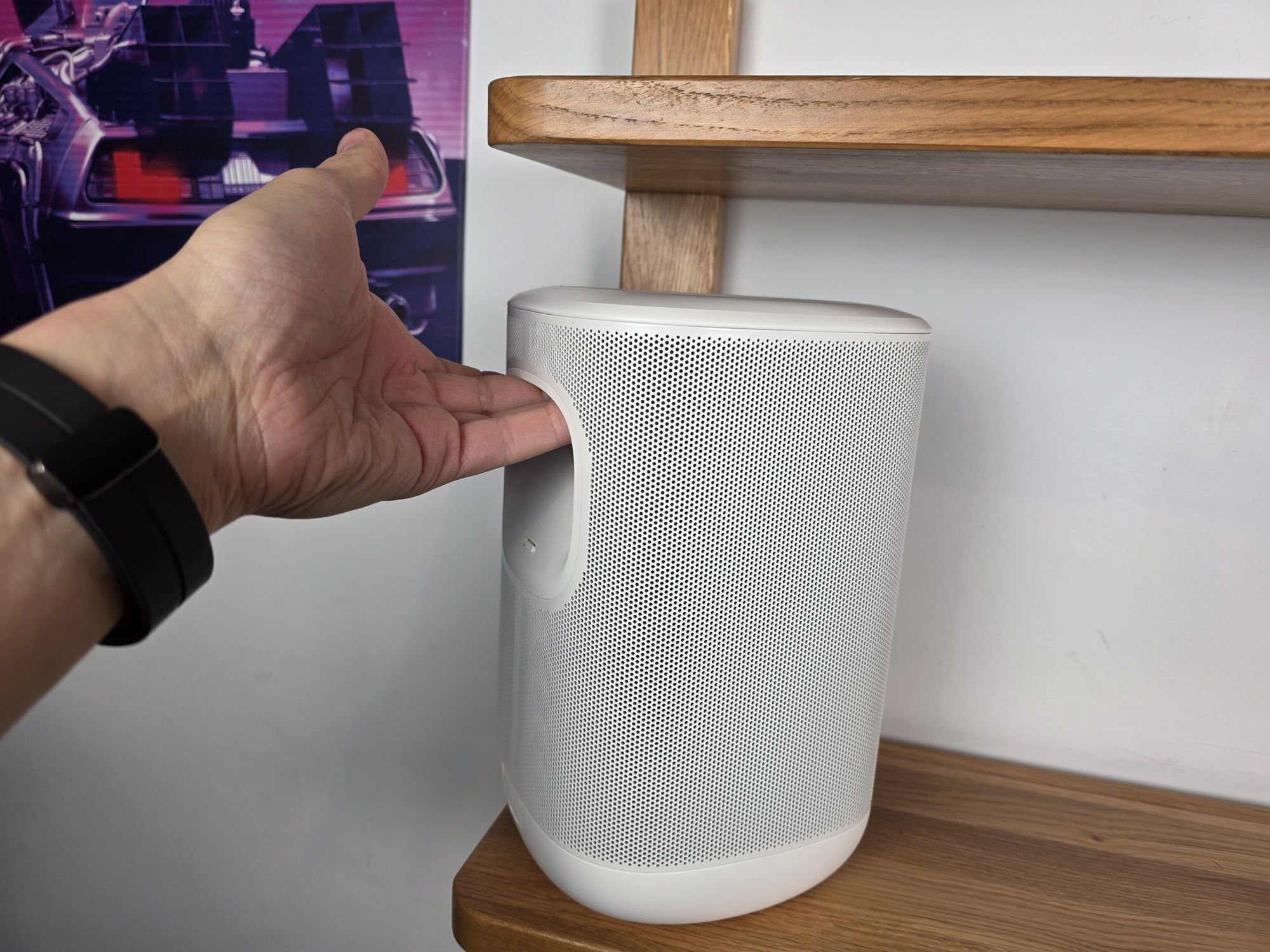
When it comes to versatility, this is where the P1 shines, with a carry handle sculpted directly into the chassis. Nothing unusual to report, except that this fixed element, and especially the absence of a strap or lanyard mount, confirm that the Cove P1 is primarily an indoor portable model rather than a truly nomadic device.
To accompany this portability aspect, the P1 thankfully ships with a charging base. No induction here, but a simple contact between two connectors.
Connectivity is Dead, Long Live Connectivity
You have to get used to it. A speaker of this type, and all small connected speakers in general, aren’t meant to be audio hubs wired with cables. The Cove P1 takes this logic to the letter, and… integrates no usable ports. Yes, there is a USB-C port camouflaged behind a waterproof hatch, but it only serves charging (if the base isn’t available). On the American version of the speaker, this port can read audio content from USB drives, but our European version omits this feature.
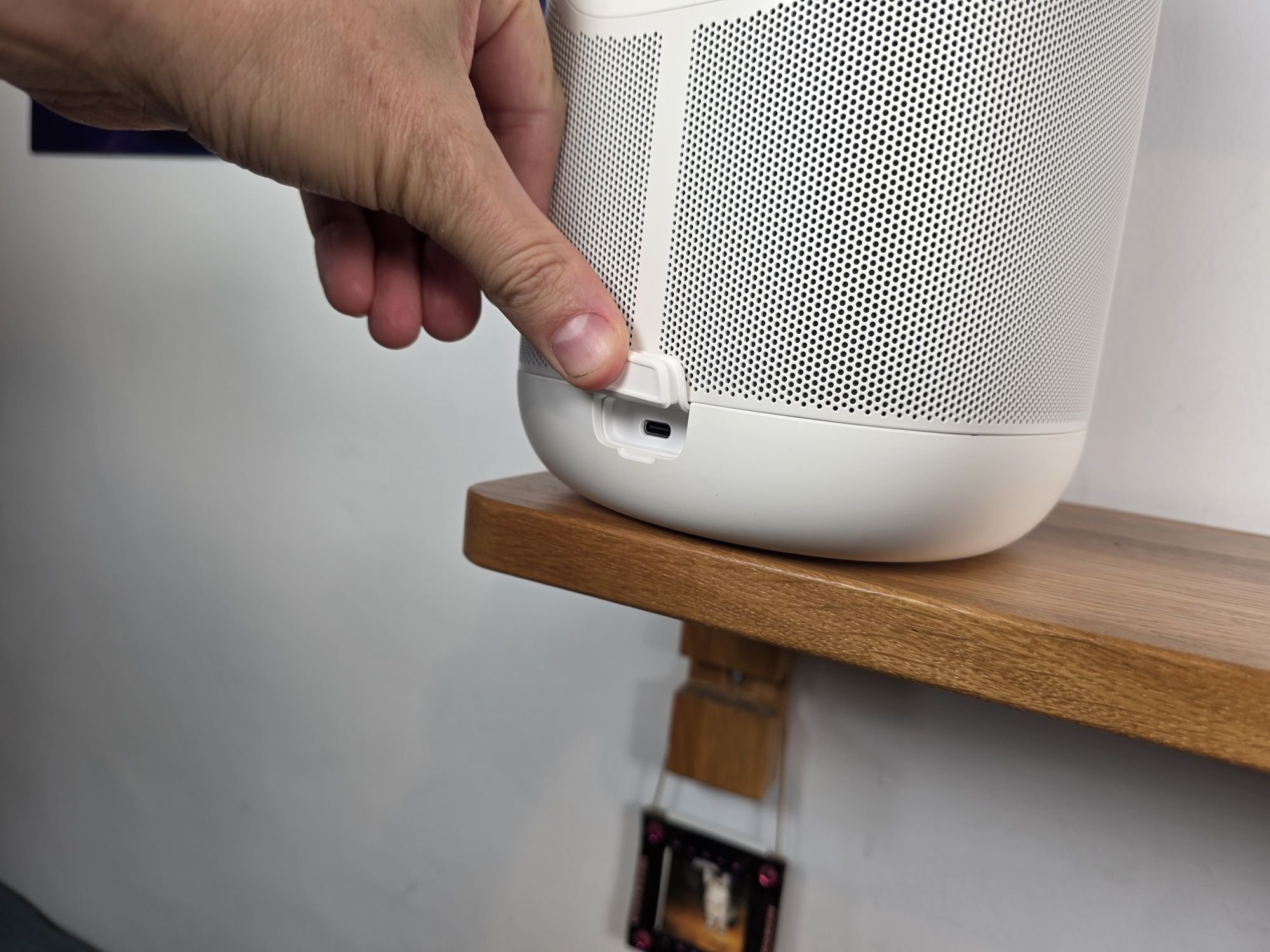
At least the connectivity is not neglected; on the contrary. As a teaser, a Bluetooth 5.3 chip compatible with LE Audio/Auracast, but also Multipoint in Bluetooth Classic. The brand thus bets on a certain universality, though LE Audio is still in its early days for the general public.
With its Wi-Fi 6 chip, the device steps squarely into advanced connectivity. Not to mention the JBL One app, the Cove P1 is compatible with AirPlay, Google Cast, Spotify Connect, Tidal Connect, Qobuz Connect, Roon Ready, and DLNA/UPnP. Its built-in microphones also enable support for the Alexa+ voice assistant (setup to be done in the Amazon Alexa app).
User Experience: Why Make It Complicated When You Can Keep It Simple
The integrated controls, symbolized by touch-sensitive keys on the curved top face of the speaker, handle the essentials: navigation, volume, Bluetooth switch, and triggering Moment, a kind of pre-selection that starts a playlist or ambient sounds. The lack of haptic feedback and tangible sensations still nudges us toward more physical solutions like Marshall, but the aim here is to stay discreet.
By contrast, JBL One is more than a complement, since it allows configuring the speaker on the local network, and managing groups and JBL’s multi-room. As is, this app earns praise for its simplicity and very pleasant look. Pairing each speaker is extremely straightforward, especially since JBL does not require the Wi-Fi password for new devices.
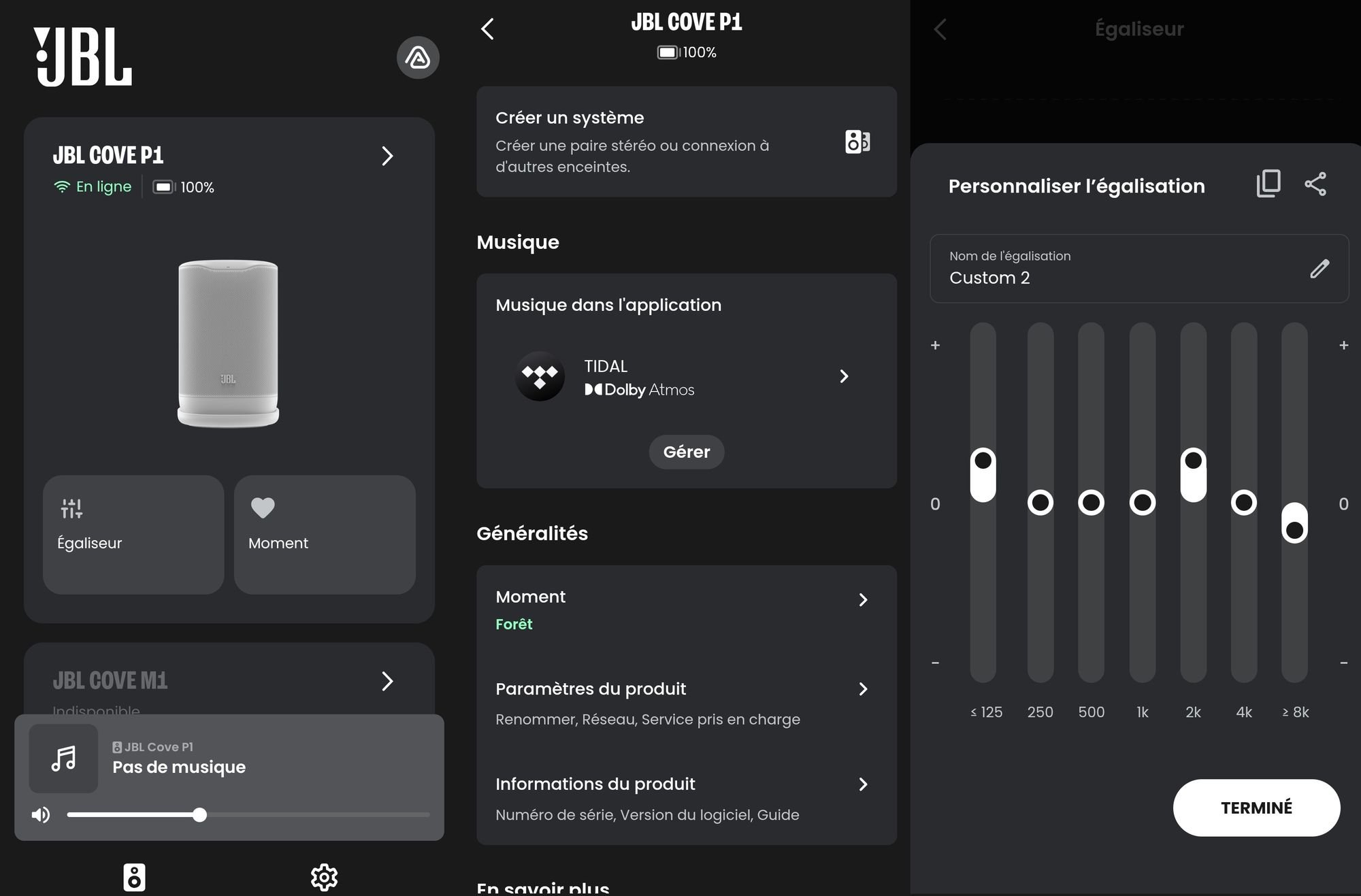
As it stands, sound and ergonomic settings aren’t as numerous as on Sonos, and the management of groups and special pairings is a bit different, but probably more turnkey. Note that two types of advanced pairings can be created: stereo, by pairing a second Cove P1 (one for the left channel, one for the right), and Surround (rear speakers) to accompany one of JBL’s Bar MK II soundbars. We could not experiment with this during our test.
Finally, and this is not a mere detail on paper, the Cove P1, as well as the larger Cove X1, feature an up-firing speaker (angled upward) used for reproducing Atmos tracks. While the presence of this speaker is a good idea, we regret that the brand does not enable true virtualization from simple stereo sources. Indeed, this element remains inactive until we feed it an Atmos audio track (found on Tidal, Amazon, or Apple Music), or pair it with a recent JBL soundbar.
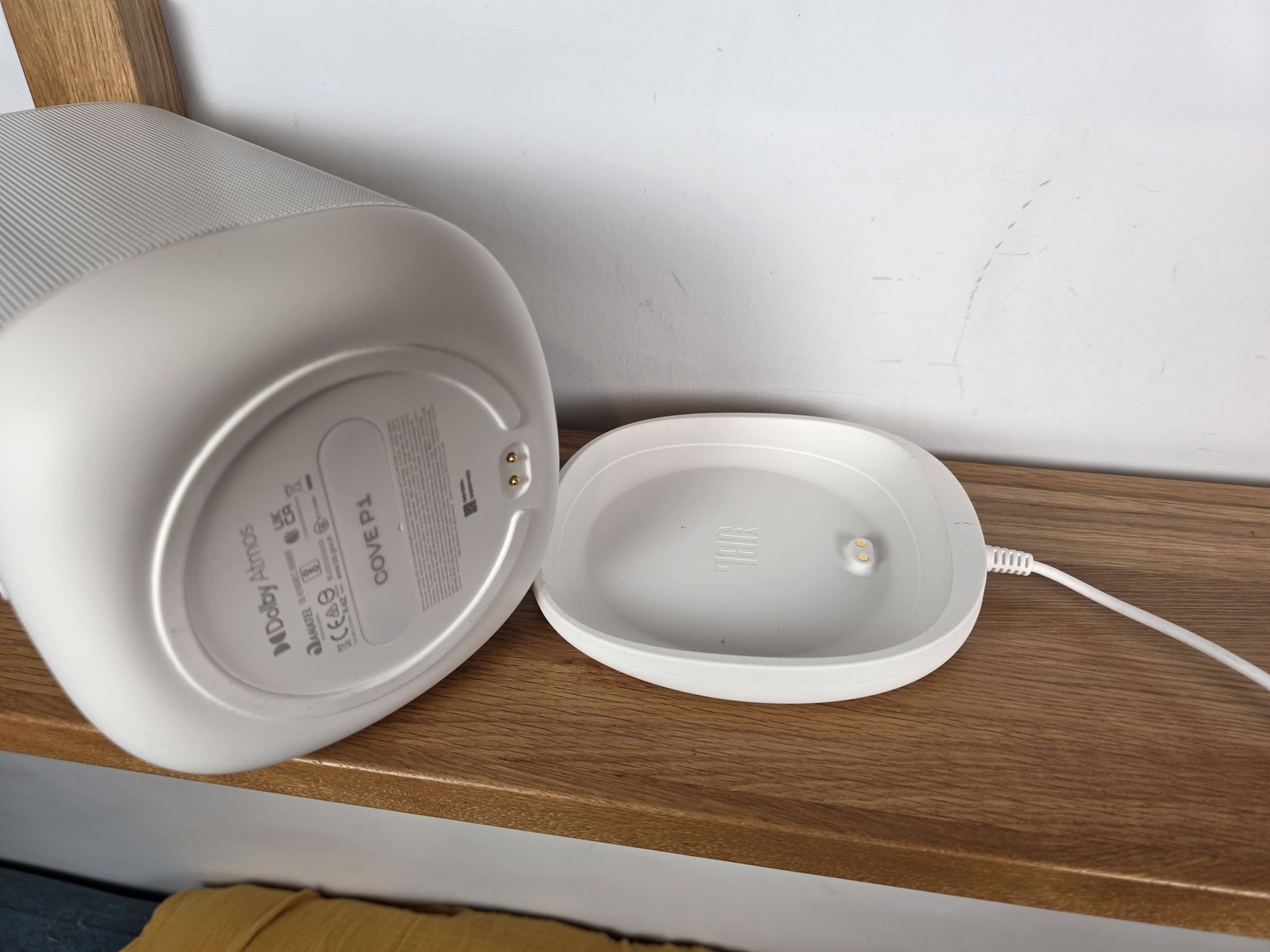
If the chances of running out of battery at home are slim, the Cove P1 is nonetheless a fairly robust product in this regard. Despite its powerful sound, the speaker easily lasts 10 hours in normal use, with the 14 hours claimed likely valid at moderately lower levels.
Powerful Yet Controlled
Quite original, JBL’s Cove P1 architecture can be defined as 3.0.1. The bass comes from a 105 mm front-facing woofer, paired with two 105 mm passive radiators on the sides. In front, a 20 mm tweeter functions as a kind of center channel. The two side panels each house a larger 30 mm tweeter, presumably covering a wider frequency range than the 20 mm model. Finally, the vertical speaker is also a 30 mm dome. All of this is driven by a 120 W RMS amplifier (measured at 1% THD), with a frequency response of 50 Hz – 20 kHz (-6 dB).
In listening tests, and as expected, JBL demonstrates once again its mastery of sound processing, both acoustic and electronic. The Cove P1 isn’t a Hi-Fi quality marvel à la Kef LS50, but it delivers a carefully balanced and technical sound, wrapped in a very comfortable power level.
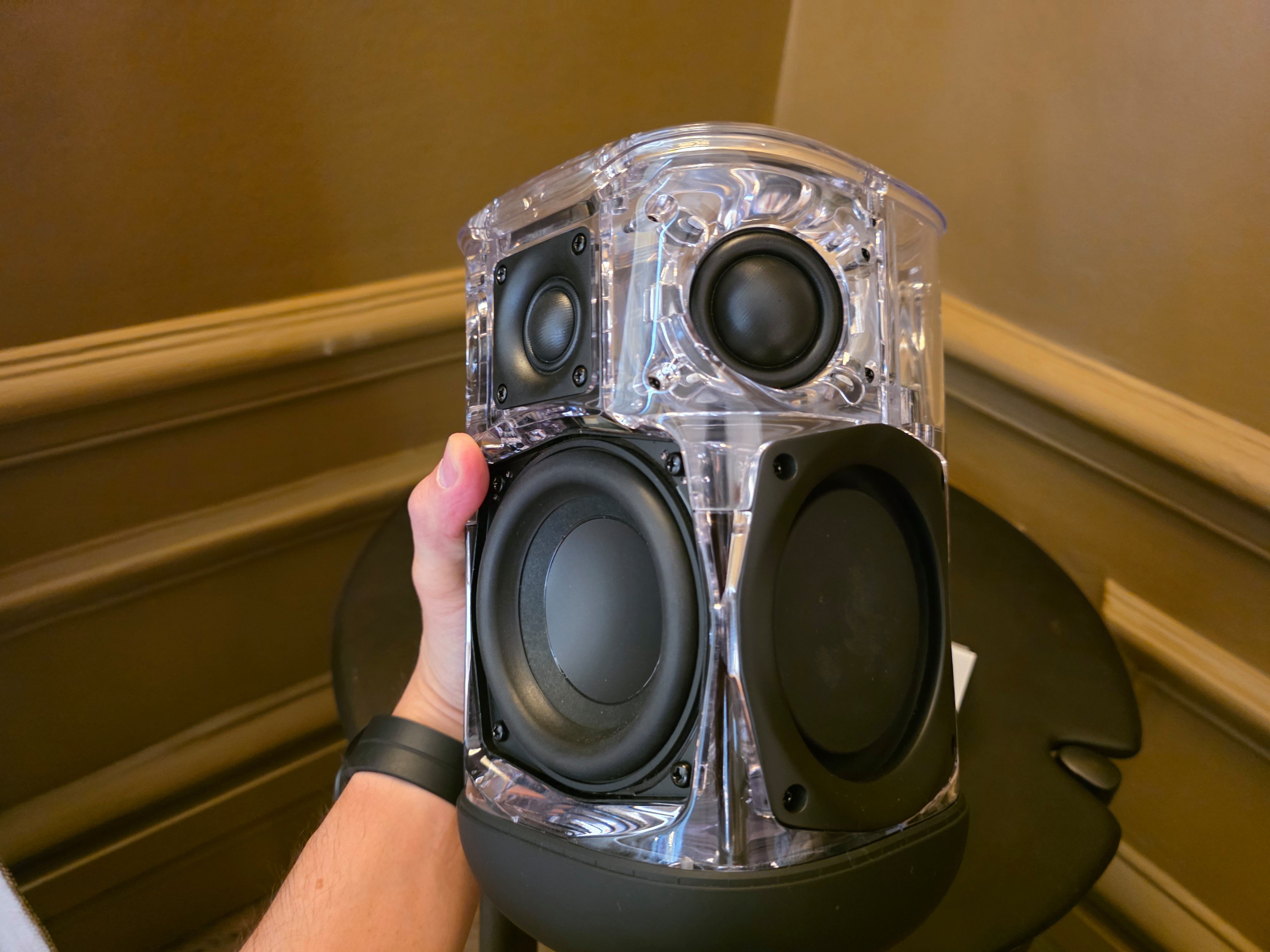
The basses, in particular, do not show exaggeration or peaks, which keeps the Cove P1 from appearing more energetic than it is. The acoustic layout yields a very satisfying result, with notably pronounced extension and, above all, excellent liveliness in this register. In other words, it delivers broad yet quite punchy bass.
The midrange is also quite clear, a tricky area given this 3.0.1 topology. Still, in our view the central tweeter helps project the listening rather than letting it drift into a somewhat blurry representation. The mid-high transition is the only slight flaw, likely tied to this architecture. Here, sharp sounds tend to lack a touch of technical finesse, especially on already dense tracks.
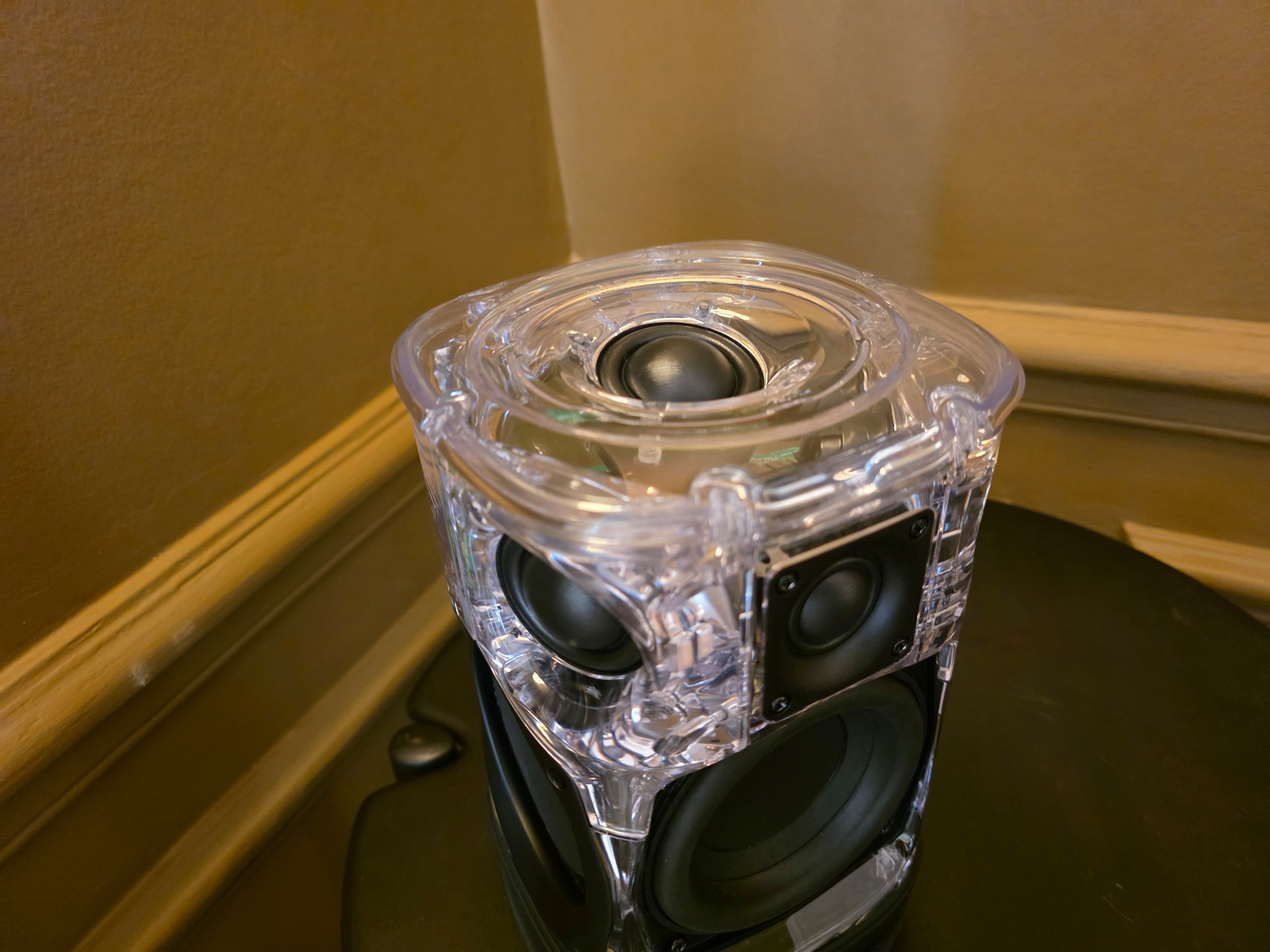
The Atmos dimension test turned out somewhat superficial; the need to rely on truly dedicated tracks remains a limitation. The idea is interesting, since the brand preserves a coherent approach here as well. The effect of verticality is not immense, but it contributes to the overall scale and allows Atmos to benefit from the airiness of this type of mix. For spatial listening enthusiasts, especially with a stereo pairing, investing in such a setup may be justified.
Who is the JBL Cove P1 Really For
This modern speaker is aimed at:
- Lovers of detailed and balanced sound
- Those who want the best portable connected speaker
- People allergic to closed ecosystem concepts
Conversely, users already well equipped with Sonos gear will not find here a product sufficiently revolutionary, nor an ecosystem yet rich enough to switch to the competition.
JBL Cove P1: Clubic’s View
JBL Cove P1 isn’t flawless, but it does exactly what we expect from a modern product at this price point. The brand, while ensuring a good user experience, is especially demanding when it comes to sound.
The Cove P1 is, in this sense, a balanced and powerful product—technical and effective. If the offerings vary slightly, and JBL’s hardware ecosystem is still in its infancy, we still have here a genuine competitor to Sonos products. A pity for JBL to imitate its competitor in the realm of connectivity, which is lacking, and not to offer the feature that would give it an undeniable advantage.
- Well balanced and rich, good reach
- Good power, controlled bass
- Advanced connectivity
- Intuitive UI
- Build quality and IP56
8
8
8
9
Son-Vidéo
Boulanger
JBL

Daniel Brooks
I cover everyday products with a practical eye, from kitchen tools and home essentials to smart gadgets and consumer trends. My goal is to help readers understand what is genuinely useful, what is worth the price, and what deserves a second look before buying.