
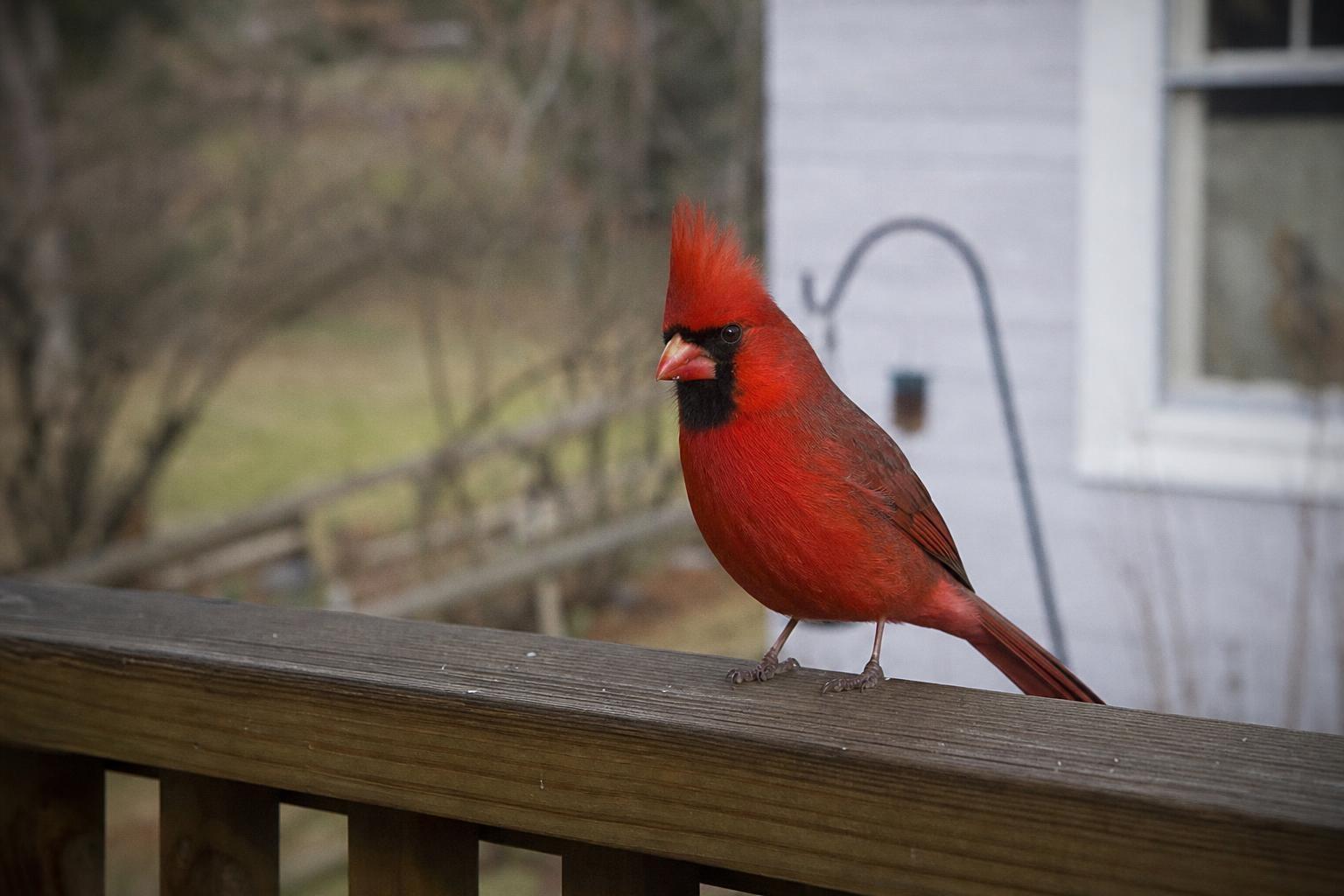
A flash of red against winter’s gray can feel like a conversation you didn’t know you were having. When a cardinal lands nearby again and again, it can seem both ordinary and uncanny. The rhythm of its visits invites attention—to the yard, to the season, to what your own life might be echoing. As one neighbor told me, “That bird felt like a small, persistent hello.”
Natural reasons they show up
Northern Cardinals are largely nonmigratory, which means they hold territory year-round. If your landscape offers a steady food source, water, and cover, a pair may claim it like a favorite address. In winter, they may forage in loose flocks at dawn and dusk, returning to dependable spots where calories are easy to find.
Reliable seed is a powerful draw. Black-oil sunflower and safflower are cardinal favorites, and platform or hopper feeders make large seeds easier to grip. Dense shrubs—think cedar, holly, or juniper—provide quick shelter from hawks, wind, and neighbors’ cats. A simple birdbath, especially one that’s heated in winter, can be a daily magnet.
Territory also explains repetitive perching and singing from the same branch. The brilliant male defends boundaries with clear whistles, while the subtler female may respond in a soft duet. These calls say, “Occupied here,” which can sound wonderfully like, “I’m back.”
What people have long believed
Across porches and generations, a familiar saying surfaces: “When cardinals appear, angels are near.” People share this with tenderness, often after loss, because a vivid bird can become a vivid memory with wings. For many, a visit is a message of companionship, a reminder that love can stay present even when someone cannot.
Color carries symbolism too. That saturated red reads as life, courage, and heart-forward attention. In bleak months, it signifies warmth and renewal; in bright months, it flashes with joy and intent. Whether you lean spiritual or secular, it makes sense that a striking creature arriving at meaningful times would feel personal.
None of this negates biology; it interweaves with it. A moment can be both ecology and emotion, both feeder science and human story. As a friend once said, “A sign is often something you’re ready to notice.”
Behaviors that feel personal
Window tapping is common and sometimes startling. The bird sees its reflection, misreads it as a rival, and defends the territory with persistence. Reducing glare with screens, decals, or shade often quiets the apparent insistence.
You may notice courtship feeding, where a male gently passes a seed to the female. It looks like tiny devotion, and in a way it is—a pair-bonding ritual that builds trust for nesting season. Repeated perches, dawn song, and the same flight paths can also feel like chosen rituals, because they are the habits of a life lived nearby.
Timing adds layers of meaning. Spring’s visits might herald nest building; midsummer can mean fledgling lessons in your hedges. In fall and winter, consistency often equals survival—secure places and predictable calories.
How to support or soften the pattern
- Offer black-oil sunflower or safflower seed in platform or hopper feeders
- Keep seed fresh, clear husks, and clean feeders to reduce disease
- Provide year-round water; add a heater or dripper for motion and safety
- Plant native shrubs and small trees—dogwood, serviceberry, hawthorn—for cover and fruit
- Leave a brush pile or evergreen thicket for quick escape routes
- Break window reflections with screens, external shades, or patterned film
- Keep cats indoors and give hawks line-of-sight interruptions with strategic planting
What it can mean for you
Meaning often arrives where attention lingers. A frequent visitor can be a nudge toward stewardship—to plant for shelter, to protect small lives, to make your corner of the world more hospitable. It can also be a cue to pause, breathe, and let a bright moment do its quiet work.
If you’re grieving, the pattern may feel like a thread you can hold. You don’t have to explain the comfort for it to be real. As one note on a kitchen fridge put it, “Let small beauties be enough for today.”
In the end, the bird is being a bird, and that is beautiful in its own right. But your attention is also doing something—finding story, building connection, turning daily nature into daily nourishment. When the scarlet visitor returns, you have two kinds of answer: the one with seed, water, and shrubs, and the one that simply says, “I see you.”