
I thought I was being clever. Close the vents in the guest room, the storage room, the office we never use, and let the furnace focus on the spaces we actually live in. “It’s just common sense,” I told myself, twisting the registers shut with a little blast of satisfaction.
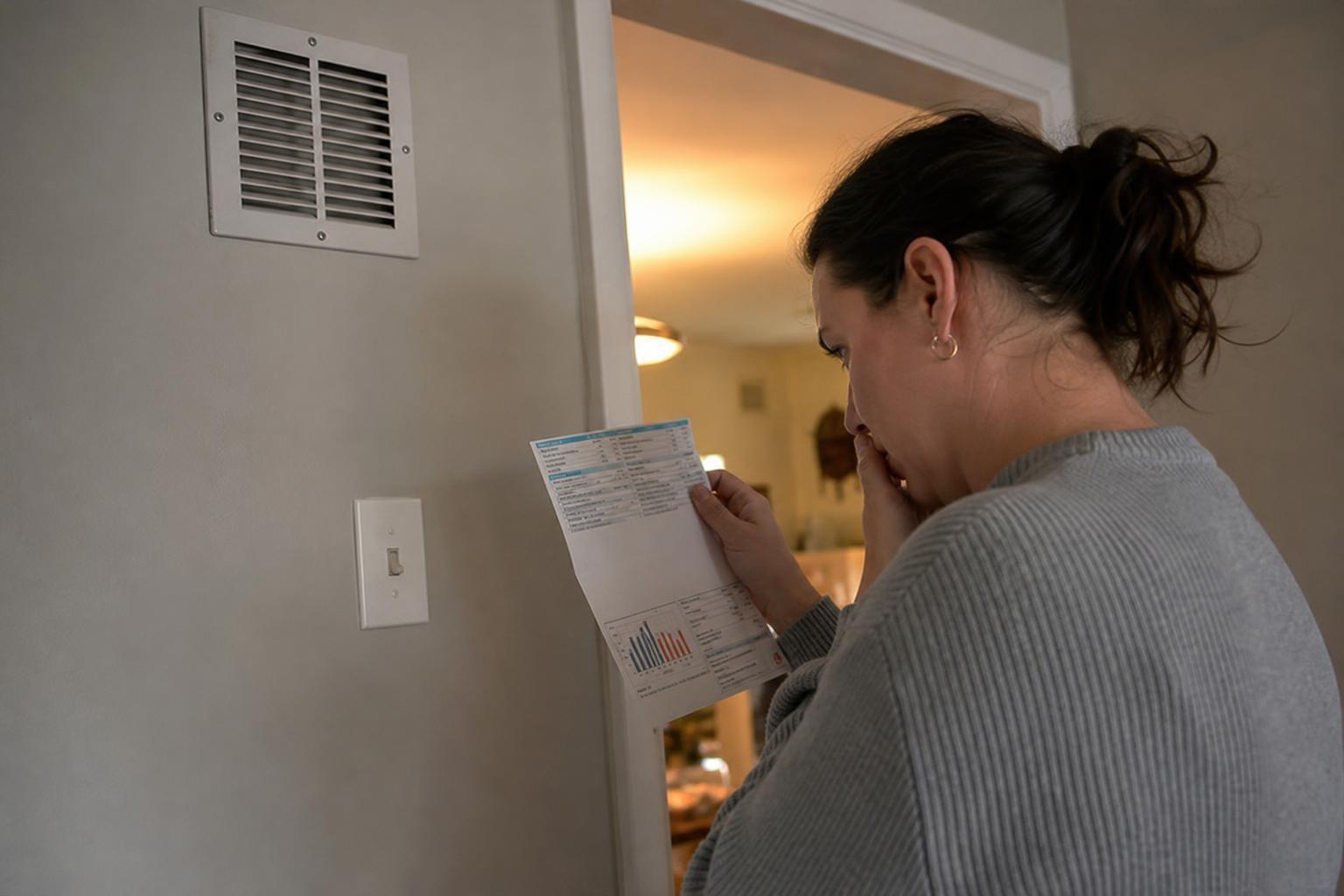
Two months later, the utility bill spiked. Not a little. A lot. I stared at the number, felt my stomach drop, and muttered, “That can’t be right.” But it was, and the reason lived inside the ductwork.
What Seemed Smart, Wasn’t
My plan was simple: choke off rooms we don’t use, reduce airflow, and spend less. The house did feel a bit warmer where we sat, so I chalked it up as a win. Meanwhile, something else was quietly working harder behind the scenes, and getting angry about it.
The Bill Told a Different Story
The next cycle was higher, and the one after that was worse. I hadn’t changed the thermostat schedule. No doors left open. No teenagers taking hour-long showers. Just closed vents—and a system pushed into a corner it wasn’t designed to occupy.
Airflow Doesn’t Like Being Trapped
Forced-air systems want balance. When you close vents, you increase static pressure in the ducts. The blower is sized for a certain flow, not a maze of cul-de-sacs that bounce air back. That pressure makes it work harder, pulling more power and running longer.
“Air will always find a path,” an HVAC tech told me over the phone. “You can’t bottle it up without a bill to match.”
Leaks Love High Pressure
Under higher pressure, tiny duct leaks become not-so-tiny. Air that used to reach the living room register starts bleeding into the attic or crawlspace. You feel cooler, so you bump the setpoint, and the spiral tightens like a vice.
Suddenly, you’re paying to heat unconditioned voids—attics, basements, and wall cavities—because the system is now forcing air out wherever it can escape.
Thermostats Can Be Terrible Witnesses
Most thermostats sit in a central hall. Close vents in nearby rooms, and the hallway warms faster, tricking the thermostat into thinking the job is done while distant corners stay cold. Then the heat shuts off, and you get uneven comfort and constant cycling.
Short cycling is like city traffic—lots of starts and stops, wasted energy, unhappy equipment.
The Hidden Wear You Don’t See
High static pressure strains the blower motor, and if you have a variable-speed furnace, it ramps up to overcome resistance. More power, more noise, more wear. Heat exchangers and coils don’t love chaos either. The whole system becomes less efficient under the extra load.
I heard a faint whistling and a new hum, but I didn’t connect the dots. “It’s probably just the wind,” I told myself. It wasn’t the wind.
Collateral Damage in Unused Rooms
Closed rooms can get too cold, inviting condensation, stale odors, and even mold on exterior walls. Pipes near outside walls can freeze in a deep snap. Doors swell or shrink. Drafts appear because the house pressure shifts, pulling in outdoor air through every tiny gap.
The system I thought I was helping had started to fight me.
What Actually Helps Instead
Here’s what finally worked, without turning my ducts into a pressure cooker:
- Open the vents at least partway in every room to maintain flow.
- Set the fan to “auto,” not on, to avoid constant mixing losses.
- Drop the main setpoint a degree or two and use localized heat (a safe, efficient space heater for short stints where you are).
- Seal duct leaks, especially in attics and basements, for a quiet, permanent win.
- Swap the filter on time; a clogged filter raises static pressure fast.
- If you’re game, add proper zoning with dedicated dampers and a pro design, not DIY closures.
The Moment It Clicked
I cracked the closed vents open, changed a shaggy filter, and booked a duct sealing visit. The next bill dropped, and the house felt more even. “Oh,” I said to nobody in particular, “so it wasn’t about fewer hot rooms, it was about smoother airflow.”
It turns out “use less” isn’t always linear with HVAC. These systems are ecosystems—blower curves, duct sizing, return paths, and envelope leakage all dance together. Break the rhythm, and the drummer starts charging by the beat.
What I’d Tell a Friend
If you want real savings, start with air sealing and insulation. Let every supply have a respectable path, and make sure returns aren’t starved. Keep filters fresh, thermostat settings modest, and consider a smart schedule that follows your actual life.
Most of all, avoid turning your ducts into a bottleneck. The cheapest kilowatt-hour is the one your blower never had to fight for. “Heat wants to move,” my tech said, smiling. “Your job is to give it a good route—not a dead end.”