
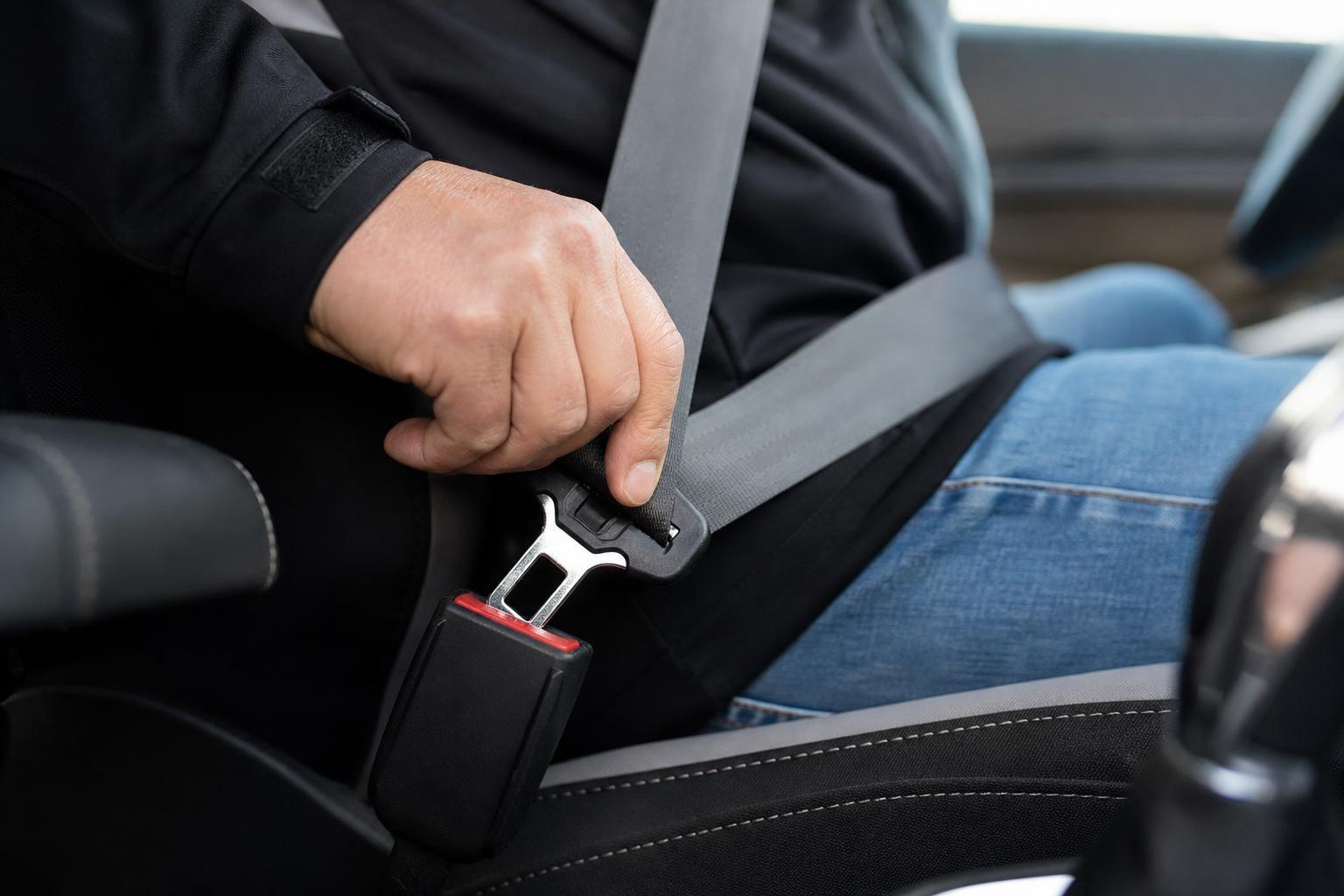
In an era obsessed with proprietary edge, one automaker made a deliberately unprofitable, deeply human choice. In 1959, Volvo introduced a new type of seat belt and then opened the patent to anyone who wanted it. The move wasn’t about branding or boosting quarterly numbers; it was about a simple engineering truth: safety that isn’t shared isn’t really safety at all.
“Make it easy, make it obvious, make it used,” could have been the unwritten brief for the invention. The three-point belt—diagonally across the chest and low across the hips—became the everyday, one-click habit that sticks. And with use came a cascade of survival stories.
A moment that reshaped everyday risk
The late 1950s were full of speed and optimism, but car cabins were still hazardous spaces. Two-point lap belts existed, yet they were inconsistent, uncomfortable, and often ignored. Volvo hired Swedish engineer Nils Bohlin, whose background in aircraft restraints met a civilian need: a belt that people would actually wear.
Bohlin focused on one insight: the best safety device is the one that becomes routine. He traded complexity for clarity, designing a belt you could fasten with one hand, in a single, intuitive motion. “The real innovation wasn’t the belt,” safety historians often note. “It was the behavior it enabled.”
The power of simple geometry
The three-point layout solved several problems at once, distributing forces across the chest and pelvis—the body’s strongest areas—while keeping the upper body from pivoting around a lap belt in a crash. It reduced internal injuries and prevented ejection without relying on brute strength or bulky mechanisms.
- Low on the hips for force absorption, diagonal across the torso for stability, anchored at the shoulder for leverage, and latched centrally for speed
This wasn’t elegant for elegance’s sake; it was elegant because survival rewards simplicity. “In design,” as Volvo’s safety team often echoes, “the shortest path to use is the longest path to impact.”
Choosing to share, not to hoard
Patents exist to protect invention, but Volvo made a different calculus. Restricting access would limit adoption; limiting adoption would limit lives saved. So the company opened the patent, inviting competitors to copy the design freely. That act turned a corporate innovation into a public good.
“Safety shouldn’t be a competitive advantage,” became part of the brand’s moral stance. The message unnerved strategists and delighted engineers. It signaled a strange, radical truth: generosity can scale faster than exclusivity when the problem is universal.
The numbers that matter
Within a decade, the three-point belt was standard across the industry. Over time, regulators and consumers turned usage into habit, and habit into culture. Analysts estimate the belt has saved more than a million lives and prevented many millions more serious injuries.
Those numbers carry an unflashy, daily heroism. They don’t crash stock tickers or flood social feeds. They simply turn collisions into stories you never hear, because someone walked away and made dinner as planned.
What innovators can learn today
Open patents aren’t a cure-all, but this case offers a clear playbook. When the benefit of adoption is exponentially larger than the value of exclusivity, openness compounds returns—measured in impact, trust, and long-tail influence. It also reframes what “ownership” means in safety-critical fields.
Three principles stand out. First, design for use, not just for novelty. Second, reduce friction until the right choice is the automatic one. Third, when public good outpaces private gain, share by default. As one Volvo executive has said in various forms: “If everyone does it, everyone wins.”
A strap, a click, a second chance
The poetry of the three-point belt is that it asks for so little—one reach, one click—and gives back the unimaginable. Countless lives were returned to the ordinary: school runs, late-night errands, long summertime drives. The belt turned catastrophe into continuation, and terror into a loud thud followed by the kind of silence you can breathe in.
“Safety is not an option; it’s a promise,” reads a line you’ll hear across Volvo’s safety materials. The line is marketing, yes, but it’s also history. A company traded a moat for a bridge, and the world crossed it—quietly, daily, relentlessly—toward a future where better ideas aren’t just invented, they’re shared.