
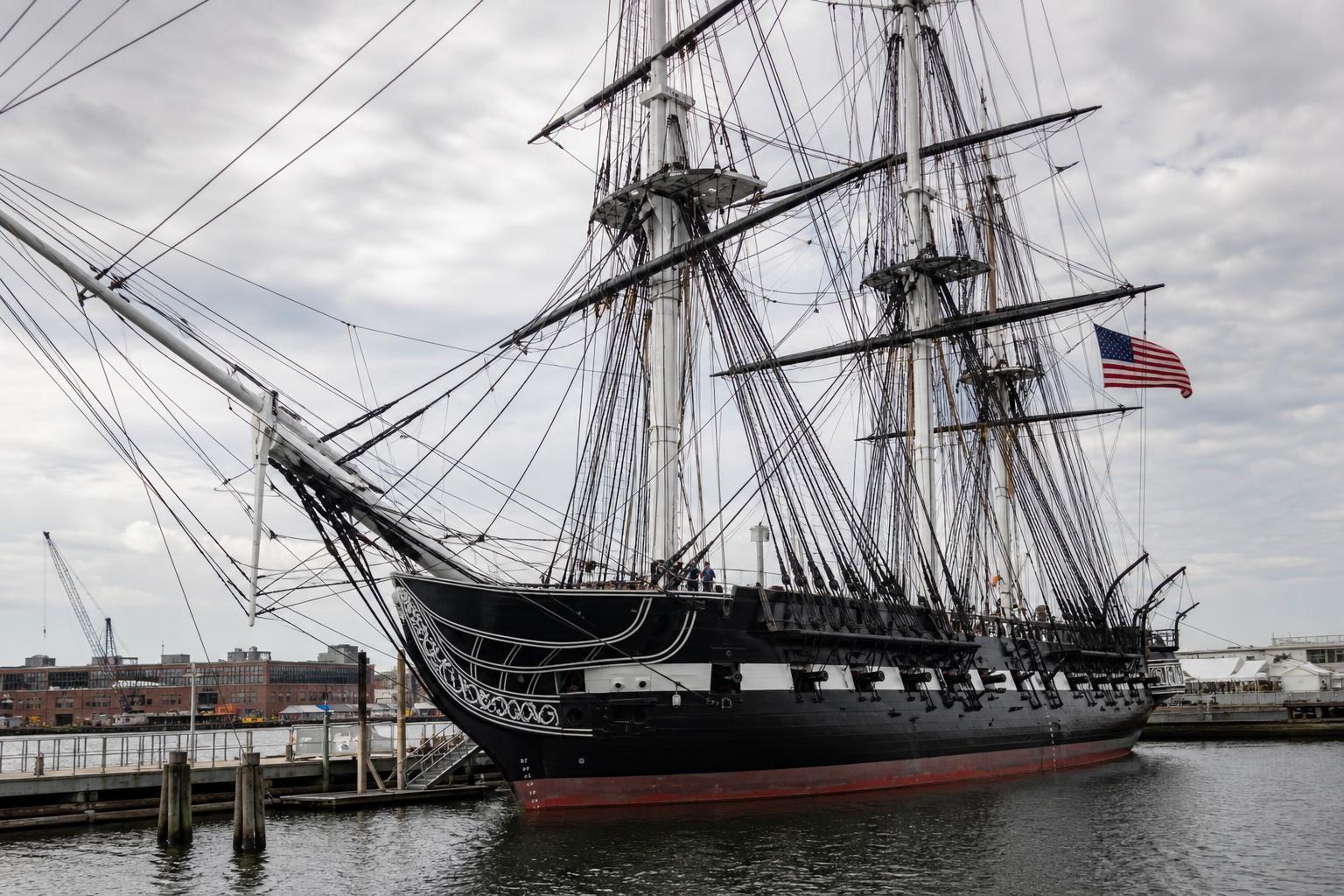
A living icon has sailed across more than two centuries, a wooden hull against the march of time. To stand on her decks is to feel the grain of history underfoot, the creak of rigging that once carried the thunder of broadsides. She is at once a fighting ship, a floating museum, and a nation’s steel-spined memory.
People still ask how a vessel born in the age of sails can remain on active duty, and why her record at sea reads like a ledger with no red ink. The answer is part genius, part grit, and completely American.
Origins of a Heavy Frigate’s Genius
Designed by Joshua Humphreys, the ship was conceived as a “heavy frigate” that could outrun ships-of-the-line yet outgun standard frigates. Her long keel, broad beam, and powerful spars turned speed into a weapon.
Built with dense American live oak, she carried a hull so tough that cannonballs often shattered or skipped away. Diagonal riders strengthened the frame against hogging, while copper bolts and sheathing—sourced from Paul Revere’s foundry—resisted rot and fouling.
Nominally a 44-gun frigate, she frequently carried more, mixing long guns with carronades for a flexible, surprising punch. In a world of compromises, she was bold design made real.
The War That Forged a Legend
In the War of 1812, she met Britain’s finest and sent them home beaten. Against HMS Guerriere and HMS Java, her crew combined crisp seamanship with deliberate, punishing gunnery. “Her sides are made of iron!” a stunned observer supposedly cried, and the name “Old Ironsides” caught the public imagination.
It wasn’t magic; it was discipline, training, and tactical nerve. Close to, she hammered; when outnumbered, she maneuvered and chose the terms of the fight. Each victory stiffened American morale and shook a Royal Navy used to writing the script.
From Target to Touchstone
Decades later, proposals to scrap the aging frigate met a storm of protest. Poet Oliver Wendell Holmes opened his rallying cry with, “Ay, tear her tattered ensign down!” and the public roared back. The ship survived as a national symbol, sailed a world tour in the 1840s, and slipped gradually from frontline duty to ceremonial service.
Today she remains a fully commissioned U.S. Navy warship, crewed by active-duty sailors under the Naval History and Heritage Command. She still gets underway for special evolutions, turns in her berth to even her sun-weathering, and greets visitors at the Charlestown Navy Yard in Boston.
How a Wooden Ship Stays Active
Two centuries demand vigilant care. Major restorations—most recently in 2015–2017—replaced tired planks, renewed copper sheathing, and restored rigging with historically faithful yet seaworthy materials. Craftspeople select dense live oak where it matters most and use modern analysis to guide 18th-century methods.
Her mission blends preservation with education. Sailors demonstrate line handling, set ceremonial sails, and explain how a wooden frigate could duel in blue-water combat. You walk her deck and sense what “shipshape” meant when order and survival were the same thing.
Why Undefeated? The Working Parts of a Miracle
- Bold design: A heavier, faster hull meant she could pick her fight—and finish it.
- Superior materials: Live oak toughness and copper fastenings absorbed and deflected punishment.
- Training and leadership: Crews drilled relentlessly; captains used brains before bravado.
- Tactical flexibility: Shift from long-gun accuracy to carronade shock at decisive range.
- Morale and myth: Confidence under fire multiplies the effect of every broadside.
What She Teaches at the Pier
Stand beneath her soaring masts, and the past doesn’t feel distant—it feels near. A petty officer explaining the gun deck might murmur, “We don’t just preserve a ship; we preserve a standard.” Another sailor smiles and adds, “She still earns her salute.”
Visitors come for the cannon and stay for the craft. They learn how sailors lived by the division of watches, how canvas and cordage turned wind into strategy, and how a nation once staked its future on a handful of wooden hulls commanding a restless sea.
There’s humility in wood that still works, in iron that still holds, in a crew that keeps faith with those who reefed and fired before them. “Old Ironsides” is a reminder that endurance is a daily choice, not a line in a ship’s log.
Two hundred years on, she hasn’t lost her edge—or her sea sense. The planks may be renewed, the crew always young, but the character remains a single, braced, undefeated thing: the will to meet the gale, and make the gale yield.