
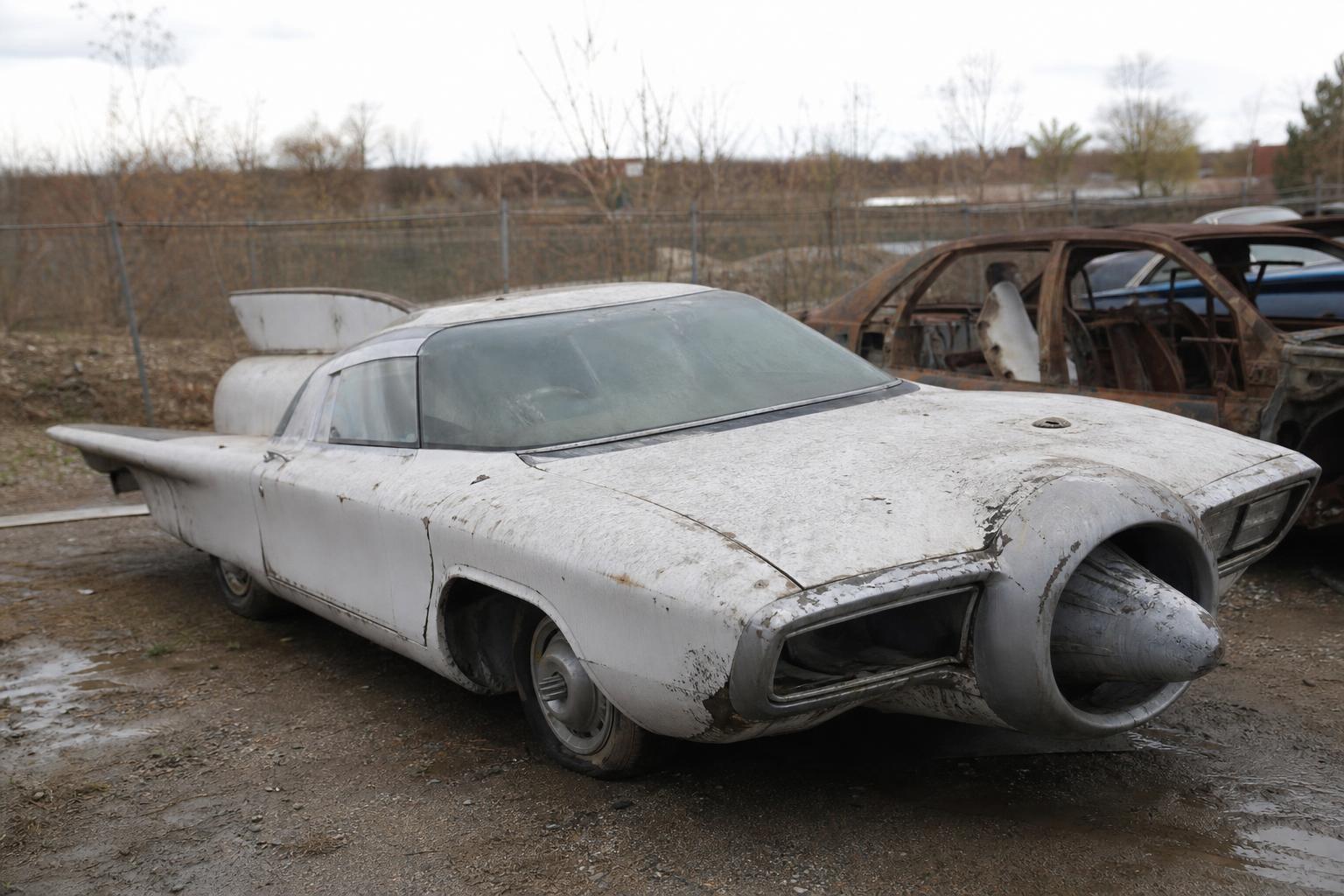
They arrived on quiet American streets with a hiss, a shimmer, and a promise of tomorrow.
For a few brief years, ordinary families slid behind the wheel of a bronze, whistling fantasy.
The cars ran on diesel, kerosene—rumor said even perfume—turning daily errands into theater.
And then, almost as swiftly as they appeared, they were gathered up and silenced.
The boldest consumer test Detroit ever staged
In the early 1960s, a major automaker did something radical.
It loaned jet-powered cars to 203 American families, for free.
Drivers from cities, farms, and suburbs lived with the machines for months at a time.
They kept diaries, logged trips, and chatted with engineers who wanted unvarnished feedback.
“Within a week, my neighbors were lining up for rides,” one participant laughed.
Across the program, the cars covered more than a million miles of commuting and curiosity.
A turbine heart in a tailored Italian suit
Beneath the long hood sat a compact gas turbine with few parts.
No pistons, no valves, just a compressor, combustor, turbine, and regenerator.
It could drink many fuels and start in deep cold or summer heat.
Maintenance was low; the biggest wear item was the air itself, bringing dust and debris.
The body, hand-built in Italy by Ghia, wore “Turbine Bronze” like armor.
Taillights mimicked afterburners, while the grille drew in air with purpose.
It looked fast idling, and it sounded like a jet-powered hairdryer.
“It wasn’t loud, it was a smooth, rising whine—almost aeronautical,” one tester said.
Living with a jet where a V8 should be
Owners learned to feather the throttle and anticipate turbine spool-up.
Once rolling, the car felt eerily smooth, with no shifting and minimal vibration.
“The lag was real, but the cruise was effortless,” a driver recalled.
Fuel economy was acceptable on the highway, less so in stop-and-go traffic.
Heat management was the public spectacle and engineering headache.
The regenerators captured exhaust heat to boost efficiency.
But the tail plume was still hot enough to worry pedestrians and melt the unwary bumper.
Street corners became classrooms for thermodynamics—and for civic patience.
Why the dream met the crusher
For all its drama, the culling wasn’t just corporate villainy.
It was economics, regulation, risk, and a dash of secrecy.
- Bodies were imported under temporary arrangements; selling them meant heavy duties and complex paperwork.
- New safety and emissions rules loomed, and certification for turbines was unclear.
- Product liability in a jet-hot novelty looked legally explosive.
- Proprietary parts and tooling made long-term service a costly promise.
- Engineers still grappled with throttle response, NOx emissions, and urban manners.
Most cars were quietly destroyed, their exotic engines pulled and studied.
A handful were saved for museums, public relations, and living memory.
“Nobody cheered at the shredders,” an insider later admitted.
“It felt like erasing a chapter we’d barely begun.”
What survives—and what it still teaches
Nine examples are known to remain, with only a few still running.
You can see one at The Henry Ford, another at St. Louis’s Museum of Transportation.
A well-sorted survivor sometimes appears in Jay Leno’s garage, still quietly spooling.
They start, they whistle, and they smell faintly of kerosene and lost potential.
The lessons ripple into modern engineering.
Heat recirculation and exotic materials inform today’s turbochargers and ceramics.
System integration—engine, aerodynamics, and user experience—proved decisive.
And the program showed that bold pilots need patient ecosystems, not just brave hardware.
The romance and the reckoning
These cars revealed how technology can feel at once inevitable and impossible.
They were practical enough for groceries, mythical enough for mythmaking.
Children chased the sound; adults argued about fuel, safety, and sense.
Progress isn’t linear—it oscillates, like a turbine spinning toward thrust.
“It made errands feel like departures,” one loaner family said.
Then the driveways went quiet, and the future returned to its hanger.
What remained was a story about audacity, constraint, and the price of being early.
Sometimes the path forward is a whispering jet that teaches the piston how to improve.