
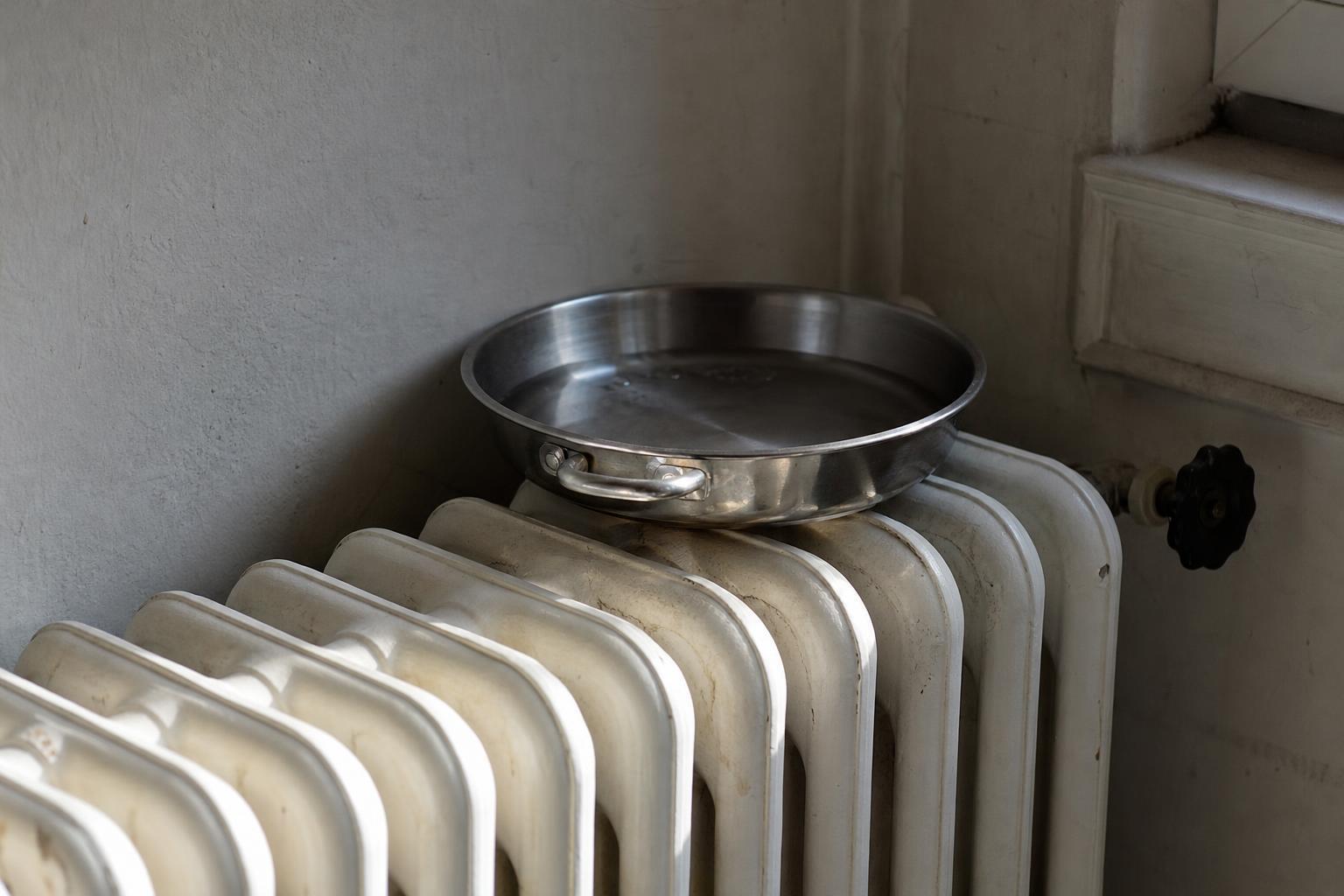
There’s a simple, old-school habit many of us remember: a small pot of water quietly steaming near the heat on cold nights. It looked quaint, even pointless, until our air got drier, our bills got higher, and our throats started to feel like sandpaper again. The humble trick is returning, and this time we understand the science behind it.
“It’s low-tech, silent, and basically free,” says more than one practical grandparent, even if they never used those exact words. What they knew by feel, we can now track with a tiny hygrometer and a few smarter habits.
Why moisture matters in heated homes
Radiators and forced-air systems dry indoor air, pushing relative humidity far down. The result is static shocks, cracked lips, scratchy throats, and creaky floors. Add in brittle wooden furniture and irritable sinuses, and you’ve got a winter pattern that feels older than central heating itself.
The sweet spot most experts cite is around 40–60% relative humidity. In that band, the air feels warmer, your skin holds its moisture, and nasal passages stay happier. “When the air is right, your body finally stops complaining,” as one family doctor likes to joke.
The health and comfort case in 2026
More recent research has linked mid-range humidity to fewer respiratory irritations and to conditions less favorable for certain viruses that travel in aerosols. While no humidity level is a medical shield, evidence suggests that overly dry rooms can increase airborne persistence and make coughs feel harsher. Balanced humidity won’t cure a cold, but it can make the season more bearable.
There’s also a comfort bonus: slightly moister air can feel warmer at the same thermostat setting. That perception often lets you nudge the setpoint a bit lower, which is welcome amid unpredictable energy prices. “Warmth you can actually feel,” as a building engineer once put it, “comes from temperature and moisture working together.”
How to bring it back, safely
If you’ve got hot-water radiators or a safe shelf nearby, passive evaporation is still a gem. But a few rules keep it smart and safe:
- Use a wide, stable container with clean or distilled water; keep it on or near hydronic radiators, not on electric heaters.
- Never block vents, thermostatic radiator valves, or safety clearances.
- Wipe and refresh at least every couple of days to avoid mineral buildup and biofilm.
- Aim for 40–60% RH with a basic hygrometer; if you hit 60% consistently, reduce the water.
- Keep containers out of reach of kids and pets, and never on precarious edges.
Practical details that make it work
Surface area beats depth. A broad, shallow pan evaporates more evenly than a deep pot. Ceramic radiator humidifiers—those simple white carafes that hang off the side—still do a solid job without plugs or noise.
Hard water leaves limescale. Distilled or filtered water slows the crust, and a quick vinegar rinse keeps things fresh. Skip essential oils: they can irritate lungs and may stain or degrade some finishes.
Remember the “good enough” rule: if your hygrometer hovers around 45–50%, you’re in the comfort lane. If you see window condensation, pull back—too much humidity can feed mold and warp wood trim.
When a pan is not the right move
Avoid setting water on any electric heater, space heater, or appliance not designed for loads. Never place containers on narrow tops that could tip or drip into wiring. If your radiators run extremely hot, use a nearby stable surface to warm the water safely rather than direct contact.
If someone in the home has severe allergies or respiratory conditions, discuss humidity targets with a healthcare professional. Over-humidification can aggravate dust mites and hidden mold, especially in older, leaky buildings.
Smarter 2026 twists on a classic
You don’t need to go full retro. Pair the pan with a $10 hygrometer for real-time feedback, or run a smart plug on a small active humidifier in tandem, then let the radiator pan maintain the baseline. Indoor plants help a bit, and drying a single load of laundry indoors (safely and with ventilation) adds gentle moisture on the coldest days.
For many homes, the pan is a “set it and forget it” helper that smooths out the dips without electricity, filters, or ongoing maintenance costs. “It’s amazing what a little water can do,” says the quiet part of every winter evening, when the room feels softer, the floorboards stop cracking, and the air stops biting your lungs.
Call it thrift, comfort, or plain common sense. The simple pot by the radiator never really stopped working—we just stopped noticing. In a season of high bills, dry air, and constant indoors, a calm bowl of water brings the environment back into balance, one quiet wisp at a time.