
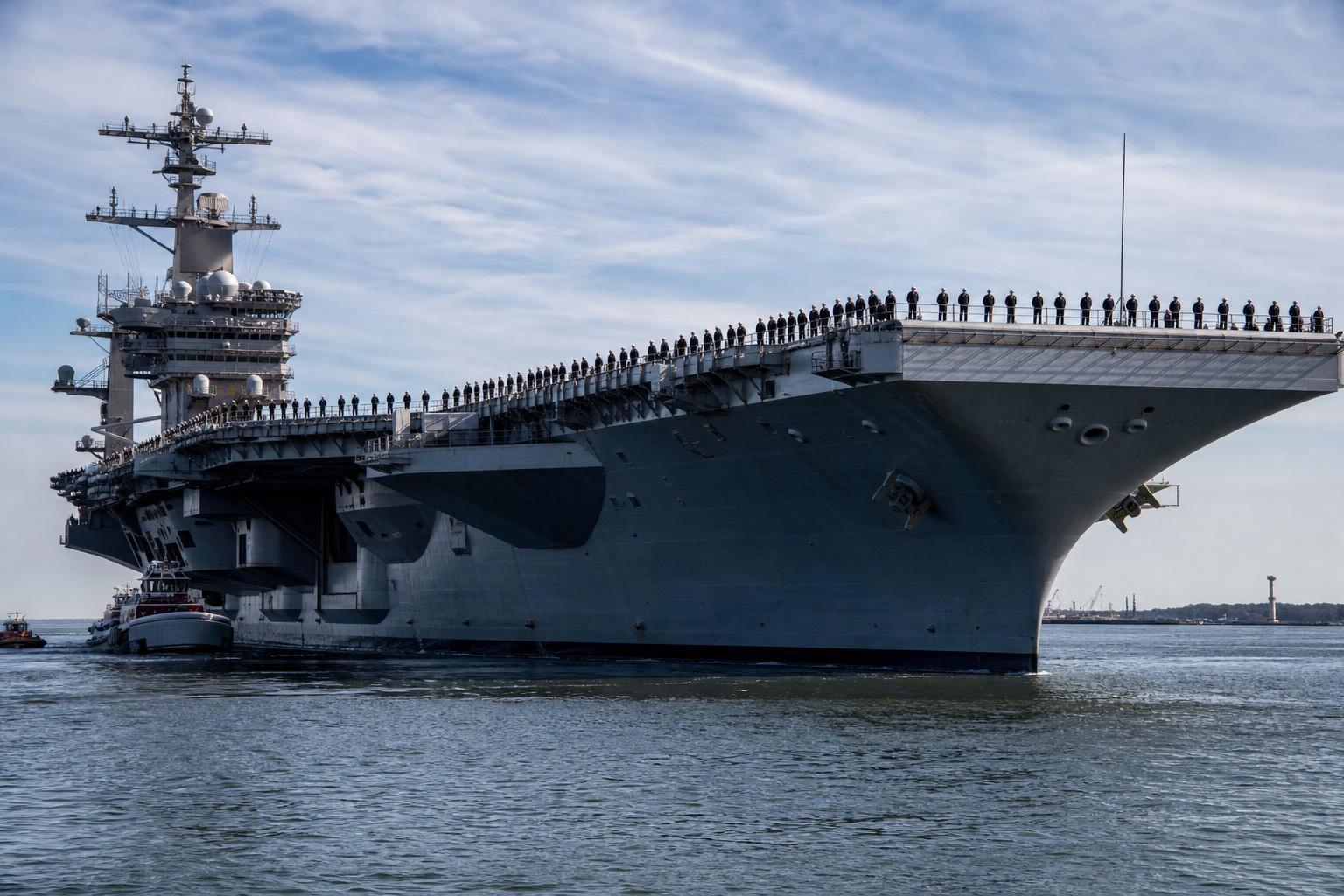
It glides across the Atlantic like a city, hums with the electricity of a metropolis, and moves thousands of trained professionals as if they were a single organism. This is the United States’ newest supercarrier, a vessel whose price tag rivals small infrastructure projects and whose presence can shape events an ocean away. Sailors have long called carriers “a floating city,” but this one scales the metaphor until it feels almost literal.
A price that buys a new generation
The first ship of its class came with a roughly $13 billion procurement bill, a number that captures both the obsessions and ambitions of modern naval engineering. That sticker price covers the ship itself, while research and development for the class push the total investment far higher. “You’re not just buying a ship, you’re buying a generation,” one program official liked to say, and the intent shows in nearly every corner of the design.
Power plant for the century ahead
Two next‑generation nuclear reactors sit deep within the hull, producing roughly triple the electrical power of the previous class. That surplus isn’t only about going faster; it’s about feeding energy‑hungry systems that launch jets, manage sensors, and someday may fire lasers. The ship’s arteries carry that power to a redesigned flight deck, where the work of launching and recovering aircraft has been rewired for efficiency and safety.
Launch, recover, repeat
The electromagnetic aircraft launch system replaces steam with precision, trading brute force for fine‑tuned control. On the other end of the landing area, an advanced arresting system brings aircraft to a halt with smoother stress on gear and airframes. Together, the changes promise a higher sortie rate—more flights per day—while reducing long‑term wear on both the ship and the wing. “Think of it as fewer moving parts and more math,” quipped one engineer, smiling at the understatement.
A crew larger than many towns
At full tempo, the carrier can embark more than 4,500 people: the ship’s company, the air wing, and the specialists who keep the whole machine alive. That population needs the services of a municipality—galleys, medical suites, workshops, desalination plants, and even its own mailroom. Watch a night flight deck cycle and you’ll see an urban choreography in miniature: tractors towing fighters, yellow‑shirts directing motion, ordnance teams loading payloads under red light. “It’s organized chaos,” a deck director said, “and it only looks chaotic if you don’t know the dance.”
What $13 billion actually buys
The headline figure can feel abstract, so break it down to what the ship enables on a daily basis:
- A mobile, nuclear‑powered airfield with global reach, capable of sustained air operations for weeks at sea, independent of local bases or political clearances.
Each line item represents an ability that is hard to replicate on land, and harder still to move at will. When a crisis brews, the carrier brings options measured not in promises but in aircraft cycles, fuel loads, and sorties.
Smaller crew, bigger impact
Automation trims hundreds of billets from the ship’s company, a nod to life‑cycle costs and the reality of tight manpower pools. Weapons elevators now lift heavy ordnance faster from deep magazines to the flight deck, slashing the hidden minutes that separate preparation from power. The island—the ship’s tower—moved slightly aft, opening up more usable deck and improving the choreography of turning jets from parking to catapult.
Teething pains, then tempo
First‑in‑class ships almost always absorb the learning curve, and this one was no exception. New techs had to be tuned, from launch systems to weapons elevators, and reliability metrics had to move from paper to practice. Over successive trials and deployments, the crew pushed the machinery through long days and cold nights, making incremental fixes that add up to decisive confidence.
Why this ship matters
For allies, its arrival signals commitment; for adversaries, it complicates calculations. A carrier doesn’t solve every problem, but it compresses time and expands choice. It can sit in blue water, sovereign and self‑contained, gracing a coastline with deterrence or launching relief when a disaster hits ashore. “Presence is not posture,” a sailor said, “it’s the ability to act when the world needs action.”
Life on the steel city
Daily routine swings between quiet maintenance and sudden, amplified tempo. One moment it’s coffee and checklists, the next it’s the wail of jet noise and the thump of tailhooks biting steel. Crew sleep inches from pipes that thrum with reactor life, and find calm in the ship’s chapel, gym spaces, or a mess deck that never stops serving meals. The extraordinary becomes ordinary, and that’s the point: repetition builds the muscle memory that turns complexity into safety.
The horizon ahead
Future carriers in the class will inherit the fixes and refinements born of hard use, pairing maturing systems with new aircraft and, eventually, directed‑energy and more autonomous assets. The blueprint is less a final answer than a platform for what comes next. For now, the great gray deck remains what navies have pursued for a century: a movable piece of strategic terrain, large enough to be a city and precise enough to thread a needle at dawn.