Samsung R95H Review: Is OLED Still Worth It?

November 13, 2026
Tech

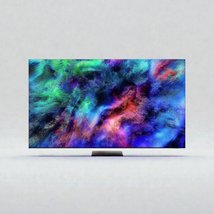
Can LCD contend with OLED in the realm of colors? Samsung bets on Micro RGB backlighting to make it possible. Its R95H combines red, green and blue LEDs with Glare Free anti-reflective treatment, with the ambition of marrying color richness with brightness. We tested its 75-inch version to compare this promise with our measurements and our usual content.

The 75-inch Samsung R95H combines Micro RGB backlighting with Glare Free anti-reflective treatment. © Matthieu Legouge

Premium LCD televisions have long banks on increasing the number and size of backlight zones and boosting peak brightness to rival OLED. The arrival of RGB adds another stake: to produce broader color gamuts and preserve saturation as luminance rises, all while maintaining zone-based light control. An approach already explored by the Sony BRAVIA 9 II, or the Hisense UR9S, and Samsung now extends it under the label Micro RGB.

Excellence in price
Samsung 75R95H

9 / 10

Samsung 75R95H

Excellence in price

Best prices

amazon.fr

2930,98 €

PC Componentes

2920,44 €

Fnac

2930,78 €

Materiel.net

2989,94 €

See more prices

Top picks
  • Rich colors and good handling in bright highlights
  • Excellent color accuracy in HDR in Filmmaker mode
  • Good HDR highlight roll-off and wide brightness reserve
  • Glare Free anti-reflective coating
  • Low input lag and full gaming setup
  • Mirror-finish foot design
The drawbacks
  • Bloominɡ still visible, more off-axis
  • Limited viewing angles
  • SDR Gamma may be imperfect
  • Limited surround spatialization
  • No Dolby Vision surprise
Read the conclusion

The R95H arrives in a lineup where OLEDs, notably Samsung’s S99H with a QD-OLED panel, already hold a strong position. Its value proposition must be assessed beyond color gamut: backlight precision, the rendering of complex scenes, daytime comfort, and versatility will also make the difference. This is what we aimed to evaluate with our 75-inch unit loaned by the brand, through our measurements and our standard test content.

Samsung R95H: performance and picture quality

Our measurements

Under the Micro RGB banner, the R95H remains a LCD TV: red, green and blue LEDs serve as backlight behind the panel. Contrary to what its name might imply, they do not constitute the image’s pixels as on a self-emissive MicroLED display. This architecture aims to broaden the gamut and preserve saturated colors at high luminance, while still allowing zone-based light control. The Micro RGB AI Engine Pro processor handles image management and video processing. Our measurements in Filmmaker mode, for SDR and HDR, allow us to examine color fidelity and the lighting behavior of this system.

Click here to see our SDR measurements

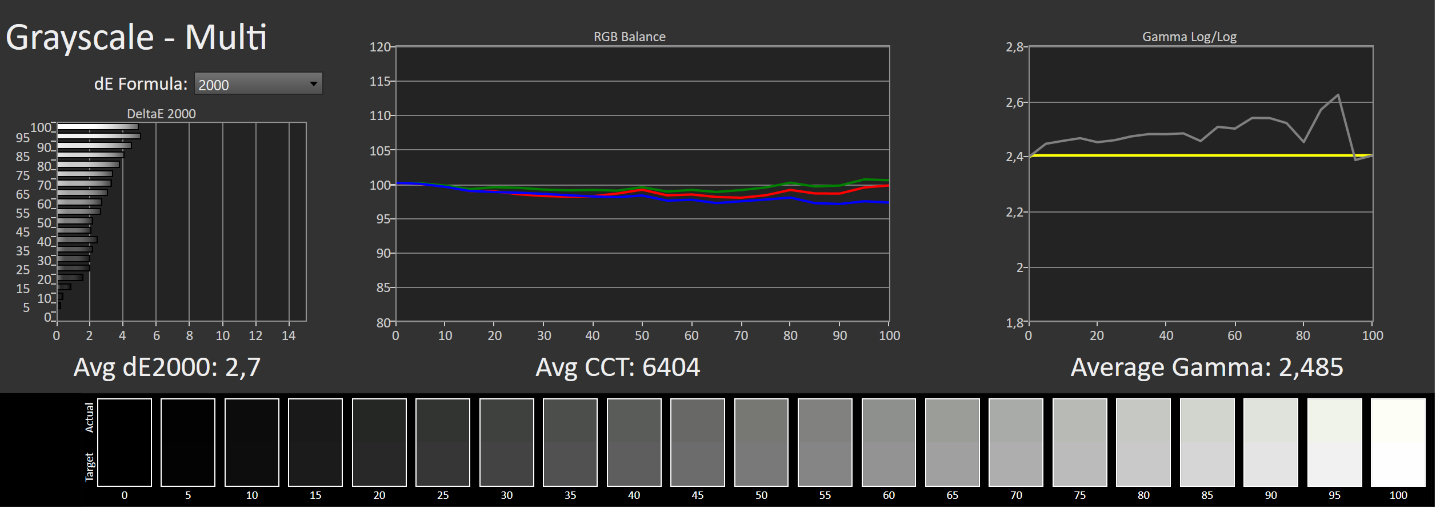
We performed our measurements on the 75-inch Samsung R95H, in Filmmaker mode. In SDR, starting with the grayscale: the Delta E 2000 average stands at 2.7. The overall performance remains well controlled, although the graph shows larger gaps as we move toward the brighter levels. The average thus provides a good general indication, without translating to perfect neutrality across the entire scale.
© Matthieu Legouge

© Matthieu Legouge

The average color temperature reaches 6,404 K, close to the 6,500 K reference of D65. The RGB balance remains reasonably steady, with a slightly cooler bias in the mid and higher levels of gray, while the green remains a touch high. The rendering thus tilts slightly toward warmth, but without a strong dominant hue. This proximity to the reference should not obscure the small RGB balance variations depending on the gray level.
The gamma requires more caution. Its average of 2.485 exceeds our target of 2.4, and the curve sits above the target for most of the scale. It typically hovers around 2.45–2.55, with a more pronounced rise in the brighter levels, before returning to the target at the end of the scale. The mid and some bright levels are therefore reproduced darker than expected.
© Matthieu Legouge

© Matthieu Legouge

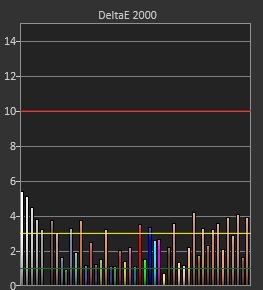
ColorChecker confirms generally good color fidelity. We note an average Delta E of 2.64, with a maximum of 5.44. The average remains below the commonly held threshold of 3 for perceptible deviations. The Filmmaker mode therefore provides a solid baseline, though it does not reach the finest factory tuning for all hues.

Finally, SDR brightness reaches 615 nits. This reserve gives leeway to adapt the image to a well-lit room.
HDR measurements continuation

The Samsung R95H supports HDR10, HLG and HDR10+, but lacks Dolby Vision. Samsung also mentions HDR10+ Advanced compatibility on its French product sheet. We kept the Filmmaker mode for HDR measurements.

© Matthieu Legouge

© Matthieu Legouge

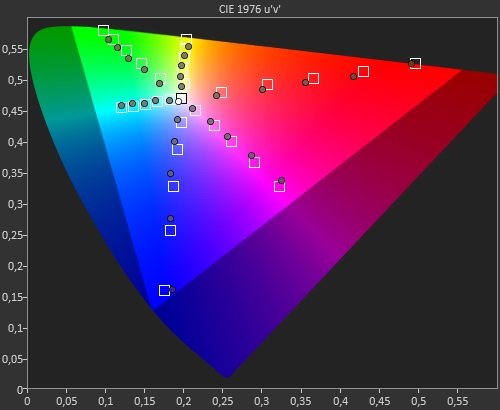
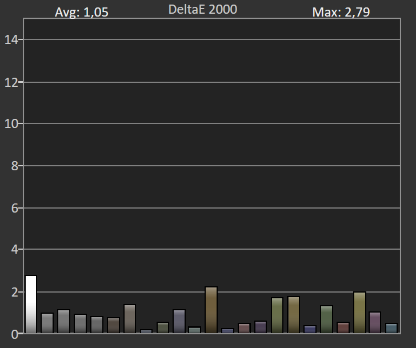
ColorChecker yields a notably more convincing result than SDR. The average Delta E drops to 1.05, with a maximum of 2.79. Even the farthest hue remains below the 3 threshold on this set. The low average hides no significant punctual deviations among tested colors: it’s one of the strongest results in this R95H.

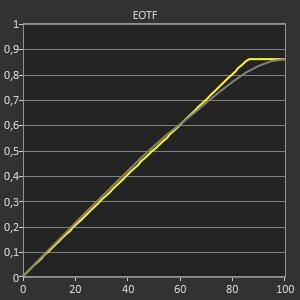
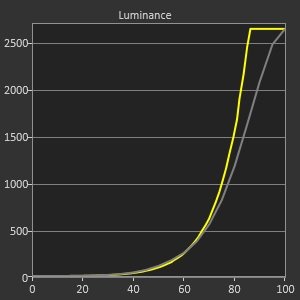
The EOTF track shows a response close to the reference across much of the scale. The gap becomes more apparent in the highlights, where the TV gradually reaches its maximum brightness. The rendering of the highest levels is therefore not perfectly in line with the reference, despite the excellent color precision measured.

© Matthieu Legouge

© Matthieu Legouge

© Matthieu Legouge

© Matthieu Legouge

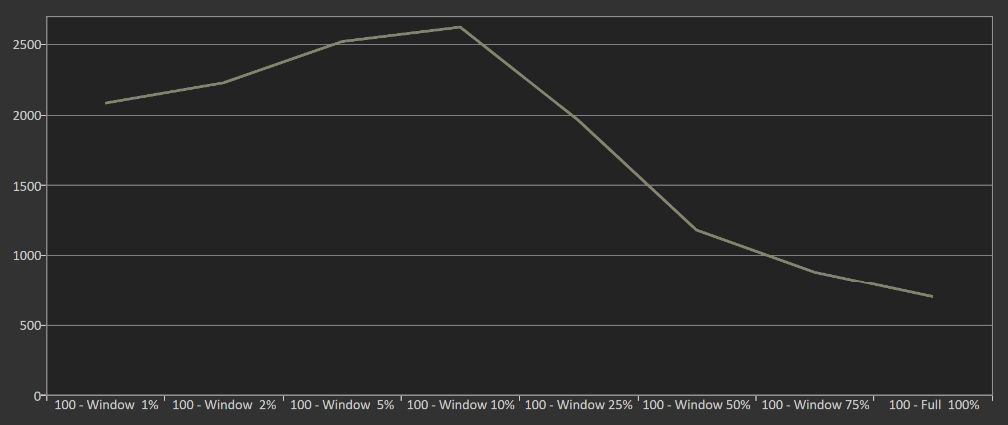
Across a 10% window, we record a peak of 2,639 cd/m². That’s a high level, but it should be weighed against other displays already tested in the lab. Our Samsung S99H 55-inch reached 2,801 cd/m² in Filmmaker mode, while the Sony BRAVIA 9 II 75-inch hovered around 3,900 cd/m² at 10% in Professional mode. The R95H thus doesn’t gain an advantage on these small bright areas by brightness alone.

Tested TV Measurement mode HDR on 10% window HDR full screen
Samsung R95H — 75 inches Filmmaker 2 639 cd/m² 700 cd/m²
Samsung S99H — 55 inches Filmmaker 2 801 cd/m² 489 cd/m²
Sony BRAVIA 9 II — 75 inches Professional 3 900 cd/m² 900 cd/m²

However, the measured brightness varies with the test pattern size. The R95H delivers about 2,100 cd/m² at 1%, then around 2,000 cd/m² at 25%, before dipping to around 1,180 cd/m² at 50% and 700 cd/m² in full screen. The maximum occurs around 10%, not at the smallest bright elements. These intermediate values are shown on the chart and are approximate.

The bright peak as a function of screen-mire size. © Matthieu Legouge

The bright peak as a function of screen-mire size. © Matthieu Legouge

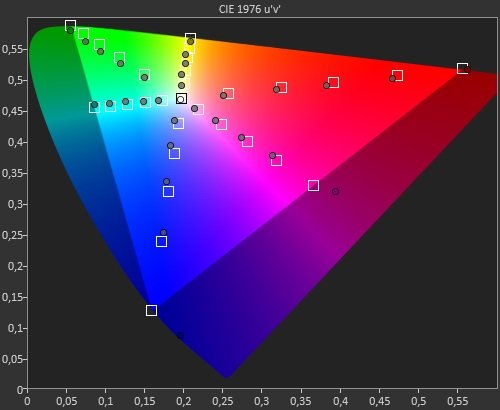
Color coverage is another key point. The UHD DCI-P3 coverage reaches 99.12%: this space is almost entirely reproduced. Our measurements also show BT.2020 coverage at 93.95%. An excellent result for a LCD television.

UHDA-P3 © Matthieu Legouge

UHDA-P3 © Matthieu Legouge

 La couverture de l'espace BT2020 © Matthieu Legouge

La couverture de l’espace BT2020 © Matthieu Legouge

Comment testons-nous les téléviseurs chez Clubic ?

À découvrir

How do we test TVs at Clubic?

Labo

Our impressions of the image rendering

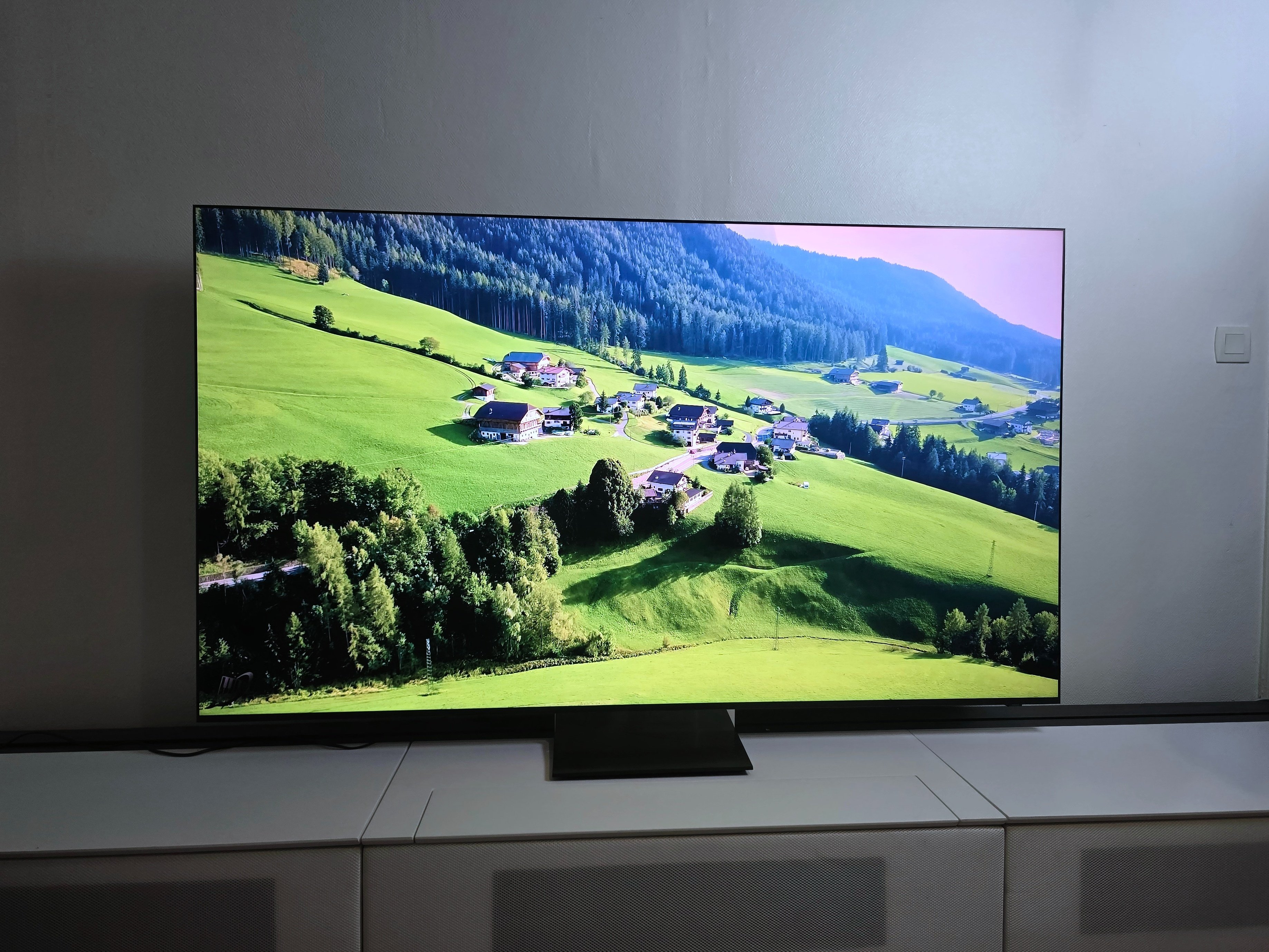
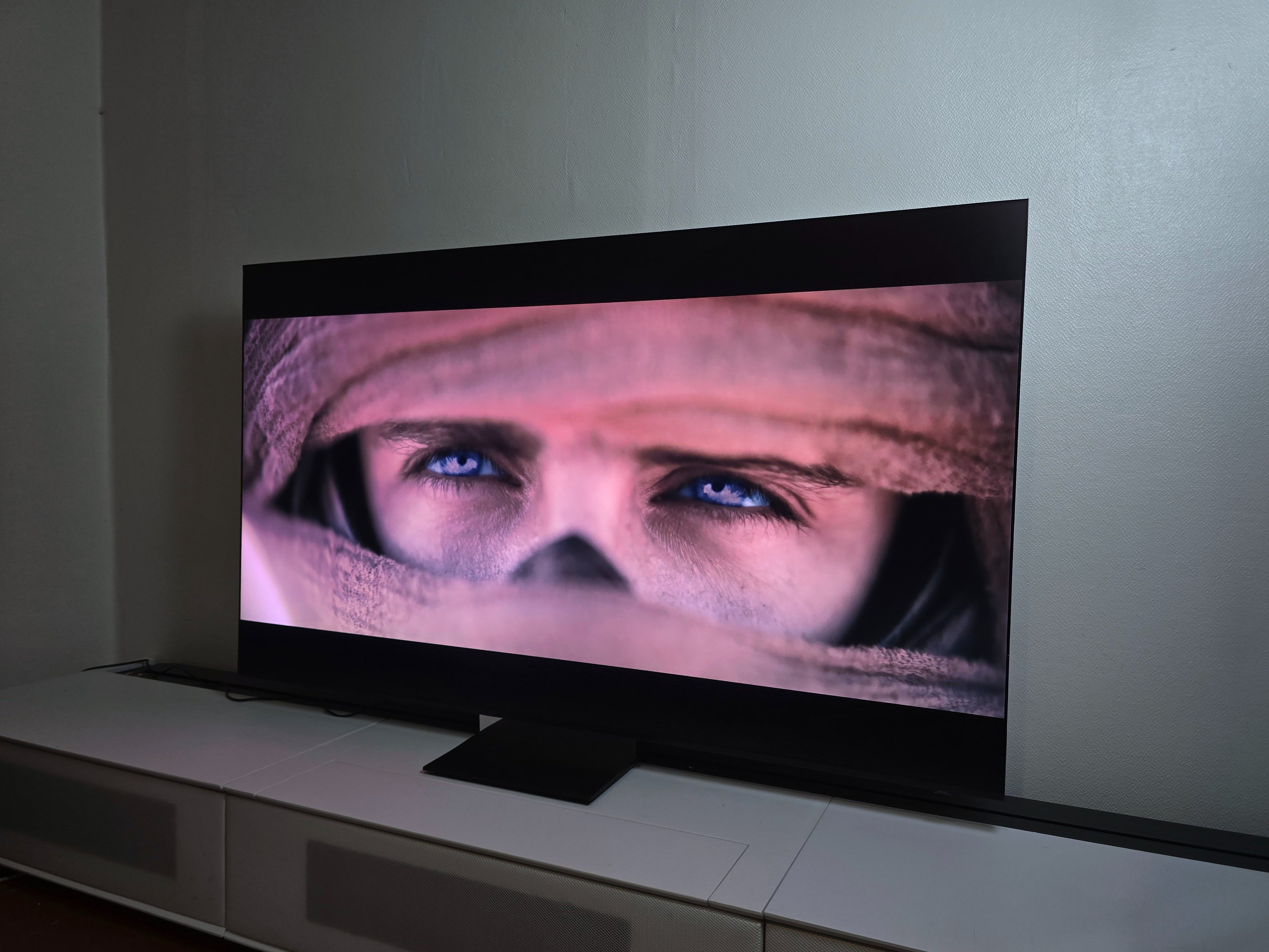
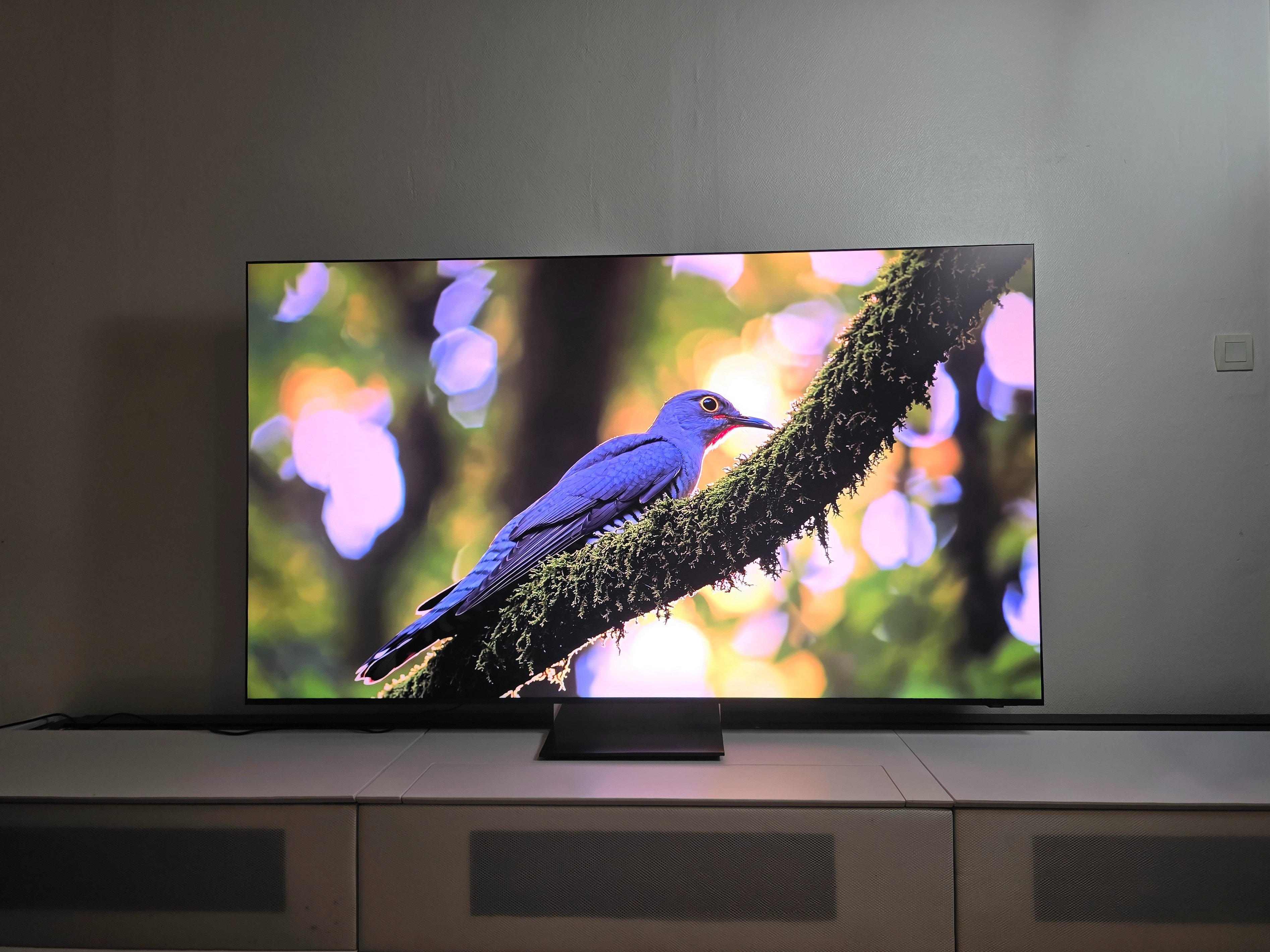
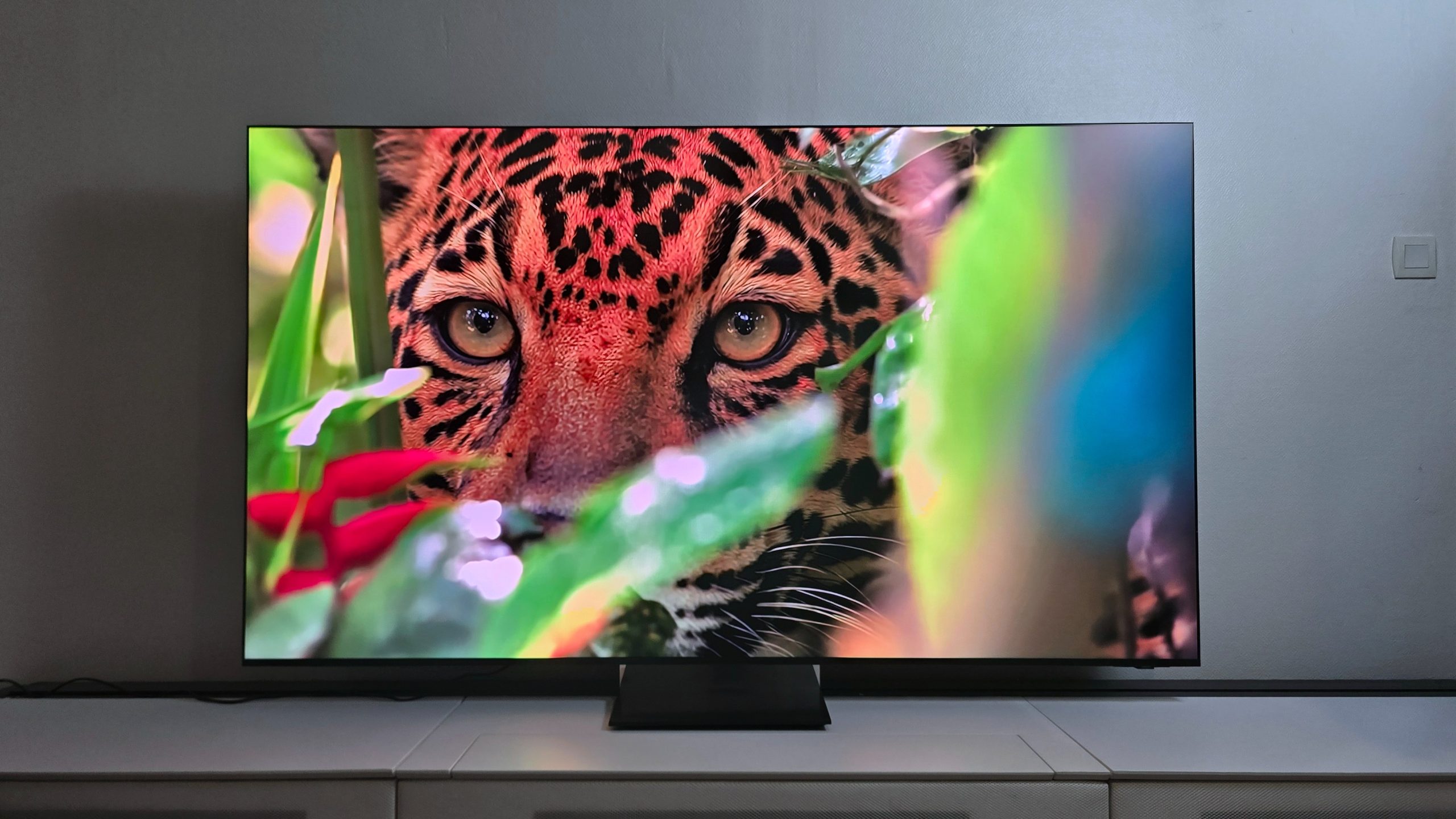
It is primarily through its colors that the R95H impressed us. The RGB backlight adds intensity to bright hues without them appearing to fade quickly. We had already noted this benefit on other RGB TVs: their advantage becomes evident when color and high brightness must coexist. In this regard, Samsung evokes what we appreciate on QD-OLED models.

The bright scenes showcase color intensity and the RGB backlight's luminance reserve. © Matthieu Legouge

The bright scenes showcase color intensity and the RGB backlight’s luminance reserve. © Matthieu Legouge

In Filmmaker mode, rendering remains natural, especially for faces; other modes yield less faithful images. We did not observe color spill on the viewed content. The palette’s richness remains at the service of the image, without becoming an ever-present saturation.

© Matthieu Legouge

© Matthieu Legouge

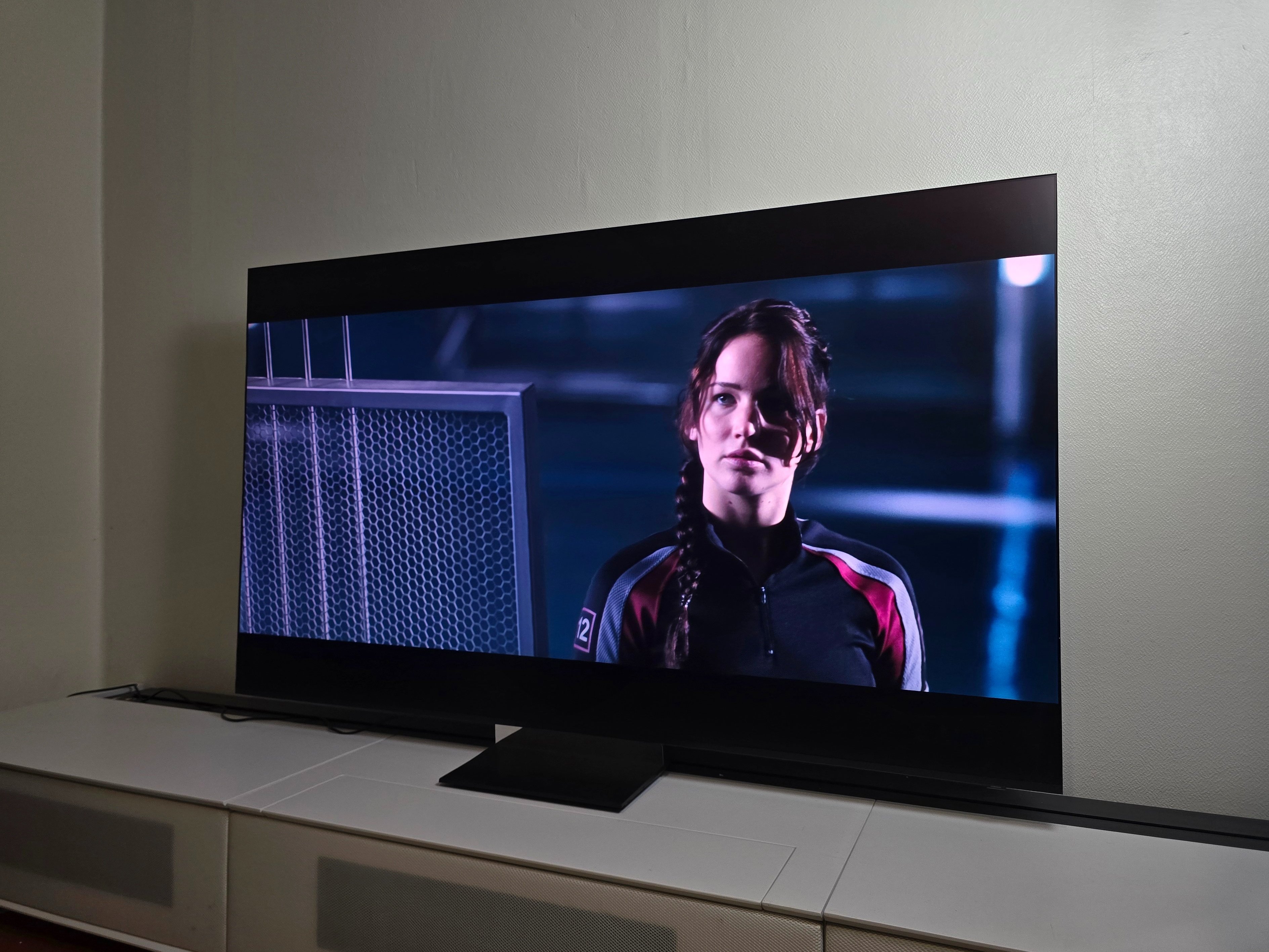
In low-light windows, contrast is well controlled and dark scenes remain legible. Blooming around bright elements on a dark background persists, however. The TV does not achieve the pixel-precise local dimming of an OLED, which can turn off each pixel independently. For cinema in dark rooms, this difference remains important: the color fidelity of the R95H does not fully compensate for halos in highly contrasted shots.

© Matthieu Legouge

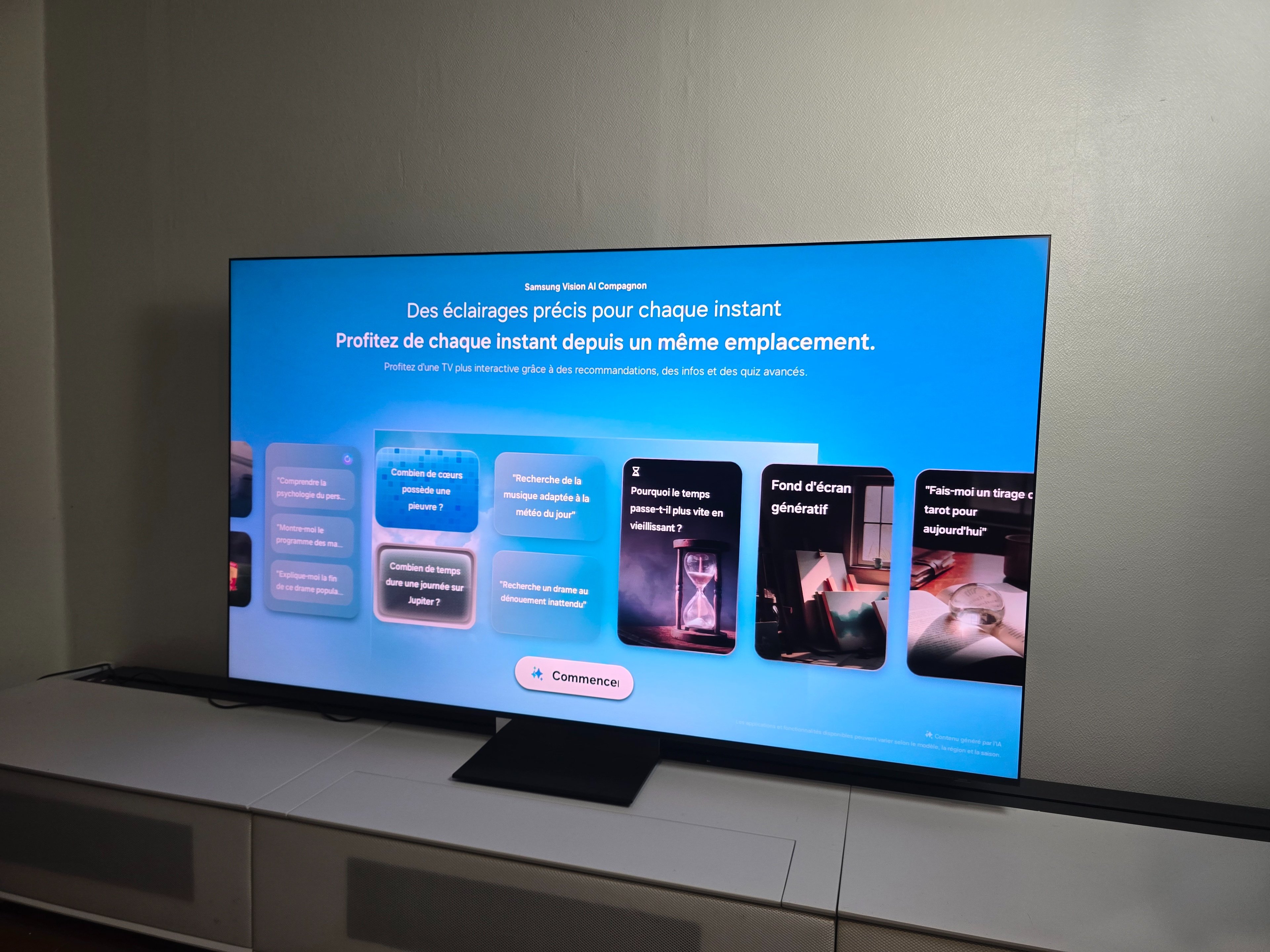
Vision AI Companion presents the conversational searches, recommendations and AI tools from a dedicated space. © Matthieu Legouge

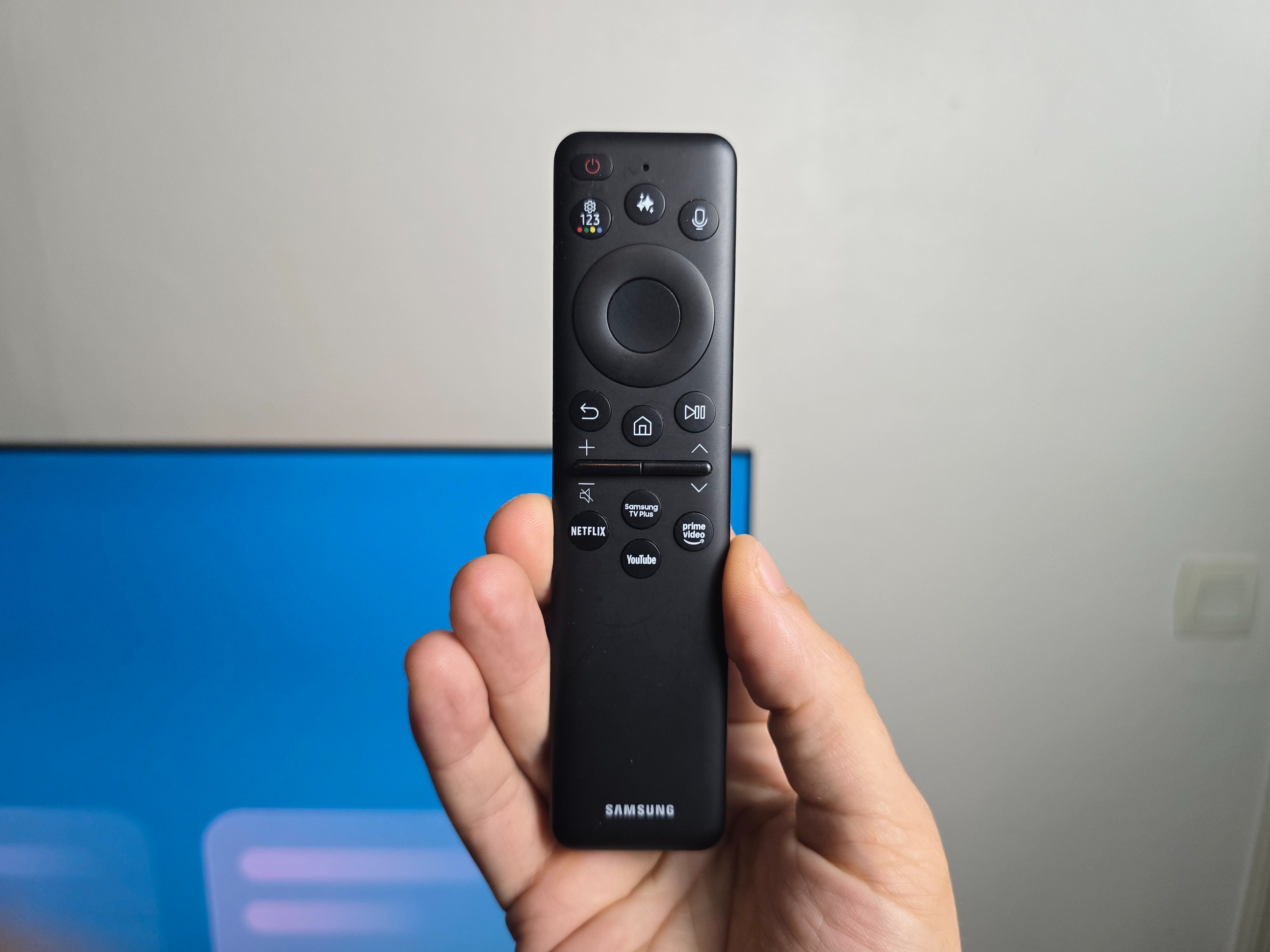
The remote control keeps Samsung’s compact and minimalist approach, with few buttons and a microphone for voice commands. It prioritizes navigation through the interface over the many direct shortcuts of a traditional remote, which may require some adaptation if coming from a more feature-rich model. Its battery recharges via the small photovoltaic cell on the back, in both natural light and indoor lighting, with a USB-C port for topping up. A practical detail that avoids battery replacements.

  Compact remote keeps shortcuts to video services and a dedicated Vision AI button. © Matthieu Legouge

Compact remote keeps shortcuts to video services and a dedicated Vision AI button. © Matthieu Legouge

Samsung also announces seven years of software updates for the Tizen system from the launch year. This commitment covers software support; features available may vary depending on the model’s capabilities. This is a welcome argument for a TV intended to stay in the living room for many years.

Gaming

We measure an 8.4 ms input lag at 60 Hz in Game mode, according to our standard protocol. The R95H responds quickly to commands. It includes four HDMI inputs supporting 4K up to 165 Hz with a compatible PC, as well as VRR, ALLM and FreeSync Premium Pro. The Game Bar provides quick access to information and settings during play.

L’input lag sur le R95H
Mode Jeu Mode Standard
Input lag mesuré (à 60 Hz) 8.4 ms 105.4 ms

Electrical consumption

As with our other tests, we set brightness to 150 cd/m² before measuring consumption. The 75-inch Samsung R95H reaches 68.4 W/m² under these conditions.
The result is close to the 68 W/m² recorded for our Hisense UR9S and slightly below the 72 W/m² of the Samsung S99H. It remains higher than the 47 W/m² of the Sony BRAVIA 9 II. When scaled to the screen area and measured with the same protocol, these figures place the R95H within our panel. Of course, these measurements do not reflect HDR movie consumption at full brightness.

Design and connectivity

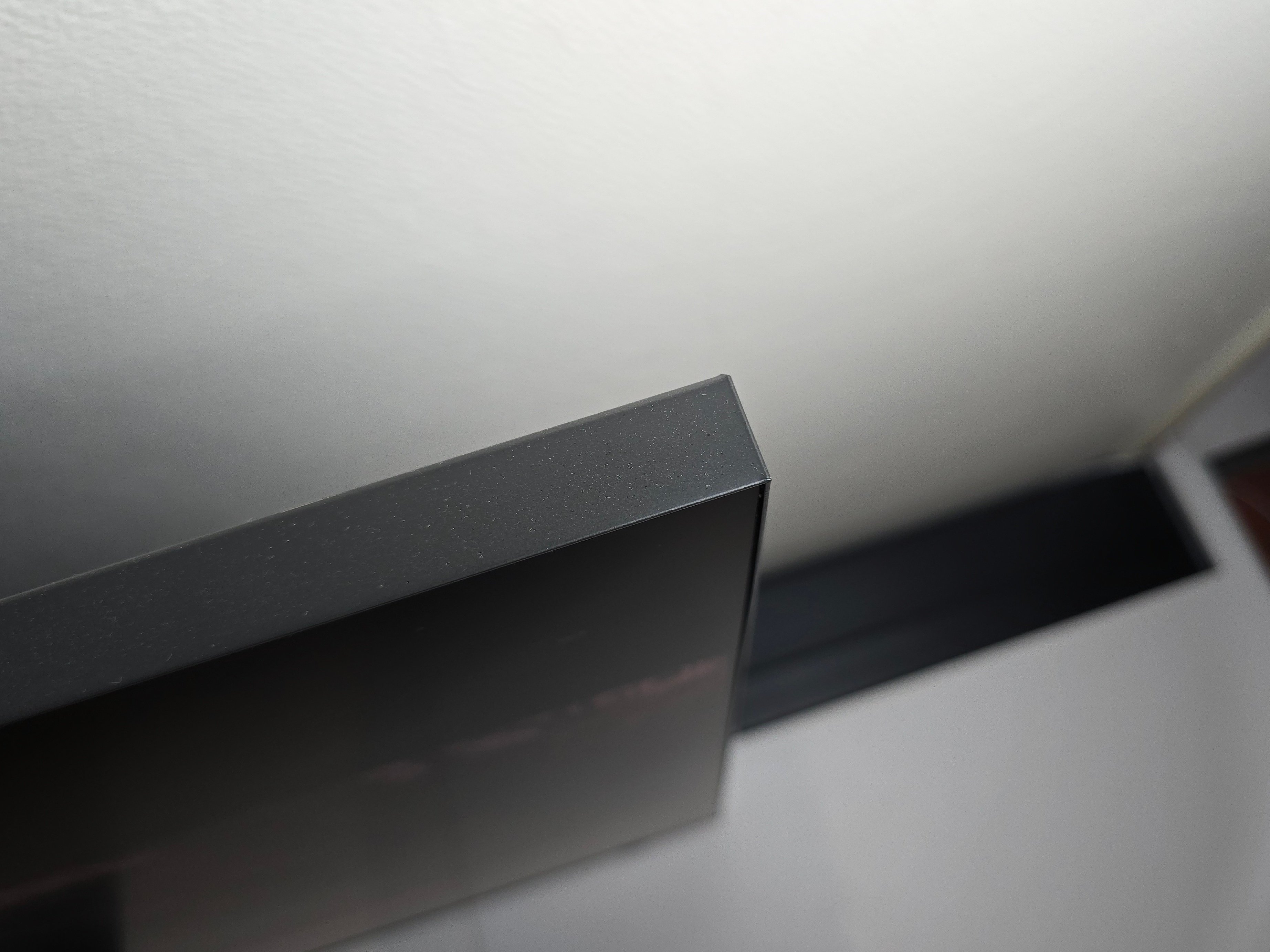
The stand is one of the R95H’s strongest features. Its mirrored effect makes the screen appear to float above the furniture, delivering an elegant result. The Infinity Motion (?) Infinity Air design thus gives the TV a distinctive identity.

© Matthieu Legouge

© Matthieu Legouge

Meanwhile, the chassis remains slim for a TV of this type. Samsung lists 29.8 mm thickness without the stand on the 75-inch model. The central stand is roughly 35.6 cm wide and 34.9 cm deep. This depth must be considered when choosing furniture, as the TV’s overall width is approximately 166 cm.

The built-in connectivity includes four HDMI inputs, eARC, two USB-A ports, an Ethernet jack and a digital optical audio output. Samsung also plans compatibility with the Wireless One Connect box, sold separately. This option allows sources to be located elsewhere while the TV maintains its own power connection.

Test Samsung R95H: Clubic’s verdict

Conclusion
General note
9 / 10

Excellence in price

The R95H confirms the value of RGB backlighting on an LCD TV, as well as Samsung’s approach. Its colors are rich, their hold in bright highlights is convincing, and the Filmmaker mode offers excellent HDR accuracy. The brightness reserve remains high, particularly when the illuminated area increases, while Glare Free helps viewing in daylight. Tizen, low latency and a pleasant audio portion complete a versatile performance.

The positives
  • Rich colors and good brightness retention in highlights
  • Excellent colorimetric precision in HDR in Filmmaker mode
  • Solid HDR handling with good light reserve
  • Glare Free anti-reflective coating effective
  • Low input lag and a complete gaming setup
  • Mirror-effect foot design
Bottom lines
  • Color quality

The R95H confirms the appeal of RGB backlighting on an LCD display and Samsung’s approach. Its colors are vivid, their durability in high brightness is convincing, and Filmmaker mode delivers excellent HDR accuracy. The brightness reserve remains high, especially when the illuminated area grows, while Glare Free eases daytime viewing. Tizen, low input lag and a pleasant audio portion complete a versatile overall performance.

The decision facing OLED, however, is highly dependent on specific use conditions. In a bright living room with a mostly axis-aligned seating position, the R95H has solid arguments. For films watched in the dark or a living room where several people sit along the sides, pixel-level contrast and OLED viewing angles keep our preference. Blooming and its visibility off-axis remain the main drawbacks of this Samsung.

Price can tip the balance in favor of the R95H. The lower price of the R95H relative to the S99H provides an additional argument for Samsung’s MicroRGB in a versatile bright-living-room setup. The final decision, though, must take into account the actual prices offered by retailers at the time of purchase, in light of the image qualities one prioritizes.

Experience in daily life

Audio

The sound output suitably matches the TV’s ambitions. The R95H offers a spacious scene and a satisfying experience for both movies and sports, and the processing options allow you to tailor the sound to content and preferences.
The Samsung system is a 4.2.2 configuration with 70 W, including Dolby Atmos and OTS+. The scale is welcome for built-in speakers, but the spatialization remains limited: the TV does not by itself recreate a true surround environment. For a deeper immersion, external audio equipment remains desirable.

What are the best soundbars in 2026?

À découvrir

What are the best soundbars in 2026?

Comparatif

Interface and features

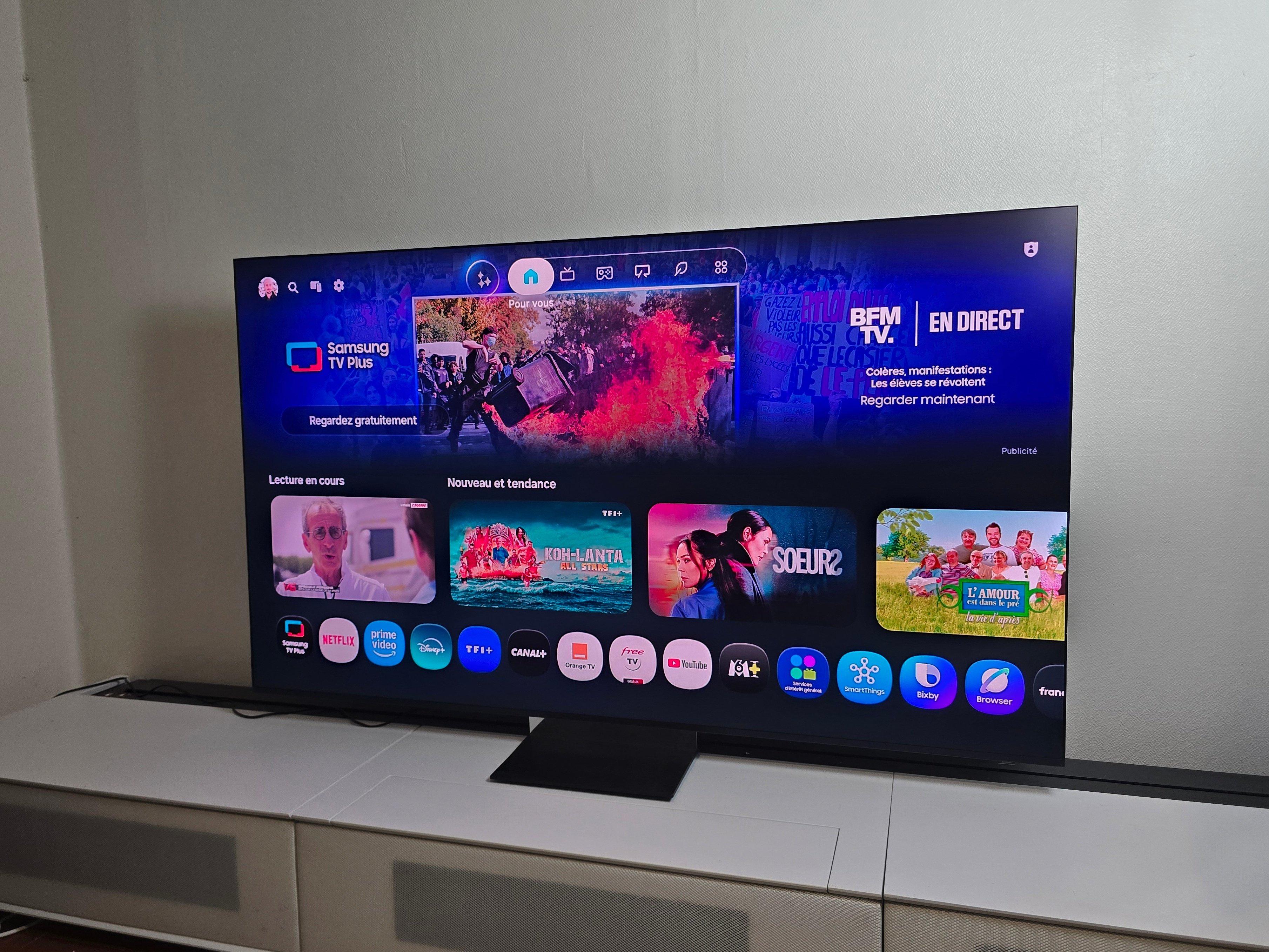
In its 2026 edition, One UI Tizen checks all the boxes of a family-friendly interface: comprehensive, feature-rich, yet never cluttered, since the essential functions are now just a click away. French operator services integration also helps centralize usage.
Samsung also puts Vision AI Companion at the center, a portal that gathers the TV’s AI features. From this space, the Bixby assistant lets you ask questions by voice, search information related to the program, or receive content recommendations. The idea is to formulate a request in natural language rather than repeatedly digging through menus. Note that using these services requires an Internet connection and a Samsung account.

L’accueil de Tizen rassemble applications, programmes et recommandations au sein d’une interface particulièrement fournie. © Matthieu Legouge

The Tizen home screen brings together apps, programs and recommendations within a particularly feature-rich interface. © Matthieu Legouge

Vision AI Companion also provides access to features such as generative wallpapers and Live Translate. This last feature translates subtitles for compatible programs received by the antenna: it does not apply uniformly to all videos or apps. The usefulness of this suite will depend on personal habits, but this shared entry point eases discovering features that might otherwise be scattered. Our tests of the S92H and S99H already delve into this environment in detail.

Vision AI Companion presents the searches, recommendations and AI tools from a dedicated space. © Matthieu Legouge

Vision AI Companion presents the searches, recommendations and AI tools from a dedicated space. © Matthieu Legouge

The remote again takes a compact approach, with a handful of shortcuts to video services and a dedicated Vision AI button. It remains comfortable to use, though a touch limited by its compactness. Its battery recharges via the built-in solar cell on the rear, in daylight or indoor light; a USB-C port is provided for topping up. A practical detail that helps avoid battery replacement.

  Compact remote keeps shortcuts to video services and a Vision AI dedicated button. © Matthieu Legouge

The compact remote preserves shortcuts to video services and a Vision AI dedicated button. © Matthieu Legouge

Samsung also announces seven years of firmware updates for the Tizen system starting from the launch year. This commitment covers software maintenance; new features may vary according to model capabilities. It’s a notable argument for a TV meant to stay in the living room for many years.

Gaming

We measure an input lag of 8.4 ms at 60 Hz in Game mode, so the R95H responds quickly to commands. It includes four HDMI ports supporting 4K up to 165 Hz with a compatible PC, as well as VRR, ALLM and FreeSync Premium Pro. The Game Bar completes the package for quick access to game-related information and settings.

L’input lag sur le Samsung R95H

Cooking up: We conducted our measurements on the 75-inch R95H in Filmmaker mode. In SDR, let’s begin with the gray scale: the Delta E 2000 average is 2.7. The overall result is well controlled, though the chart shows more noticeable deviations as the brightness increases. The average provides a solid general indication, without implying perfect neutrality across the scale.

© Matthieu Legouge

© Matthieu Legouge

The average color temperature reaches 6,404 K, close to the 6,500 K reference of D65. The RGB balance remains fairly uniform, with a slightly cooler blue in mid-to-high gray levels, while the green stays a little higher. The result thus leans slightly warm, but without a strong bias. This proximity to the reference should not hide small variations in RGB balance across gray levels.
The gamma requires more caution. Its average of 2.485 exceeds our target of 2.4, and the curve sits above the target across most of the scale. It typically hovers around 2.45–2.55, with a more pronounced rise in lighter levels, before returning to the target at the end of the scale. The midtones and some bright levels are therefore reproduced darker than expected.

© Matthieu Legouge

© Matthieu Legouge

ColorChecker confirms overall good color fidelity. We recorded an average Delta E of 2.64, with a maximum of 5.44. The average remains below the 3 commonly used threshold for perceptible differences. The Filmmaker mode thus provides a solid basis, though it does not reach the best factory tuning across all hues.

Finally, SDR brightness reaches 615 cd/m². This reserve gives leeway to adapt the image to a bright room.

View our HDR measurements

Samsung’s R95H supports HDR10, HLG and HDR10+, but Dolby Vision is not supported. Samsung also notes HDR10+ Advanced compatibility on its French spec sheet. We kept Filmmaker mode for HDR measurements.

© Matthieu Legouge

© Matthieu Legouge

Here, the ColorChecker yields a clearly more convincing result than SDR. The average Delta E falls to 1.05, with a maximum of 2.79. Even the farthest hue stays below the 3 threshold. The good average hides no major occasional deviations among the tested colors: this is one of the strongest results of this R95H.

The EOTF trace shows a response close to the reference across a large portion of the scale. The deviation grows more noticeable in the high lights, where the set gradually reaches its maximum brightness. The rendering of the highest levels is therefore not perfectly faithful to the reference, despite the excellent color accuracy measured.

© Matthieu Legouge

© Matthieu Legouge

Color fidelity remains strong overall, with ColorChecker showing good results. The color gamut coverage of BT.2020 is good; brightness and color range remain well balanced.

HDR measurement highlights confirmed this: HDR in 10% window yields higher peak brightness in HDR with good color saturation evolution.

The 10% window brightness peak is around 2,639 cd/m². This is a high level, but should be weighed against other displays tested in the lab. Our S99H 55-inch reached 2,801 cd/m² in Filmmaker mode, while Sony’s BRAVIA 9 II 75-inch stayed near 3,900 cd/m² at 10% in Professional mode. The R95H thus does not outperform these on small bright patches by sheer brightness.

Téléviseur testé Mode de mesure HDR sur fenêtre de 10 % HDR plein écran
Samsung R95H — 75 pouces Filmmaker 2 639 cd/m² 700 cd/m²
Samsung S99H — 55 pouces Filmmaker 2 801 cd/m² 489 cd/m²
Sony BRAVIA 9 II — 75 pouces Professionnel 3 900 cd/m² 900 cd/m²

Colorimetric coverage is another important metric. The DCI-P3 coverage reaches 99.12%: the space is almost entirely reproduced. Our measurements also show BT.2020 coverage at 93.95%. An excellent result for a LCD TV.

UHDA-P3 © Matthieu Legouge

UHDA-P3 © Matthieu Legouge

The BT.2020 coverage is also extended on the right, offering more freedom for content with richer colors. The TV remains a strong LCD candidate in this regard.

How do we test TVs at Clubic?

À découvrir

How do we test TVs at Clubic?

Comparatif

Our impressions of image rendering

This TV impressed us most with its colors. The RGB backlight adds intensity to bright hues without them fading quickly. We’ve observed this benefit on other RGB TVs: color and strong brightness coexistence is where this approach shines. Samsung’s RGB approach evokes what we value on QD-OLED in this regard.

The bright scenes highlight color intensity and the RGB backlight's luminance reserve. © Matthieu Legouge

The bright scenes highlight color intensity and the RGB backlight’s luminance reserve. © Matthieu Legouge

The Filmmaker mode preserves natural rendering, particularly for faces; other modes yield images that are less faithful. We did not observe color bleed on the tested content. The richness of the palette remains in service of the image, not turning into constant saturation. Our viewings of Blade Runner 2049, Dune: Part Two and Bugonia confirm convincing HDR. Reflections, flames and lighting gain depth; small bright areas stand out with intensity while preserving highlight detail. Overall bright scenes are pleasant and credible. The R95H does not, however, match the BRAVIA 9 II’s brightness in our tests: Samsung primarily impresses with the combination of light and color.

Le R95H conjugue des éclairages intenses et une palette de couleurs convaincante. © Matthieu Legouge

Le R95H conjugue des éclairages intenses et une palette de couleurs convaincante. © Matthieu Legouge

In the darks, control is good and dark scenes remain legible. Blooming around bright elements on dark backgrounds persists, though. The TV does not reach OLED-level local dimming precision, which can extinguish each pixel independently. For films viewed in darkness, this difference remains significant: the R95H’s color fidelity does not fully compensate for halos in high-contrast shots.

 La scène sombre reste lisible, même si le contrôle par zones demeure limité face à l’OLED. © Matthieu Legouge

La scène sombre reste lisible, même si le contrôle par zones demeure limité face à l’OLED. © Matthieu Legouge

Angles of view intensify this limitation. As you move off-axis, contrast loses its grip and blooming becomes more apparent. The best position is clearly straight-on. In a living room with side seating or a wide sofa, not all viewers will enjoy the same rendering.

During the day, the Glare Free anti-reflective coating effectively mitigates the nuisance from light sources facing the screen. Under significant ambient light, we notice a slight rise in blacks. The compromise remains attractive for a living space: with SDR brightness reserve, the R95H remains comfortable to watch even when lighting is not fully controlled.

© Matthieu Legouge

Les contenus riches en couleurs illustrent l’un des principaux attraits du R95H. © Matthieu Legouge

The video processing yields good results on compressed sources, as long as the signal retains enough information. Truly poor sources remain more challenging: Samsung does not remove all compression artifacts. Motion handling is generally good, though some jerks remain perceptible during long tracking shots.

Everyday experience

Audio

The sound reproduction aligns well with the TV’s ambitions. The R95H offers a spacious scene and a good experience for both movies and sports, and the provided processing options let you tailor the sound to content and preferences.
The manufacturer’s stated configuration is a 4.2.2 channel system at 70 W, with Dolby Atmos and OTS+. The space is commendable for built-in speakers, but the spatialization remains limited: the TV alone cannot recreate a true surround environment. For deeper immersion, external audio gear remains valuable.

Which are the best soundbars in 2026?

À découvrir

Which are the best soundbars in 2026?

Comparatif

Interface and features

In its 2026 iteration, One UI Tizen checks all the boxes of a family-friendly interface: comprehensive, rich with features, yet never cluttered, since the essential functions are now just a click away. The integration of French operator services also helps centralize uses.
Samsung also places Vision AI Companion at the forefront, a portal that gathers the TV’s AI functions. From this space, the Bixby assistant can answer questions by voice, search for information related to the currently displayed program, or provide content recommendations. The idea is to phrase a request in natural language rather than multiplying searches within menus. Note that using these services requires an Internet connection and a Samsung account.

The Vision AI Companion gathers apps, programs and recommendations within a richly stocked home screen. © Matthieu Legouge

The Vision AI Companion gathers apps, programs and recommendations within a richly stocked home screen. © Matthieu Legouge

Vision AI Companion also provides access to features such as generating wallpapers and Live Translate. This latter translates subtitles for compatible programs received through the antenna: it does not apply uniformly to all videos or apps. The value of this suite will depend on individual habits, but this shared entry point makes discovering otherwise scattered features easier. Our reviews of the S92H and S99H already detailed this environment.

Vision AI Companion presents the conversational research, recommendations and AI tools from a dedicated space. © Matthieu Legouge

Vision AI Companion presents the conversational research, recommendations and AI tools from a dedicated space. © Matthieu Legouge

The remote again sticks to Samsung’s compact style, with few shortcuts to video services and a dedicated Vision AI button. It remains easy to use, and a highlight is the solar cell behind the remote to recharge in daylight or indoor light, with a USB-C port for topping up. A practical detail that helps avoid replacing batteries.

  The compact remote preserves shortcuts to video services and Vision AI. © Matthieu Legouge

The compact remote preserves shortcuts to video services and Vision AI. © Matthieu Legouge

Samsung also announces seven years of firmware updates for the Tizen system starting from the launch year. This commitment concerns software maintenance; availability of new features varies by model capability. It’s a meaningful argument for a TV intended to stay in the living room for many years.

Gaming

We measure an input lag of 8.4 ms at 60 Hz in Game mode, according to our usual protocol. The R95H responds promptly to commands. Its setup includes four HDMI ports allowing 4K up to 165 Hz with a compatible PC, and supports VRR, ALLM and FreeSync Premium Pro. The Game Bar provides quick access to information and settings during gameplay.

L’input lag sur le Samsung R95H
Mode Jeu Mode Standard
Input lag mesuré (à 60 Hz) 8.4 ms 105.4 ms

Consommation électrique

As with previous tests, we set the brightness to 150 cd/m² before taking measurements. The 75-inch Samsung R95H reaches 68.4 W/m² under these conditions.
The result is close to the 68 W/m² recorded on our Hisense UR9S and slightly below the 72 W/m² of the S99H. It remains higher than the 47 W/m² of the Sony BRAVIA 9 II. Expressed relative to screen area and using the same protocol, these values place the R95H within our panel. Of course, these figures do not reflect HDR movie consumption at full brightness.

Design and connectivity

The stand is one of the R95H’s strongest points. Its mirror-like effect gives the impression that the screen floats above the furniture, yielding an elegant result. The Infinity Air design thus provides a distinctive identity to the television.

© Matthieu Legouge

© Matthieu Legouge

On the connectivity side, the TV offers four HDMI ports, eARC, two USB-A ports, an Ethernet jack and a digital audio output. Samsung also plans compatibility with the Wireless One Connect box, sold separately. This option allows sources to be housed elsewhere while the TV still has its own power connection.

Test Samsung R95H: Clubic’s verdict

Conclusion
Overall note
9 / 10

Excellence in price
Cons
  • Blooming still visible, more off-axis
  • Off-axis viewing angles
  • Gamma SDR imperfect
  • Spatialisation surround limitée
  • No Dolby Vision surprise
Notes
Image quality

8

Design and connectivity

9

Audio quality

8

Interface and features

9

Gaming

9

Electrical consumption

8

Best prices

amazon.fr

2213,71 €

Voir l’offre
2213,71 €

PC Componentes

2149,23 €

Voir l’offre
2149,23 €

Bravo

2290,00 €

Voir l’offre
2290,00 €

Fnac

2351,51 €

Voir l’offre
2351,51 €

Son-Vidéo

2490,00 €

Voir l’offre
2490,00 €

Voir plus de prix

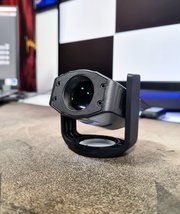
All measurements in this test were captured with the CalMAN Ultimate software, a Calibrite Display Plus HL probe and a Leo Bodnar input lag measurement box.

Spec sheet Samsung R95H

Résumé

Écran 3840 x 2160 pixels – 4K UHD
Technologie d’écran MicroRGB (LCD)
Compatibilité HDR HDR10, HDR10+, HDR10+ Adaptive
Rafraîchissement 120 Hz
Rafraîchissement maximal 144 Hz
Haut-parleurs (watts) 70
Système d’exploitation Tizen

Display

Résolution d’écran 3840 x 2160 pixels – 4K UHD
Technologie d’écran MicroRGB (LCD)
Rétroéclairage MicroRGB
Processeur Processeur Micro RGB AI
Compatibilité HDR HDR10, HDR10+, HDR10+ Adaptive
Rafraîchissement 120 Hz
Rafraîchissement maximal 144 Hz
Autres Mode Filmmaker

Audio

Puissance des haut-parleurs (watts) 70
Dolby Atmos Oui
Synchronisation audio Q-Symphony

Connectivité

Système d’exploitation Tizen
Bluetooth Oui
Norme Bluetooth 5.3
Wi-Fi Oui
Norme Wi-Fi 5 (AC)
Assistant vocal Bixby, Google Assistant, Alexa
Chromecast Oui
AirPlay 2 Oui

Audio

Puissance des haut-parleurs (watts) 70
Dolby Atmos Oui
Synchronisation audio Q-Symphony

Connectivité

Système d’exploitation Tizen
Bluetooth Oui
Bluetooth 5.3
Wi-Fi Oui
Norme Wi-Fi 5 (AC)
Assistant vocal Bixby, Google Assistant, Alexa
Chromecast Oui
AirPlay 2 Oui

Caractéristiques physiques

Pied amovible Oui
Compatibilité VESA Oui

Connectivité

Système d’exploitation Tizen
Bluetooth Oui
Bluetooth 5.3
Wi-Fi Oui
Norme Wi-Fi 5 (AC)
Assistant vocal Bixby, Google Assistant, Alexa
Chromecast Oui
AirPlay 2 Oui

Caracteristiques physiques

Pied amovible Oui
Compatibilité VESA Oui

Daniel Brooks

I cover everyday products with a practical eye, from kitchen tools and home essentials to smart gadgets and consumer trends. My goal is to help readers understand what is genuinely useful, what is worth the price, and what deserves a second look before buying.