
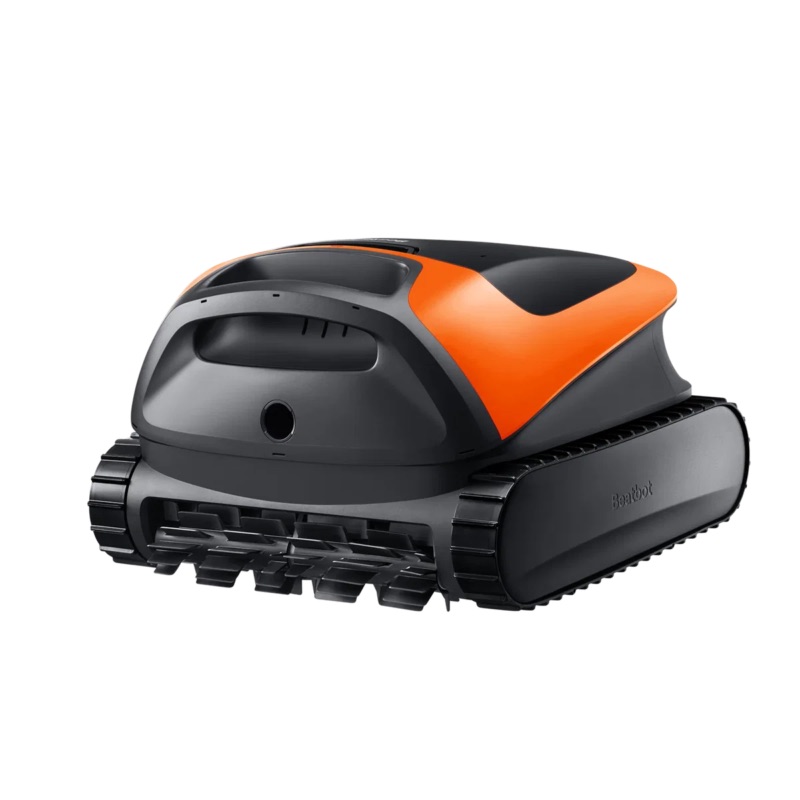
After the Sora 70 which popularized cleaning robots with a surface-cleaning function, Beatbot continues to refresh its range with a notably affordable robot (under €600 during a “promotion” on the brand’s official site). But then, does Beatbot’s reliability still hold at that price?
8 / 10
Best Pros
amazon.fr
- Large filter and strong suction power: top-tier cleaning efficiency
- Finishing buoyancy at the end of the cycle, even with a dead battery
- Compatible with 3-micron filters
- Comfortable autonomy for a medium pool, even in random mode (5 hours)
- No mapping, operates only in random mode
- 3-micron filter is a paid option
- Filter lid without hinge
Beatbot has established itself over the past few years as the specialist in pool robots, delivering highly effective and well-finished products, but often at fairly steep prices. The time has now come to test Beatbot’s entry-level offering, the Sora 30, a robot designed to equip as many pools as possible around the world.
Beatbot Sora 30 unboxing: light on the outside, powerful on the inside
On opening the box, you find a robot and a power supply (and, of course, a hook to retrieve the robot from the bottom of the pool if needed) — the bare minimum for living happily with your robot. Recharge station fans will be disappointed, but given the price, you can’t really complain. One detail that makes us love entry-level robots: this Sora 30 weighs only 8.9 kg, a real treat after testing robots that weigh nearly twice as much.
The control panel is exceptionally minimalist: a trigger lets you switch from bottom mode to full mode, and to turn the robot on or off by moving it to the right or left, quickly or slowly.
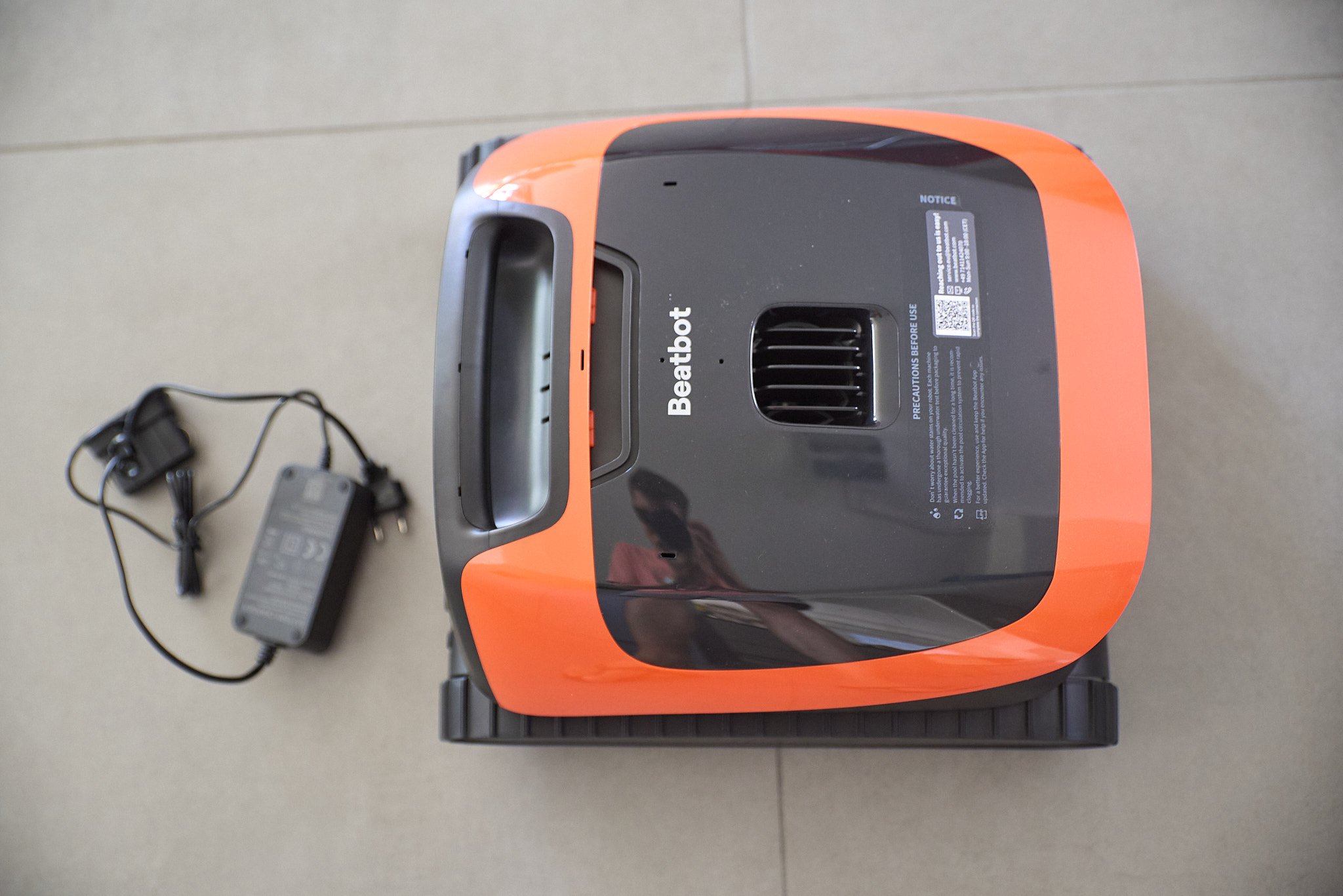
For its entry model, Beatbot offers a single color option. If you don’t fancy the Orbit “cosmic” orange that feels straight out of the 70s (unless it reminds you more of the orange on an Omega Planet Ocean, fitting the theme), you can opt for a calmer “deep blue.” Pretty nice for a robot that stays under €600.
The small annoyance appears when you open the filter hatch: no hinge—the hatch is just clipped, and you’ll need to set it somewhere while you service the filter. It’s a minor complaint that’s quickly forgotten when you realize that the Sora 30, like the Sora 70, features a huge filtration basket, a guarantee of good suction even if the pool is very dirty, especially since the pump is the same as the Sora 70, with a flow rate listed at 25,700 liters per hour. In short, you get the same suction component on this sub-€600 robot as on the €1,000 model: Beatbot doesn’t compromise on fundamentals.
Beatbot Sora 30 review: the little crazy one that does a good job
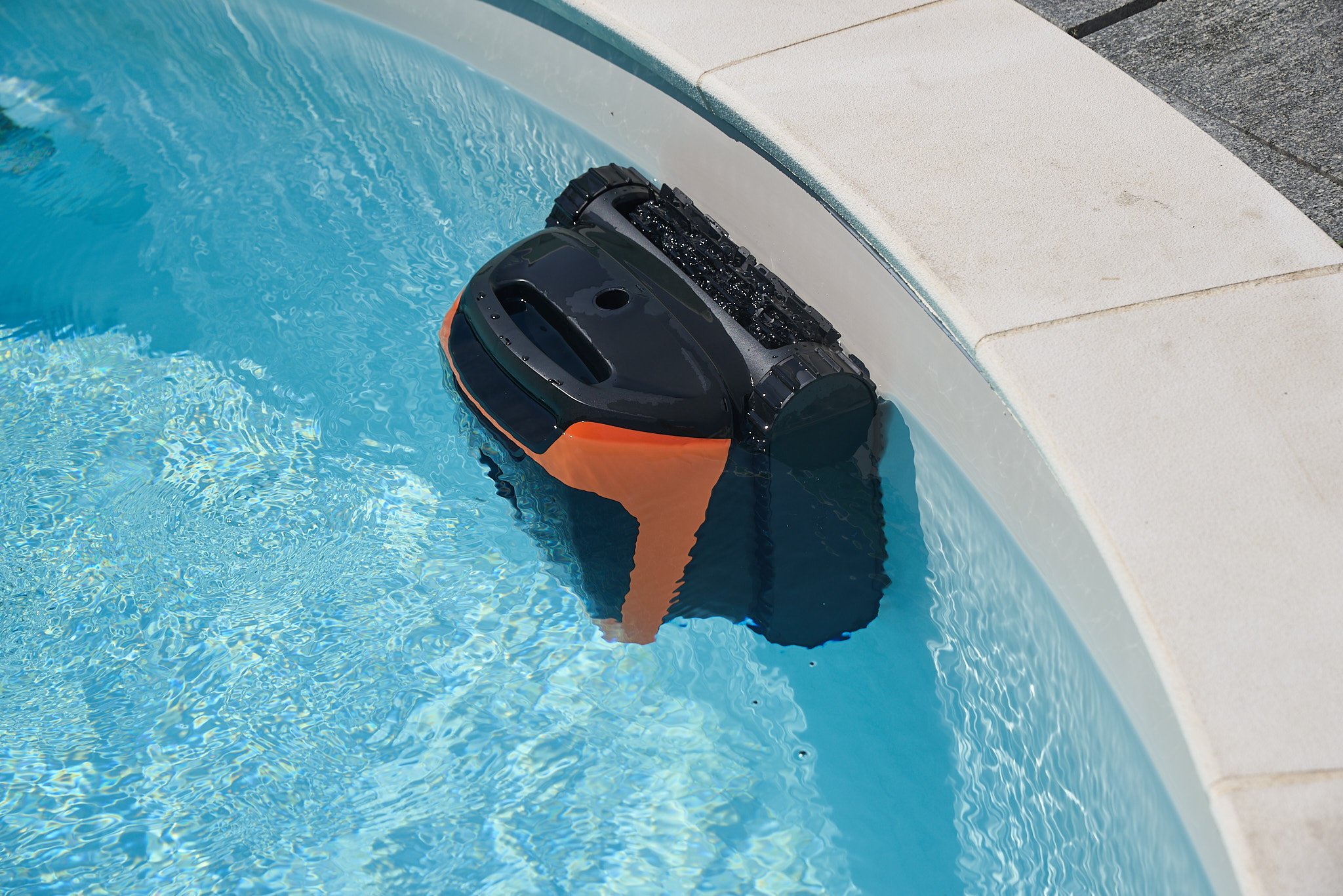
A Sora 30 is quintessential Beatbot: it takes a bit of time to descend to the bottom because it has real ballast that lets it float at the end of cleaning, even when the battery is dead.
As for cleaning, be clear: for €600 with Beatbot, there is no camera, no mapping, and the sensors are extremely limited. You’ll only see a forward ultrasonic sensor, that’s it, and the robot must rely on accelerometers to understand its position at a minimum.
So how does it clean without all the high-tech avionics seen in recent years? Well, it cleans “the old-fashioned way,” in a completely random mode, whether for the bottom or the walls. There is no deliberate movement along the wall to give the impression of rigor; it descends from the wall and wanders elsewhere in search of another surface. This Sora 30 happily and quickly roams in a completely random fashion, diagonally climbs stairs while scrubbing them, and sometimes seems to bump a bit on the walls despite its frontal sensor, hence its nickname the little madman.
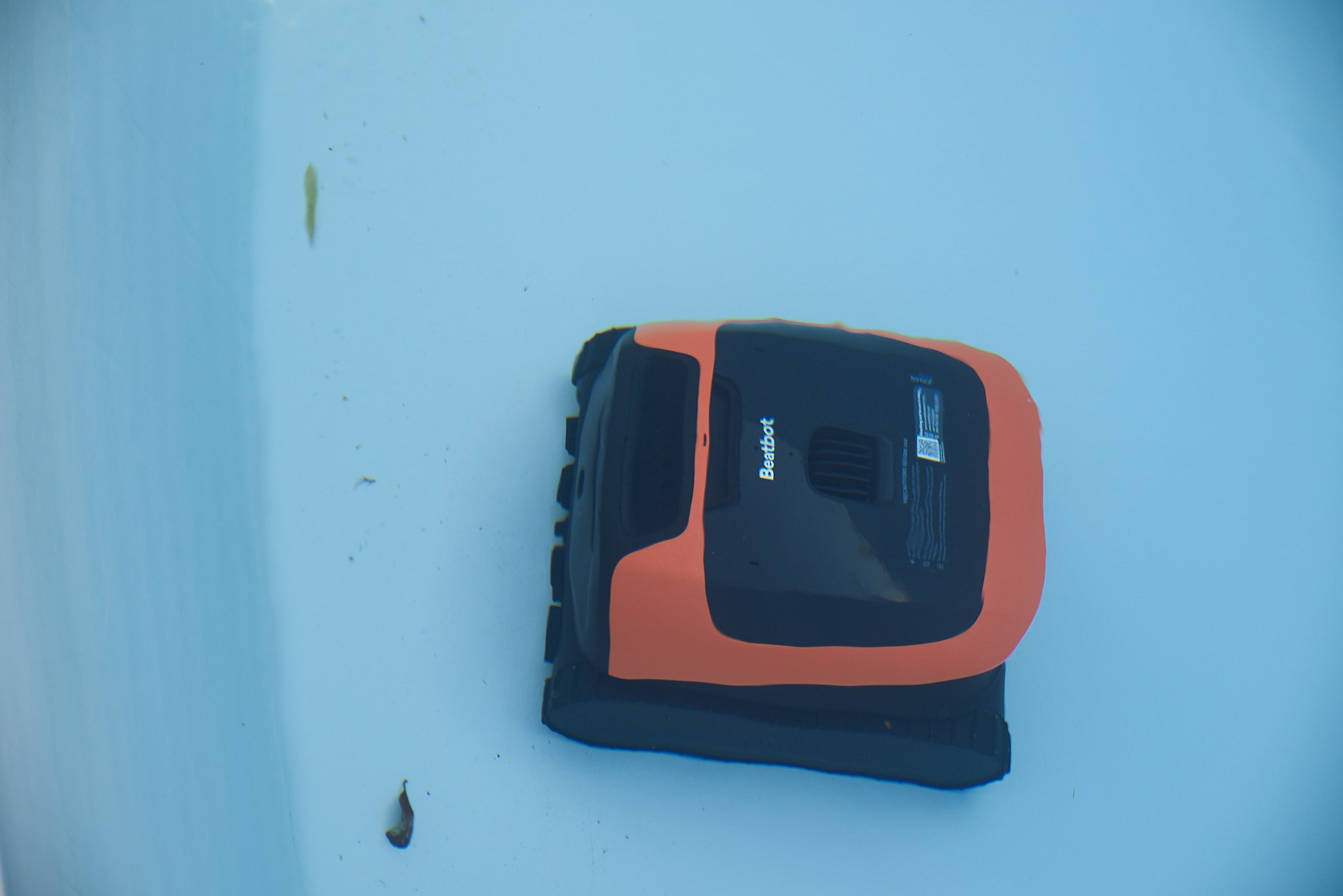
If this Sora 30 lags in navigation precision, we saw that it shares with its big brother a massive filtration basket, coupled with the same powerful pump: in plain terms, if this robot sucks up debris anywhere, it sucks well. So in this context, you should let the robot run for a little while to allow chance to cover nearly all areas.
Fortunately, there’s no cutbacks on battery life, and this little robot can run up to 5 hours. In short, for a medium-sized pool (less than 10m), this robot can do a clean job if you give it time. The lack of dirt-detection mode or mapping will only penalize you if you want a very quick cleaning just before swimming.
A note on the Beatbot microfiltration basket
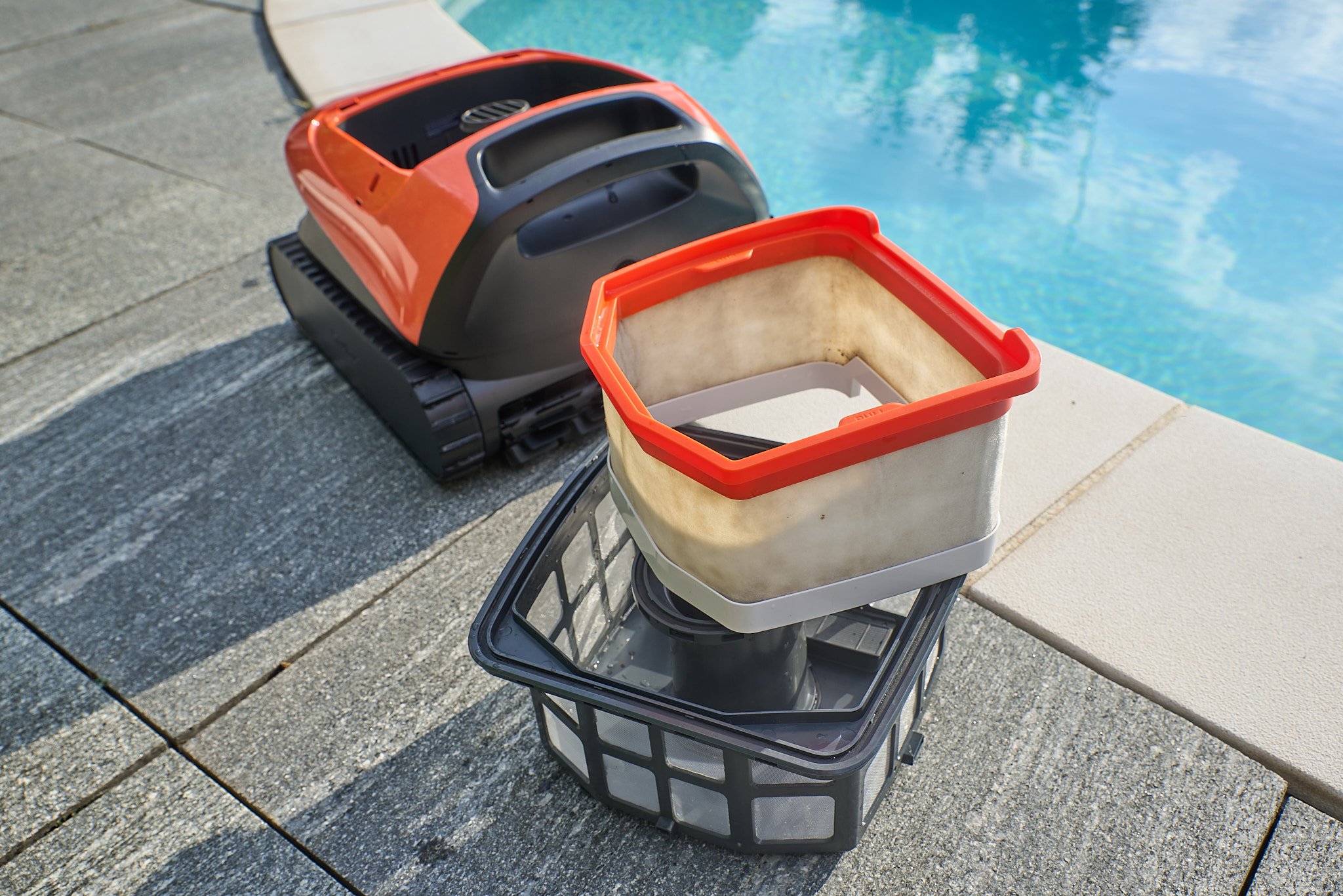
Like the Sora 70, the Sora 30 offers optional microfiltration baskets. These baskets consist of a thick-fiber filter surrounded by a basket with large mesh openings (the latter could easily serve for early-season cleaning, though that doesn’t seem recommended by the brand). We tended to dislike “mesh” filters, and they have improved somewhat by 2026. Beatbot seems to have chosen a material, fibrous indeed, but fairly dense on the surface, and thus less likely to deteriorate quickly from jets or debris removal by hand: during this test, we did not see a filter that disintegrated; it stayed intact. On the flip side, it will soon be difficult to clean. Beatbot also states clearly: this filter will last only about 150 hours or roughly 40 full cleaning cycles, i.e., about one intensive cleaning season.
Once this basket is in place, the robot detects it and the app informs you that only the floor should be cleaned, but it doesn’t prevent the other modes if you’re feeling playful. This basket is very closed; it has no filtering surface at the center or bottom, just closed plastic surfaces, and it significantly reduces the flow. The suction is therefore cut down, which might not suffice for the robot to climb the walls.
Beatbot Sora 30: Clubic’s verdict
With the Sora 30, Beatbot offers a concentrated snapshot of what the brand excels at: solid construction, a very large filter, and substantial suction power. This makes for effective cleaning in a normal-sized pool, especially since its respectable battery life compensates for the lack of mapping.
So, is it an ideal budget robot? Almost, except that for just over €100 more, Aiper offers a version with camera-based impurity detection and a micrometric filter as standard. Therefore, a robot to prefer if you don’t want to exceed €600, or if you favor a large filtration basket over advanced cleaning modes. Or if you prefer a robot that floats at the end of cleaning, even with the battery dead—indeed, it does have a few arguments in its favor, doesn’t it?

Daniel Brooks
I cover everyday products with a practical eye, from kitchen tools and home essentials to smart gadgets and consumer trends. My goal is to help readers understand what is genuinely useful, what is worth the price, and what deserves a second look before buying.