

A congested nose is maddening… and it’s hard to tell apart a cold, the flu, or allergies. When we’re congested we sleep poorly, perform less, and, to be honest, the day feels uphill.
When the congestion tightens, we want quick relief, but also solutions that don’t irritate or turn into another problem. Here is our selection of 8 nasal sprays to clear and cleanse the nose, with a clear comparison and recommendations according to your case.
If you’ve been using medicated decongestant sprays (vasoconstrictors) for days, beware of rebound congestion. Consult a doctor or pharmacist.
Table comparison: the 8 “stuffy-nose” sprays at a glance
🤧
Why do I have nasal congestion?
Nasal congestion can have various causes; however, some of the most common ones include:
👃 Respiratory infections: Colds, the flu, or other viral infections can cause nasal congestion as part of the body’s response to infection.
👃 Allergies: Allergic reactions to pollen, dust, mites, animal dander, or other allergens can cause nasal inflammation.
👃 Weather changes: Exposure to cold or dry temperatures can irritate the nasal membranes and cause congestion.
👃 Environmental irritants: Tobacco smoke, pollutants, or strong odors can irritate the nasal passages and cause congestion.
👃 Deviation of the nasal septum: A deviated septum can hinder normal air flow, causing congestion.
👃 Side effects of medications: Some medicines can have congestion as a side effect.
How to choose a nasal spray for congestion
1) Isotonic vs hypertonic: what really changes
-
Isotonic:
- Hypertonic: usually feels more “intense” and can help when the nose is very congested, promoting drainage.
2) Are we aiming only to clean or also to achieve a “clear feeling”?
- If we want cleansing/pulling (mucus, dust, allergens), saline sprays such as sea water sprays fit better.
- If we seek an instant sensation (menthol/eucalyptus), choose balm-like formulas.
3) Beware medicated decongestants and the “rebound” effect
Rebound congestion (rhinitis medicamentosa) appears from overuse of topical vasoconstrictors. The University of Navarra Clinic describes it clearly as inflammation from excessive and prolonged use.
4) If you do nasal irrigation: always safe water
If you use irrigation (neti pot), it is recommended to use distilled/sterile water or boiled and cooled water (not tap water “as is”).
The 8 best nasal sprays for nasal congestion:
PRANARÔM Aromaforce, Dm Bio nasal spray
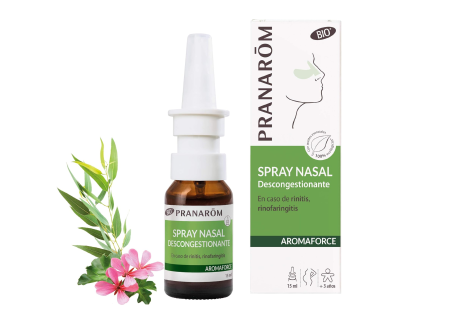
PRANARÔM Aromaforce is a hypertonic nasal spray associated with 100% organic essential oils; the brand positions it as a symptomatic treatment for nasal congestion in rhinitis/sinusitis and highlights a refreshing and balsamic profile.
Suitable for pregnancy, breastfeeding, and children over 3 years old.
We’d use it if…
- We want a spray with a balsamic sensation (eucalyptus radiata and similar).
- We’re looking for a “bio” positioning option.
We’d use it less if…
- We are sensitive to strong aromas.
Rhinomer Intensive Eucalyptus Decongestant Nasal Spray
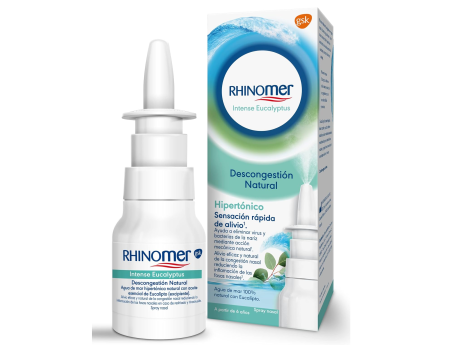
Hypertonic saline spray with essential eucalyptus oil and mint extract; suitable for adults and children over 6 years old.
What’s best
- Very evident refreshing feel (that “now I can breathe” many people seek).
- Quite direct for a nose that is “stuffy.”
Things to note
- May feel potent if menthol/eucalyptus aren’t well tolerated.
Aboca Fitonasal Spray Concentrated
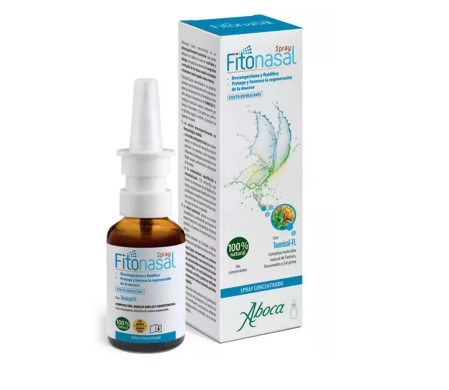
Aboca Fitonasal Spray Concentrated is a preservative-free nasal spray designed to decongest the airways. Indicated for allergies, colds, and nasal congestion, it protects and promotes mucosal regeneration.
Ideal for
- Someone who wants a very “manual” option: how to use it is explained in detail.
- Nasal congestion with irritation component.
Not ideal for
- Someone seeking a minty fresh sensation.
AQUILEA Respira Spray
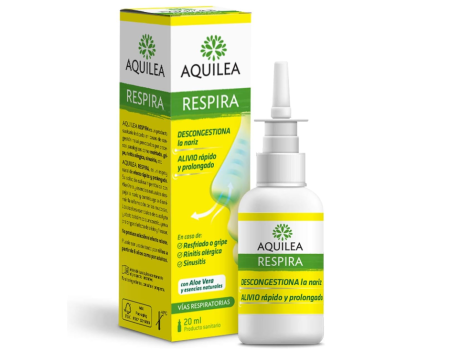
Nasal decongestant spray with saline solution, aloe vera, and radiata eucalyptus and balsamic fir essential oils; the brand recommends it for adults and children over 6 years old, with 1–2 sprays as often as needed.
Why we like it
- The aloe may add a soothing sensation when we feel dryness.
- Flexible use (no complications).
Pay attention if…
There is an allergy or suspected allergy to any of its components (the brand itself warns about this).
Puressentiel Respiratorio, nasal spray decongestant with AE BIO
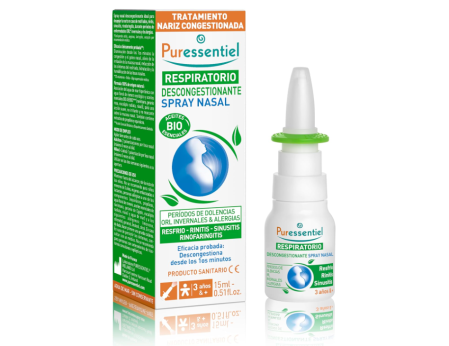
Brand clearly states usage guidelines: adults 2 sprays per nostril (maximum 5 times per day) and children over 3 years old 1 spray per nostril (maximum 5 times per day).
Its formula is 100% natural and includes hypertonic seawater, organic rosemary floral water, organic essential oils, propolis, and echinacea.
We’d use it if…
- We want a “natural” formula with clearly defined usage guidelines.
- We’re looking for a spray to manage episodes of a congested nose.
We’d use it less if…
- We prefer to avoid aromatic actives.
Sinomarin ORL Spray (hypertonic seawater 2.3% NaCl)
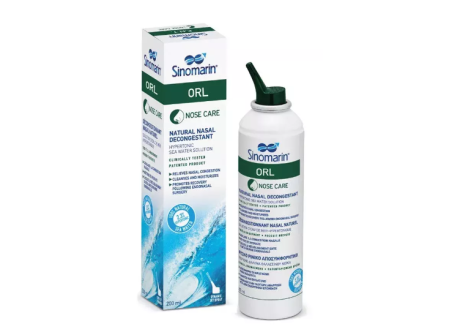
Sinomarin ORL Spray is a hypertonic seawater solution with 2.3% salt, generating a natural osmotic effect ideal for treating nasal congestion.
Suitable for adults and children from 10 years old, safe for pregnant and breastfeeding women.
Ideal for
- Someone who wants cleansing + pulling (mucus, crusts, allergens).
- Having a “home format” for recurrent use.
To consider
- The hypertonic solution can feel intense on sensitive mucosa.
Pharysol Sinus Quick Action
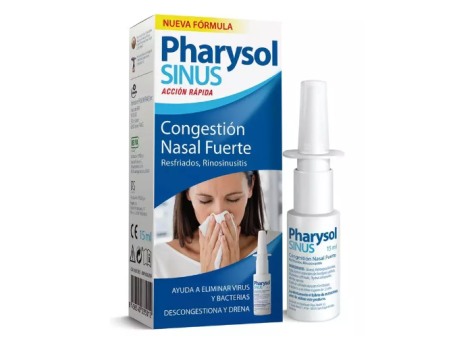
A viscous decongestant product with a hypertonic solution that forms a film on the nasal mucosa and promotes an osmotic effect.
We’d use it if…
- We feel congestion is “very stuck” and we want a product with a different texture.
- We want something aimed at rhinitis/rhinosinusitis.
Careful if…
We don’t like “dense” sprays.
A.Vogel Nasal Spray Sinuforce
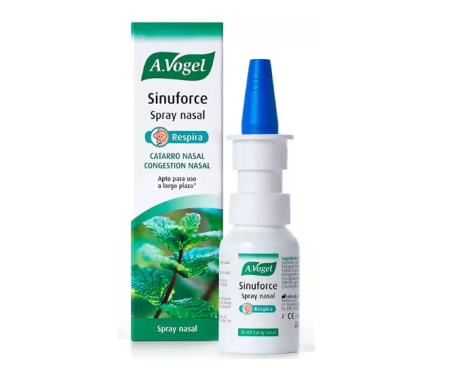
A.Vogel Sinuforce nasal spray provides quick relief from nasal congestion by reducing swelling of the nasal mucosa, while maintaining its natural protective function.
Its 100% natural ingredients are suitable for nasal mucosa and are vegan-friendly.
Can be used during pregnancy and breastfeeding, continuously up to a maximum of 30 days.
Ideal for
- Someone who wants a balance between cleansing and freshness.
- Episodes of nasal obstruction with perceptible relief needed.
To consider
- There are different versions and data sheets with varying details (it’s worth checking composition and age on the packaging).
How to use a nasal spray “the right way” (and make it work best)
We recommend these basics:
- Blow your nose gently first.
- Keep your head straight (no need to tilt it too far back).
- Spray and wait a few seconds.
- If you need to repeat, do so exactly as the manufacturer instructs.
- Maintain applicator hygiene (rinse/clean according to product).
If, despite everything, congestion lasts many days, or there is severe pain, high fever, foul-smelling discharge, or breathing problems, it is best to consult a doctor.
Frequently asked questions about nasal sprays for congestion
What is better for a blocked nose: spray or nasal irrigation?
It depends. For cleansing and removing mucus/allergens, irrigation can help a lot.
Can I use decongestant sprays for many days in a row?
With certain vasoconstrictor decongestants, there is a risk of rebound congestion (rhinitis medicamentosa) if used longer than recommended.
Does hypertonic seawater dry out the nose?
For some people, it can feel more intense than isotonic. If you notice dryness, you can alternate with gentler solutions or look for formulas containing moisturizing ingredients (e.g., aloe).
Which spray is best if I have allergies?
A routine of cleansing (spray or wash) to remove allergens usually works well, but if symptoms persist, it’s advisable to consult to choose the proper treatment.