
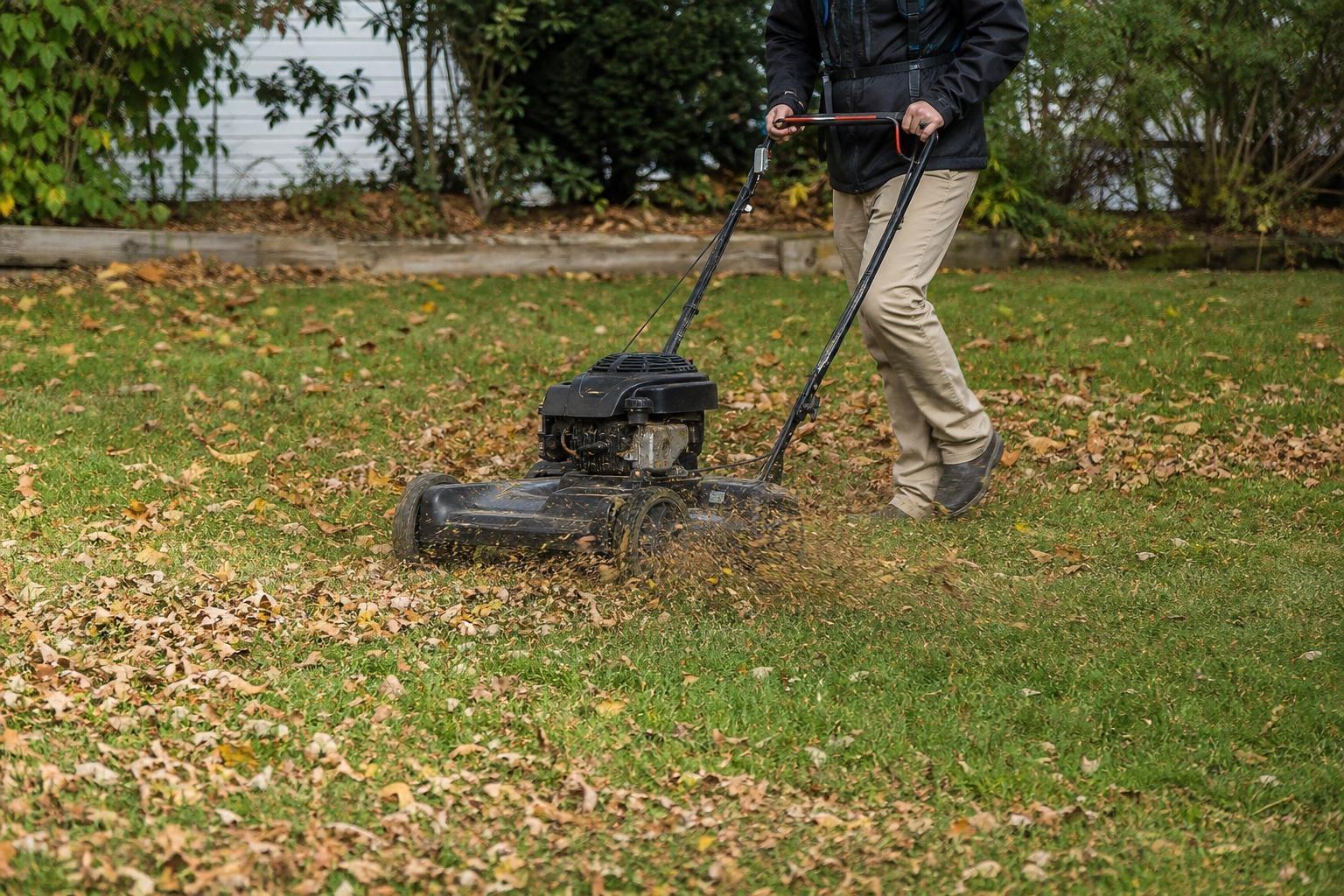
A few years ago, the autumn ritual meant a rake, a stack of bags, and a sore back. Today, many pros treat fallen leaves as assets, not trash. The result is a healthier soil sponge, less waste, and a lawn that pops green months earlier. “Mulch the leaves; they’re free fertilizer,” says a veteran groundskeeper. “You’re feeding the soil, not fighting nature.”
Why the pros stopped bagging
Leaves are carbon-rich and packed with minerals that turf quietly needs. When you shred them into fine pieces, they slip between the blades of grass and decompose into humus. That feeds microbes, improves structure, and helps lawns hold water. “Every bag you drag to the curb is organic matter your yard just lost,” notes a landscape manager. It also keeps tons of material out of landfills, where leaves can generate methane as they rot.
The new routine: shred, spread, and feed
The modern move is simple: mow the leaves into confetti and let the lawn do the work. Set your mower to a mulch mode (or install a mulching blade) and mow when leaves are dry. Make two or three passes at different angles until pieces are thumbnail-sized. A thin, speckled layer settles in without smothering turf.
If you’ve got extra, blow or rake them into beds and under shrubs. That blanket cushions soil, buffers winter temperature, and blocks weeds. “We call it a duvet for perennials,” says a maintenance lead. In spring, the layer is mostly gone, traded for soft, crumbly tilth.
Where leaves should not stay
What lawns hate is a soggy, matted cover. Thick, wet piles block light, hold too much moisture, and invite snow mold. Clear heavy layers from small, shaded lawns, north-facing slopes, and any area that stays damp. Keep leaves off walkways, drains, and storm grates; relocate them to beds or a compost corner.
Add-ons that boost spring green
Pros pair leaf mulching with a few extras for a dramatic pop in April. Overseed thin areas in early fall, then top-dress with a skim of screened compost. Run a soil test; if pH is low, a bit of lime helps nutrients unlock. A late-fall, slow-release nitrogen feed (when grass is still active, soil near 50°F/10°C) builds deeper roots without pushing leafy growth.
Keep mowing through fall: 3–3.5 inches for regular cuts, and one final pass slightly shorter to reduce winter matting. Don’t scalp; you want enough blade to photosynthesize on warm days.
Simple gear upgrades
A mulching blade with serrated or lifted edges shreds far better than a standard blade. Some mowers accept a mulching baffle kit that keeps leaves under the deck for a finer chop. Battery mowers with high-torque modes are surprisingly effective and quieter for the neighborhood. Eye and ear protection make the job safer and more pleasant.
How much leaf is too much?
You can mulch more than most people think. Several inches of dry leaves usually vanish after a few careful passes. If, after two passes, you can’t see much grass, move the remainder to beds or a compost pile. Use this quick rule-of-thumb guide:
- If the speckled layer is no thicker than a half-inch and you can still see plenty of green, you’ve mulched enough; if it looks like a blanket, redistribute it to beds or compost.
Compost and leaf mold payoffs
Not every leaf must stay on the lawn. Pile extras in a dedicated bay, keep them moist like a wrung-out sponge, and add a light nitrogen source (grass clippings or blood meal). Turn a couple of times each season. In 12–18 months you’ll have dark, crumbly leaf mold—a soil supercharger that improves water holding, aeration, and rooting. “Leaf mold is like adding a memory foam layer to your soil,” says one horticulturist.
Friendly for pollinators and birds
Many butterflies, moths, and beetles overwinter in leaf litter. Landscapers now leave deeper, unshredded layers in select beds, tree rings, and no-mow corners. Shred only on active turf; keep habitat pockets intact. Birds scratch through those areas for food, and your spring garden thanks you with fewer pests and richer life.
The spring payoff
Come thaw, lawns that “ate” their leaves wake up earlier, stay denser, and shrug off early droughts. You’ll see fewer weeds, fewer bare patches, and better color without heavy inputs. You also saved weekend hours, skipped plastic bags, and kept nutrients on your own property. As one pro puts it, “We stopped fighting fall and started farming it for spring.”