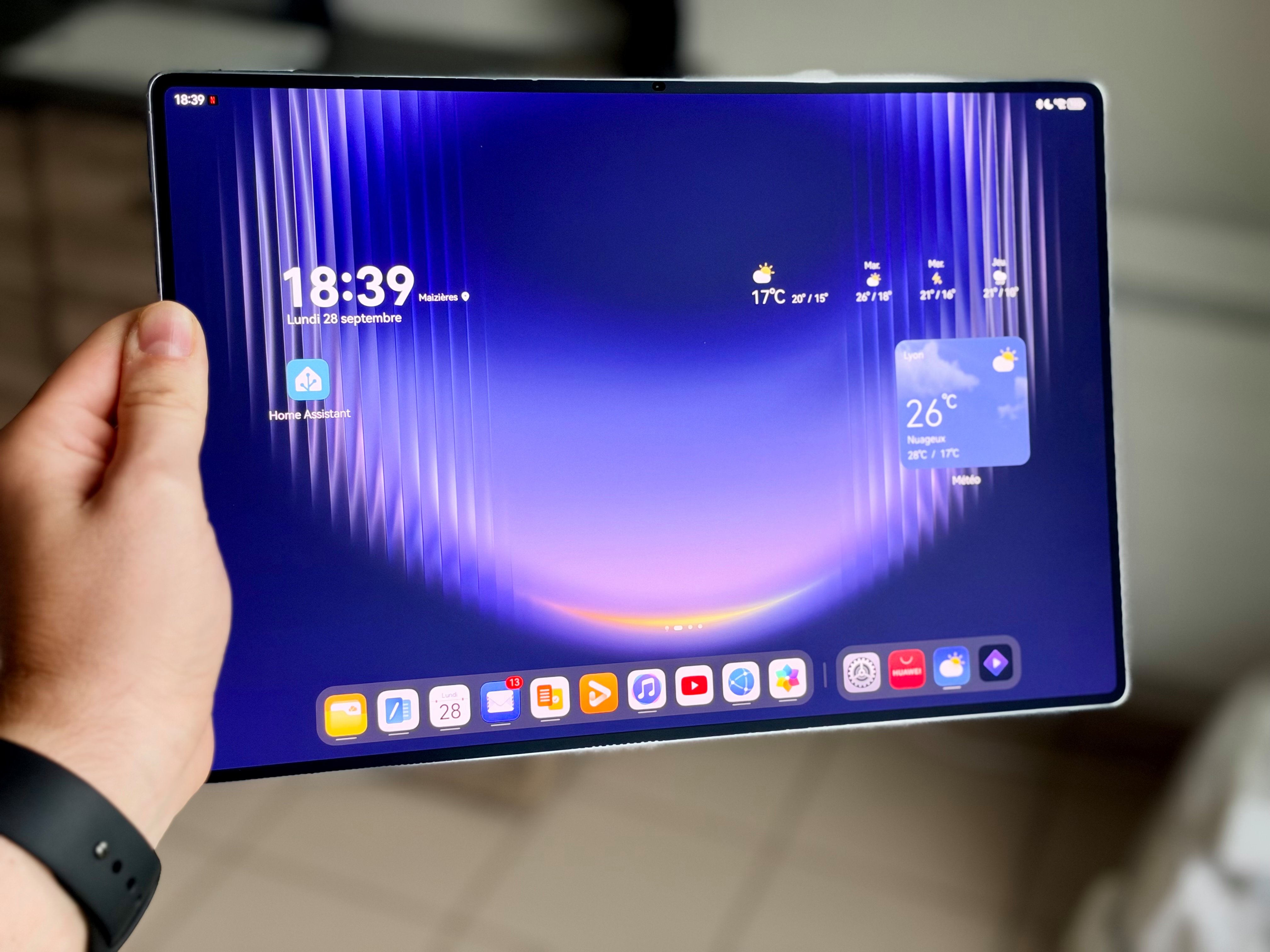
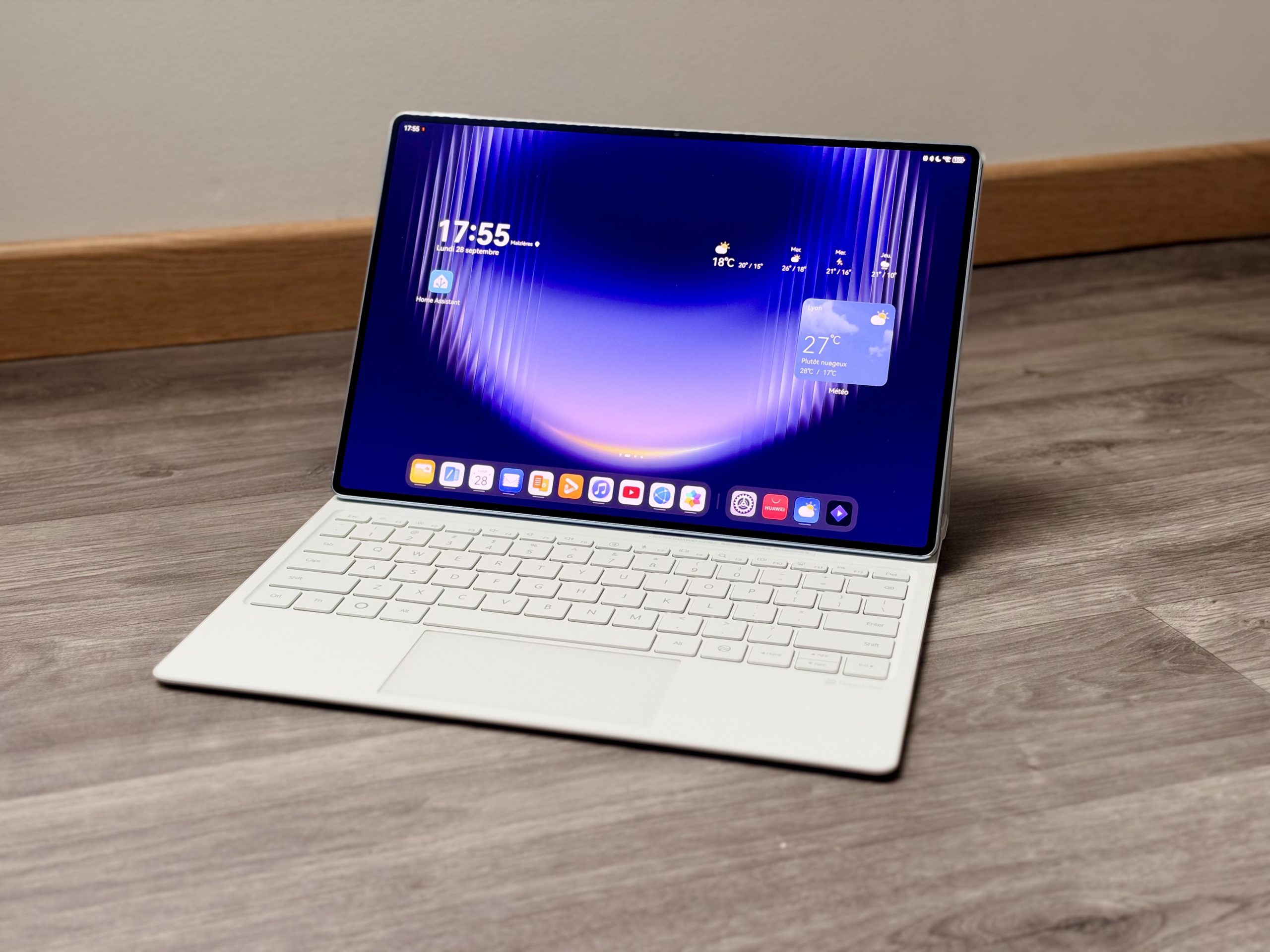
With the MatePad Pro Max, Huawei introduces a tablet only 4.7 mm thick, priced from €1,099, pairing a 13.2-inch OLED PaperMatte display with a flawless finish. A tablet that could look iPad Pro squarely in the eye. Provided that this model’s flawless looks can make one forget a software ecosystem that still requires tinkering to reclaim everyday apps.
8 / 10
Best prices
Huawei
- Exceptional OLED PaperMatte display
- Impeccable build and refined construction
- Excellent responsiveness and controlled heat
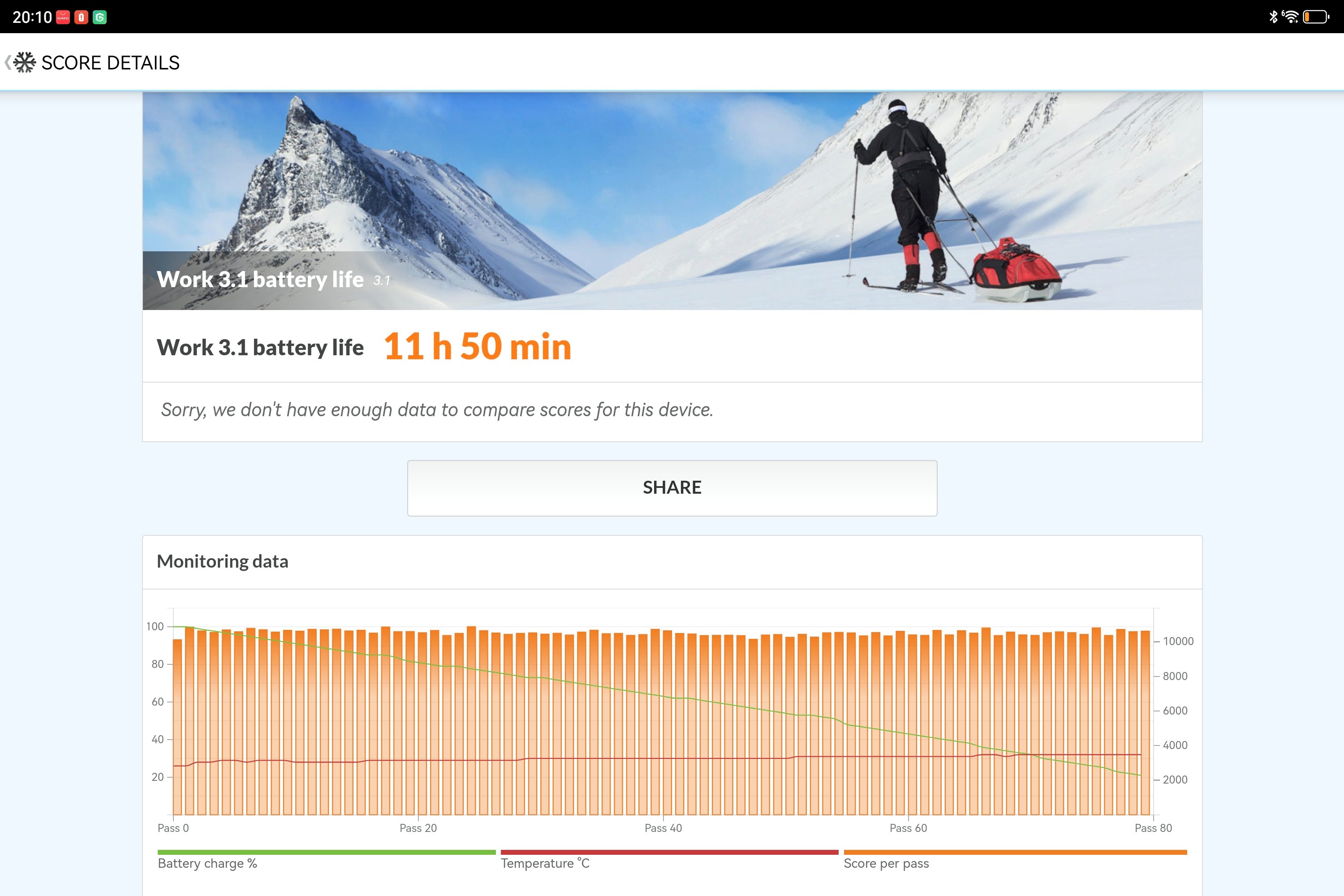
- Solid endurance for a 13.2-inch screen
- Fast charging
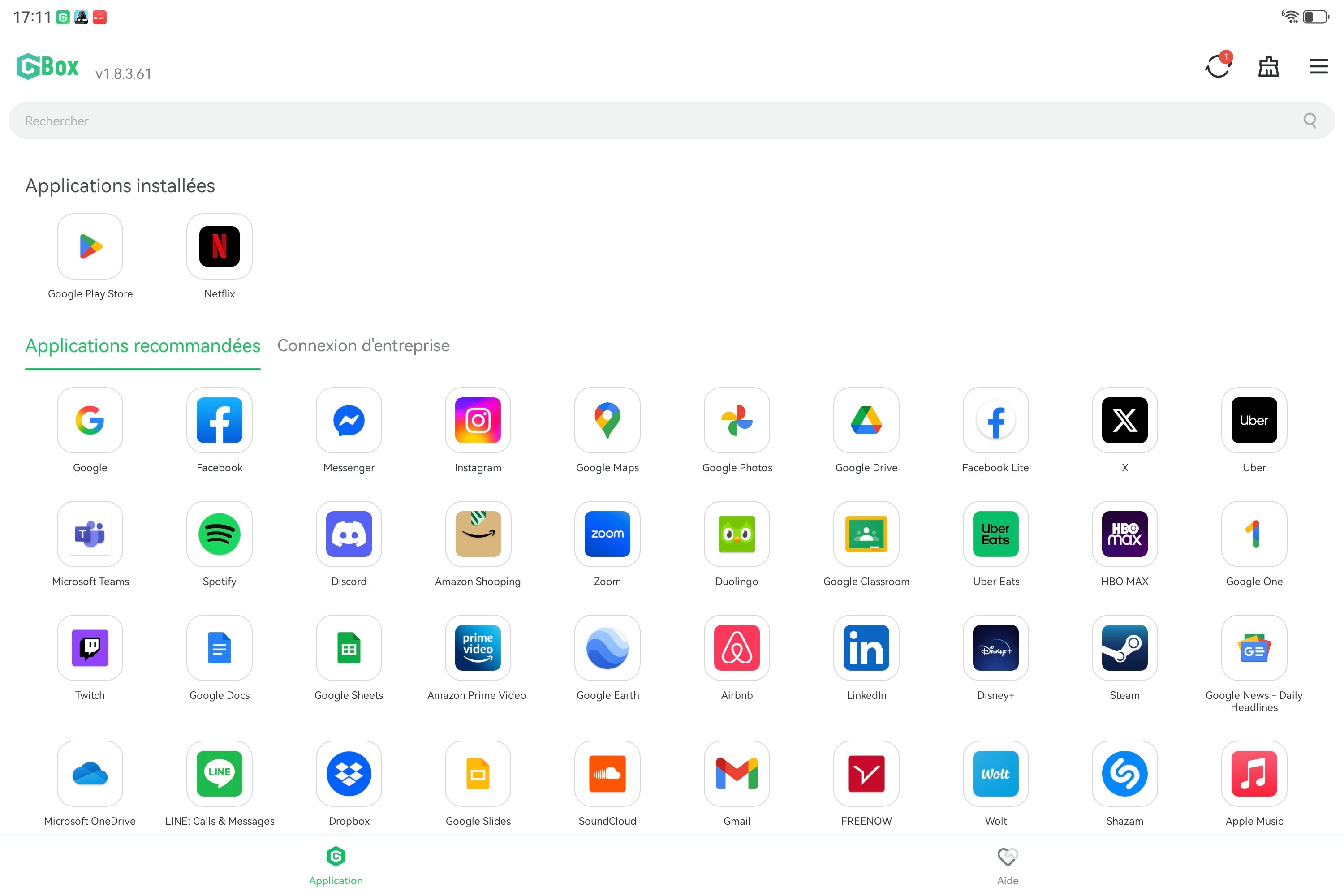
- Detour via GBox for the Android ecosystem
- AppGallery apps sometimes unstable
- Voice assistant still immature
- Speech dialogues are too dry on speakers
- QWERTY keyboard
A few months ago, I tested the Honor MagicPad 4 with its 4.8 mm thickness, wondering how far manufacturers would push this thinness race. Huawei answered without flinching: 4.7 mm, a tenth of a millimeter thinner, while the iPad Pro M5 stays at 5.1 mm. The MatePad Pro Max doesn’t stop at that symbolic record. It sports a 13.2-inch OLED PaperMatte display, an all-metal chassis, and Huawei’s own Kirin T93 Pro chip, with a clearly stated ambition: to replace the laptop.
But a tablet isn’t just about the specs, especially when it arrives without Google services. I used the MatePad Pro Max for several weeks, for work and for entertainment, to verify whether Huawei’s hardware prowess is enough to make users forget its software constraints.
Test conducted on a unit loaned by the manufacturer.
Design and Build: a Delicate Masterpiece That Requires Your Respect
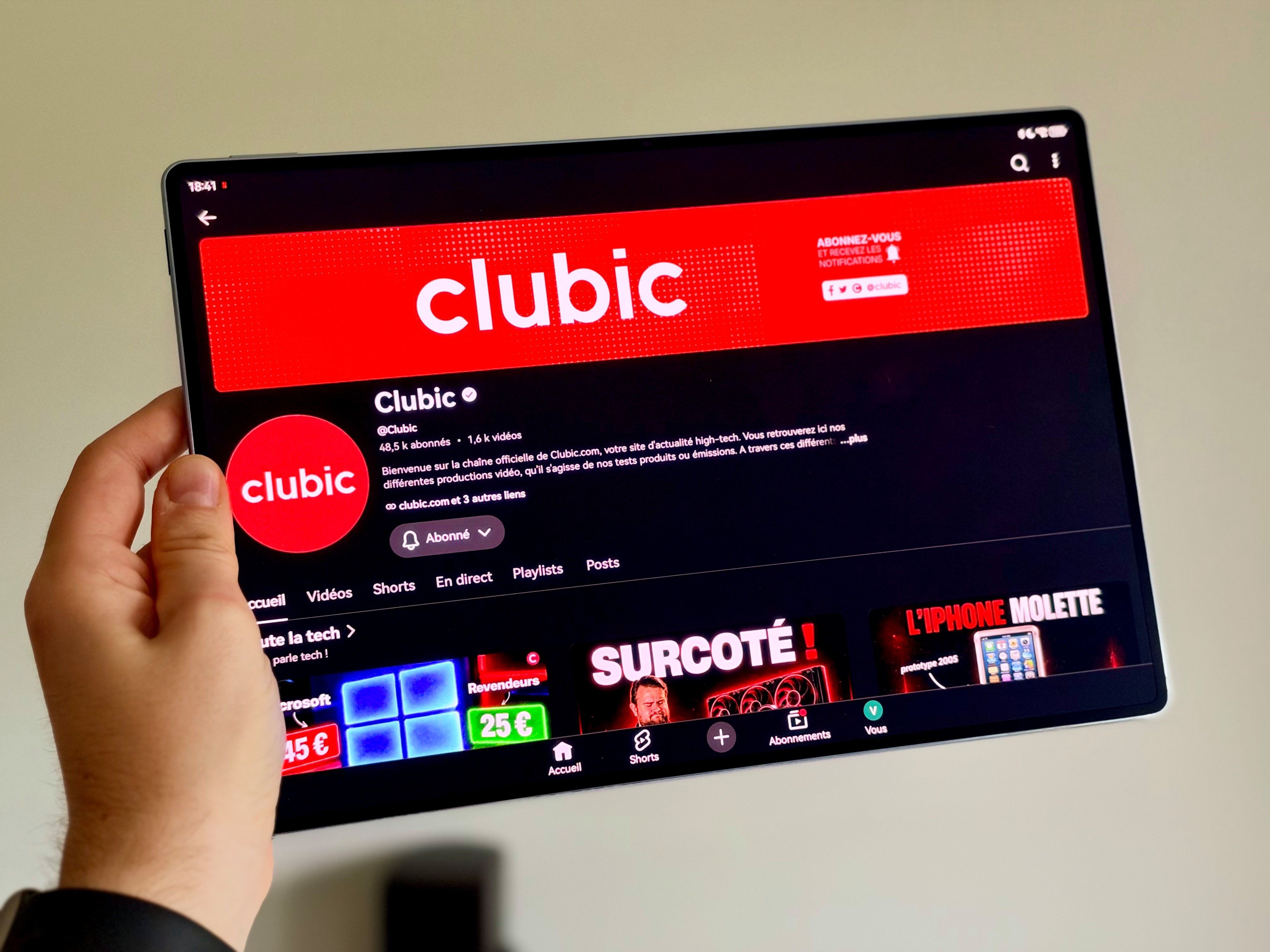
The first hand feel always leaves an impression. At 4.7 mm thick, and measuring 289.34 × 196.34 mm, the MatePad Pro Max feels remarkably sleek, as if you’re holding a display torn from its case. Huawei builds on a new architecture called Cloud Falcon and a full-metal chassis that spares only the antenna housing and the camera module. The brand also touts the first Ultra-thin Bending Resistance certification granted by TÜV Rheinland, meant to attest to its resistance to bending. Despite its extreme slenderness, the whole unit gives a sense of solidity and ruggedness.
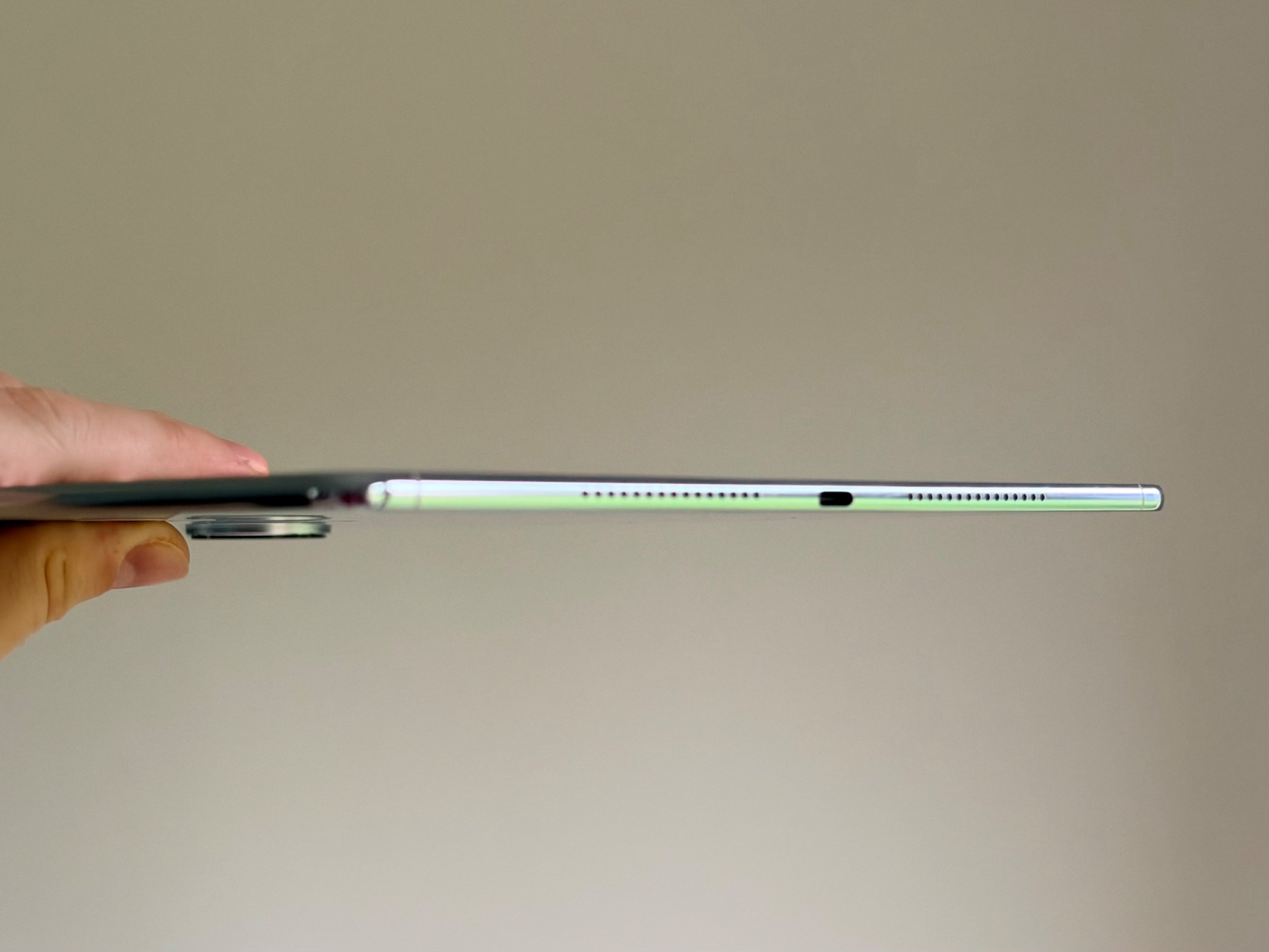
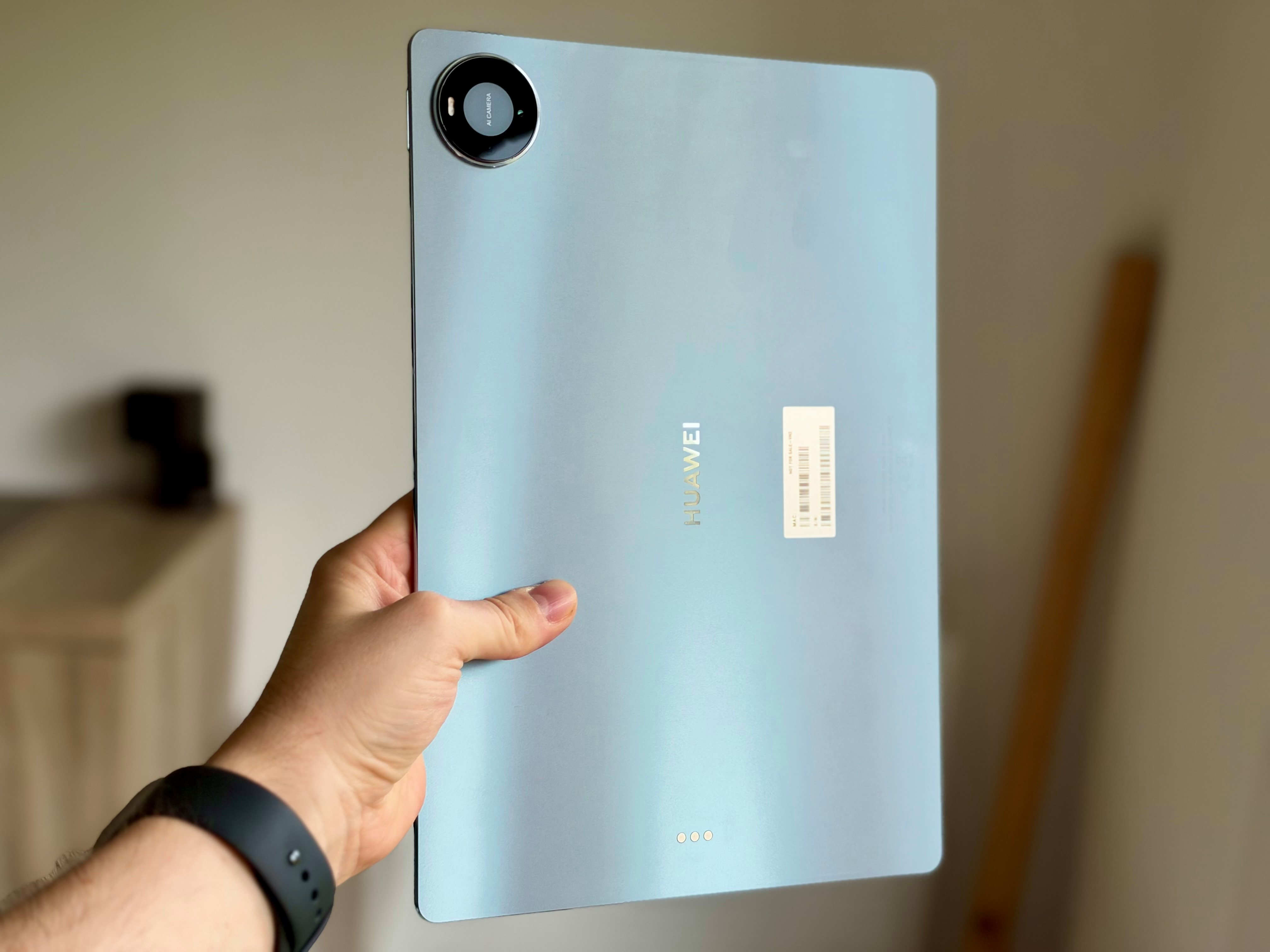
The bezels are slim, the edges rounded, and the circular rear camera module remains discreet. The tablet is offered in blue and Space Gray; the blue version (which we received from the manufacturer) features a glossy finish that shifts reflections as the angle changes. The result screams premium without ostentation.
But slenderness has its limits. The form factor remains substantial, and the 509 grams are noticeable after a few minutes of one-handed use. The back coating is rather slippery, which doesn’t help with grip. The MatePad Pro Max is clearly more comfortable on a desk, on a stand, or paired with its keyboard.
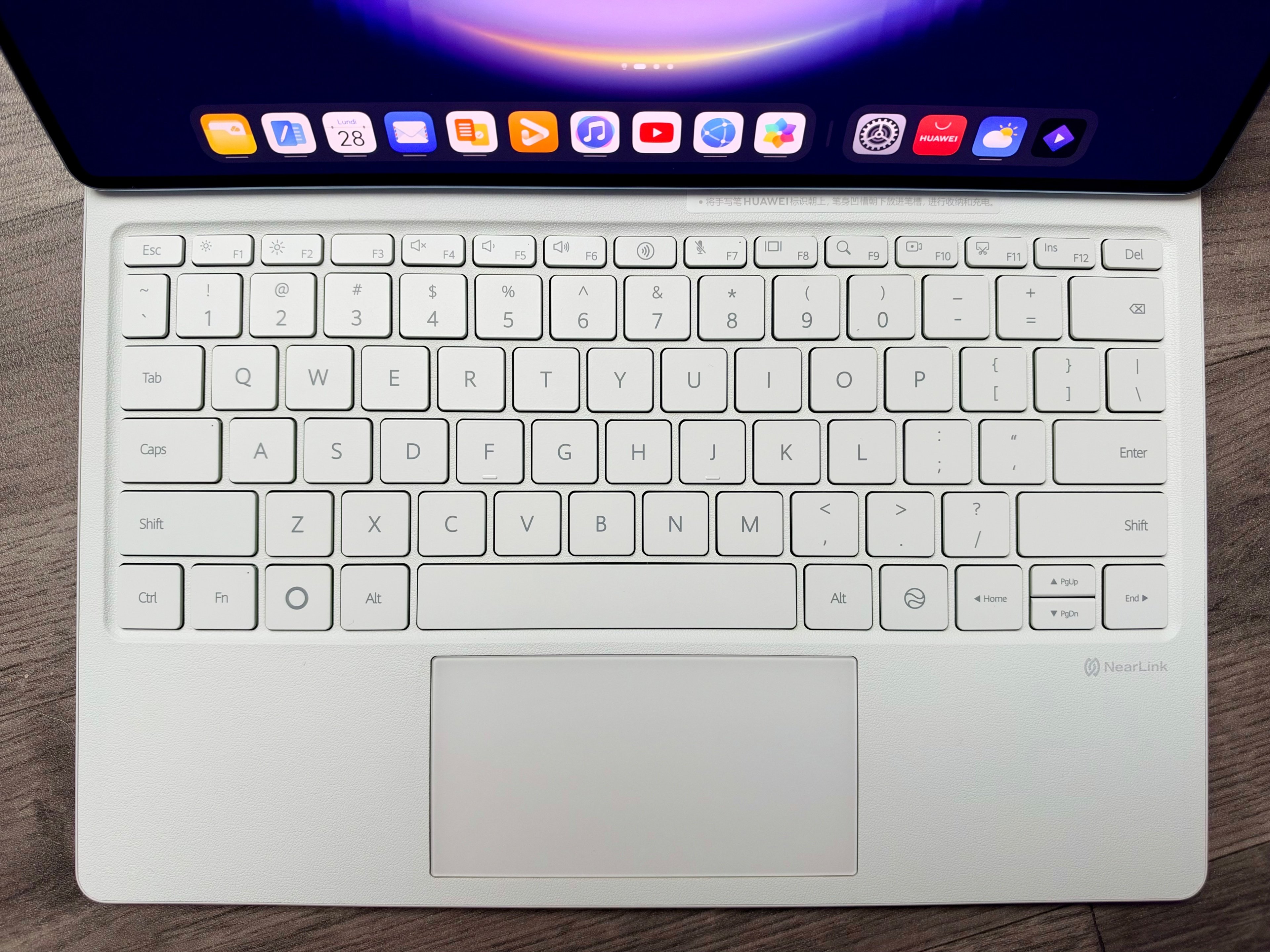
Specifically, Huawei offers the Glide Keyboard as an option, weighing 439 grams and bringing the total to 948 grams. The tablet rests directly on the keyboard, with no floating hinge, and a slot lets you store the M-Pencil Pro stylus, sold separately. A detail that could cool off a portion of French buyers: this keyboard is only available in a QWERTY layout. For a device that touts “PC-level” productivity, the lack of AZERTY may come as a surprise.
On the audio front, Huawei did not skimp with six speakers. Music is pleasant to listen to, with good breadth and comfortable volume for a tablet this slim. Dialogues suffer more: voices can sound a touch dry, bass lacks body, and the highs take up a bit too much space. Depending on the content, the result oscillates between excellent and disappointing. At moderate volume, the experience remains very satisfying in most situations.
Display: a PaperMatte finish that makes the difference
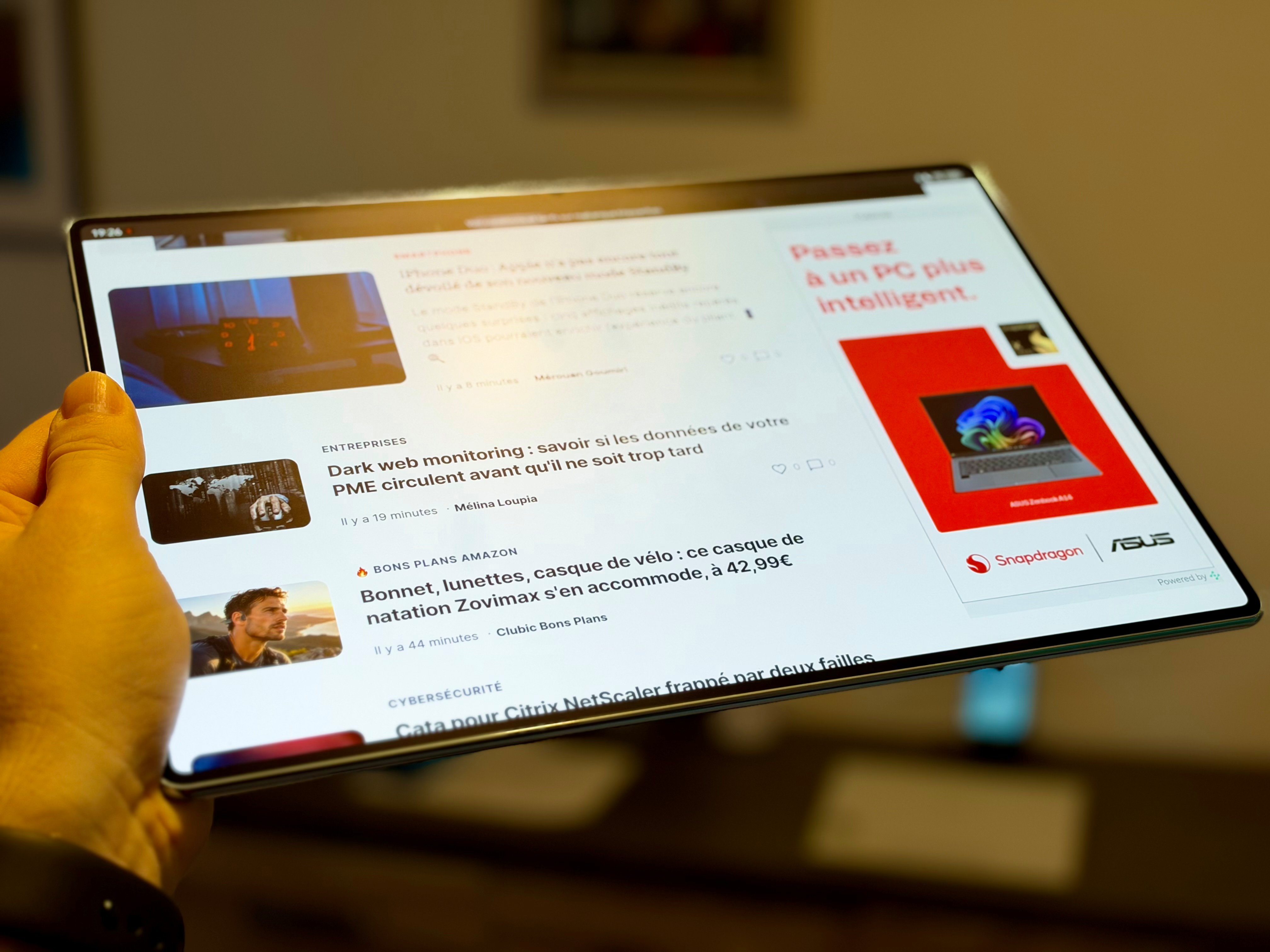
The display is the standout achievement of the MatePad Pro Max, by a large margin. The 13.2-inch OLED panel resolves at 3,000 × 2,000 pixels, equating to 273 ppi, with a 144 Hz refresh rate, an advertised contrast ratio of 2,000,000:1, and a peak brightness of 1,600 nits, according to Huawei. The 3.55 mm bezels keep the screen-to-body ratio at 94%, and there is no notch, since the camera sits in the bezel.
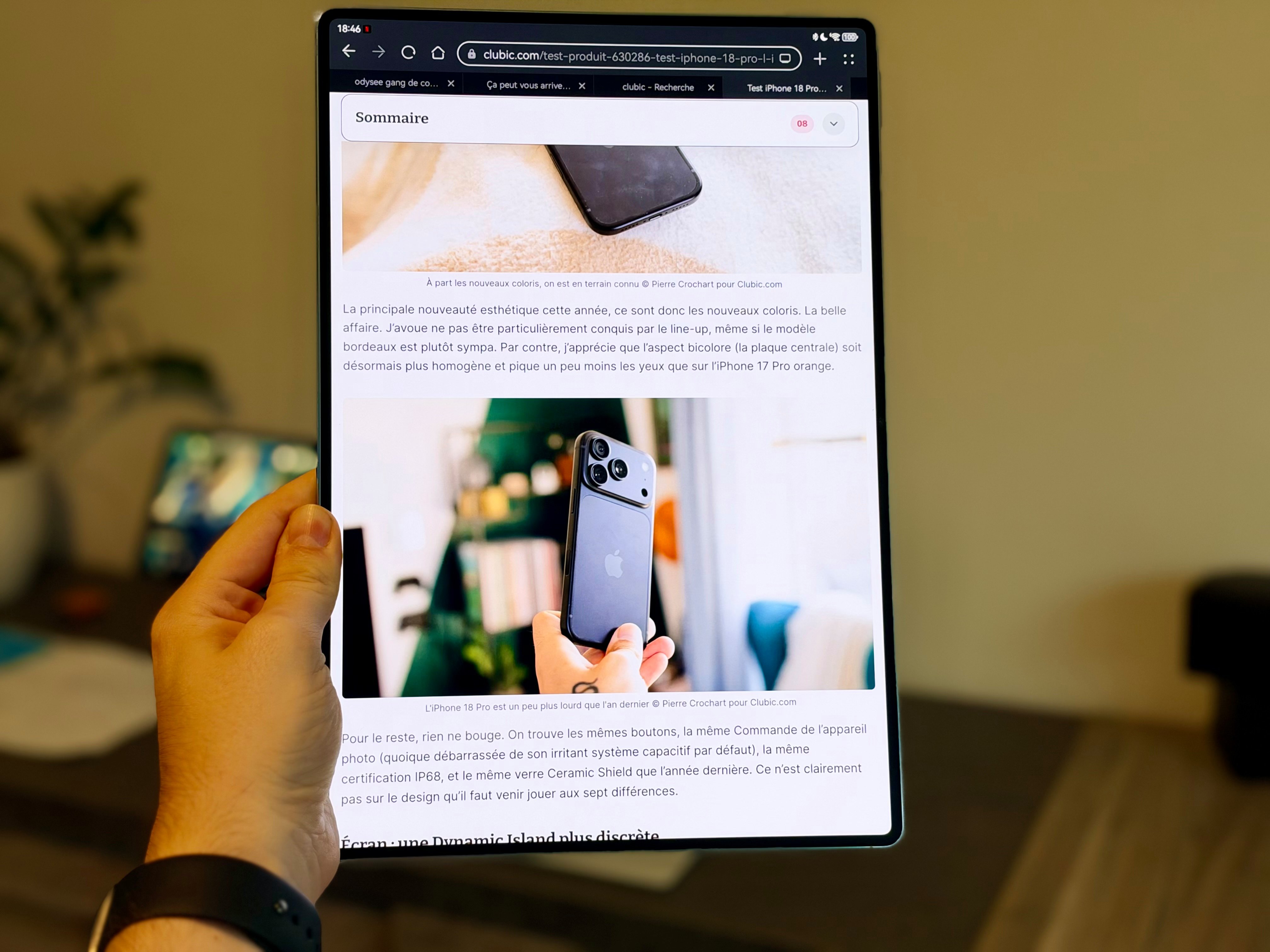
But what truly changes the game is the PaperMatte treatment. Huawei etches the screen surface at the nanometer scale to diffuse light and reduce reflections, and the result is immediately noticeable. Reading becomes far more comfortable, glare from lamps or windows doesn’t collapse visibility, and the glossy displays of competitors fade from memory. Contrast is excellent, colors are rich without leaning into excess, and the 144 Hz fluidity makes navigation enjoyable. The Ebook mode, designed for long reading sessions, finds a perfect home here.
The combination of OLED, 144 Hz, and this coating simply delivers one of the best visual experiences in the tablet market.
Performance: Impeccable Responsiveness, Modest Raw Scores
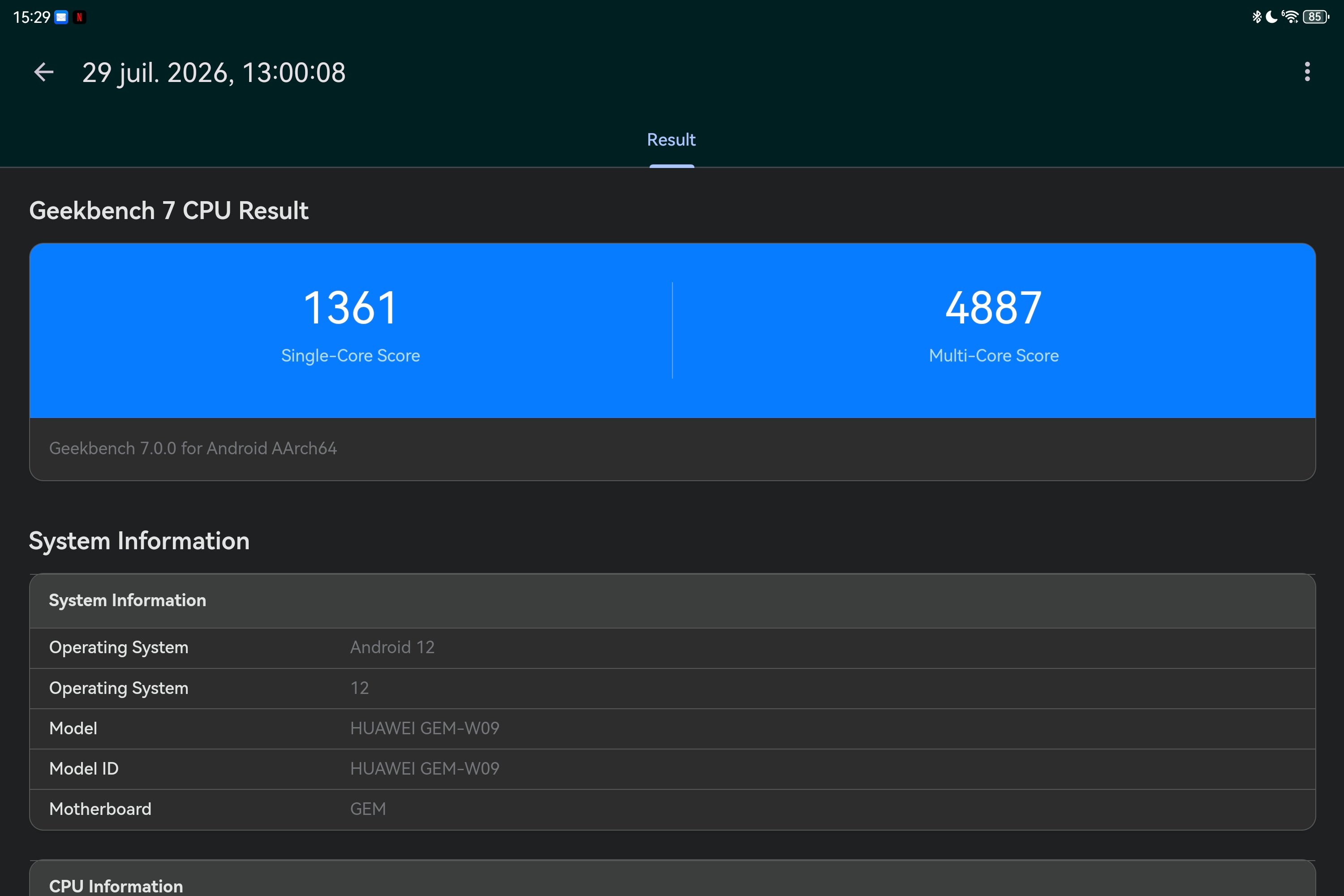
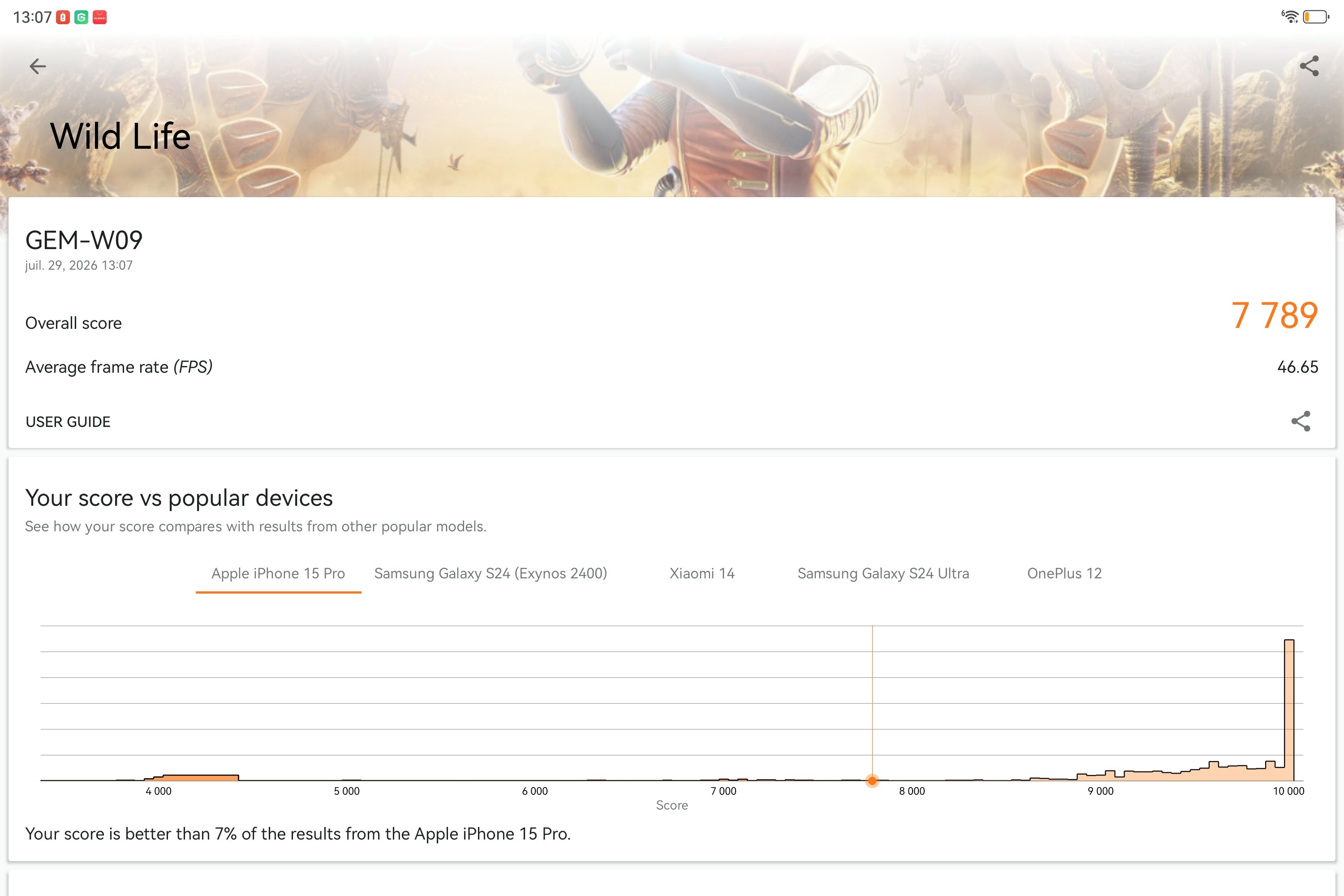
Under the hood, Huawei relies on its own Kirin T93 Pro chip, backed by a Maleoon 935 GPU and 12 GB of RAM, with 256 or 512 GB of storage, priced at €1,099 and €1,299 respectively. On paper, benchmarks aren’t aiming to impress: 1,361 points in single-core and 4,887 in multi-core on Geekbench, 7,789 on 3DMark Wild Life. To put these numbers in perspective, the Xiaomi Pad 8 I tested in spring, sold for nearly a third of the price, performs better on Geekbench. The irony is delicious for a tablet aimed at the very high end.
Yet, in practice, none of that is felt. Overall responsiveness is remarkable, apps open without delay, and multitasking across three windows works smoothly. The presence of Wi‑Fi 7 on the device is also noted.
Thermal management is another pleasant surprise. Even under heavy load, the tablet heats up very little and temperatures stay well controlled. Huawei has centered the motherboard and adopted a dual-layer vapor chamber to distribute heat, and the result is perceptible to the touch.
In gaming, the MatePad Pro Max earns its keep. Call of Duty Mobile runs at maximum settings without a hiccup, Fortnite remains stable at max graphics, even though it’s capped at 30 fps, and Genshin Impact hits 60 fps on maximum settings with excellent playability. Some textures appear less detailed at times, likely due to the homegrown GPU, but nothing that ruins the experience.