
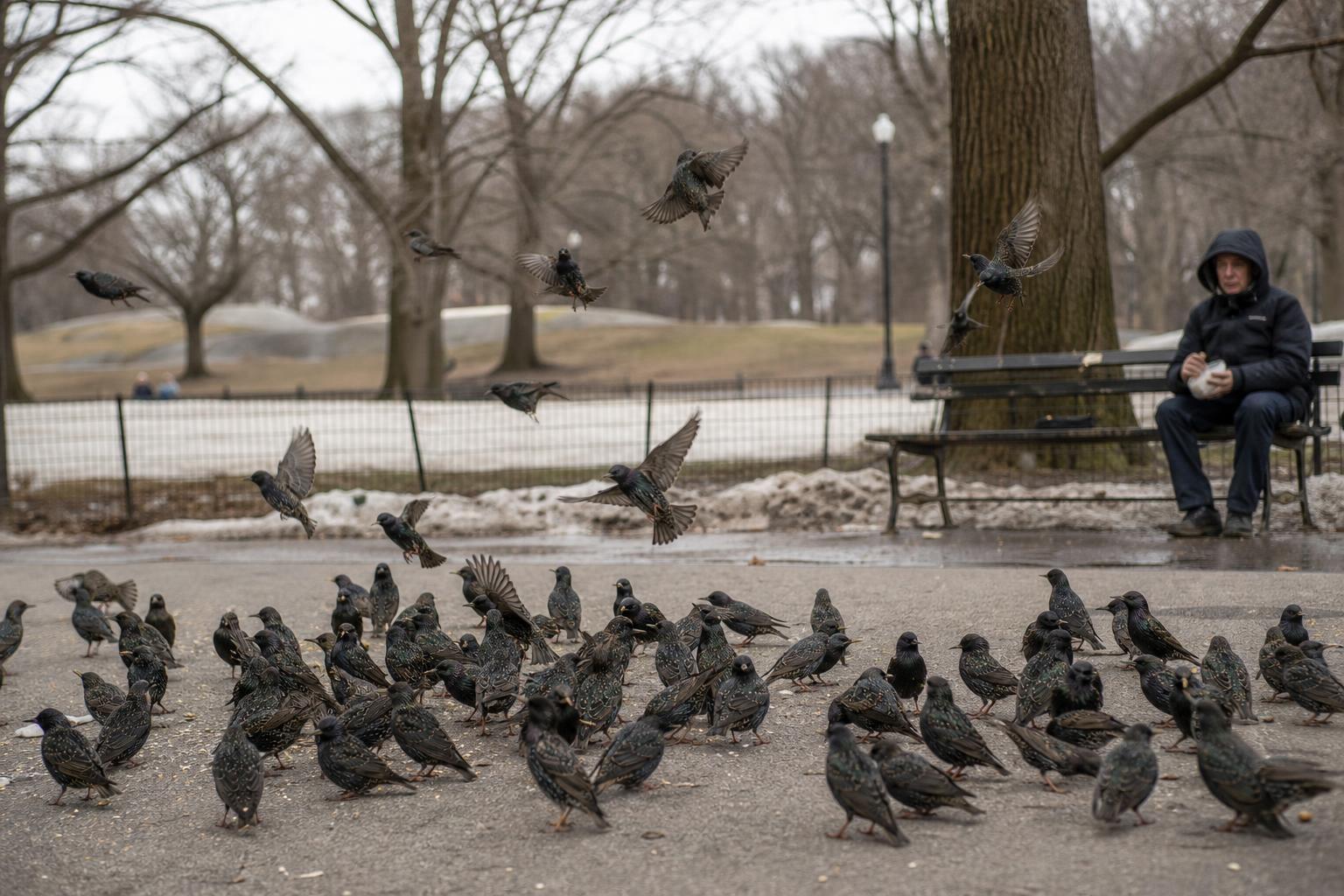
A tiny act can reshape a continent. A quiet release in a city park can swell into a living, winged wave. “Small gestures can echo for centuries,” and few stories prove it as starkly as the rise of the European starling.
From a handful of birds, the population expanded into tens of millions. They took to farms, suburbs, and skyscraper ledges with almost mischievous ease. What followed was a tapestry of awe and irritation, beauty and disruption.
A Victorian impulse with modern consequences
In the late 1800s, a New York socialite imported starlings and released about sixty in Manhattan. Another release soon followed, and the flock began to stick. The oft-repeated tale says he wanted every bird mentioned by Shakespeare to sing in America, a tidy story that scholars now debate. The motives matter less than the result: a new avian nation began.
The birds found a city full of niches. They roosted under eaves, probed gutters for food, and learned human rhythms with unblinking confidence. “A bird that never read our rulebook,” as one field note might mutter.
How they won the continent
The starling’s success is not mystery, but math. It is design plus opportunity, multiplied by time. Consider a few edges they brought to the game:
- A fiercely generalist diet, able to switch from grubs to grain to discarded city crumbs.
They also breed early, nest in cavities, and outcompete less aggressive neighbors. Their flocks move as one, a murmuration that both dazzles and dominates. Cold winters barely slow them; new crops and mild cities speed them up. Every warehouse sign becomes a perch. Every half-rotted knot-hole becomes a home.
Biology met infrastructure, and the line kept rising.
The bill comes due
Admiration coexists with cost. Farmers tally lost berries, dented cherries, and pecked livestock feed. Feedlots attract massive flocks, and the birds foul water and troughs. Federal estimates have placed annual damages in the hundreds of millions, depending on year and method.
Airports face a different math. Dense flocks near runways are a hazard to engines and pilots. Mid-20th century accidents linked to starlings remain somber footnotes in aviation safety. Modern deterrents, radar, and habitat management reduce risk but never fully erase it.
Native wildlife pays a quieter price. Starlings seize nest holes from bluebirds and woodpeckers, sometimes ejecting eggs or young. Each small eviction ripples through local webs, shifting who breeds and where.
The uneasy allure of a sky that moves
And yet, against a dusk backdrop, a murmuration can stop a town. Thousands twist into fluid geometry, a dark ink curling and dissolving. People pull over, step out, and simply watch. “The sky becomes a single organism,” someone whispers, not sure whether to cheer or wince.
This is the paradox of invasions. The same traits that make a species so alive also make it so hard to live with. Beauty and nuisance are two faces of the same flight. We built the banquet; the guests arrived.
Management without illusions
Eradication is a comforting fantasy; wide-ranging realities demand triage. Managers lean on layered tools. Exclude birds from structures with nets and spikes. Disrupt roosts with sound, light, and targeted harassment. Modify habitat near runways to reduce insects and roosting cover. In agriculture, coordinate timing of harvest, deploy scaring devices, and secure feed. Where permitted, lethal control suppresses peaks, though it rarely changes the long trend.
Data matters most when budgets are thin. Track local roosts, chart seasonal surges, and aim effort where the curve is steepest. “You can’t manage what you don’t measure,” goes the old line. Community science helps fill gaps, turning casual watching into knowledge.
What the story teaches
One release became legion because conditions were ready. Cities offered roosts; fields offered calories; rail and road offered corridors. The lesson is painfully clear: prevention beats all later cures. Today’s inspection station, today’s quarantine, today’s restraint against a charming “just a few pairs” can save tomorrow’s ecosystems from decades of aftershocks.
We still live with the consequences, but we also hold the pen. Policy can be smarter. Design can be tighter. Our sense of “native,” “novel,” and “necessary” can be more honest. Starlings teach that the border between wonder and wreckage is thinner than it looks—and that a quiet act in one park can swell into a chorus that sings across a continent.