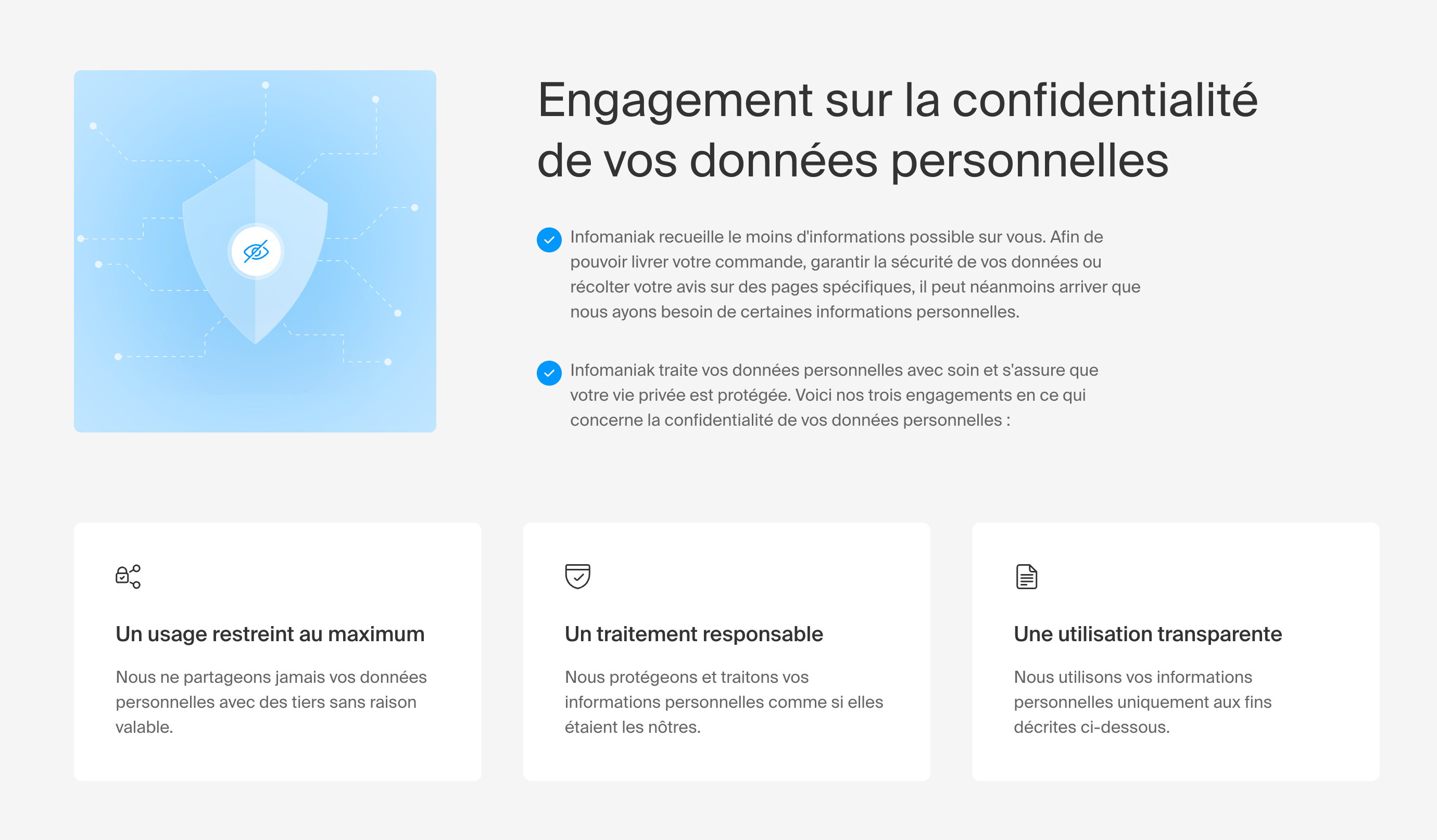
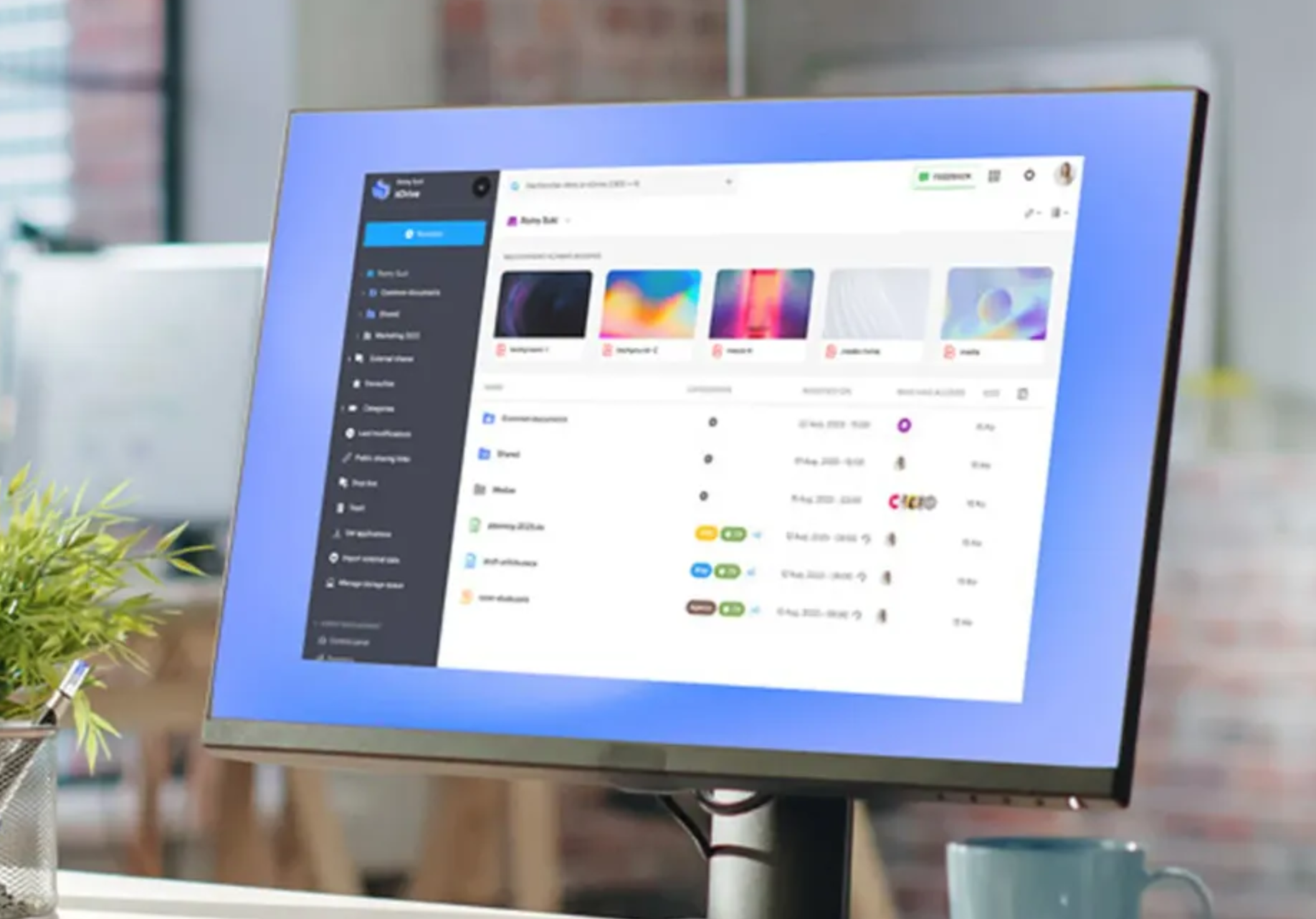
Facing the American cloud giants, Infomaniak kDrive, developed and hosted entirely in Switzerland, offers its users much more than a simple collaborative storage space: data sovereignty, enhanced security, and strict respect for privacy are at the core of its positioning. A tempting promise on paper, in a context where privacy concerns weigh increasingly on the choice of a cloud service. We tested the tool to give you our opinion.
Like Google Drive or OneDrive, kDrive targets a diverse audience, from individuals looking to secure their personal data to businesses seeking a storage solution. Infomaniak’s service stands out for its environmental commitment and full compliance with the GDPR and the new Swiss data protection law (nLPD).
Let’s see how the service has evolved in recent years with an updated review. How does Infomaniak kDrive fare in 2026?

- mood15 Go of free space
- uploadNo upload limit
- home_pinServers in Switzerland
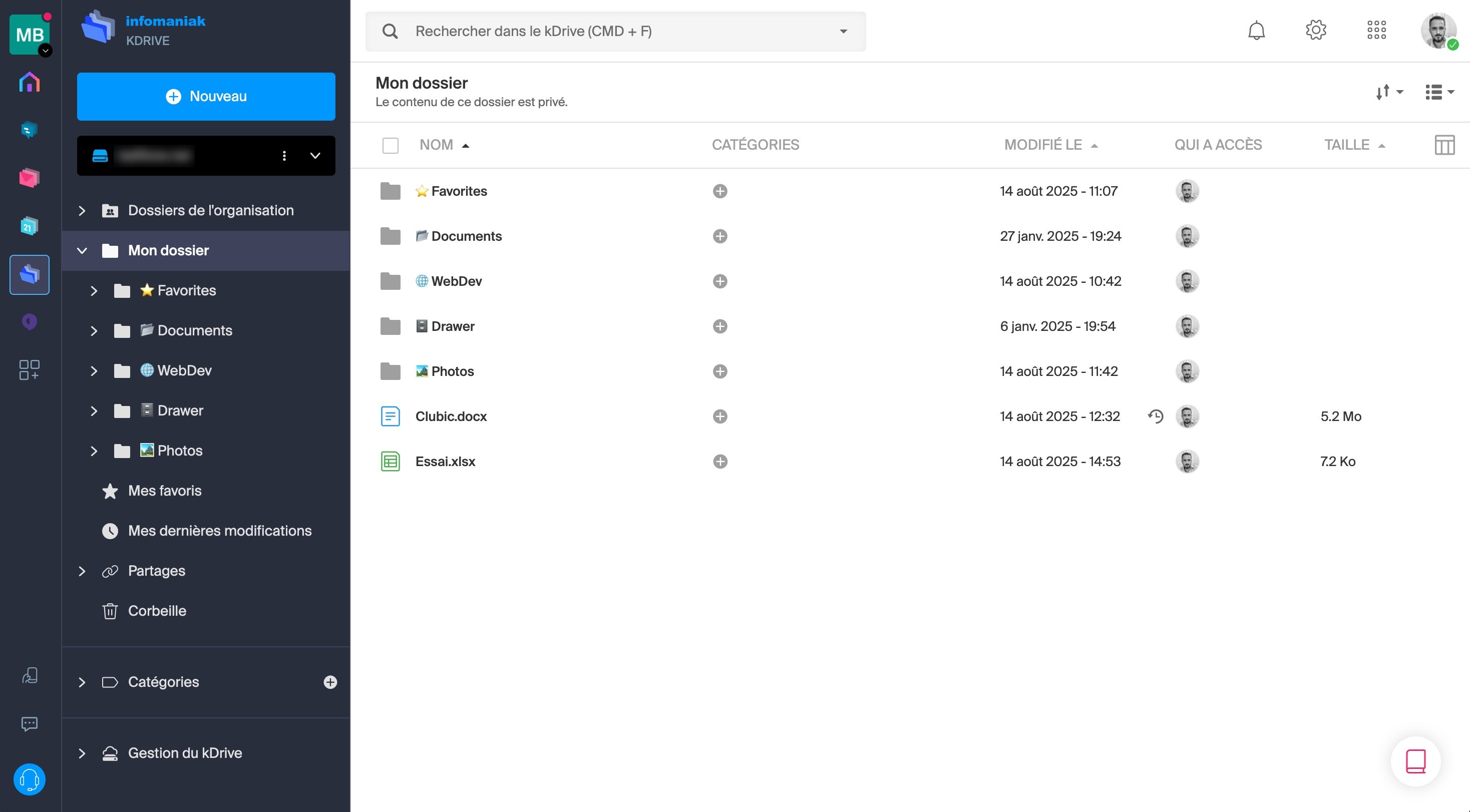
Infomaniak kDrive groups cloud storage, synchronization, sharing, and collaborative editing into a service accessible on desktop, mobile, and web. It suits both individual users and teams that regularly exchange documents. The distribution of features across numerous offers requires checking the exact plan chosen. The service should not be confused with a standalone backup, despite its version history and recycle bin.
- Applications on five platforms
- Collaborative document editing
- Public links without account
- Single user limit
- Team limited to six users
- Office Online conditional on plan
kDrive: Essential information to know
- Data sovereignty and security : kDrive is developed and hosted entirely in Switzerland, with full compliance with GDPR and the Swiss data protection law. Files are encrypted in transit (TLS) and at rest (AES 128-bit), with triple replication across two distinct data centers. Downside: unlike Proton Drive, the encryption is not yet “zero-knowledge” (keys are generated by Infomaniak, not by the user).
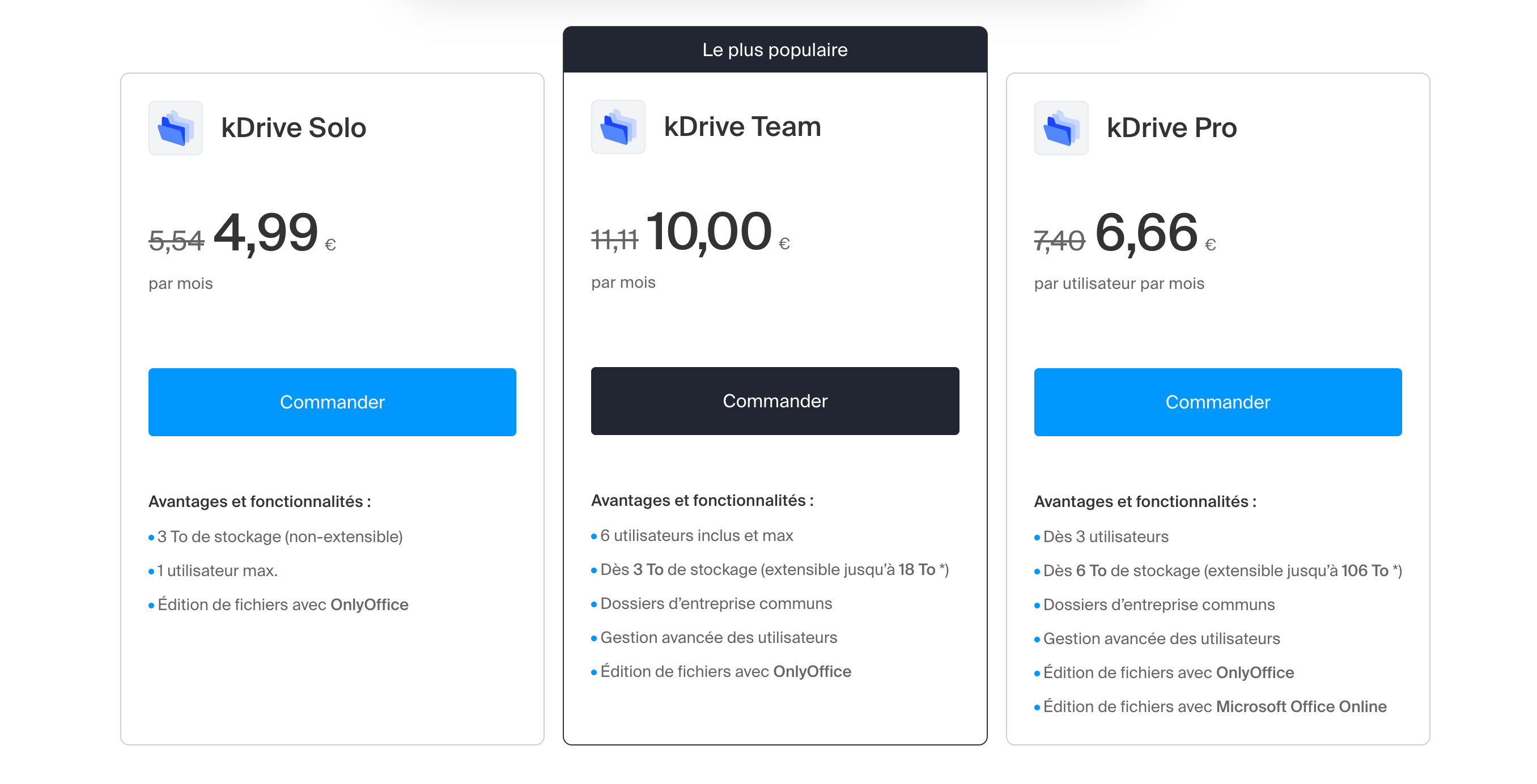
- A generous pricing offer : the free “my kSuite” offers 35 GB (15 GB for kDrive storage + 20 GB for mail). The jump afterwards is dramatic: it leaps to 3 TB for 4.99 €/month (Solo), with no intermediate tiers such as 100 GB or 500 GB seen on competitors. There is, however, a little-known option, “my kSuite+” at only 19 €/year for 1 TB.
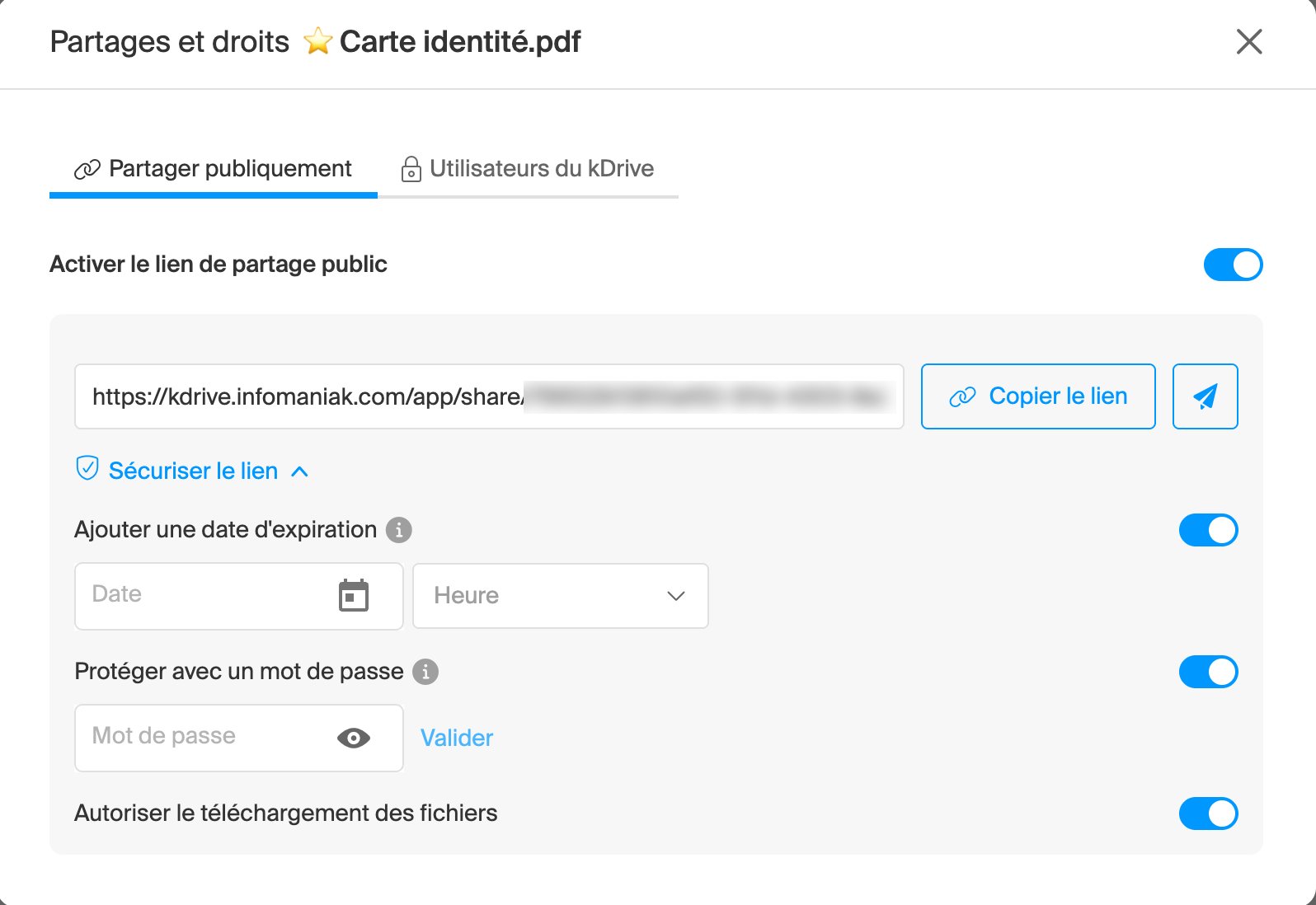
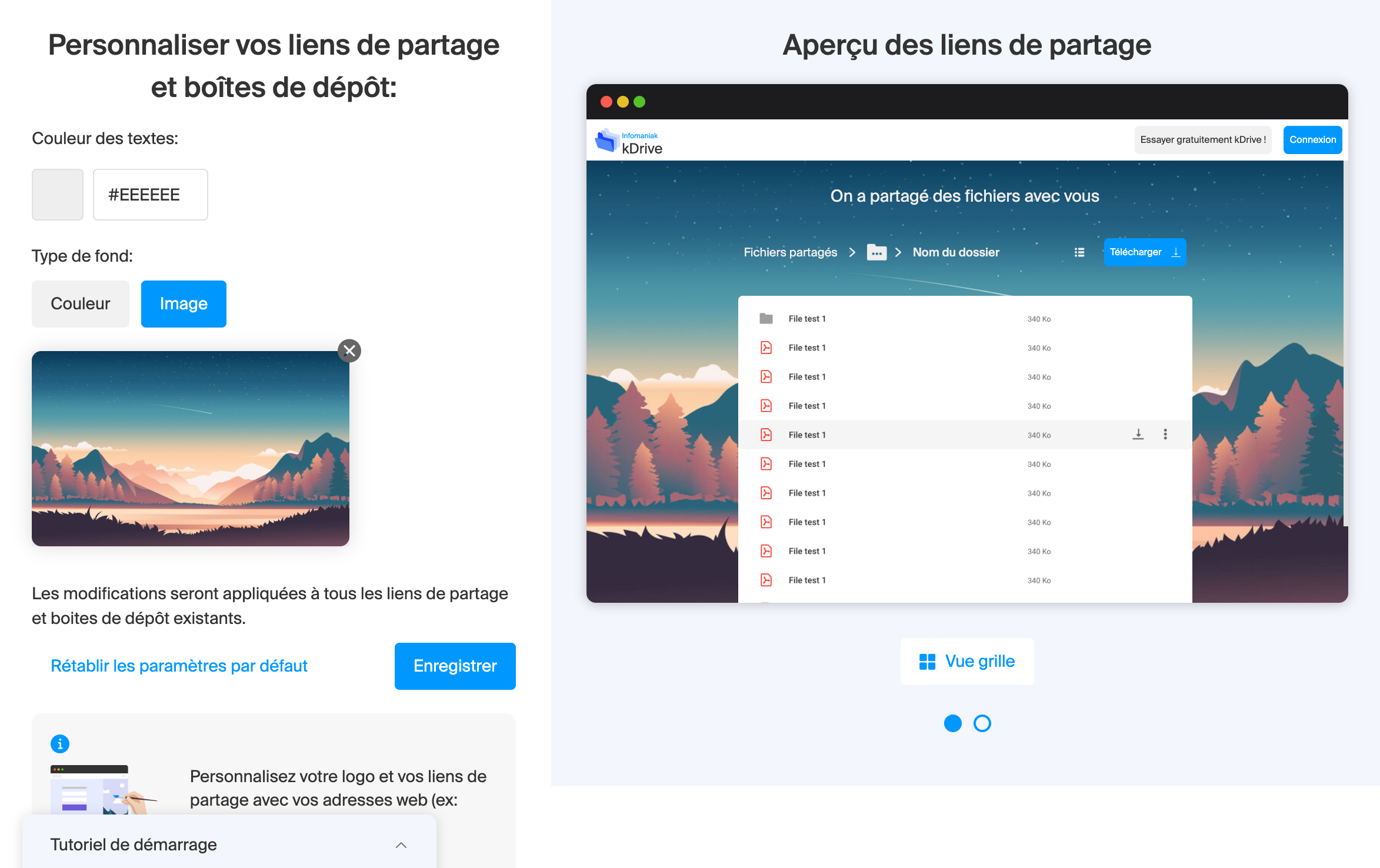
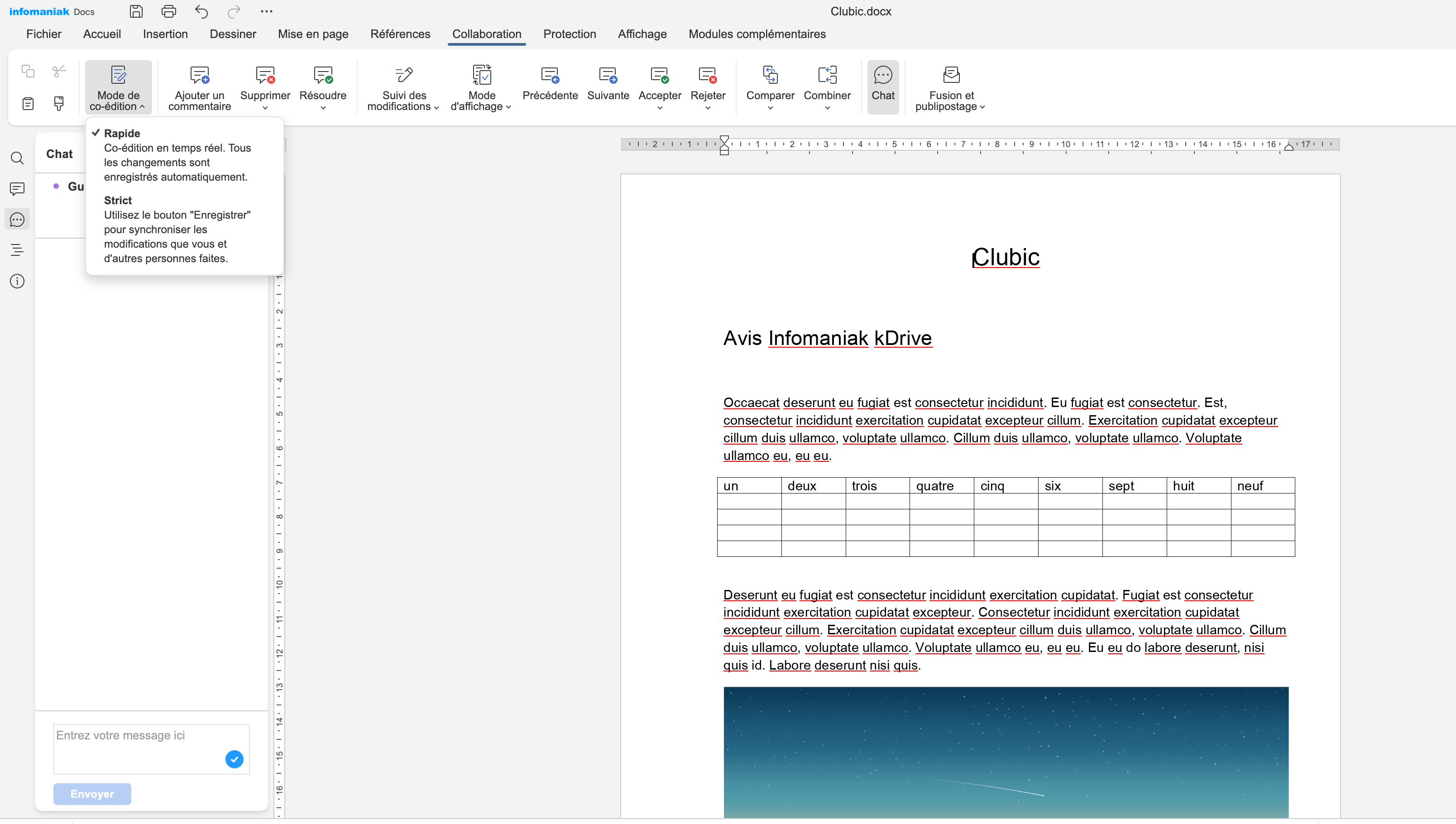
- Integrated collaboration and office suite : the service includes OnlyOffice for real-time collaborative editing (Word, Excel, PowerPoint), with Microsoft Office Online for Pro subscribers. Among features are password-protected sharing links (no account required), granular permissions, drop boxes, and branding in the company colors.
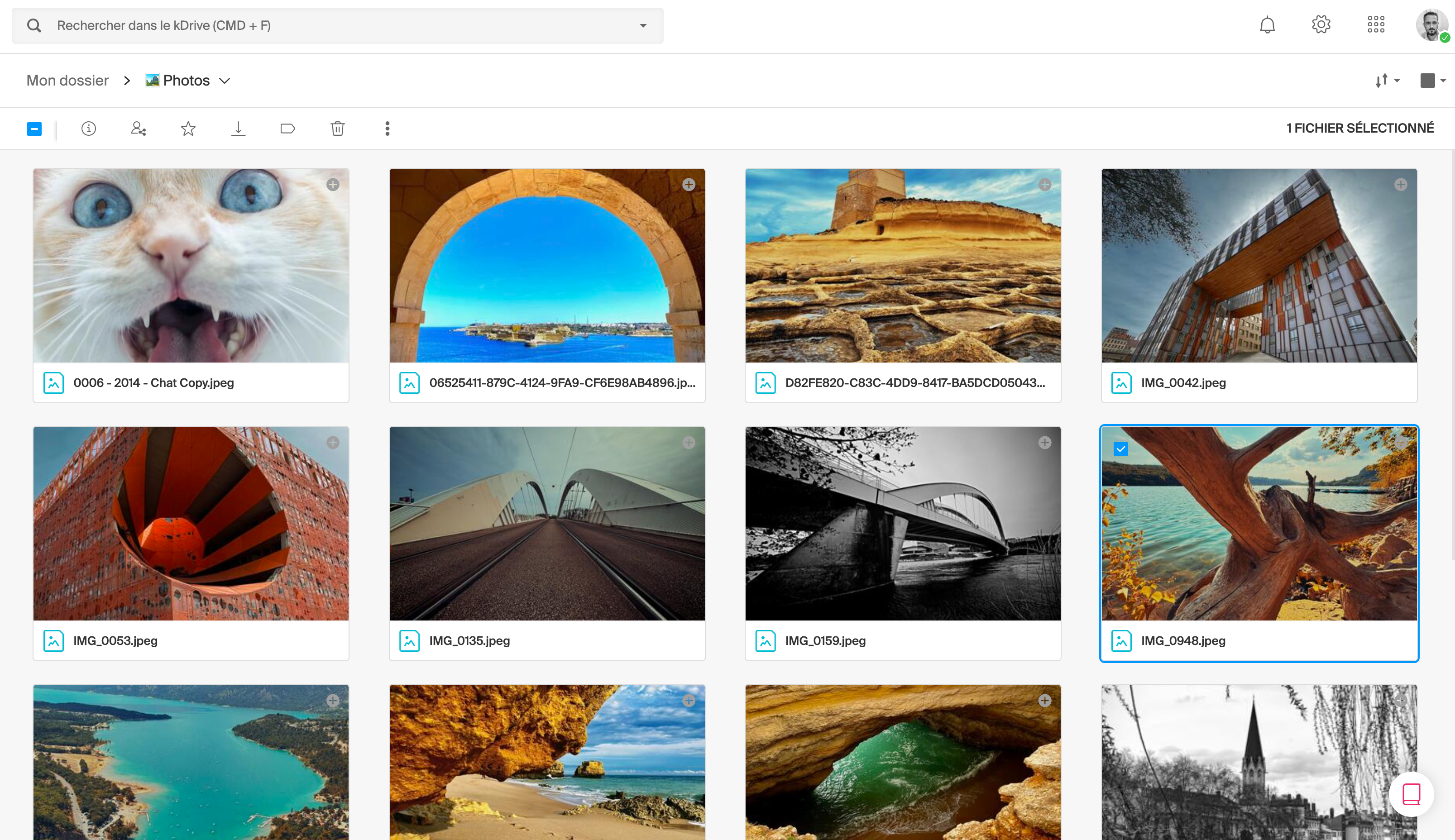
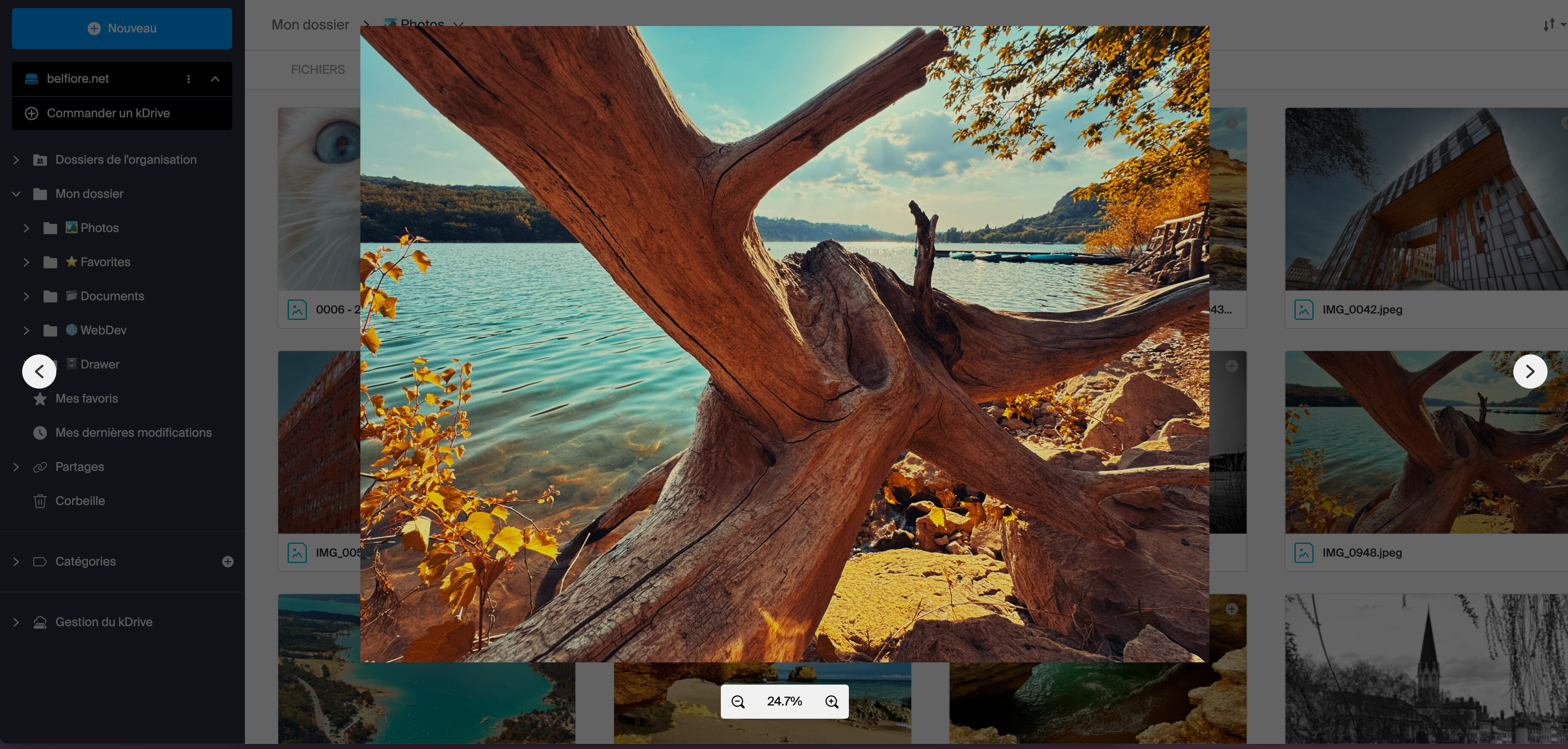
- Photo management is the service’s weak point : the mobile app’s “Photos” section blends all visuals found in files (PDFs, screenshots, emojis…), with no album creation or facial recognition.
- Against the competition : kDrive stands out for its storage-to-price ratio and advanced collaboration, but is less advanced than Proton Drive in encryption (zero-knowledge absent) and less mature than pCloud or Google in media management. A good compromise for freelancers, SMEs, and GDPR-conscious teams, less suited for those seeking maximum privacy or a sophisticated photo library.
Introduction to kDrive
kDrive is Infomaniak’s cloud storage solution, a Swiss independent company founded over 30 years ago and certified B Corp in 2025. As of May 2026, it transferred its voting rights to the public utility foundation Fondation Infomaniak to place itself beyond the reach of investors. The company offers secure collaborative storage capable of handling up to 106 TB depending on the plans. The infrastructure relies on Tier 3+ data centers located in Geneva, providing complete control over data hosting.
The service’s technical architecture rests on a triple-backup system: each file is automatically replicated on three different physical media spread across two different Tier 3+ data centers in Geneva. This physical redundancy prevents data loss while ensuring constant service availability.