
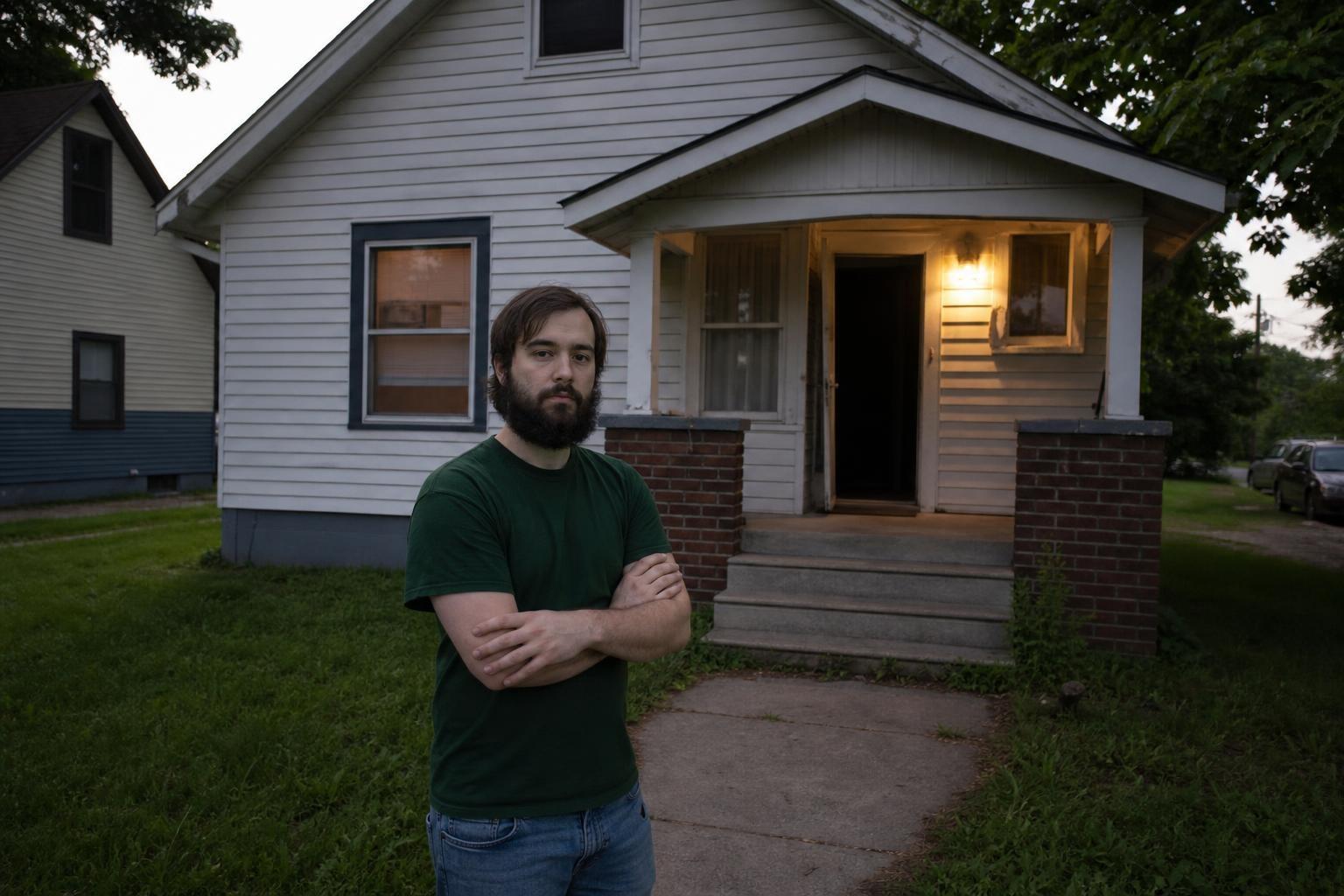
A shoestring budget. A suburban house. And a seven-day shoot that rewired how scary movies get made. The project seemed like a late-night experiment, but it detonated into a cultural event, proving that terror can be both intimate and wildly profitable.
No backlot, no ornate sets, no army of technicians. Just a director’s own home, a pair of unknown actors, and an idea so lean it felt like a dare. “What if the scariest thing is what you can’t see?” That became the north star for a film that turned absence into presence.
The $15,000 gamble that rewrote the rules
Oren Peli, a software designer turned filmmaker, leaned on instinct instead of industry orthodoxy. He bought consumer-grade gear, taped down a few markers, and let the house do the haunting. The budget—about $15,000—covered practical effects, minimal crew, and long nights of patient experimentation.
The plan was deceptively simple: stage believable phenomena in ordinary rooms, then let the audience’s mind fill the void. “Make the audience write half the movie in their heads,” the creative mantra might as well have read. It was the anti-spectacle spectacle—low-cost, high-tension.
Seven nights, one house, infinite dread
The approach favored stillness over stunts. Long, unbroken shots watched the bedroom like a witness, catching doors that creep, sheets that twitch, and footsteps that settle like dust. With each quiet beat, the camera became a silent conspirator, inviting you to inspect the corners.
Improvisation pushed the performances toward unnerving naturalism. Katie Featherston and Micah Sloat—then relative unknowns—played a couple trapped between domestic routine and supernatural erosion. Their exchanges felt rough-edged and real, the kind you only have when you’re too tired to perform for anyone.
The sound design did the heavy lifting. A low hum here, a distant thud there, air pressure turning into menace. “Noise is a monster you can’t point a finger at,” the film seems to whisper. The scares didn’t sprint; they accumulated, creeping like a draft under a shut door.
From living room to global scream
Word-of-mouth did the early work, then a canny release strategy poured gasoline on the embers. Limited runs seeded buzz, and a “demand it” campaign turned spectators into distribution partners. Midnight screenings became ritual, with crowds chasing communal fear like a roller-coaster they could ride again.
The numbers became the myth. Around $193 million worldwide off a micro budget—a return so outsized it felt like an urban legend. There were no massive sets, no lavish stars, no orchestral score swelling to announce the horror. Just a house, some cameras, and the discipline to hold the shot a little too long.
Why it terrified audiences
- Familiar setting made uncanny: the everyday turned alien
- Restraint as fuel: ambiguity became the engine
- Unvarnished performances: authenticity signaled truth
- Patience over pyrotechnics: dread built by increments
- Sound as phantom: your ears wrote the story
The legacy: a new playbook for fear
Blumhouse’s microbudget model—risk small, scare big—found its loudest early proof here. Sequels, imitators, and a wave of found-footage experiments followed, each tweaking the grammar of realism and record. A generation of filmmakers realized you could turn a condo into a haunted stage, and a nightstand camera into mythology.
It also shifted the marketing conversation. Trailers featuring night-vision audience reactions reframed the pitch: don’t sell the monster, sell the body’s response. You weren’t just watching a movie; you were watching people get haunted, then daring yourself to be the next.
How scarcity became style
Constraints weren’t obstacles; they were the aesthetic. A limited toolkit forced choices that later read as vision: static frames instead of frantic coverage, rough edges instead of polish, suggestion over exposition. “If you can’t show everything, show almost nothing,” the technique insists—and let imagination pull the weight.
Even the home itself shaped the story. Hallways framed tension; stairs created visual drops; bedrooms turned intimacy into exposure. A thermostat could change the mood, and the refrigerator’s hum could become a threat. Architecture became narrative, one angle at a time.
What creators can steal—ethically
Start with a tight premise you can film in your space. Use sound as your primary effect. Cast for chemistry, then protect improvisation with clear beats. Embrace the bored moments; that’s where dread ferments. And treat marketing like chapter one, not an afterthought in post.
“Keep the camera honest and the frame a little cruel.” That might be the secret thesis—trust the silence, trust the room, and trust that an audience, left alone with their nerves, will do the scaring for you.