
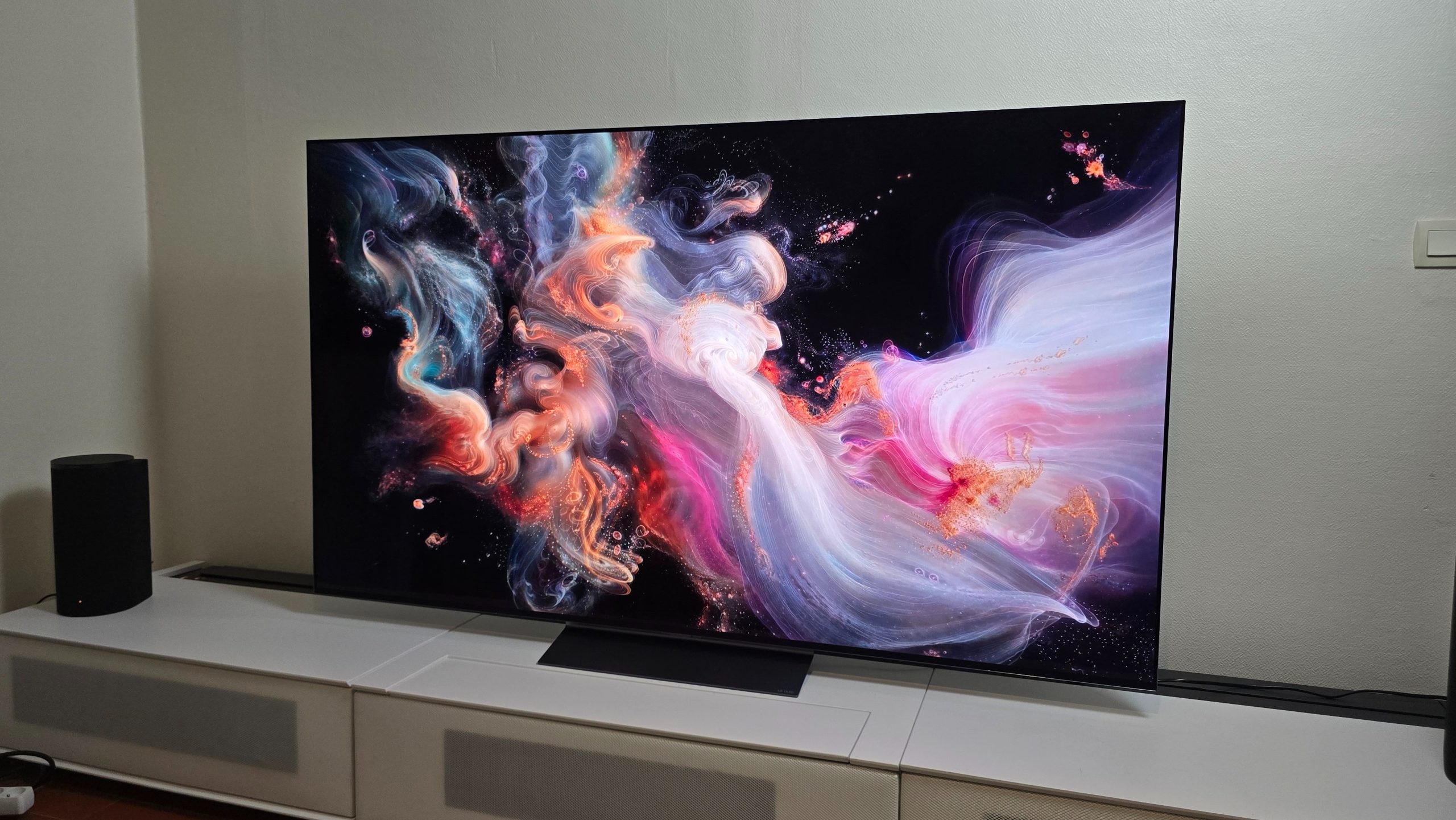
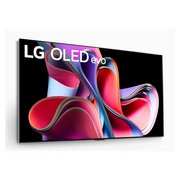
An OLED from the C series that faces the G range head-on? That is the entire promise of the LG OLED77C6. With its Tandem panel dedicated to large diagonals, this 77-inch model does not play exactly the same role as the other C6s. And that is precisely what makes it interesting.
9 / 10
- Dalle OLED Tandem very bright on this 77-inch diagonal
- Excellent color fidelity in SDR and HDR
- Perfect contrast, deep blacks and detailed shadows
- Excellent HDR rendering, closer to the G-series than to older C-series
- Alpha 11 video processing convincingly
- Four full HDMI 2.1 inputs
- WebOS complete and fluid
- Low power consumption for a 77-inch model
- HDR10+ and DTS decoding still not present
- Integrated audio too limited for such a large diagonal
- Delle brillante sensible to direct reflections
- BT.2020 still lagging behind the best QD-OLED
- Remote non rétroéclairée
Chez LG, la série C a toujours été l’OLED du juste équilibre : plus ambitieuse qu’un modèle d’entrée de gamme, moins élitiste qu’un téléviseur Gallery, mais suffisamment complète pour séduire aussi bien les cinéphiles que les joueurs. Une valeur sûre, en somme, presque devenue une évidence d’une génération à l’autre.
The LG OLED77C6 nevertheless shakes up this formula. On the 77-inch diagonal (as with the 83-inch), it benefits from a Tandem OLED panel that is brighter and the Alpha 11 AI 4K Gen 3 processor, two elements that clearly bring it closer to LG’s high-end. On paper, the C6 keeps its label as a versatile model, but it seems determined to walk into the territory of the G series.
The whole challenge of this test is there: to verify whether this upscale shift actually translates into better image quality and day-to-day experience, or if LG still preserves enough distance to maintain its hierarchy. Between home cinema, HDR, gaming in 4K up to 165 Hz and the webOS experience, the 77C6 has solid arguments.
LG OLED C6: Performance and Image Quality
Our measurements
The LG OLED77C6 is not quite a C6 like the others. That’s the most important point to note before moving to the measurements. On smaller diagonals, the C6 line remains the logical continuation of previous generations: a versatile OLED, well equipped, but still clearly behind the G series. In 77 and 83 inches, it’s something else. This version indeed benefits from a more ambitious Tandem OLED panel paired with the Alpha 11 AI 4K Gen 3 processor and Hyper Radiant Color technology, elements seen on the G series.
This diagonal difference is not trivial. For several years, the C series has been one of the best-balanced spots in LG’s OLED catalog, with a fairly clear gap to the G series. With this 77C6, LG substantially narrows that distance. The aim is no longer merely to offer a very good, large-format OLED, but to provide an even more premium experience with a TV better equipped to face aggressive competition on large diagonals, particularly from QD-OLED and the best MiniLEDs.
The core question for this section is simple: does the LG OLED77C6 remain a large C series with upgraded features, or does it truly cross a threshold to approach the G series?
Our measurements quickly confirm that the LG OLED77C6 sits at a very high level, both in SDR and, as we will see next, in HDR.
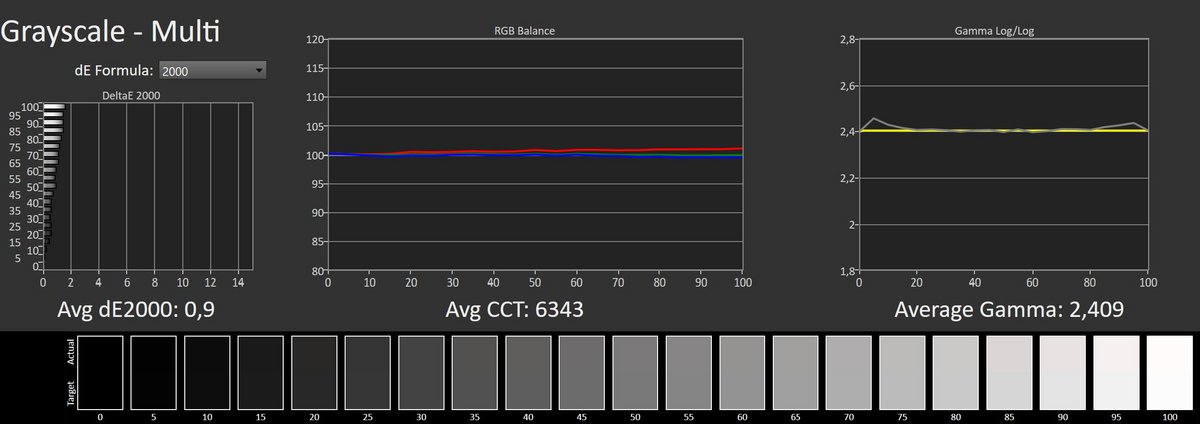
The grayscale scale is also exceptionally well controlled. We measured an average Delta E of only 0.9, with an average color temperature of 6343 K. The image thus leans very slightly warm relative to the reference D65 set at 6500 K, but the difference remains small and consistent with a cinema-style Filmmaker mode. The average gamma, recorded at 2.409, is also very close to target, with a globally stable curve despite a very slight variation in the brighter levels. Nothing to disrupt image readability or nuance progression.
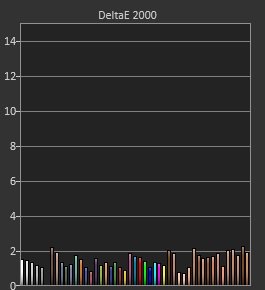
In Filmmaker mode, the TV already displays excellent color accuracy straight out of the box, with an average Delta E of 1.49 and a maximum of 2.27. We remain well under the 3 threshold beyond which color drifts become visible to the naked eye. In other words, the C6 is immediately usable in a faithful mode without requiring calibration to achieve a balanced image.
HDR playback confirms this excellent mastery. Still in Filmmaker mode, the TV shows a Delta E average of 0.64, with a maximum limited to 1.78.
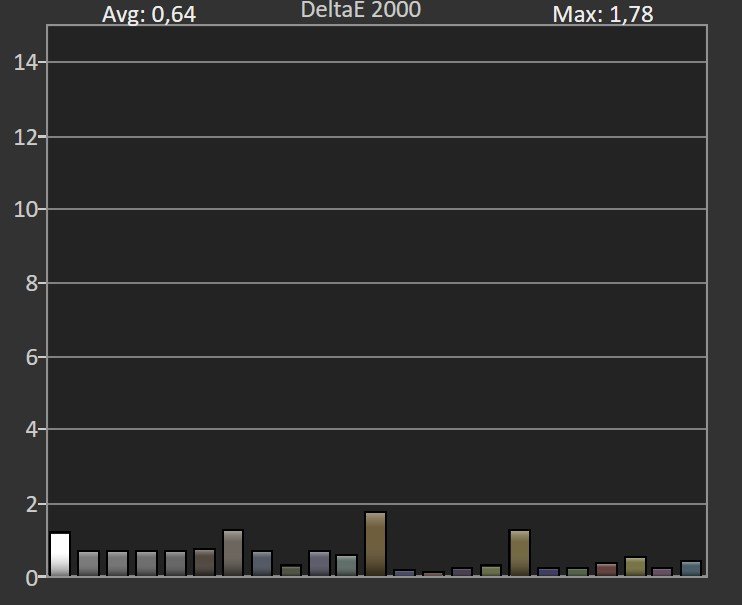
This is simply excellent for a TV that isn’t calibrated. The colors stay faithful, even in HDR where drifts can become more noticeable. LG doesn’t seek to flatter the eye with excessive saturation or a too-cold balance: the image remains precise, natural, and well controlled.
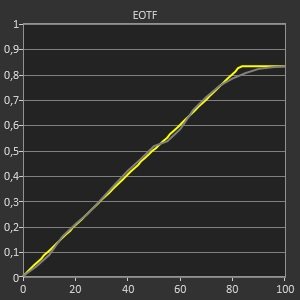
The EOTF tracking is also solid. The curve stays close to reference across most of the brightness range, with a gradual handling of the very bright highlights. The TV does not look to unnecessarily brighten the image to deliver a more spectacular or faithful result. It maintains good overall coherence, with tone mapping that supports the rise in luminance without crushing detail in the highlights.
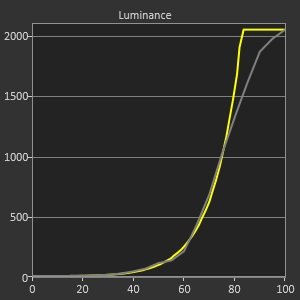
Brightness is evidently the most anticipated aspect of this 77-inch version. And on this front, the C6 clearly moves up a category. We recorded a peak brightness of around 2045 cd/m² in HDR, with very high sustain on small windows. The TV reaches about 2150 cd/m² at 1, 2 and 5% windows, and remains above 2000 cd/m² on a 10% window. For a C-series OLED, these values are particularly impressive and showcase the Tandem panel’s contribution on this diagonal.
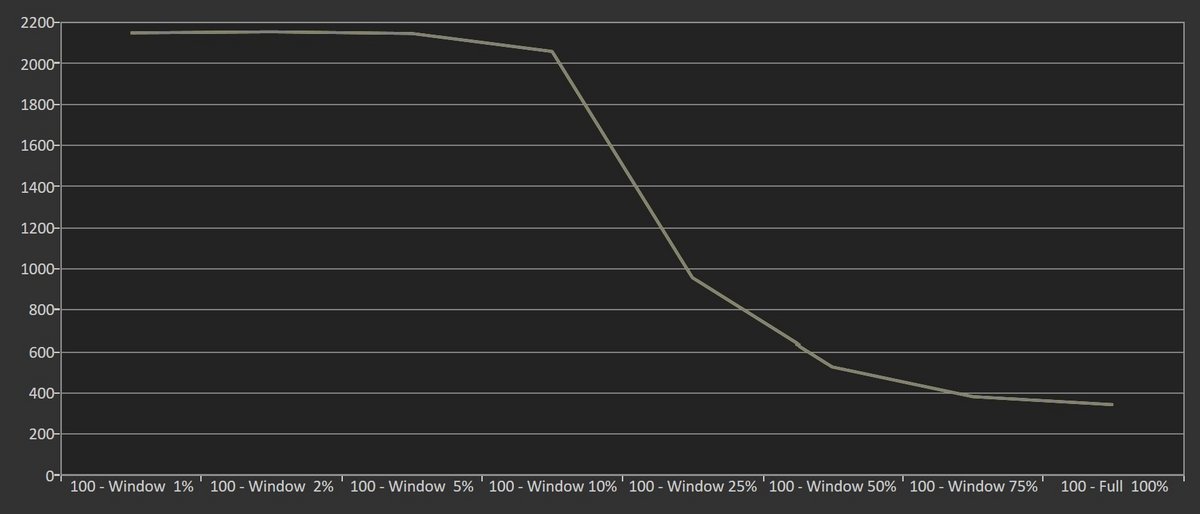
The brightness drop becomes more noticeable as the lit area grows, which makes sense for an OLED TV due to ABL. The 77C6 dips to around 950 cd/m² on a 25% window, about 520 cd/m² at 50%, 380 cd/m² at 75%, and nearly 340 cd/m² in full-screen.
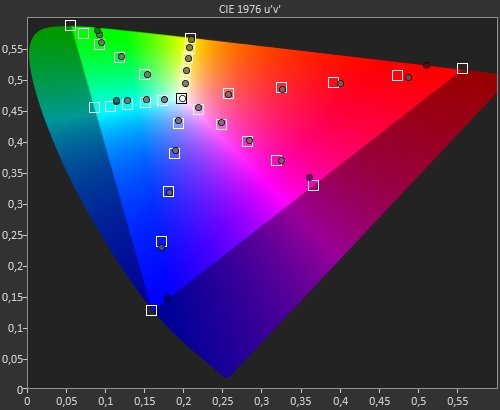
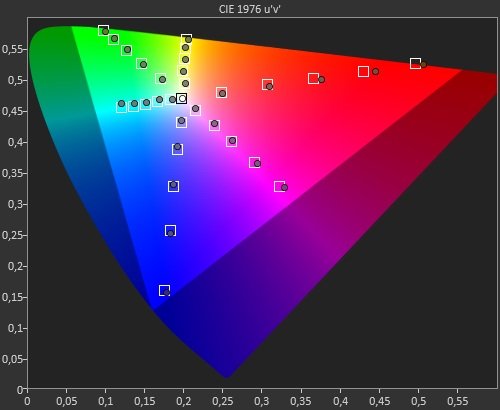
Color coverage is also excellent. DCI-P3 is almost fully covered at 99.65%, ensuring broad reproduction of the colors used by most HDR content today. BT.2020 reaches 81.1%. This is solid for a WOLED panel, but it also reminds us that the best QD-OLEDs maintain an edge in gamut extension and color volume in the most saturated tones.
Overall, these results clearly change the interpretation of this new TV. The LG OLED77C6 remains a C-series in its design, audio, and general approach, but its image performance brings it much closer to LG’s high-end than one might have imagined. HDR brightness, color fidelity, and the quality of its EOTF tracking make for a grand-format OLED that preserves the technology’s traditional strengths while delivering the punch previously missing from earlier generations.
The comparison with LG OLED C5 and LG OLED G5 that we tested last year helps place the 77C6. Against the C5, the leap is clear: SDR fidelity remains similar, but HDR performance is vastly better both in color accuracy and brightness. Whereas the C5 topped around 1,100 cd/m² on a 10% window and was more limited in full-screen, the C6 exceeds 2,000 cd/m² on small windows and still hovers around 340 cd/m² on a full-screen pattern. The closeness to the G5 is equally telling.
- Balanced image, good handling of blacks and HDR
- Factory calibration well done
- Great gaming performance (HDMI 2.1, VRR, G-Sync, 144 Hz, low input lag)
8 / 10
- Un saut générationnel réussi avec le Tandem OLED
- Improved color rendition on highlights and bright tones
- Better color accuracy on HDR, closer to G-series than older Cs
- Strong HDR performance, closer to G-series than Cs
- Video processing Alpha 11 convincing
- Four HDMI 2.1 inputs
- WebOS complete and fluid
- Energy consumption managed for a 77-inch screen
Le modèle Gallery conserve une avance en luminosité pure, avec 2 476 cd/m² à 10 % et 409 cd/m² en plein écran, mais l’écart se resserre nettement. Autrement dit, le LG OLED77C6 ne remplace pas totalement un G5 dans la hiérarchie LG, mais il enterre clairement l’idée d’une série C simplement “raisonnable”. Sur cette diagonale, il vient occuper un territoire beaucoup plus premium que son prédécesseur direct.
Our impressions on image rendering
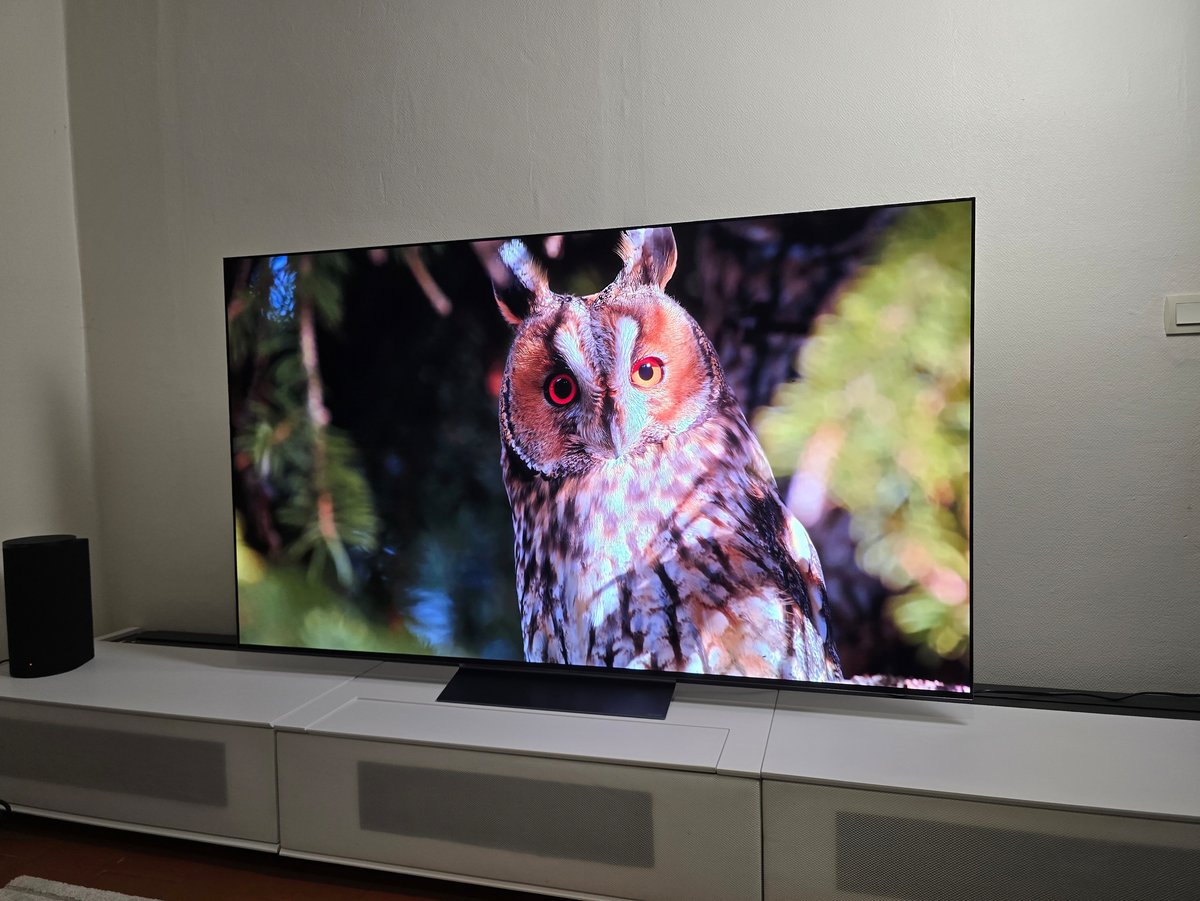
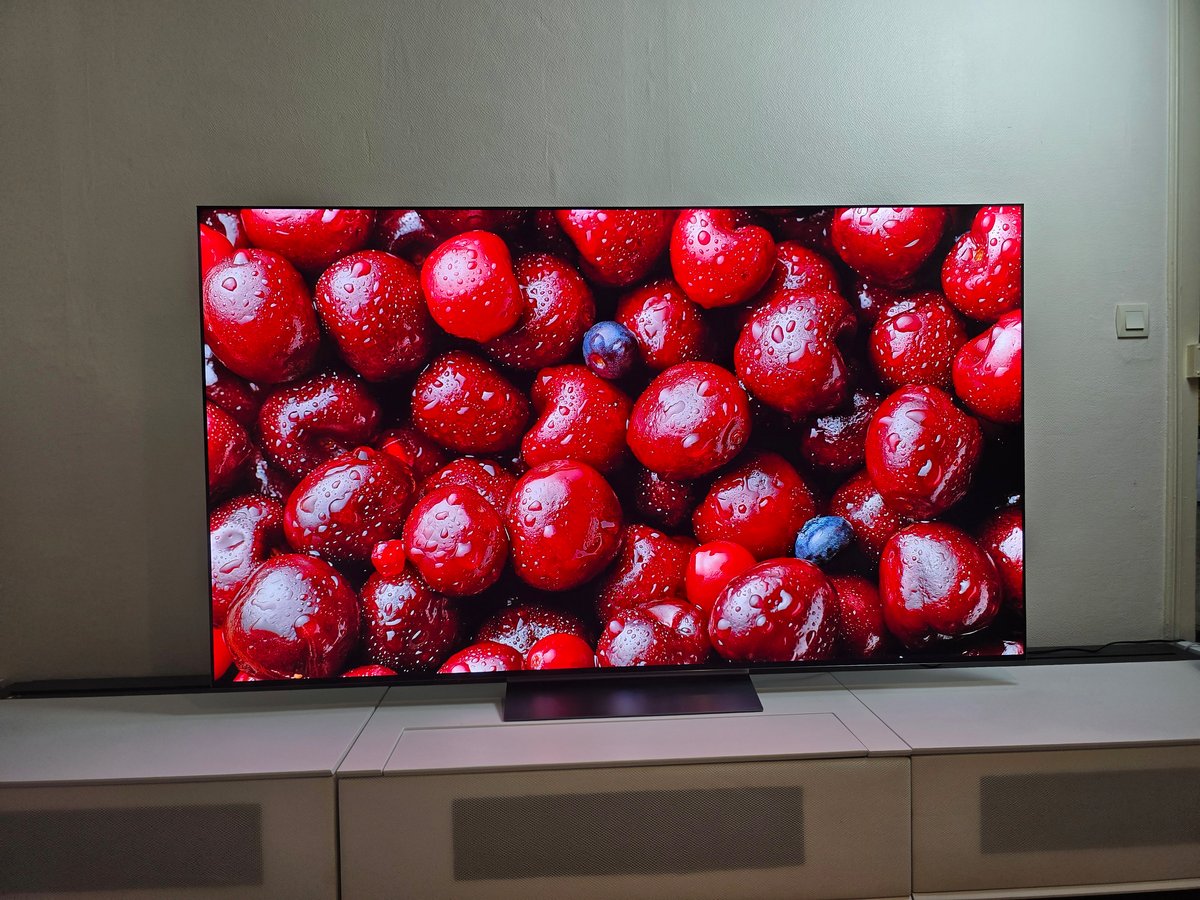
The measurements suggested a high-performance TV; viewing confirms that the LG OLED77C6 is no longer a typical C-series OLED when HDR is involved. On this 77-inch diagonal, the image gains scale and intensity. Blacks stay perfectly deep, as is customary with OLED, but they are no longer the main argument of this series for image quality. This C6 impresses more with its ability to bring out highlights, add sparkle to reflections, and improve the legibility of bright scenes without sacrificing the precision expected from an LG model.
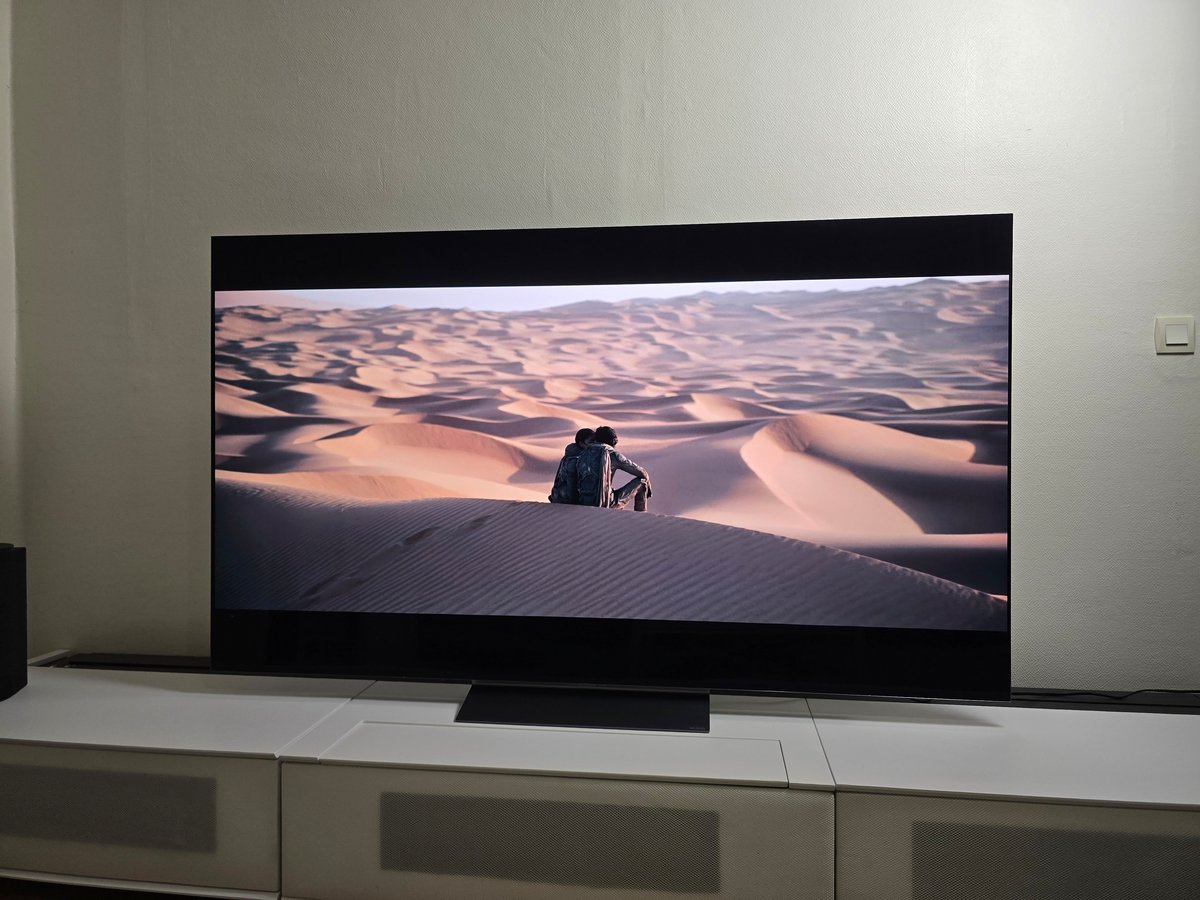
C’est sans doute dans les contenus HDR bien maîtrisés que l’évolution se remarque le plus. Les sources lumineuses ponctuelles, les éclats métalliques, les flammes, les néons ou les ciels très contrastés gagnent en impact, avec un rendu plus démonstratif que sur les précédentes séries Cs. Le téléviseur ne se contente pas d’afficher une image plus claire : il donne davantage de matière aux éléments lumineux, avec un relief plus marqué et une sensation de dynamique et de profondeur très convaincante. Le bond face au C5 se ressent immédiatement dans ce type de scènes.
Surtout, cette montée en puissance ne se fait pas au détriment de la cohérence générale. Le 77C6 conserve une image très propre, bien tenue, avec une colorimétrie naturelle en mode Filmmaker et une gestion HDR qui évite de trop forcer le trait. Le rendu est équilibré, les tons chair ne basculent pas dans l’excès, et les scènes sombres gardent cette profondeur caractéristique de l’OLED, sans halo ni blooming autour des objets lumineux.
La grande diagonale joue évidemment un rôle important dans cette perception. En 77 pouces, le moindre progrès en luminosité et en traitement HDR devient plus visible, surtout sur les films de science-fiction, les scènes nocturnes ou les séquences très contrastées. Le téléviseur donne alors une vraie impression de projection domestique, avec une image large, enveloppante, mais toujours très précise. Le format renforce clairement l’immersion, sans faire ressortir de faiblesse majeure sur les contenus 4K de bonne qualité.
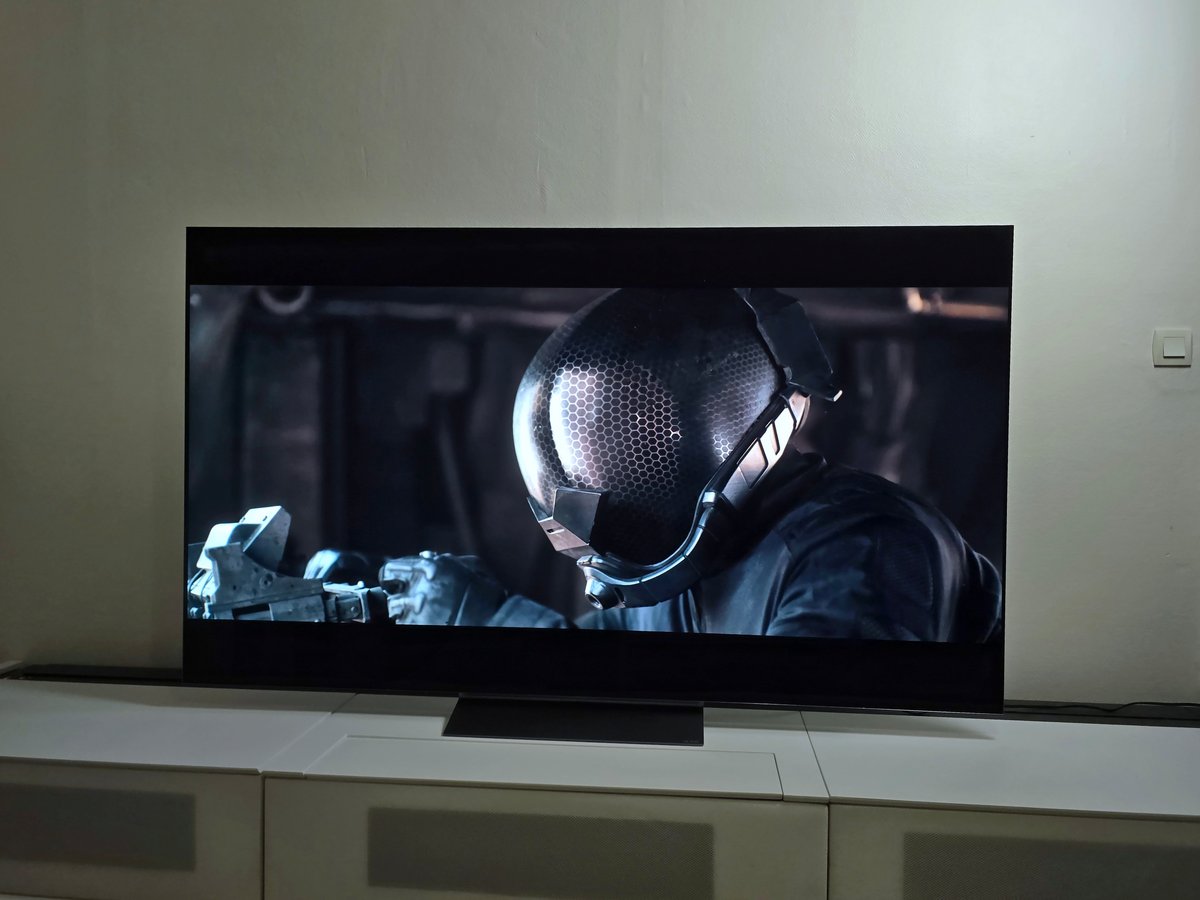
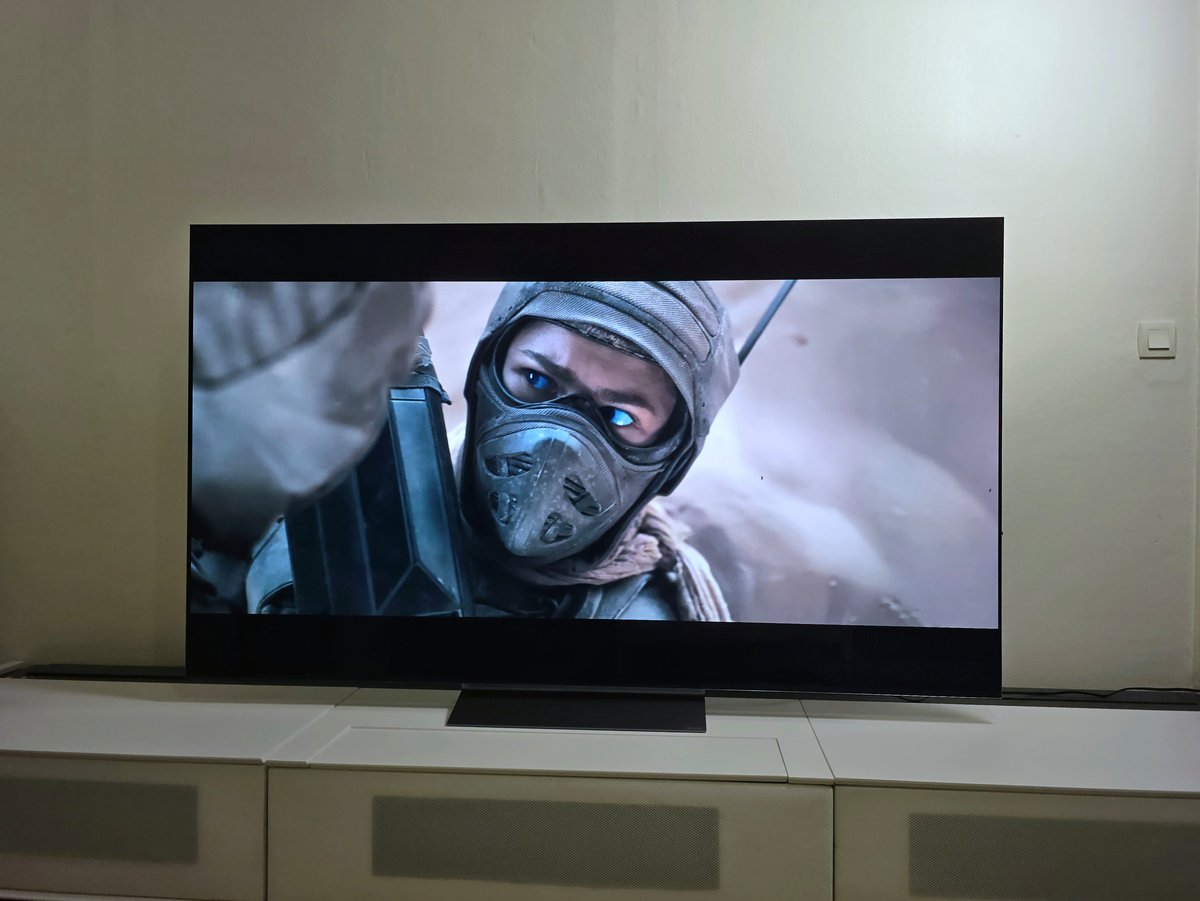
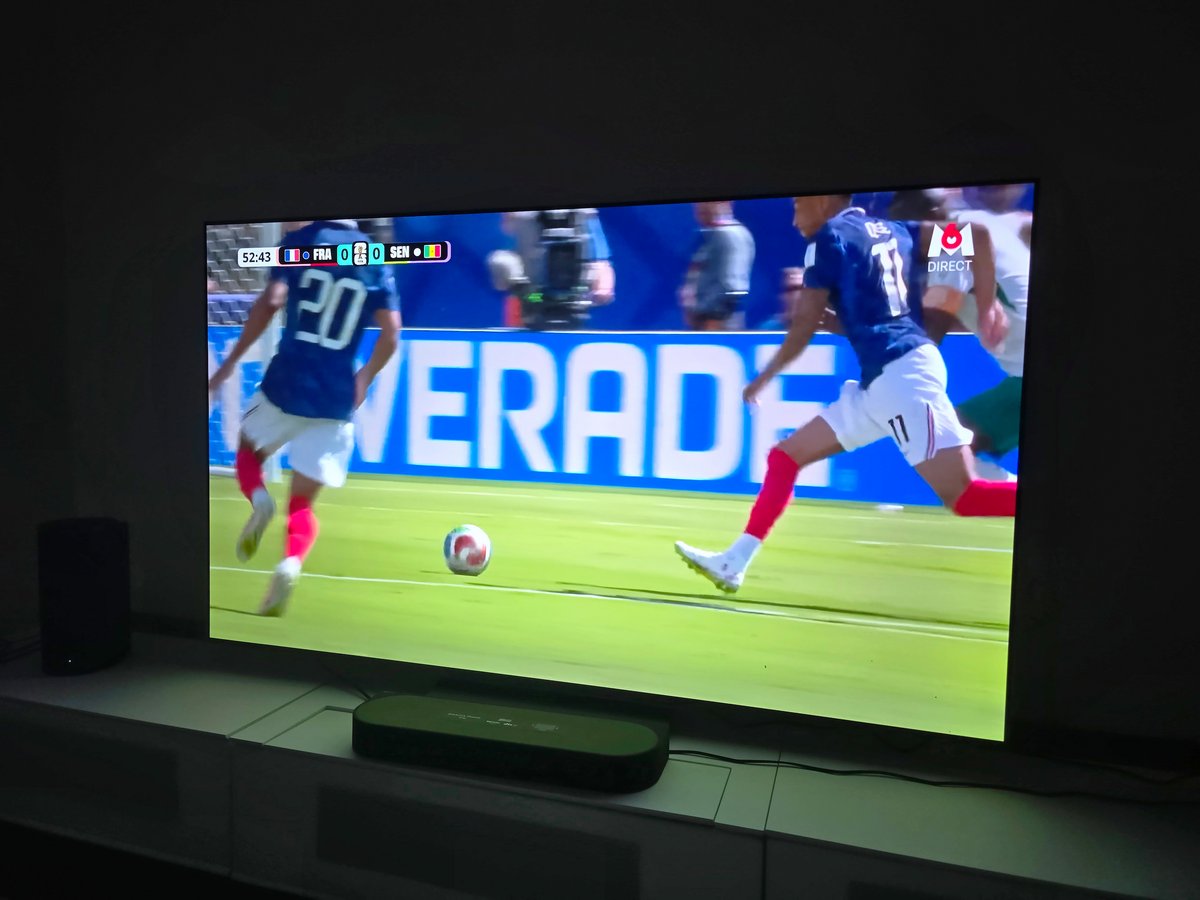
Le traitement vidéo confié au processeur Alpha 11 se montre également convaincant. Les contenus 4K propres sont restitués avec beaucoup de finesse, sans accentuation excessive des contours. Les sources plus compressées profitent d’un nettoyage efficace, même s’il faudra évidemment rester raisonnable avec les réglages de netteté et de réduction de bruit pour ne pas obtenir une image trop artificielle. Sur la diffusion des matches de Coupe du monde sur M6 par exemple, l’image est fluide et suffisamment nette, mais pas toujours aussi précise que ce que l’on peut attendre. En effet, sur une diagonale aussi grande, les limites des flux de streaming trop compressés restent visibles, mais le C6 parvient généralement à préserver une image stable, détaillée et agréable à regarder.
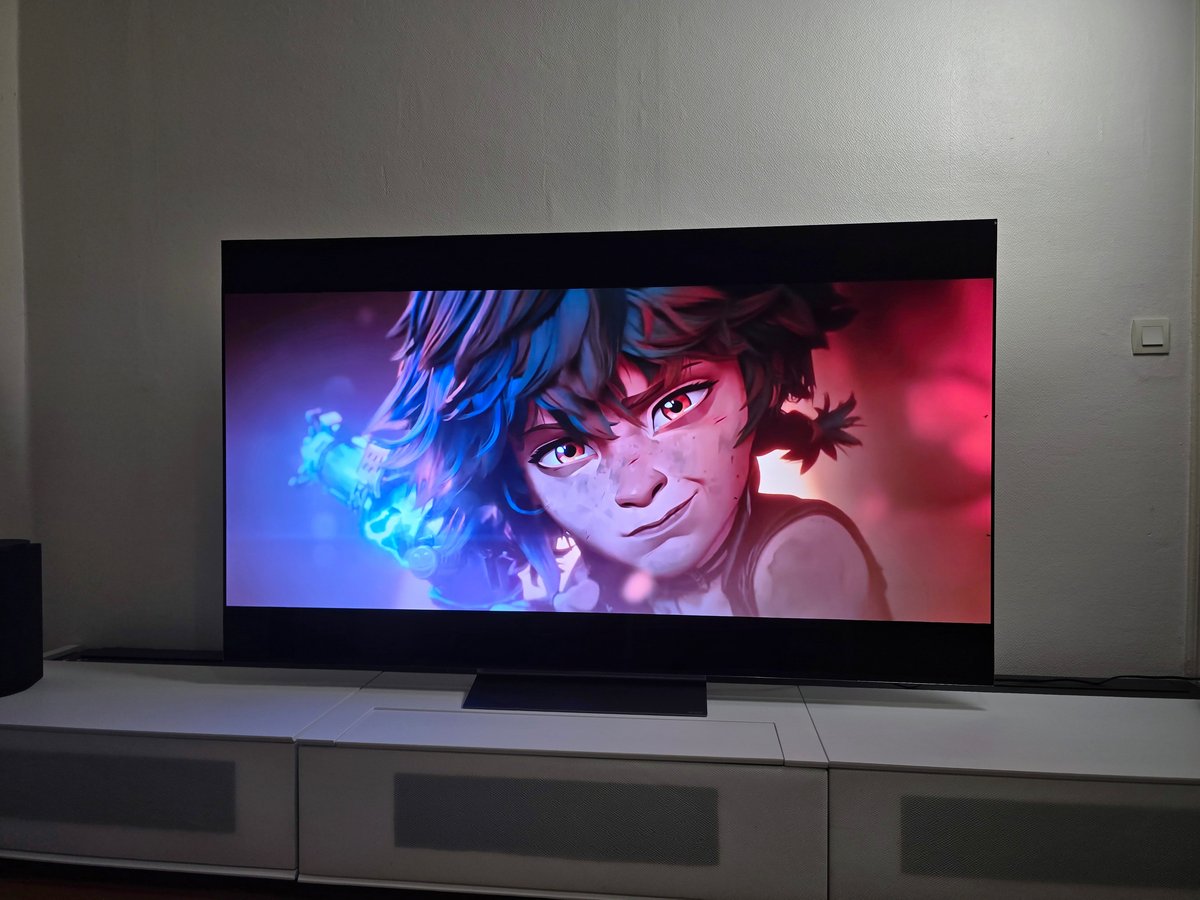
Les dégradés constituent aussi un point intéressant. Les précédents OLED de LG pouvaient encore montrer quelques limites sur certaines transitions difficiles, notamment dans les ciels, les fonds sombres ou les aplats colorés. Le 77C6 semble progresser sur ce terrain, avec des transitions plus douces et moins de banding visible sur les contenus bien masterisés. Tout n’est pas parfait pour autant : certaines scènes très exigeantes, notamment dans les rouges profonds ou les très basses lumières, peuvent encore laisser apparaître des transitions un peu moins naturelles, comme nous l’avons constaté dans Blade Runner 2049. Néanmoins, l’image paraît globalement plus propre et plus fluide dans ses nuances.
Face aux QD-OLED, la comparaison reste intéressante. Le LG OLED77C6 impressionne par sa luminosité, sa justesse et la profondeur de ses noirs, mais les modèles Samsung conservent encore un avantage sur certaines couleurs particulièrement saturées. Les néons, les flammes, les effets colorés ou les éclairages très vifs peuvent paraître un peu plus éclatants sur un QD-OLED haut de gamme. Cela ne rend pas l’image du LG terne, loin de là, mais cela rappelle que la technologie WOLED, même dans cette version Tandem avec Hyper Radiant Color, ne domine pas tous les terrains.
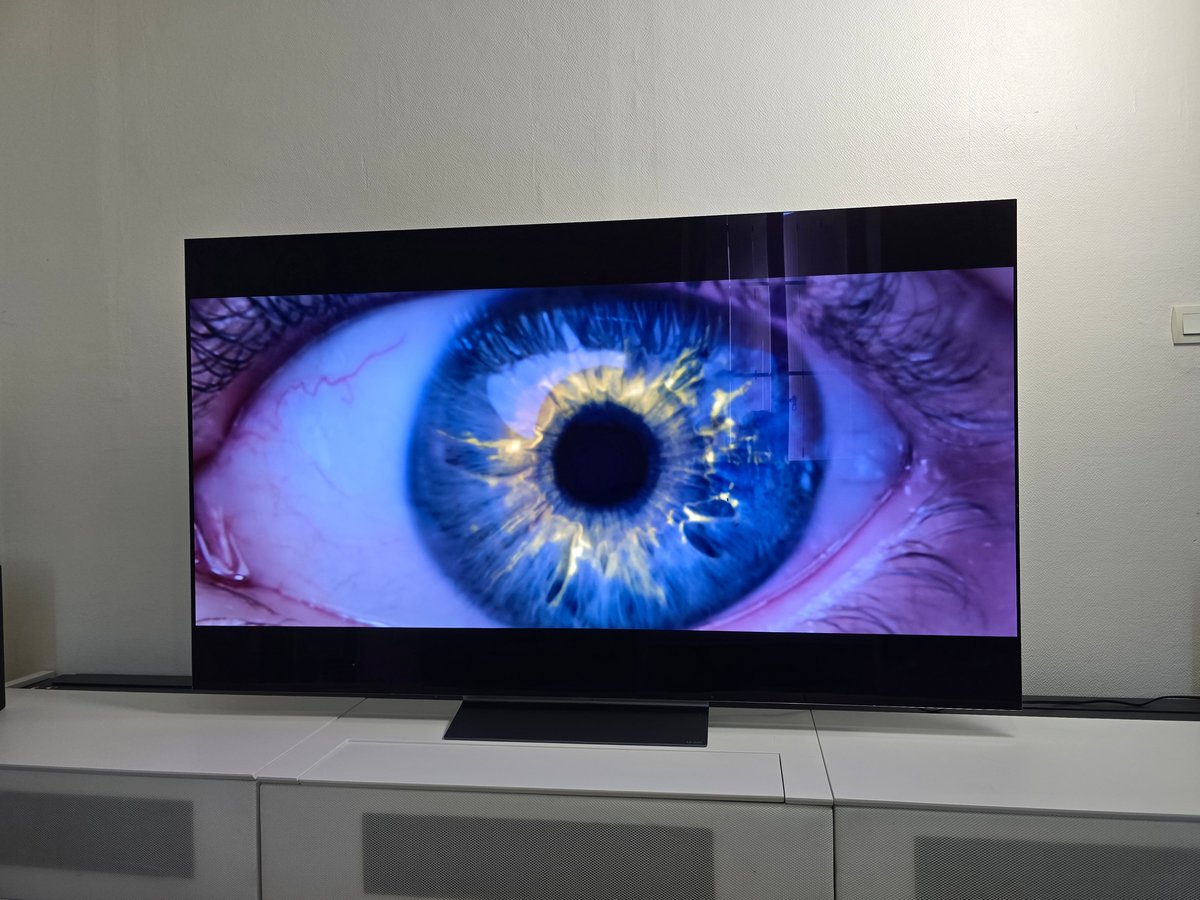
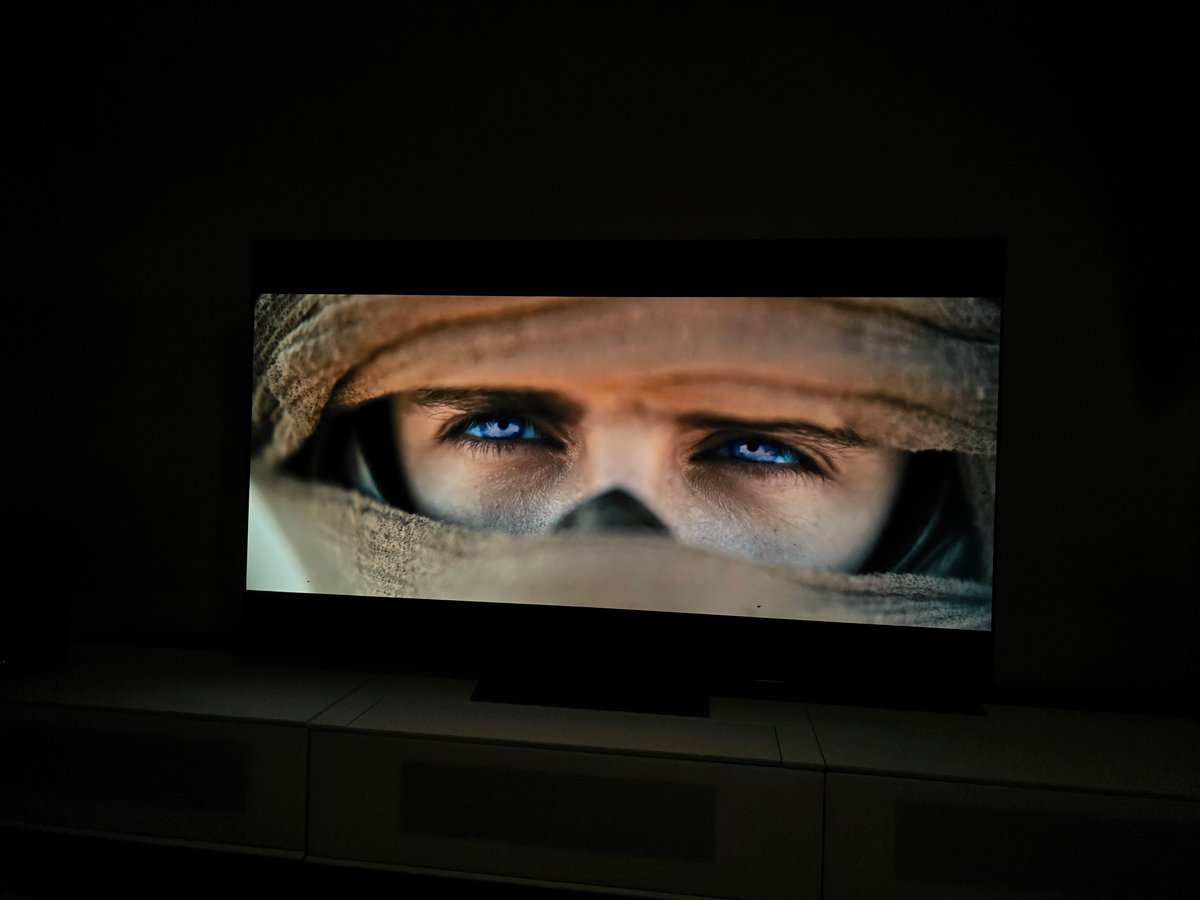
Enfin, en pièce sombre, le C6 est clairement dans son élément. Le contraste natif de l’OLED, l’absence de blooming et la luminosité accrue de la dalle Tandem produisent une image très spectaculaire, avec des scènes nocturnes profondes, des hautes lumières plus intenses et des détails bien préservés dans les zones sombres. C’est sans doute dans ces conditions que le 77C6 se rapproche le plus de la série G.
En pièce lumineuse, le bilan reste bon, mais plus nuancé. La réserve de luminosité permet de conserver une image lisible, bien mieux qu’avec une ancienne série C, mais la dalle brillante demeure sensible aux reflets directs. Une fenêtre face à l’écran ou une lampe mal placée peuvent encore gêner le visionnage avec une teinte violacée bien visible.
Daily usage
Beyond its more ambitious panel, the LG OLED77C6 remains primarily a C-series TV in its overall approach: a model designed to do everything, and to do so with minimal compromises.
Audio
That’s probably where the LG OLED77C6 most clearly reminds us of its C-series origins. The image steps up in ambition, brightness increases, the diagonal invites a true cinema experience, but the audio remains more traditional. The built-in system is enough to watch a program, follow a series, or enjoy daily content, with dialogues well emphasized and a generally clear sound. For everyday use, it’s not a deal-breaker.
However, the gap widens when you try to fully exploit the TV’s home cinema potential. On a 77-inch screen that immersive, you naturally expect more breadth, depth, and body in the lower end. Atmos effects remain contained, the soundstage lacks verticality, and the bass doesn’t have the support needed for the most spectacular soundtracks. The result remains clean, but it doesn’t quite match the ambition of the image.
Adding a soundbar, or better yet a full home cinema system, seems almost a given with such a model. LG keeps its ecosystems, notably with WOW Orchestra soundbars able to pair the TV speakers with external system speakers. It’s a promising path to strengthen the audio scene without sacrificing LG’s software integration.
Interface and features
WebOS continues to evolve toward a highly complete direction, with an interface that increasingly resembles a real multimedia hub. The home screen provides access to main streaming apps, HDMI inputs, content recommendations, user profiles, and LG’s home services. It’s rich and somewhat busy, but easy to navigate once you get used to the interface.
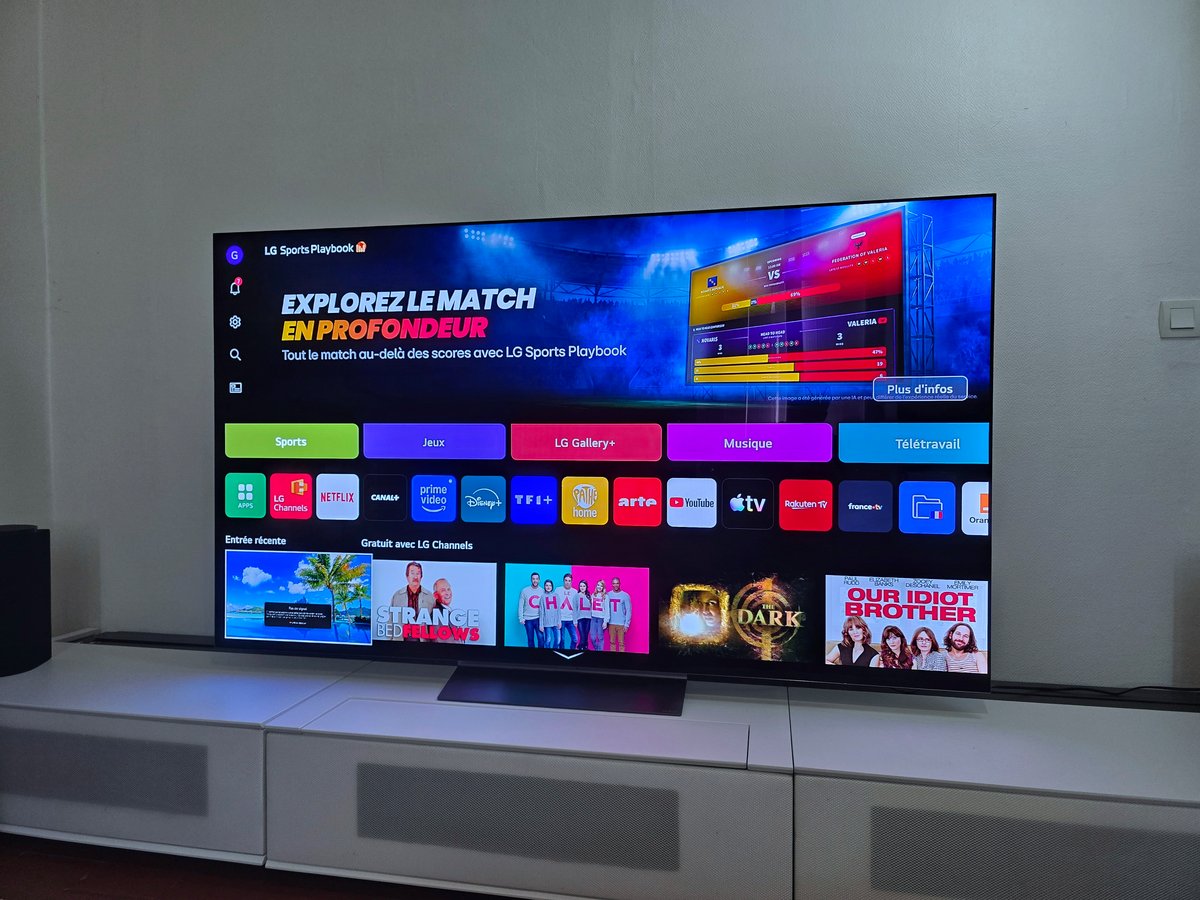
The Magic Remote keeps a notably unique edge on the market thanks to its gyroscopic pointer. Navigating menus, typing a search, or switching apps quickly remains highly effective, especially on such a feature-rich interface. You may still prefer the simplicity of more minimalist remotes, but LG’s keeps a real everyday relevance. The main drawback remains more hardware-based than functional: the lack of backlight, still regrettable on a TV of this level.
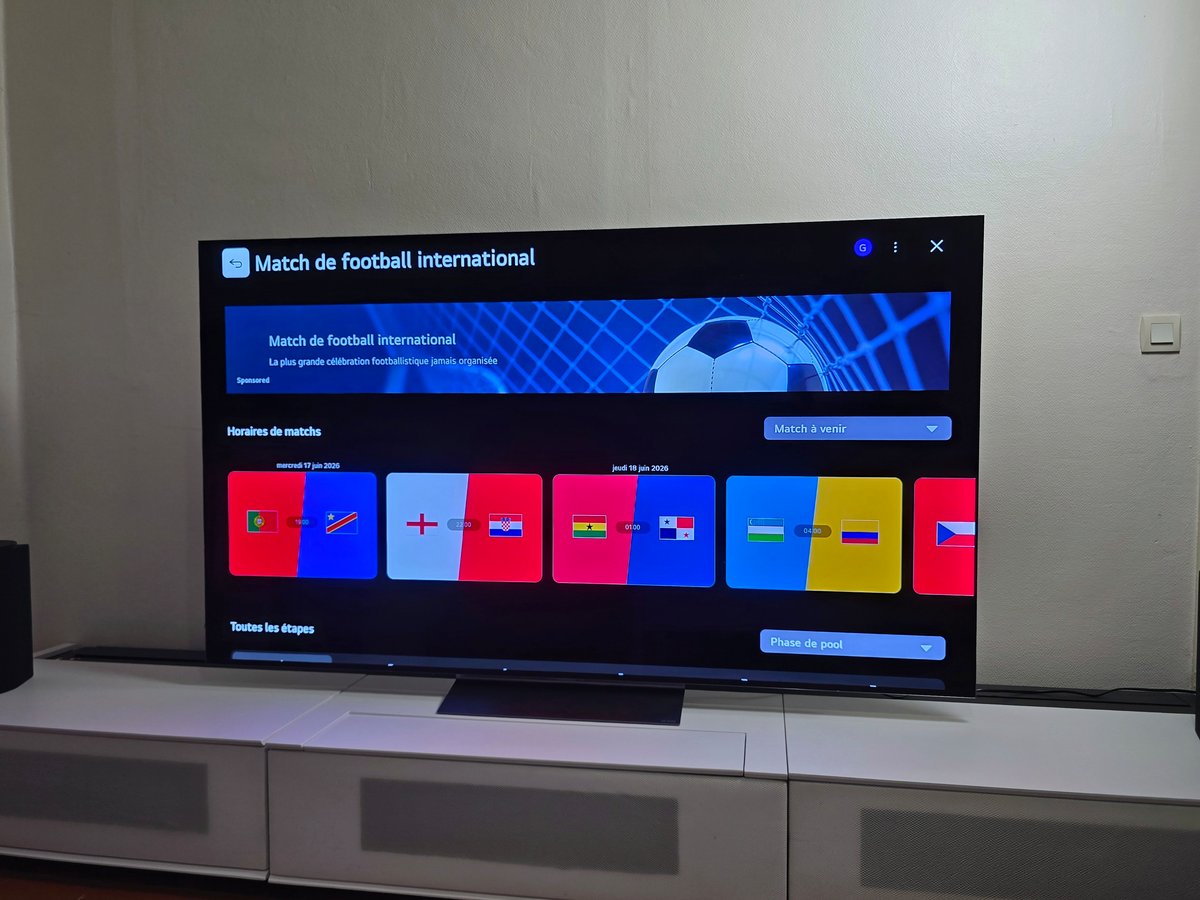
LG continues to push its artificial intelligence features, with personalized recommendations, automatic adjustments based on content, voice recognition for multiple users, and the ability to generate certain wallpaper backgrounds. As is common with this type of feature, not everything is essential, and some suggestions lean toward cosmetic rather than usage revolutions. Still, the set contributes to making the experience more customizable, especially in a home with multiple profiles using the same TV.
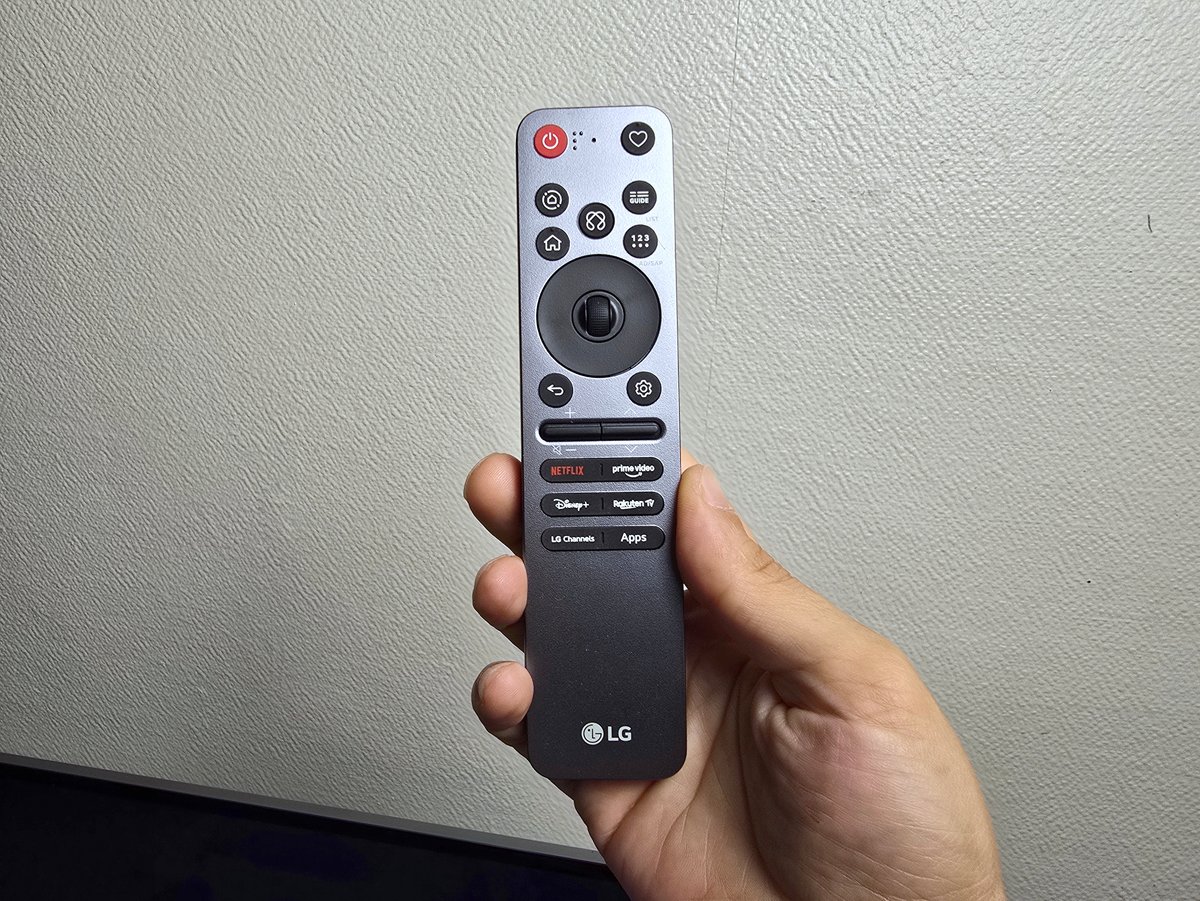
Finally, the app catalog poses no particular difficulty. Major streaming services are present, the interface remains smooth, and compatibility with AirPlay, Chromecast, and voice assistants facilitates integrating the TV into a broader connected environment. LG also promises several years of webOS updates, a persuasive argument when choosing a high-end TV, especially as embedded platforms sometimes age faster than panels themselves.
Gaming
The C-series still dominates one of its favorite domains here. The LG OLED77C6 checks virtually all boxes expected from a modern gaming TV: four HDMI 2.1 inputs, VRR support, ALLM, FreeSync Premium Pro and G-Sync, a low-latency mode, and 4K up to 165 Hz. For living-room consoles, the ceiling remains 120 Hz, but PC gamers have an extra margin here.
| Input lag on LG OLED C6 | ||
| Game Mode | Standard Mode | |
| Measured input lag (at 60 Hz) | 12.9 ms | 88.9 ms |
With 12.9 ms at 60 Hz in the Game optimization, the C6 feels perfectly responsive for console use. The Standard mode climbs to 88.9 ms, confirming the value of the dedicated gaming mode.
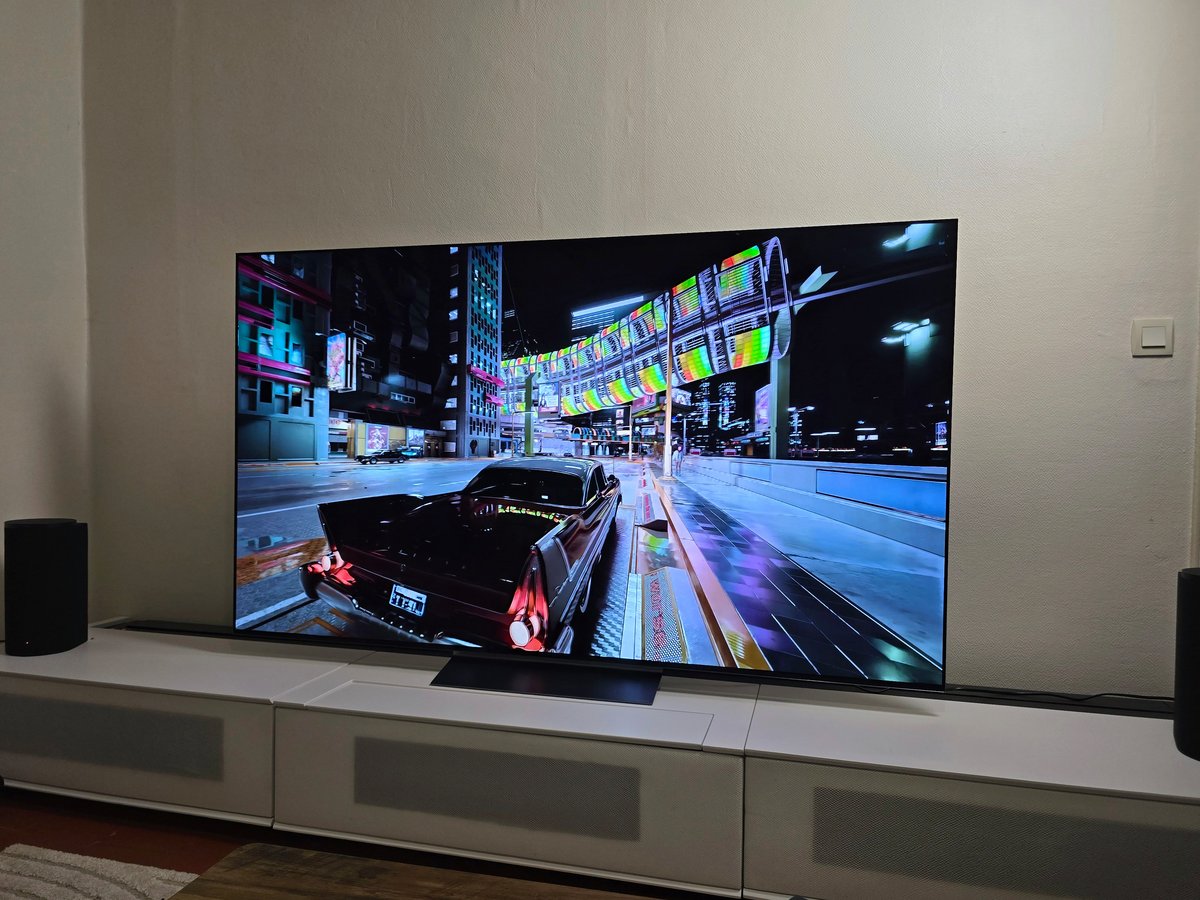
Game Optimizer remains one of the most practical dashboards on the market. It allows for quick checks of refresh rate, VRR, the image mode used, and specific game-type settings. Options to brighten shadows, adjust latency, or tailor renderings to different genres can be useful, provided you don’t distort the image too much.
Electrical consumption
As usual, to evaluate the LG OLED77C6’s consumption, we displayed a 10% white test pattern at 150 cd/m². Under these conditions, the TV consumes 55.9 W. Relative to the 77-inch panel area, this yields a density of 34.2 W/m². This is a particularly low figure, among the lowest we have measured, indicating significant gains in current OLED panels. Of course, as always, consumption varies greatly with the content displayed and the actual brightness demanded from the panel.
Design and connectivity
The LG OLED77C6 does not pretend to be a Gallery model. That’s one of the points that helps clearly distinguish this large C-series from LG’s higher-end references. Where the G series focuses on a more stately wall-mount integration, with a chassis designed to sit flush against the wall, the C6 keeps a more traditional approach: a slim, elegant TV, well finished, but primarily built to sit easily on a furniture cabinet.
The front face remains, of course, very clean. As is often the case with OLED, the bezels are minimal and the panel draws almost all attention. On a 77-inch diagonal, this is important: the TV inevitably asserts its presence in a room, but it avoids unnecessary filler around the image, unlike a Samsung S99H that takes the opposite route.
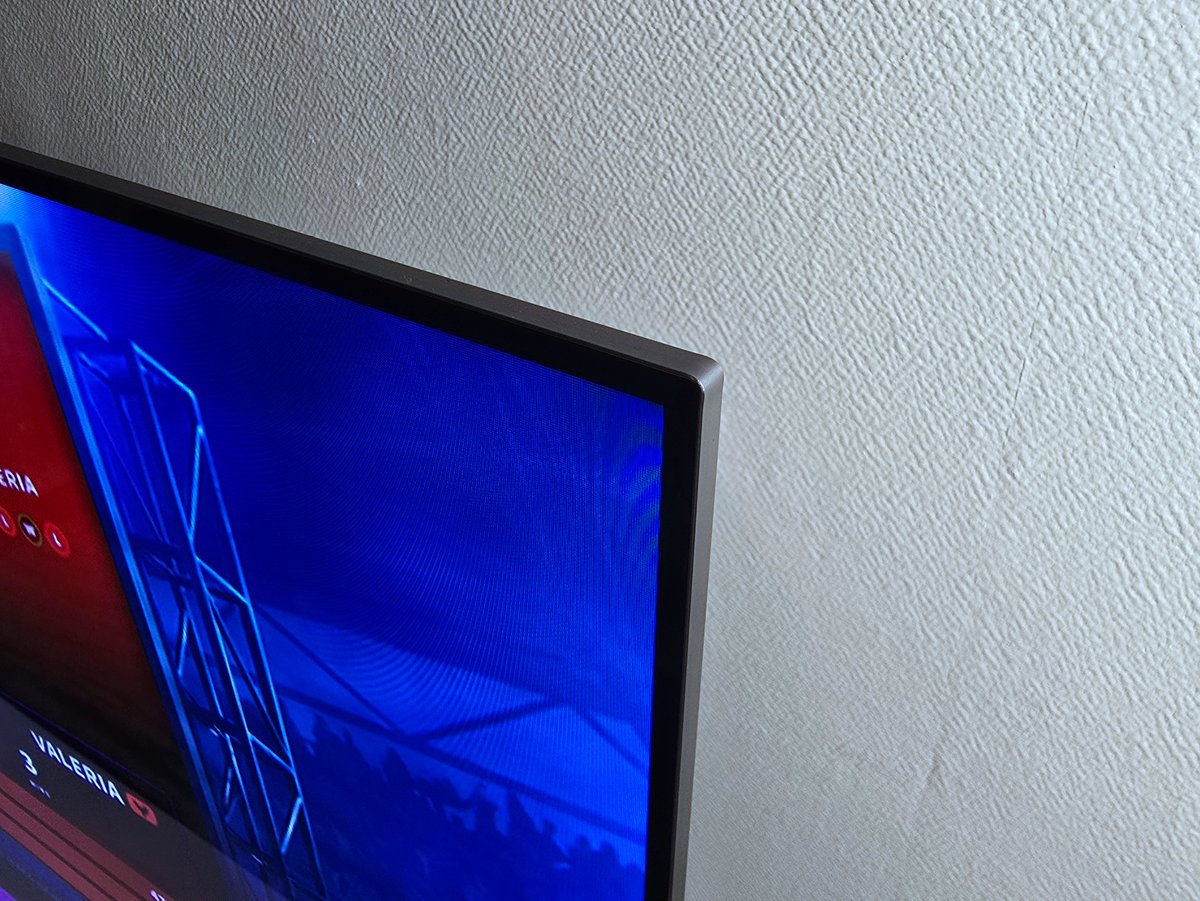
The central stand makes installation on a piece of furniture easier, which is not insignificant on such a generous diagonal.
On the connectivity side, LG preserves one of its strong advantages against some competition: the TV has four HDMI 2.1 inputs, all capable of handling the most demanding signals. This makes it possible to connect a PlayStation 5, an Xbox Series, a gaming PC, and an eARC soundbar simultaneously without having to choose between ports with varying completeness. On a TV aimed at versatility, this choice is much appreciated.
The rest of the connectivity covers the essentials expected from a high-end TV. There are USB ports for media playback or powering small accessories, an optical audio output, an Ethernet port, plus antenna and satellite inputs. Wireless connectivity relies on Wi‑Fi and Bluetooth.
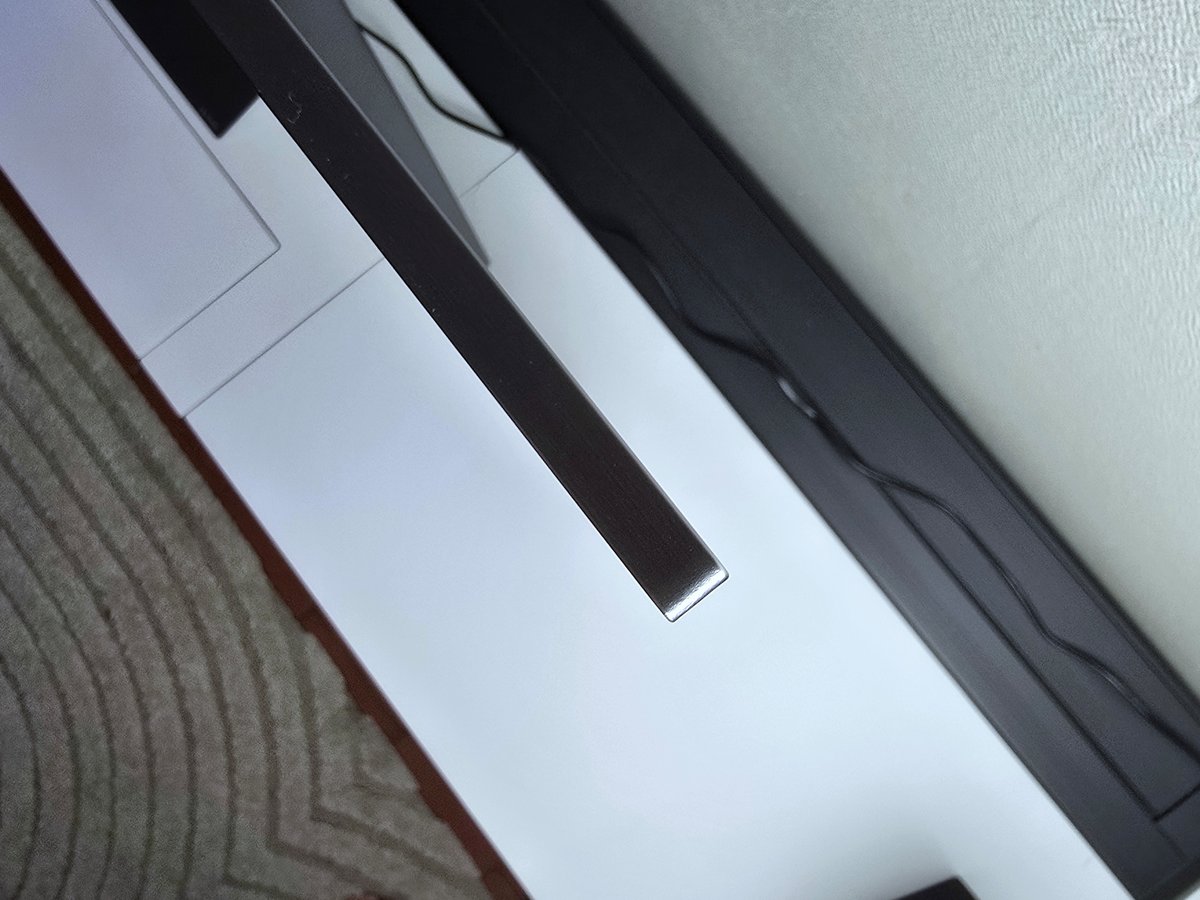
The support for VRR, ALLM, 4K at high refresh rates, and eARC reinforces the impression of a product built to last. Add to that the conventional connectors—USB ports, optical out, Ethernet, antenna and satellite inputs, plus wireless connectivity. Nothing particularly surprising, but the overall offering covers the vast majority of expected uses for a premium TV.
It’s also worth noting LG’s usual absences. The C6 still does not support HDR10+, which is regrettable for users who want dynamic HDR formats covered, even if Dolby Vision remains well entrenched in streaming and UHD Blu-ray ecosystems. The absence of DTS will also bother those who regularly play local files or certain discs with a DTS audio track.
Overall, the LG OLED77C6 confirms its hybrid positioning. Its connectivity is flawless for gaming as well as modern home cinema, its design remains elegant and well-balanced, but it doesn’t attempt to rival the more premium, wall-integrated approach of the G series. A boundary clearly remains between the two ranges, though it becomes much thinner when it comes to image.
Clubic’s verdict on the LG OLED C6
The LG OLED77C6 isn’t just another annual evolution within an already well-established Cs series. On this 77-inch diagonal, LG clearly changes the product’s nature. The Tandem panel, Hyper Radiant Color technology, and the Alpha 11 AI 4K Gen 3 processor allow the TV to cross a very clear HDR threshold, delivering brightness far above the C5, remarkable color fidelity, and an image output that seriously approaches what is typically expected from a G-series model. Of course, we’d have liked these refinements to trickle down to smaller diagonals, such as 55 and 65 inches… perhaps next year?!
Moreover, this closer alignment does not mean the C6 completely erases LG’s hierarchy. The G series still retains an edge in peak brightness and, of course, in design. But that’s precisely what makes the 77C6 interesting: it doesn’t try to be a disguised G; it simply pushes the Cs formula further than expected, blurring the line between the two ranges.
In practical use, the TV proves to be particularly convincing. HDR content benefits from a genuine resurgence of intensity, blacks stay flawless, video processing is solid, webOS remains comprehensive, and the gaming experience remains among the most refined on the market with four HDMI 2.1 ports, VRR, ALLM, and 4K up to 165 Hz. Limitations are more conventional: reflections are still noticeable in bright rooms, HDR10+ and DTS are absent, the remote is still not backlit, and the built-in sound quickly benefits from a soundbar to complement the experience.
The LG OLED77C6 thus stands as one of the most interesting large OLEDs of its generation. It doesn’t fully replace a G-series for those chasing maximum brightness and a more premium wall integration, but it significantly narrows the gap with LG’s top-tier offerings while preserving the versatile spirit of the Cs. An excellent large-format OLED, more ambitious than ever, and probably one of LG’s best balanced choices for cinema lovers and gamers alike.
- Dalle OLED Tandem très lumineuse sur cette diagonale de 77 pouces
- Excellent color fidelity in SDR and HDR
- Parfaite contraste OLED, noirs profonds et détaillés
- Très bon rendu HDR, plus proche de la série G que des anciennes Cs
- Alpha 11 video processing convincing
- Quatre entrées HDMI 2.1 complètes
- WebOS complete and fluid
- Consommation maîtrisée pour un 77 pouces
- Toujours pas de HDR10+, ni de décodage DTS
- Audio intégré trop limité pour une telle diagonale
- Dalle brillante sensible aux reflets directs
- BT.2020 encore en retrait face aux meilleurs QD-OLED
- Télécommande non rétroéclairée
9
9
8
10
9
10
RDC
Futureland
EasyLounge.com
Fnac
Fnac
All measurements in this test were recorded with the CalMAN Ultimate software, a Calibrite Display Plus HL probe, and a Leo Bodnar input lag meter.

Daniel Brooks
I cover everyday products with a practical eye, from kitchen tools and home essentials to smart gadgets and consumer trends. My goal is to help readers understand what is genuinely useful, what is worth the price, and what deserves a second look before buying.