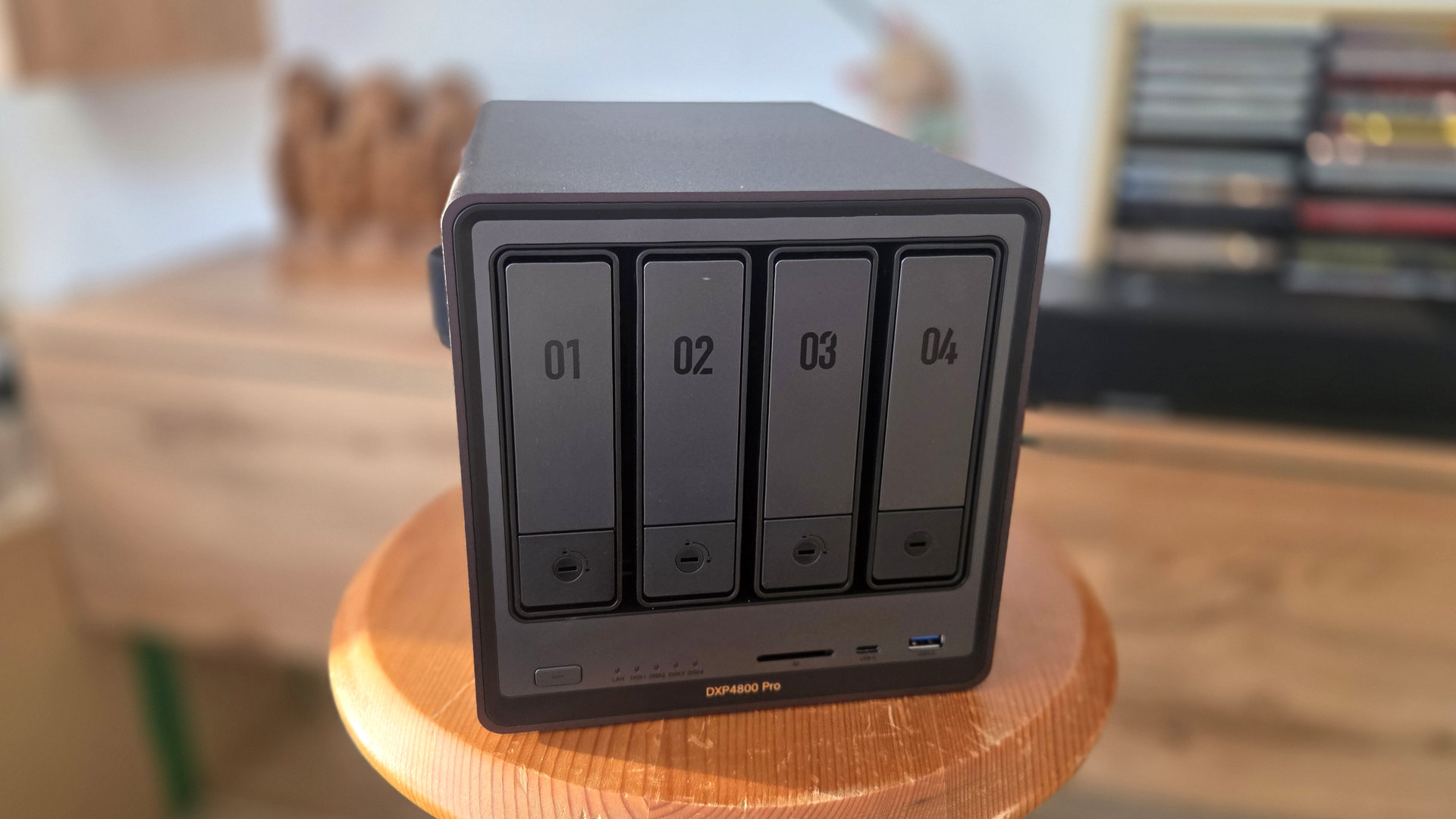
More ambitious and bolder than ever, UGREEN is taking the NAS scene head-on with a product range that still shies away from rackable models (for how long?) but eyeing every other category. The NASync DXP4800 Pro is, to date, the most premium UGREEN product to have passed through our hands.
8 / 10
Best Prices
amazon.fr
- Rugged metal chassis
- Powerful CPU and capable iGPU
- 10 GbE RJ45 connector
- RAM expandable up to 64 GB
- 128 Go of eMMC (system)
- SD card reader
- Sturdy metal chassis
- Powerful CPU and solid iGPU
- 2x 10 GbE RJ45 ports
- RAM up to 64 GB
- 128 Go of eMMC (system)
- SD card reader
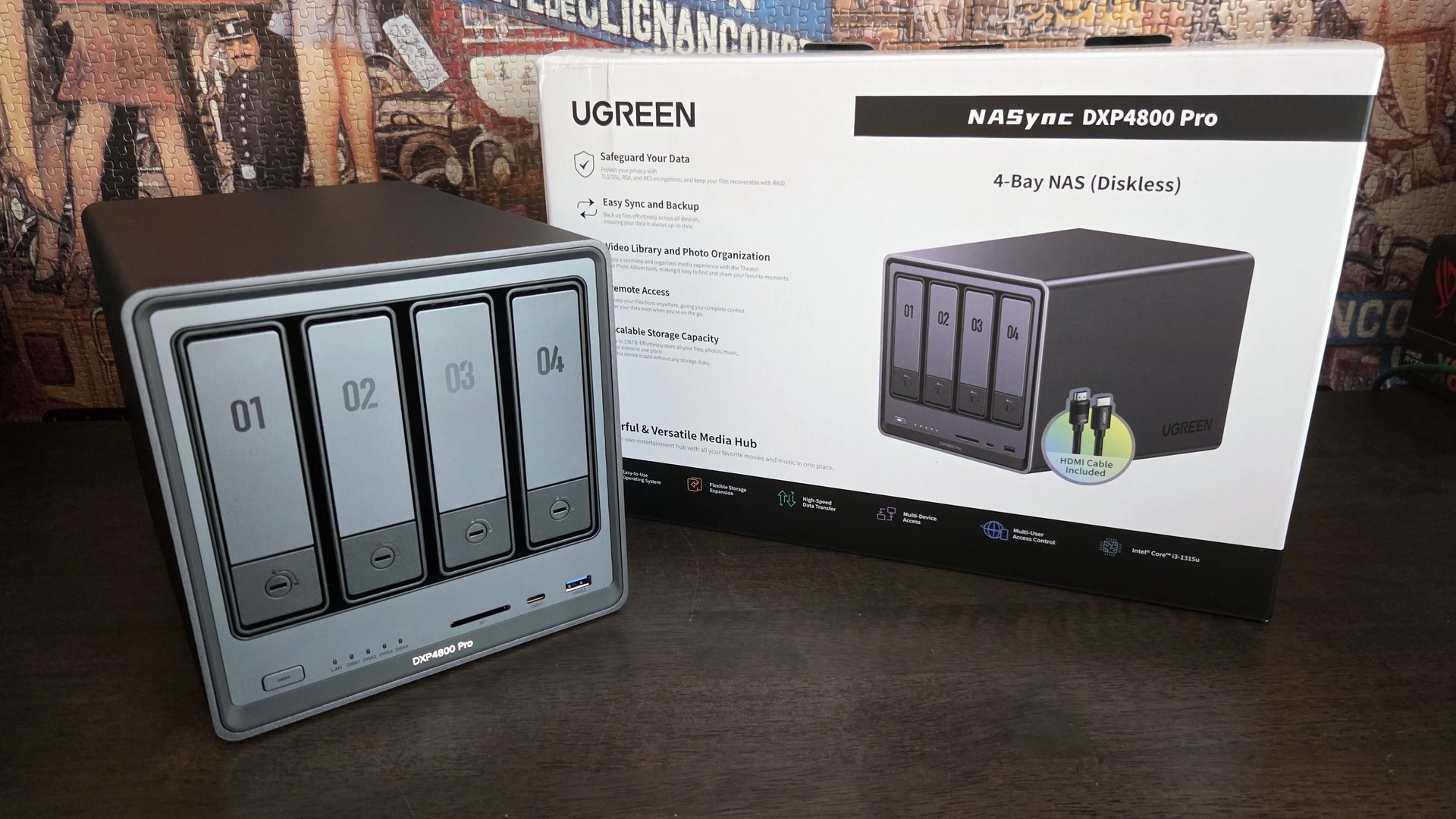
A Well-Executed Design, But with a Familiar Look
As always, it presents a deeper footprint than it is wide or tall. It measures exactly 257 x 178 x 178 millimeters and weighs about 3.8 kilograms. Yes, that’s a substantial unit on the desk, especially since, as usual, you also have to account for the power supply’s volume and weight—measuring 165 x 70 x 31 mm and weighing around 520 grams.
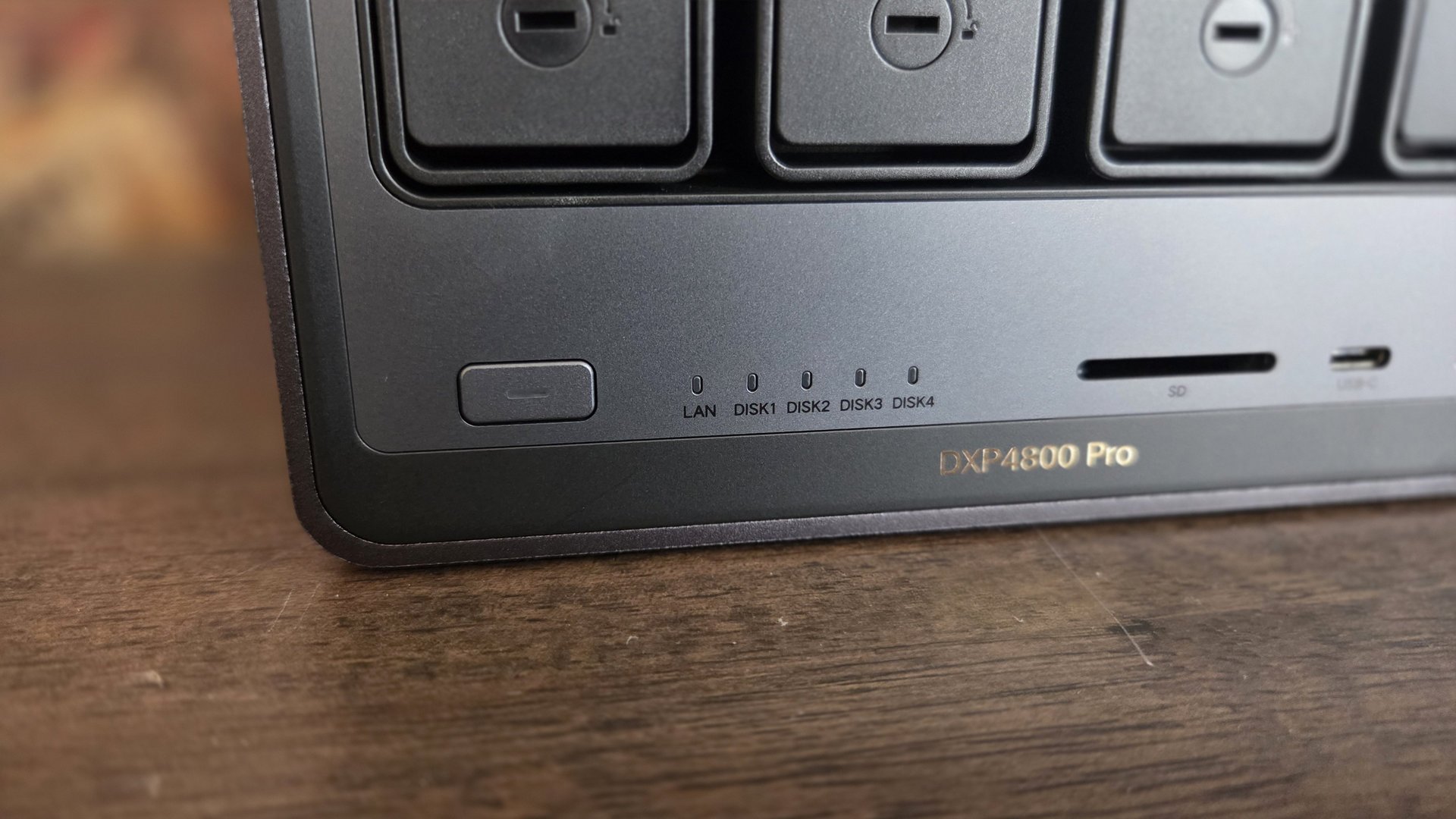
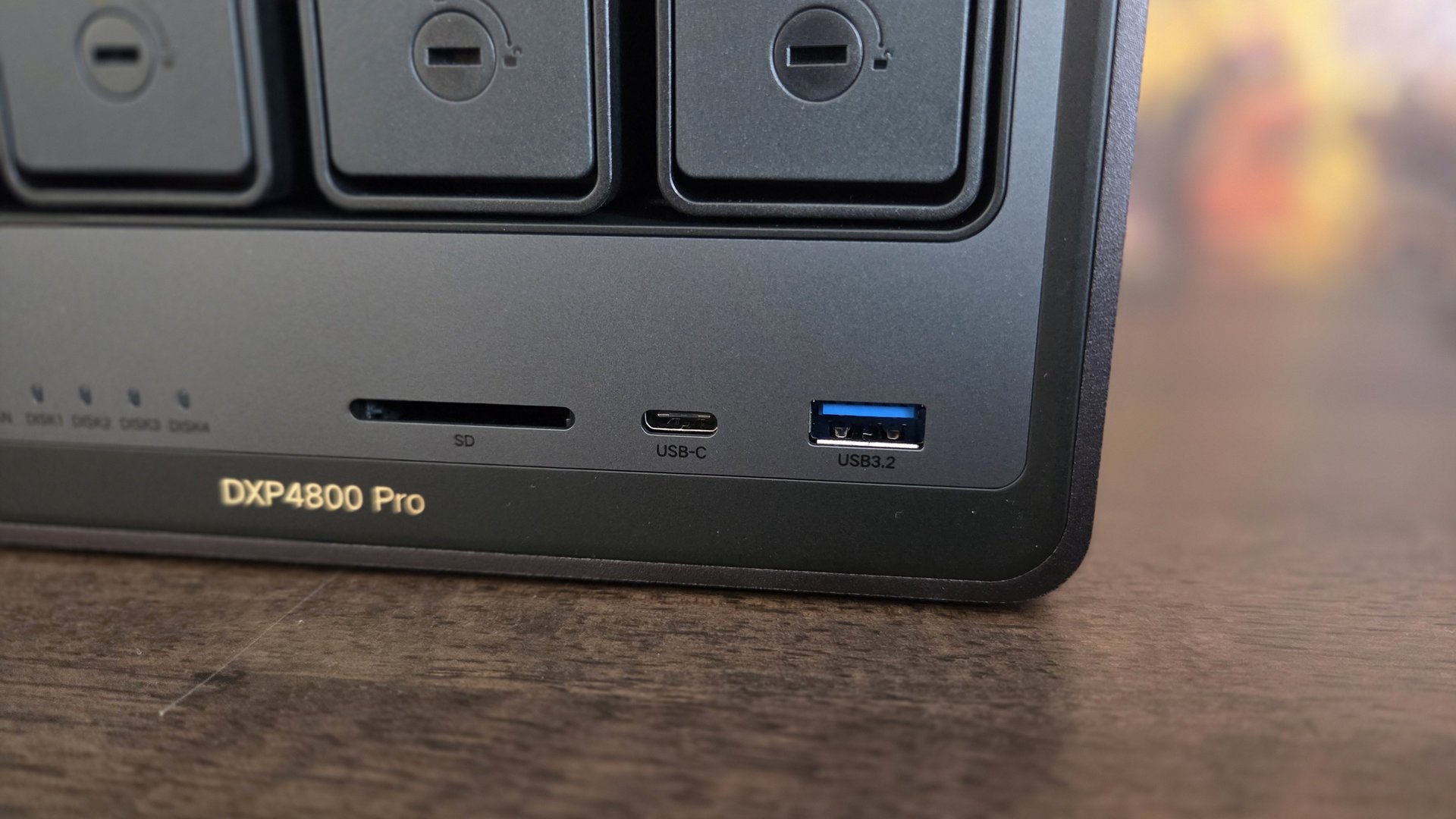
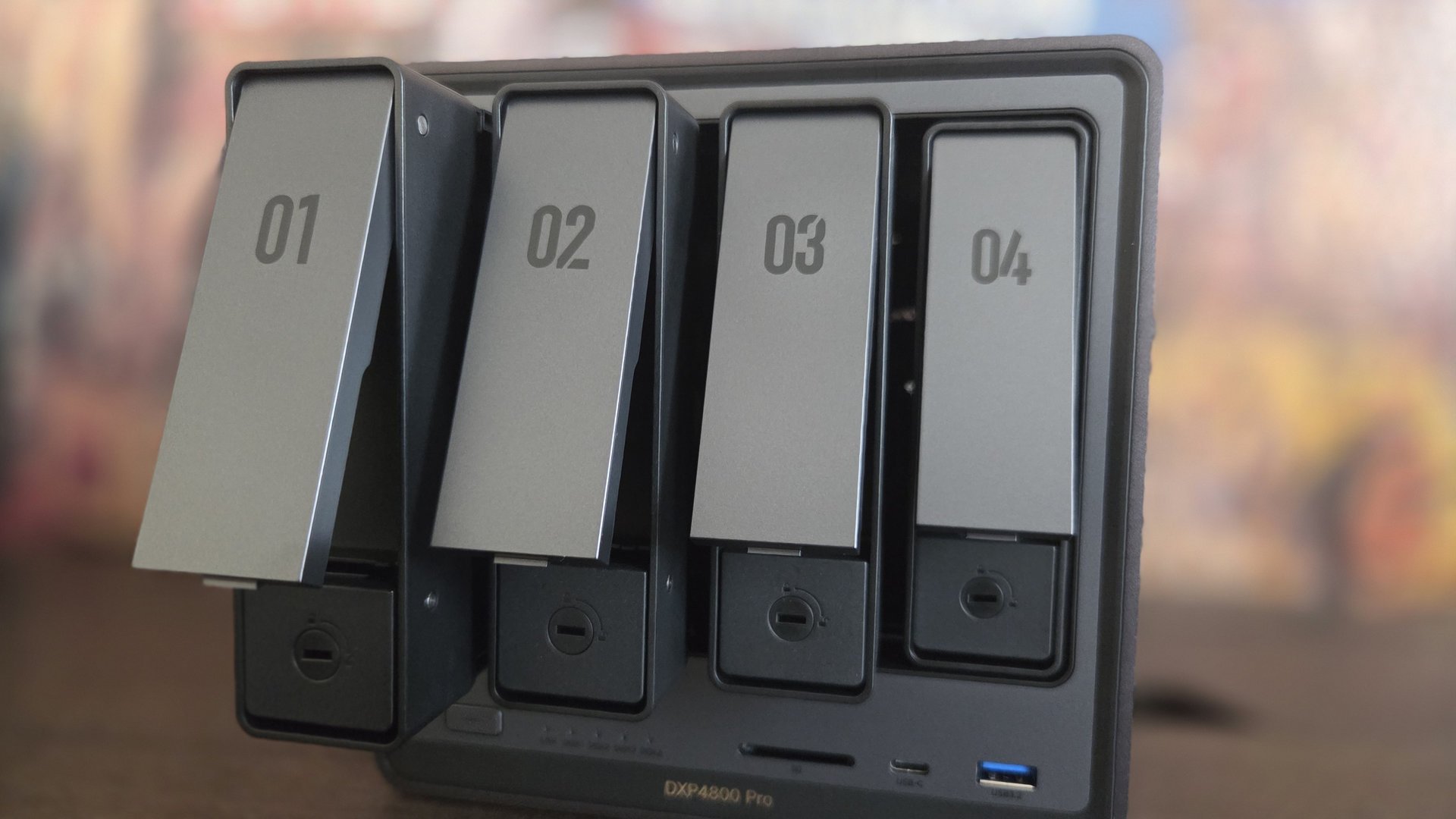
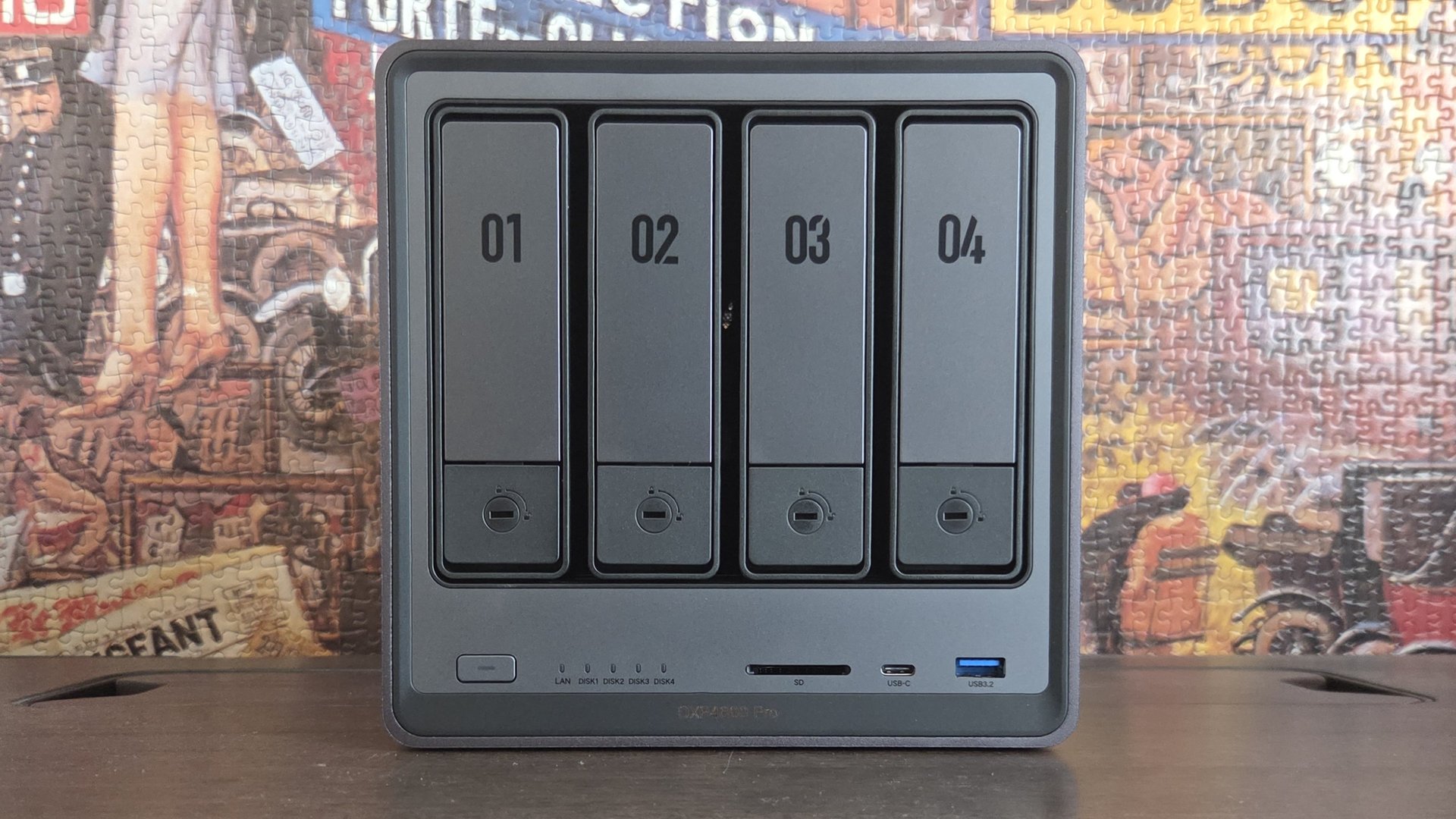
As with the DXP4800 GT, the 3.5-inch bays are front-mounted and the units must be inserted into extractable, lockable drawers. Simple and practical. As with the DXP4800 GT, there are six front control LEDs in addition to the power button, two USB 10 Gbps ports (one Type-C, one Type-A) and a SD card reader. Nothing to complain about.
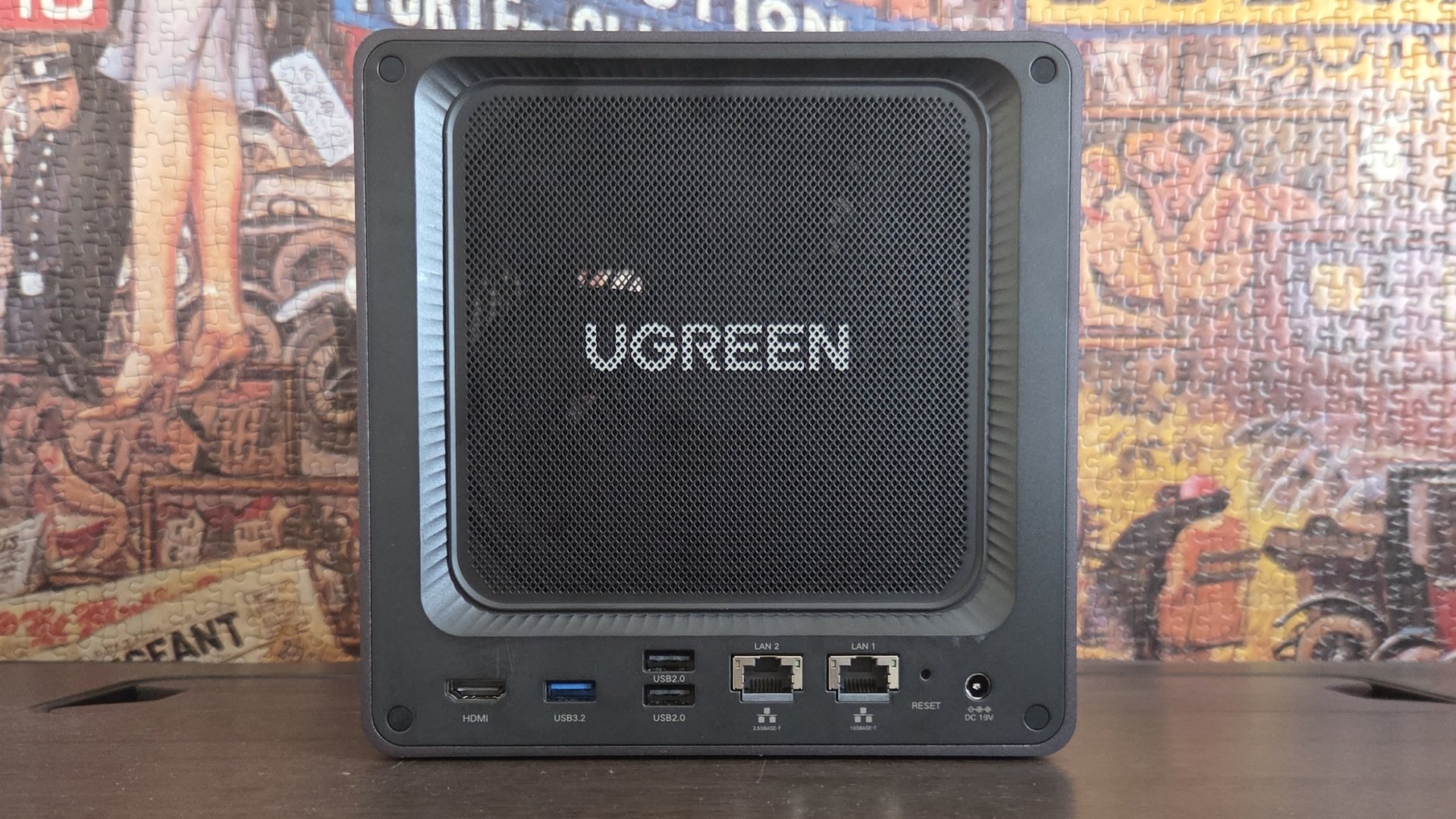
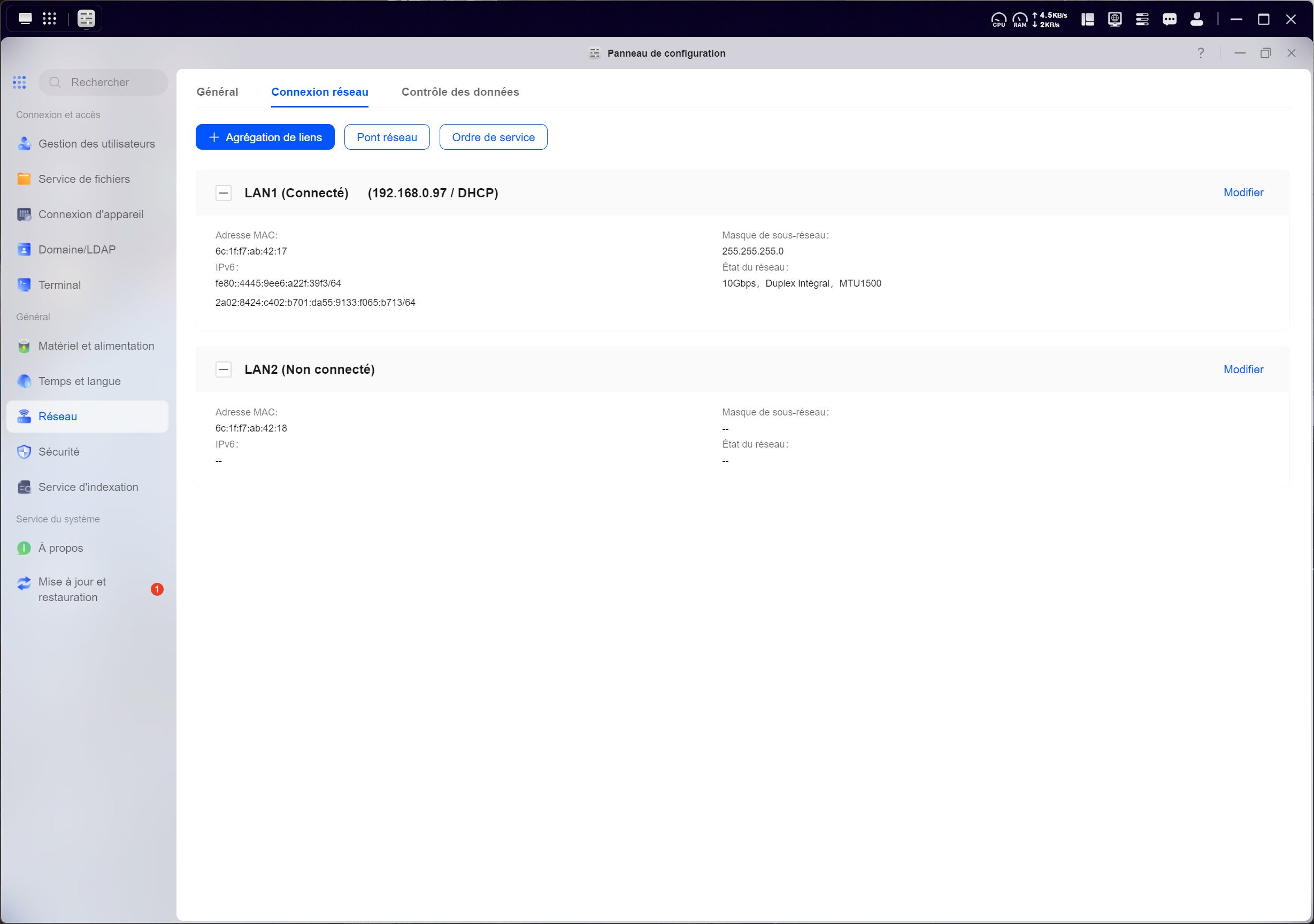
On the back, then, we find something akin to the DXP4800 GT but in a diminished form. The HDMI 2.1 port (4K@60Hz) remains, as does the power input and the two USB-A 2.0 ports (480 Mbps). However, the USB-C moves up to 5 Gbps and we only get a single 10 GbE RJ45 port. A second port is indeed present, but “only” at 2.5 GbE. For most targets of such a NAS, that won’t be a problem, but it’s good to know.
Features and Software Interface
From a design standpoint, UGREEN isn’t far from flawless, but—as you may have guessed—the DXP4800 Pro doesn’t drastically alter the formula. Yet, justify a price about 100 euros higher than the DXP4800 GT, you must—but the answer lies inside the machine. It’s no longer an AMD Ryzen Embedded R2514 powering the beast, but an Intel Core i3-1315U with two additional cores and higher clock speeds.
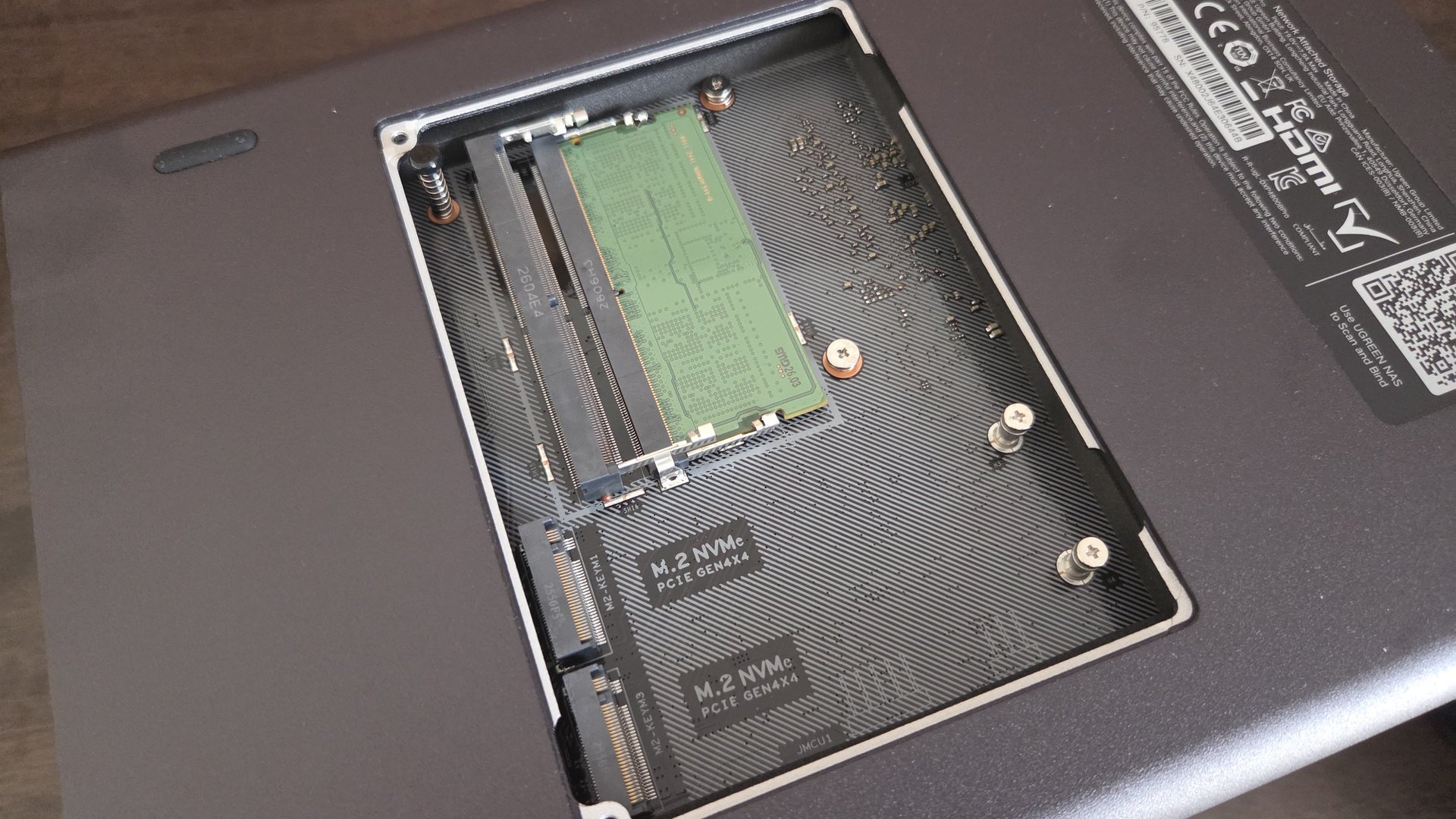
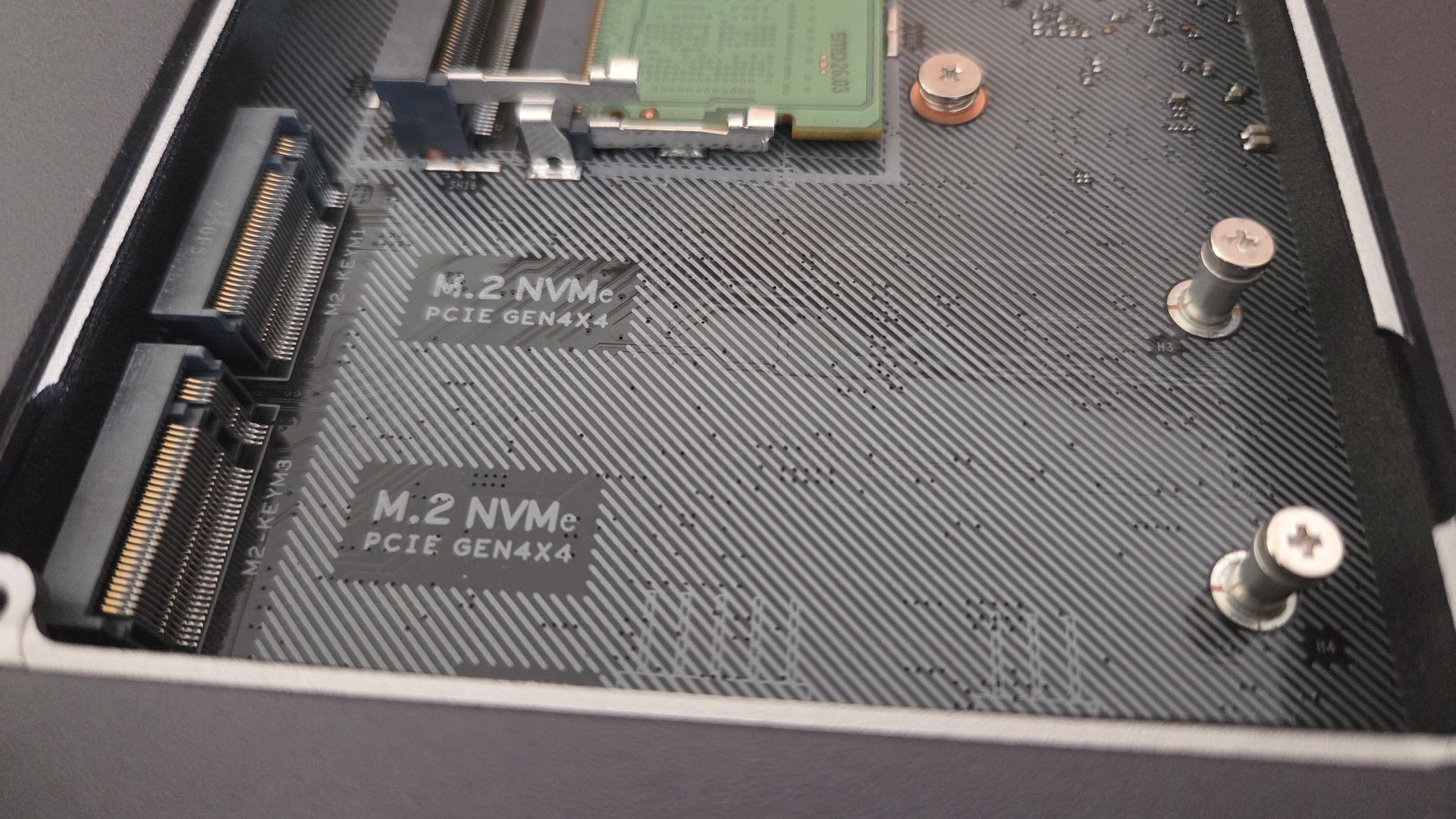
For the rest, if you’ve read our GT test of the DXP4800 GT, you’ll be in familiar territory here. UGREEN still relies on four drawers to insert storage units from the front of the NAS. Nothing unusual to note here aside from the drawers functioning perfectly, accepting 2.5- and 3.5-inch drives and each drawer features a small lock to prevent mishandling.
Of course, UGREEN provides everything needed to manage users, guest accounts, user groups, and storage quotas. Snapshots, virtual machines, cloud data management, and surveillance are other features accessible directly. Unfortunately, since our previous UGREEN tests, the brand remains noticeably behind the sector leaders. It’s not surprising—you don’t build an entire software ecosystem with a snap of the fingers.
When it comes to dimensions, the device is a substantial brick, yet it remains manageable. On the back, the ports mirror the GT variant but with some concessions: HDMI 2.1 (4K@60Hz), power input, and two USB-A 2.0 ports. The USB-C is upgraded to 5 Gbps, and there is only a single 10 GbE RJ45 port. A second port exists, but only at 2.5 GbE. For most NAS targets, this is not problematic, but it’s good to know.
Heating, Noise, and Performance
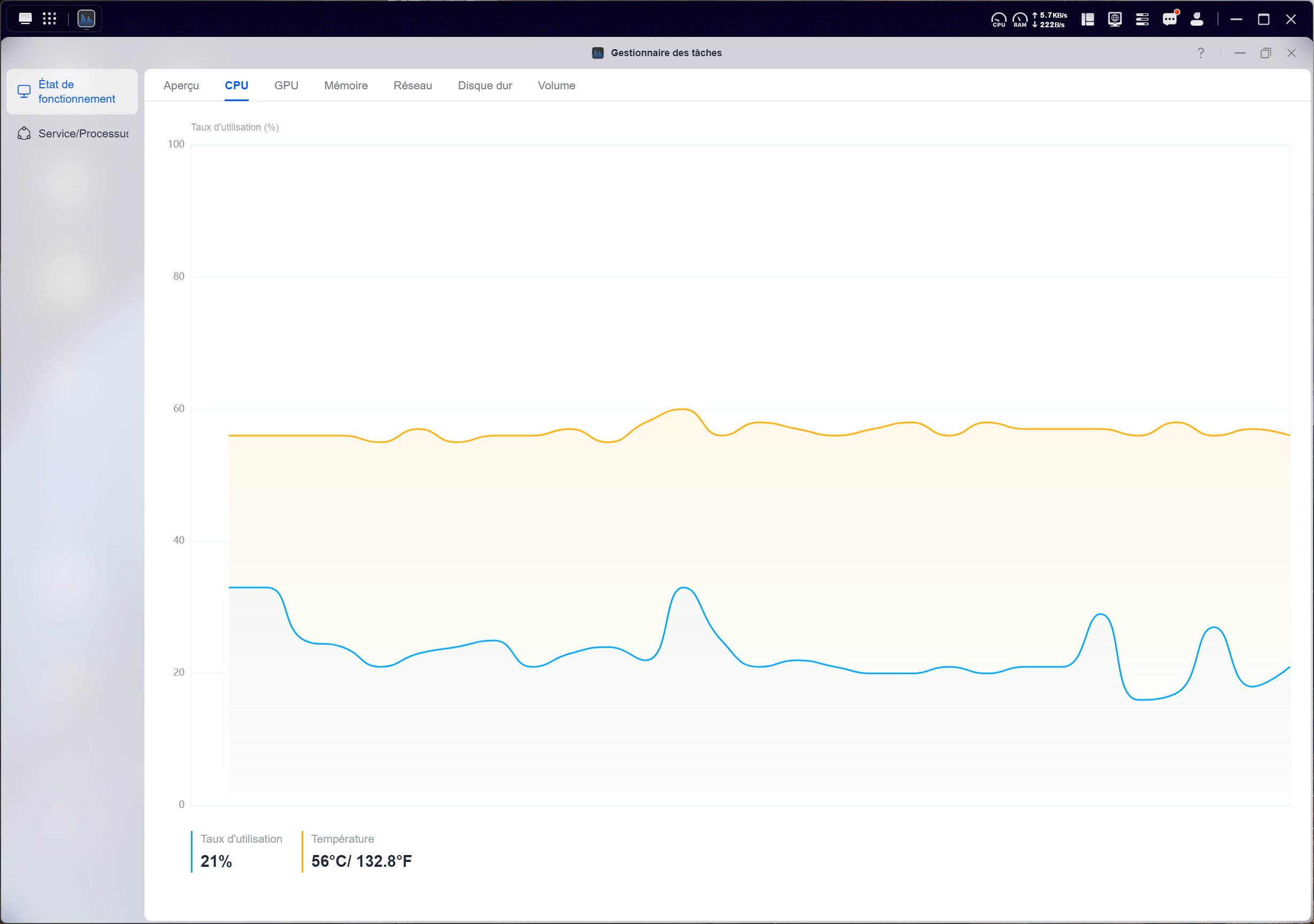
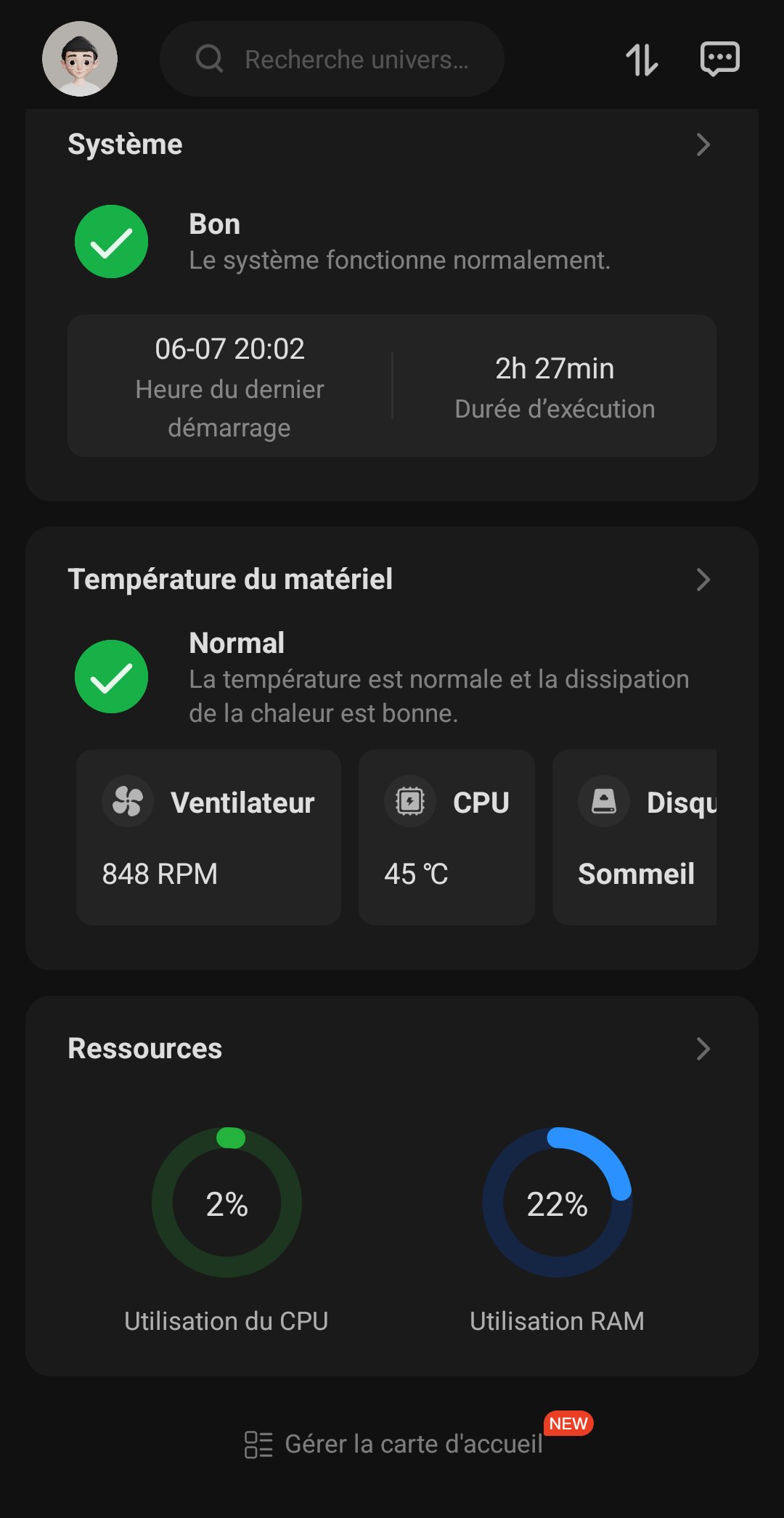
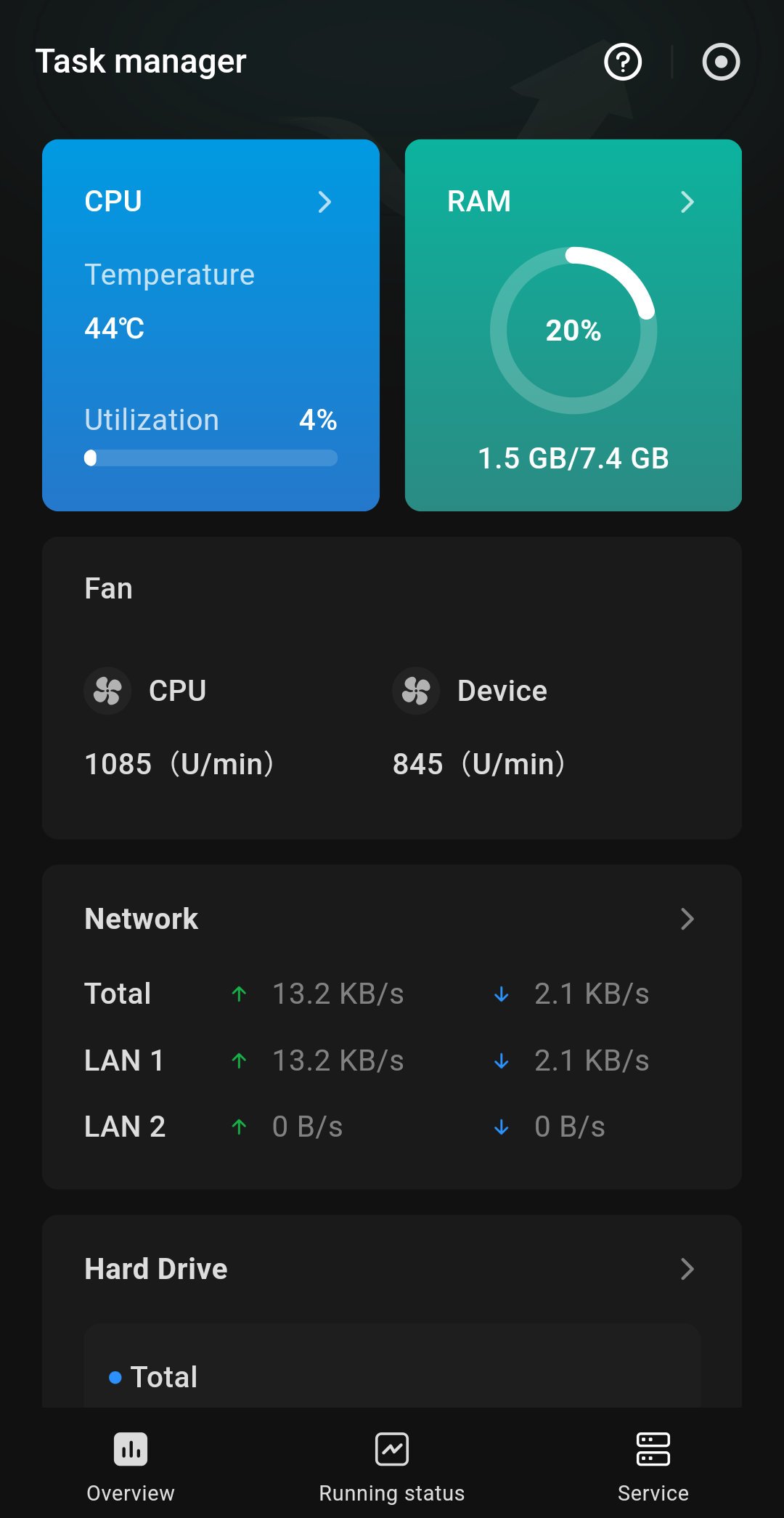
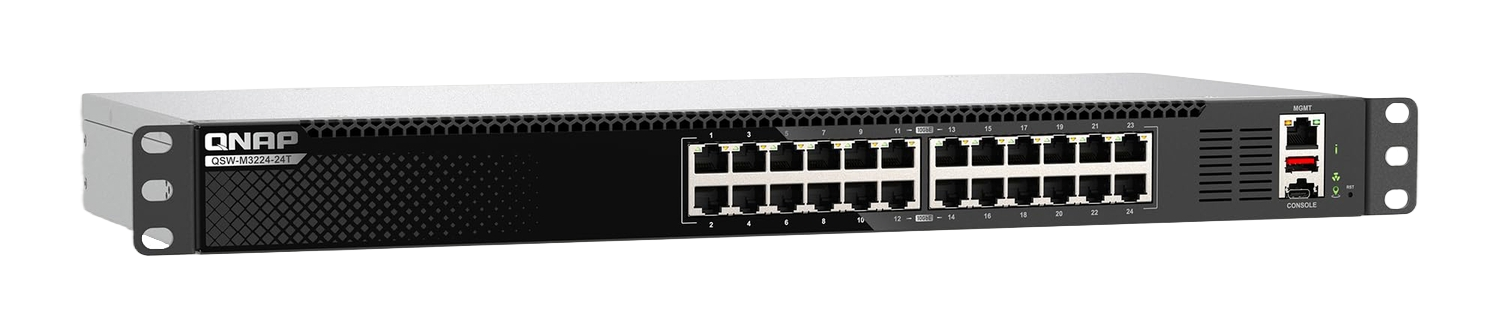
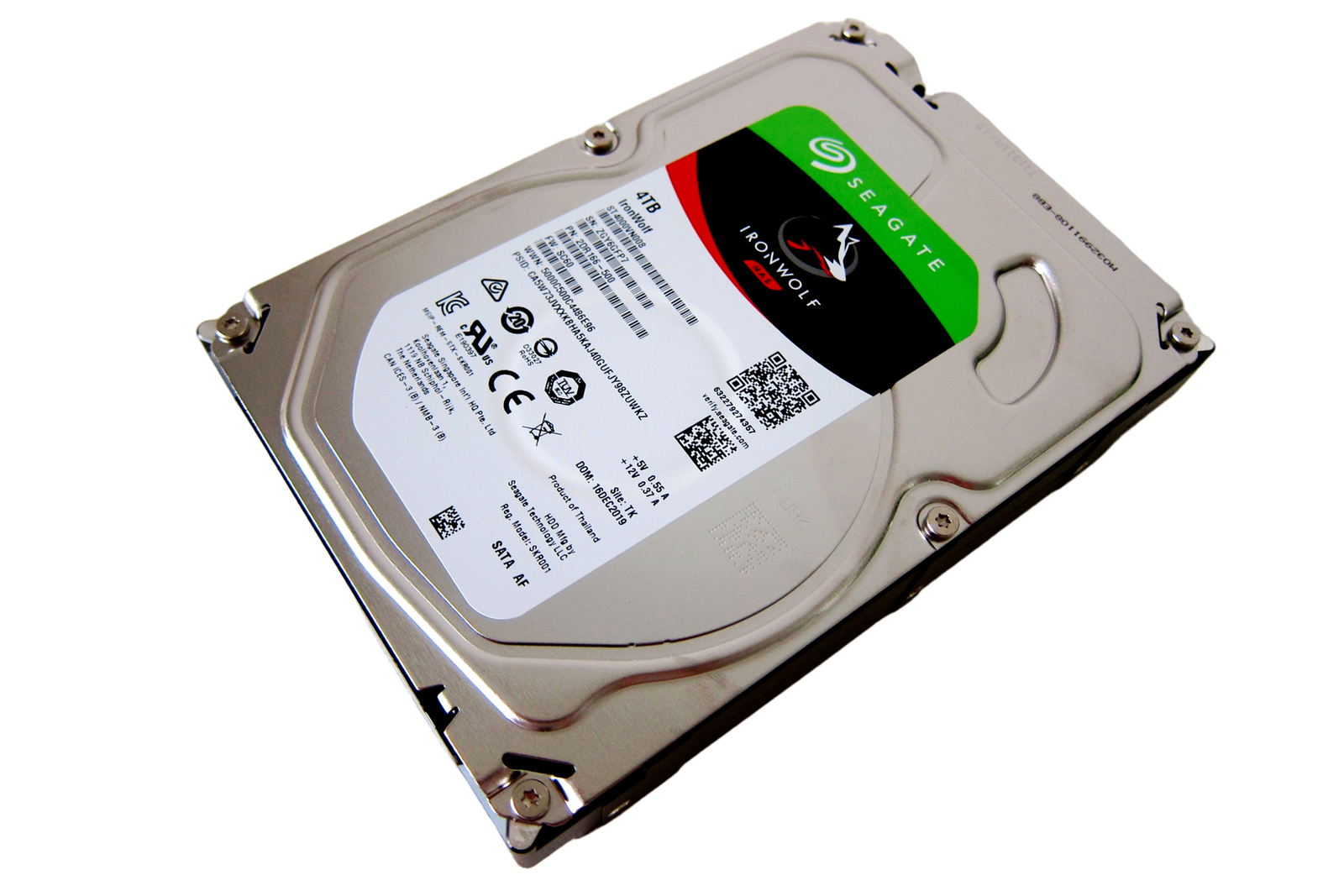
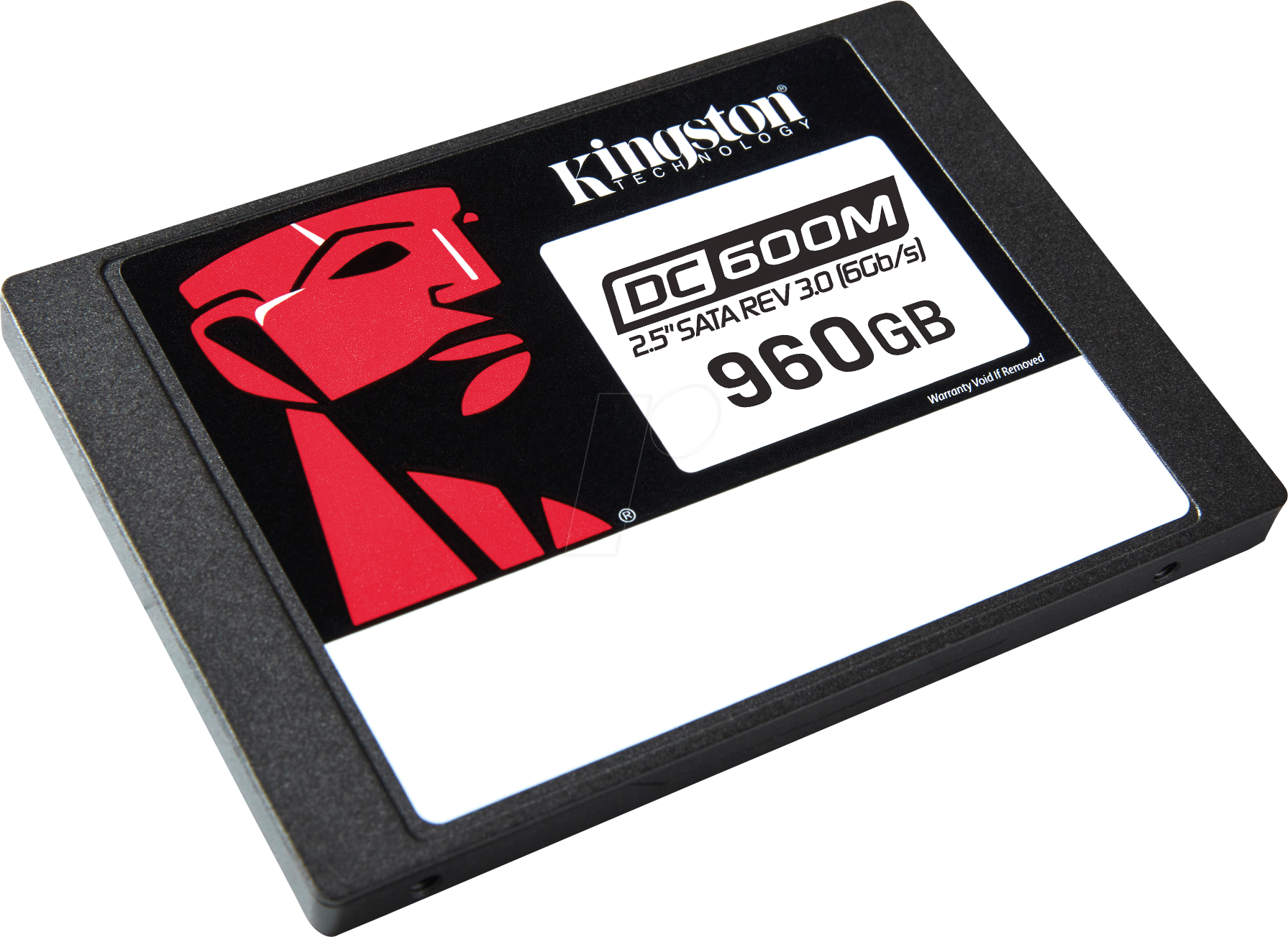
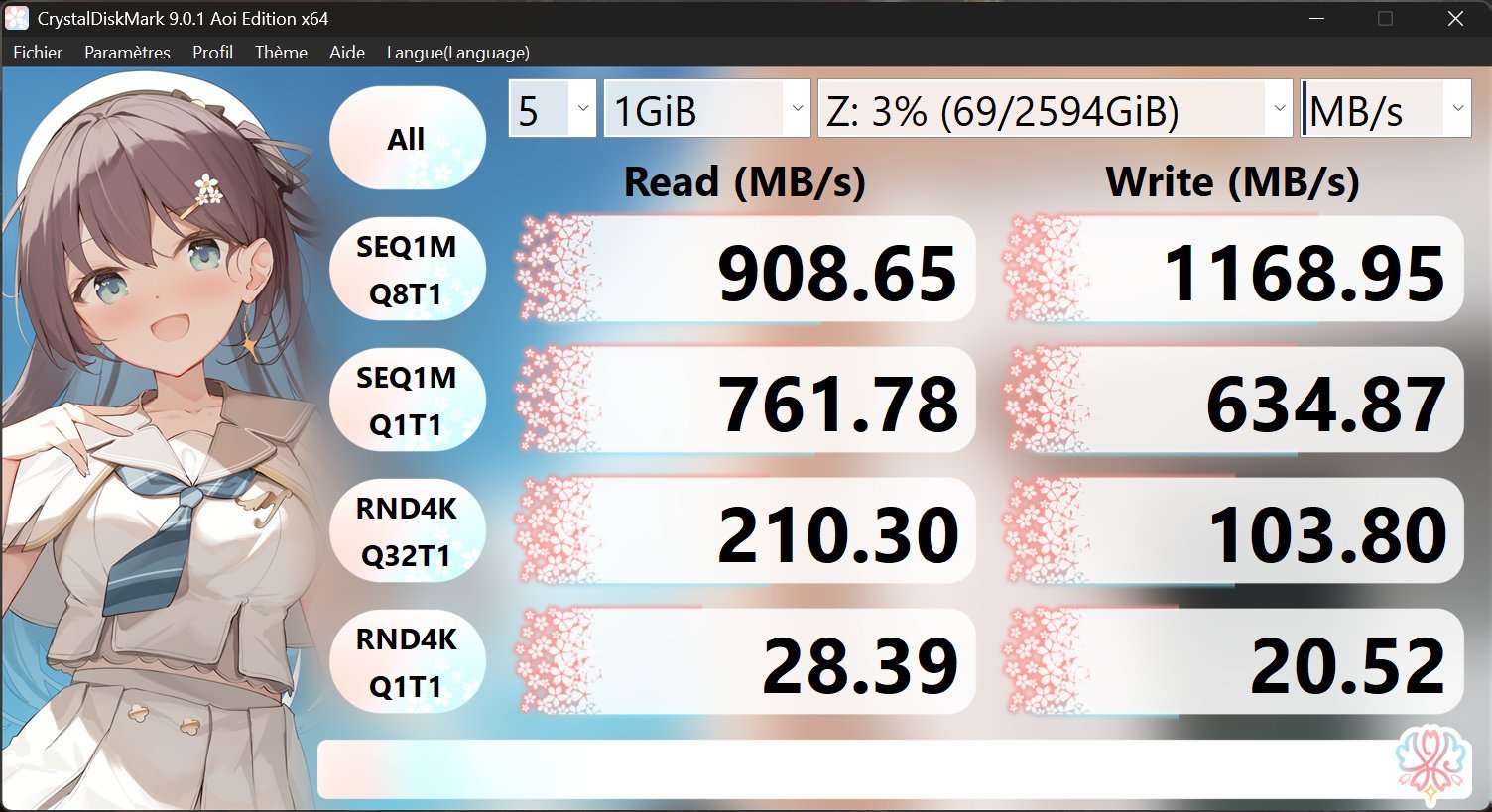
To test the NAS’s behavior and performance, we use both SSDs and traditional hard drives. In this case, Kingston DC600M and Seagate IronWolf Pro drives are used. The NAS is connected to a network infrastructure built around a QNAP QSW-M3224-24T 10 GbE switch, of course.
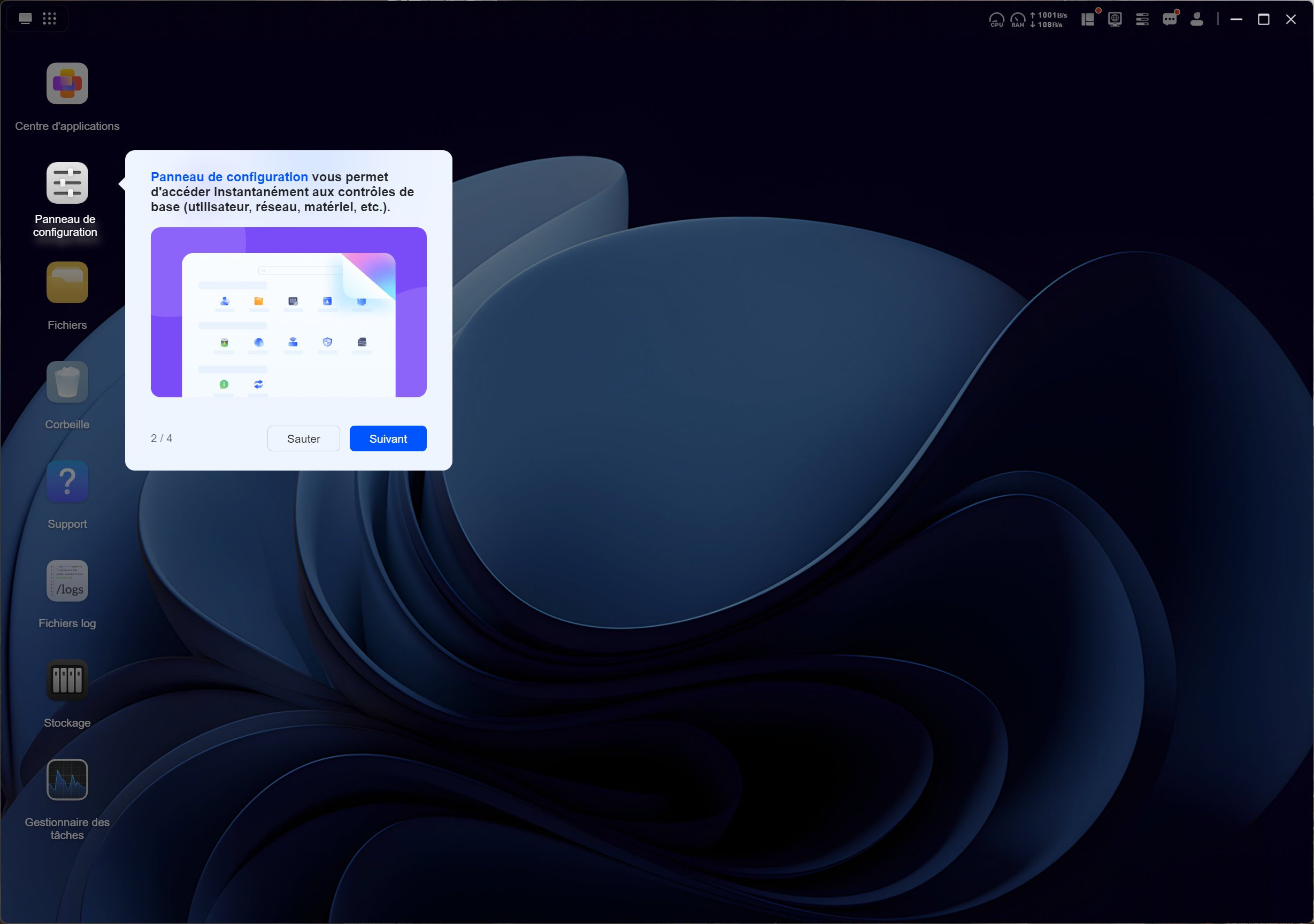
Of course, UGREEN provides everything needed to manage users, guest accounts, user groups, and storage quotas. Snapshots, virtual machines, cloud data management, and surveillance are other fairly accessible features. But since our previous tests, the brand remains clearly behind the sector’s leaders. It’s not surprising; you don’t build an entire software ecosystem with a click.
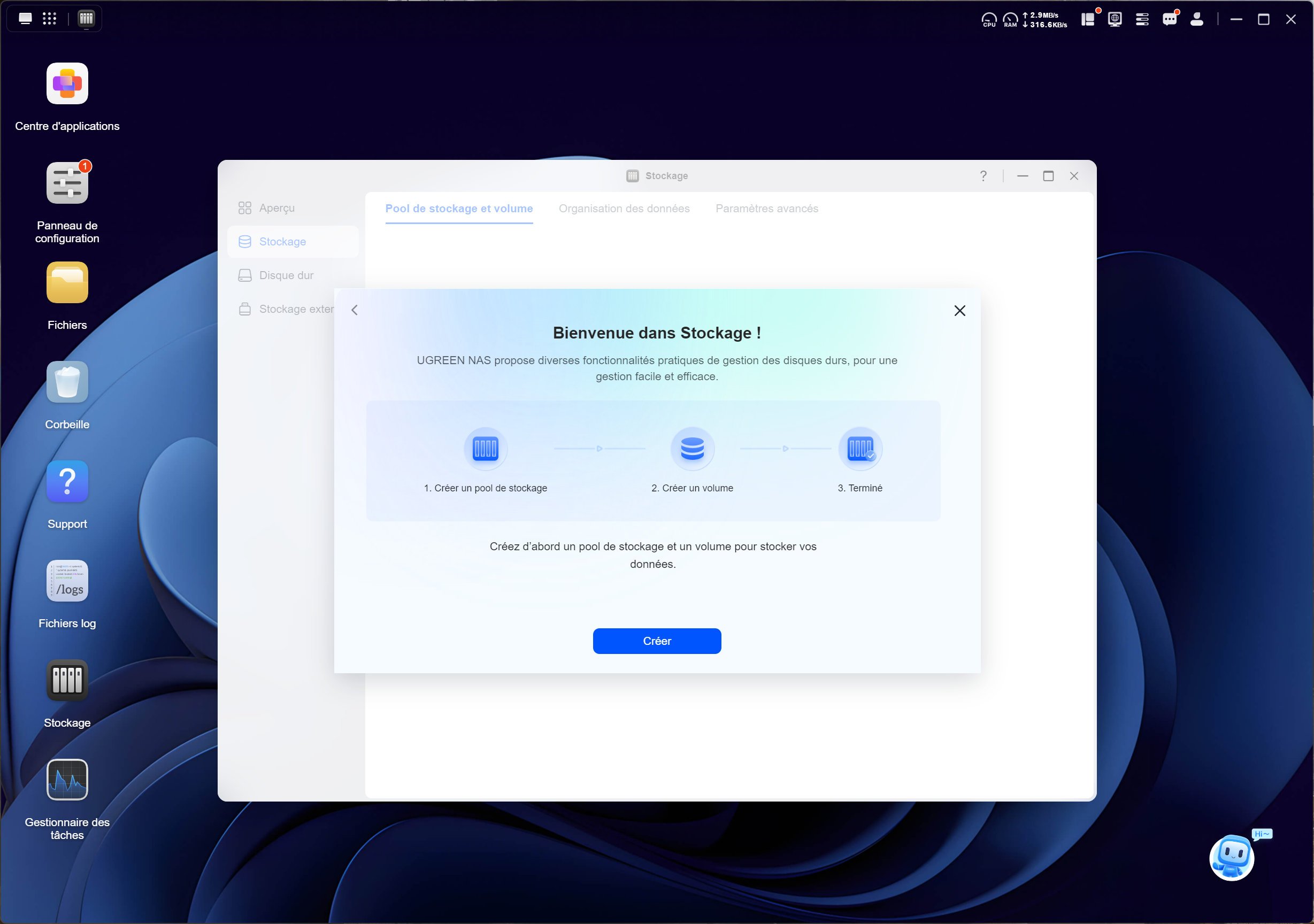
As with the GT, the OS and configuration landscape is dense and complete, with the classic RAID options (RAID0, RAID1, RAID5, RAID6) and filesystem choices (ext4 or BTRFS). What’s particularly nice with UGREEN’s interface is that the explanations are numerous and very clear.