
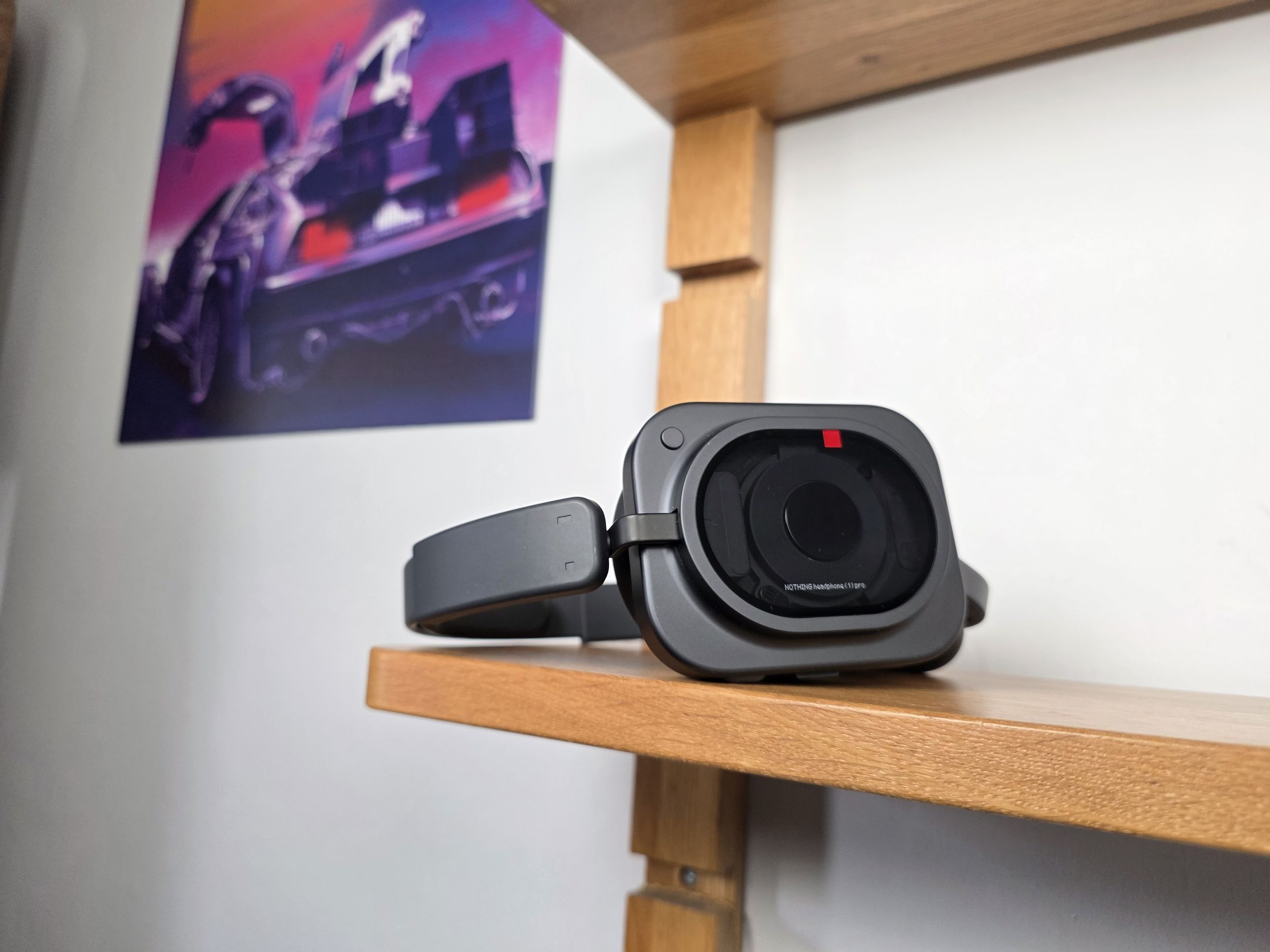
We clearly did not expect Nothing to reappear so quickly in the headphone segment, after an excellent Headphone (1) in 2025, and the Headphone (a) in March, one of the best value-for-money options right now. The Headphone (1) Pro is, in this regard, a fine upscale move, in form even more luxurious, and in substance, with an audacious ambition. A truly premium product, yet surprisingly affordable (€349) given what it offers. But sometimes, more is not always better.
Headphones with active noise cancellation, the Nothing Headphone (1) Pro are built around a frame that melds aluminum, titanium, and tempered glass. Beyond user-centric improvements like a better ANC and clearer call quality, the build borrows the strong DNA of its first headset (USB audio mode, jack, highly efficient buttons, LDAC and multipoint), while injecting a dose of modernity thanks to Auracast. Yet it is clearly through its three-driver acoustic architecture that the Nothing Headphone (1) Pro aims to stand out.
8 / 10
No offers available, discover :
Apple AirPods Max 2
Sennheiser Momentum 5 Wireless
Sony 1000X The Collexion
Nothing CMF Headphone Pro
See more prices
- Lots of details, some versatility
- Advanced sound controls
- Stellar construction
- Advanced connectivity (USB-C, jack, Auracast)
- Ergonomics perfection
- Excellent ergonomics
- Very good passive isolation
- Very rough and abrupt highs
- Unbalanced Flat mode
- Travel case not convincing
What our measurements say
First reveal and first cold shower, our measurements of the frequency response, or rather the two frequency responses (classic sound mode and Flat) are not particularly flattering. We’ll see, but beyond the very impressive promises, there is a lack of coherence, especially in the highs, which are quite jagged, far from the smooth linearity we were hoping for.
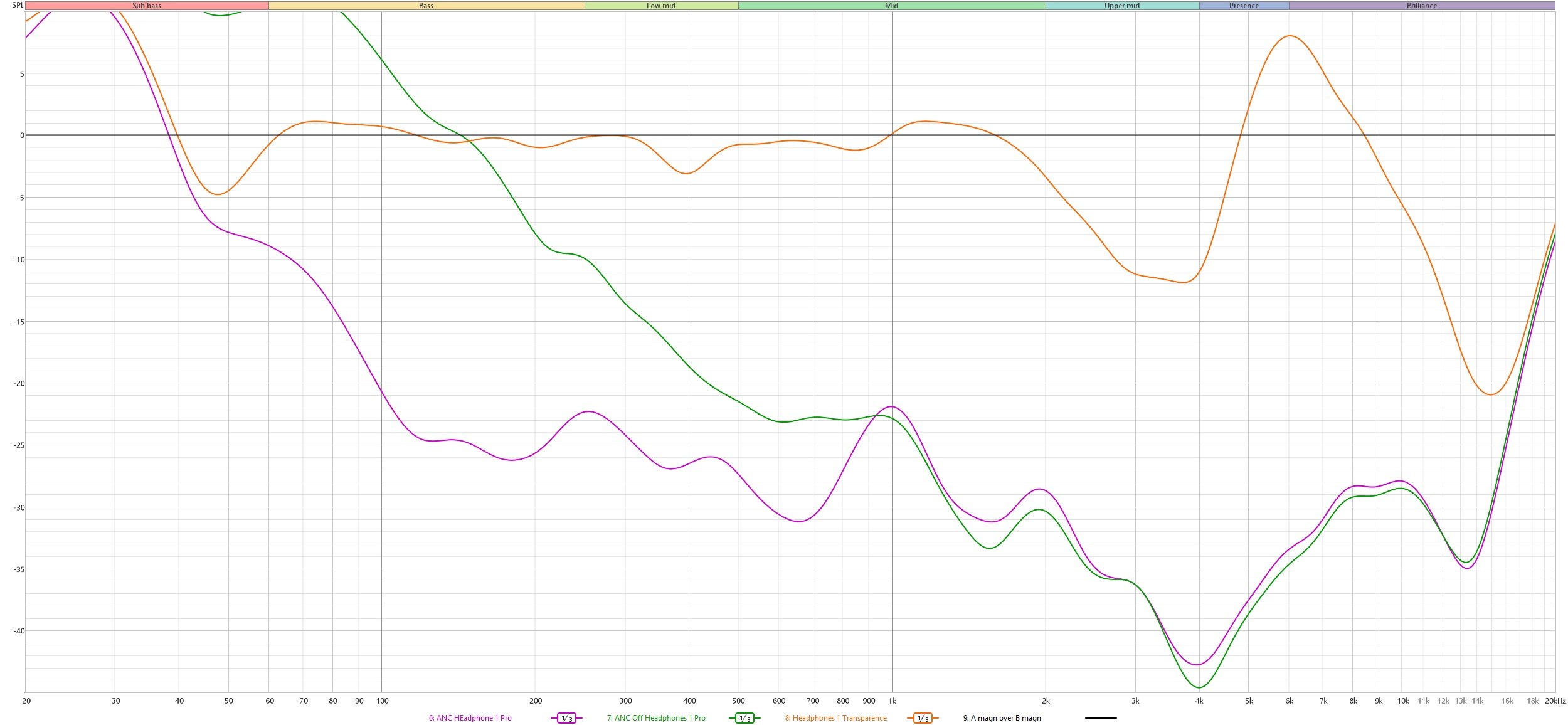
Sound isolation is one of the many signs of improvement. The headset is not yet at the level of Sony WH-1000XM6, Apple AirPods Max 2, or Bose QC Ultra Headphones Gen 2, but the very good passive attenuation created by the new cushions, combined with effective active noise cancellation, leaves no real weakness.
As for endurance, the computational power involved is a bit of a step back compared to the two previous headsets. Nothing claims an endurance of 30 h with ANC, and 68 h without ANC.
Listening: Triple drivers, triple trouble?
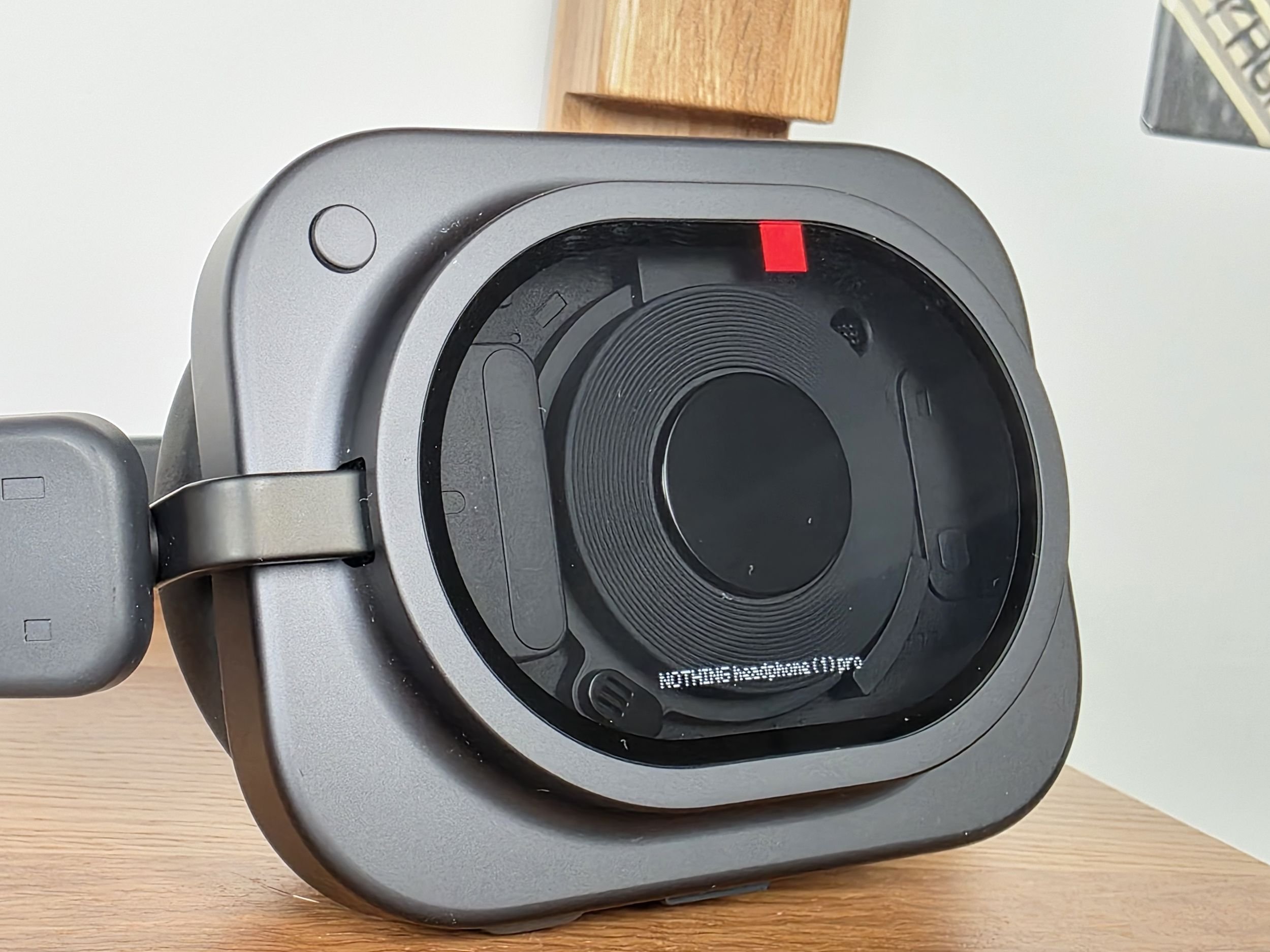
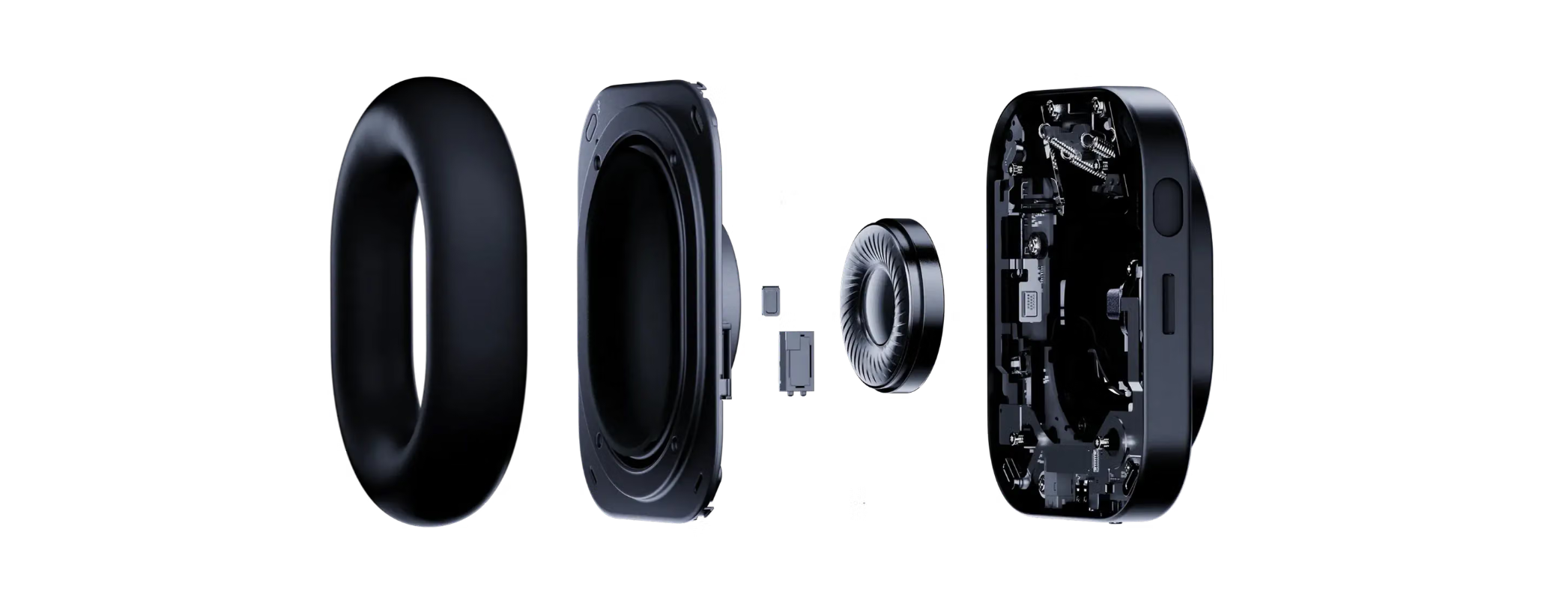
Although not entirely unique, the very niche Noble Fokus Artemis takes a path in a similar direction, the Nothing Headphone (1) Pro’s architecture goes beyond anything else among high-end headphones. The brand relies on an interesting principle in theory: put more drivers to improve sound quality. We thus get: a traditional dynamic driver covering 20 Hz to 10 kHz (already quite high for the highs); a small “Dynamic Precision” transducer, which seems to be a planar-type model (used in some earphones), here covering 5 kHz to 15 kHz; and an xMEMS transducer, for frequencies up to 40 kHz (to achieve the Hi-Res Audio logo). Used on a few rare earphones like Creative Aurvana Ace 3, the xMEMS transducer is derived from MEMS transducers used as microphones on most headphones/earphones and smartphones. We’re dealing with a mini-device with an ultra-rigid silicone diaphragm, mounted on a piezoelectric suspension, which deforms with voltage changes to create movement.
On paper, Nothing has everything it needs to trounce the competition. In practice… we are unfortunately rather cool about it. If one thing stands out from our listening, it’s that the various transducers don’t sing in harmony, but rather in a more chaotic fashion, producing counterproductive effects, especially in instrument separation. The technical foundation is impressive, with a high level of detail and a spacious soundstage, but the treble remains cluttered.
Frequency response: our measurements
Clearly, the headset is too irregular in the highs. Our measurement is smoothed, which shows how the drivers seemingly struggle to coexist.
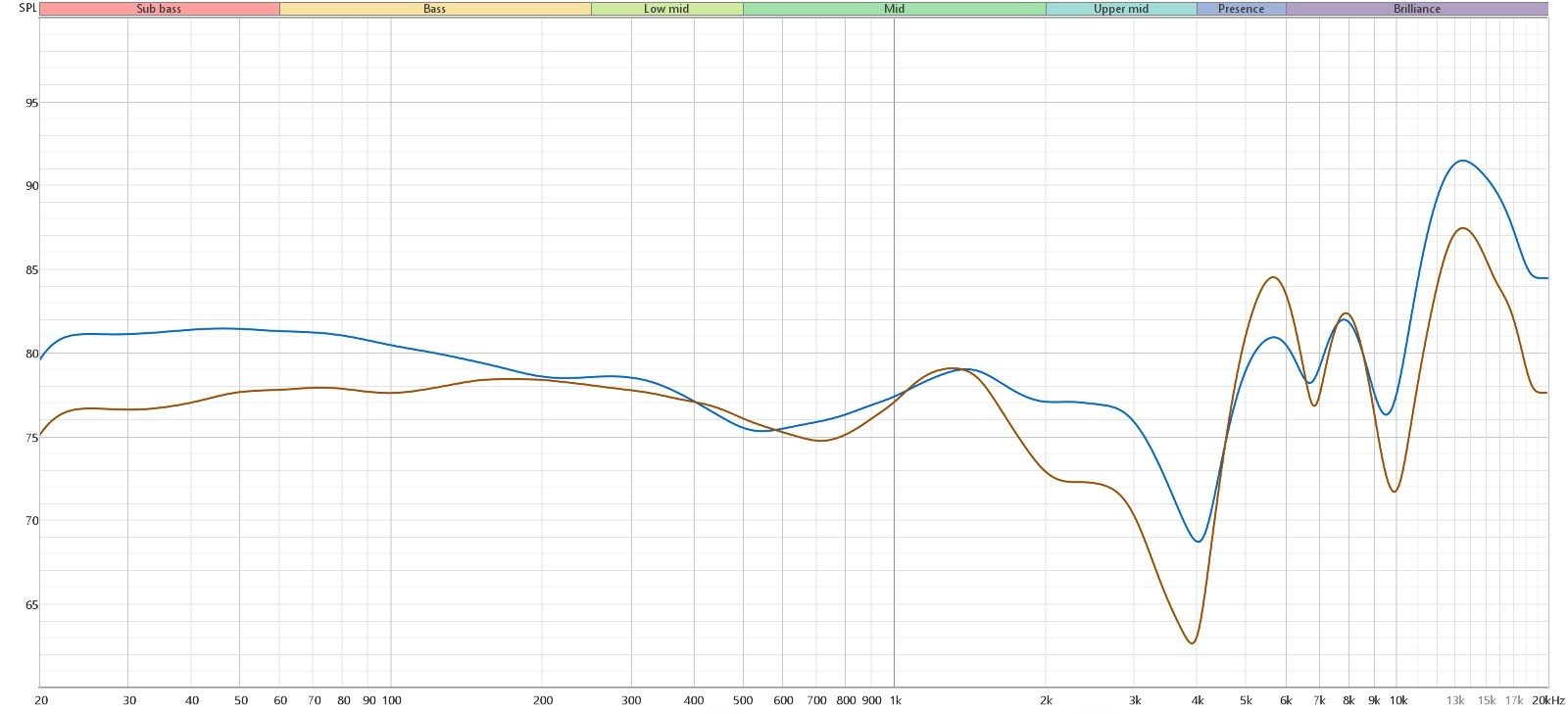
Two sound modes are available on the headset. In Classic mode, the bass is fairly strong, the mids are relatively balanced, but the highs are jagged, with a mix of a slight veil and excessive shimmer. Some tracks display hiss as the very high frequencies are emphasized (not always visible in the measurement). Everything would be nearly ordinary if the highs were linear, but that isn’t the case. The sound is very demonstrative, but clearly lacks control.
Switching to Flat mode, set by the Metropolis Studios’ sound engineers, things look somewhat rosier, but we cannot call it balanced. Indeed, the onset of the highs erodes the top-end, which enhances the veil slightly and compresses the soundstage a bit.
A disappointment? Yes, considering expectations. Sony does better with its flagship, AirPods Max 2 offers a more open, balanced, and nuanced sound in the bass, and Sennheiser Momentum 5 delivers a stronger sense of unity. Nevertheless, Nothing’s approach avoids some pitfalls and maintains a certain effectiveness. The sound isn’t satisfying, but it remains versatile and fairly detailed. The biggest sonic flaw of the Nothing Headphone (1) Pro is simply its lower coherence than the single-driver Nothing Headphone (1), and the more affordable option. We’re not far from thinking that, even if less technical, the Headphone (a) might appeal to a broader audience thanks to its greater sonic coherence.
Reste l’arme secrète de Nothing, l’égaliseur paramétrique extrêmement puissant (disponible uniquement en mode sonore Classique), qui ici permet d’ajuster séparément le transducteur dynamique du haut-parleur Precision Dynamic. Nous n’avons pour l’instant fait que quelques essais avec cet outil, car régler un tel dispositif est complexe, mais cela permet déjà de corriger certaines exagérations générales. En étant suffisamment précis, le casque gagne déjà en aération, tout en évitant d’être trop scintillant. C’est aussi pour cela que, exceptionnellement, nous proposerons une note sans égalisation et une note avec. Les profils d’égalisation peuvent être partagés avec la communauté (directement via l’application), nul doute qu’un utilisateur trouvera bientôt un réglage excellent.
Our measurements are conducted with a dedicated MiniDSP Ear Pro head, a semi-professional model close to the GRAS 45C system. We perform several measurements, with several head distances, for a more complete result.

How do we test Bluetooth headphones at Clubic?
For now, we have not managed to reach the level of the three aforementioned competitors, but it is possible to get a bit closer, and to observe that, from a purely technical standpoint, the headset does have something substantial inside. Unfortunately, the headset joins the fairly long list of multi-driver headsets I have tested. And in this crowd, with sometimes much more expensive models, none has ever been truly satisfying.
Noise reduction, transparency, call quality: a solid performance
There are headsets with better isolation than the Nothing Headphone (1) Pro, that is a fact. Yet the manufacturer has clearly progressed compared to its other headsets. The active noise cancellation remains a little slow to engage in the low frequencies, but the midrange performance is more than satisfactory. If voices aren’t completely erased, the device stands out for its exceptional passive attenuation, which greatly tames the highs. The new cushions tame all aggressive sounds with perfect efficiency. A product that, again, remains a notch below the top tier, but still firmly in the high end.
The transparency mode, for its part, is generally convincing, but marked by slight gaps. Widely usable, capable of perfectly reproducing voices and delivering a fairly natural soundstage, it attenuates the very high frequencies a bit too much.
Noise reduction: our measurements
The headset, though not perfect, already presents effective acoustic isolation, aided by the cushion performance.
In the same vein as the Headphone (1), the Nothing Headphone (1) Pro’s hands-free mic sits in a sort of mid-ground. In calm environments, the capture is quite decent, but the voice timbre isn’t perfectly respected. Occasional artifacts can appear here and there. In noisy environments, capture generally remains intelligible, but the voice becomes more cavernous and muffled. Some truly loud settings may overwhelm the product.
Construction and comfort: ultra-luxury, mastered
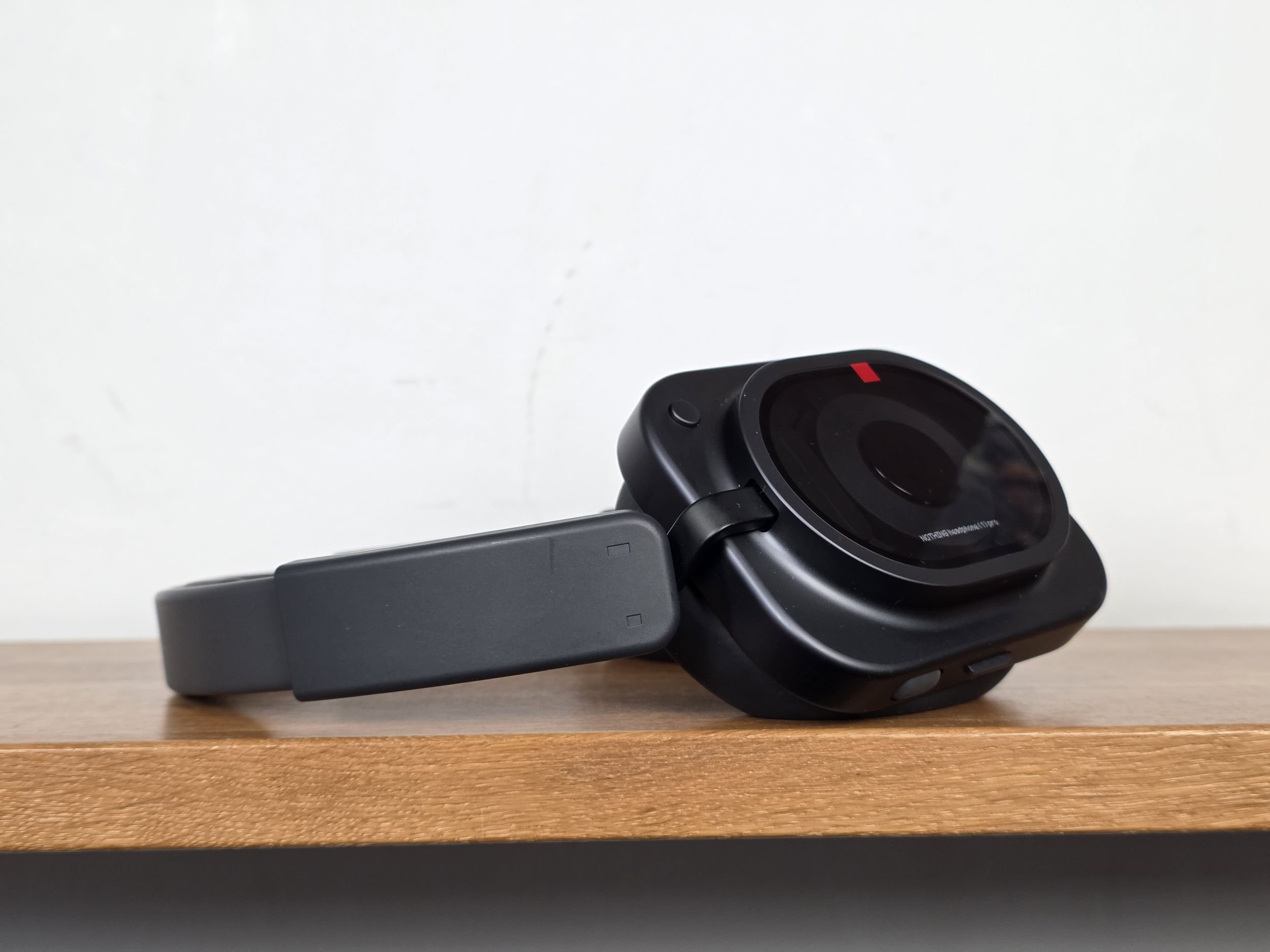
One wonders how Nothing manages to price its headset at “only” €349. Across the board at that price, you could find a Bose QC Headphones Gen 2 that is mostly plastic. The Headphone (1) Pro, by contrast, features machined and anodized aluminum shells, new titanium arms, and even a back in Panda 9H tempered glass (shock resistant). Only the B&O H100 and its €1,700 price have ventured into glass territory. Bonus: IP52 certification.
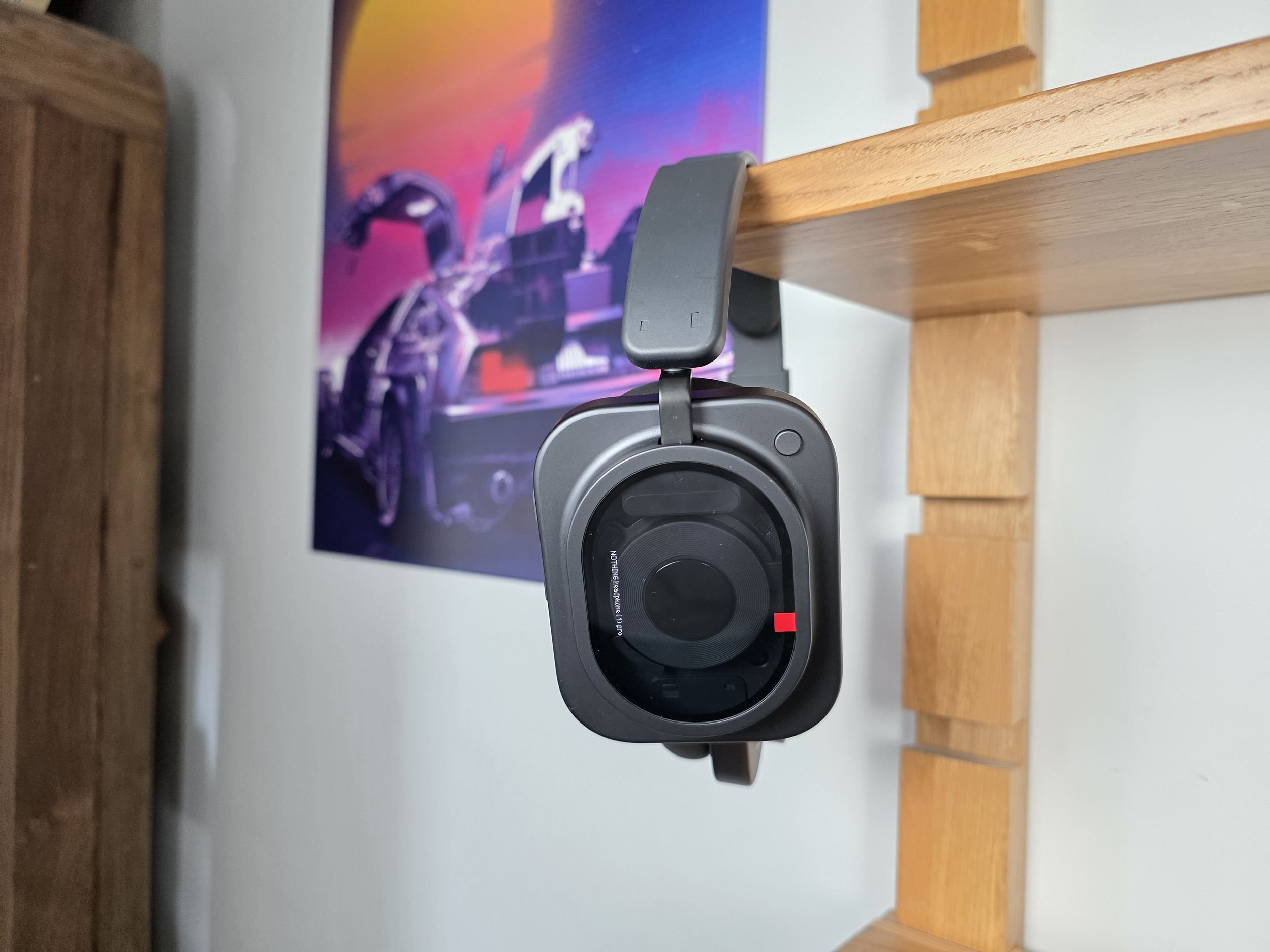
From our perspective, the design is at least as successful as that of the brand’s first headset. Nothing trades its retro look for a more understated modernity, revealing the speaker through a pane of glass. A more serious aesthetic, no doubt, equally successful, but which may not appeal to the same audience.
Apart from the lack of a folding structure, the Nothing Headphone (1) Pro surpasses everything nearby, and makes Sony, Bose, Sennheiser, and even AirPods Max 2 look pale by comparison. Only the Bowers & Wilkins PX8 S2, in an even more sartorial style, can sit at its table.
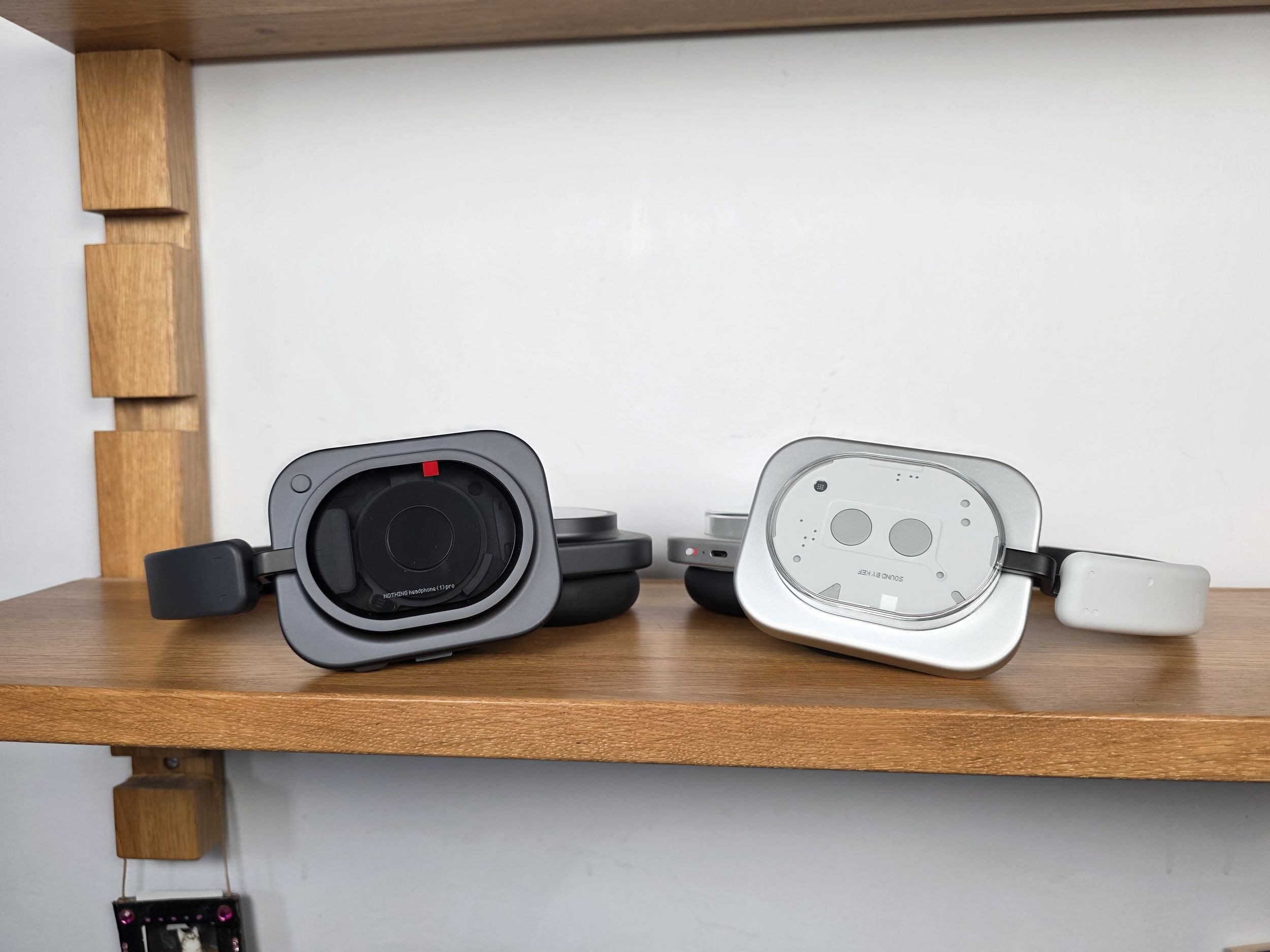
In terms of comfort, things are equally positive. The headset features a headband 10% wider and 12% more padded than the Headphone (1), plus thicker cushions, “50% softer,” all while keeping the weight reasonable: 327 g, versus 329 g for the Headphone (1).
More comfortable than the latter, the Headphone (1) Pro still trails the Bose in this respect. Yet, we can be fairly enthusiastic, as the fit sits superbly on the head, and the headband exerts no pressure on the crown.
One caveat? Probably the carrying case. Here again, Cognizant of reinventing itself, Nothing has discarded its previous (very imperfect) accessory to approach Apple. The maker therefore ships it with a rigid plastic case in an unusually pale white, which, in our view, does not match the headset at all. Nothing explicitly aimed to bring the Headphone (1) Pro closer to its case as a small handbag. But this vision clashes with the headset’s more masculine aesthetic. We would have appreciated either a better color harmony or a special feature, like an integrated battery. Yes, Nothing offers better protection than Apple, since the case really protects the structure, but it’s hard to be fully satisfied.
User experience: back to near-perfection
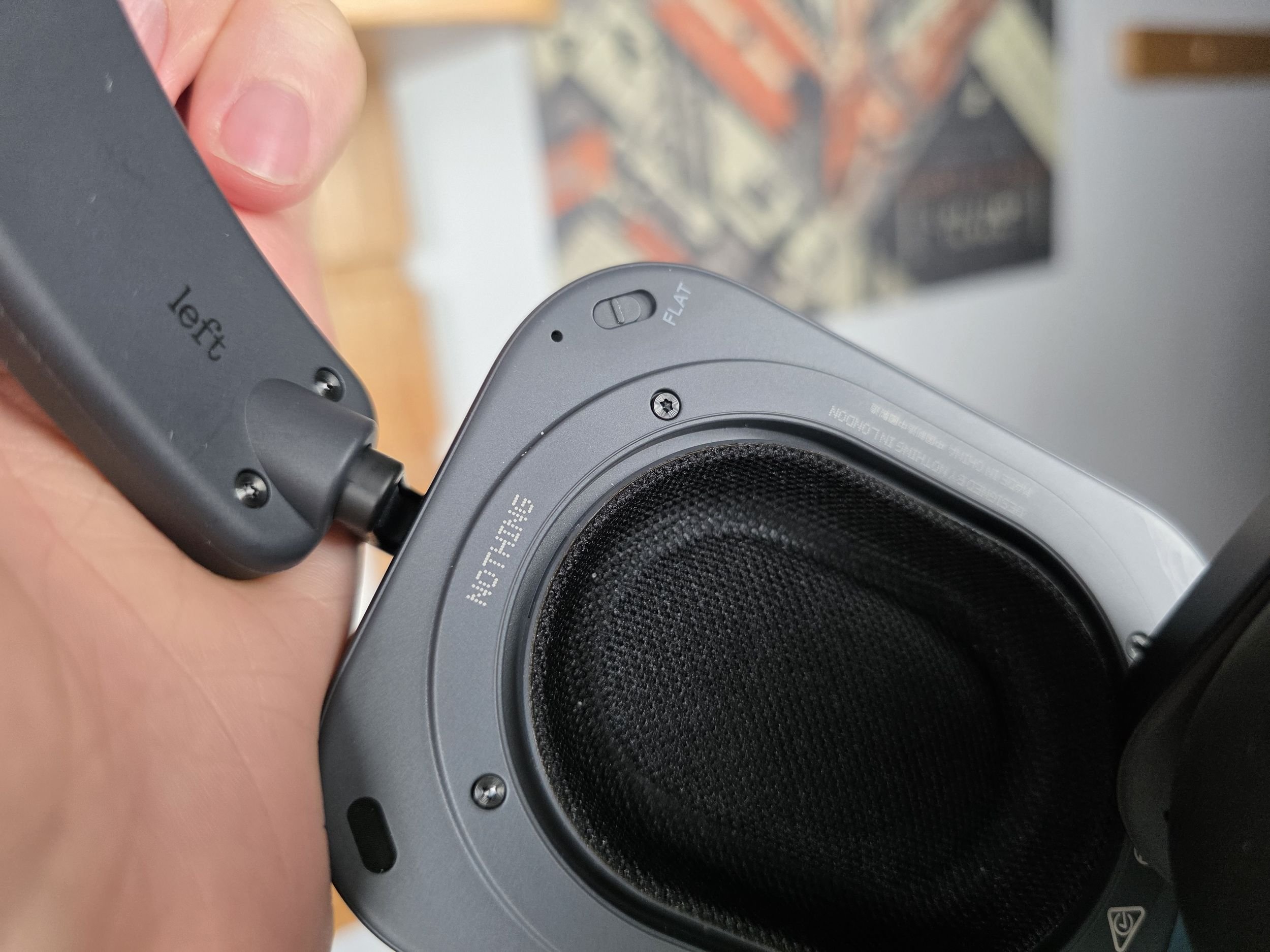
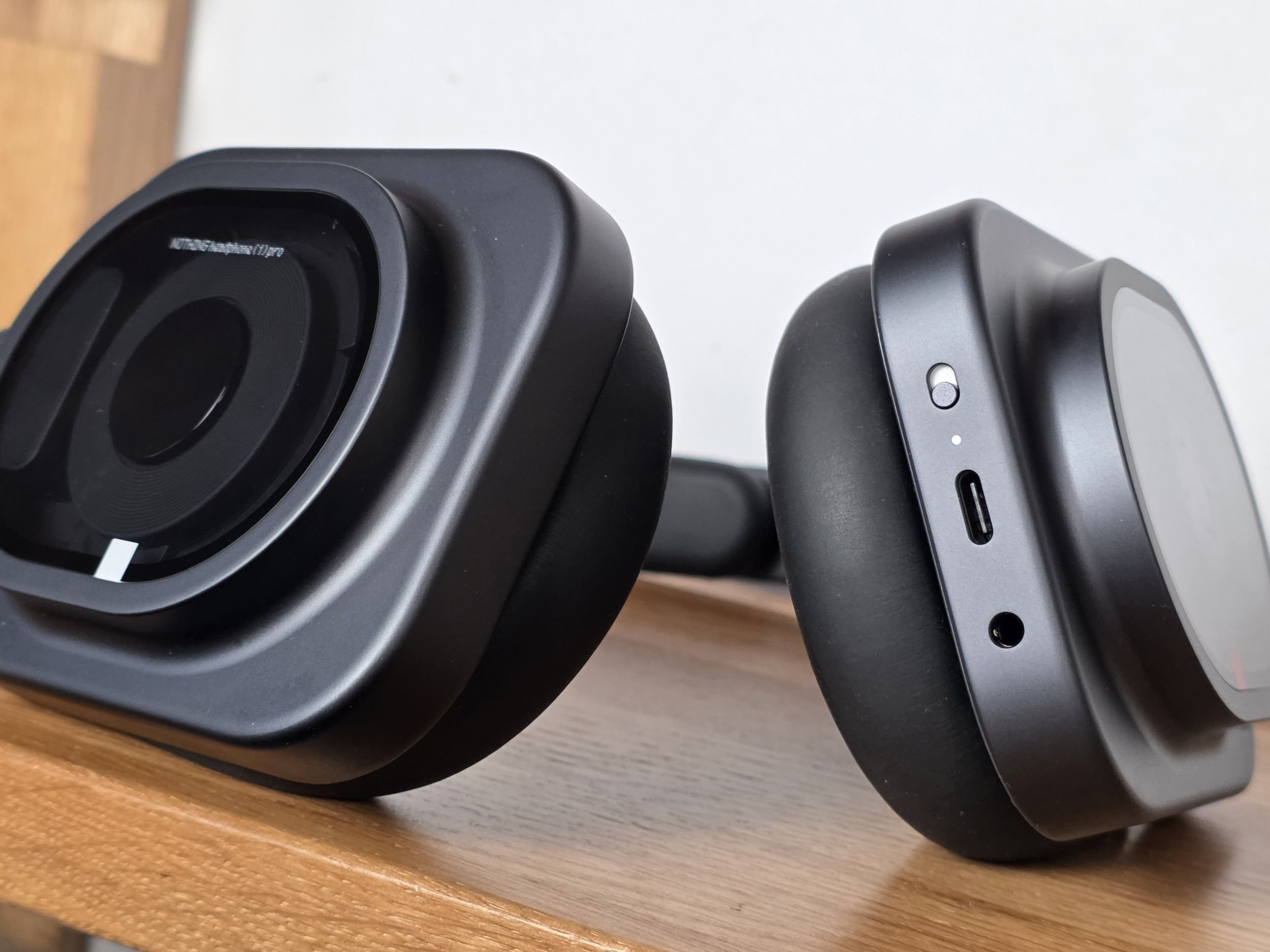
Innovative, the integrated ergonomics of Nothing’s first headset are preserved here for our great pleasure. A clickable wheel for volume and navigation; a paddle for navigation and quick actions; shortcut buttons on the exterior of the right shell to trigger a function. Add to that the pairing button discreetly placed on the inner face of the right shell, and the switch (inner face of the left shell) to switch from Classic to Flat sound mode.
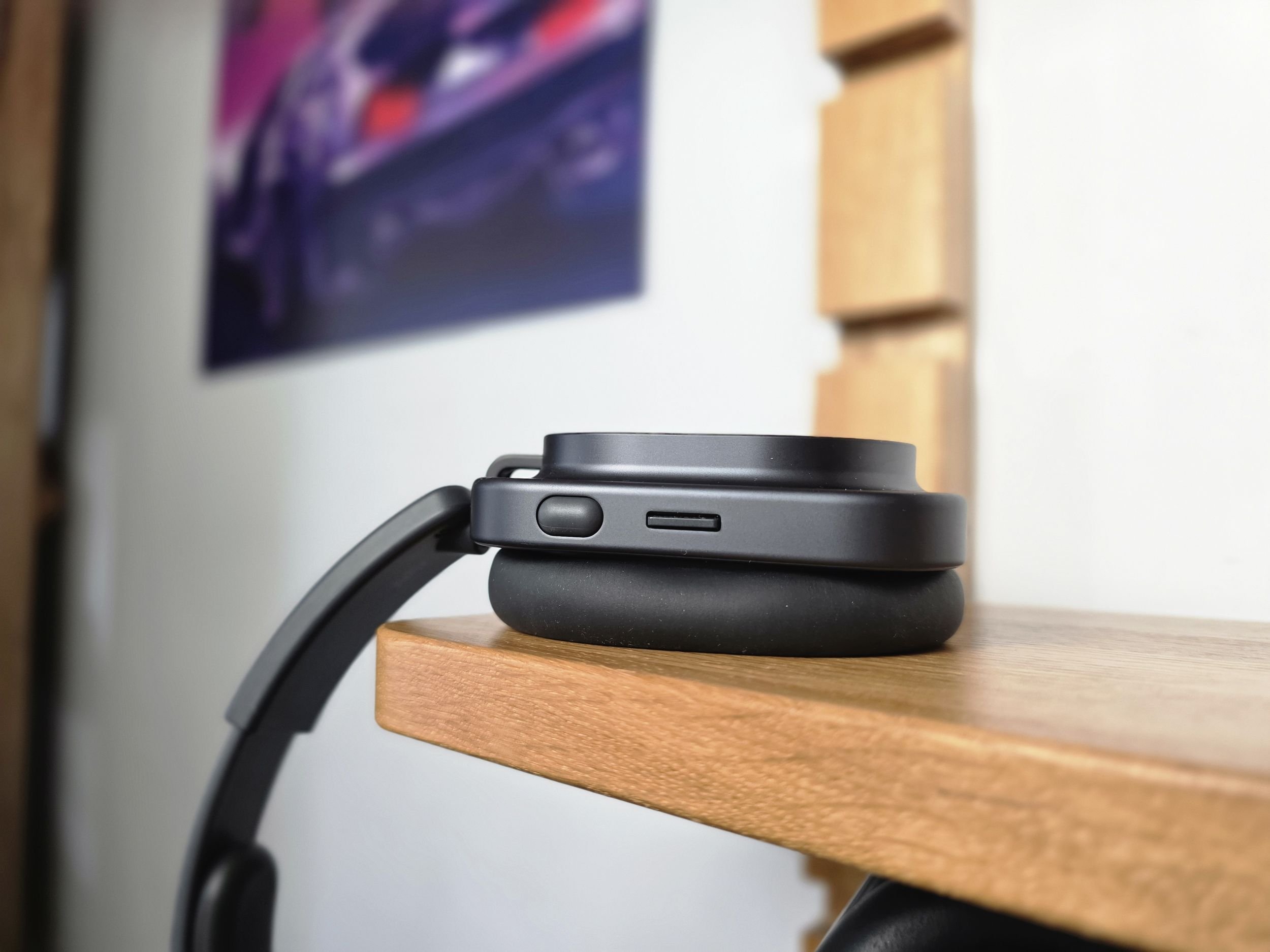
In practice, the headset is incredibly easy to use, almost playful, and above all, particularly feature-rich.
Connectivity is on par, with the reintroduction of USB Audio mode, a 3.5 mm jack input, and a modern Bluetooth chip, here at 6.1. Compatible with LDAC, multipoint, and Fast Pair, it finally supports the Auracast standard… but not Unicast (the classic LE Audio connection).
Again, Nothing does things differently, since Auracast works in both reception (the headset can receive a stream) and transmission. Via the Nothing X app, it is possible to turn the Nothing Headphone (1) Pro into a transmitter to relay the audio stream to an infinite number of compatible devices. Still a bit rough, this transmission mode sends, according to our tests, a fairly degraded, clearly low-bitrate stream.
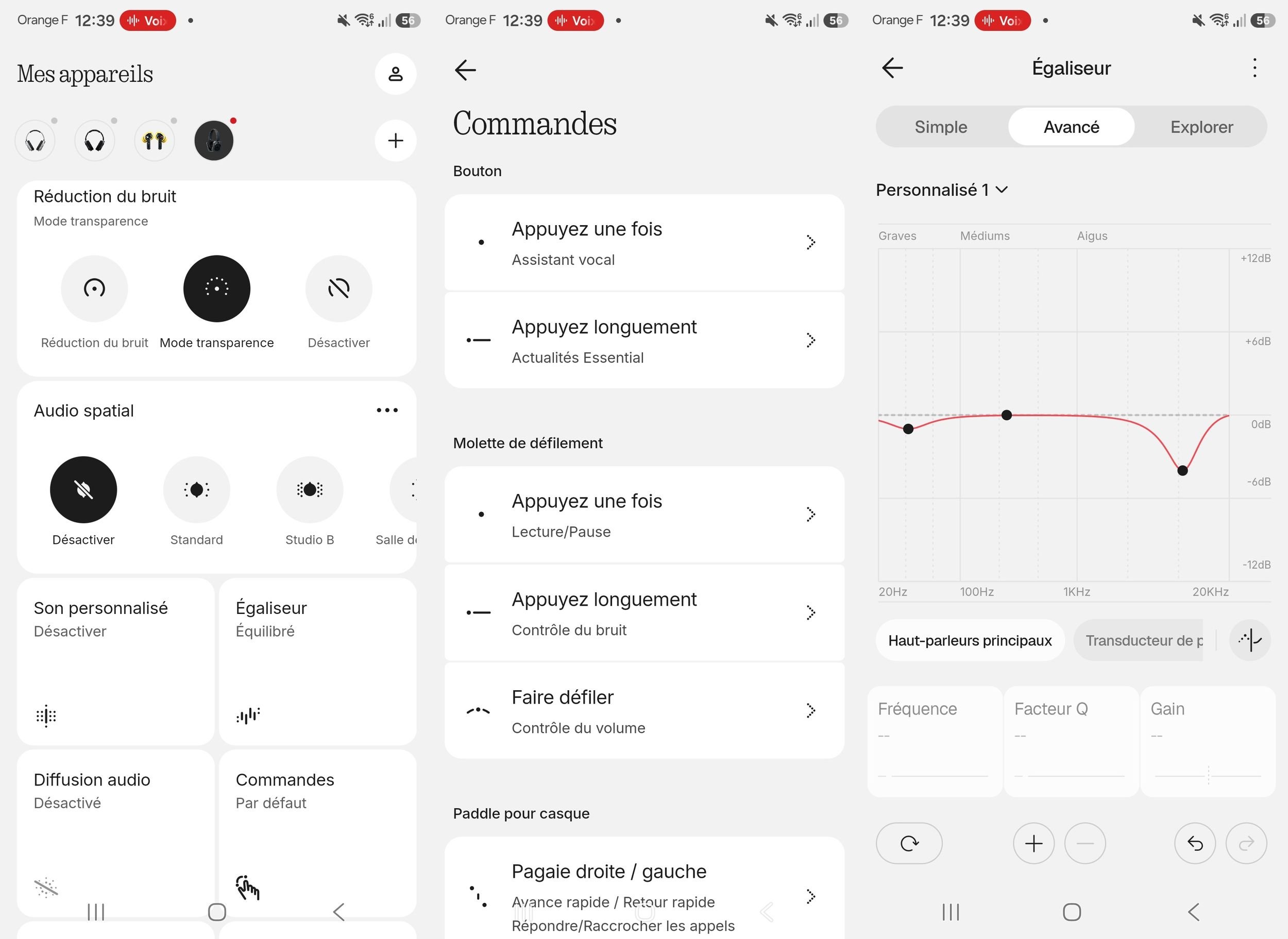
A quick note on the Nothing X app. Almost too complex given the number of settings it offers, it surpasses everything in the industry in terms of sound adjustments. This, incidentally, allows the product’s sonic personality to be heavily corrected.
Battery life and long-term use
Advertised at 30 h with ANC and 68 h without ANC, the Nothing Headphone (1) Pro’s endurance is fairly well respected in practice. We measured 29 h 30 with ANC, and around 65 h without ANC, each time in the normal sound mode.
Who the Headphone (1) Pro is really for
Almost perfect, the device targets the following groups:
- Fans of modern, luxurious design
- Those who love having as many settings as possible
- Users wanting ergonomic, effective and original comfort
Conversely, we would not recommend the headset to those who demand the best isolation on the market, nor to those who prefer signatures that are truly balanced
What are the best Bluetooth headsets in 2026 ?
Nothing Headphone (1) Pro: Clubic’s take
Headphones with design, and a construction that isn’t shy about itself, the Nothing Headphone (1) Pro has everything going for it: good comfort, headphone-grade isolation, impeccable ergonomics, the most modern connectivity, and solid endurance. All of that?
Unfortunately, its only, and most notable, flaw is also the thing Nothing is most proud of: the audio quality. Relying on a complex and very high-end three-driver architecture per side, the brand overshoots, delivering a sound that is too complex and not coherent enough to make us forget about the Headphone (1).
A product that had everything to be flawless, yet a flaw that can be mitigated by using the dedicated parametric equalizer, capable of delivering impressive feats. Hard, therefore, to give a definitive opinion.
- Lots of detail, some versatility
- Advanced sound settings
- Exceptionally built
- Advanced connectivity (USB-C, jack, Auracast)
- Ergonomics perfection
- Very good passive isolation
- Very rough and jerky highs
- Flat mode completely unbalanced
- Carrying case not convincing
Nothing Headphone (1) Pro: Clubic’s verdict
The headset is stylish, and worn with an audacious build, the Nothing Headphone (1) Pro has everything going for it: good comfort, isolation that rivals high-end models, excellent ergonomics, highly modern connectivity, and solid endurance. All of that?
Unfortunately, its sole—and most striking—flaw is also the thing Nothing is most proud of: the audio quality. Relying on a complex and extremely premium three-driver architecture per side, the brand overshoots, delivering too intricate a sound with insufficient coherence to make us forget about the Headphone (1).
A product that had everything to be flawless, yet a flaw that can be somewhat mitigated by using the dedicated parametric EQ, capable of performing remarkable feats. Difficult, therefore, to render a definitive verdict.

Daniel Brooks
I cover everyday products with a practical eye, from kitchen tools and home essentials to smart gadgets and consumer trends. My goal is to help readers understand what is genuinely useful, what is worth the price, and what deserves a second look before buying.