
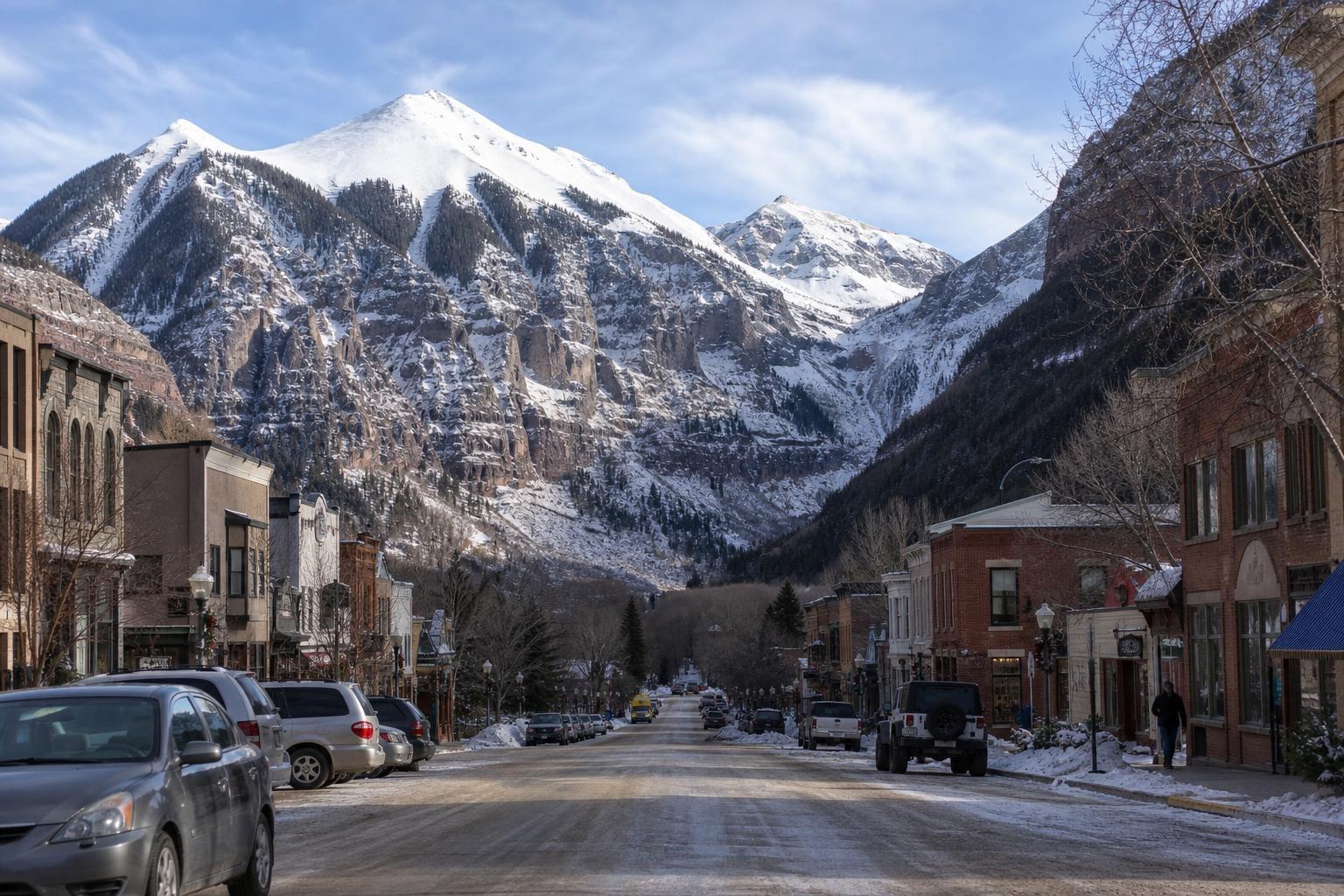
Snowy streets, painted Victorians, and a skyline sawtoothed by the Elk Mountains: this is the Colorado getaway that locals whisper about, then quickly change the subject. In winter, the town glows with alpenglow and woodsmoke, feeling both remote and effortlessly welcoming, a place where ski boots echo on boardwalks and lifties remember your name.
Ask a bartender where they’re from and they’ll smile, “Here, by choice,” before topping your glass with something warming. The place is called Crested Butte, and it’s the kind of mountain town that makes frequent flyers contemplate longer stays and shorter emails.
Postcard charm, without the pretense
Main Street—officially Elk Avenue—runs with a bright line of historic storefronts, hand-painted signs, and low-slung porches that shrug off snow like lazy cats. The vibe is defiantly unpolished, equal parts artist colony and powder basecamp. You’ll find high-level coffee, serious cocktails, and a dining scene that’s intimate rather than exclusive.
“People move here for the mountains, then stay for the neighbors,” a ski tech told me, tuning a pair of local’s boards while a dog snored by the shop’s warm radiator. There’s style, but it’s the kind that comes from well-worn flannels and legs that know the morning skintrack.
The mountain that made its own legend
Crested Butte Mountain Resort rides a dramatic ridge, with a trail map that reads like a dare and a handshake. Greens are genuinely gentle, blues are long and sunny, and the blacks grow steep, chalky, and satisfying. Off the Silver Queen, terrain funnels into bowls that catch storm snow and late-day light.
Then there are the famed “Extremes,” a network of hike-to steeps that teach humility and edge-control: chutes that pinch, faces that roll, and traverse lines locals treat like scripts. “It’s where you learn to ski with commitment,” said a patroller, snow dust sparkling in their beard. But the mountain also gives beginners and families breathing-room, with broad groomers that feel like open roads.
Cheaper? In all the right ways
You can still sleep a block off Elk Avenue without mortgaging your season, especially midweek and outside holiday peaks. Lift tickets track the modern dance of dynamic pricing, but they rarely skyrocket to the stratosphere you’ll see down-valley elsewhere. Passholders on the Epic network find value, and day skiers score by buying early.
Meals favor hearty over haughty: wood-fired pizza that disappears in radiant heat, tacos with green-chile swagger, and burgers that taste like a day very well lived. Après is convivial rather than flashy, a mix of breweries, cocktail nooks, and porches where snowflakes land on wool cuffs.
Beyond the lifts, a winter playground
The town doubles as a Nordic hub, with miles of groomed trails tracing willowed creeks and open meadows right from the edge of town. Fat bikes hum along designated winter routes, and backcountry skiers fan into the Elks—with avalanche education treated like essential homework.
On storm nights, you can hear the quiet accumulate, then wake to roofs frosted like layer cakes and an entire valley moving a little more slowly. “There are days when it feels like the world forgot this place,” a barista said, steaming milk into a cloud of sweet air.
How to keep it smart and affordable
- Book midweek and later in January for softer prices and softer crowds.
- Ride the free town shuttle between Elk Avenue and the lifts to ditch parking costs.
- Buy lift access in advance or lean on your Epic Pass for better value.
- Eat one big lunch in town, then après with a shareable local brew.
When the timing is just right
Early season brings enthusiastic energy, with locals dusting off gear and refreshing muscle memory. By midwinter, storm cycles turn the hills into pillows, and the Extremes tick from “closed” to “let’s go” as coverage settles in like layered felt. March often delivers sunny powder mornings and corn-snow afternoons, that Rocky Mountain two-for-one you’ll brag about all spring.
If you arrive for a bluebird stretch, pack sunglasses and a good attitude; if you arrive for a hammering storm, clear your plans and let the mountain write your schedule.
Getting there, and settling in
Most travelers fly into Gunnison, then shuttle the scenic valley road to town, watching cottonwoods slide past snowy fences and river bends that blink with icy light. Others run the longer route via Montrose or even Denver, turning the approach into a road-trip rite.
Once you’ve arrived, you’ll realize how small distances feel: a five-minute walk to breakfast, a ten-minute bus to the lifts, an evening stroll back under a prairie of crisp stars. Bring layers that work, boots that walk, and a willingness to let plans soften like snow on a south-facing window.
Why locals keep it quiet—and why you’ll talk anyway
Part of the magic is how ordinary days feel special, stacked with small mercies: the driver who waits as you jog to the bus, the bartender who remembers your order, the neighbor who shovels not only their own steps but also yours. “It’s not just the mountains,” a longtime resident told me, “it’s the daily kindness.”
You’ll swear to keep it secret, then catch yourself rhapsodizing about the color of evening shadows, the clap of skis in cold air, and the first sip of something warm while snow dusts your sleeves. That’s the risk here: you arrive seeking value and views, and leave carrying a place that feels suspiciously like home.