ZTE’s subsidiary spares no effort to win over the European market. Adopting a frenetic release pace, REDMAGIC is this month unveiling the 11s Pro, which, as the name suggests, makes small, incremental refinements to the already ambitious proposition of the REDMAGIC 11 Pro that I tested last October.
However, behind the polished marketing rhetoric that touts major improvements and multiple revisions, the reality must be faced: the REDMAGIC 11s Pro is extremely close to its predecessor. You could say it’s only a letter apart. I would add: by about €100, in fact. Indeed, the brand uses the launch of this new model to raise the price of its gaming smartphone. We’ll see: if that does not chip away at the excellent price-to-performance ratio, I must admit that I come away from this test with a strong sense of déjà vu.
7 / 10
- The best performance on the market
- A hypnotic screen
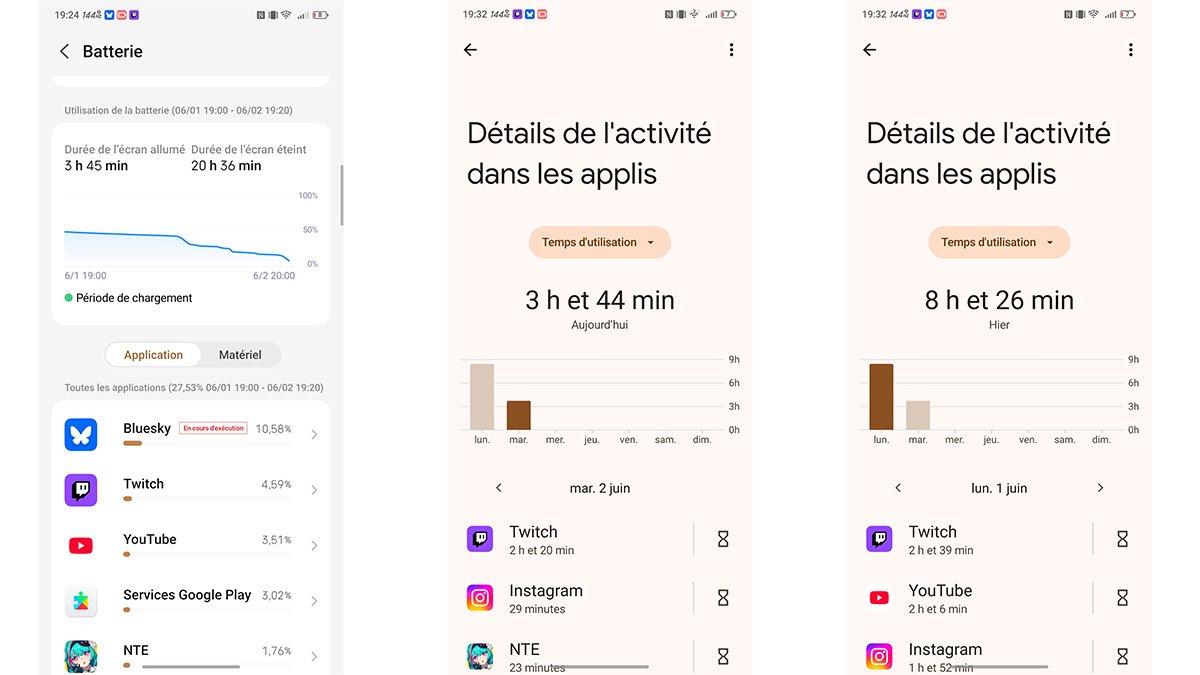
- An incredibly long-lasting battery life
- Convenient 3.5 mm jack
- Advanced gaming features
- Too few new features compared to the 11 Pro
- €100 more than the previous model
- A photography section to revisit
Test conducted on a smartphone loaned by the manufacturer.
In the Box of the REDMAGIC 11s Pro
- USB-C to USB-C cable;
- Rigid silicone protective case;
- 80W charger.
Design: a gaming smartphone with liquid cooling
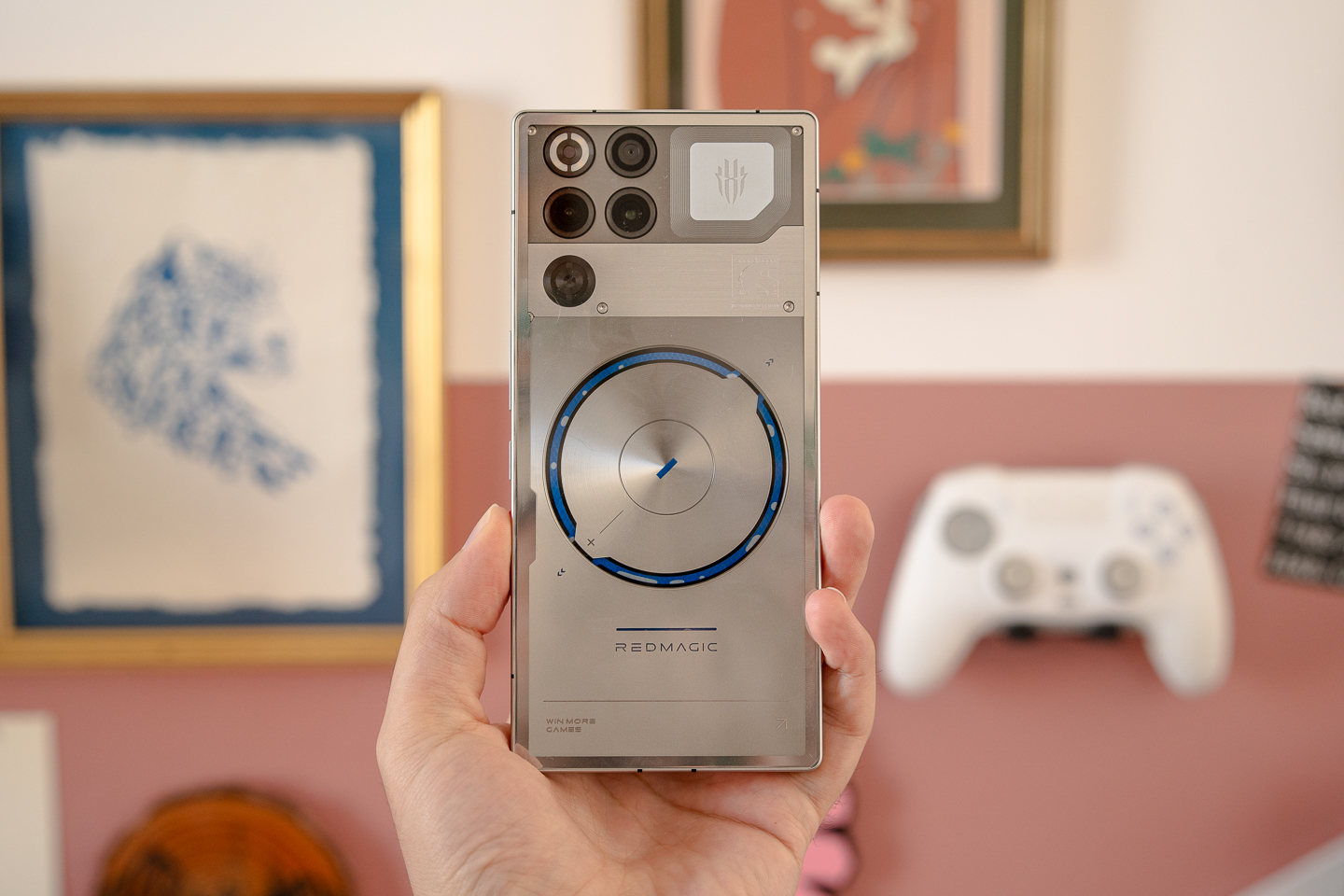
The REDMAGIC 11s Pro adopts, exactly as its predecessor did, the same design. There’s no trick; it is the same phone. A chunky device whose dimensions call to mind the Samsung Galaxy S Ultra, and thus fairly heavy (about 230 grams). I remain impressed by certain details, such as the perfectly flat transparent back (the camera module forms no bump), and of course the liquid cooling circuit that animates when gaming, which has a hypnotic quality.
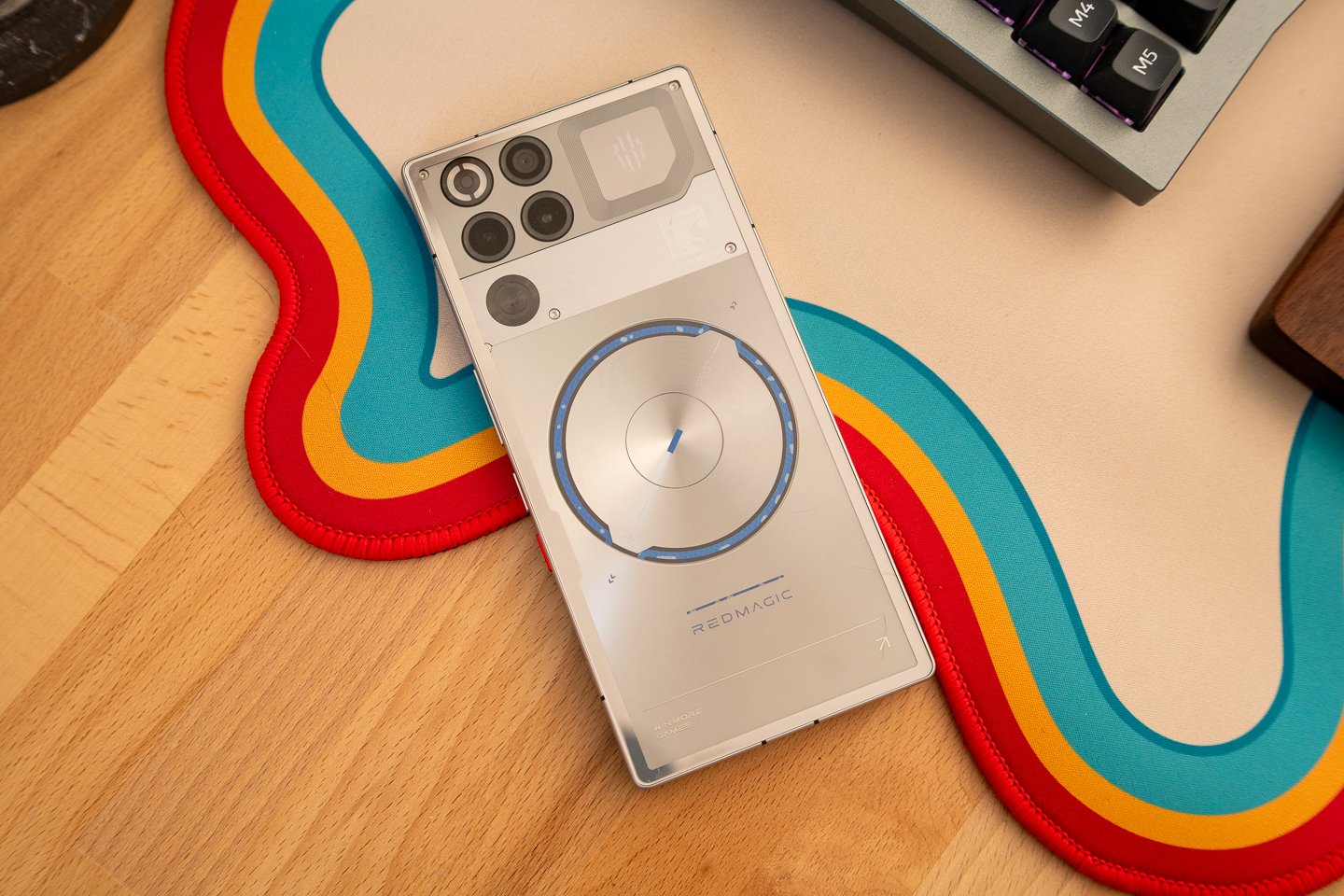
As a gaming phone, the straight sides of the REDMAGIC 11s Pro reveal two configurable capacitive shoulder buttons for your favorite games. There’s also a switch to trigger the gaming mode, which changes the interface and boosts the phone’s performance. On the other side, a grille allows heat to escape from the fan—which I find marginally less audible than on previous models.
But, where there’s a grille, there’s an opening. Consequently, this high-end smartphone carries only an IPX8 certification. It is water resistant (it can be submerged for 30 minutes), but not dustproof. Beware if you plan gaming sessions on the beach! The screen and back are protected by a Gorilla Glass of an unknown generation (which is rarely reassuring).
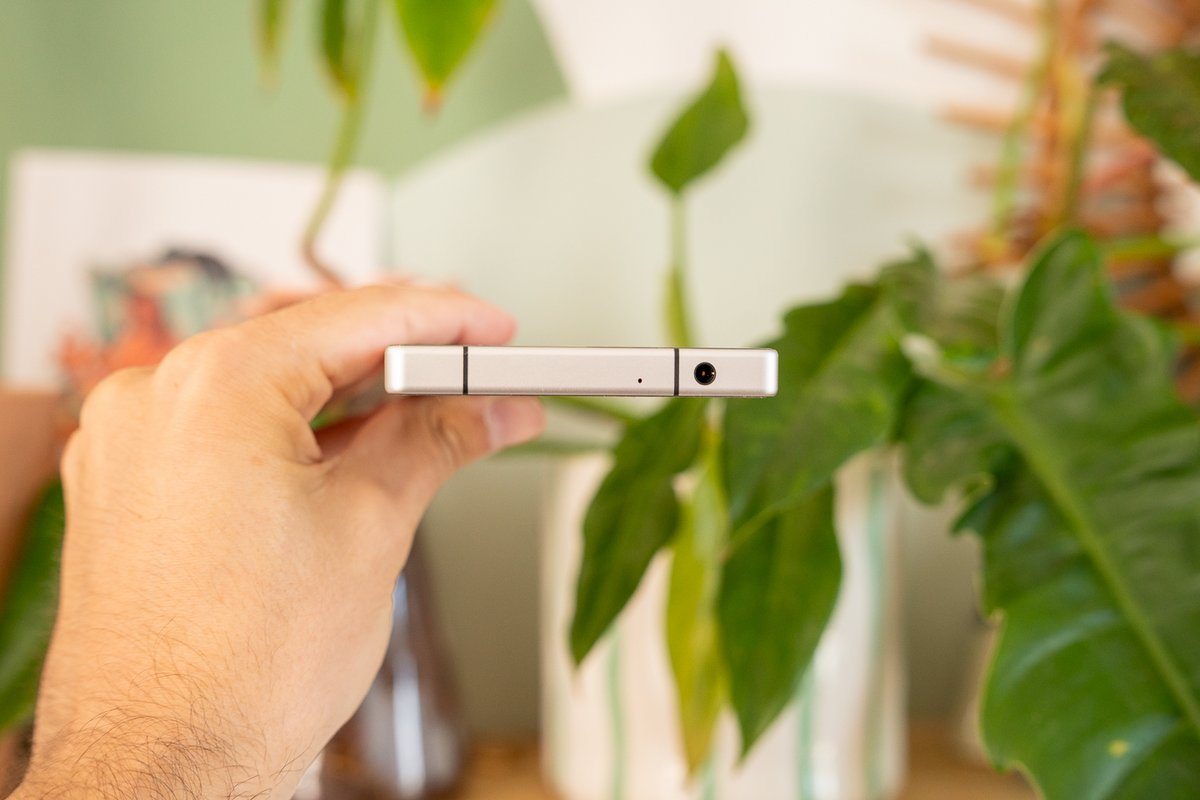
Lastly, and this is welcome, the REDMAGIC 11s Pro includes a 3.5 mm jack on its top edge. However, it does not support eSIMs.
Display: a hypnotic panel
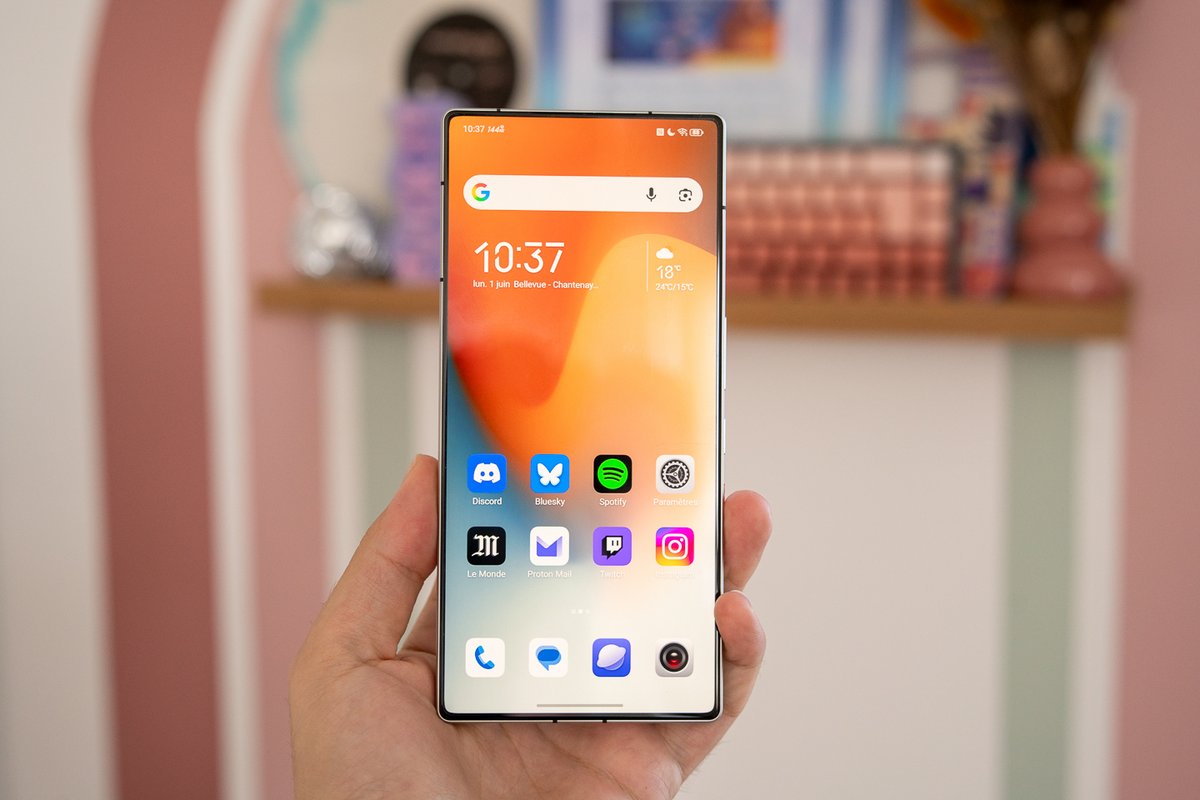
And we return to the same point: the 11s Pro uses the same display as the 11 Pro. A large 6.85-inch OLED panel, resolution 2688 x 1216, with a maximum refresh rate of 144 Hz. A bezel-to-bezel, edge-to-edge display that is utterly immersive, especially since there is no notch or punch hole. Yes, the selfie camera sits underneath the display, invisible to the naked eye. A plus for immersion… but also the promise of somewhat tricky self-portraits. We’ll come back to that later.
I found brightness to be quite adequate (about 1,800 nits); comfortable for outdoor reading without needing to remove sunglasses. Colors are fairly lush, though the default calibration leans a bit cold. I quickly warmed up the display through the phone’s settings to achieve something a little more neutral.
Finally, the screen’s responsiveness is astounding. REDMAGIC claims a 3000 Hz touch sampling rate. That means 3000 touch checks per second. The slightest movement on the panel is instantly reflected on screen, creating a remarkably fluid impression. A real achievement on this front.
Performance: top-of-the-line at this price
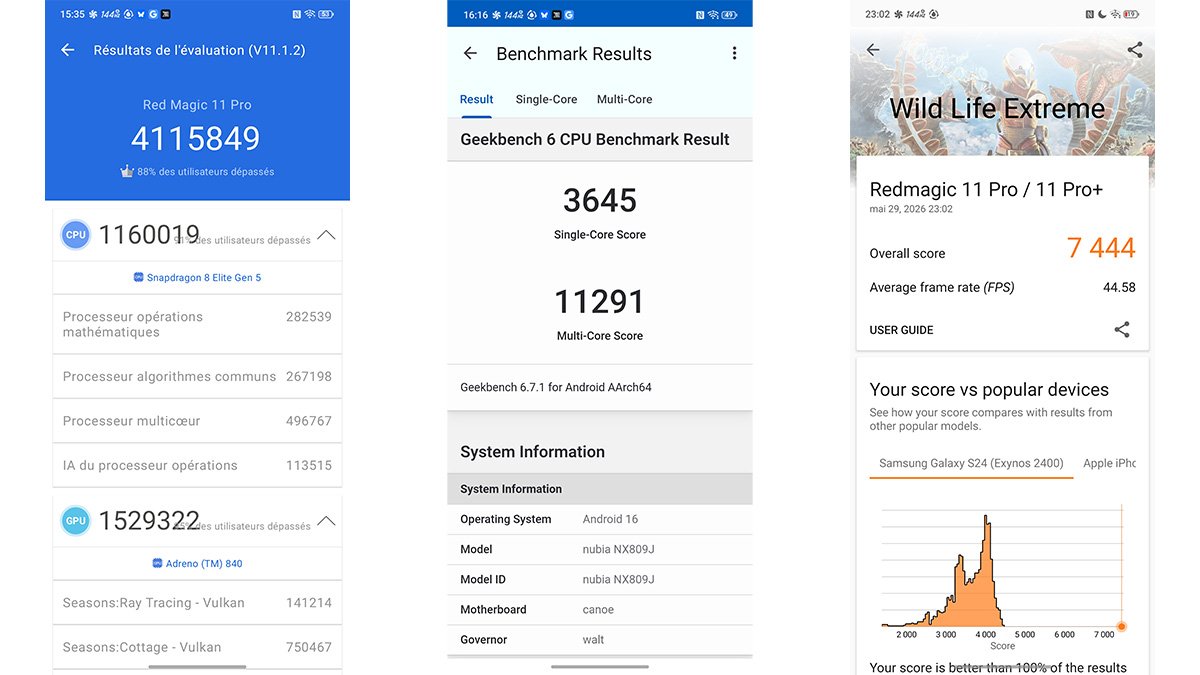
Like the REDMAGIC 11 Pro, the 11s Pro ships with 12 GB of RAM and a Snapdragon 8 Elite Gen 5 chip. But this is a revised version of Qualcomm’s latest SoC, with slightly boosted CPU and GPU clock speeds. Is that enough to make a real difference? Clearly not. But it’s evident that the REDMAGIC 11s Pro remains at the pinnacle of smartphone performance.
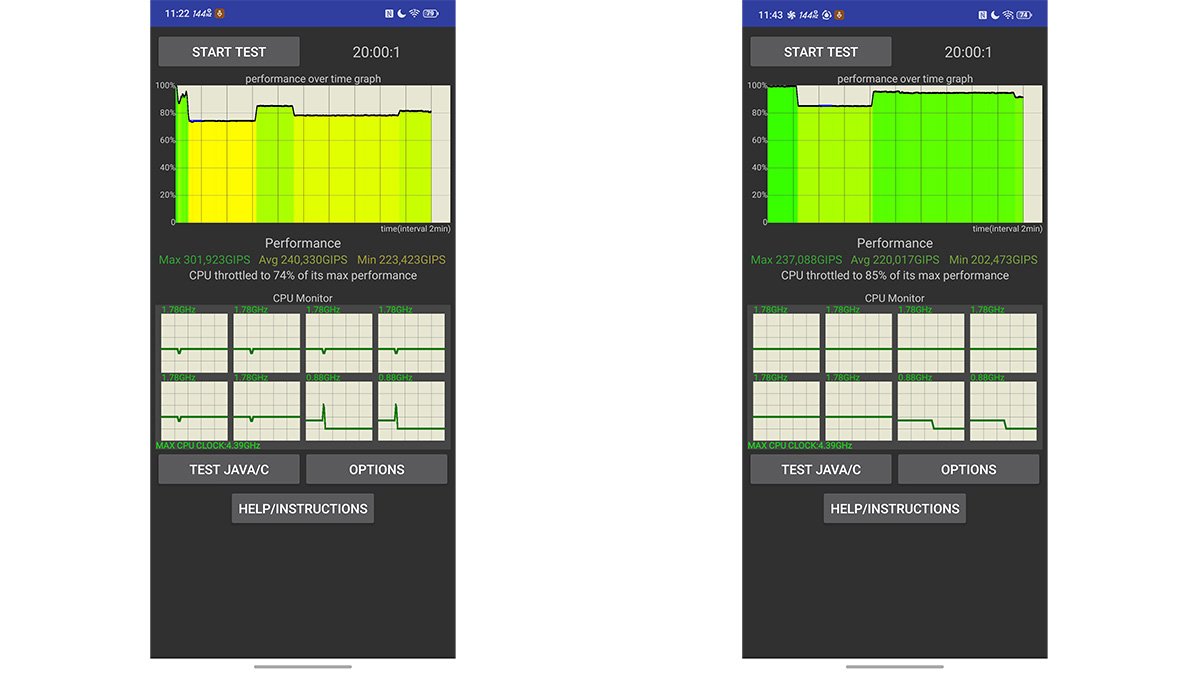
According to my usual benchmarks, the new model offers roughly a 2.5% gain in performance on average. In other words, you won’t notice a difference—and the 11 Pro still handles any game at maximum settings and high refresh rates.
However, I must warn you that the presence of a liquid cooling loop, a substantial vapor chamber, and a fan will not prevent the smartphone from heating up. In fact, it provides REDMAGIC with a reason to push its performance even further. For instance, I was unable to complete the 3DMark stress test. Each attempt ended with the phone shutting down due to an abnormally high temperature. On the other hand, you can clearly see a stability improvement when all the cooling circuit is engaged.
All of this is primarily about ensuring consistent performance, even during long gaming sessions. If you’re used to playing with a controller, heat is unlikely to bother you (though the fan noise could be more annoying).
Interface: better translation, finally
My relationship with Redmagic OS is, to say the least, complicated. This Android skin, fairly neutral, is riddled with bloatware—preinstalled apps that feel parasitic. It’s simple: the initial phone setup tosses you into a stage where as many as twenty-something apps are proposed as extras. You have to uncheck them all, one by one. Then you reach the homescreen, where another twenty or so unfamiliar apps and obscure games await—annoying for an €800 device.
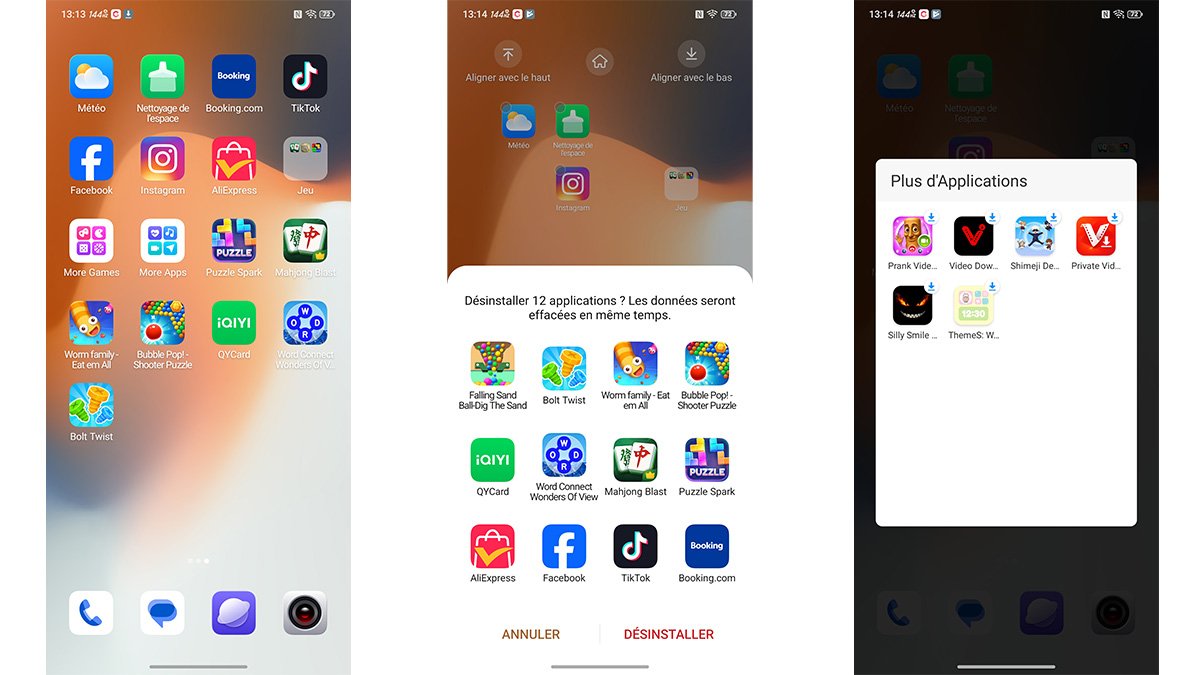
Still, I knew what to expect. Also, I’m glad to see the team has made some progress on translating the UI into French. I didn’t spot major errors, although some terms still feel a bit out of place in their context.
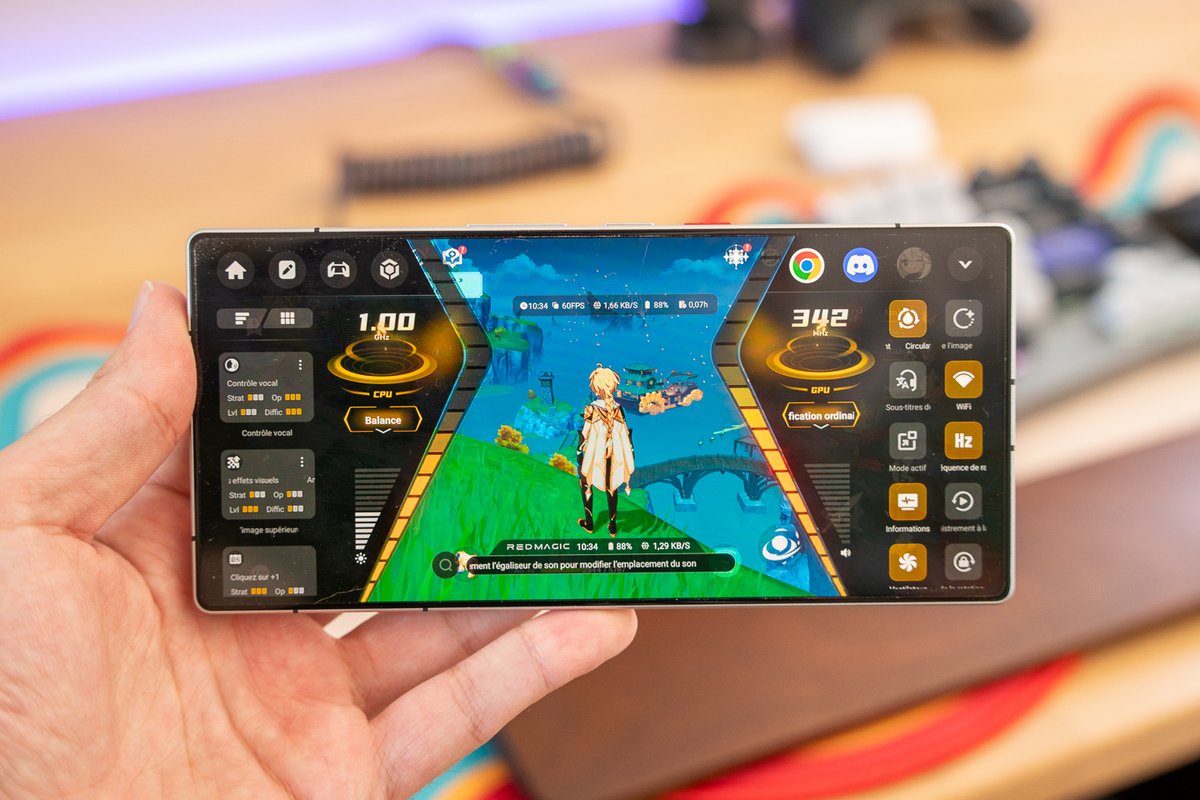
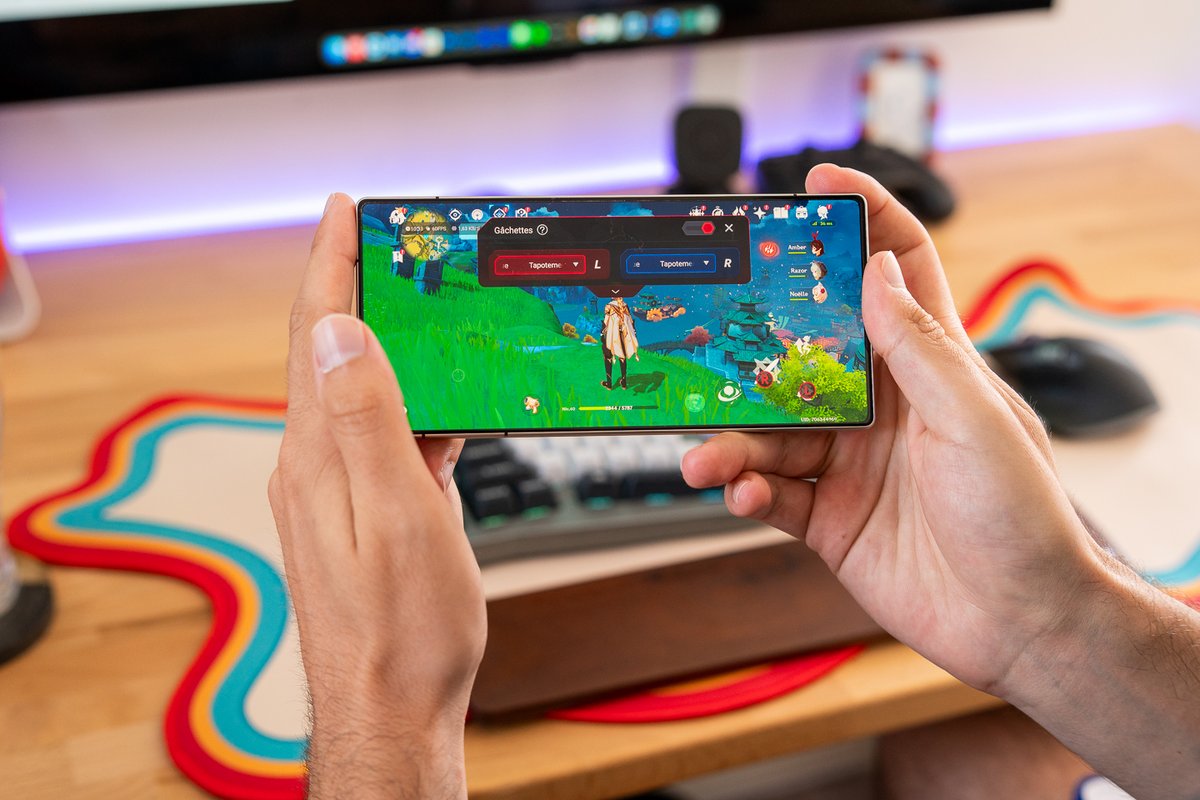
The big feature of Redmagic OS is, of course, the gaming hub, activated via the red switch on the phone’s side. A dashboard intended to gather your favorite games and configure them meticulously. Once a title is launched, swiping left reveals an overlay that opens a world of options, shortcuts, and micro-adjustments to refine your experience. This is where you can specify the use of the shoulder triggers.
But that is also where Mora, Redmagic’s AI assistant lives. A character animated to resemble a very young girl, whom you can dress like a doll and who offers to respond to questions like any other chatbot. Bizarre and dispensable.

Artificial intelligence, precisely, shows up in small touches. Some relatively rare apps may offer a writing assistant—for example, based on the previous message received on Telegram, it can propose replies. It’s rudimentary, not always highly relevant, but it exists. Of course, Gemini is involved, as is Entourer for search.
Finally, the manufacturer’s update policy hasn’t changed. Five years of Android upgrades, and five years of security patches, should be on the horizon.
Camera: still forgettable
Photography has never been, and still isn’t, the forte of REDMAGIC smartphones. We may forgive them; it’s hard to excel at everything, especially for €800. Still, there are a few positives to note, notably with the main sensor.
The REDMAGIC 11s Pro camera setup:
- Wide: 50 MP, 1/1.55“, f/1.9, OIS ; Ultra wide: 50 MP, 1/2.88“, f/2.2 ;
- Selfie: 16 MP, 1/3.06″, f/2.0

Wide-angle
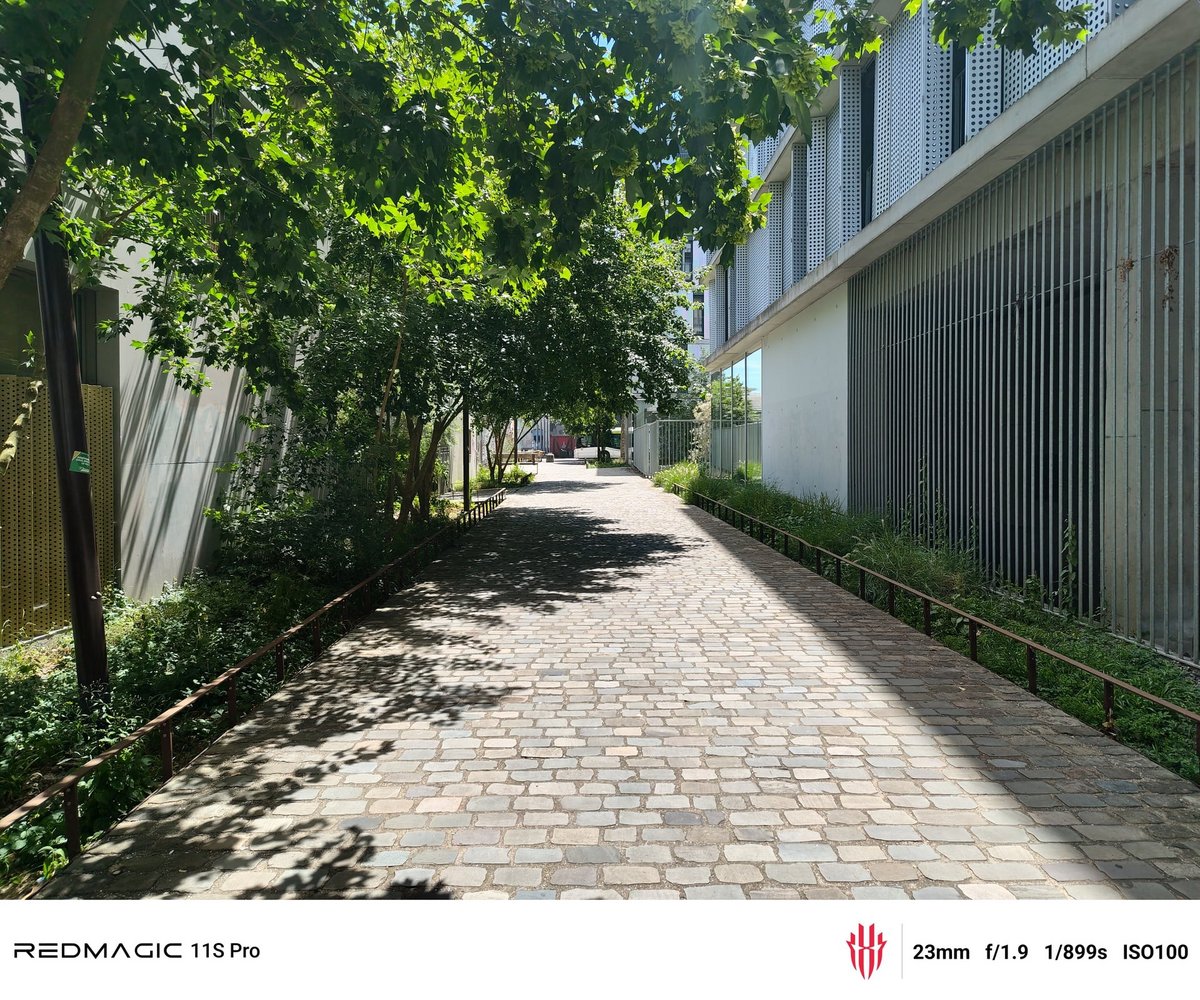
The REDMAGIC’s wide-angle isn’t bad per se. It can capture bright and detailed images, but it relies heavily on saturation (greens in particular) to grab the viewer’s attention. Yet the sensor size and lens aperture don’t help with sharpness, which can be a bit rough. The most discerning eyes will also notice a green tint applied in most shots. In short, it does its job well enough if you only look at the photos on the phone.
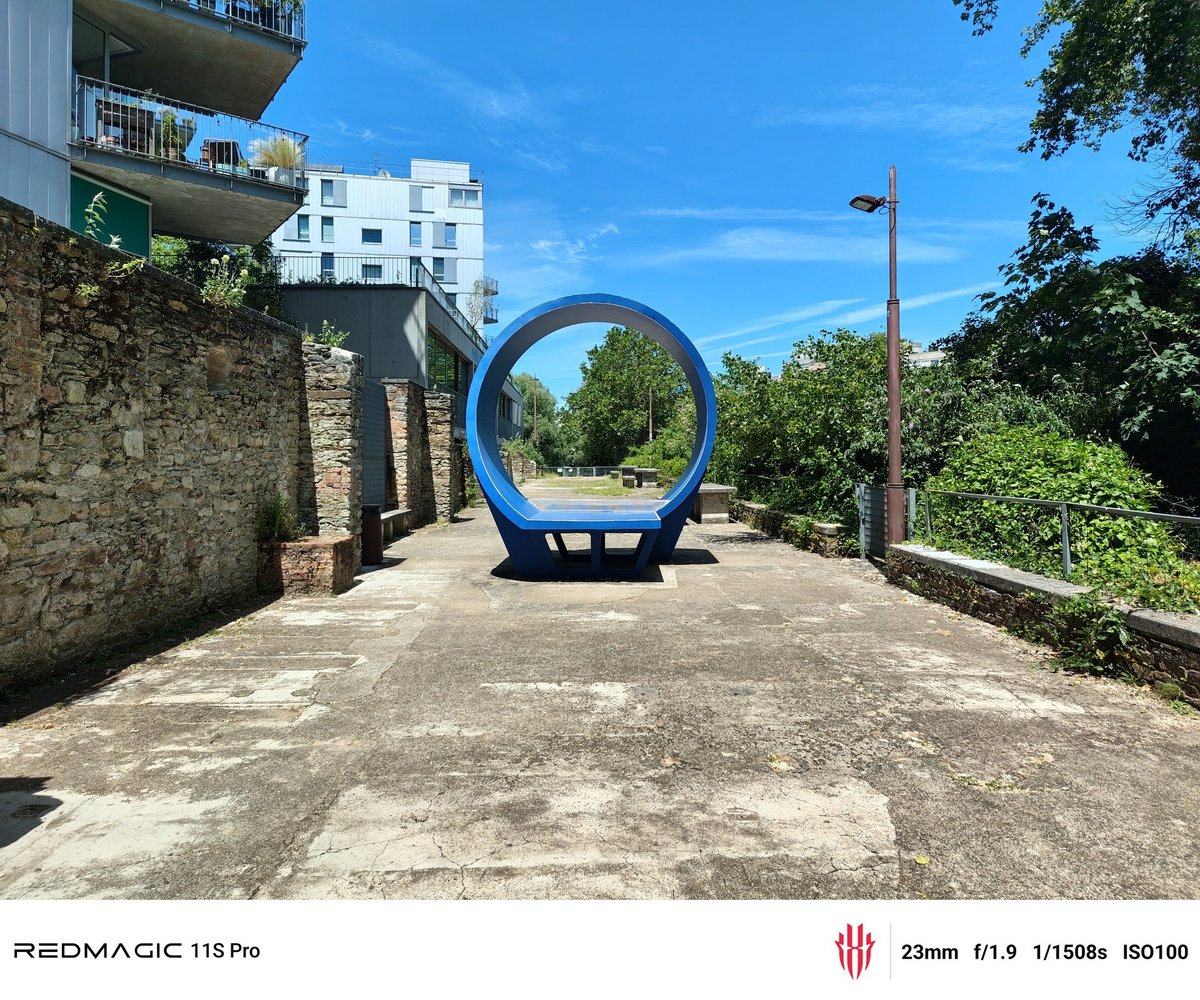


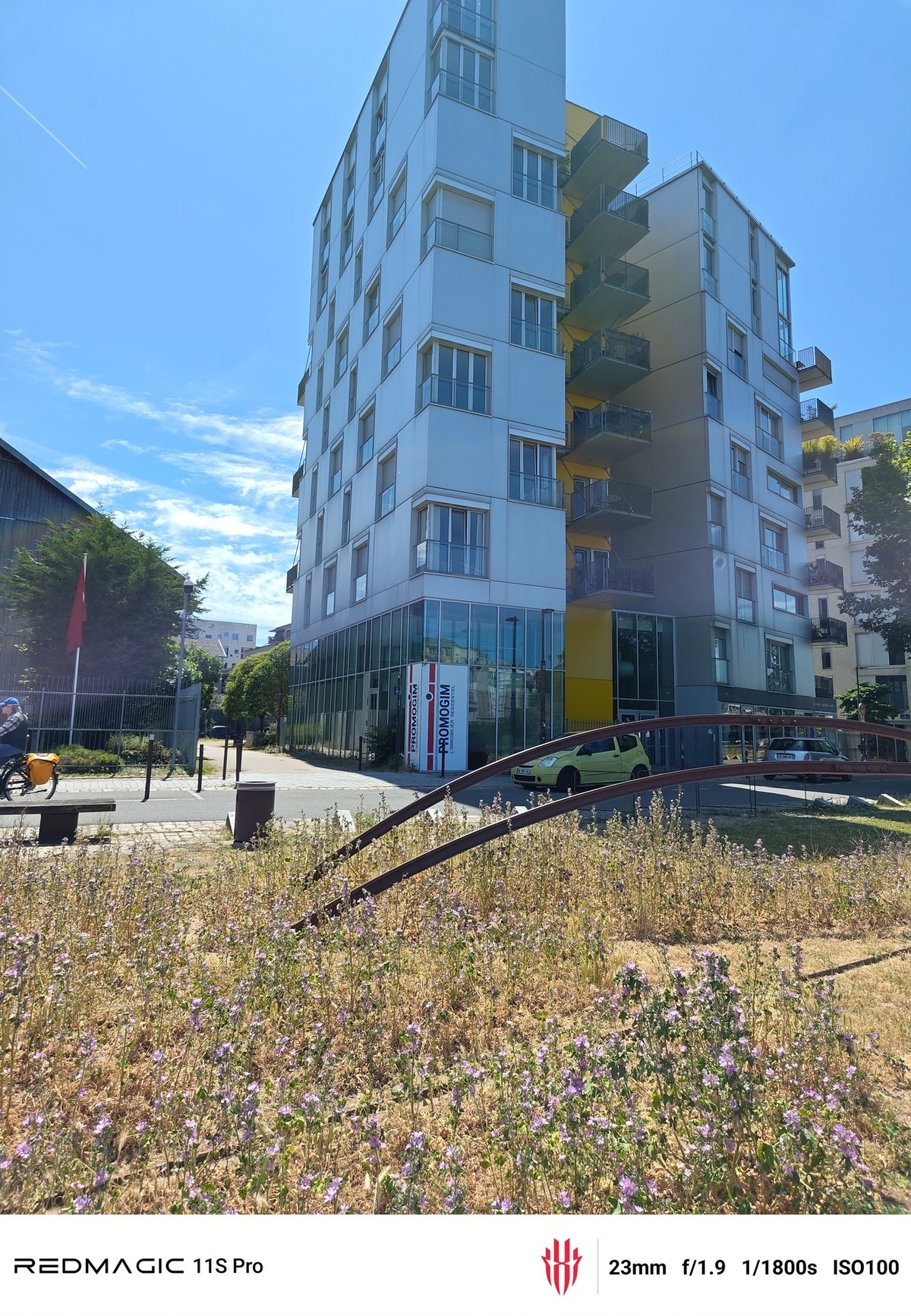

Ultra wide-angle
If it’s decent, the 50-megapixel ultra-wide is modest in its technical offering. Even smaller than the main module, its sharpness is inevitably somewhat degraded. Once again, better to keep to photos you view on the smartphone. There’s also a noticeable difference in colorimetry, oddly more neutral than on the main wide-angle.
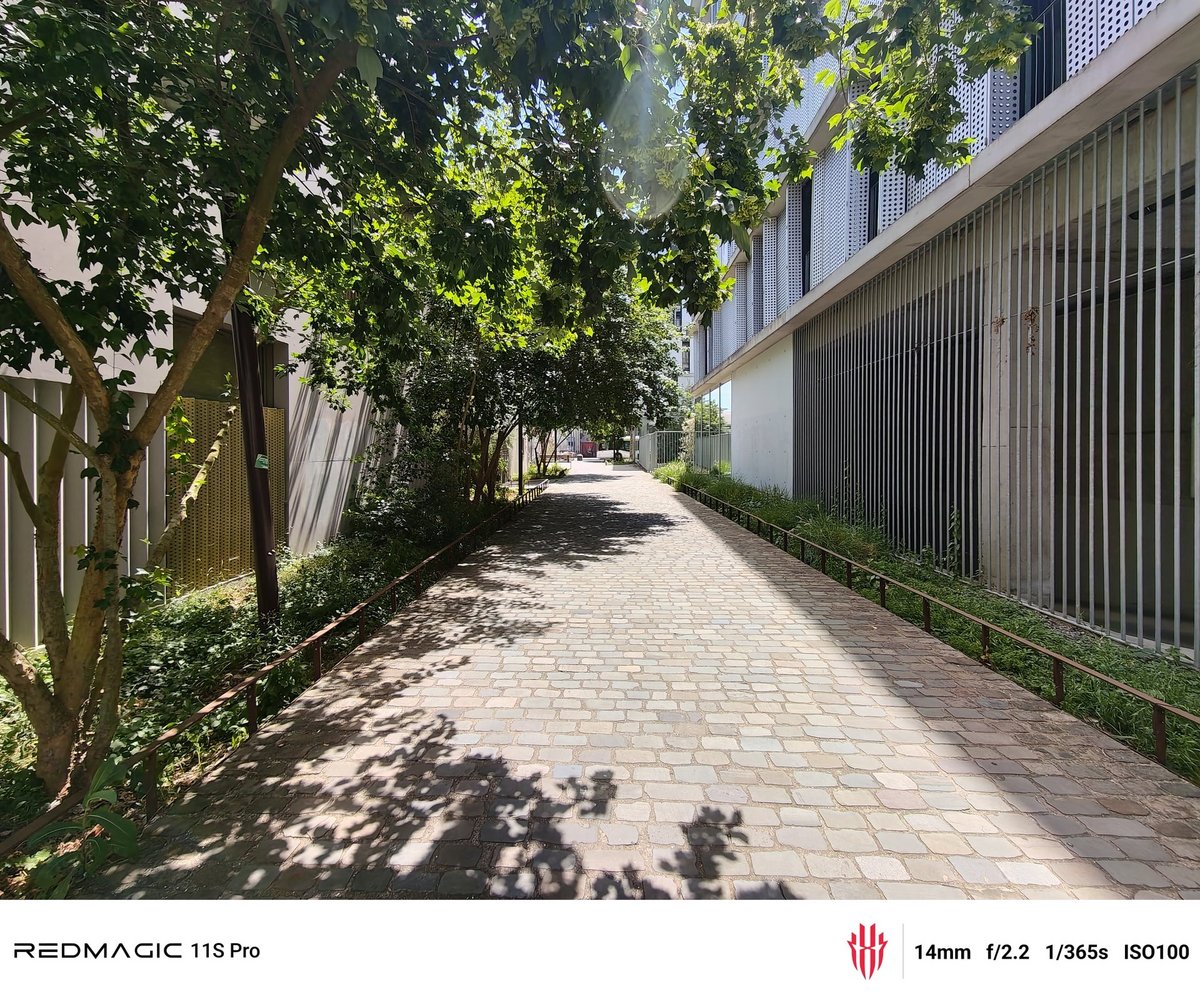
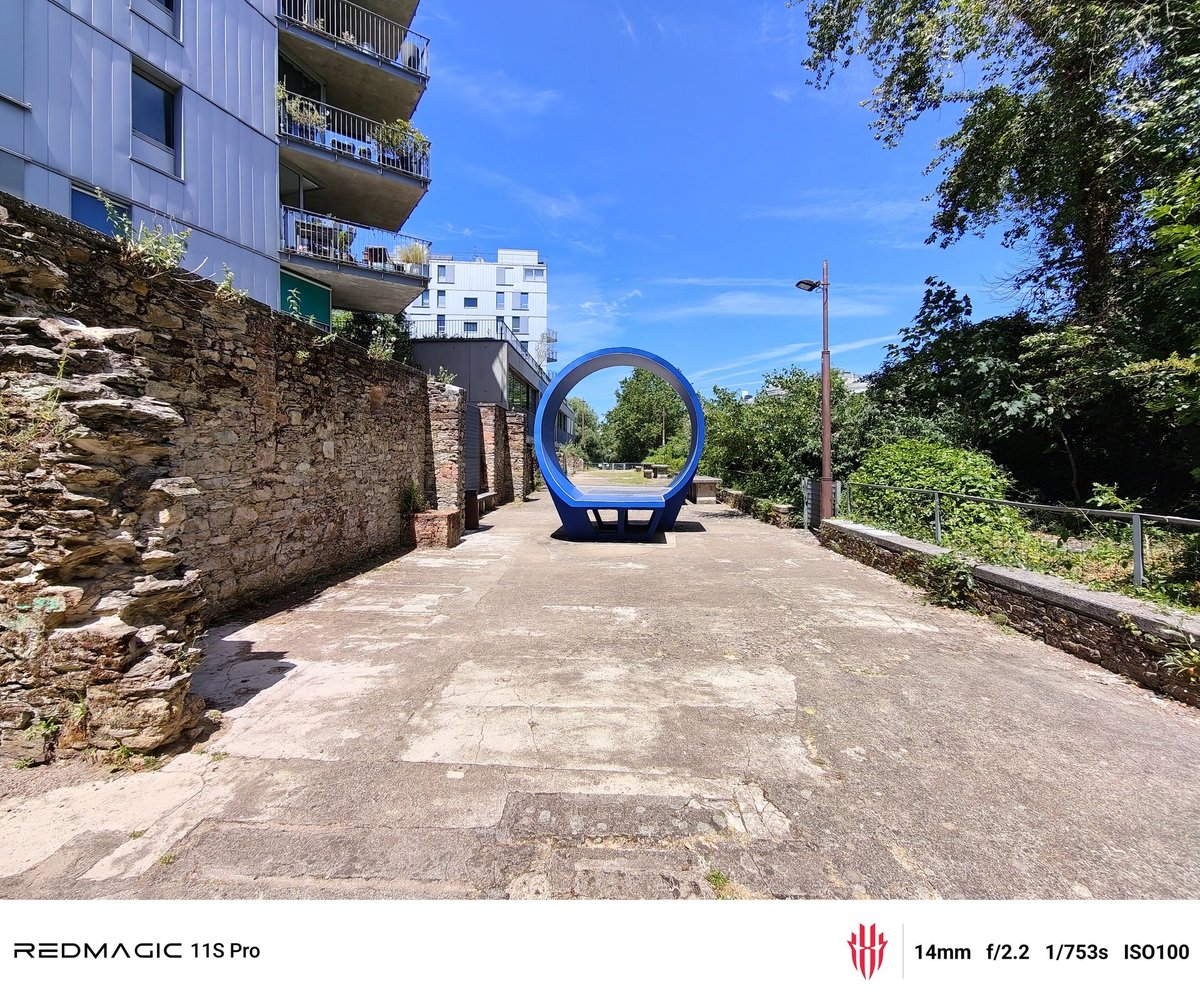



Telephoto / Zoom
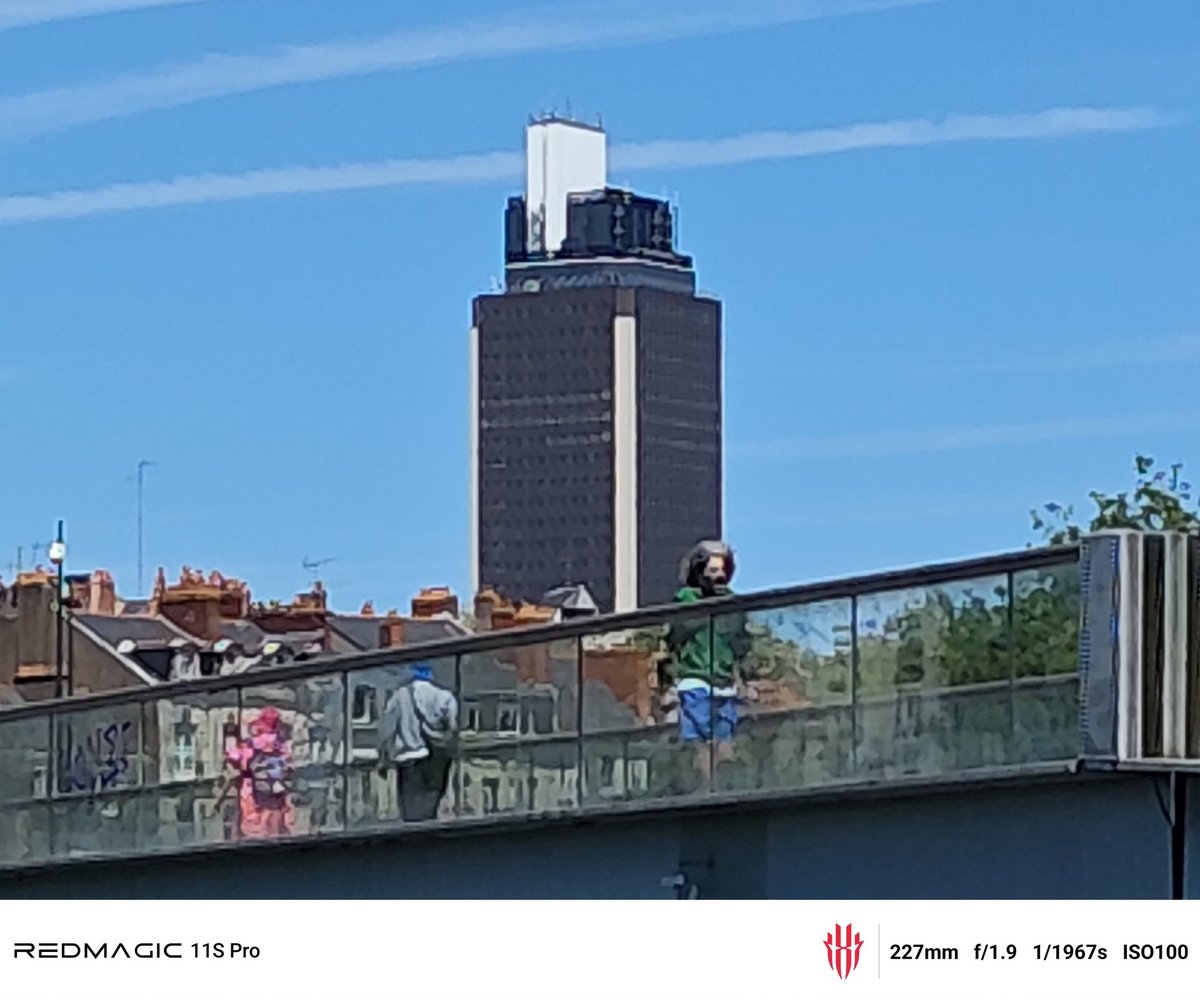
There is no telephoto lens in the REDMAGIC 11s Pro’s lineup, and the interface doesn’t make it easy to use digital zoom. Technically you can push up to 10x zoom, but to do so you must slide a slider in the Camera app. We would at least like 2x zoom to be easily accessible without digging around.
That said, once you view the results, it becomes clear that REDMAGIC is not itching to let you tinker with this capture mode. Even with a simple 2x zoom, which should be no big deal for a 50-megapixel sensor, the results lag far behind the competition. I’ll spare you the comments on 10x zoom photos. Conclusion: