
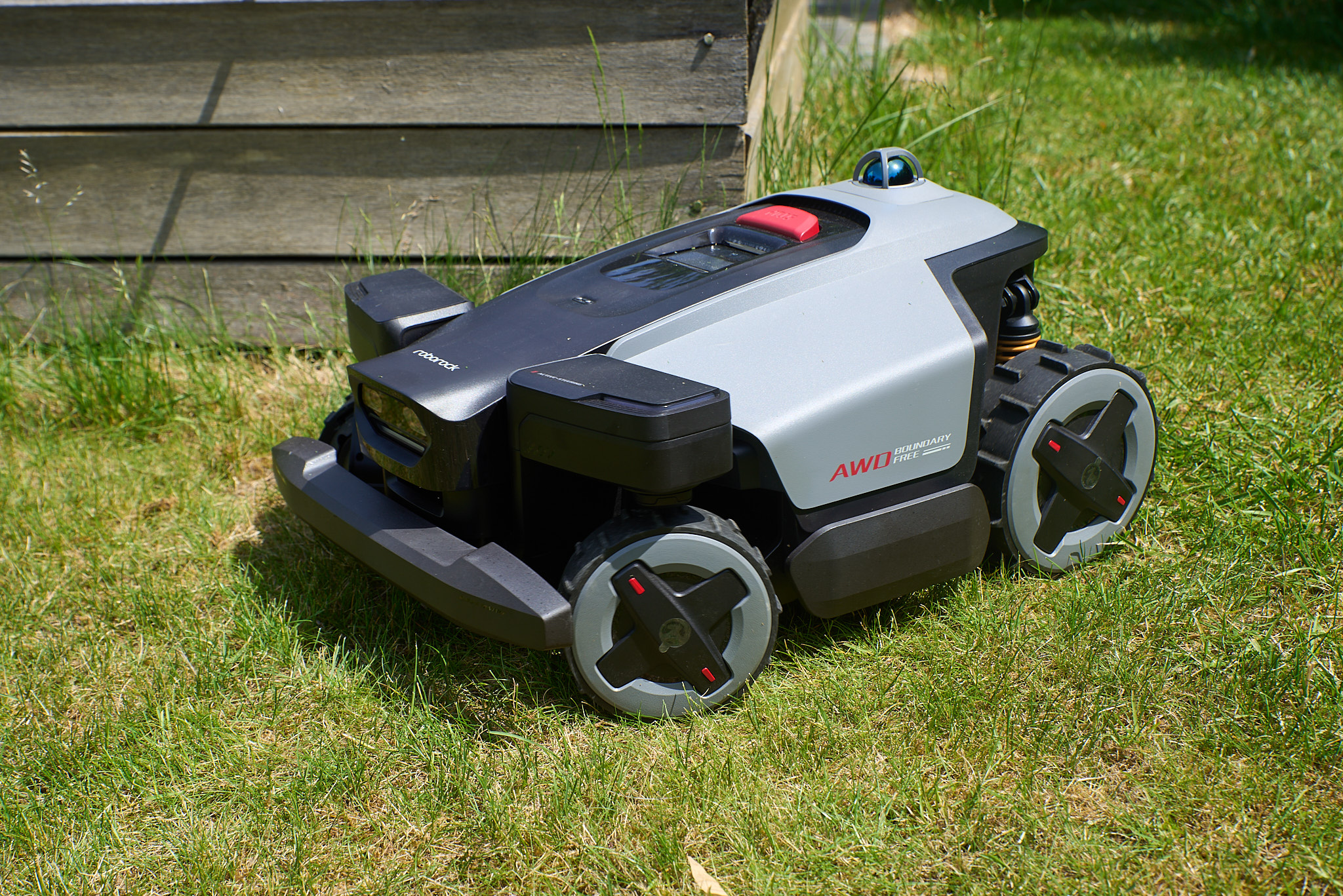
The robot garden party is on: every brand that had already made a name for itself in our living room with floor-cleaning robots is now venturing into our gardens. All of them? Not quite! One manufacturer still resisted the lure of fresh grass. But since its announcement at IFA 2025, that’s no longer the case—Roborock has given in and just released a line of lawn mowing robots. The brand has its work cut out to stand out in a market that’s already saturated.
9 / 10
- Finally a LiDAR robot that can slip under hedges!
- Unmatched traction: tackles 80% slopes with ease and handles 8 cm obstacles
- Optional border-cut module
- Sometimes misses detection of small obstacles (garden hose…)
The Rockmow Z1 LiDAR (also known as RockMow Z120) is Roborock’s premium model. Priced just under €3,000, it may seem expensive, but that’s standard for robots designed to cover 2,000 m². The brand also offers a more affordable RTK lineup that we will test soon.
Test conducted on a unit loaned by the manufacturer.
Rockmow Z1 LiDAR Unboxing: Unique Design Choices
You notice even before opening the box: the Rockmow Z1 LiDAR sits in the heavyweight category, weighing 21.7 kg on the scale. In terms of footprint, it isn’t a monster. Its dimensions are very similar to the latest robot we tested, the Navimow i208 LiDAR: 66 cm long, 47 cm wide, and 33 cm tall at its peak—the LiDAR dome. But the comparison ends there: the Z1 LiDAR’s design is unlike its competitors. With its two visibly direct-steering front wheels topped by large motor blocks, rear wheels equipped with large yellow suspension springs enabling a very wide range of motion—and evoking a radio-controlled car—Roborock has chosen solutions never seen before in the small world of mowing robots.
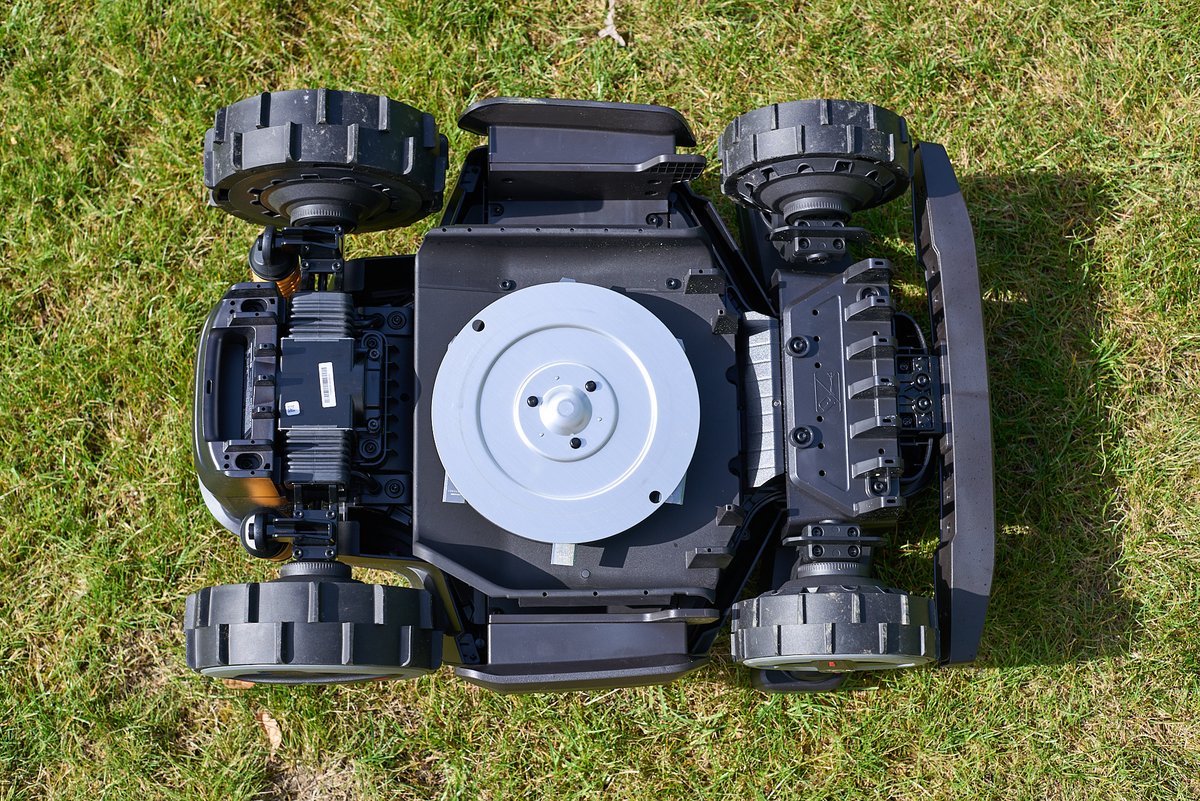
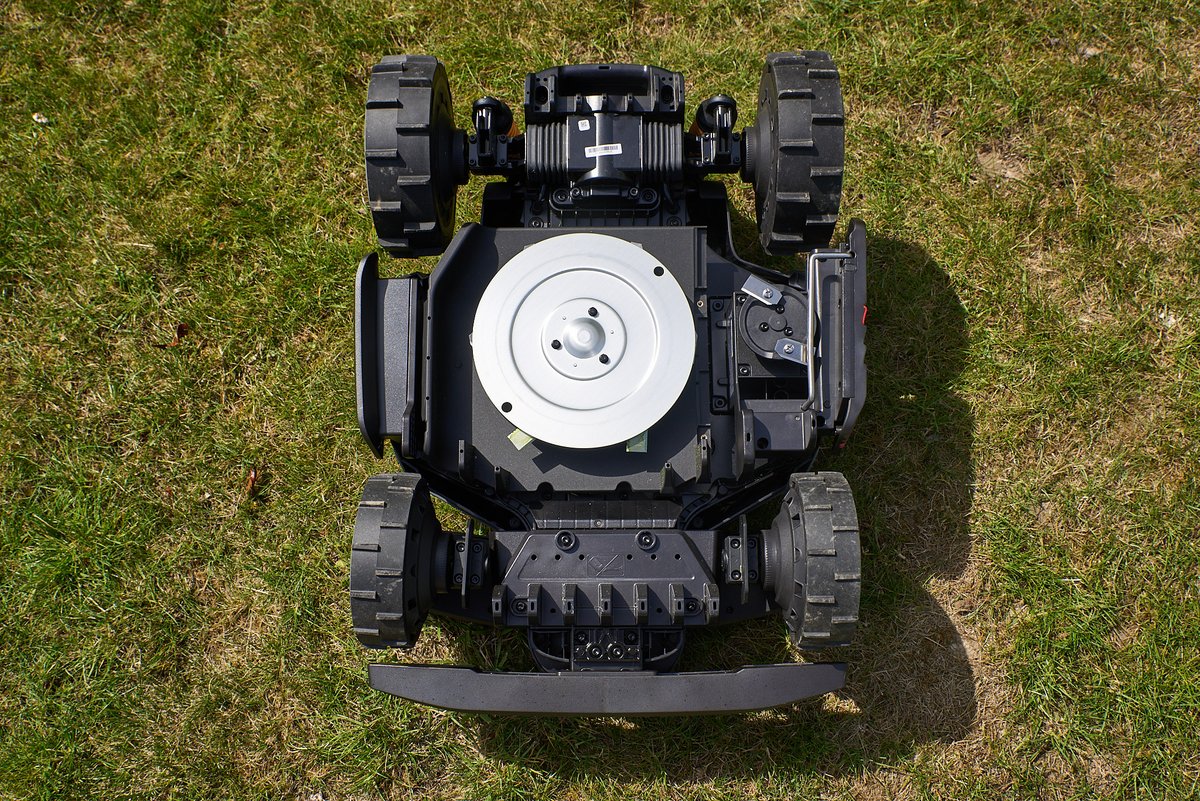
When flipping the robot, the exception is confirmed: while the 24 cm disc with six blades is fairly standard (though there is a separate aluminum shield disc in front of the blades for extra protection of the screws, still quite rare), a very rare option appears on our test model: a small additional side disc with two blades that allows trimming along the edge as close as 3 cm from the robot’s edge. A practical detail when trimming edges the robot cannot cross, and already present on the Ecovacs Goat A1600 LiDAR Pro. Note, however, that robots with a mobile deck are starting to hit the market.
The charging dock is extremely minimalist, just a connector, and there is no LiDAR brush here since the LiDAR is located at the back anyway.
Rockmow Z1 LiDAR Mowing: A Real Step Forward
For the moment, there is no automatic mapping at Roborock: the brand sticks to the essentials for now, since automatic mapping is announced for a future update on Roborock’s site. Manual mapping is quite easy to do in “game mode.” If usually you use the two thumbs to move the device (left stick to move forward/back, right stick to steer, like a classic RC car remote), here all controls are under the left thumb. So a bit more dexterity is required, but we can bet most customers will enjoy their experience with a game controller’s directional pad from previous console days.
The app organizes mowing into three blocks: Zone (to select a zone to mow from several), Complete (to mow all zones), and Edges, to mow only the edges of the chosen zones. It’s simple and well presented. You can then proceed with all the classic settings: quick mow or standard mow or mowing angle. A random angle function between each mowing run is available in the settings. We applaud the app’s simplicity, but regret that once again a primary tab is sacrificed to display the brand’s online shop.
The cutting height is adjustable from 20 to 70 mm, which matches the best in class, but here the step is not 5 mm as in nearly every other brand; it’s a 1 mm increment, perfect for the fussiest (but is it really necessary?).
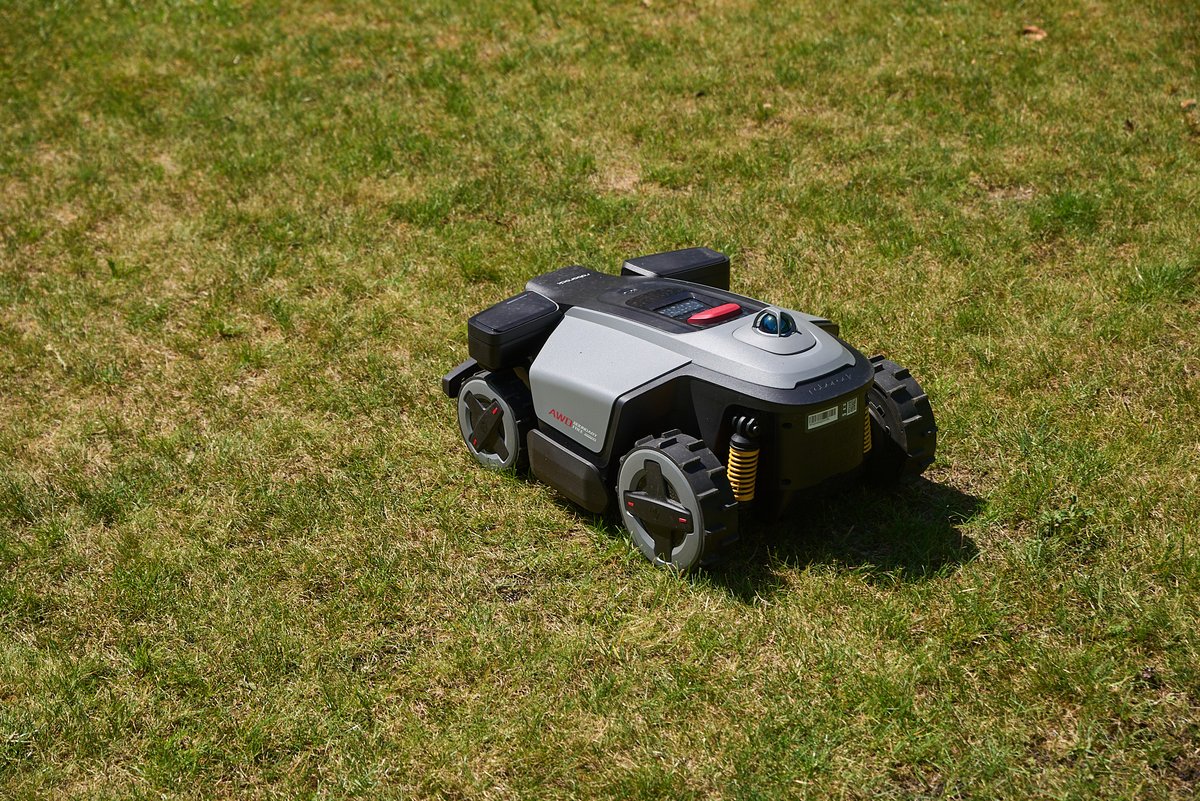
Note that to start mowing, a bug often blocked the robot at startup during our test: it displayed that the rain protection must be disabled and refused to start. In the heatwave! By choosing the option to mow right after rain (default 3 hours after rainfall), we could reliably start. It should only take a light shower at night to reset this three-hour timer once everything has been dry for a long time.
Who says LiDAR robot means poor lawn coverage… For the first time, a non-RTK robot managed to respect the defined borders during mapping, without fearing to go under a hedge or shrub. 2026 is a landmark year, as a LiDAR robot now matches RTK robots in land coverage. Bravo, Roborock!
One might have expected limited traction due to a smaller rear wheel diameter, but not at all: the Rockmow managed to traverse uneven areas that no other robot had crossed before, thanks to its large front motorized wheels. The 80% slope tolerance is solid, but it’s mainly the ability to move across rough terrain that makes this robot a new reference, with Roborock claiming it can clear 8 cm obstacles (slightly less in our test, but Roborock notes that border-cutting is limited to 5 cm with the PreciEdge border cutter).
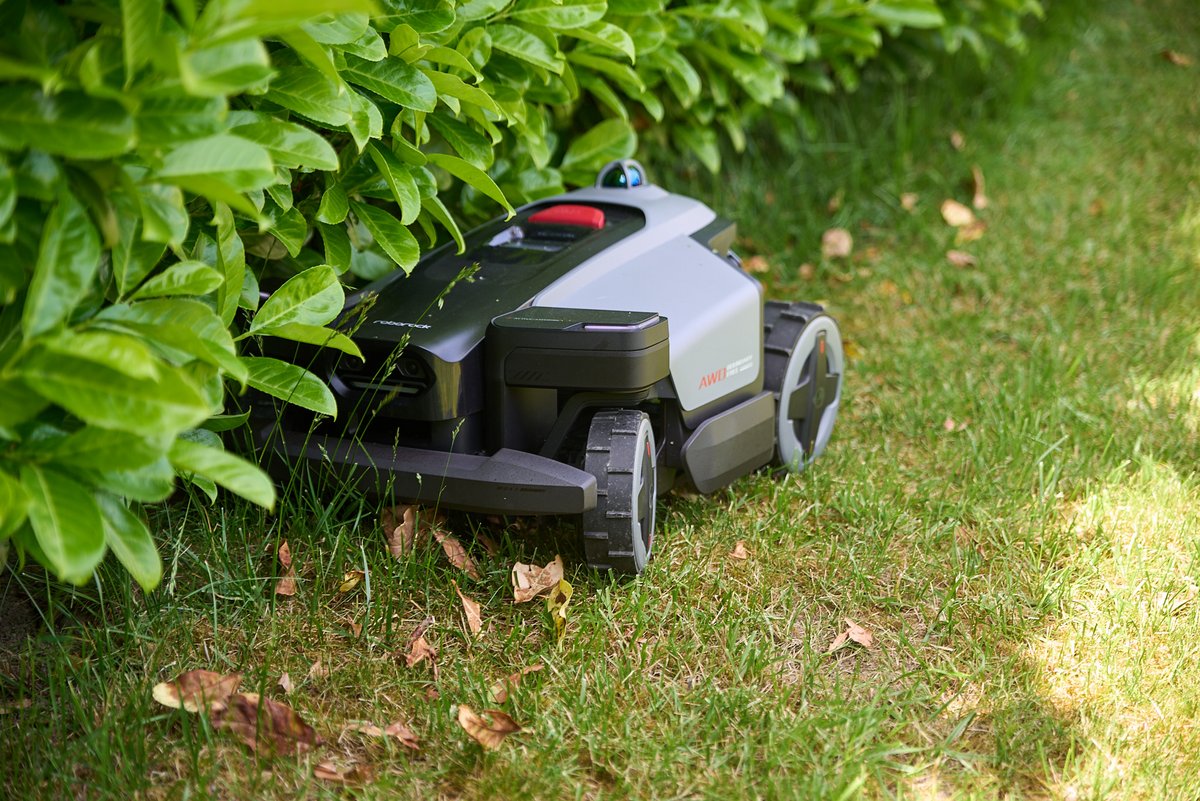
If you think cutting under hedges compromises safety and invites the robot to cut objects, animals, or people on your lawn, you’ll be mostly right. In fact, safety is highly configurable, with settings ranging from “sensitive,” where the app warns that some zones may remain unmowed, to “balanced,” where the strategy smartly prioritizes mowing area.
Even in the “sensitive” mode, the robot still passes under hedges. You can also choose to avoid or not avoid obstacles in passages you define between mowing zones, or those near the boundary (disable to fully pass under hedges), as well as pause if a human is detected. Security is therefore both comprehensive and highly adjustable. Yet this Roborock isn’t the best we’ve tested at obstacle avoidance: its flaw—likely to be fixed—remains the hose test: the Rockmow Z1 LiDAR only detects it about two of three times.
Also note that when an object is trailing, the robot circles it as closely as possible, with little safety distance. The robot nearly touches the object detected, which means the blades are still a few centimeters away—something we generally appreciate. For humans, the safety distance is greater.
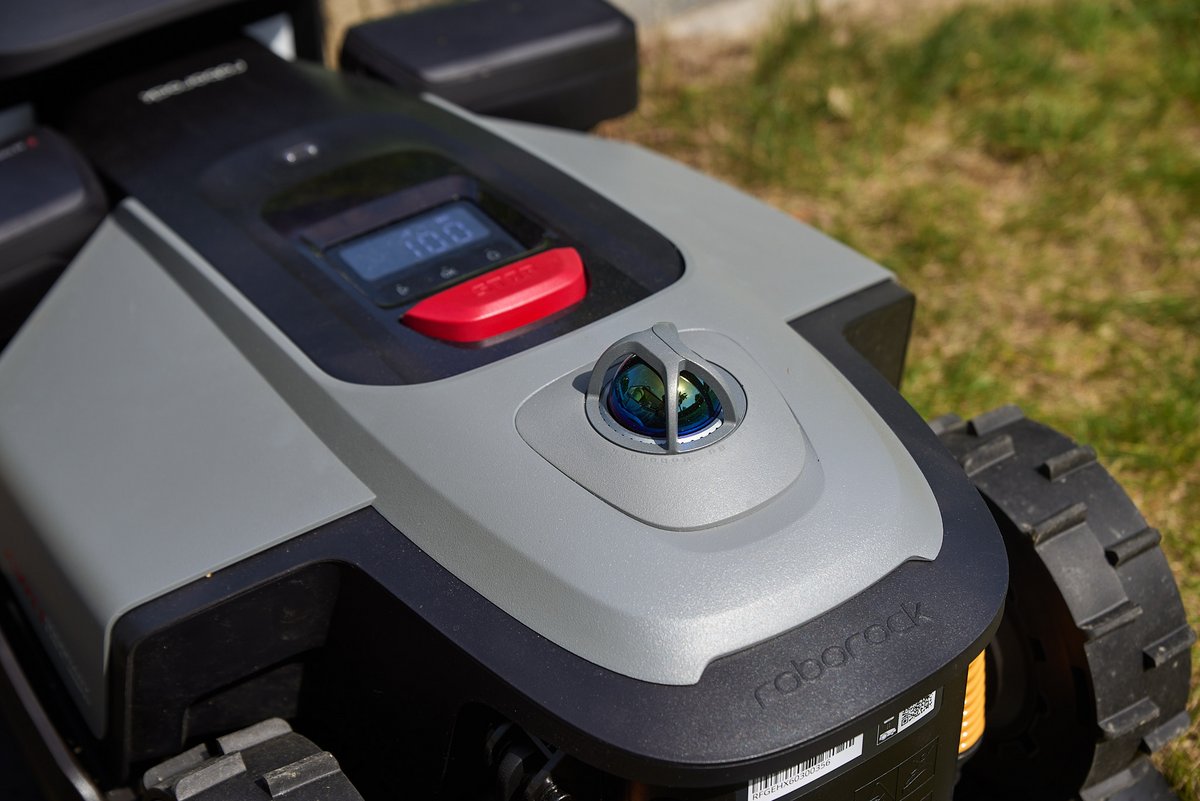
The Rockmow Z1 LiDAR is crowned for border trimming: thanks to its PreciEdge module and its ability to approach terrain limits—be they walls or hedges—it’s the robot that leaves the least amount of work for border trimming. However, there is still some uncut margin; we’re not at zero. And if you mention the advent of robots with mobile decks (or even dual decks), it’s for an important point: the PreciEdge module is not vertically motorized, which means it cuts borders at a fixed height, unlike a main deck that allows height adjustment.
And what about autonomy? It can mow 400–500 m² on a single charge, so 2,000 m² would take 4 to 5 charges, fairly quick charges (the robot fully recharges in about 50 minutes). Manufacturers have grown a bit too used to this kind of calculation: mowing area is usually given across several charges, for about 8 hours of work. It’s worth noting that the battery is accessible behind a rear hatch on the robot; unscrewing four screws will allow you to replace it.
Roborock RockMow Z1 LiDAR: Clubic’s Verdict
While the mowing market is new to Roborock, the brand has performed magic with its Z120: efficient mowing, exceptional traction, excellent ergonomics, and for the first time on a LiDAR robot, near-perfect field coverage, plus a border-cutting option to reduce unmowed areas, leaving almost nothing to critique…
But since we’re picky, we did find a couple of flaws: first, this Z120 is a big robot, not very easy to handle when you need to bring it in for winter storage. Second, its price: the first LiDAR robot that truly convinces isn’t competing with the “smaller” LiDAR robots; it’s a “large lawn area” robot (2,000 m²) with a corresponding price, bordering €3,000 if you opt for the border-cutting accessory.
- Finally a LiDAR robot that can pass under hedges!
- Unmatched traction: climbs 80% slopes with ease, and handles 8 cm obstacles
- Border-cut module as option
- Occasionally misreads the detection of certain small obstacles (hose, etc.)
The Rockmow Z1 LiDAR—RockMow Z120, Roborock’s top-tier offering. With a price just under €3,000, it may seem pricey, but that’s the standard for mowing robots built to cover 2000 m². The brand also offers a RTK lineup that is more affordable, which we will test soon.
Test conducted on a unit loaned by the manufacturer.
Rockmow Z1 LiDAR Unboxing: Unique Design Choices

Daniel Brooks
I cover everyday products with a practical eye, from kitchen tools and home essentials to smart gadgets and consumer trends. My goal is to help readers understand what is genuinely useful, what is worth the price, and what deserves a second look before buying.