
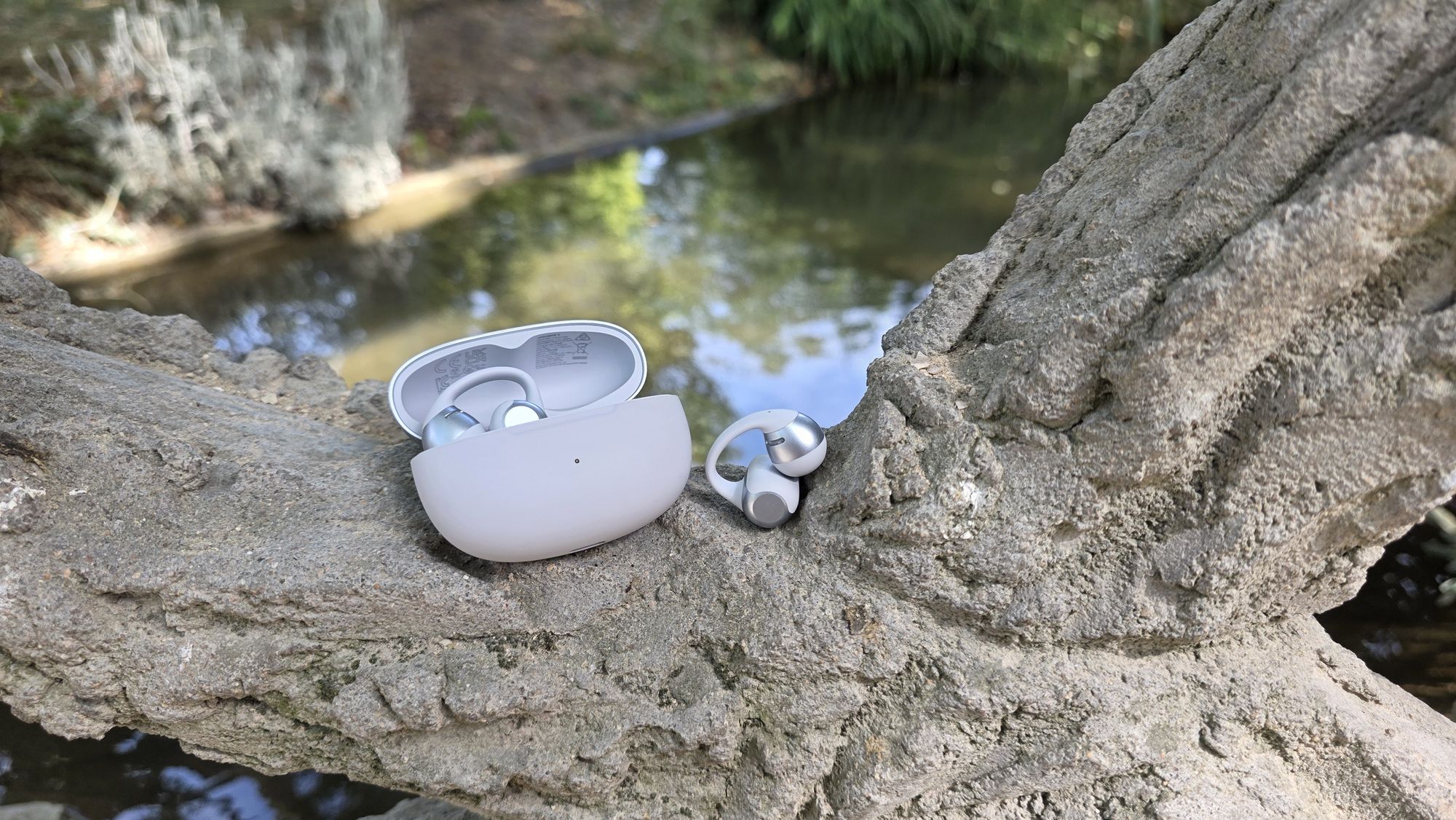
Less than a year after their first earclip headphones, Shokz returns with a slightly optimized version, the OpenDots 2. On the agenda, a complete and comfortable model, driven by an enhanced sound architecture.
A kind of soft yet pragmatic evolution of the first OpenDots, the Shokz OpenDots 2 are earclip headphones that combine rugged construction, IP57 certification, an acoustic chamber housing two drivers, full controls, fairly modern connectivity, and a few extras like Dolby Atmos processing. Quite enough to match or surpass the champions of the category such as Huawei’s FreeClip 2?
7 / 10

- Good balance and solid bass extension
- Exceptional comfort
- Element resistance (IP57, case IP54)
- Full and intuitive controls
- Very good battery life
- Still a bit lacking in overall support
- Call quality not impressive
- No LE Audio
- Design rather basic
What our measurements reveal (and why it truly matters)
Our measurements show that Shokz is one of the players who best masters the air-conduction architecture. The core issue for a clip-on format, bass extension here is very good but not miraculous. We can note that the earphones begin to lose linearity below 70 Hz, and drop off completely from around 60 Hz. In the rest of the spectrum, there’s a slight emphasis on the highs, giving a marginally bright character, but even with loud playback we don’t observe real aggression.
In pure quality, the earphones defend themselves quite well, with a good level of detail, and fundamentals generally under control: decent dynamic range, a soundstage not particularly wide but coherent and well projected forward, instrument separation fairly good for air-conduction earbuds. In this regard, Huawei is slightly superior. The sense of detail and the width of the stage are better managed with the FreeClip 2. Consequently, we give the same score for the audio aspect, even though Shokz is more pleasant in a noisy environment.
Finally, battery life is one of the very strong points of the product. Not only are the Shokz OpenDots 2 capable of comfortably hitting the 10 hours on a single charge, but they can even exceed that in a calm environment, and the case adds about 2.5 additional cycles. More still, the standby management (when the earphones aren’t playing audio) is excellent, making it easy for these earphones to last a full day out of their case.
Listening: format limits, but top of the line
No air-conduction earphones have reached the sonic holy grail, not even matching the performance of AirPods 4 with their button-like architecture. If the Shokz OpenFit Pro currently stands as a near exception for its more pronounced extension, the OpenDots 2 offer solid performance, but without a miracle either.
As with almost all air-conduction models, the earphones don’t go very deep in the bass, a range that requires moving a lot of air. Nevertheless, the manufacturer manages to push beyond 80 Hz, which is already a sign of bass presence. Likewise, the highs aren’t overly emphasized, and the sound isn’t aggressive.
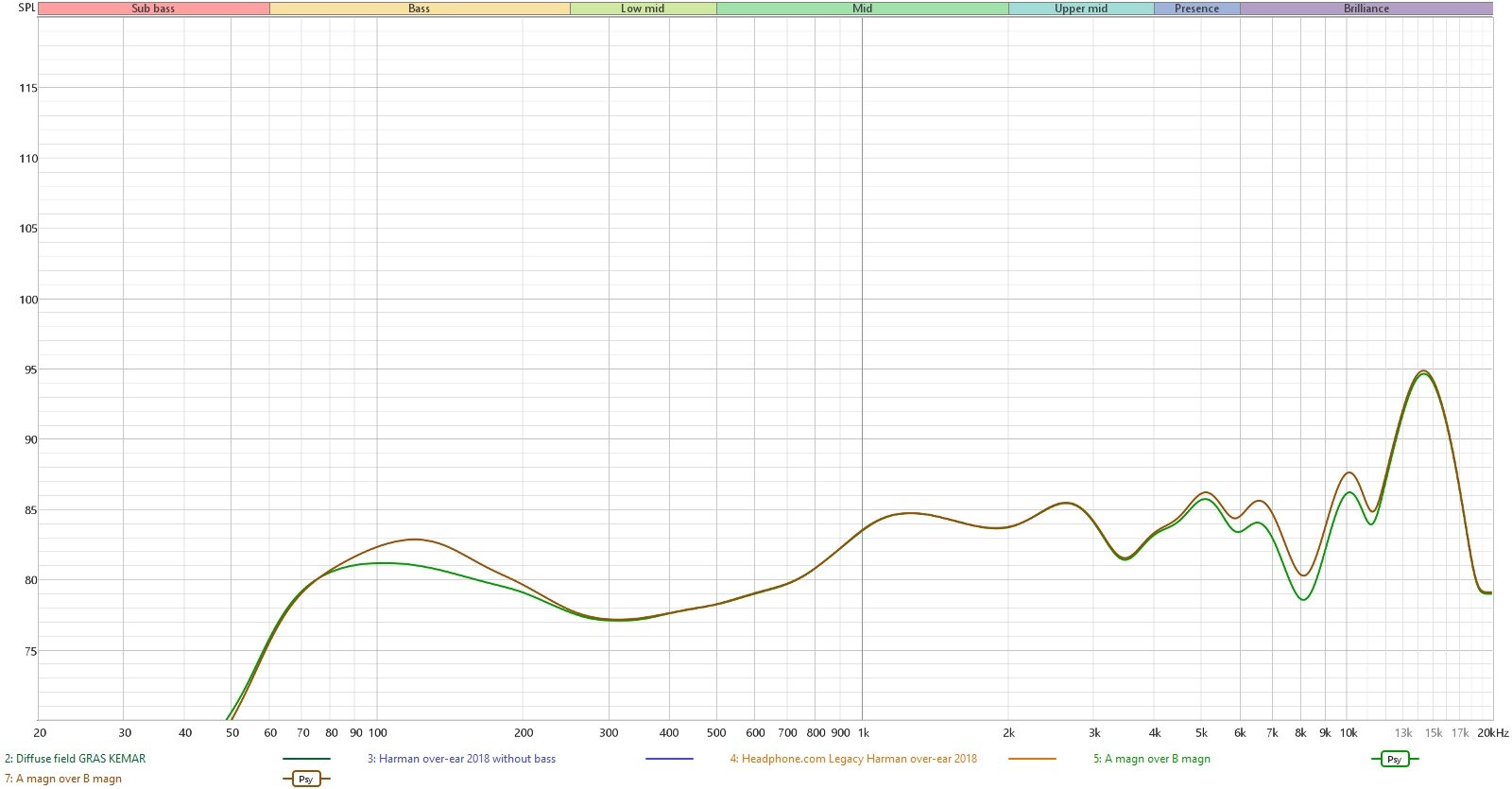
Thus the sound is powerful with some body and highs that stay reasonably controlled despite occasional brightness peaks. However, as with all earphones of this type, there’s no real sense of low-end heft. Even on very rounded tracks, the OpenDots 2 never break through a ceiling. Quite versatile, the earphones manage to be effective across most genres, especially at moderate volume. On this point, we slightly prefer Shokz to Huawei’s counterparts, the FreeClip 2.
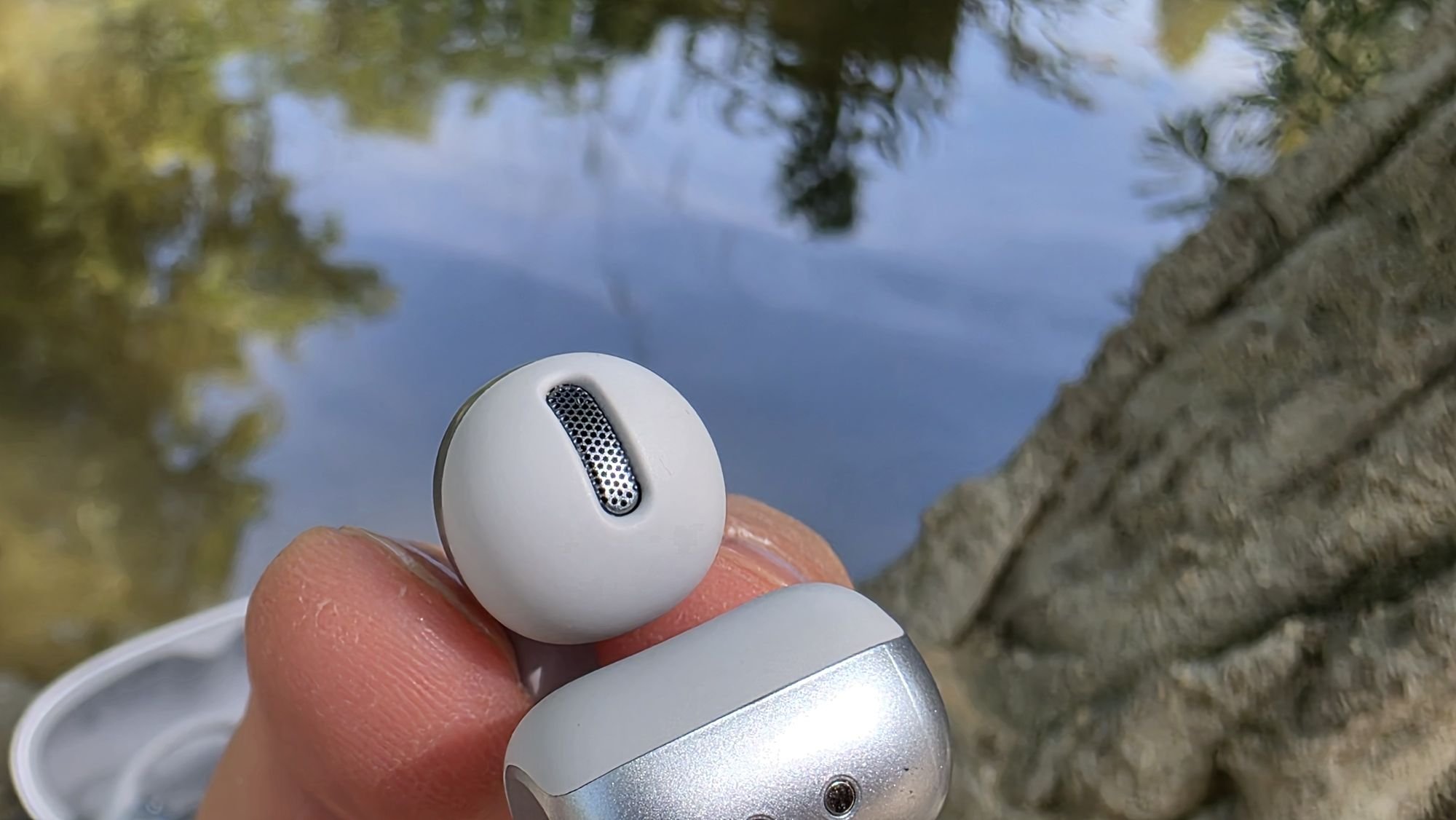
These latter offer a similar extension; they’re a touch more punchy (a small bump in the lower mids) but become a bit more flashy at high volume. At moderate volume, the two are about equal, but the Shokz’s sense of balance is better at high volume.

But one of the big pluses of the earphones, also present in Huawei’s counterpart, is the ear recognition system. The earphones don’t have a dedicated canal; this pairing is established once the buds are placed on the ear.
Everything would be perfect if the hands-free kit were more capable. In calm environments, the voice isn’t particularly natural, tinged with cavernous effects and numerous artifacts. Yes, the bone-conduction sensor helps cancel background noise, but at the cost of increasingly noticeable voice deterioration. In practice, it’s quickly hard to be heard on a street. On this point, Huawei is unquestionably superior.
Waterproof, and silicone-soft
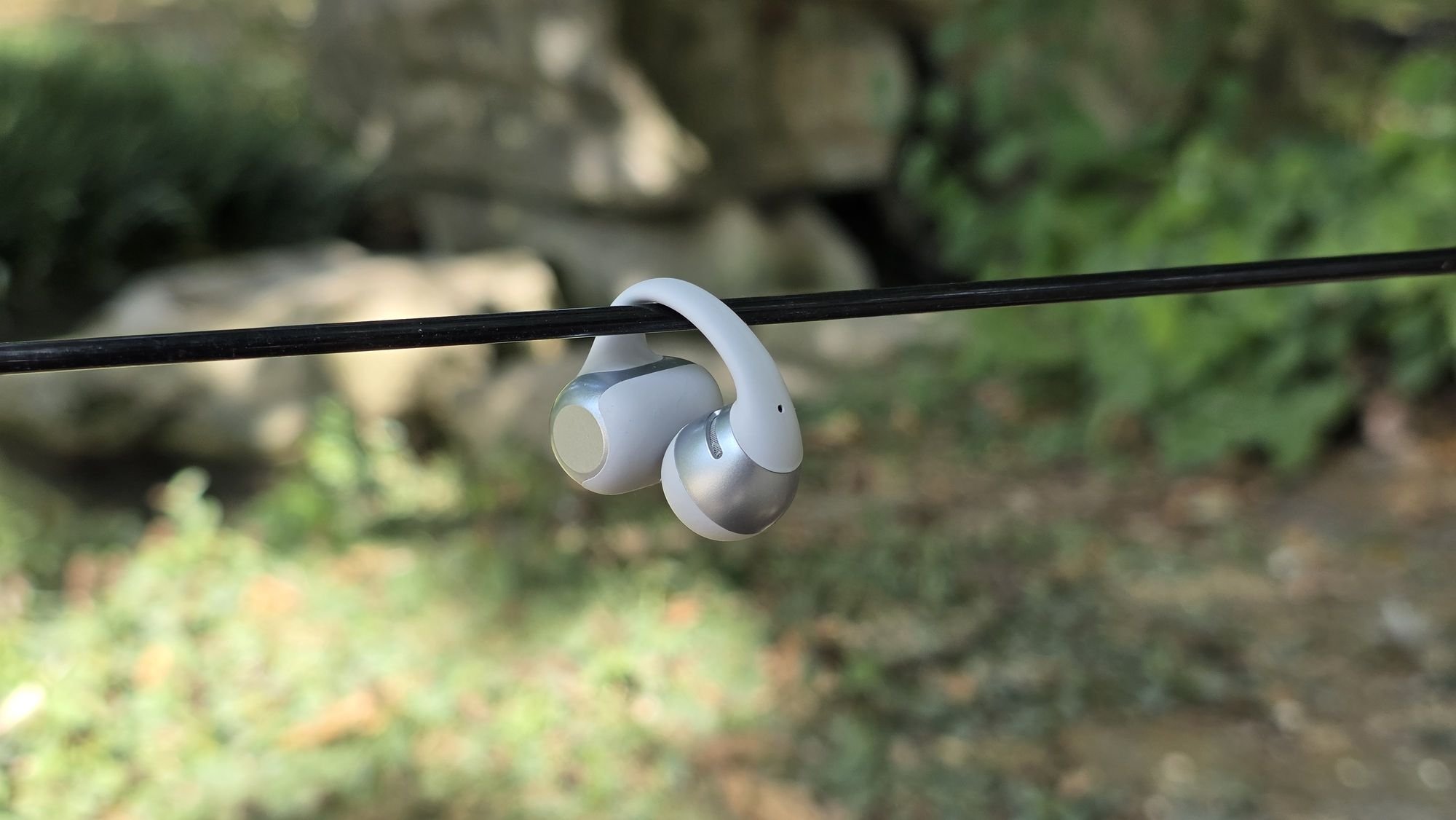
A silicone specialist, Shokz operates a dedicated unit focused on this material. Not surprising that even on earclips, comfort is paramount. The OpenDots 2 are among the best in this regard. The fit is firm enough, but the sensation of pressure on the ears remains negligible. The combination of a titanium-nickel alloy bridge (shape memory) and silicone coating is perfect in its class.
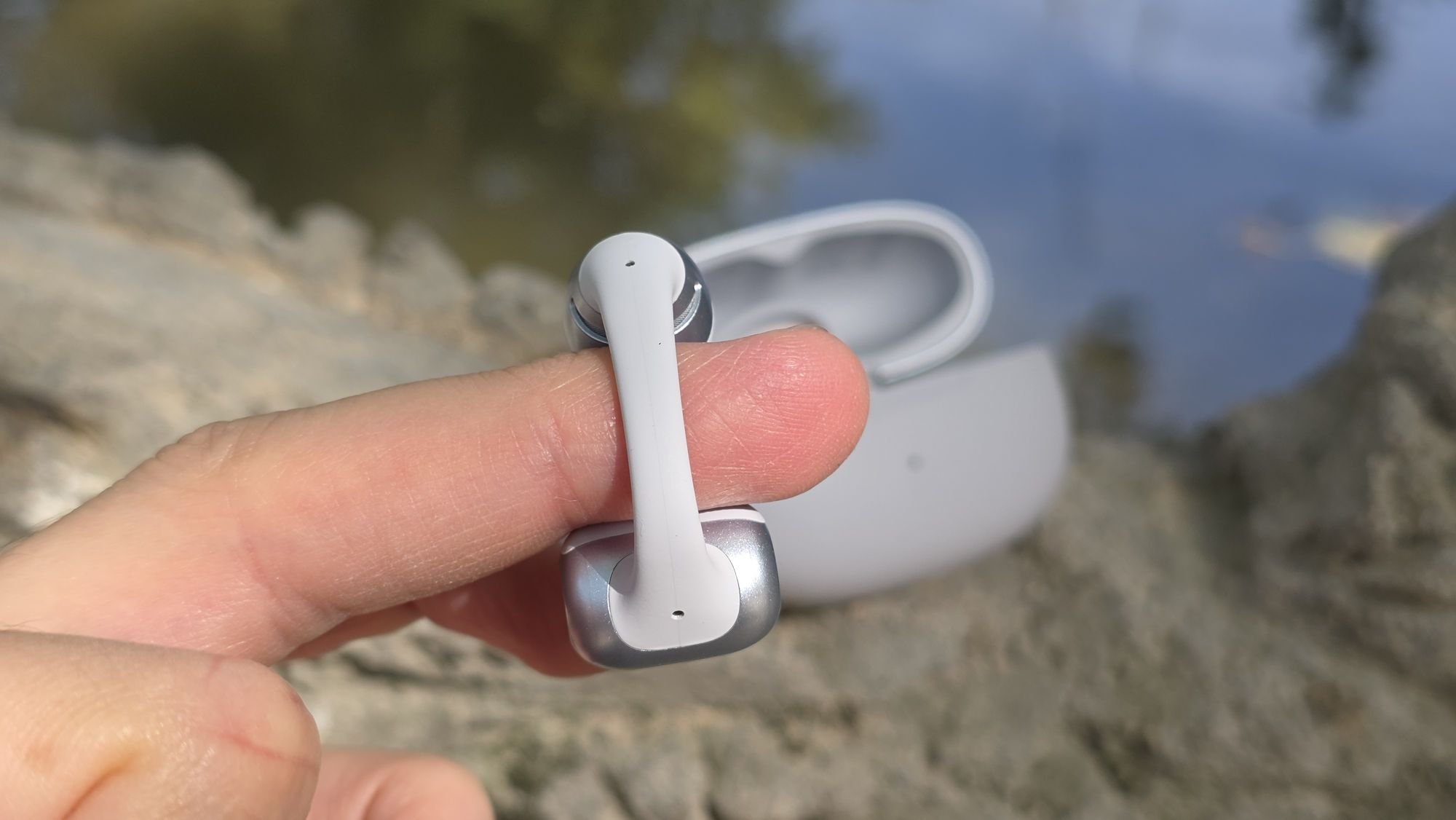
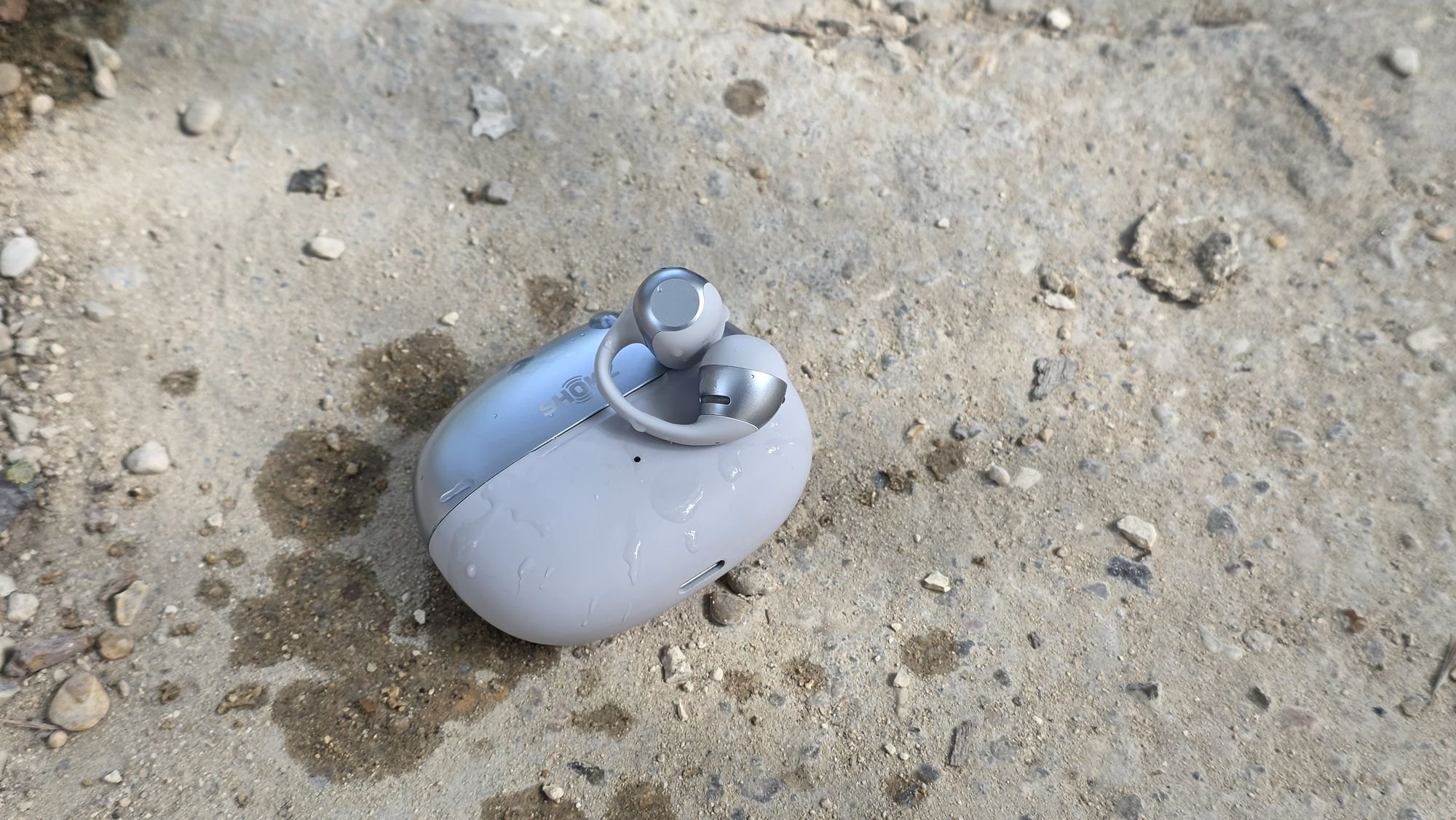
Regarding the design, it must be admitted that Shokz is more conservative than Huawei. While the latter have managed to turn their creation into an audio jewel, the OpenDots 2 adopt a more classic format, bringing them closer to Bose QC Open and other rivals. However, the IP57 rating, paired with the IP54 resistance of the case, is at the top of what exists in this format.
Battery life: a full day of sport
Listed at 10 hours on a single charge, and 40 hours including the case, the earphones’ endurance holds up in practice. If used outdoors, stamina quickly dips below 9 hours, but in a calmer mode, where you don’t push the volume to the limit, this figure can rise to over 11 hours.
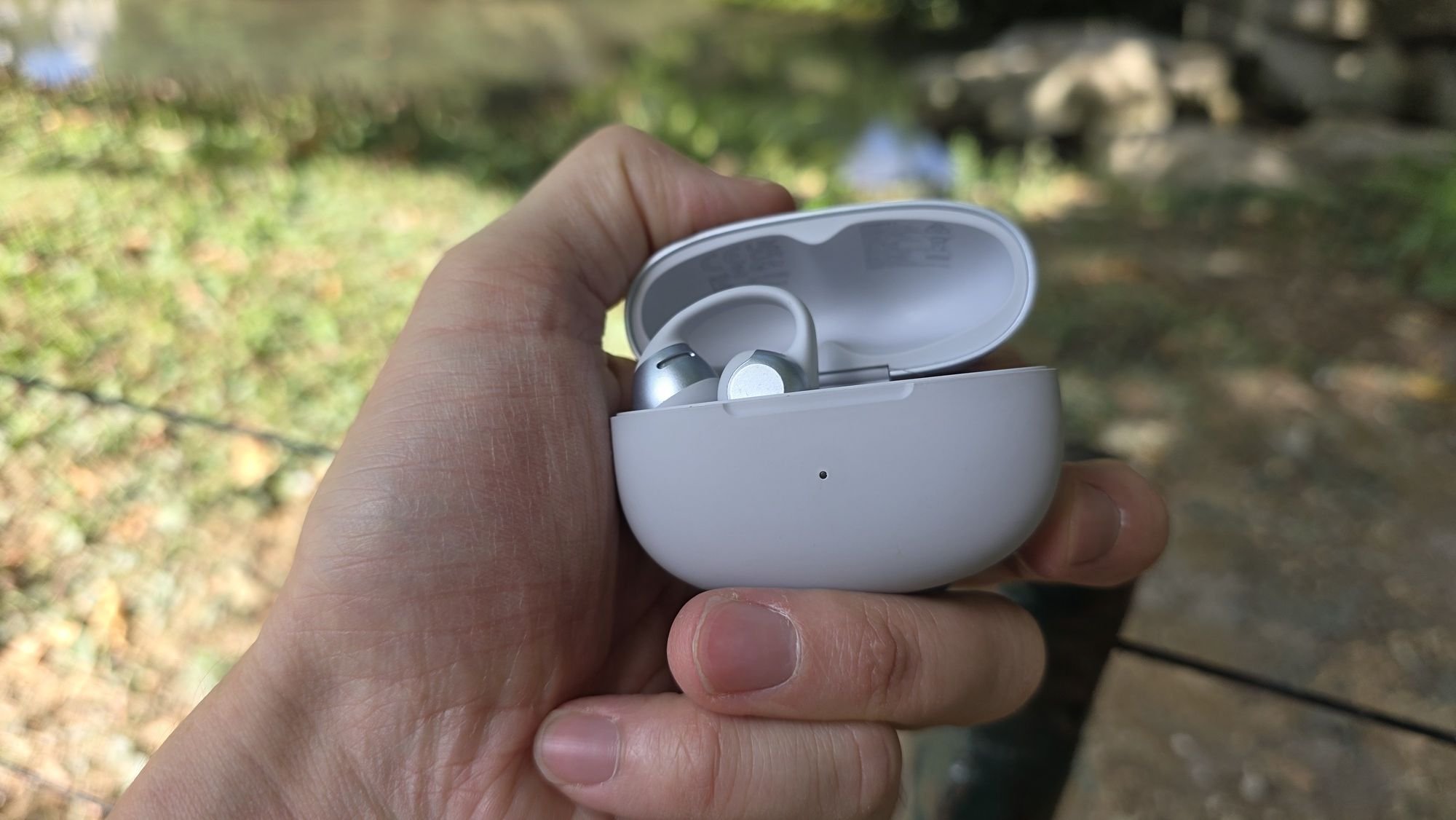
Finally, we noted a bit more than 2.5 additional charges via the case. The 40 hours total are likely optimistic, but the OpenDots 2 still sit at the top tier. In fact, Shokz edges Huawei by a small margin.
Who are Shokz OpenDots 2 really for?
A premium model in their category, the OpenDots 2 are clearly aimed at:
- Those who want open sport earphones that don’t press on the ear
- A sound with enough bass for music use
- A sports product with full controls that doesn’t require finger-twiddling; however, we clearly would not recommend these earphones for very noisy environments or for those where call quality is paramount
Shokz OpenDots 2: Clubic’s take
If it hasn’t yet found the perfect earclip formula, Shokz achieves with the OpenDots 2 a result that is more than satisfactory. Performant and very comfortable, it rises to the level of the best products on the market today.
The brand’s science, particularly its advances in silicone and its sophisticated audio architecture, translates into a coherent product perfectly suited for sports use. That said, beyond bass extension that could be even more pronounced, the manufacturer skips LE Audio, and lags in call quality.
- Pretty good balance, bass extension quite correct
- Exceptional comfort
- Element resistance (IP57, case IP54)
- Full and fairly intuitive controls
- Very good autonomy
- Still a touch lacking in body
- Voice quality in calls only average
- No LE Audio
- Design rather basic
8
9
7
6
8
7
amazon.fr
Fnac
Son-Vidéo
Lepape
i-Run
The best alternatives to Shokz OpenDots 2
For those seeking the best truly open-format equivalents, we have two products in mind.
- Huawei FreeClip 2
Real rivals to the OpenDots 2, Huawei’s FreeClip 2 are weaker in some areas and stronger in others. More stylish but just as comfortable, somewhat less enduring but offering better call quality and waterproofing, Huawei’s earphones have little to envy their rivals.
- Shokz OpenFit Pro
Larger and heavier than the OpenDots 2, the OpenFit Pro nonetheless remain the best bone-conduction earphones on the market. Few flaws, surprisingly strong bass extension for the format, and advanced features. Not for everyone, but genuinely excellent.

- Sound strong and open
- Confort idéal, auto-detect left/right
- Hands-free kit usable in all circumstances
7 / 10

Daniel Brooks
I cover everyday products with a practical eye, from kitchen tools and home essentials to smart gadgets and consumer trends. My goal is to help readers understand what is genuinely useful, what is worth the price, and what deserves a second look before buying.