Sony BRAVIA 9 II Review: Ambitious RGB LCD TV vs OLED

August 22, 2026
Tech

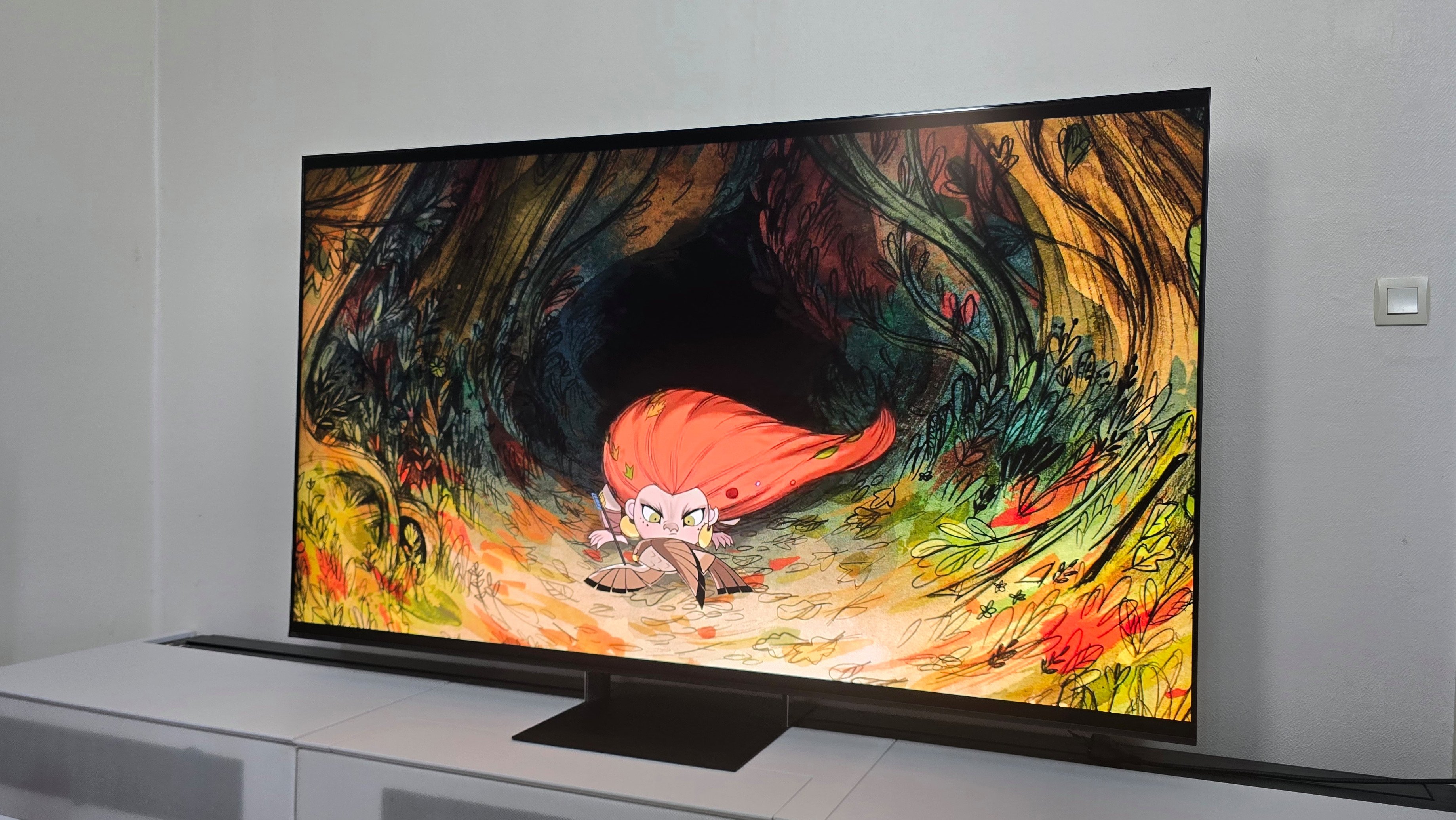
Sony targets the very high-end LCD market with a markedly different approach from what has been adopted in recent years. The BRAVIA 9 II abandons conventional MiniLED backlighting in favour of an RGB system capable of separately steering the red, green, and blue components. On paper, the promise is compelling: to significantly increase color volume, keep saturated colors at very high luminance, and preserve the traditional LCD advantages in terms of brightness.

© Matthieu Legouge

That is precisely what we wanted to verify with the 75-inch Sony BRAVIA 9 II. Between its True RGB backlighting, its impressive brightness claims, its in-house video treatments, and its premium positioning, this model aims to push the limits of LCD and measure up to the best OLED references. It remains to see what this new generation actually brings to the image, and whether the RGB MiniLED promises hold true when the TV is subjected to our measurements and test content.

Sony BRAVIA 9 II

9  / 10

Sony BRAVIA 9 II

Best prices

Fnac

€2,999.00

Son-Vidéo

€2,999.00

Darty

€2,999.00

Sony FR

€2,999.00

See more prices

The pros
  • Spectacular HDR rendering with very high brightness
  • Strong color volume, even in bright highlights
  • Excellent on-axis contrast and solid video processing
  • Excellent gaming performance with reduced input lag
  • Ultra-efficient anti-reflective
The cons
  • Blooming and color crosstalk perceptible
  • Off-axis rendering degradation fairly noticeable
  • SDR calibration in Professional mode could be improved
  • Only two HDMI 2.1 ports
  • 120 Hz maximum, a bit tight for the most demanding PC gamers
Read the conclusion

Sony Bravia 9 II: performance and image quality

Our measurements

The BRAVIA 9 II marks a significant evolution in Sony’s LCD lineup. The manufacturer leaves behind conventional MiniLED backlighting in favor of what it calls True RGB technology, in other words a backlight whose red, green, and blue components can be controlled separately. The objective is to push further in color volume: rather than simply producing a lot of light, the TV must be able to retain rich, saturated colors as luminance rises.
Sony officialise enfin sa marque "True RGB" pour ses prochains téléviseurs

To discover

Sony officially brands “True RGB” for its upcoming televisions

News

On our 75-inch model, this backlight sits behind a VA-type LCD panel. This pairing promises high on-axis contrast, but it also places heavy responsibility on the local dimming system. With three light-emitting components to drive, the challenge is not only to limit blooming; Sony must also prevent light from a colored zone from contaminating neighboring areas.
This is the core challenge of this generation. On paper, True RGB promises very high brightness, an extended gamut, and sufficiently fine backlight control to rival the best self-emissive televisions. We sought to verify this ambition through both measurements and real-world observations.

Click here to view our SDR measurements

We conducted measurements on the BRAVIA 9 II 75-inch using the Professional mode as our baseline.
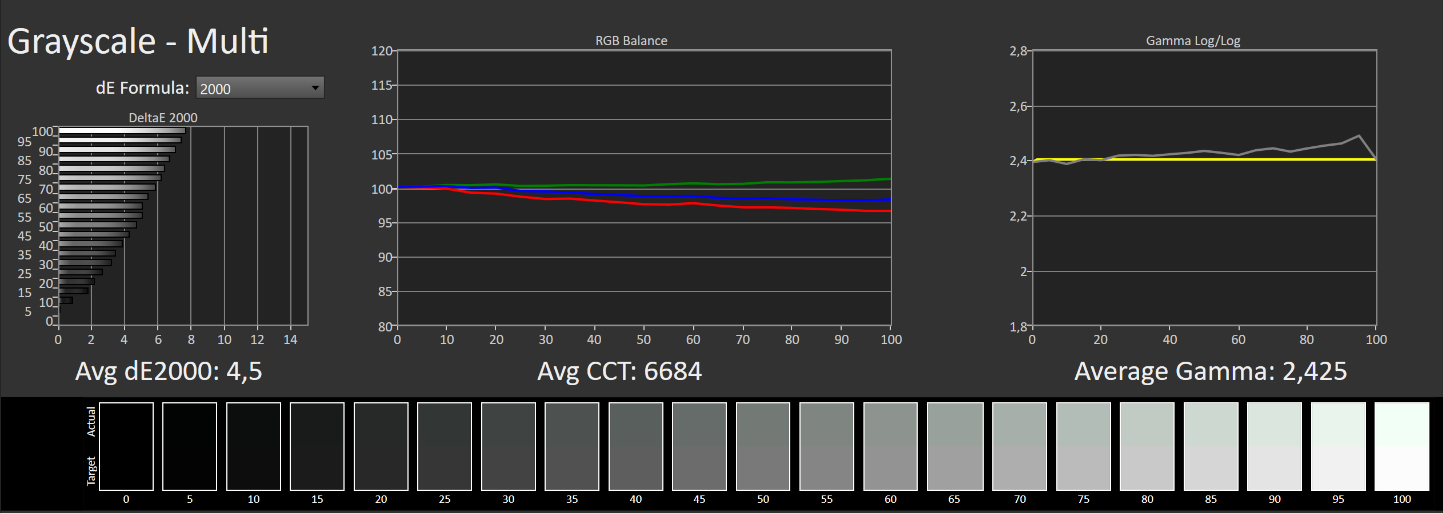
In SDR, let’s start with the grayscale. The average color temperature sits at 6,684 K, a value fairly close to the D65 reference. However, the RGB balance becomes less tight as luminance increases: red progressively drifts downward while green remains slightly dominant.
Matthieu Legouge

Matthieu Legouge

This slight drift is reflected in the mean Delta E on the grayscale, measured at 4.5. It’s a fairly high value for a Professional mode on a TV of this tier. The average gamma reaches 2.425. The curve remains overall coherent, but gradually sits above our 2.4 target at the higher luminance levels.
Matthieu Legouge

Matthieu Legouge

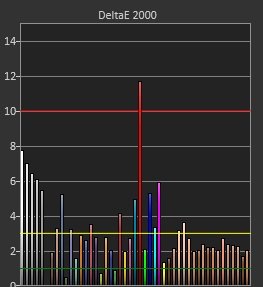
The ColorChecker results confirm SDR accuracy of the Bravia 9 II remains imperfect. We obtain an average Delta E of 3.27, with notably a large drift of 11.71 on red.

Most colors stay much closer to reference, but this occasional deviation shows that the average does not tell the whole story. To the eye, the drift remains not easily noticeable across most content, though some warm-toned images sometimes appeared a bit more saturated.

Our HDR SDR measurements continuation

Passons maintenant au HDR. Le BRAVIA 9 II prend en charge les formats HDR10, HLG et Dolby Vision, y compris Dolby Vision pour le jeu. Comme toujours chez Sony, le HDR10+ reste absent. La certification IMAX Enhanced est également de la partie.

The HDR support includes HDR10, HLG, and Dolby Vision, including Dolby Vision for gaming. As always with Sony, HDR10+ remains absent. IMAX Enhanced certification is also included.

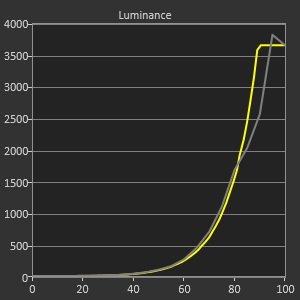
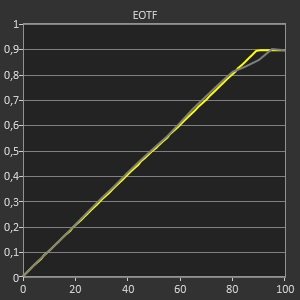
Certainly, brightness is where this BRAVIA 9 II shows its muscles. With True RGB backlighting, Sony promises substantial brightness reserves, and our 75-inch model does not disappoint here. On our HDR window test, we measure about 3,600 cd/m² at 1%, close to 4,000 cd/m² at 2%, and peak a little over 4,100 cd/m² on a 5% window. At 10%, the TV stays around 3,900 cd/m². This reserve is accompanied by a particularly clean EOTF tracking. The measured curve closely follows reference for most of the luminance rise, indicating Sony isn’t just chasing the brightest image possible. The TV respects the signal’s intent before adapting its behavior as it approaches its limits.
© Matthieu Legouge

Matthieu Legouge

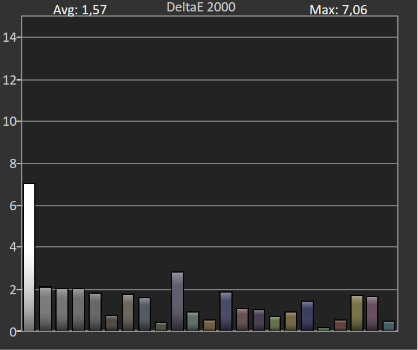
La précision colorimétrique est d’un excellent niveau en HDR. Notre ColorChecker affiche un Delta E moyen de seulement 1,57, largement en deçà du seuil à partir duquel les écarts deviennent perceptibles. Tout n’est toutefois pas parfait: l’écart maximal atteint 7,06 sur le blanc.

This is clearly demonstrated by the on-axis brightness and color precision; the ColorChecker result shows an excellent HDR color accuracy with a mean Delta E of 1.57, and only a maximal deviation of 7.06 on white.

La précision colorimétrique est d’un excellent niveau en HDR. Notre ColorChecker affiche un Delta E moyen de seulement 1,57, largement sous le seuil à partir duquel les écarts deviennent perceptibles. Tout n’est toutefois pas parfait puisque l’écart maximal atteint 7,06 sur le blanc.

C’est évidemment par la luminosité que ce BRAVIA 9 II commence à montrer les muscles. Avec son rétroéclairage True RGB, Sony promet une réserve lumineuse particulièrement importante, et notre modèle de 75 pouces ne déçoit pas sur ce point. Sur notre série de fenêtres HDR, nous relevons environ 3 600 cd/m² à 1 %, près de 4 000 cd/m² à 2 %, avant d’atteindre un maximum d’un peu plus de 4 100 cd/m² sur une fenêtre de 5 %. À 10 %, le téléviseur reste encore aux environs de 3 900 cd/m². Cette réserve s’accompagne d’un suivi EOTF particulièrement propre. La courbe mesurée colle étroitement à la référence sur l’essentiel de la montée en luminance, signe que Sony ne cherche pas simplement à produire l’image la plus lumineuse possible. Le téléviseur respecte correctement l’intention du signal avant d’adapter son comportement à l’approche de ses limites.
Matthieu Legouge

Matthieu Legouge

Matthieu Legouge

Matthieu Legouge

Le rendu ColorChecker confirme que la précision SDR du Bravia 9 II reste perfectible. Nous obtenons un Delta E moyen de 3,27, avec surtout une large dérive de 11,71 sur le rouge.

Most colors remain reasonably close to reference, but this occasional deviation shows that the average does not tell the whole story. To the eye, the drift remains difficult to identify clearly across most content, though some hot-toned images sometimes appeared slightly more pronounced.
The HDR behavior also shows a few interesting characteristics. When a very bright HDR target appears abruptly, the BRAVIA 9 II can momentarily deliver a brief brightness surge before stabilizing. A slight persistence of glow may also remain visible for a short time after the motion or pattern disappears. We did not observe this behavior in films or games, so it appears to be a transient response of the backlight to abrupt luminance changes on test patterns rather than a daily problematic trait.

© Matthieu Legouge

© Matthieu Legouge

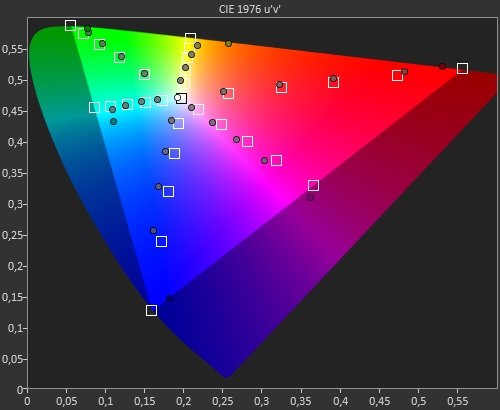
C’est enfin sur l’étendue des couleurs que la technologie True RGB était particulièrement attendue. Le BRAVIA 9 II couvre 98,6 % de l’espace UHDA-P3, soit pratiquement l’intégralité de cet espace colorimétrique. La couverture du BT.2020 atteint quant à elle 87 %. C’est un excellent résultat, qui dépasse largement ce que proposent de nombreux téléviseurs MiniLED conventionnels, tout en rappelant que l’utilisation de LED rouges, vertes et bleues ne suffit pas à atteindre les 100 % du BT.2020.

BT.2020

BT.2020

The ColorChecker shows excellent HDR color accuracy, with a Delta E average of only 1.57; the maximum deviation reaches 7.06 on white.

The brightness capability is where the BRAVIA 9 II demonstrates real power. With True RGB backlighting, Sony promises substantial brightness reserves, and the 75-inch model does not disappoint. In our HDR window tests, we measure around 3,600 cd/m² at 1%, near 4,000 cd/m² at 2%, and a peak just above 4,100 cd/m² on a 5% window. At 10%, the TV remains around 3,900 cd/m². This reserve is accompanied by a remarkably clean EOTF track, indicating Sony does not simply chase the brightest image possible. The TV respects the signal’s intent before adapting its behavior as it approaches its limits.

© Matthieu Legouge

© Matthieu Legouge

Matthieu Legouge

© Matthieu Legouge

The color tolerance remains good overall; the Depth of ColorSpec is strong and spreads across the entire gamut. The ColorChecker checks out well in HDR, but the color crosstalk becomes more visible in edge cases.

Le contraste est lui aussi excellent lorsque l’on regarde le téléviseur dans l’axe. Les noirs descendent très bas pour un LCD et les bandes noires des films en CinemaScope restent vraiment sombres lorsque l’on est bien placé en face de l’écran. En pièce noire, les nuances sombres situées au-dessus du noir restent aussi visibles. Sony ne cherche donc pas à accentuer artificiellement l’impression de contraste en écrasant systématiquement les détails les plus sombres.

© Matthieu Legouge

© Matthieu Legouge

On ne retrouve évidemment pas le contrôle au pixel près d’un OLED. Une scène très sombre contenant quelques éléments extrêmement lumineux peut rappeler la présence d’un rétroéclairage zoné.

© Matthieu Legouge

© Matthieu Legouge

Le contraste est également excellent lorsque l’on regarde le téléviseur dans l’axe. Les noirs descendent très bas pour un LCD et les bandes noires des films au format CinemaScope restent réellement sombres lorsque l’on est correctement placé face à l’écran. En pièce noire, les nuances sombres situées au-dessus du noir restent également visibles. Sony ne cherche donc pas à renforcer artificiellement l’impression de contraste en écrasant systématiquement les détails les plus sombres.

© Matthieu Legouge

© Matthieu Legouge

Le contrôle des angles de vision est toutefois une limite beaucoup plus évidente. Le BRAVIA 9 II donne clairement le meilleur de lui-même lorsque l’on se place exactement au centre de l’écran. Dès que l’on s’écarte sensiblement de l’axe, le contraste chute et le blooming devient nettement plus visible. Il peut aussi prendre une teinte liée à celle des objets affichés. Une personne installée sur le côté d’un canapé ne bénéficie donc pas exactement de la même qualité d’image que celle placée face au téléviseur. Le résultat reste acceptable, bien sûr, mais l’excellence du contrôle lumineux observée dans l’axe s’en trouve atténuée assez rapidement.

© Matthieu Legouge

© Matthieu Legouge

L’uniformité de notre exemplaire de 75 pouces ne nous pose en revanche pas de problème particulier dans l’axe. Nous n’avons pas constaté de dirty screen effect suffisamment important pour perturber les grands aplats ou les mouvements de caméra. Sony conserve aussi son savoir-faire en matière de traitement vidéo. Avec de bonnes sources, le niveau de détail est remarquable. Sur des flux plus comprimés ou de définition inférieure, l’upscaling fait partie des meilleurs du marché. Le constructeur n’effectue évidemment aucun miracle lorsque la source est franchement mauvaise, mais il parvient généralement à améliorer la lisibilité sans donner à l’image un aspect trop artificiel.

© Matthieu Legouage

© Matthieu Legouge

We did not encounter any significant banding or posterization during our test. Gradients remain clean and color transitions are sufficiently gradual on the content we used.

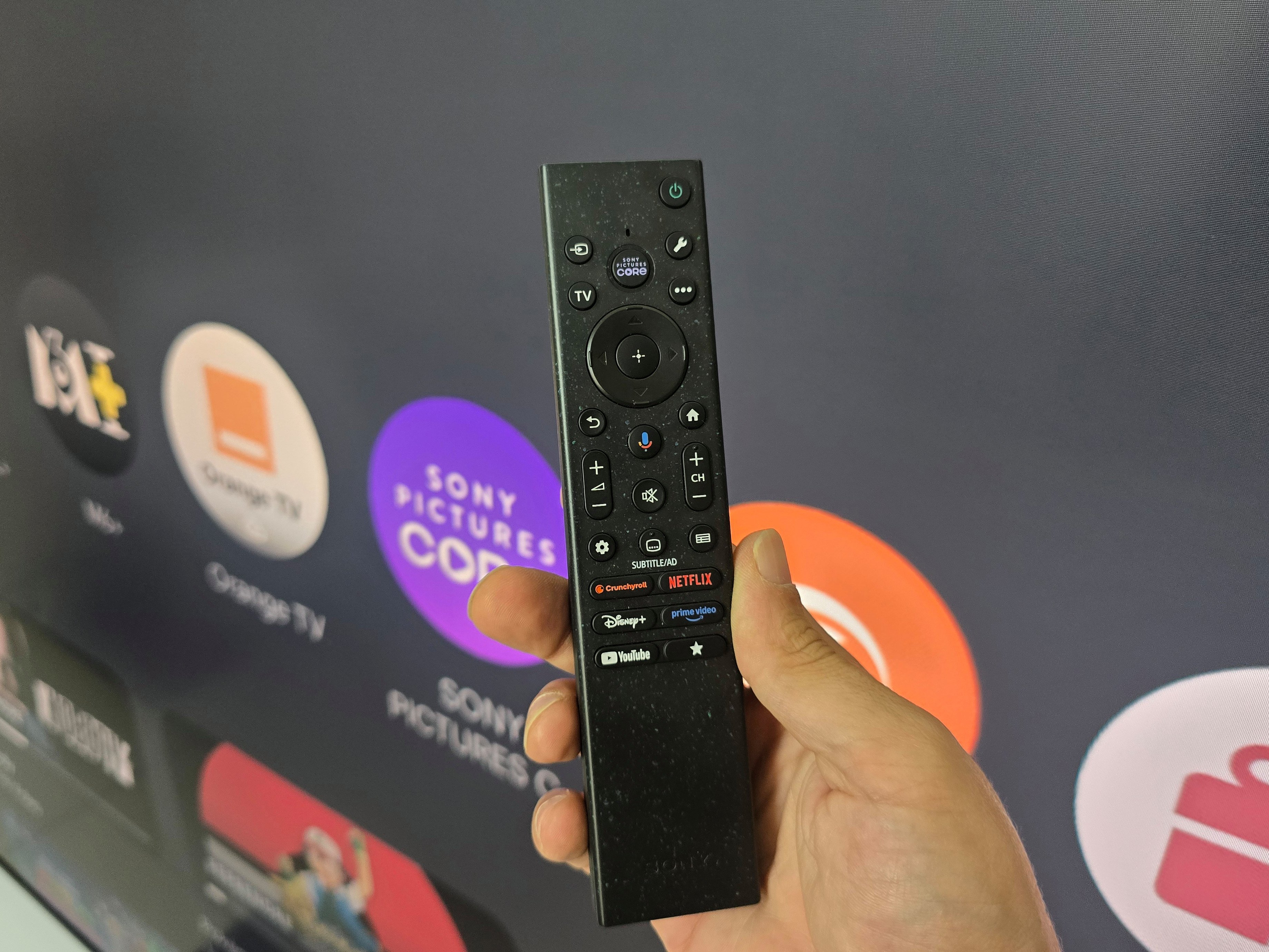
Finally, as usual, the BRAVIA 9 II ships with two remotes: one more modern and connected, and a second more classic and full-featured. The primary remote benefits from a pleasant grip thanks to its textured back and includes USB-C charging.

© Matthieu Legouge

© Matthieu Legouge

Gaming

The BRAVIA 9 II is also a solid gaming TV. We measured an input lag of 1080p at 60 Hz. In Standard mode, it reaches 183.6 ms, a value far too high for comfortable play and a sign of the heavy video processing applied by default. Switching to Game mode dramatically changes the game: lag drops to just 10.4 ms. The difference is immediately noticeable in-hand and places the TV among models sufficiently responsive for the vast majority of uses.

L’input lag sur le Sony Bravia 9 II
Mode Jeu Mode Standard
Input lag mesuré (à 60 Hz) 10.4 ms 183.6 ms

The Game mode result is also quite convincing. The colorimetry seems reasonable. The image simply presents itself a bit more aggressively than in Professional mode. HDR is one of the BRAVIA 9 II’s strong points for gaming. Titles that properly utilize highlights benefit enormously from the RGB backlight’s power, with particularly intense bright flashes and excellent color retention. In some immersive games, the result can be spectacular.

As for the rest, we did not observe any flicker or VRR issues during our sessions. However, the TV remains capped at 120 Hz, where some competitors offer 144 Hz or more. For current consoles, this is not a real constraint. The most demanding PC users may nonetheless view this ceiling as a drawback on such a premium model.
Same observation for the connectivity: only two HDMI ports fully support HDMI 2.1 features. That is enough for most setups, but a user with multiple consoles, a gaming PC, and an eARC-compatible audio system may quickly find this arrangement restrictive.

Power consumption

To compare the TV properly with other models we’ve tested, we measured with a white calibration pattern at 150 cd/m². In these conditions, the 75-inch unit consumes 73 W. This translates to roughly 47 W/m² given the display area.
This standardized measure is far more representative of the TV’s efficiency than its HDR maximum consumption, which can vary greatly depending on the content and the backlight load.

Design and connectors

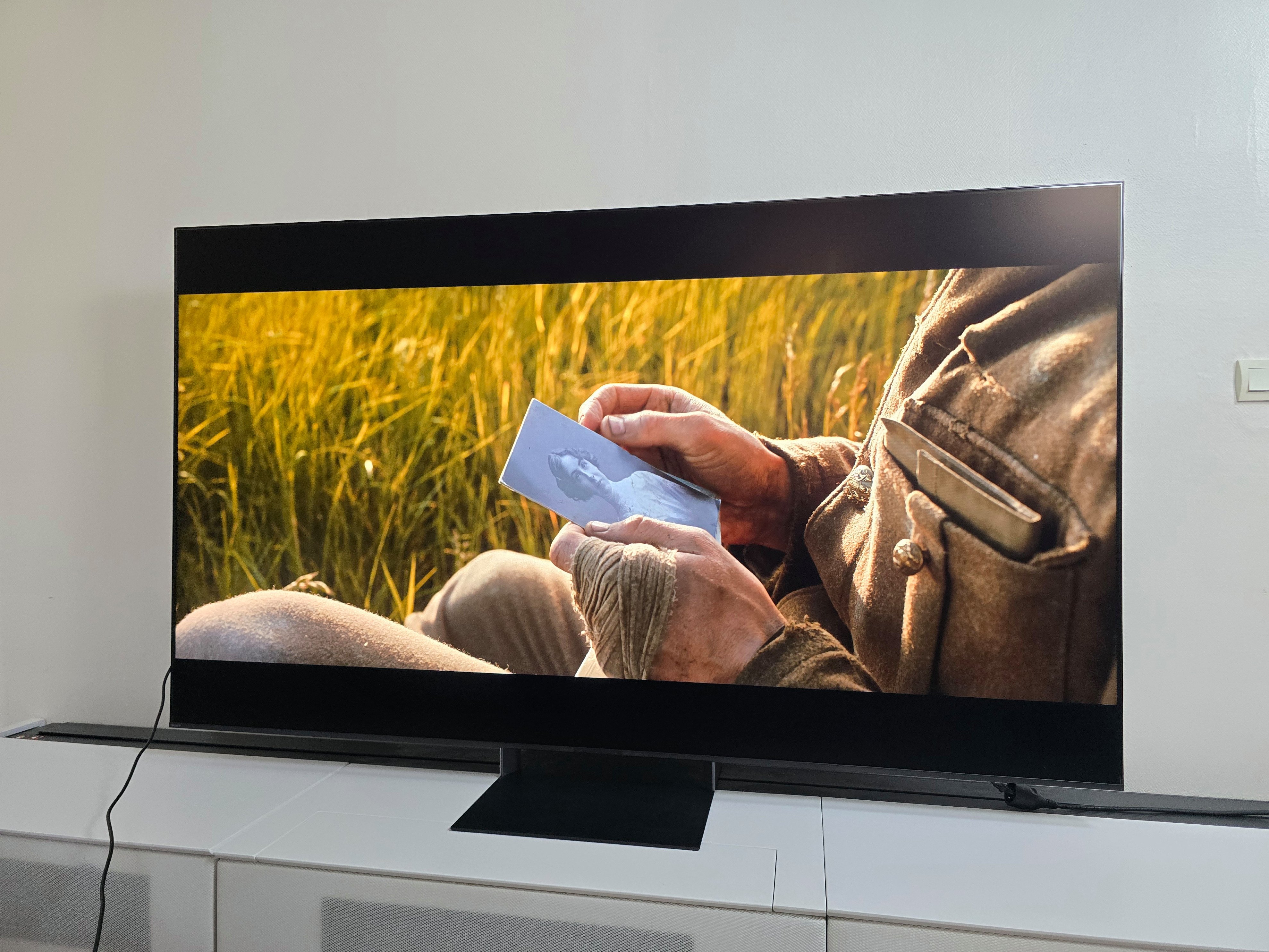
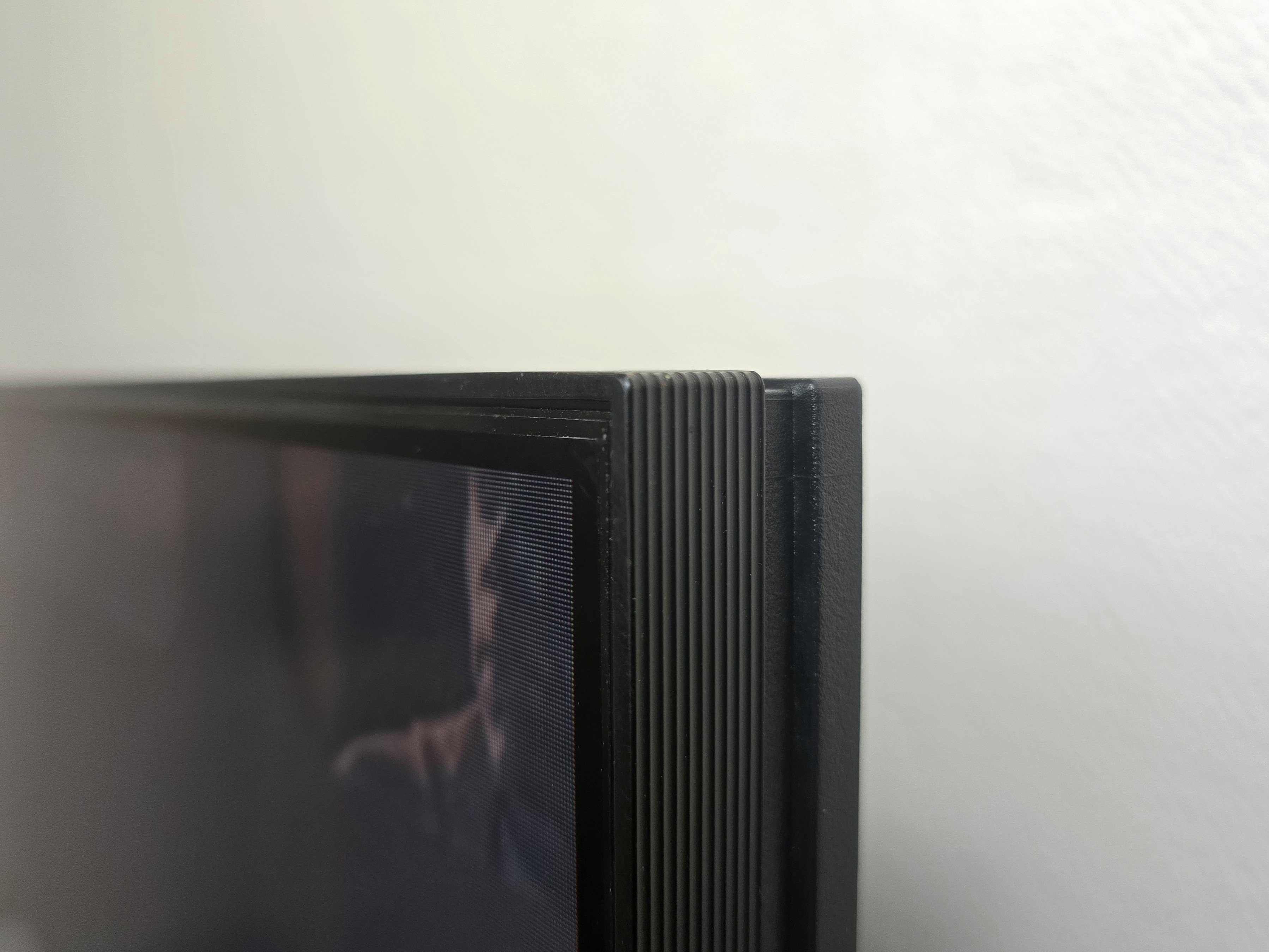
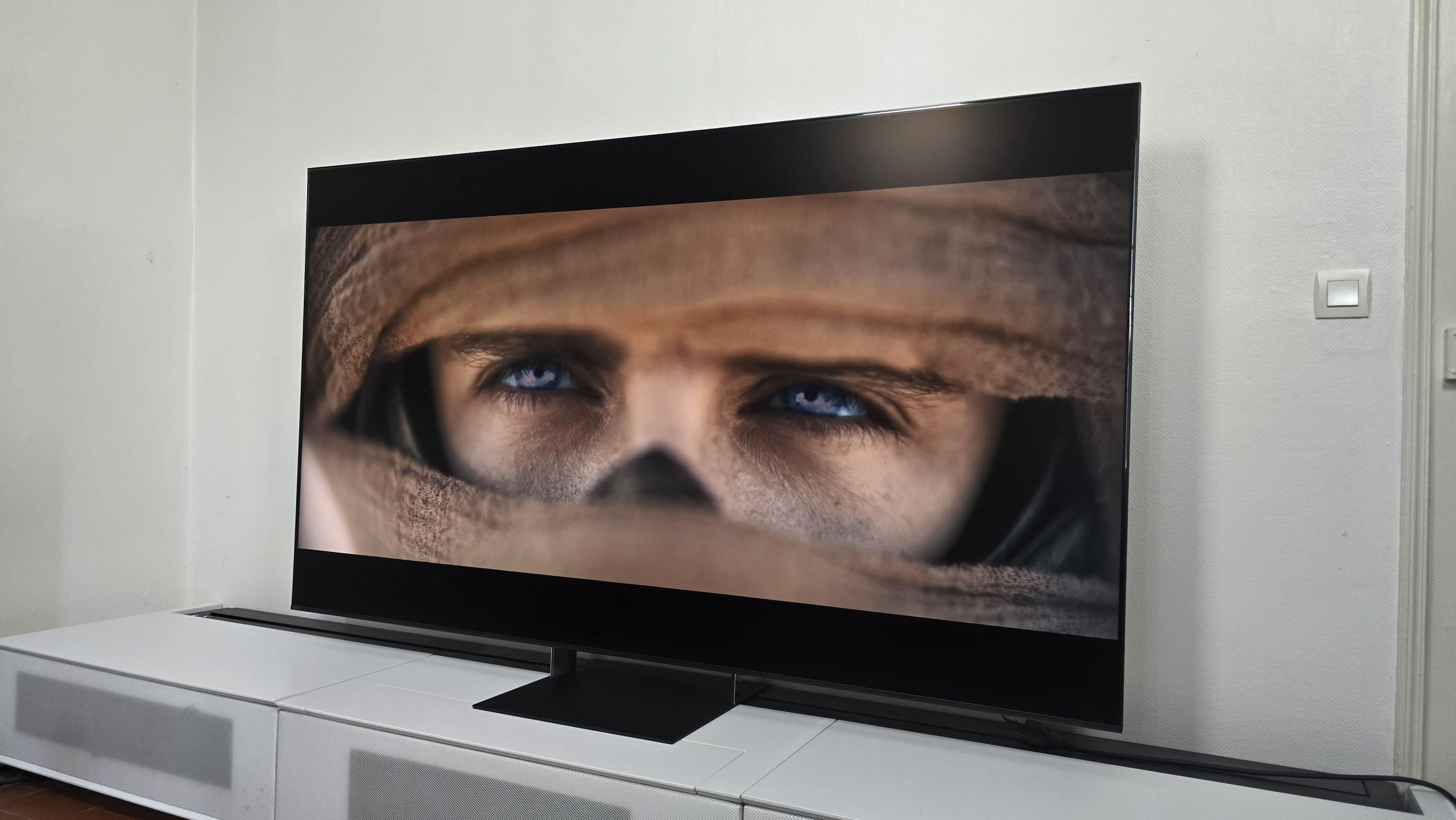
The BRAVIA 9 II does not aim to rival the astonishing slimness of an OLED. In 75 inches, it presents almost a monolithic impression.

© Matthieu Legouge

© Matthieu Legouge

Its chassis is relatively thick, a logical consequence of its backlighting and the amount of hardware behind the panel. Sony turns this constraint into part of the design: the finish is solid, lines are sober, and the whole exudes a premium feel. The central stand is an excellent choice for this diagonal. It allows placing the TV on a wider range of furniture than systems relying on two widely spaced feet. Visually, it also helps give a sense of lightness to this huge screen when placed on a piece of furniture.

Test Sony Bravia Theatre Trio : et si la meilleure barre de son n’en était pas vraiment une ?

To discover

Our impressions on image rendering

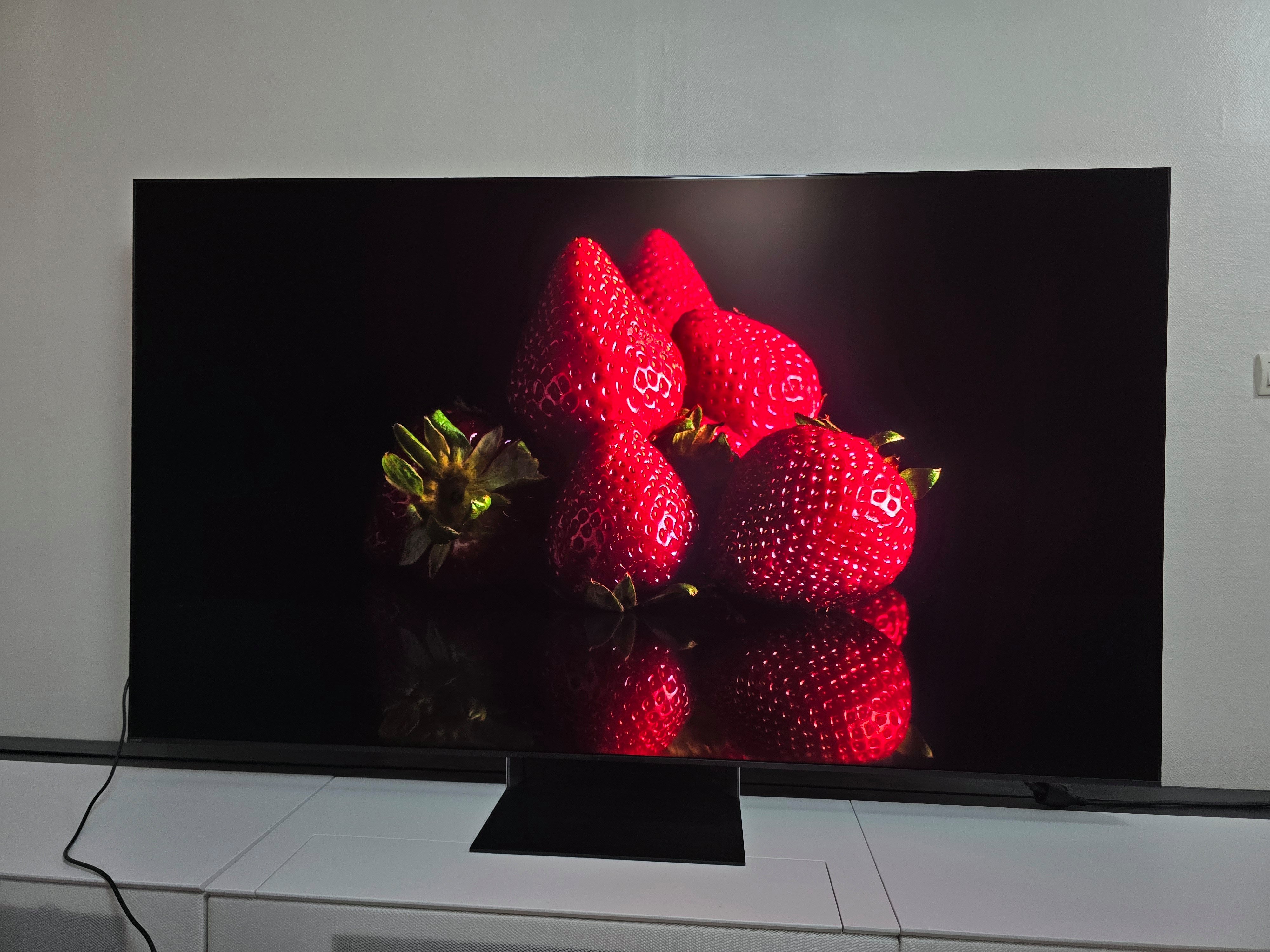
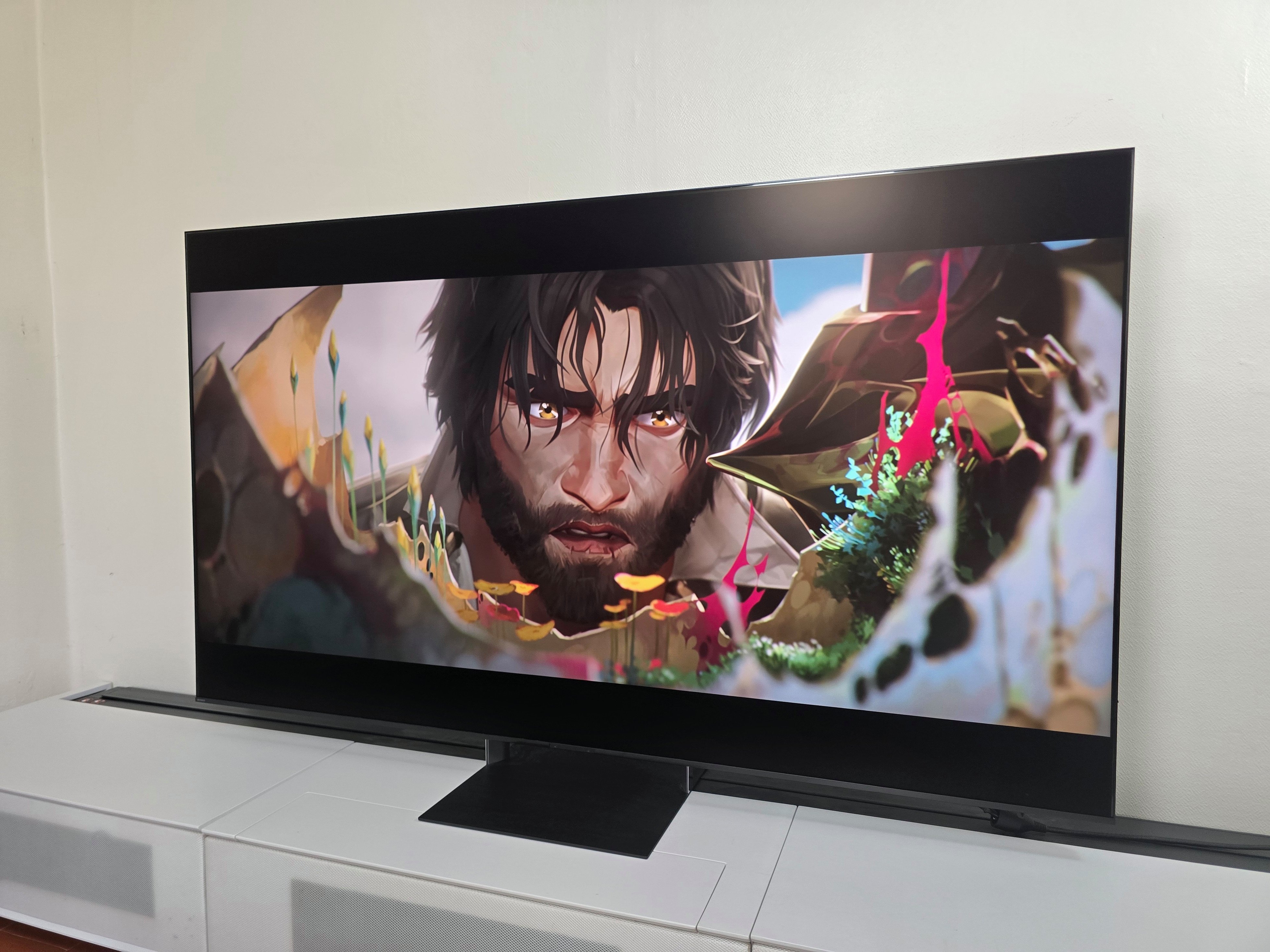
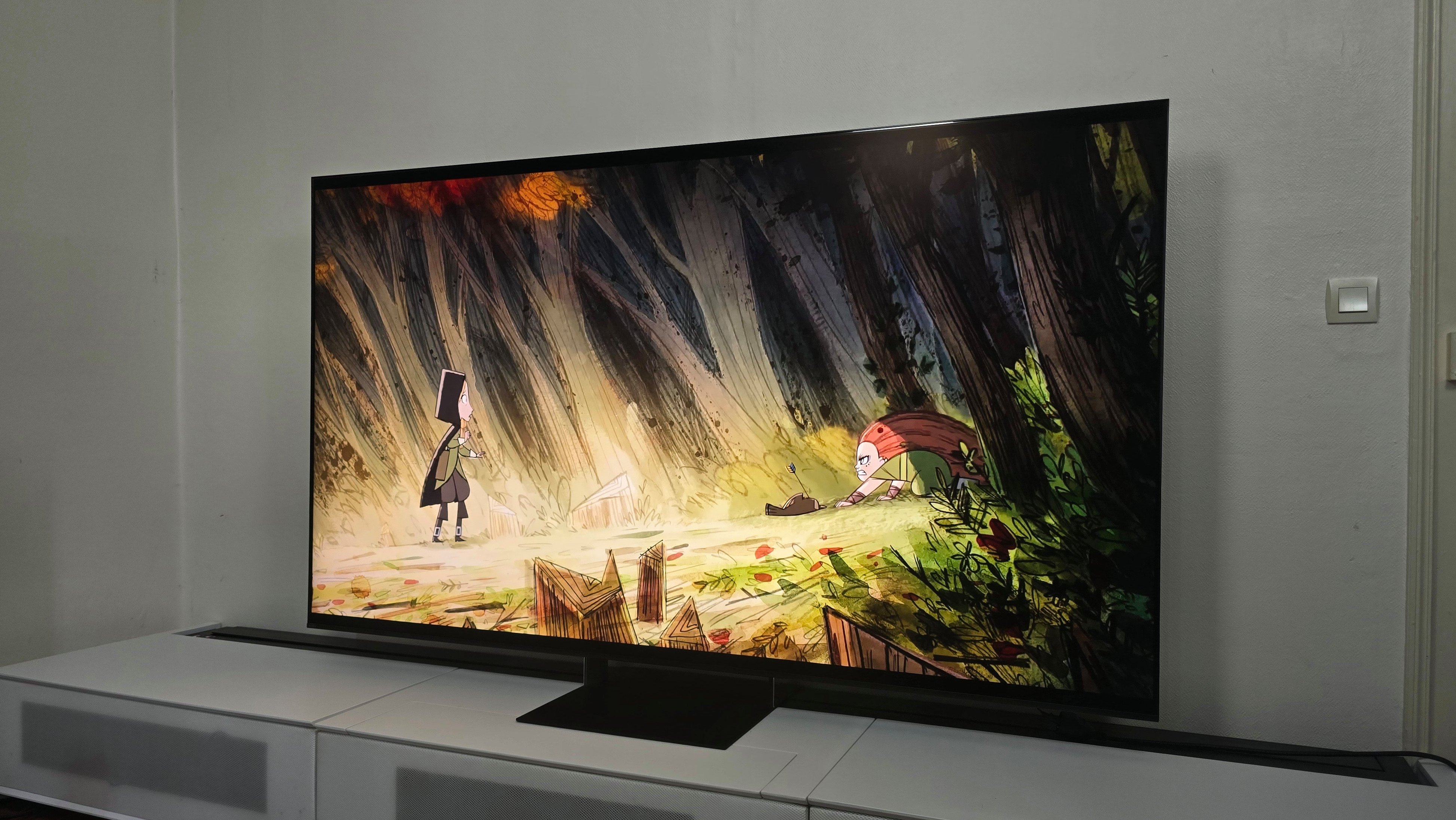
The figures we gathered during measurements tell only part of the story. In real-world usage, what astonishes most about the BRAVIA 9 II is its color volume. On high-quality HDR content, colors retain saturation and density even in the brightest areas. Reflections, city lighting, flames, sunsets, or special effects benefit from this ability to combine color with high luminance without one dampening the other. This is arguably where RGB LED backlighting demonstrates its most evident advantage.

© Matthieu Legouge

© Matthieu Legouge

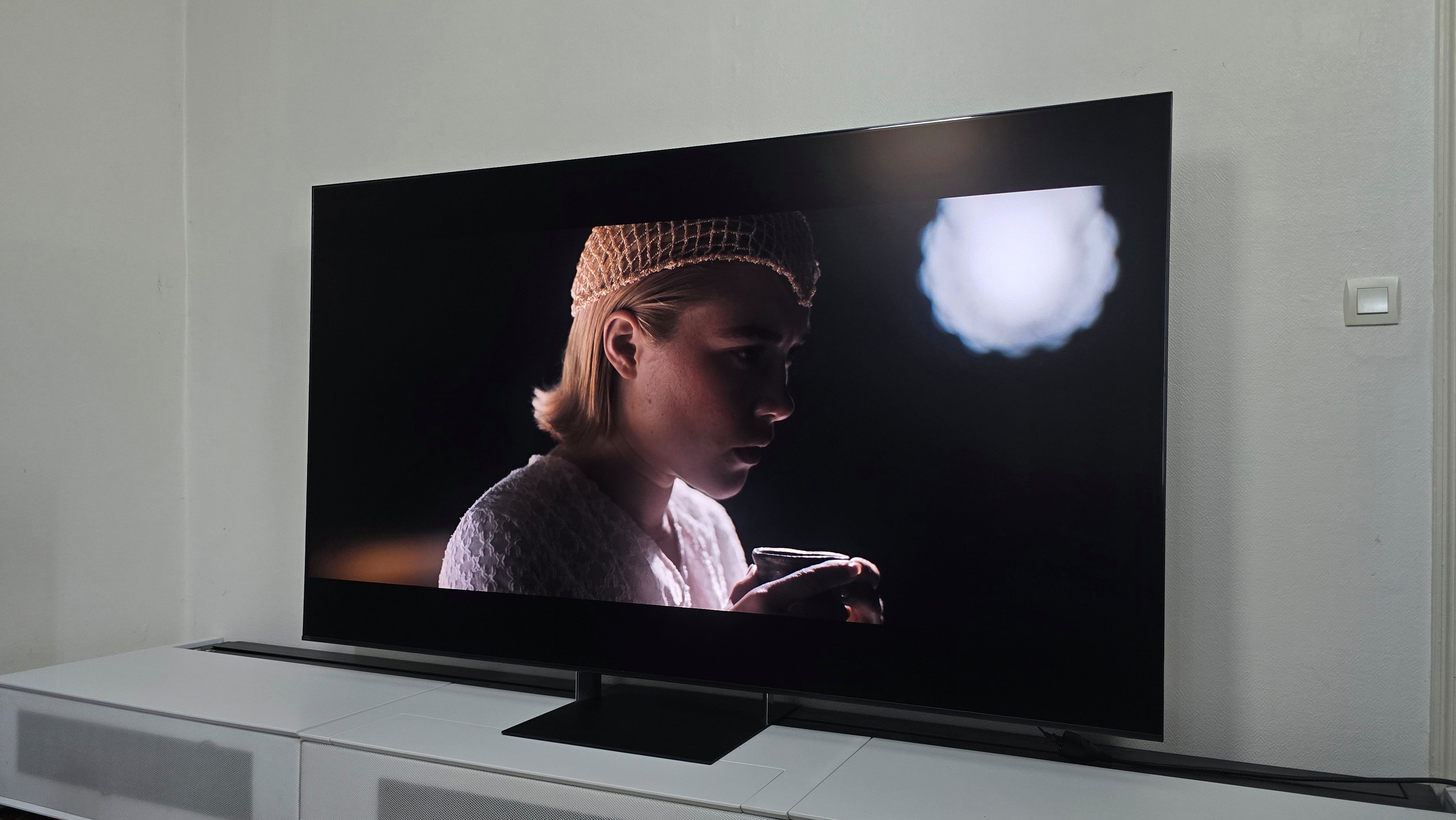
The contrast is excellent on-axis. Blacks go very low for an LCD, and the black bars in CinemaScope films stay suitably dark when viewed straight on. In a dark room, the darker tones above black remain visible as well. Sony thus does not artificially boost perceived contrast by crushing the darkest details.

© Matthieu Legouge

© Matthieu Legouge

We do not find pixel-perfect control comparable to OLED. A very dark scene containing a few extremely bright elements can remind of backlight zoning.

© Matthieu Legouge

© Matthieu Legouge

Le téléviseur souffre aussi d’un léger crosstalk couleur sur certains motifs très contrastés. Les motifs Spears & Munsil montrent que certaines couleurs très saturées peuvent contaminer les zones adjacentes. Le phénomène est moins prononcé que sur le Hisense UR9S, mais il demeure perceptible lorsque l’on sait où regarder.

Matthieu Legouge

Matthieu Legouge

The color crosstalk is nevertheless present. With Spears & Munsil test patterns, some highly saturated colors may bleed into adjacent areas. The phenomenon is much less pronounced than on the Hisense UR9S, but it remains perceptible when you know where to look.

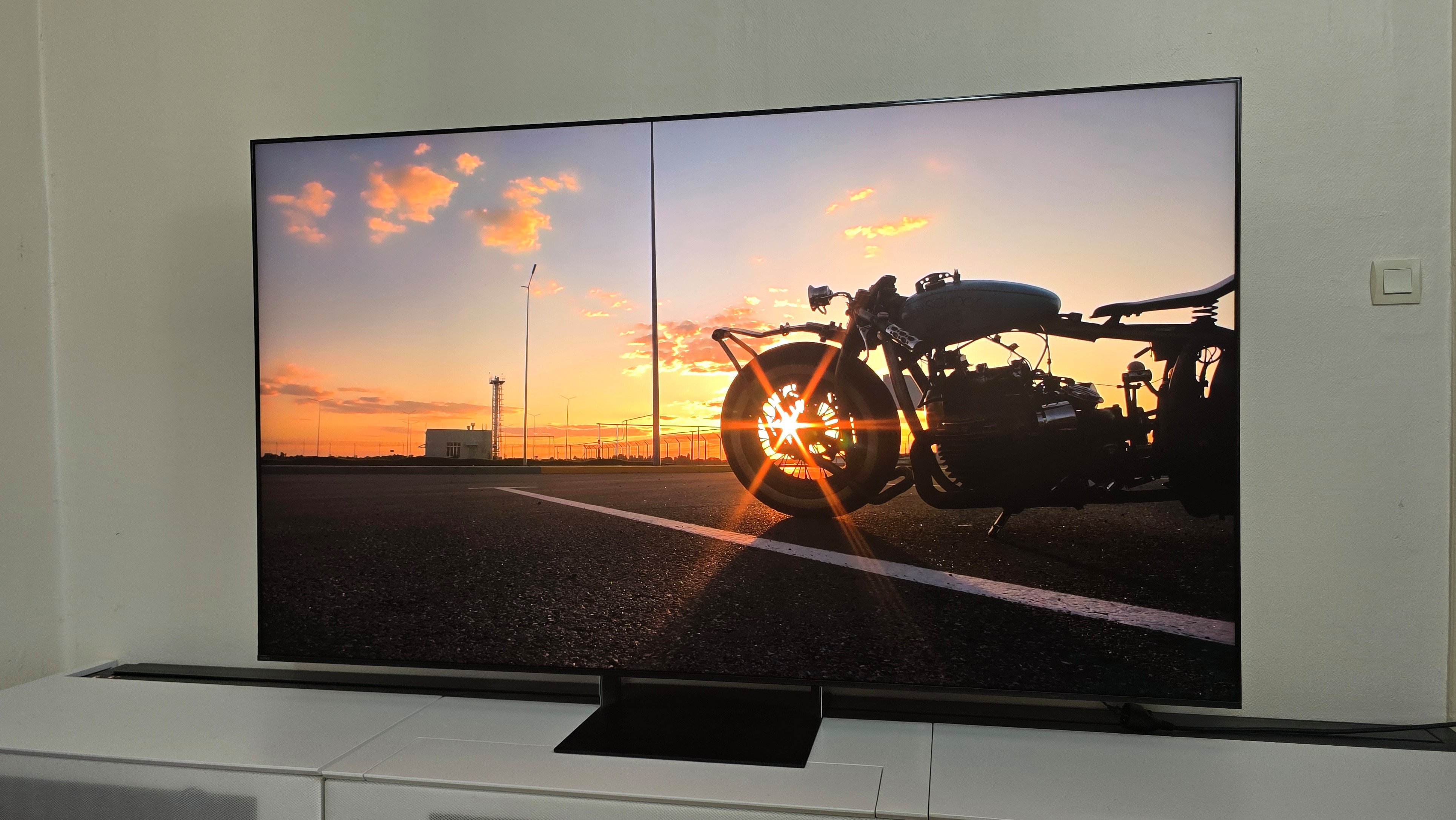
We also observed it on patterns closer to real content. Around a very bright yellow or orange element on a dark background, blooming can take on a slightly greenish or yellowish tint. The behavior is particularly noticeable on highly contrasted motifs and reminds that the three RGB backlight components do not always behave like a single white source.

The pattern continues with more test imagery, including UHDA-P3 and other color targets, showing strong color reproduction and a wide gamut. The BT.2020 coverage reaches 87%, demonstrating a high level of color fidelity for a backlit LCD but also highlighting that RGB backlighting, even in True RGB, cannot reach 100% of the BT.2020, as the article notes.

The overall color accuracy in HDR is excellent, with a Delta E average around 1.57 and a maximum deviation of 7.06 on white. The brightness capability is where the BRAVIA 9 II shows its strength, delivering high luminance while preserving color accuracy across a broad range of scenes. The EOTF tracking is clean, signalling a deliberate, thoughtful approach to HDR rendering rather than simply maximizing peak brightness.

In practice, the brightness reserve allows HDR highlights to pop without washing out color, and the on-axis performance remains highly convincing even in challenging bright scenes. The system manages color and light with a high degree of finesse, ensuring bright elements retain their hue and saturation while maintaining overall detail.

The color gamut coverage is strong: UHDA-P3 at 98.6% and BT.2020 at 87%. This is an excellent result, well above many conventional MiniLED offerings, yet it reminds us that RGB backlighting alone cannot hit the BT.2020 100% mark.

UHDA-P3

UHDA-P3

Comment testons-nous les téléviseurs chez Clubic ?

To discover

Daily experience

Audio

Sony has long focused on improving its TV sound more than many competitors, and the BRAVIA 9 II continues this approach with its Acoustic Multi-Audio+ system.
The result is convincing for a TV. Dialogue remains well centered and naturally seems to emanate from the image itself. The soundstage extends well beyond the screen’s physical limits, and the power reserve is ample for filling a small living room.

Test Sony Bravia Theatre Trio : et si la meilleure barre de son n’en était pas vraiment une ?

To discover

Effects on the sides and vertically are perceptible, albeit limited by design. It’s entirely reasonable to use the BRAVIA 9 II without a soundbar at first, but the experience changes considerably with a dedicated system, especially with the BRAVIA Theatre Trio, which we’ve previously tested and which clearly belongs to a different category for spatialization, bass, and dynamics.

Interface and features

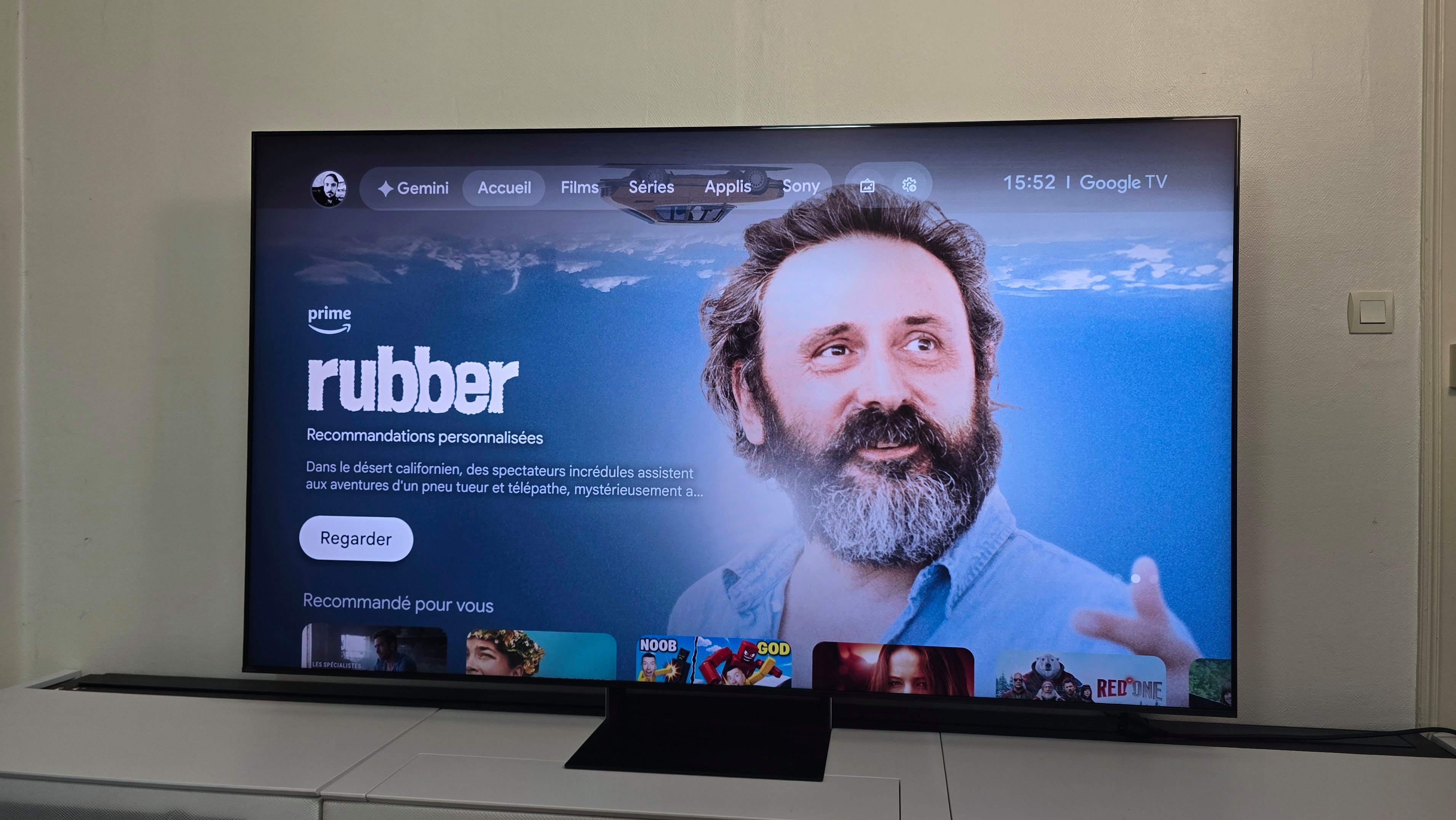
Google TV remains at the core of the experience, delivering a smooth interface, a wealth of apps and a generally enjoyable user experience.
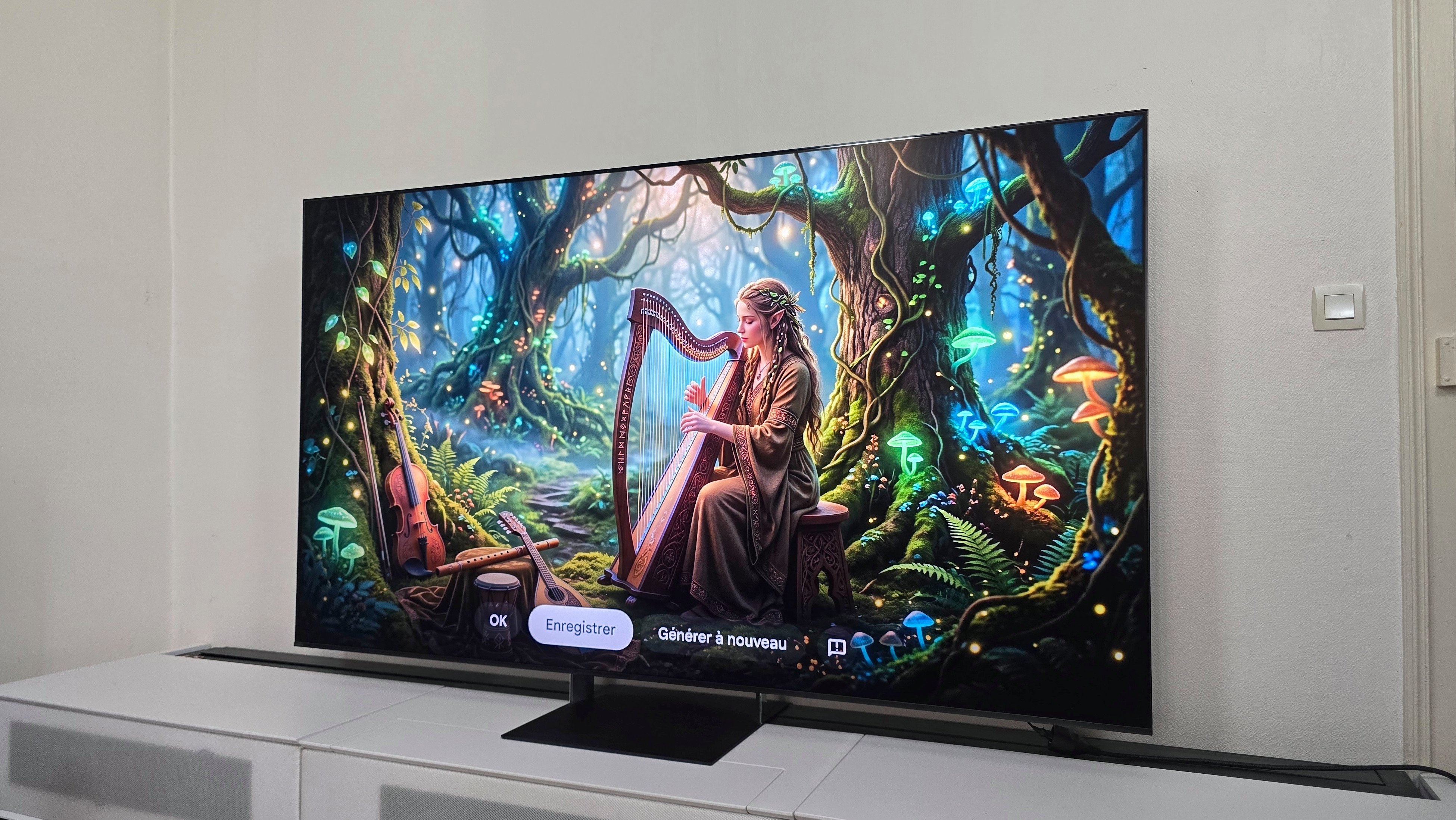
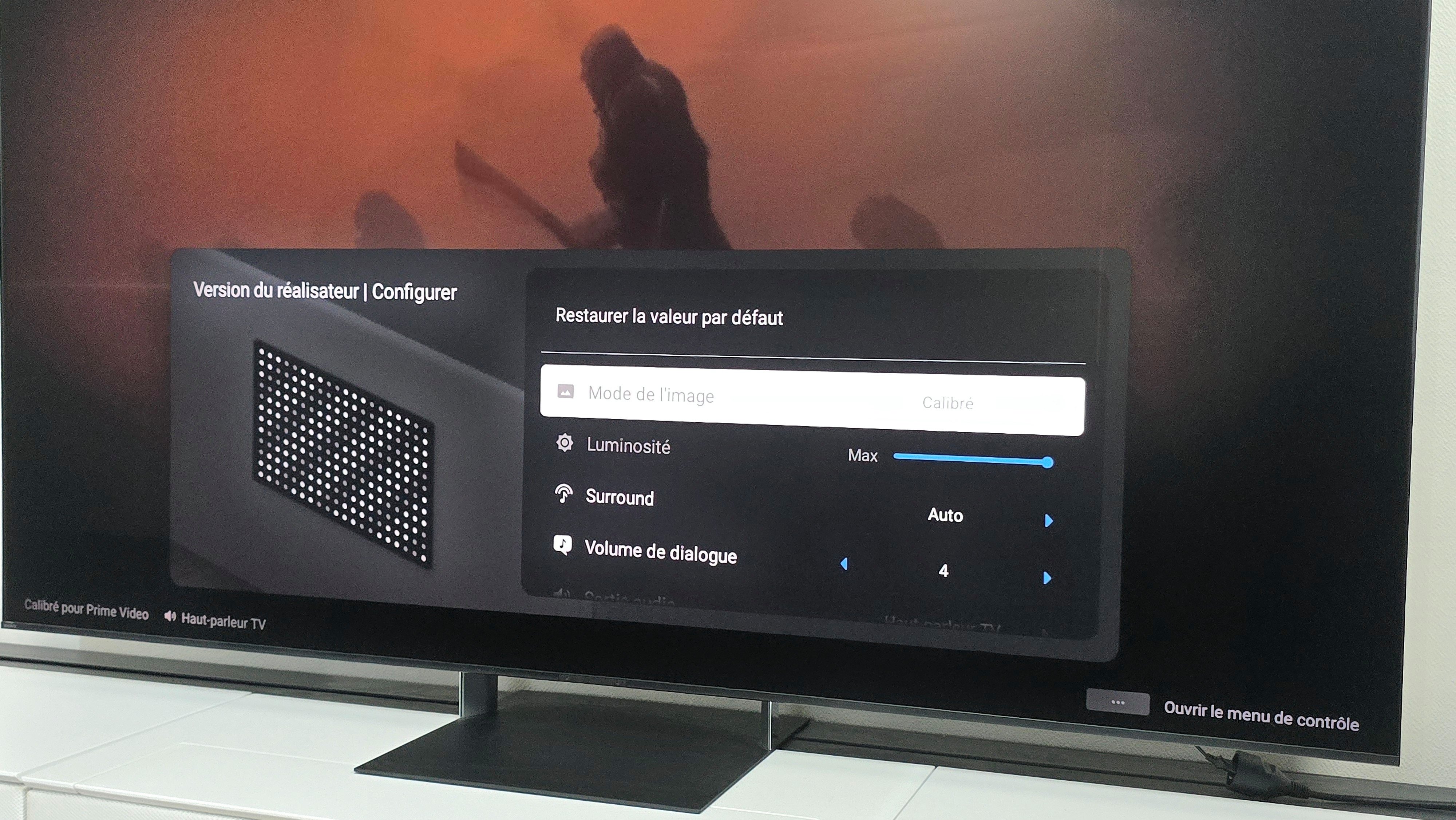
Sony, however, keeps its own calibration menus, which is a great thing. They allow precise adjustments of picture and sound settings while keeping the content visible in the background, greatly facilitating fine-tuning.

© Matthieu Legouge

© Matthieu Legouge

The 2026 generation also brings new features, including Gemini integration. The potential is interesting, though a few teething issues remain.

© Matthieu Legouge

© Matthieu Legouge

Sony introduces a new My Cinema environment, which centralizes certain image and sound adjustments according to the input source. The idea is practical: instead of navigating through multiple menu levels, you can quickly reach the settings needed for a cinema session.

© Matthieu Legouge

© Matthieu Legouge

Finally, as usual, the BRAVIA 9 II ships with two remotes: a modern, connected main remote and a second more traditional, feature-rich one. The primary remote benefits from a pleasant grip thanks to its textured back and includes USB-C charging.

© Matthieu Legouge

© Matthieu Legouge

Gaming

The BRAVIA 9 II is also a capable gaming TV. We measured an input lag of 1080p at 60 Hz: 183.6 ms in Standard mode—a rate far from ideal for comfortable play, indicating the heavy default video processing. Switching to Game mode brings the lag down dramatically to 10.4 ms. The difference is immediately apparent, placing the TV among models sufficiently responsive for the majority of gaming scenarios.

L’input lag sur le Sony Bravia 9 II
Game mode Standard mode
Measured input lag (60 Hz) 10.4 ms 183.6 ms

The Game rendering remains convincingly solid. The colorimetry seems reasonable. The image presents itself with a touch more punch than in Professional mode. HDR is one of the BRAVIA 9 II’s strengths in gaming, with scenes using bright highlights benefiting from the powerful RGB backlight and delivering intense pops of light with excellent color preservation. In some immersive games, the result is frankly spectacular.

Otherwise, we did not observe flicker or VRR issues during our sessions. However, the TV remains limited to 120 Hz, whereas some competitors offer 144 Hz or more. For current consoles, this isn’t a real constraint. The most demanding PC users may view this ceiling as a drawback on such a premium model.
Same goes for the connectivity: only two HDMI ports fully support HDMI 2.1 features. This is enough for most setups, but a user who owns multiple consoles, a gaming PC, and an eARC-compatible audio system may quickly find this configuration restrictive.

Power consumption

To enable a fair comparison with other models we’ve tested, we conducted measurements with a white pattern calibrated to 150 cd/m². In these conditions, the 75-inch unit consumes 73 W. This translates to around 47 W/m² given the panel’s display area.
This normalized measurement is much more representative of the TV’s efficiency than its HDR maximum consumption, which can vary greatly depending on content and backlight usage.

Design and connectivity

The BRAVIA 9 II doesn’t strive to rival the razor-thin look of an OLED. At 75 inches, it presents a near-monolithic impression.

© Matthieu Legouage

© Matthieu Legouge

His chassis is fairly thick, a logical consequence of the backlight and the amount of hardware needed behind the panel. Sony makes this constraint part of the design: the finish is solid, lines are restrained, and the overall impression is premium. The central stand is an excellent choice for this diagonal; it allows the TV to sit on a wider range of furniture than setups with two far-apart feet. Visually, it also helps give the large screen a sense of lightness when placed on a piece of furniture.

Quelles sont les meilleures TV 4K en 2026 ?

To discover

Clubic’s verdict on the Sony Bravia 9 II

Conclusion
General note
9 / 10

The Sony BRAVIA 9 II succeeds primarily in demonstrating how far LCD can push forward when pursued with such ambition. Its True RGB backlighting enables bright output while preserving a remarkable color richness, including in bright highlights. HDR rendering is thus one of its strongest points, with strong impact, excellent readability in bright scenes, and a genuine ability to preserve fine, colorful detail.
Sony continues to rely on what has long been the strength of its TVs: precise video processing, excellent upscaling with good sources, sharp detail, and generally well-managed motion handling. On-axis contrast is also very convincing, with deep blacks for an LCD and good detail levels in the near-black areas.
That said, the overall picture isn’t perfect. Blooming remains visible in certain situations, color crosstalk is present, and these phenomena become more noticeable when you move away from the center axis. SDR calibration in Professional mode shows a few surprising discrepancies for a product in this price range, while BT.2020 coverage, though excellent, remains below the promises associated with RGB MiniLED.

The BRAVIA 9 II remains an extremely accomplished TV, especially adept with HDR content, in bright rooms as well as in darker environments, and it’s versatile enough for cinema, gaming, or everyday use. Sony signs here one of the most convincing expressions of how premium LCD can still push forward.

Pros and Cons

Pros
  • Spectacular HDR rendering with very high brightness
  • Remarkable color volume, even in the highlights
  • Excellent contrast on-axis with solid video handling
  • Very good gaming behavior with reduced input lag
  • Ultra-effective anti-reflection
Sub-notes
Design and connectivity

8

Image quality

9

Audio quality

8

Gaming

8

Connected experience

9

Power consumption

10

Best prices

Fnac

€2,999.00

View offer
€2,999.00

Son-Vidéo

€2,999.00

Voir l’offre
€2,999.00

Darty

€2,999.00

Voir l’offre
€2,999.00

Sony FR

€2,999.00

Voir l’offre
€2,999.00

Futureland

€3,425.00

Voir l’offre
€3,425.00

Voir plus de prix

All measurements in this test were recorded with the CalMAN Ultimate software, a Calibrite Display Plus HL probe, and a Leo Bodnar input lag device.

Specification sheet Sony BRAVIA 9 II

Résumé

Screen resolution 3840 x 2160 pixels – 4K UHD
Display technology RGB-Mini LED
HDR compatibility HLG, HGiG, HDR10, HDR10+, HDR10+ Adaptive, HDR10+ Gaming, IMAX Enhanced
Refresh rate 120 Hz
Operating system Google TV

Display

Screen resolution 3840 x 2160 pixels – 4K UHD
Display technology RGB-Mini LED
Video processor Cognitive Processor XR (2026)
HDR compatibility HLG, HGiG, HDR10, HDR10+, HDR10+ Adaptive, HDR10+ Gaming, IMAX Enhanced
Refresh rate 120 Hz
Other Filmmaker Mode, EyeComfort mode

Audio

Dolby Atmos Yes
DTS:X Yes

Connectivité

Nombre de ports HDMI 4
HDMI standard HDMI 2.1
ARC / eARC eARC
ALLM Yes
Dynamic HDR VRR, FreeSync Premium, G-Sync
Other inputs 1x USB-A, 1x Ethernet, 1x CI+, 1x TV antenna
Other outputs 1x optical (SPDIF), 1x headphone

Connectivité

Système d’exploitation Google TV
Bluetooth Yes
Wi‑Fi Yes
Voice assistant Google Assistant, Alexa
AirPlay 2 Yes
HomeKit Yes
Interoperability SmartThings, Matter, Zigbee, Thread

Physical characteristics

Removable stand Yes
VESA compatibility Yes

Connectivité

Système d’exploitation Google TV
Bluetooth Yes
Wi‑Fi Yes
Voice Assistant Google Assistant, Alexa
AirPlay 2 Yes
HomeKit Yes
Interoperability SmartThings, Matter, Zigbee, Thread

Caractéristiques physiques

Pied amovible Yes
Compatibilité VESA Yes

Daniel Brooks

I cover everyday products with a practical eye, from kitchen tools and home essentials to smart gadgets and consumer trends. My goal is to help readers understand what is genuinely useful, what is worth the price, and what deserves a second look before buying.