
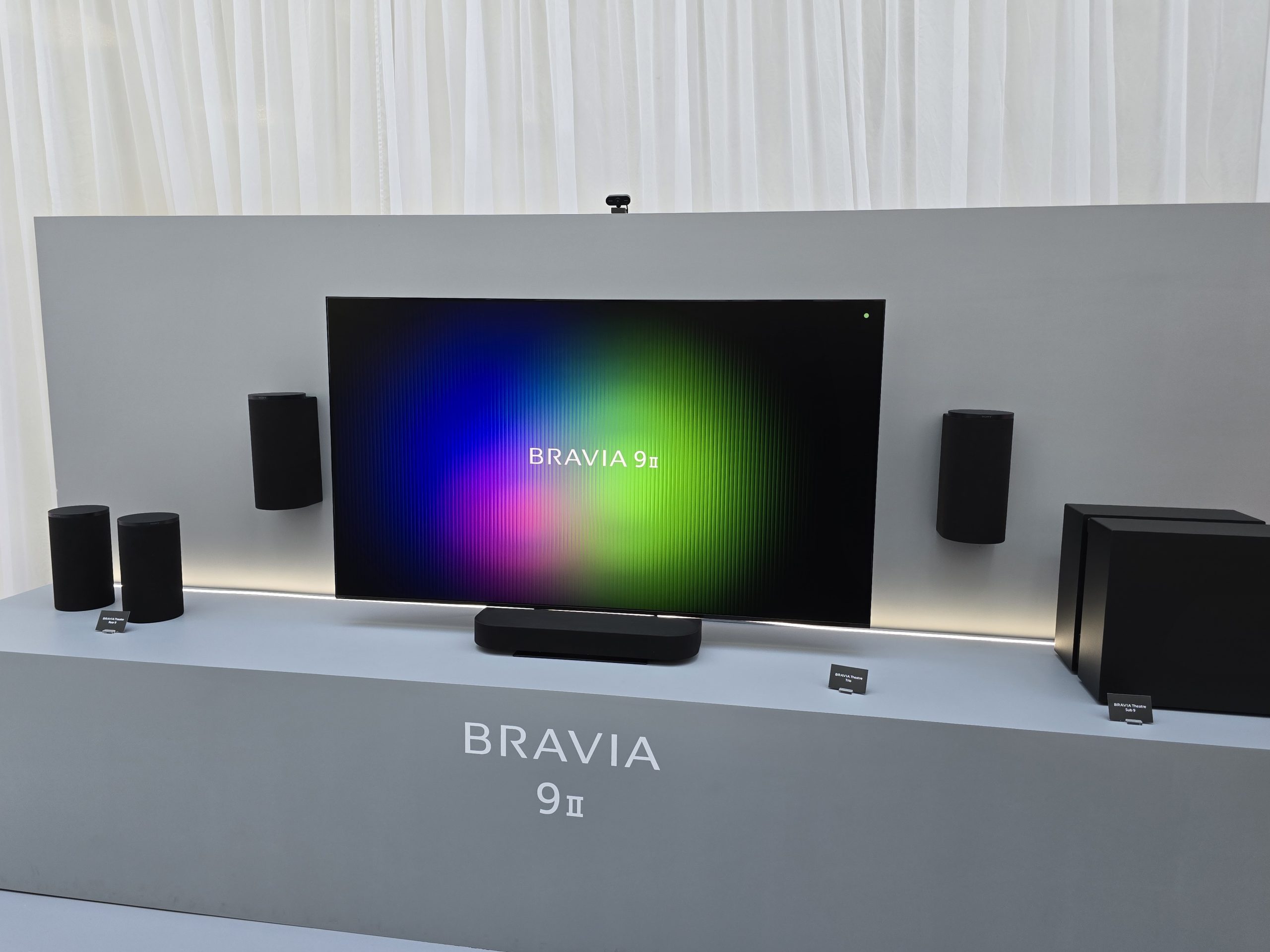
Sony isn’t signing here for yet another soundbar, but for a far more unconventional proposition. With the Bravia Theatre Trio, the Japanese manufacturer breaks the front soundstage into three distinct elements: a center channel and two separate left/right speakers, aiming to offer more breadth than a traditional bar while preserving the simplicity of a system designed for the living room.
The soundbar has become the simplest solution to improve a TV’s audio. One block, a few cables, quick setup, and you’re set. Yet this approach has its limits, especially as the screen grows larger. On very large TVs, the soundstage can feel cramped, as if the image has grown faster than the sound.
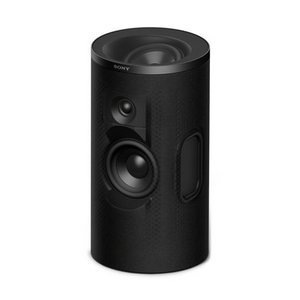
Sony is exploring another approach here. The Bravia Theatre Trio keeps the idea of simplicity of a soundbar but distributes the front channels across three separate speakers. A small central “bar” sits under the screen, while two taller speakers flank the TV. All components communicate wirelessly, with automatic calibration and Sony’s own spatial processing.
On paper, the concept is appealing. The question remains whether this deconstructed soundbar can really outperform a premium bar, and whether adding the Sub 8 and Rear 9 truly transforms the experience.
9 / 10
- Extremely wide, well-structured front stage
- Centered dialogues
- Excellent coherence among the three parts
- Careful installation and calibration
- Well-executed setup and calibration
- Atmos performance is excellent for a frontal system
- Musicality superior to many soundbars
- Easy expansion path with a sub and rear speakers
- High price (and the whole system becomes quite expensive)
- No built-in display
- The Trio itself remains primarily a front-focused solution
- Multiple power cables to plan for
The Bravia Theatre Trio can operate on its own, and that is exactly how we first tested it. Sony also provided us with the Bravia Theatre Sub 8 and the Bravia Theatre Rear 9 to evaluate what the system gains when it’s expanded. A key note: these aren’t the only compatible elements with the Trio, but they are the configuration we were able to listen to.
A Deconstructed Soundbar, But Not a Crazy Idea
The Bravia Theatre Trio starts from a fairly sound observation: TVs are growing, but soundbars often stay tucked beneath the screen. On a 55-inch set, that can still work. On a 75, 85, or 98-inch screen, the image commands more width than the audio can always provide.
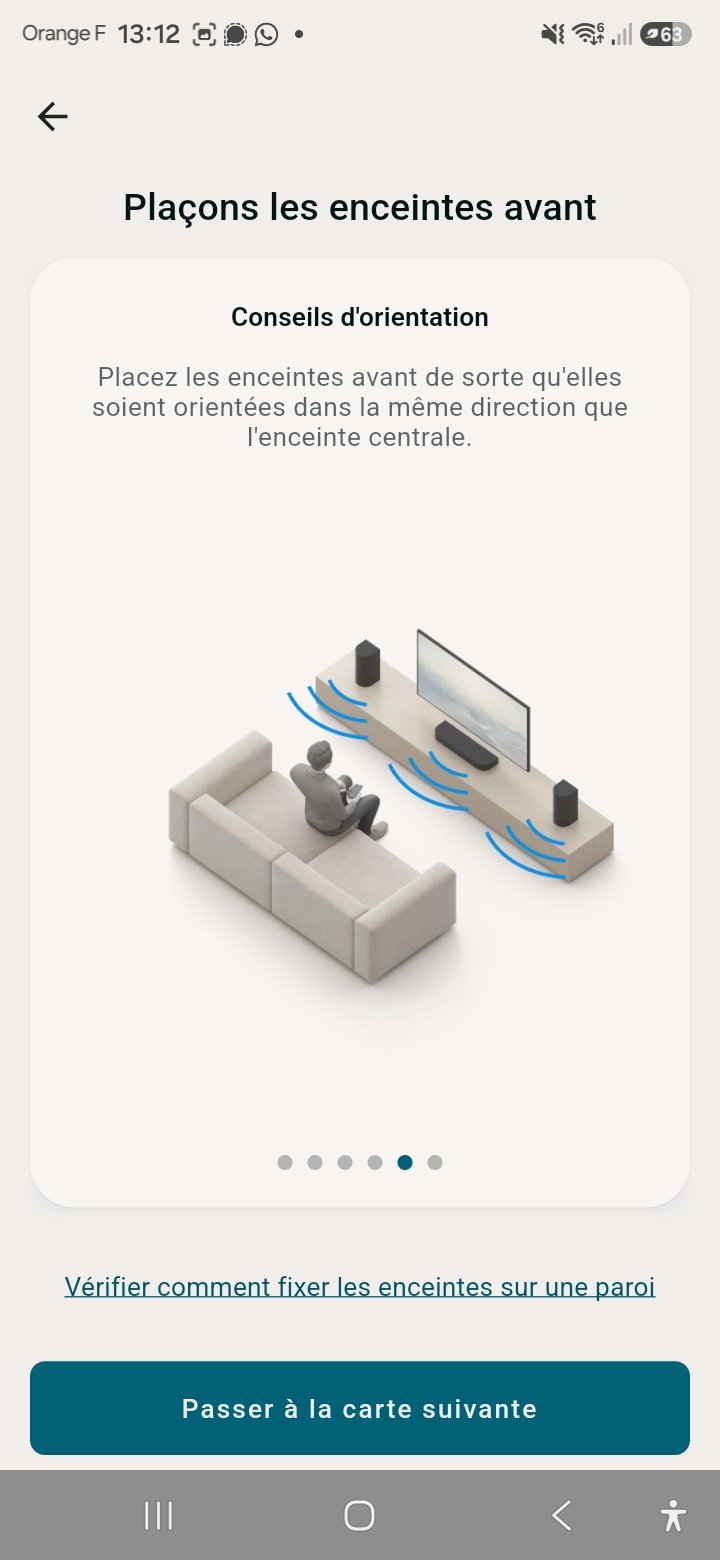
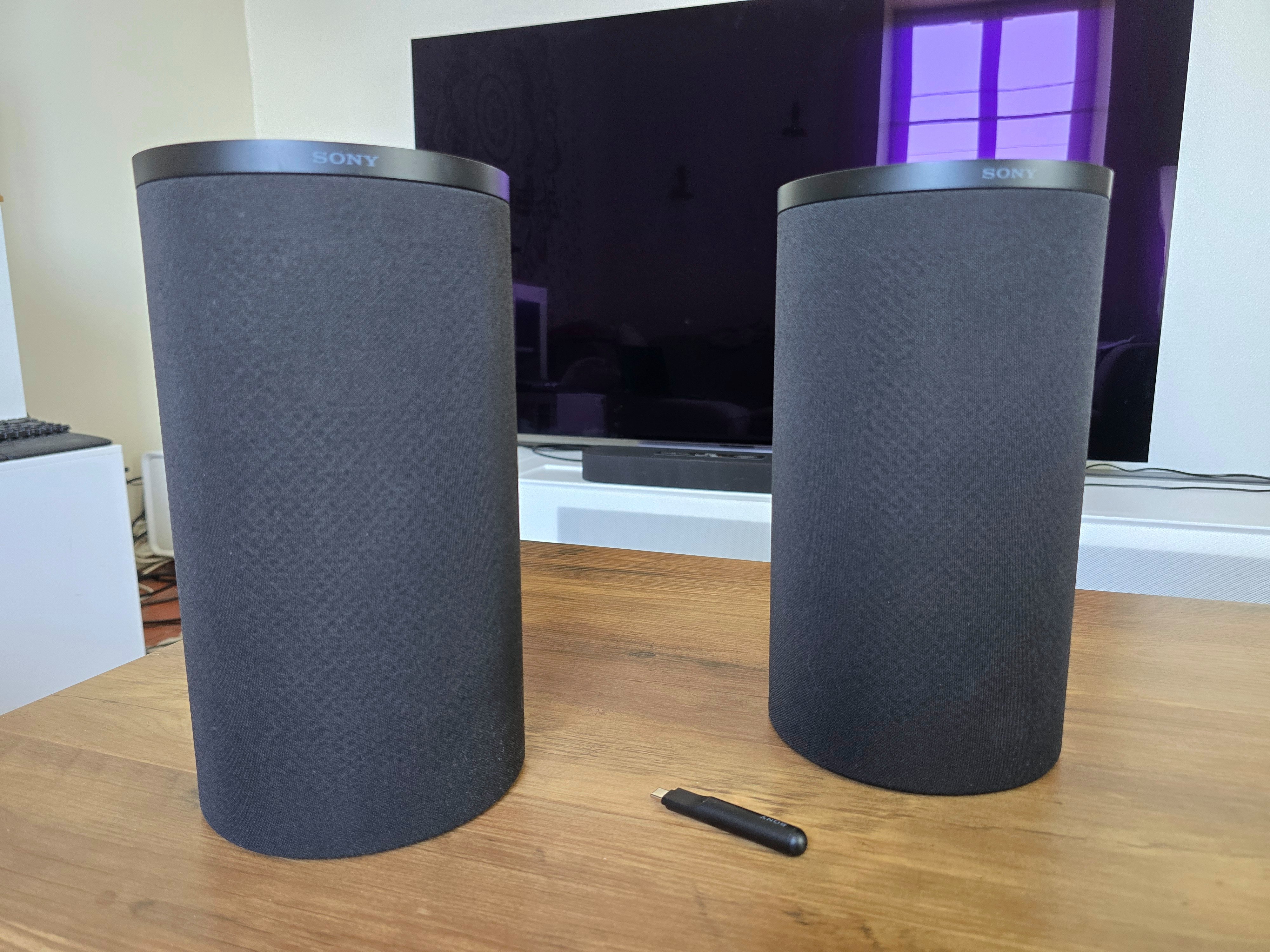
Sony addresses this with a three-part setup. The center channel sits beneath the TV like a small soundbar. The two front speakers flank the screen, bringing width, stereo openness, and vertical effects thanks to drivers angled toward the ceiling.
This concept is appealing in theory. But can this deconstructed approach really surpass a premium one-piece bar, and does adding the Sub 8 and Rear 9 genuinely improve the overall experience?
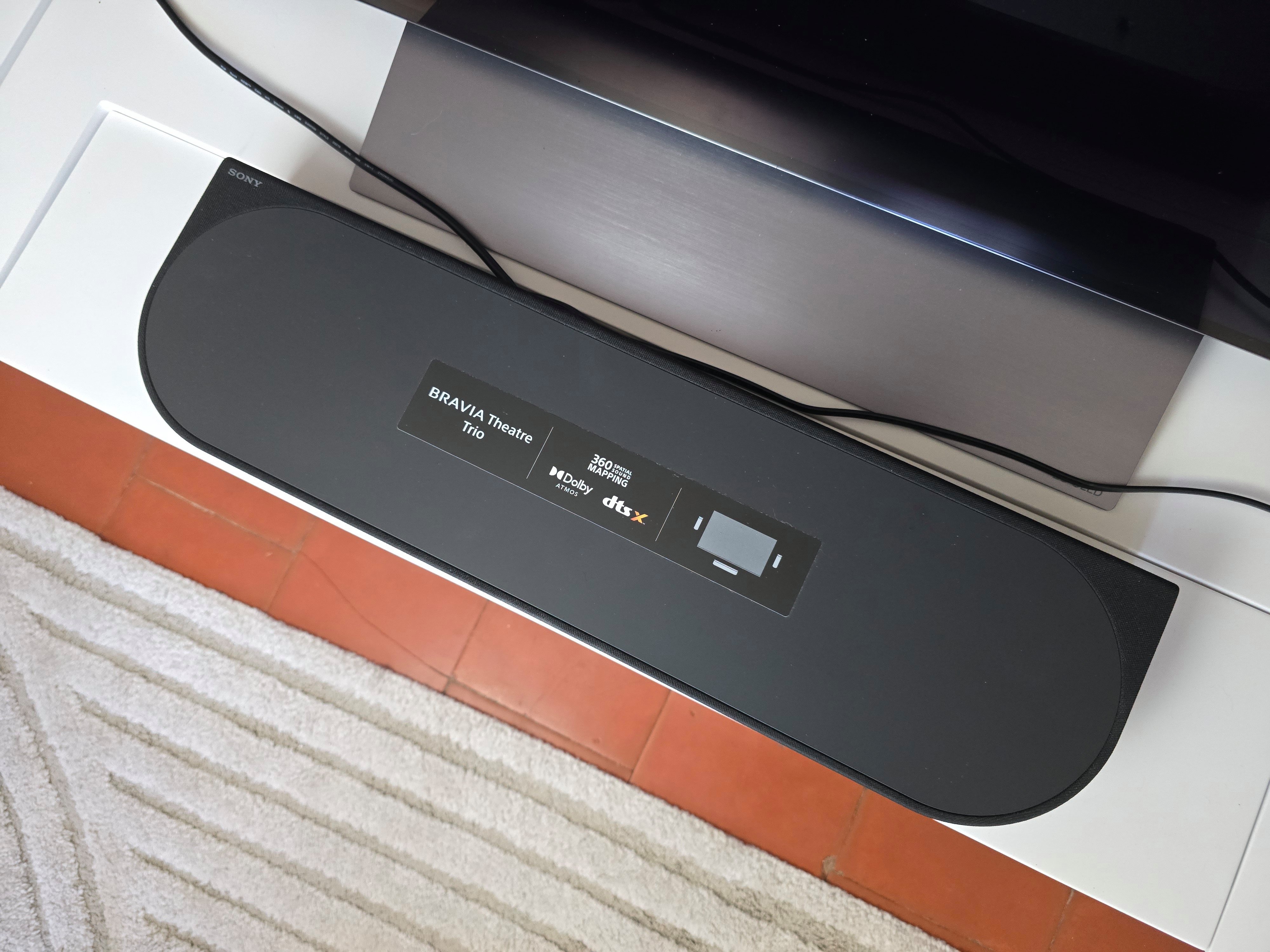
This choice has a clear advantage: the sounds no longer feel squeezed into a single block. Effects gain space, music breathes more freely, and dialogues stay firmly anchored at the center of the image. This is precisely what is sometimes missing from more “virtual” systems, which can create a wide soundstage but struggle to maintain a true central focus.
Design and Installation: More Components, But Not More Complexity
Naturally, the Bravia Theatre Trio requires a bit more space than a classic soundbar. The central module must sit beneath the TV, with the two left and right speakers placed on either side of the screen. Each element needs its own power supply, which means you have to plan cable routing at least a little.
Nevertheless, Sony has crafted a thoughtful installation experience. The speakers can sit on a piece of furniture or be wall-mounted, and the system does not demand perfect symmetry to work well. This is important: the Trio is designed for a living room, not a dedicated home theater.
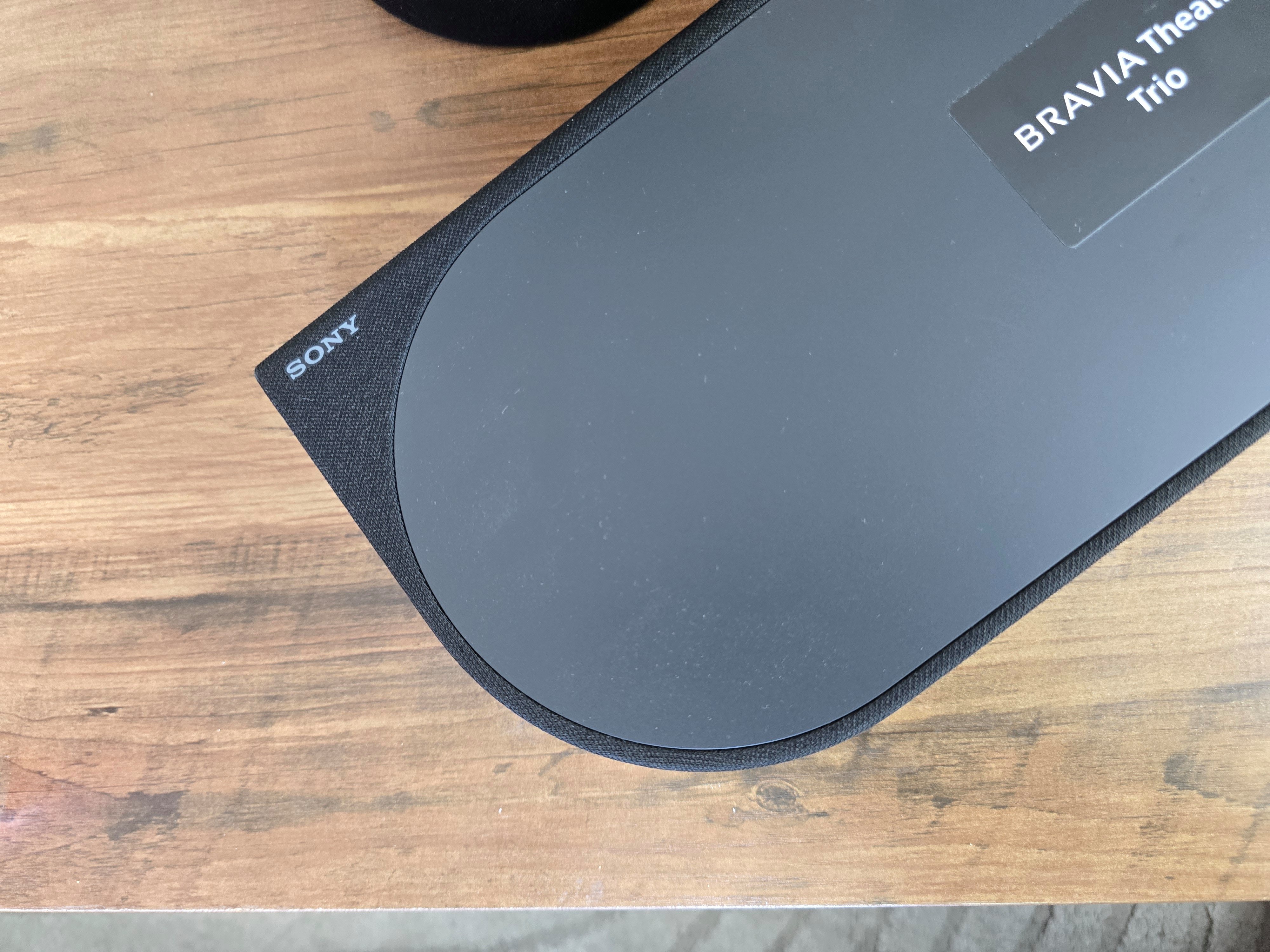
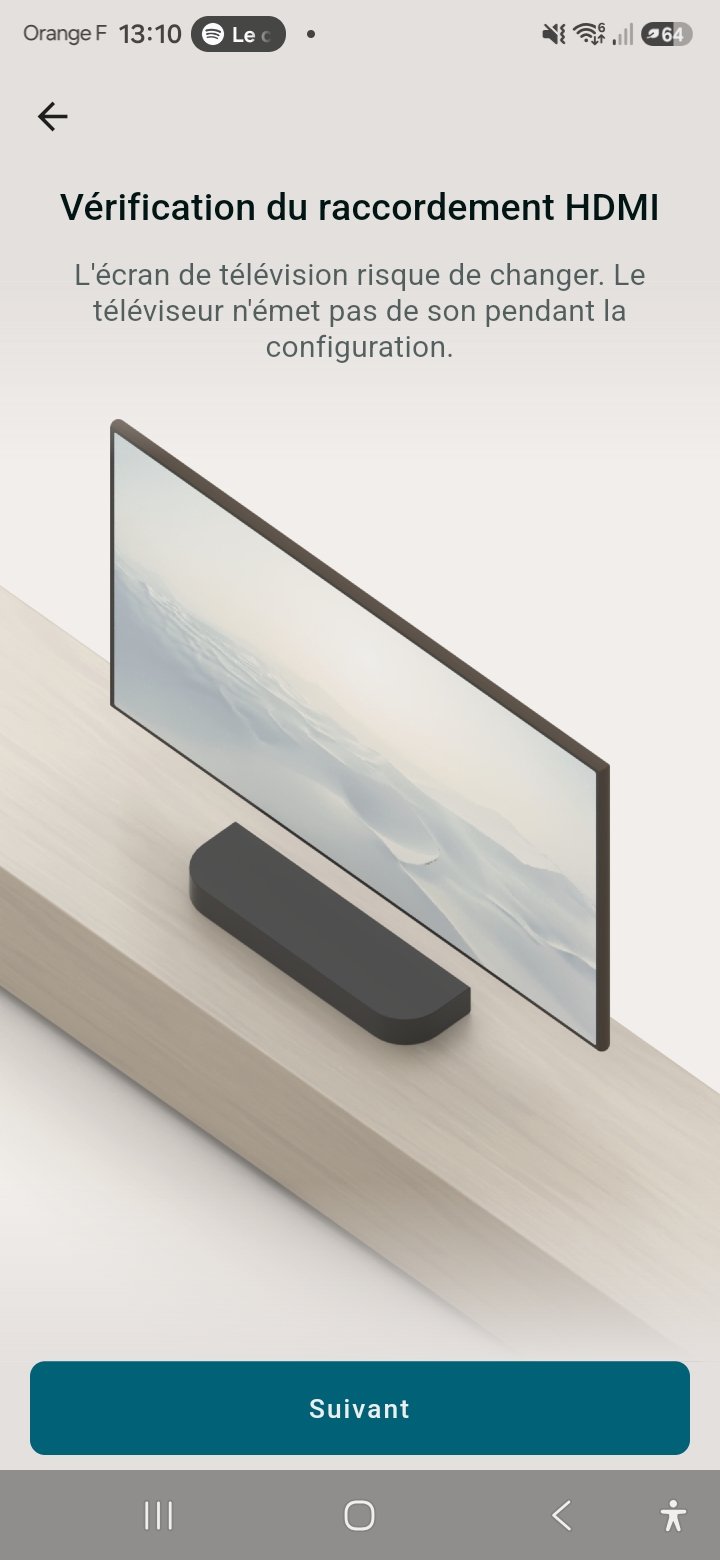
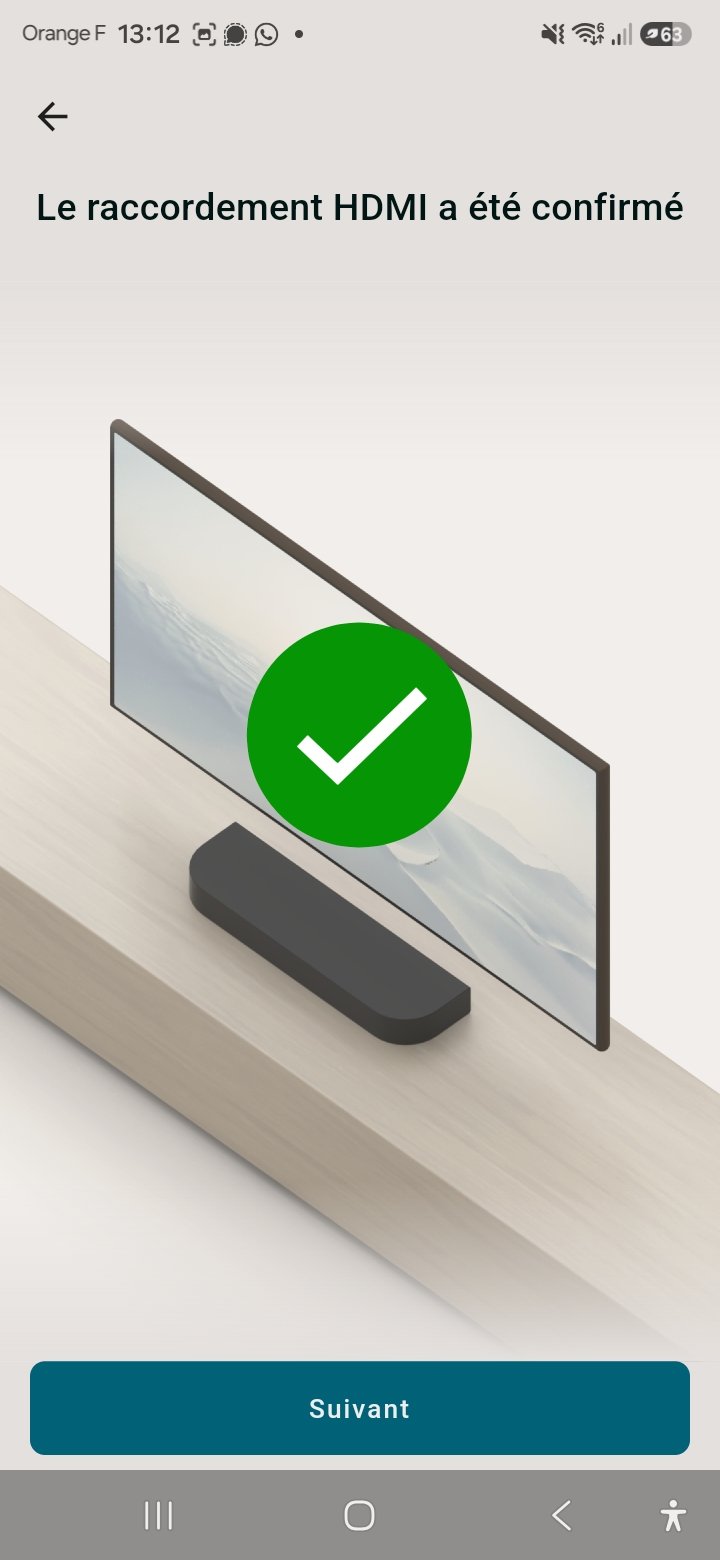
The Bravia Connect app guides the user step by step, with a calibration procedure that is simple yet thorough. Sony provides a dedicated micro USB-C cable to connect to a smartphone, used to measure listening position and tailor the output to the room. The system also accounts for the position and height of the speakers, which helps compensate for imperfect placements.
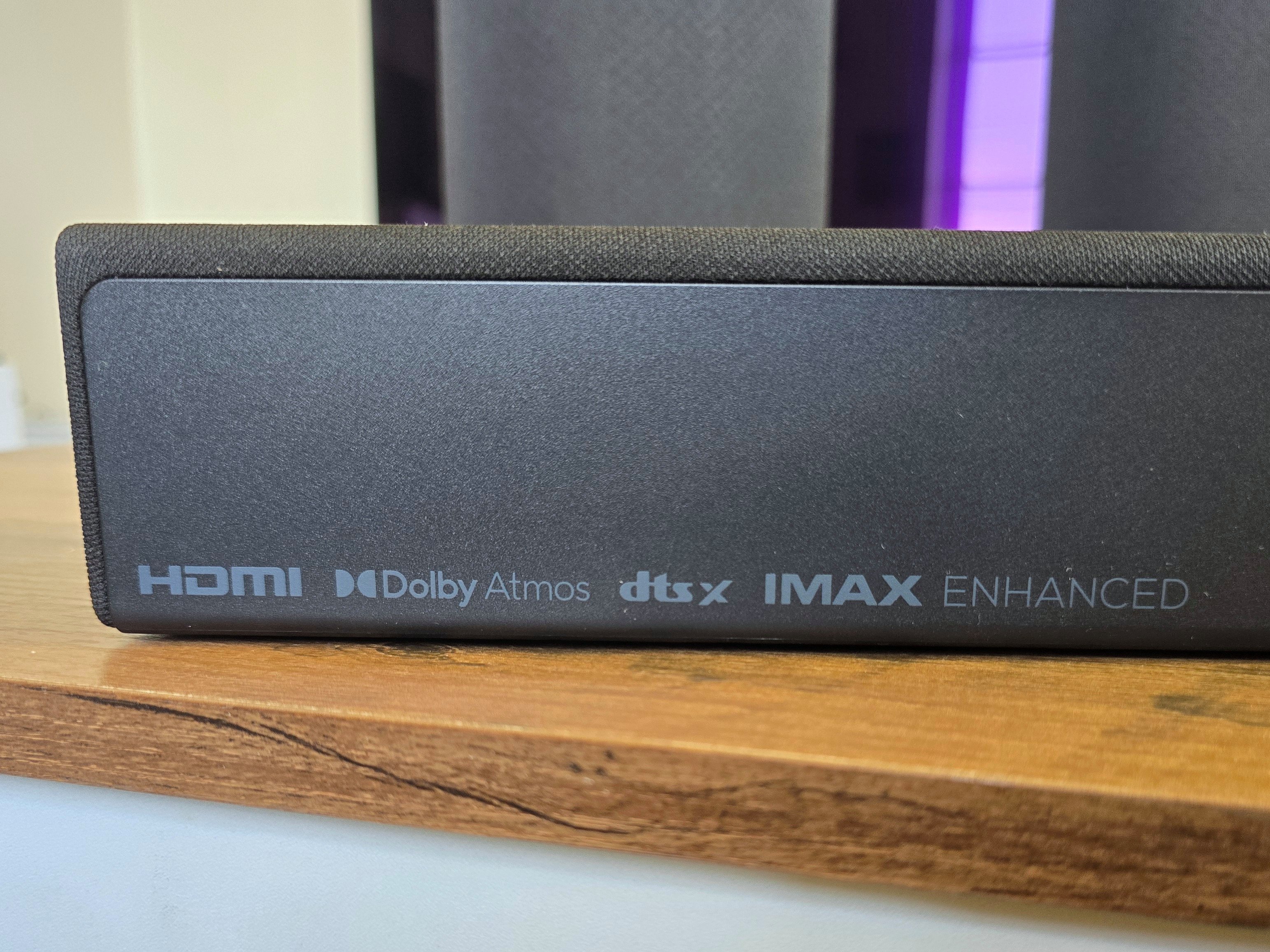
One notable practical limitation: there is no on-device display. Sony relies on small status LEDs on the speakers. For detailed adjustments, you must use the app or the compatible TV interface. It isn’t dramatic, but for a product at this price, at least some visible information directly on the unit would have been welcome.
The Trio Alone: A Real Alternative to Premium Soundbars
Of course, the Bravia Theatre Trio must first be judged in its basic configuration. In this use, the Sony system fulfills its role very well: it preferable replaces a premium soundbar.
The first striking thing is the width of the soundstage. Effects no longer stay glued to the image’s center or confined to the area beneath the TV. They extend broadly to the sides, delivering a sense of space more natural than many classic soundbars. The physical separation of the left and right channels makes a real difference here.

The center channel also performs very well. Dialog remains well placed, clearly tied to the screen, without feeling like it’s floating in the room or coming from one side. The Atmos effects are also convincing for a frontal system. The left and right speakers integrate ceiling-facing drivers, and Sony’s spatial processing works to create a taller, more enveloping sound bubble. Obviously, this isn’t the same as a full Atmos installation with ceiling speakers, but the result exceeds what you typically get from a single bar.
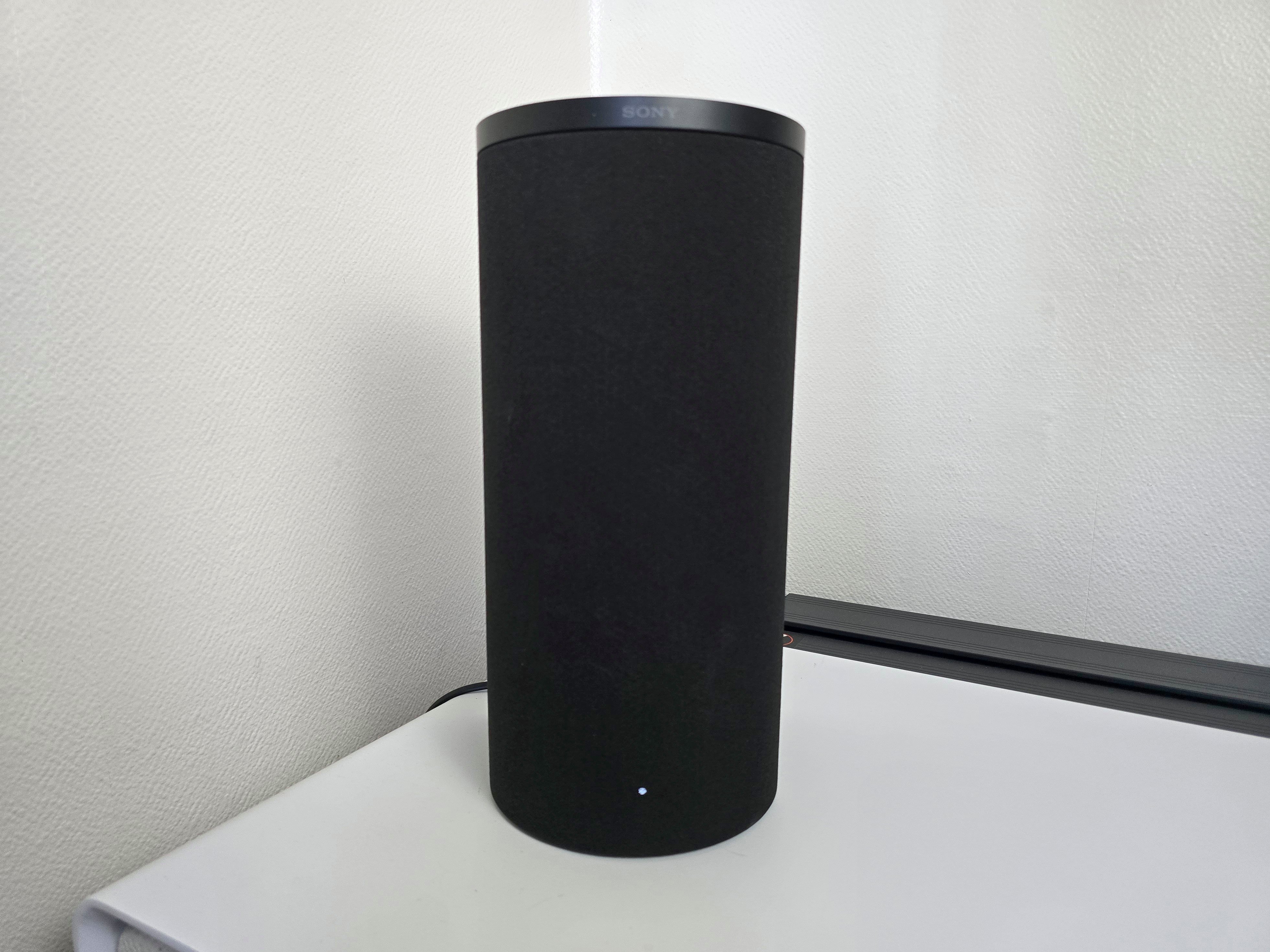
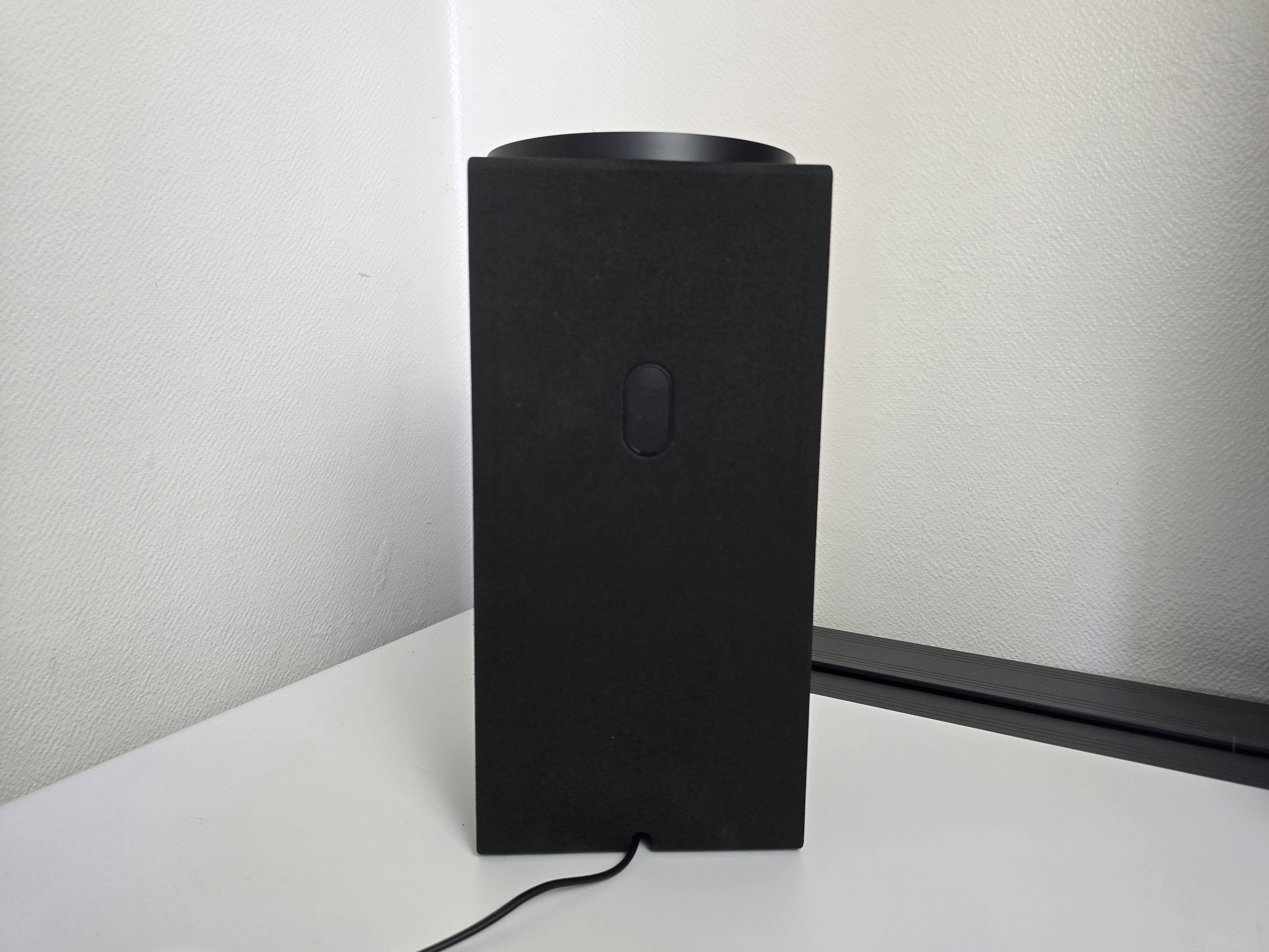
The Trio mainly gives a sense of scale. The soundtracks breathe; environments fill the room more completely; action scenes become more immersive. This is particularly relevant with a large TV, where the audio must follow the image’s size. In this respect, Sony’s proposal is coherent.
However, a limit must be acknowledged: alone, the Trio remains primarily a front-focused system. It broadens the listening field in front of the listener very well, adds verticality, and creates credible side effects, but it cannot conjure true speakers behind the sofa. Virtual processing helps a lot, but it’s not magic. The immersion is already very good, but not equal to that of a system equipped with real rear speakers.
A pleasant surprise for music as well
Soundbars are rarely the best friends of music; they can produce a lot of noise and sometimes deep bass, but they often struggle to offer a true stereo image. The Bravia Theatre Trio has a clear advantage: its left and right speakers are genuinely separated.
In musical listening, the system thus sounds more credible than most traditional soundbars. The stereo stage is better defined, voices sit more naturally in place, and instruments breathe more freely. It doesn’t replace a carefully chosen real hi-fi pair, but the Trio holds its own as a lifestyle home cinema system.
That’s one of the strengths of this “split” approach. Sony isn’t just chasing cinema immersion; it also gains musical coherence. For a user who watches films, series, concerts, and streams music, that is a significant argument.
Sub 8 and Rear 9: The Trio Can Go Much Further
The Bravia Theatre Trio can operate alone, and it does so very well. But Sony also designed it as a scalable base. You can pair it with compatible accessories, notably multiple subwoofers and rear speakers from the brand.
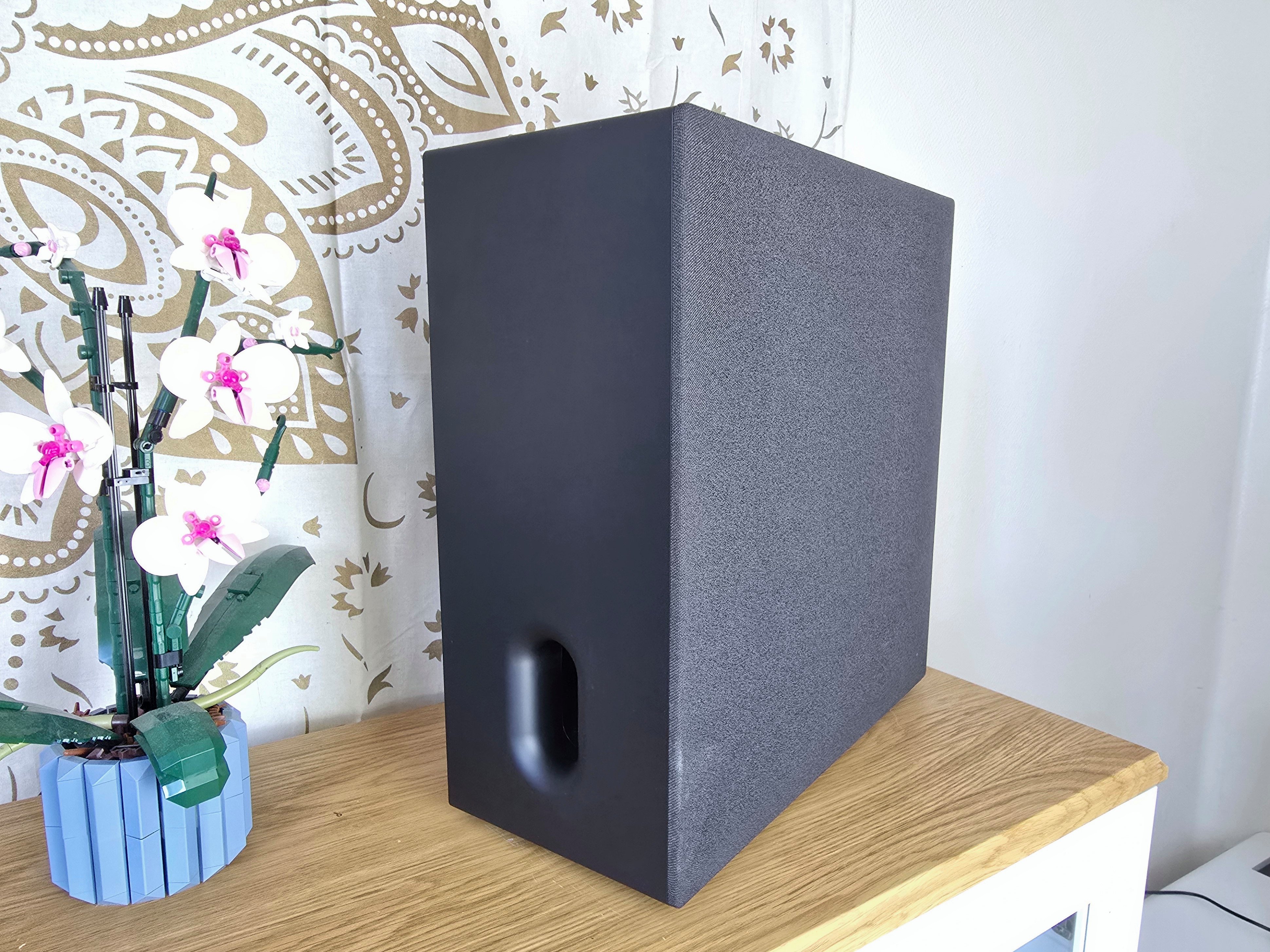
The Sub 8’s contribution is immediate. It doesn’t just add bass to rattle the couch; it gives the whole setup more depth. The impacts feel more physical, the atmospheres gain depth, explosions carry more weight, and the soundtracks feel fuller. The Trio also breathes more easily, since it no longer has to carry the most demanding frequencies alone.
The Rear 9 play an even more obvious role in immersion. With the Trio alone, the soundstage is wide, tall, and already impressive, but primarily in front of the listener. With rear speakers, the bubble closes in. Effects circulate around the listening position, room atmospheres fill the back of the space, and Atmos-like scenes gain continuity.
That is where the system changes category. The Trio alone is already an excellent alternative to premium soundbars. With the Sub 8 and Rear 9, it approaches a true wireless home cinema system. You keep the simplicity of a modern ecosystem, but with a far more complete immersion.
This configuration also merits addressing natural limitations of the Trio alone. The sub provides the physical base that three compact front speakers inevitably miss, while the Rear 9 give a rear presence that virtual processing cannot entirely recreate. They are not just decorative accessories: they extend the concept in a very logical way.
An Appealing Upmarket Move, But Expensive
One caveat remains, though: price. The Bravia Theatre Trio already sits in the premium tier. It targets those who want more than a traditional soundbar and are willing to pay a higher price for a more ambitious, wider, and evolutive system.
amazon.fr
Fnac
Son-Vidéo
Sony FR
See more prices
But with a sub and rear speakers, the bill climbs quickly. We’re no longer talking about a simple accessory to improve TV sound, but a genuine home cinema investment. At this price level, competition becomes serious, with complete soundbars, high-performance surround packs, or even more traditional setups.
Sony’s proposition remains nonetheless quite unique. The Trio is more elegant and easier to integrate than a classic home cinema system, yet broader and more natural than a single-block soundbar. It targets a precise middle ground: a user who wants a real audio upgrade without multiplying amps, speaker cables, and complex settings.
That’s also why it’s important to distinguish the two uses. The Trio alone should be judged as a complete and already convincing solution. The pack with Sub 8 and Rear 9 shows what the system can become if you’re willing to go further. It isn’t essential to enjoy the product, but it clearly represents the configuration that fully exploits its potential.
Sony Bravia Theatre Trio: Clubic’s Verdict
Sony Bravia Theatre Trio pulls off a balancing act that might have seemed risky: deconstructing the soundbar to surpass its limits. By separating the center channel from the left and right channels, Sony achieves a much wider front soundstage, more open, and more coherent with today’s large TVs.
Alone, the Trio is already a fine solution. It delivers solid dialogues, convincing spatialization, real cinema scale, and better musicality than many soundbars. It doesn’t fully replace a complete surround system, but it clearly does better than a standard bar at opening up space and depth.
Adding the Bravia Theatre Sub 8 and the Bravia Theatre Rear 9 does raise the bar. The bass gains authority, the room’s rear comes to life, and the whole setup becomes far more immersive. It isn’t the only configuration that works with the Trio, but the one we tested best showcases Sony’s ecosystem: start from a strong front end and gradually build a more ambitious wireless home cinema system.
The main snag remains price. The Trio is already expensive, and adding the full system makes it even more so. But for anyone seeking an elegant, easy-to-install, highly immersive solution that suits large screens, Sony offers a genuinely compelling proposition.
- Very wide, well-structured front stage
- Dialogues well centered
- Nice coherence across the three components
- Careful installation and calibration
- Assembly and calibration carefully done
- Impressive Atmos rendering for a frontal setup
- Superior musicality to many soundbars
- Great potential for upgrading with a sub and rear speakers
- High price (and the full system becomes frankly costly)