
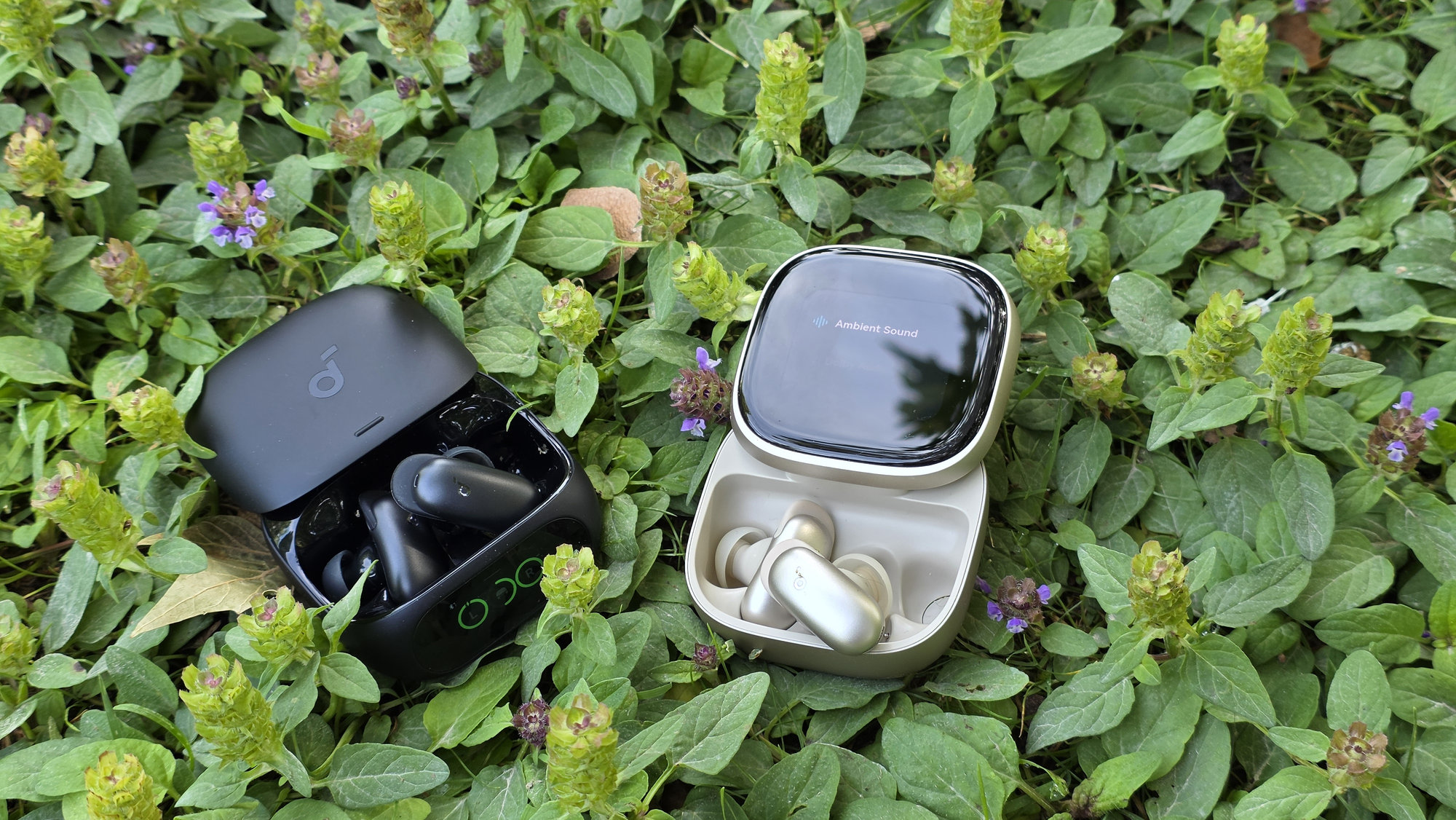
Once just a simple builder navigating the entry-level market, Soundcore, Anker’s audio subsidiary, now positions itself as an innovative force. A sign of this upward move is the new Liberty 5 Pro and its intelligent variant Liberty 5 Pro Max facing the genre’s top contenders. A technically ambitious formula, even revolutionary in the case of the 5 Pro Max.
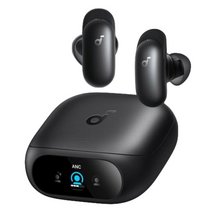
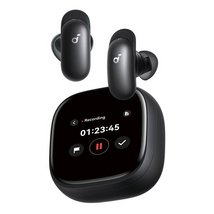
Identical in substance and form, the Soundcore Liberty 5 Pro (179 euros) and Liberty 5 Pro Max (249 euros) are Bluetooth earbuds with active noise cancellation that stand out on two points: their charging case with a touchscreen, capable of managing settings and adjustments usually reserved for dedicated apps; and the integration of the new in-house Anker Thus chip, dedicated to AI. The Pro Max version’s case goes even further, with a larger screen, and especially additional features, such as instant translation management, as well as intelligent transcription in Plaud Note style.
9 / 10
- Powerful yet well-balanced sound
- Good openness and level of detail
- Very good call quality
- Integrated case features
- Impressive standby
- Some oscillations and imprecision in the highs
- Could better isolate voices
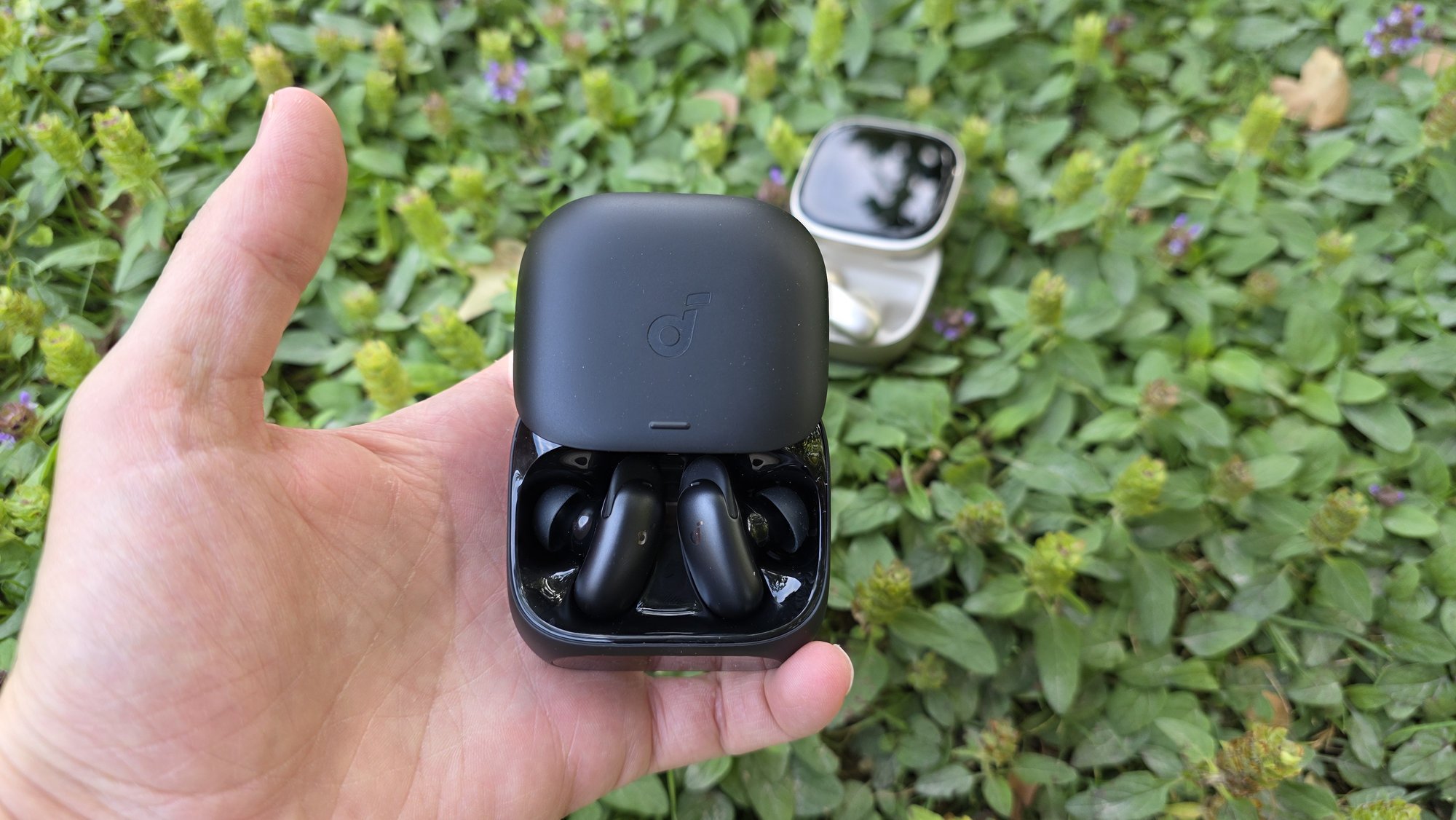
- Relatively bulky, not for all ears
- Mandatory login to access some app features
8 / 10
- Powerful but overall balanced
- Good openness and good detail level
- Excellent call quality
- Built-in power bank-like case
- Impressive endurance
- Some oscillations and imprecisions in the highs
- Could further isolate voices
- Quite bulky, not for everyone
- Requires login to access certain app features
Our measurements: a formula approaching the elite
Our measurements highlight the earbuds’ overall sound management, reflecting a certain restraint from the brand. The basses are boosted but not excessively. Above all, from the lower midrange up to the early treble, the spectrum remains fairly balanced, with the high end showing a touch of shimmer and some brightness, yet nothing bordering on excessive. In short, Soundcore’s base tuning (Soundcore Signature) aims for a natural, yet powerful overall signature.
The active noise cancellation is very satisfactory, though heavily dependent on the ear tips used. Our new measuring head tends to yield a result that appears less impressive for bass isolation (compared to our old head), but attenuation is already quite impressive, nearly on par with the best earbuds. The 25 dB attenuation in bass and midrange is present, and the brand manages to keep some effectiveness in bridging mid-to-highs, which remains the weak link of phonetic isolation, except with a few champions like the AirPods Pro 3. The transparency mode roughly meets this standard, reproducing a coherent sound environment without bass or midrange emphasis. Only the very high frequencies reveal a slight drop, resulting in a small veil effect.
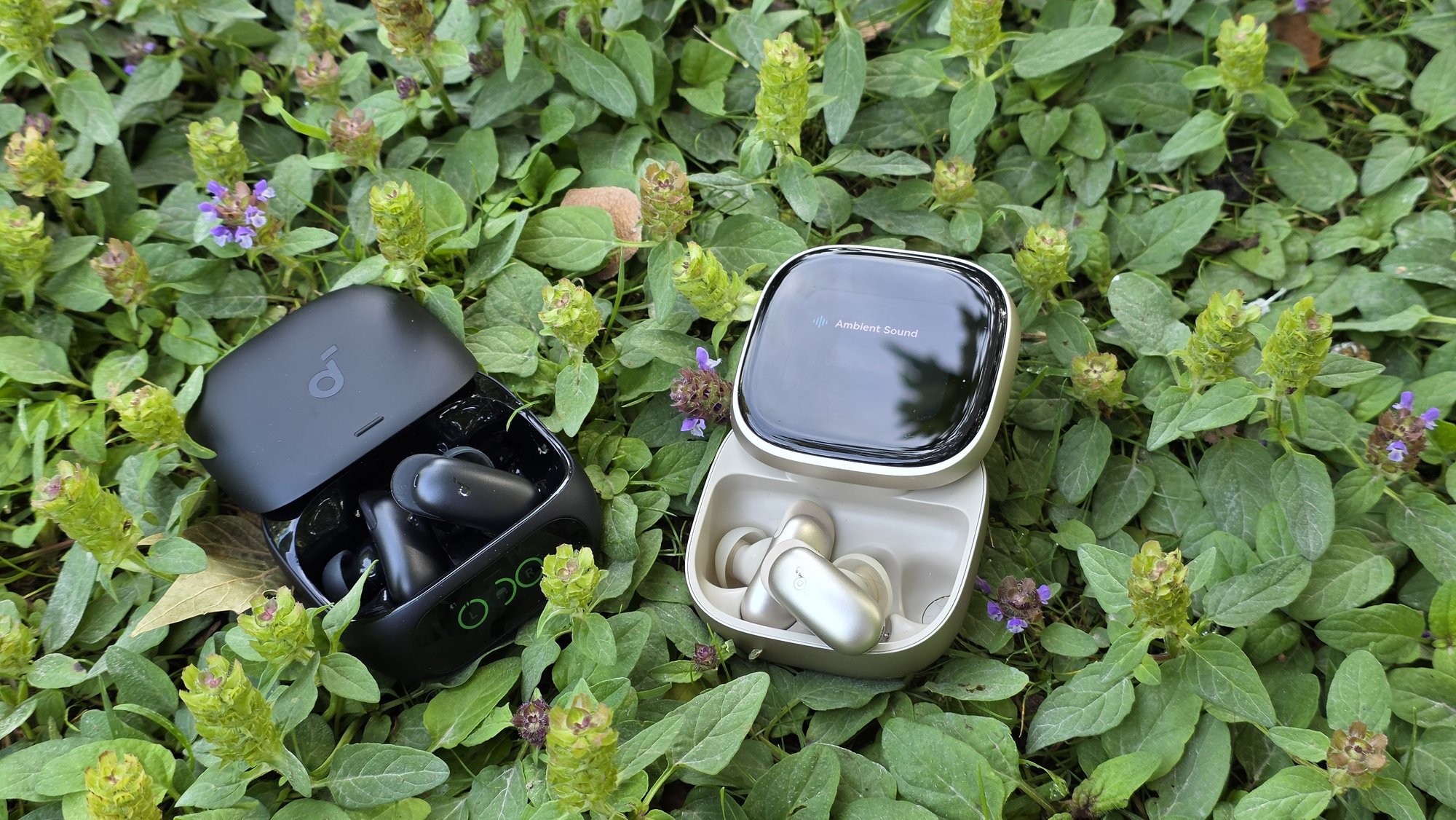
In practice, the autonomy of the Soundcore Liberty 5 Pro and Liberty 5 Pro Max, advertised at 6 h 30 with ANC and 12 h without ANC, holds true. We measured 6 h 45 and 11 h 45 respectively. The charging cases provide roughly three additional cycles in both cases, though their performance can vary. Indeed, the model paired with the Liberty 5 Pro Max, being more intelligent, can quickly drain its own battery for ancillary tasks, starting with audio recording. Consequently, the classic Pro model tends to be more enduring.
Listening Test: solid sound quality with a touch of sparkle
Both models, driven by a conventional-looking dynamic driver, deliver a powerful but not unbalanced sound by default, with a sole notable flaw—a slight excess of sheen beyond 10 kHz. In my ears, this translates to a touch too much brightness, the sense of over-boosted sparkle, and even a faint hiss. There’s also a bit of oscillation around 6-8 kHz, which can give the impression of a slight excess, particularly on female voices.
Overall balanced, with a few peaks and oscillations, the earphones’ sound is more than acceptable for headphones in this price range.
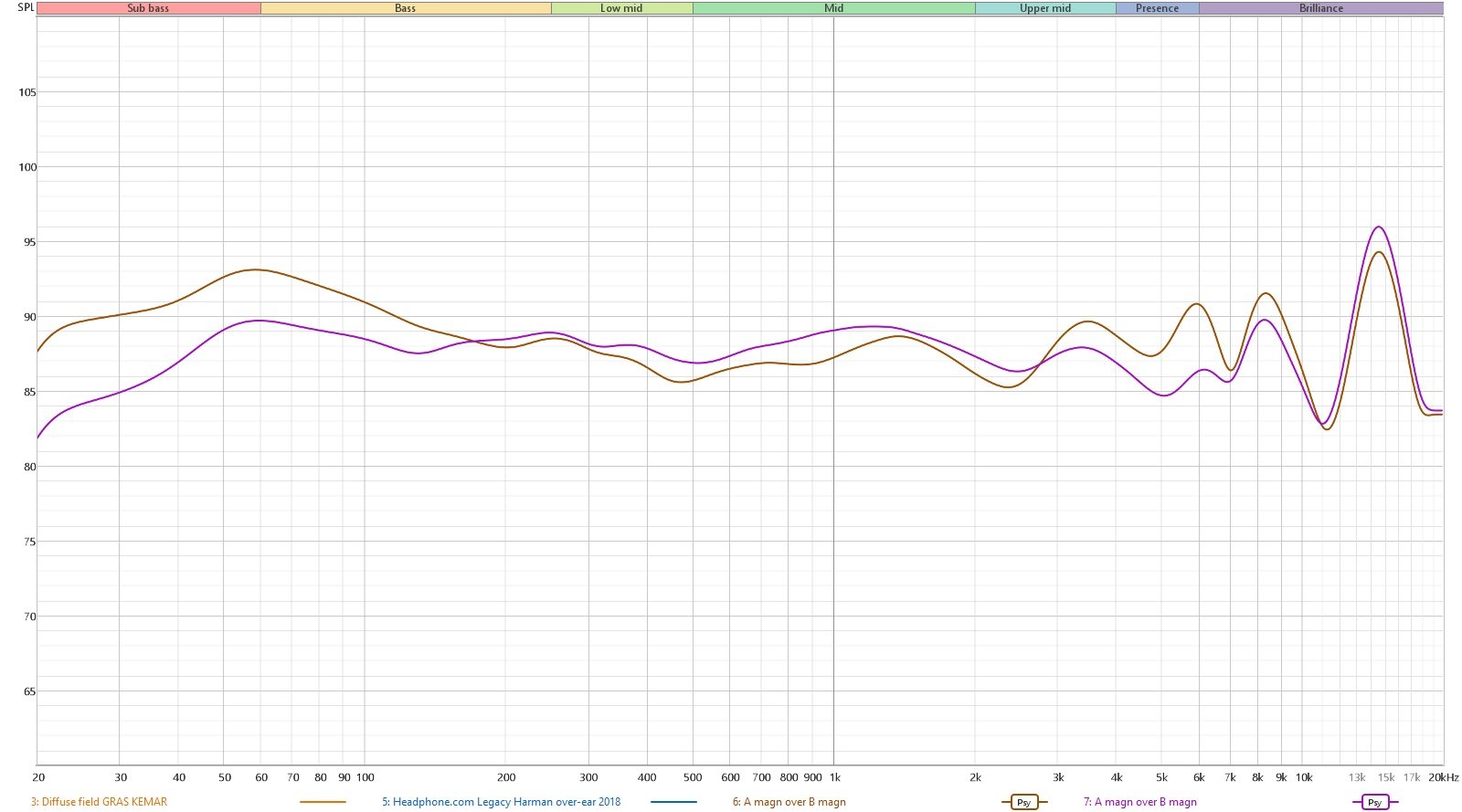
That said, Soundcore hasn’t fallen into the trap of an overly flashy signature. The bass boost adds body without rumbling the earbuds or encroaching on the voices. The earbuds produce a relatively simple, not aggressive sound, especially compared to rivals like the Huawei FreeBuds 5 Pro.
The sound is detailed and airy, with a solid technical baseline. Instrument separation is present, and instrument projection is sufficiently forward. As such, the earbuds are among the good performers, even when considering their relatively upscale orientation, although they remain a notch behind the Sony WF-1000XM6 in pure quality, which are more detailed, more open, and clearly have more nuance in the bass. The AirPods Pro 3, despite a signature less effective than the AirPods Pro 2, are also a bit above technically. Their closest rivals are probably the Samsung Galaxy Buds4 Pro, which are fairly balanced but with bass-forward response and a touch of sparkle. Samsung maintains, despite slightly smaller soundstage, better technical traits, slightly richer highs.
Our measurements are performed with a MiniDSP Ear Pro dedicated head, a semi-pro model close to the GRAS 45C system. We perform several measurements, with multiple head spacings, for a more complete result.
A quick note on the special audio modes, activable in the app (or via the case). The first, already present on older earbuds, creates a listening profile by listening to a track under different settings and comparing it to the ear. This allows, even to a neophyte, to obtain a more satisfying signature without touching the equalizer. A second mode, AI enhancement, leverages the brand’s new chip to “reconstruct” the signal lost by destructive codecs. A decent idea on paper, but technically anecdotal and energy-intensive. Finally, Soundcore offers a Dolby mode, which emulates a 3D sound, with or without head tracking. Unlike many competitors, Soundcore has managed to implement processing that is optional but not useless, because it’s never excessive. There isn’t that reverb effect coming from the back of a bathroom. Of course, its usefulness heavily depends on the track and content type (music or video).
Noise reduction/Transparency and calls: an unexpected performance
Very effective for an 180-euro product (the Pro version), the active isolation isn’t the market’s most impressive. Like Apple, Soundcore remains coherent: they do not aggressively push isolation on one frequency range if the work is skimpy on another. Attenuation is excellent in the basses, very good in the mids, and very good in the highs. We would have liked even more emphasis on voices, which remains the ceiling of active noise cancellation, but Soundcore Liberty 5 Pro and Pro Max don’t exhibit a huge hollow in the response, a feature of many models. Perhaps the Thus chip will allow, via updates, to do even better.
In Transparency mode, these Bluetooth earbuds also leave a very good impression. Aside from a slight drop in the highs, resulting in a touch of imprecision in the audio environment, there is nothing notable.
Noise reduction is effective because it’s regular, with no real spikes.

Daniel Brooks
I cover everyday products with a practical eye, from kitchen tools and home essentials to smart gadgets and consumer trends. My goal is to help readers understand what is genuinely useful, what is worth the price, and what deserves a second look before buying.