
When the moment arrives to spend money on an expensive product that must last, such as a household appliance, anything that helps in the purchase decision is welcome. And that is what OCU typically does: present its product recommendations based on their features. In this case, we will talk about noise in the home. You may not notice the sounds your appliances make during the day. Moreover, some noises are punctual, others are constant. For example, the sound of the refrigerator.
The fridge should always be plugged in to take care of your food, so considering noise is important when you buy. Because it is most annoying at night and can even disturb your sleep. That is why this list of the three quietest refrigerators can be of great help to you. And not only that, they also provide guidance on the most important aspects of this selection of three. Before continuing, do you know at what decibel level (dB) noise becomes bothersome?
- Quiet environment: less than 30 dB. The noise is barely perceptible, for example, footsteps while walking or the wind through the trees.
- Moderately quiet environment: 30 – 60 dB. In this case, the noise is soft, like speaking in a quiet voice.
- Noisy environment: 60 – 90 dB. Here it is akin to a normal conversation, the sound of traffic, or a vacuum cleaner.
The 3 Quietest Refrigerators According to OCU
Miele KFN 4795 AD Refrigerator
This refrigerator from Miele is, according to OCU, the quietest one you can currently find on the home appliance market. It is a very complete option, notable for its energy savings thanks to its low consumption; in case of a blackout, it keeps the food well; and the freezer does not require periodic defrosting. But what stands out most according to OCU is precisely that it is a high-quality refrigerator and that, despite its features, its noise level is especially low, at 34 dB.
In the overall rating they give this appliance, they score it 74 out of 100. The best-rated aspects are temperature stability, energy consumption, low noise, and brand reliability. Its height is 201.5 cm and its width is 59.7 cm, making it perfect for a family that needs to store a large amount of food. It is in energy class A, the highest on the market. The freezer is No Frost, which means no frost will form inside.
Frigorífico Hisense RB390N4BCC
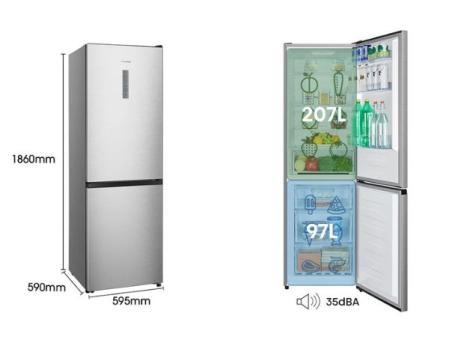
The Hisense RB390N4BCC refrigerator is the second quietest option OCU could find. It is also worth noting that the price difference with the first appliance is substantial, although the features also vary somewhat. The best aspects according to the consumer organization, besides the 35 dB of noise it produces, are that the food is adequately preserved in the refrigerator compartment; that it can freeze properly in all situations; and that the device is very easy to use.
OCU gives this fridge a score of 75 out of 100. The tests that scored best are refrigeration capacity, temperature stability, noise, and brand reliability. “It provides enough space to store the food of a family of 3 or 4 members thanks to its 186 cm height. Its width is 59.5 cm. It has a C energy class (the highest is A, while the lowest is G). The freezer is Frost Free, so no frost will form inside,” explains OCU.
Frigorífico Candy CQS5T918EWX1
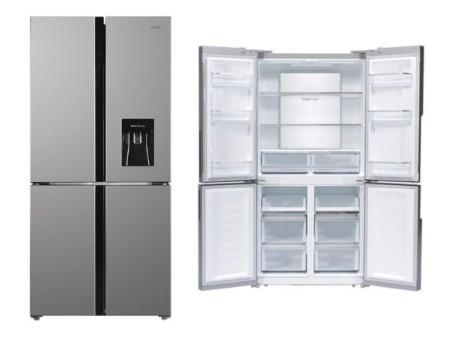
The third option proposed by OCU is an American-style model with two doors that open. It is from Candy and the noise it makes is only 37 dB. What stands out most about this appliance is that it provides enough space to store the food for a family of 3 or 4 members thanks to its 183 cm height; it is a very large model, with a width of 91.1 cm; and the freezer is No Frost, so no frost will form inside.
Overall, it scores 60 out of 100. The feature that rated best in OCU’s tests is its temperature stability and also the noise, in addition to the reliability of the brand. It is a very large model, with a width of 91.1 cm, and it has an E energy class, so it is not among those that help save the most.
What You Should Consider When Choosing a Refrigerator
1. Dimensions and Capacity
- Measure the actual width, height and depth of the space, and leave a few centimeters for air circulation so the motor doesn’t overheat.
- A family of four that eats at home usually needs around 300 liters of total capacity (about 230 L for the fridge and 70–80 L for the freezer).
- For larger families or very bulky shopping, American or side-by-side fridges exceed 400 L of fridge space and about 200 L of freezer space.
- In small apartments or singles, a compact combi or even a mini fridge may suffice.
2. Type of Refrigerator
- Freestanding (combination, two doors, American, side-by-side): offers more capacity and is cheaper than a built-in at equal performance.
- Built-in: can be panelled to blend with the furniture and become “invisible,” ideal for design kitchens but tends to be more expensive and with slightly less usable volume.
- Combi (top fridge, bottom freezer) is today’s standard for its balance of capacity, price and size (about 60 cm wide).
3. Energy Efficiency and Consumption
- It is the appliance that stays on the most hours, so energy efficiency is key to saving on the bill.
- Look for models with a high energy label (category B or better on the new scale, or older A+/A++), because they consume less electricity over their lifetime.
- A low annual consumption in kWh is a strong selling point for the end user and a good hook in affiliate content.
4. Cooling Technology and No Frost System
- Prioritize fridges with No Frost or frost-free technology: they prevent frost buildup and save you from having to defrost the freezer manually.
- Mid-range models nowadays usually include No Frost by default, but there are still some that require manual defrost and it’s better to avoid them.
5. Interior Layout and Ergonomics
- The interior layout is very important: number of shelves, fruit/vegetable drawers, door balconies and bottle racks determine how comfortable daily use will be.
- Glass shelves with a lip are advisable because they are sturdy, easy to clean and prevent liquid spills from spreading.
- Consider special drawers: “fresh” or 0°C for meat and fish, humidity control for fruits and vegetables, extendable or adjustable-height trays.
6. Noise, Design and Finishes
- Pay attention to decibels: in open-plan kitchens or studios, a quiet fridge greatly improves comfort.
- The finish (white, stainless steel, glass, black) and door design can be decisive when the fridge is a visual focal point in the kitchen.
- Models with interior LED lighting and an exterior panel to adjust temperature without opening the door add convenience and save energy.
7. Interesting Features and Extras
- External touch panel or LCD display allows you to regulate temperature, activate quick modes or set vacation mode without opening the door.
- Eco, vacation, super-freeze or super-refrigerate modes help optimize consumption and preservation.
- Water and/or ice dispenser, smart home connectivity and door-open alarms are valued extras in mid-to-high ranges.
- Advanced preservation technologies (like BioFresh drawers or other brands) extend the shelf life of delicate foods several days longer than conventional fridges.
8. Brand, Reliability and Warranty
- Brands with good reputations tend to offer better materials, more refined technology and lower failure rates, crucial for a device that can last 10–20 years.
- Always check the warranty (minimum legal and optional extensions) and the availability of service technicians in your area.
9. Ideas for Your Affiliate Content
- You can structure the article into sections such as “Capacity by Household Type,” “Savings on the Electricity Bill” or “Features That Are Worth It and Which Are Pure Marketing.”
- In comparison tables, combine hard data (liters, kWh/year, dB, cooling type) with 1–2 bullets of practical value (for whom it’s best, strongest point, main drawback).
Frequently Asked Questions About Refrigerators
What size refrigerator do I need?
Most four-person households that eat at home regularly need around 300 liters of total capacity, with about 230 liters for the fridge and about 70–80 liters for the freezer. If you do large shopping or there are many people, it makes sense to go up in size or consider an American model with more than 400 liters of fridge space and around 200 liters of freezer space.
What is better: a combi fridge, American, or two-door?
The combi (fridge on top and freezer below) is the most balanced format in standard size (about 60 cm wide) and price. American or side-by-side models are ideal for large families or for those who freeze a lot, because they offer a lot of capacity but take up more space and usually consume more energy.
What should I look at first when buying a refrigerator?
First, check the space available in the kitchen, measure width, height and depth, and ensure the doors will open properly. Then define the capacity you need based on how many people are at home and your shopping habits (whether you buy fresh daily or do bulk shopping weekly).
Why is fridge energy efficiency important?
The fridge runs 24 hours a day, so a more efficient model can lead to significant savings on the electricity bill over time. High energy-labels (categories higher than B on the new scale, or the old A+/A++) indicate lower annual consumption in kWh than less efficient models.
What is No Frost technology and is it worth it?
No Frost prevents frost from forming in the freezer and defrosts automatically, saving time and keeping the interior temperature more stable. Today it is a highly recommended feature since it eases maintenance and usually comes with better cold control inside.
Static cooling or No Frost, which should I choose?
Static cooling is typically cheaper and can preserve foods well if you don’t open the door too often, but it forms frost and requires manual defrosting. No Frost is more convenient because it avoids ice, maintains temperature more evenly, and is the most common system in mid-to-high-range models.
How do I know if the interior capacity will be enough?
In addition to looking at total liters, check the usable volume of the fridge and freezer separately, because two models with the same exterior size can have different interior capacity. Also pay attention to shelf distribution, drawers and door balconies to see if it fits the foods you buy.
What level of noise is acceptable in a refrigerator?
In open-plan kitchens or small apartments, it’s wise to look for quiet models, paying attention to the decibels listed on the technical sheet. A quieter refrigerator improves daily comfort and can make a difference if you spend a lot of time near the kitchen.
Which extras are really useful?
Features such as vacation mode, super-freeze, independent temperature control and an LCD display on the door simplify use and optimize consumption. Also handy are special drawers for fruits and vegetables with humidity control, a 0 °C drawer for meat and fish, and extendable shelves.
Is an integrated fridge better than a freestanding one?
An integrated fridge can be panelled to blend with the cabinetry and achieve a uniform look in the kitchen. Freestanding models typically offer more capacity for the same price and easier installation, though they may protrude slightly from the cabinet line.
How often should you replace a refrigerator?
The typical lifespan is between 10 and 15 years, although some last longer if well cared for. It may be worth replacing earlier if the fridge is very old and inefficient, because energy savings can be substantial.
How should I maintain the fridge to extend its life?
Regularly clean the interior, avoid blocking ventilation grills and don’t push it too close to walls or furniture to allow air to circulate. Also help regulate the temperature (about 3–5 °C in the fridge and -18 °C in the freezer) and avoid overloading it.
What’s the difference between a cheap fridge and a high-end one?
High-end models typically excel in energy efficiency, material quality, advanced preservation technology and noise levels. The most basic models do their job, but they may consume more, offer fewer extras and have simpler construction.