
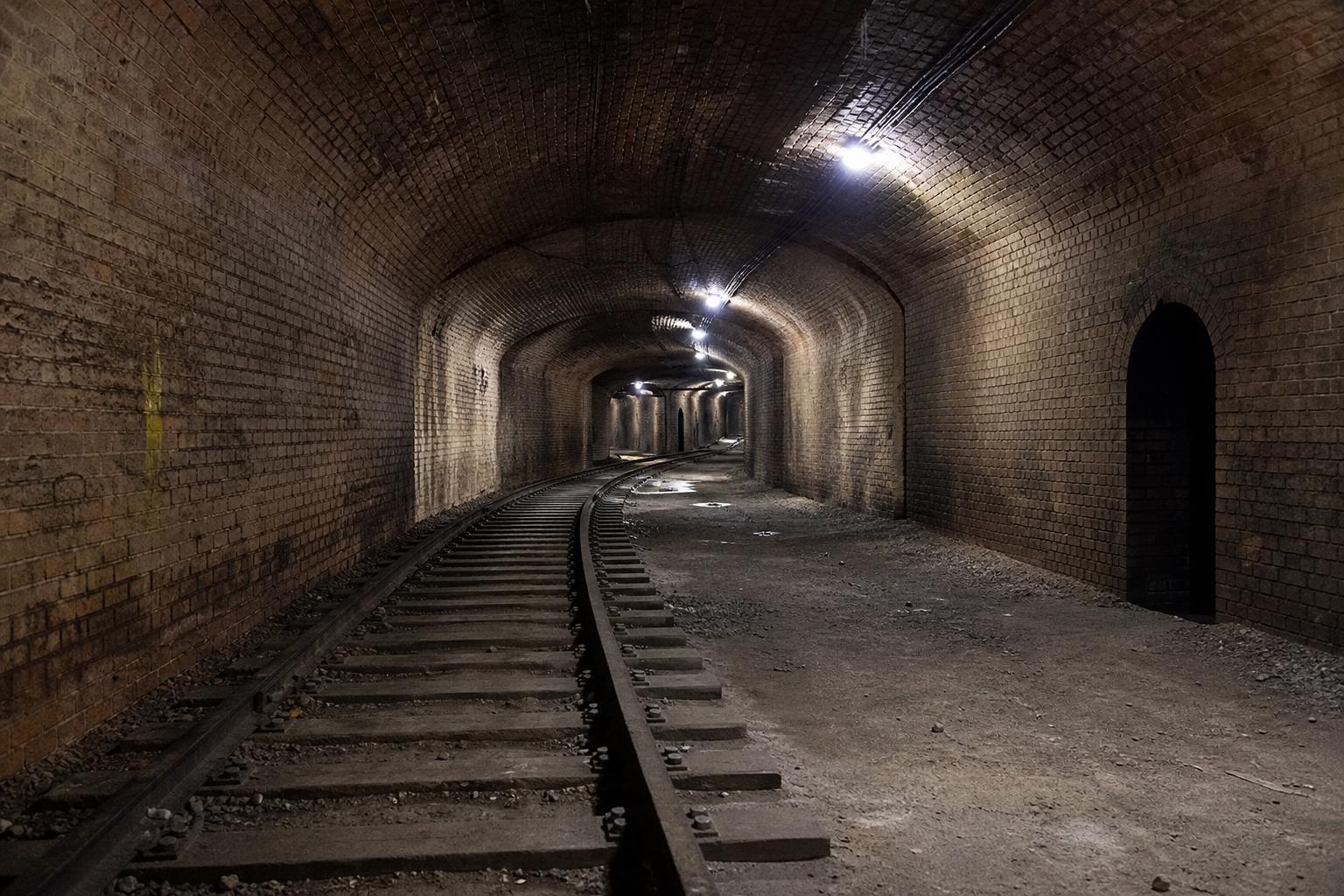
Beneath Cincinnati’s busy avenues, a dark ribbon of concrete sits in perpetual pause. In the cool hush below Central Parkway, tiled platforms and wide arches wait for a train that never comes. It feels both near and impossibly far: a civic dream sealed in time, a relic so intact you can almost hear brakes squeal, yet so silent you can count your breaths.
The canal that became a corridor
Long before steel rails, the Miami-and-Erie Canal carved a watery spine through the city. As the canal withered, planners saw a ready-made right-of-way, a straight trench begging for a modern fix. Voters approved bonds in the 1910s, and by the roaring 1920s, crews were lowering forms, pouring arches, and laying the bones of a system meant to loop the city and release the streets from gridlock. In that moment, it seemed both obvious and unstoppable: Cincinnati would join the subway age, with stations tucked neatly beneath a new boulevard.
A pause that became permanent
Then came the slow unraveling: postwar inflation spiked costs, estimates tumbled into overruns, and political will, so bright at first, began to flicker. Automobiles surged, reshaping habits and hollowing the promise of fixed-rail investment. “The money ran out, the will ran out, and time ran on,” as locals sometimes say. Construction stalled in the mid-1920s and never cleanly resumed; by the time recovery beckoned, other priorities had planted deeper roots. The project wasn’t spectacularly defeated so much as gradually abandoned, paperwork in one pile, concrete in another, and a future left unaligned with the past.
What remains in the dark
If you could step inside, you’d find corridors surprisingly broad, walls still plumb, and platforms that look stubbornly serviceable. The geometry is elegant in a pragmatic way: vaults that curve just so, niches for signals, and trackbeds poured to exacting grades. Moisture breathes through joints, but the place is more bunker than cave, more dormant infrastructure than decayed ruin. Graffiti tags bloom in color, small reminders that the city’s pulse has a way of seeping through. In places, modern utilities share the space, a grudging proof that even paused projects can be quietly useful. Some residents call it a “train to nowhere,” but in truth it’s a train to a different 1920s—one that never quite arrived.
The pull of an unfinished story
Part of the tunnel’s power is narrative: it sits at the crossroads of ambition and delay, where great ideas meet calendar and cash. Unfinished works spark curiosity because they leave a blank where the ending should be, a space for listeners to project their own answers. The city’s identity, long balanced between Midwestern steadiness and restless innovation, finds a mirror in that emptiness. You can read it as cautionary tale, as buried treasure, or as civic palimpsest, where one century’s hope peeks through the next century’s pavement. The tunnel says, without speaking, that plans are fragile, and timing is the most ruthless engineer of all.
Futures that have circled the platform
Over the decades, proposals have cycled in and out, mapping new dreams onto old concrete. Each idea asks the same question: how do you honor what’s there, while serving what the city needs now?
- A preserved walking museum, an art-and-history gallery, an emergency conduit, or a revived transit spur linked to modern lines—all pitched with varying costs and public appetite.
None has cleared the twin hurdles of funding and political momentum. Security is a concern, maintenance isn’t free, and every dollar has a louder, more urgent use above ground. Yet the file never fully closes; in city hall and coffee shops, the idea keeps breathing.
What the quiet teaches
Stand at a sealed portal, and you feel two clocks ticking. One measures rebar, seepage, and the slow patience of material. The other measures public attention, election cycles, and shifting needs. The gap between them is where big projects live or die. You learn that a system can be sound and still be impossible, that a blueprint can be right for the wrong decade, and that “not now” often becomes forever. Yet there’s also grace here: proof that cities can adapt, that even halted work can find new functions, and that memory itself is a kind of infrastructure we carry forward.
The city above, the city below
Walk Central Parkway today and traffic hums over a hidden artery of might‑have‑been. Restaurants light their windows, cyclists slip through green signals, and the sidewalks cast their familiar rhythm. Underfoot, the tunnels keep their truce with time, neither crumbling nor awakening, a quiet chapter in a very loud book. “Cities are promises you negotiate,” someone once wrote, and this promise remains half kept: the corridor exists, the trains do not. Perhaps that’s why the place feels so alive in memory—because it holds a future just barely out of reach, whispering from beneath the wheels.