
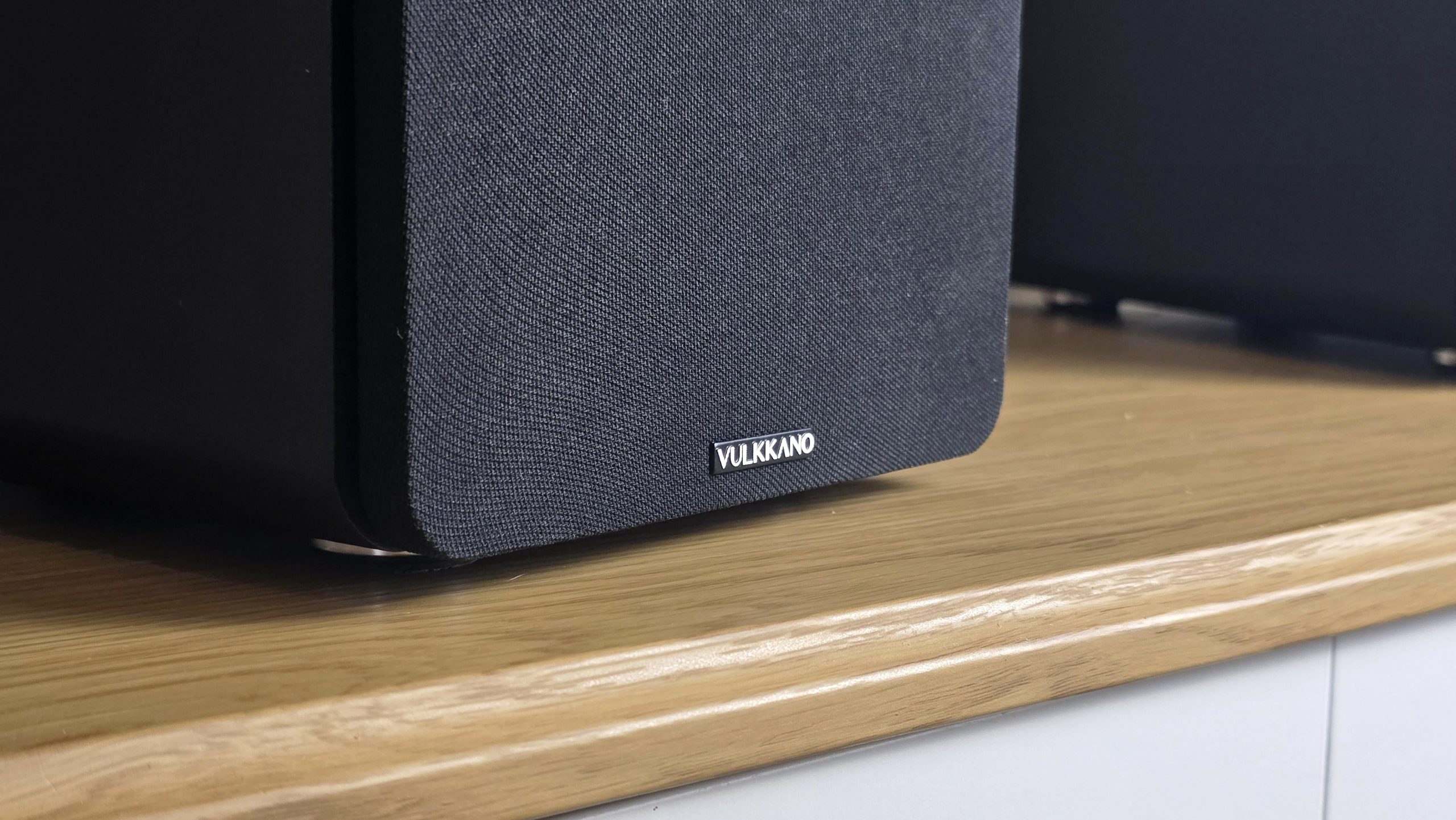
The VULKKANO A5 ARC MKII are bookshelf active speakers designed to multiply their uses, from desk work to the TV, including a vinyl turntable or a portable source. This second generation brings several targeted evolutions, notably a new amplification stage, a redesigned DSP, a USB-C Audio input, and a few finish refinements.
The original A5 ARC had already convinced us with their versatility, their equipment, and their value for money, despite a few clearly identified limitations in use. A light hiss remained audible in near-field, their performance at high volume could be better, and the absence of a true USB Audio input seemed hard to justify on speakers so well-suited for a desk.
With the A5 ARC MKII, VULKKANO does not completely reinvent the recipe. The manufacturer seems to have addressed, point by point, several criticisms directed at the first generation to offer a more mature version. It remains to be seen whether these evolutions are enough to make a real difference in listening and in daily use.
8 / 10
Best prices
amazon.fr
- Equipment/price ratio remains convincingly strong
- Low background hum
- Better handling at high volume
- USB-C Audio now present
- Bass better controlled
- Extensive connectivity
- Resolution still limited
- Separation not ideal on complex tracks
- Creaks that still lack finesse
- Little incentive to replace the original A5 ARC
Well-targeted evolutions
At first glance, it’s hard to call this a revolution. The A5 ARC MKII remain very close to their predecessors in both philosophy and size. That’s fortunate: the first A5 didn’t really need a complete rethink.
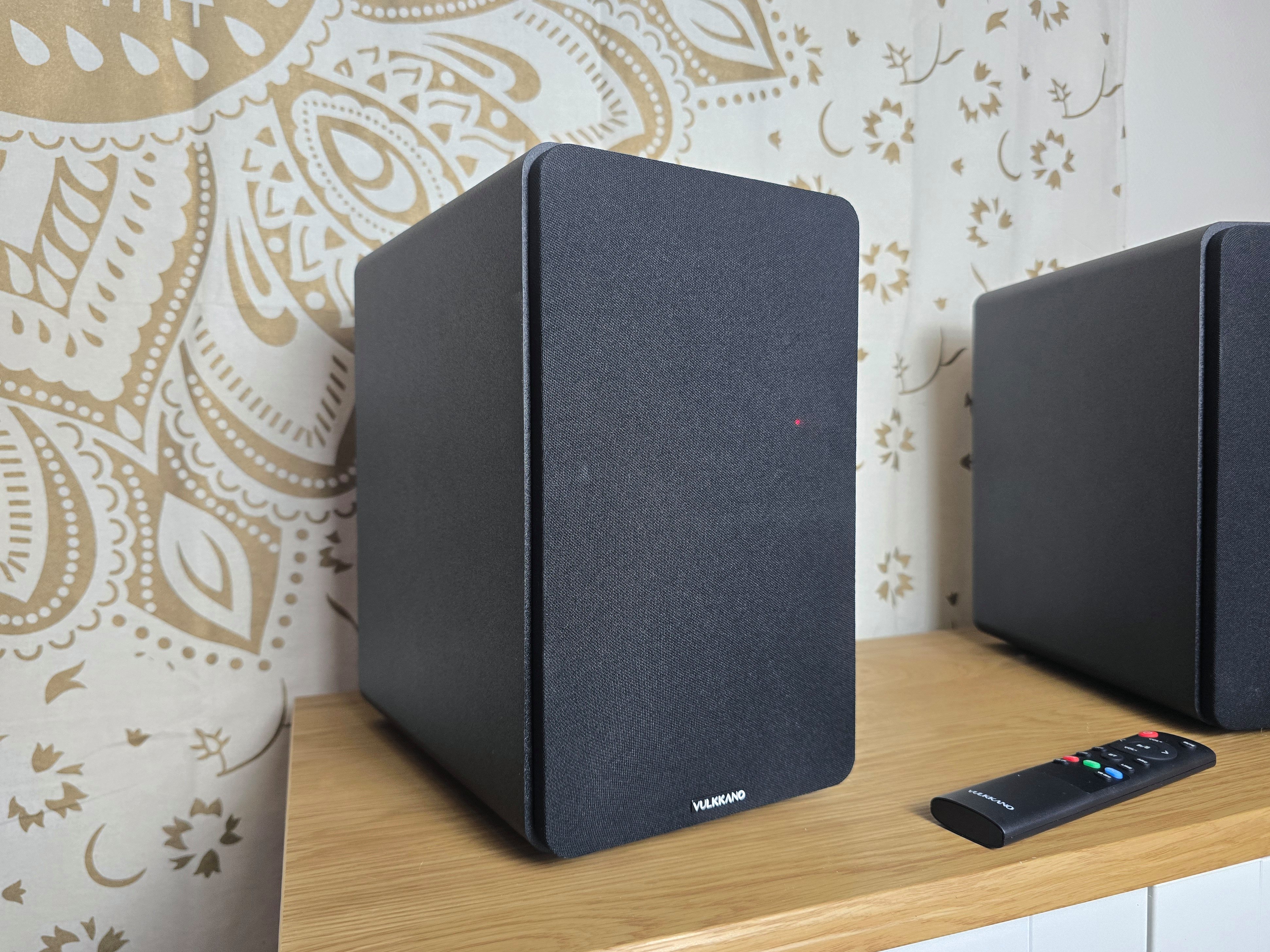
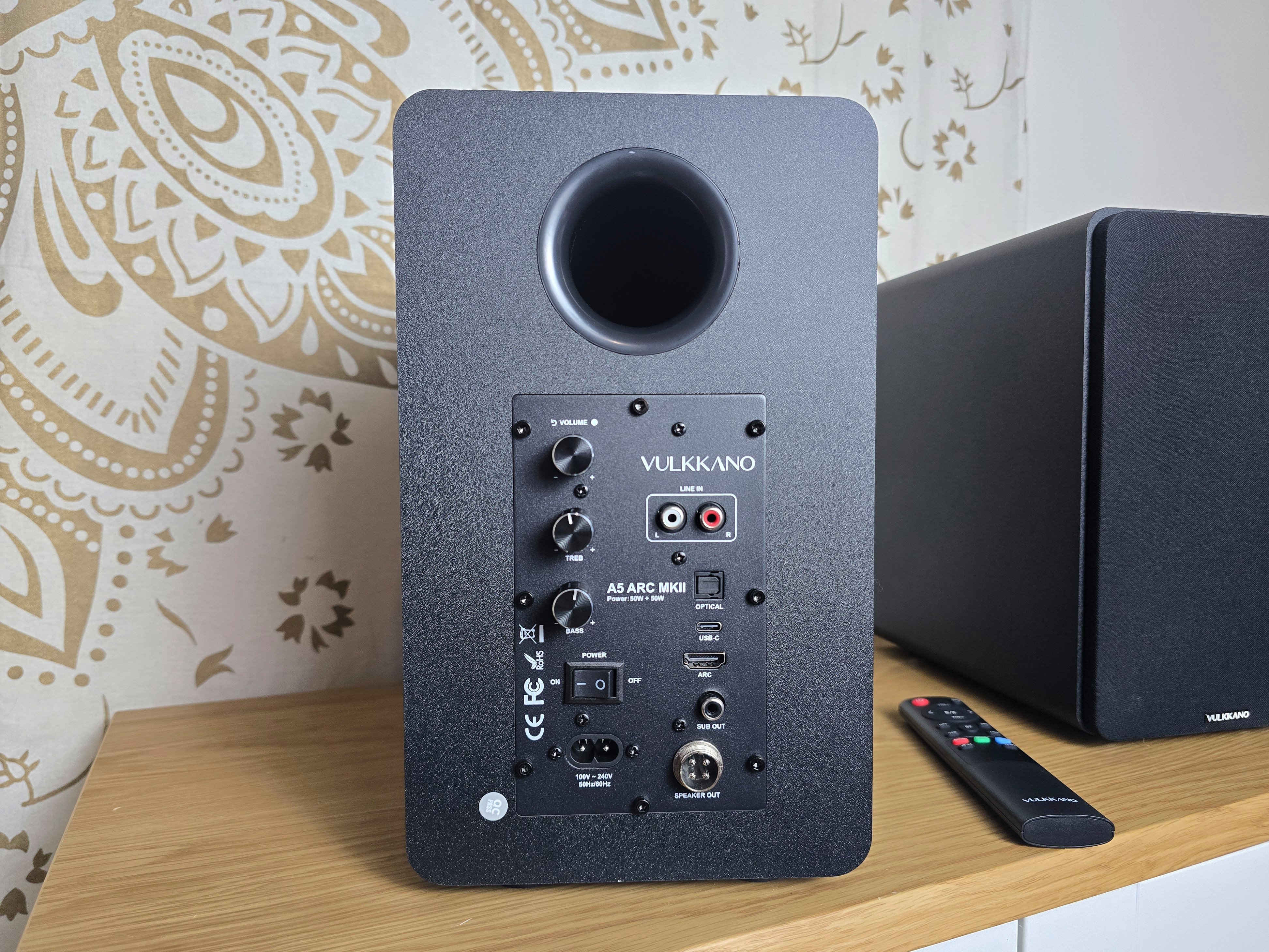
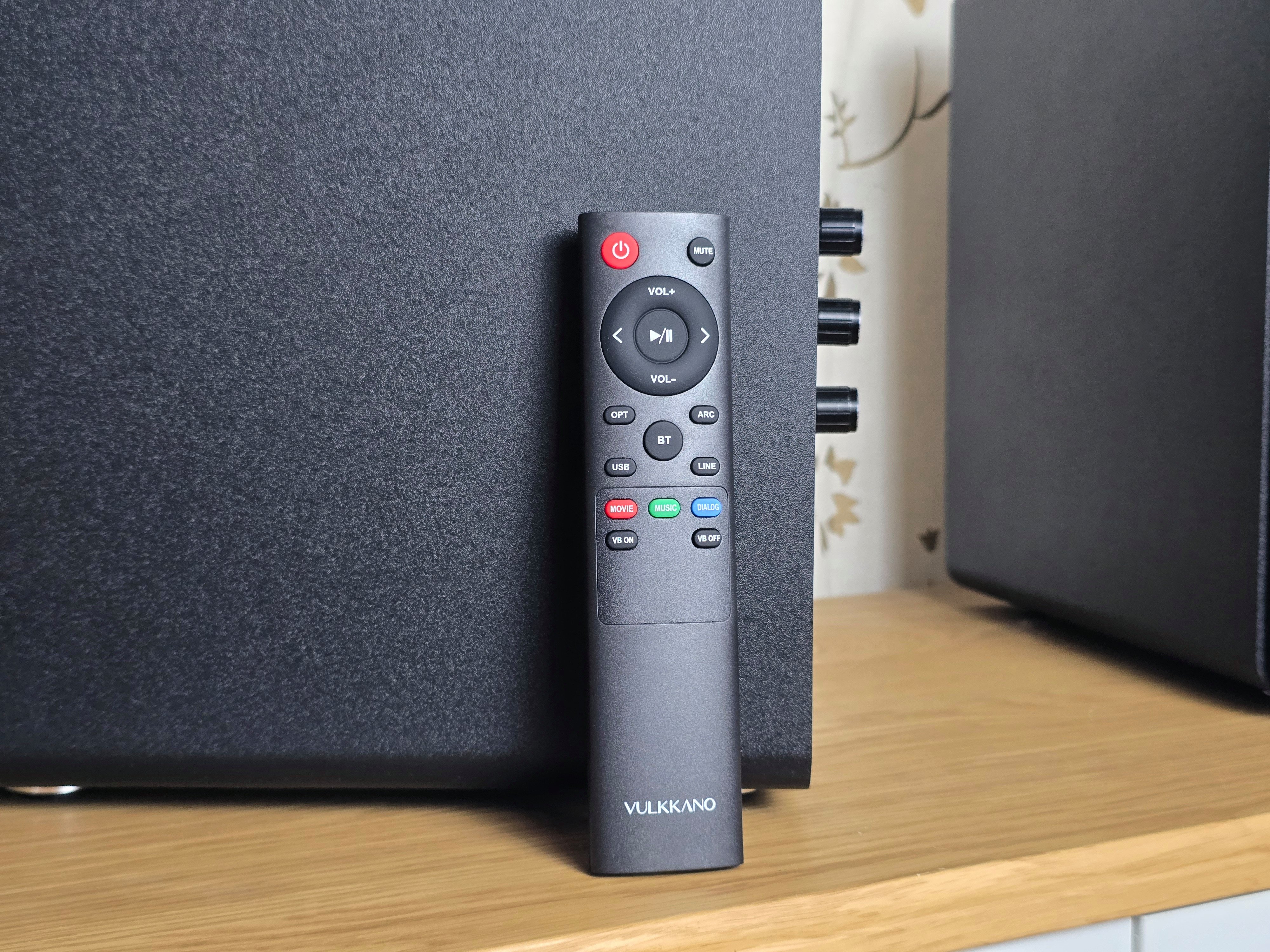
VULKKANO has focused on the aspects that deserved evolution. The grills are now magnetic, which slightly improves presentation and avoids the visible fixings of the previous generation. More importantly, the internal electronics have evolved with a new Class D amplification stage. The stated power remains 100 W RMS, paired with a 5.25-inch woofer and a 25 mm silk-dome tweeter. The DSP retains several listening profiles, while Bluetooth moves to version 5.3, still with SBC codec support only.
Another important novelty concerns USB-C Audio. In the first A5 ARC, the USB port did not allow using the speakers directly as an audio peripheral from a computer. That was a drawback given their desk-friendly footprint.
This shortcoming is now corrected. Connected via USB-C to a computer, the A5 ARC MKII are recognized directly as an audio peripheral, with no special configuration. The practicality is the main benefit: a single cable can carry the digital signal to the DAC integrated in the speakers, making their use on a desk notably more natural than with the previous generation.
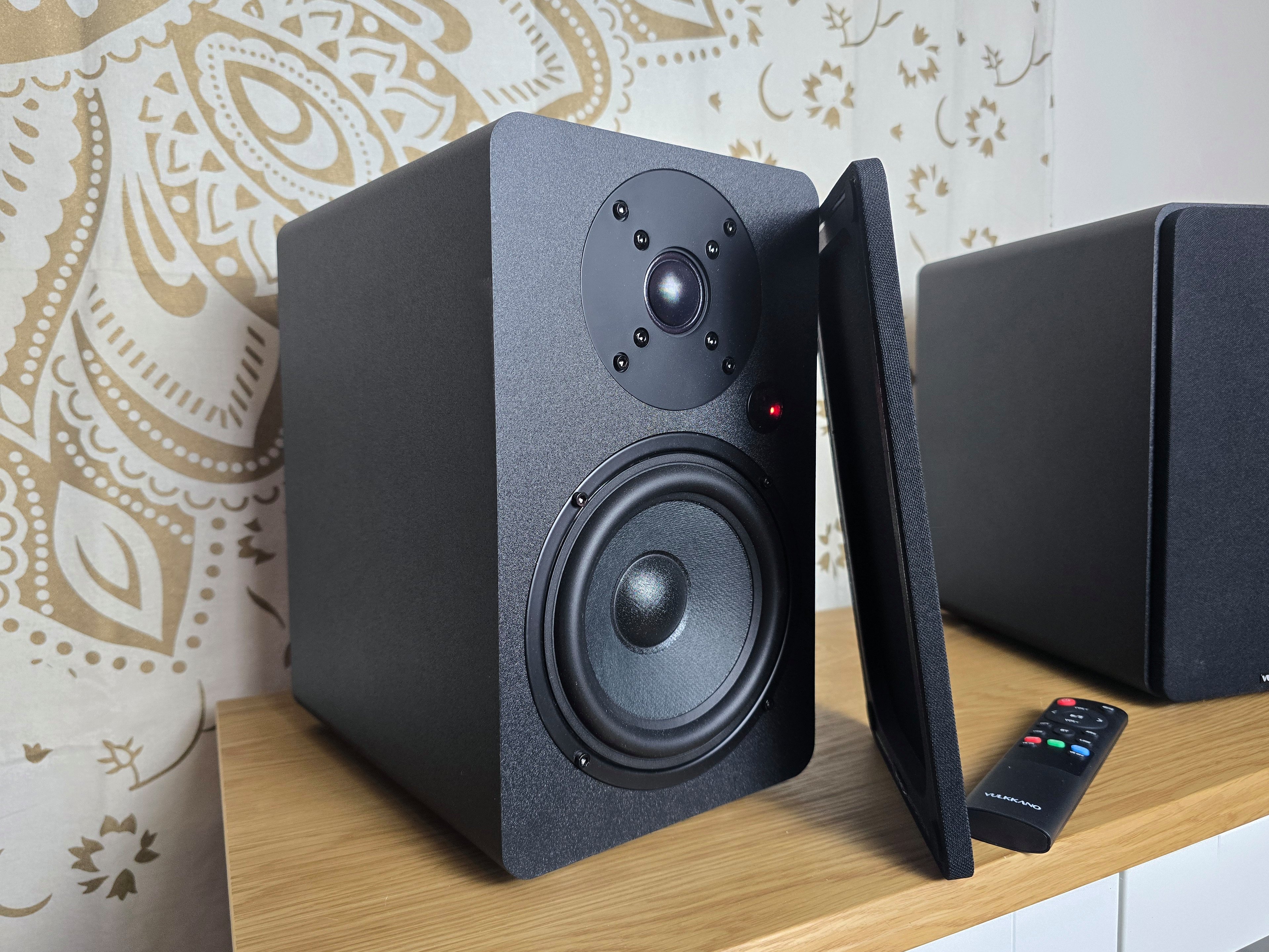
The HDMI ARC remains, for its part, one of the main arguments of the range. Connected to a television, the speakers can be used as a stereo alternative to a soundbar, with volume control from the TV remote. A simple use, but coherent with the very versatile positioning of the A5 ARC MKII.
Taken separately, none of these changes is truly spectacular. Put together, they nevertheless make the MKII more coherent with the uses they are designed for.
Listening tests: VULKKANO corrects several flaws
That’s where the evolutions become interesting. The first noticeable change is in near-field use: the background noise has significantly diminished. This was one of our main criticisms of the original A5 ARC, where the faint hiss remained audible at close distance when the music stopped.
The new amplification module also improves things considerably. Silence is never absolute on this type of active speaker, but the residual noise becomes much more discreet and far less noticeable when they are placed on a desk.
The new amplification also brings a bit more calm when you push the volume. The original A5 tended to lose their swagger at high levels, with a response that would compress gradually and distortion that became more perceptible.
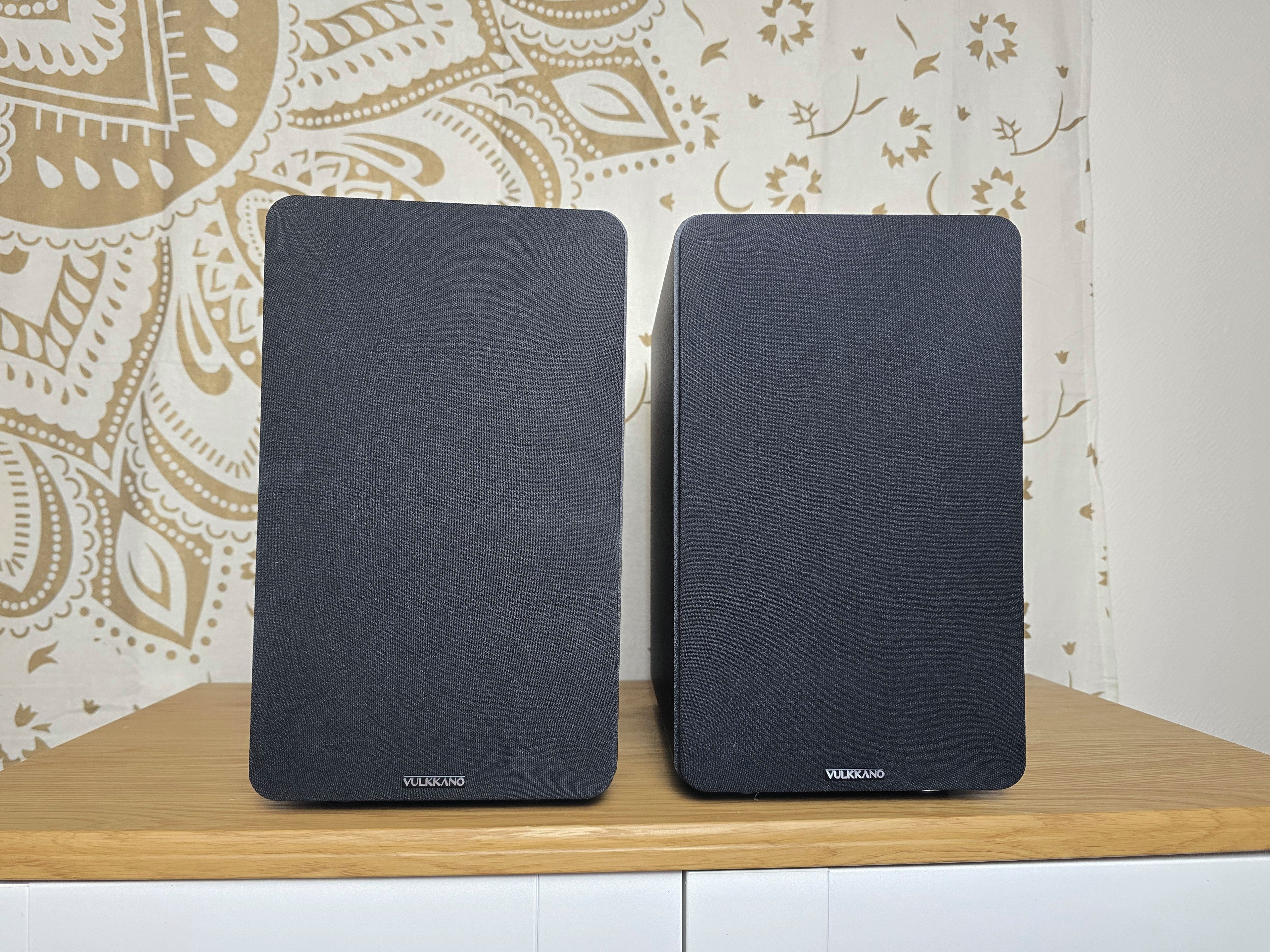
The MKII handle the exercise better. They are not, however, speakers intended to fill large rooms, but they keep their balance longer as the level rises. It’s a fairly clear improvement, contributing to giving the whole system more headroom.
Bass also benefits from this perceptible refinement. The first generation showed a slight emphasis in this region of the spectrum, pleasant at low volume but sometimes a bit too prominent depending on the track. The MKII seem better at controlling this energy, without aiming for a particularly dry or analytical reproduction.
The result thus preserves part of what gave the A5 ARC its charm: generous bass for the size, but with a slightly better-balanced overall character.
A sound signature that remains familiar
For the rest, differences are noticeably subtler. The treble remains very close to that of the previous generation. It continues to favor a relatively soft, non-fatiguing, and rarely aggressive presentation. It’s an approach that works well for long listening sessions and easily forgiving toward somewhat harsh recordings.
In return, the A5 ARC MKII still do not offer the finesse or airiness found in more ambitious speakers. The tweeter does its job adequately, but without trying to extract the slightest detail from the recording. The same goes for instrument separation. On relatively simple tracks, the reproduction stays legible and the different planes stand out properly. As the arrangement becomes denser, though, the limits become more apparent. Instruments start to overlap more, and the soundstage loses a bit of precision. Depth remains fairly limited when several sonic layers must coexist. This was already the case with the first A5 ARC, and the MKII don’t really change things on this point.
This observation helps place these speakers in the market. Despite improvements in amplification and signal processing, the A5 ARC MKII do not become compact audiophile monitors capable of analyzing a recording to its finest details.
Their ceiling remains overall resolution, timing, and especially their ability to untangle complex arrangements. Very busy tracks or those demanding precise rhythm quickly reveal these limits.
But these criticisms must be weighed against the price. The A5 ARC MKII evolve within a category where versatility, equipment, and ease of use likely matter more than seeking surgical restitution.
The A5 ARC MKII are launched at €189.99, slightly less than the original A5 ARC’s €199.99 price. The original models are now offered around €160, which reintroduces a roughly €30 gap between generations.
Vulkkano A5 ARC test: complete, efficient and affordable active speakers
Clubic’s verdict on the Vulkkano A5 ARC MKII
VULKKANO evolves its A5 ARC where it really counts. The background noise is better controlled, high-volume handling improves, and the bass gains a touch more control. Most notably, USB-C Audio finally fills a clear gap for PC use, while HDMI ARC continues to hold its relevance with a TV.
However, the overall sonic presentation does not change dramatically. The treble remains fairly tame and complex tracks still reveal limits in resolution, separation, and rhythmic precision. The MKII thus stay more as versatile, well-equipped speakers than as models capable of extreme finesse or analytical prowess.
For existing A5 ARC owners, upgrading to this new generation does not seem essential. For a new purchase, however, the MKII appears to be the most logical choice: they preserve the good points of the original while addressing several of its major shortcomings, without blowing up the price.
Clubic’s verdict on the Vulkkano A5 ARC MKII
VULKKANO evolves its A5 ARC where it really counts. Background noise is better controlled, high-volume behavior improves, and the bass gains a touch more control. Notably, USB-C Audio finally fills an obvious gap for PC use, while HDMI ARC remains fully relevant with a TV.
However, the reproduction does not radically change in dimension. The highs stay fairly modest and complex pieces still reveal limitations in resolution, separation, and rhythm accuracy. The MKII thus remain more versatile, well-equipped speakers than units capable of achieving a high level of finesse or analysis.
For owners of the first A5 ARC, moving to this new generation does not seem indispensable. For a new purchase, however, the MKII appear as the most logical choice: they preserve the qualities of the original model while correcting several of its main faults, without inflating the price.
Pros and cons
The A5 ARC MKII are launched at €189.99, slightly less than the €199.99 asked originally for the first A5 ARC. The former models are now offered around €160, which reestablishes a roughly €30 gap between generations.
Test Vulkkano A5 ARC: complete, efficient and affordable
Clubic Test: Vulkkano A5 ARC MKII — verdict
The Vulkkano A5 ARC MKII improves where it counts. The background noise is better controlled, high-volume stability is better, and the bass is more controlled. Above all, USB-C Audio finally fills a clear gap for PC use, while HDMI ARC remains valuable when used with a television.
Still, the reproduction doesn’t dramatically shift in scale. Treble remains relatively restrained and complex tracks continue to reveal limits in resolution, separation, and rhythmic precision. The MKII remain more versatile and well-equipped than high-fidelity pursuit machines.
Bottom line

Daniel Brooks
I cover everyday products with a practical eye, from kitchen tools and home essentials to smart gadgets and consumer trends. My goal is to help readers understand what is genuinely useful, what is worth the price, and what deserves a second look before buying.