
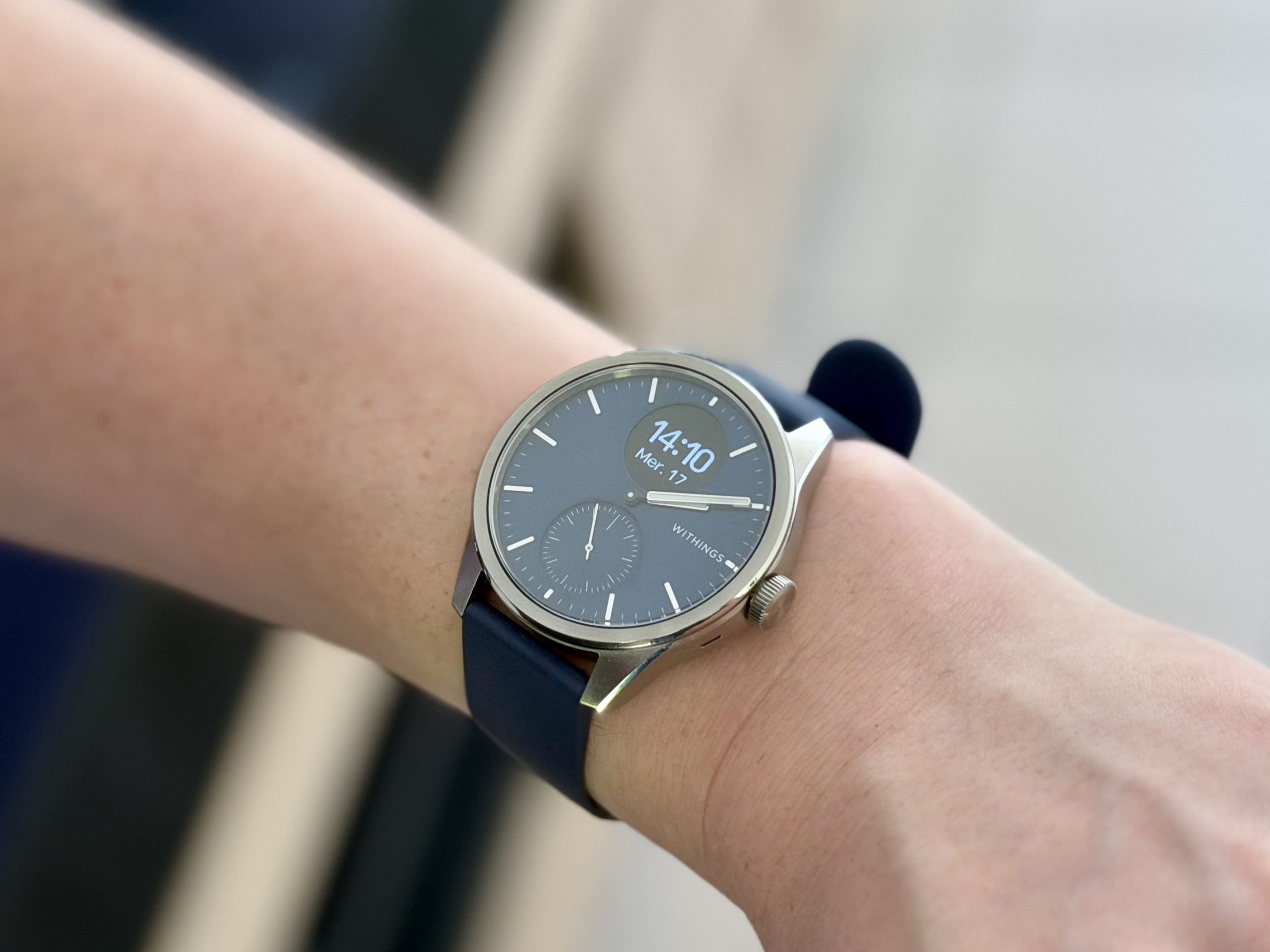
Withings returns with the ScanWatch 2, the new version of its hybrid connected watch. Its most discreet novelty, a permanent body temperature sensor, is paired with a far broader ambition: to bring artificial intelligence into daily health monitoring. An ambition that does not always live up to all its promises.
Withings has, for years, pursued a single idea: put health on the wrist without the flashy theatrics of typical smartwatches. The ScanWatch 2 stays true to that principle. This new iteration, which we had already tested a few years ago, reprises almost exactly the design that made the previous version a success: a hands-based dial, a steel and titanium case, and sapphire glass. On the outside, it looks like an ordinary watch, and you could almost forget it is packed with sensors.
But the real evolution of this generation is less visible. It lies in a new temperature sensor and, above all, in a new software approach. With Withings Intelligence, its AI coach integrated into the Withings+ subscription, the French brand aims to transform a data-collecting watch into a watch that explains the data. I wore the ScanWatch 2 for several weeks, day and night, to see whether this new version delivers on its promises on the wrist.
Test conducted on a unit lent by the manufacturer.
Design and Build: a watch that hides its true character
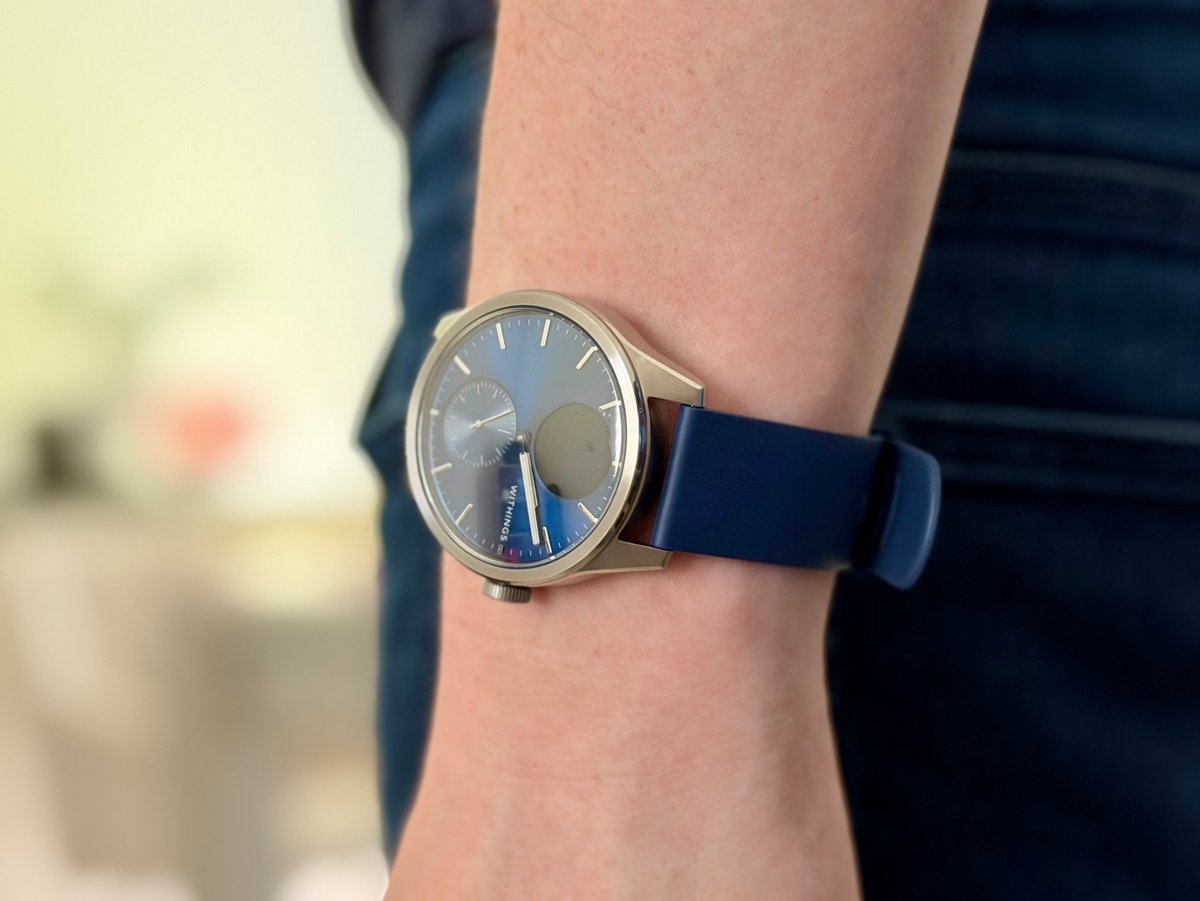
This is arguably the ScanWatch 2’s strongest suit: it does not look like a smartwatch. In the 42 mm version and blue color, it is a genuine watch—elegant and discreet, the kind you wear without feeling like you’re lugging a piece of technology on your wrist. In fact, during my weeks of testing, no one asked me what that watch was, unlike the Huawei or Apple Watch models I’ve worn in the past.
The dial with hands, the stainless steel and titanium case, and sapphire crystal convey a distinctly traditional watchmaking ethos. Withings has understood that not everyone wants a blinking touch screen on the wrist, and that is precisely what sets it apart in the market.
On wear, it is flawless. The watch is light, almost forgettable on the wrist, even at night, which is a real asset for sleep tracking. No discomfort, no bracelet snagging: you wear it 24/7 without thinking about it, which is exactly what you want from a device designed for continuous monitoring.
The crown, a mechanical rotating knob, is a pleasure to use and allows scrolling through information on the small circular screen. The monochrome OLED screen handles essential data—heart rate and step count—but it remains limited when you want to go further. Notifications, for example, scroll horizontally in a long, somewhat awkward way. To be frank, I found myself rarely consulting the screen: it feels far from the intuitiveness of a touchscreen, and the watch is primarily a sensor feeding the app, not a display you interrogate.
Usage: health comes first
This is, of course, the core of the ScanWatch 2, and it justifies its existence. The watch houses a small battery of sensors at the wrist: heart rate, ECG, SpO2, respiration rate, and now body temperature. There is almost nothing missing for a comprehensive view of one’s current fitness, and, for the long term, a complete health snapshot.
The big novelty of this version is precisely this temperature sensor. Withings has gone beyond a simple probe: the TempTech24/7 module combines four sensors (thermistor, heat flux, PPG, and accelerometer) to drive an algorithm that reconstructs body temperature. The app then establishes a personal reference baseline and alerts if there is a notable variation. In practice, this isn’t data you check every ten minutes, as it wouldn’t be meaningful. Its value lies in the long term: spotting unusual variations, anticipating the onset of illness, or simply better understanding how your body fluctuates over time.
Regarding reliability, I compared the ScanWatch 2 readings with those of my Apple Watch throughout the test. The verdict is reassuring: heart rate, SpO2, and general data are perfectly consistent across devices. Even better, sleep tracking felt more accurate on the Withings, which is notable given how much this metric varies across manufacturers. The analysis, based on movement and heart rate, clearly distinguishes sleep stages and accounts for naps.
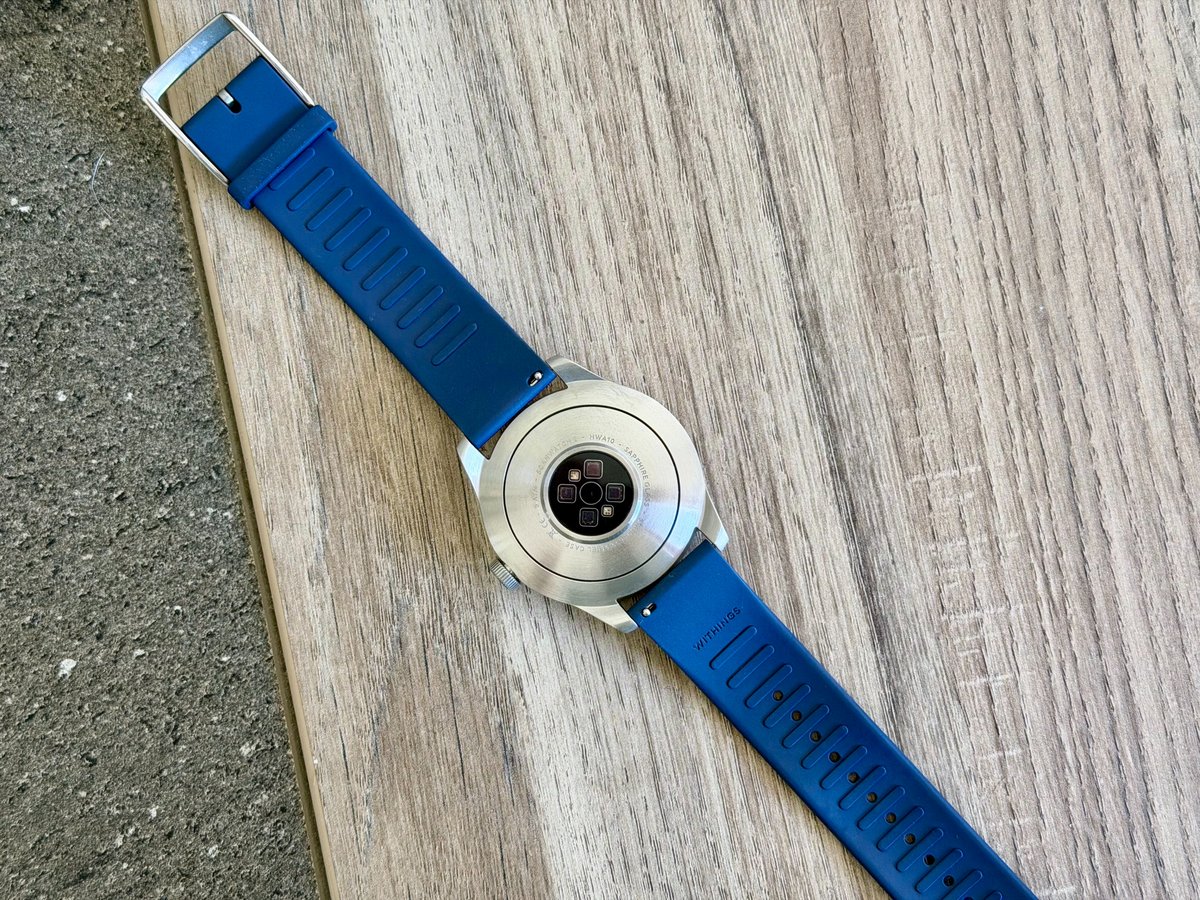
The standout novelty here is indeed the temperature sensor. Withings did not stop at a simple probe: the TempTech24/7 module fuses four sensors (thermistor, heat flux, PPG, and accelerometer) to feed an algorithm that reconstructs body temperature. The app then sets a personal reference baseline and raises an alert for notable deviations. In practice, this isn’t data you consult every few minutes; its value is realized over the long term: detecting unusual variations, anticipating illness, or simply better understanding your body’s fluctuations.
In terms of reliability, I cross-checked the ScanWatch 2 readings against those from my Apple Watch during the entire test. The verdict is reassuring: heart rate, SpO2, and general data are perfectly consistent between devices. Even more, the sleep tracking felt more precise on the Withings, which is notable given how variable this measure can be across manufacturers. The analysis, based on movement and heart rate, does a good job distinguishing sleep phases and accounts for naps.
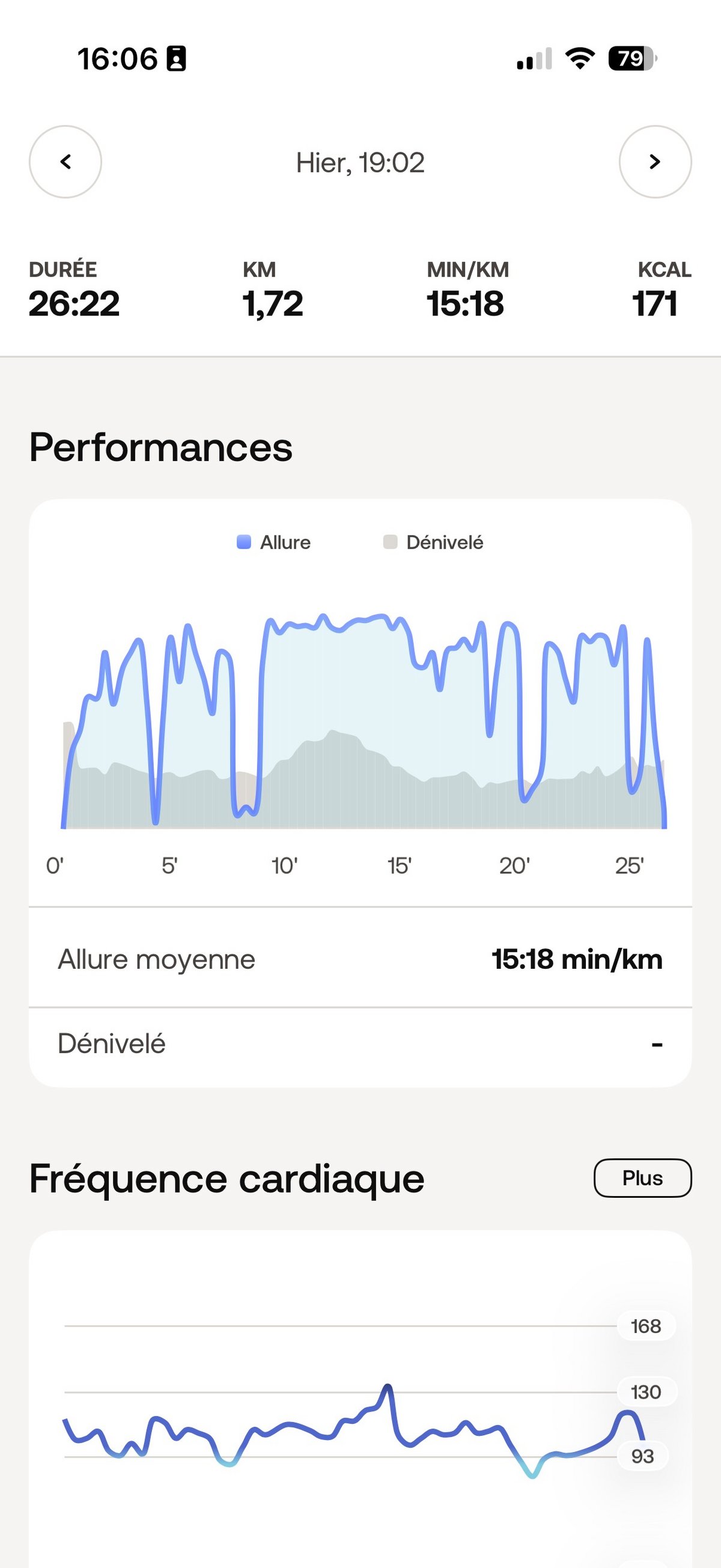
For data viewing, you simply twist the crown, then rotate to display information on the small circular screen. To be completely honest, I quickly abandoned this gesture, except to check my step count. If you’re going for a pseudo-analog watch, you’ll likely rely on the Withings app to get a complete panorama of your metrics. If you want to use it, you can customize the list to view your preferred data very quickly.
The sport aspect, however, is clearly the weaker point of the experience, and that’s an intentional choice. The tracking remains very consumer-focused, without deep analysis for anyone aiming to progress. Moreover, the ScanWatch 2 does not have built‑in GPS: you cannot map a route without bringing your smartphone along. For everyday use, walking, casual running, it’s not an issue. But a serious athlete who wants to head out for a run light and phone‑free will need to look elsewhere. Again, this is not the watch’s playground, and you should buy it with that in mind.
Withings Intelligence: an AI coach that changes the game?
Here, the true novelty of this generation lies, and, incidentally, the new health strategy from Withings. With Withings Intelligence, the brand adds a layer of artificial intelligence to its app. Practically, it is a health coach you can talk to, capable of cross-referencing all your data to answer questions and provide a deeper analysis of your physical condition.
Withings did not try to reinvent the wheel, opting for a chatbot-like interface similar to ChatGPT or Google Gemini. If you’ve had a bad night, you can ask the coach why: it will assess the data analyzed by the watch during sleep and propose possible reasons. I was able to query it about an unusually low heart-rate variability upon waking. The coach analyzes the data in its context and attempts to explain what is happening. In principle, this is exactly what we expect from modern health monitoring: not just a pile of raw numbers, but a smart reading of those numbers.
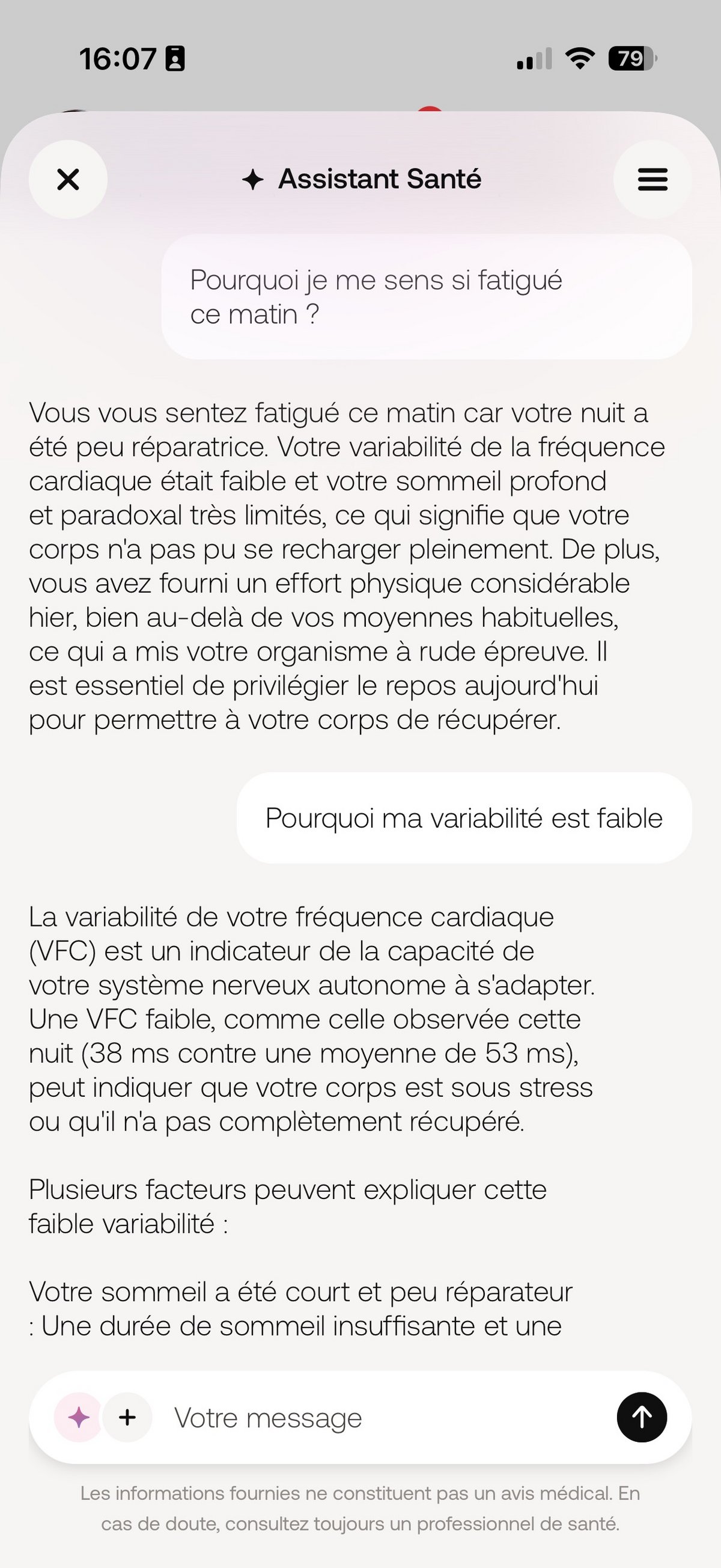
In practice, the execution is uneven. The conversational part left me somewhat unsatisfied. Withings Intelligence does the job, but remains rather cold: you don’t always know what to ask, and the experience lacks that little human touch that invites you to dig deeper. The comparison with Google is harsh on this point: on the Fitbit Air, Google Health’s Gemini coach (still another AI assistant embedded in the mobile app) offers suggested questions, a more playful and accessible approach that makes you want to explore. Withings, by contrast, leaves the user somewhat alone with the input box.
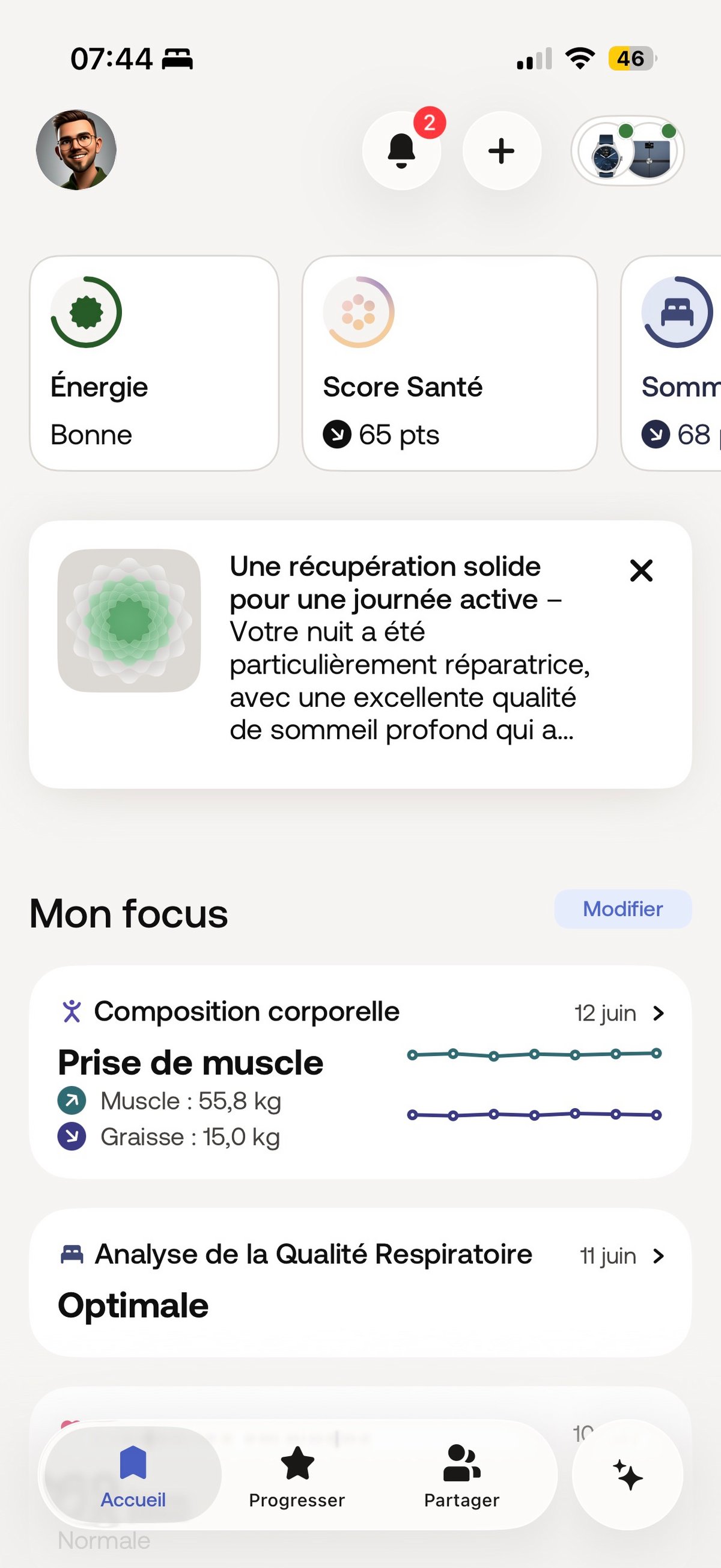
However, where Withings Intelligence truly shines is in passive analysis. The health scores and insights distilled on the app pages are genuinely useful: they provide a clear and quick assessment of your condition without needing to ask a single question. This might be where the real value of the subscription lies. The scores and illustrations give a highly digestible snapshot of your health. Withings also leans into pedagogy.
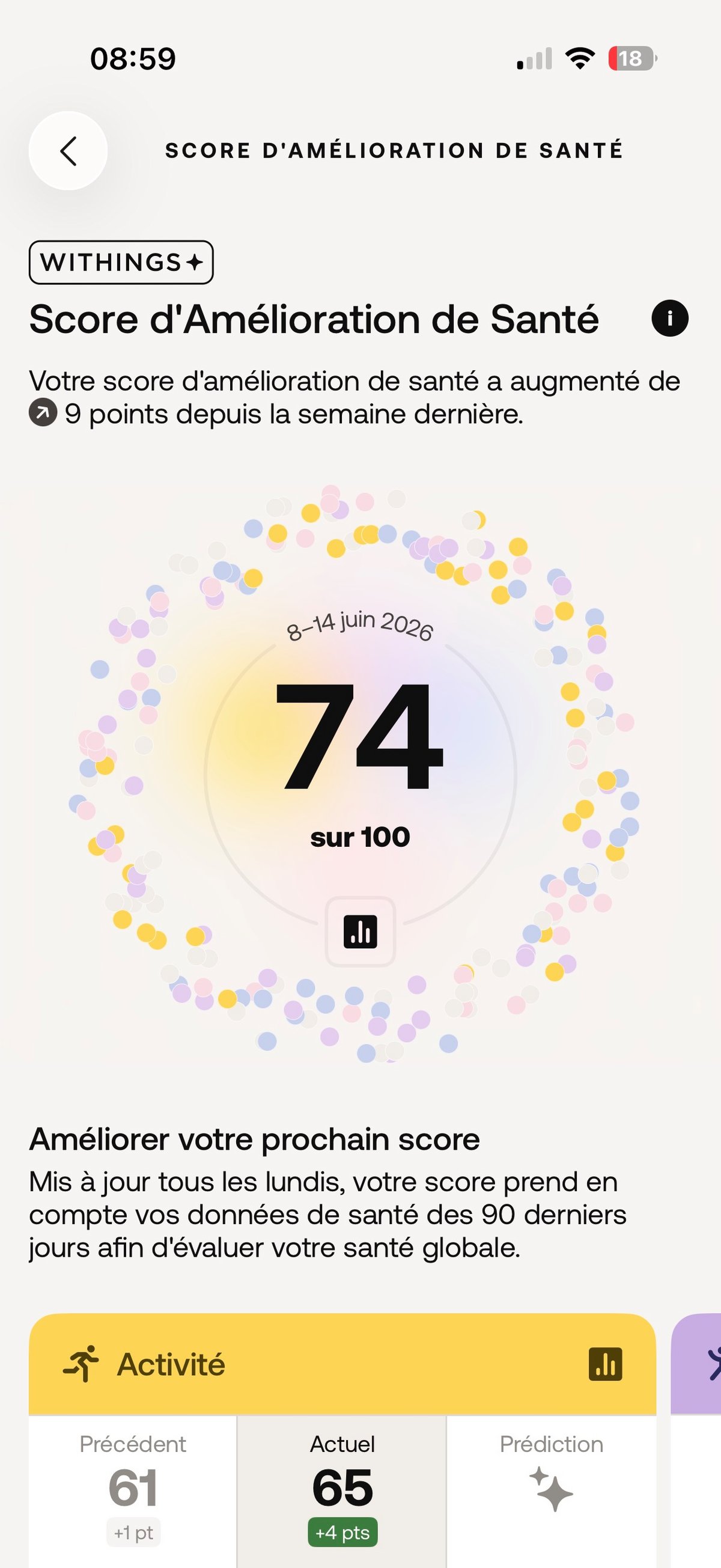
The next tile shows another set of scores, the energy indicator, and the cardiologist’s ECG and sleep evaluation; all are behind the Withings+ paywall. In theory, the app is usable without a subscription, with data stored for life and PDF export for telemedicine. But the essence of these features—the health assistant, the trends, the daily energy indicator, ECG analysis by a cardiologist, and clinical sleep evaluation—is locked behind the paywall. It’s up to you to decide whether the ongoing cost is worth the level of monitoring offered, on top of the watch’s already substantial price.
Autonomy: a longer-lasting watch than its rivals, but not as long as expected
If there is a domain where the ScanWatch 2 crushes the competition of classic smartwatches, it is battery life. Where an Apple Watch often asks for daily charging, Withings lasts much longer. Withings promises up to a month, and while I didn’t quite reach that figure, I came close: around three weeks with all sensors active and about 40 minutes of activity per day. That’s slightly below the official claim, but still excellent and, above all, very comfortable for daily use. The daily life benefit is the ability to forget about recharging, which is also a plus for sleep tracking: no need to remove the watch at night to plug it in.
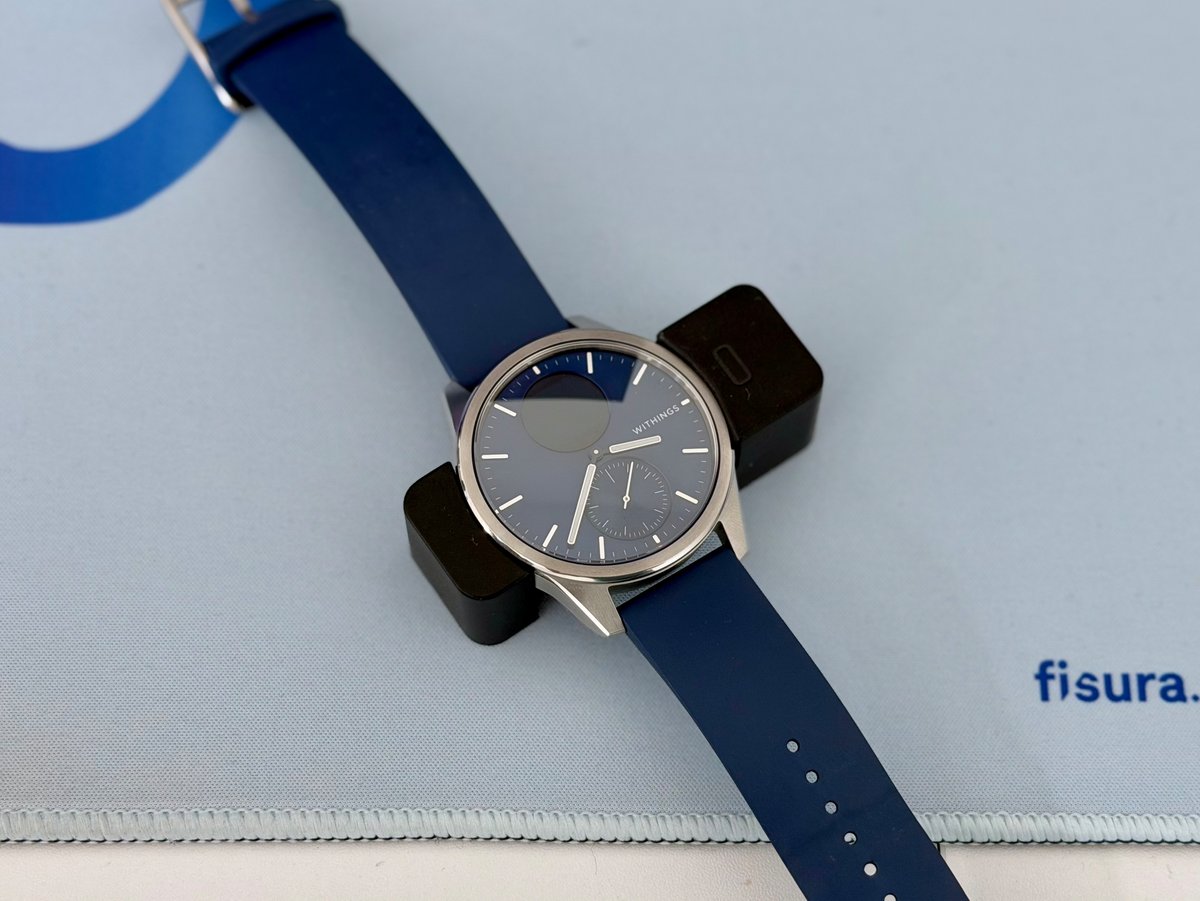
The only real drawback is the charger. Withings relies on a proprietary USB 2.0 system, which requires seating the watch in a small plastic cradle that feels a little cheap and misaligned with the watch’s build quality. Not dramatic, since the autonomy alleviates the need to charge often, but at this price point, one would have appreciated a bit more refinement for this accessory.
Withings ScanWatch 2 (2025): Clubic’s verdict
The ScanWatch 2 succeeds in the gamble it set for itself. It is a health-first watch, elegant, discreet, with standout autonomy, offering comprehensive and reliable medical monitoring at the wrist without ever resembling a gadget. The new temperature sensor and the arrival of Withings Intelligence enrich an already proven formula. In this terrain, it remains one of the benchmarks.
There remain blind spots. The monochrome screen quickly reveals its limits, the sports aspect is treated as a poor relation due to the lack of GPS, and the heart of the novelty, the Withings Intelligence chatbot, remains a bit too cold next to more accessible competition. Not to forget that most of these novelties are locked behind the Withings+ subscription, which adds to an already high price.
This ScanWatch 2 is therefore aimed at a precise audience: those who want to monitor their health seriously, without giving up a real watch on their wrist. For contactless payments, music, or advanced sport, look elsewhere. But for an elegant watch that quietly watches over your health for weeks, the Withings ScanWatch 2 has, practically, no equal.
- An elegant, discreet watch with premium materials
- Comprehensive and reliable health tracking
- New body temperature sensor
- Remarkable autonomy, around three weeks
- Withings Intelligence insights that are genuinely useful
- Monochrome OLED display is limited; the app remains essential
- Conversational AI feels a bit cold for broad public use
- No built-in GPS
- New features locked behind Withings+ subscription
- Proprietary USB charger feels a touch cheap
8
7
7
8
9
amazon.fr
amazon.fr
RDC
Fnac
Boulanger

Daniel Brooks
I cover everyday products with a practical eye, from kitchen tools and home essentials to smart gadgets and consumer trends. My goal is to help readers understand what is genuinely useful, what is worth the price, and what deserves a second look before buying.